Key takeaways
- Scrunch AI is a solid monitoring platform, but it starts at ~$250/mo with no free tier and stops at tracking -- it won't tell you what content to create
- Answer gap analysis (knowing which prompts competitors rank for but you don't) is the most actionable feature to look for in any alternative
- The best alternatives in 2026 combine monitoring, gap identification, and content generation in one loop
- Promptwatch is the only platform rated "Leader" across all GEO categories in 2026, with built-in content generation grounded in 880M+ citations
- Several budget options (Otterly.AI, Peec AI) exist for teams that just need basic tracking without the price tag
Scrunch AI does what it says. It tracks your brand across AI engines, detects hallucinations (genuinely useful for regulated industries), and gives you an Influence Score for citation tracking. The team raised $19M and serves 500+ brands. It's a real product.
But here's the problem most teams run into: Scrunch shows you where you stand. It doesn't tell you what to do about it.
If you ask "which prompts are my competitors getting cited for that I'm not?" or "what content should I publish to improve my AI visibility?" -- Scrunch doesn't have an answer. You're left staring at a dashboard, then opening a separate doc to figure out strategy.
That gap -- between monitoring and actually fixing the problem -- is why teams go looking for alternatives. This guide covers 8 tools that go further, with a focus on which ones include answer gap analysis and content optimization, not just tracking.
What answer gap analysis actually means
Before comparing tools, it's worth being specific about what "answer gap analysis" means in this context, because vendors use the term loosely.
Real answer gap analysis does three things:
- Runs a set of prompts across multiple AI engines (ChatGPT, Perplexity, Claude, Gemini, etc.)
- Identifies which prompts your competitors appear in but you don't
- Shows you the specific topics, questions, and content angles that are missing from your site
The output isn't a vague "you need more content." It's "ChatGPT is citing your competitor for 'best project management tools for remote teams' and you have nothing on that topic." That's actionable. That's what you can actually do something with.
Most monitoring tools stop at step one. They'll tell you your brand appeared in 23% of relevant AI responses. They won't tell you what the other 77% looked like or what you need to write to capture it.
The 8 best Scrunch AI alternatives in 2026
1. Promptwatch
Promptwatch is the most complete option in this space right now, and the only platform that closes the full loop from gap identification to content creation to traffic attribution.

The Answer Gap Analysis feature is the core of what makes it different. It shows you exactly which prompts competitors are visible for that you're not -- the specific questions and topics AI models want to answer but can't find on your site. From there, the built-in AI writing agent generates articles, listicles, and comparisons grounded in real citation data (880M+ citations analyzed), prompt volumes, and competitor analysis. This isn't generic content -- it's engineered to get cited by ChatGPT, Claude, Perplexity, and other models.
Beyond gap analysis, Promptwatch monitors 10 AI engines (ChatGPT, Perplexity, Google AI Overviews, Google AI Mode, Claude, Gemini, Meta/Llama, DeepSeek, Grok, Mistral, Copilot), provides real-time AI crawler logs showing which pages each model reads and how often, and connects visibility to actual revenue through traffic attribution.
Pricing starts at $99/mo for the Essential plan (1 site, 50 prompts, 5 articles). Professional is $249/mo (2 sites, 150 prompts, crawler logs, city-level tracking). Business is $579/mo for 5 sites and 30 articles per month. Free trial available.
The honest summary: if you want to know what content you're missing and then actually create it, this is the tool built for that workflow.
2. Profound
Profound is the other serious enterprise option. It covers 10+ AI engines, has full historical data (no 90-day cap like Scrunch), and includes prompt volume data -- meaning you can see how often specific queries are being asked, not just whether you appear.
Profound

Where Profound stands out is depth of analytics. The competitive benchmarking is detailed, and the account management support at higher tiers is real. Where it falls short relative to Promptwatch is content generation -- Profound is still primarily an analytics and monitoring platform. You get excellent data on what's happening, but the "now what?" question is left to you.
Pricing runs from $99/mo on the lower end to $5,000+/mo for enterprise contracts. Worth evaluating if your team has strong content capabilities already and mainly needs better data to direct them.
3. AirOps
AirOps takes a different angle -- it's built around content engineering for AI search visibility, with workflows that connect research, writing, and publishing.
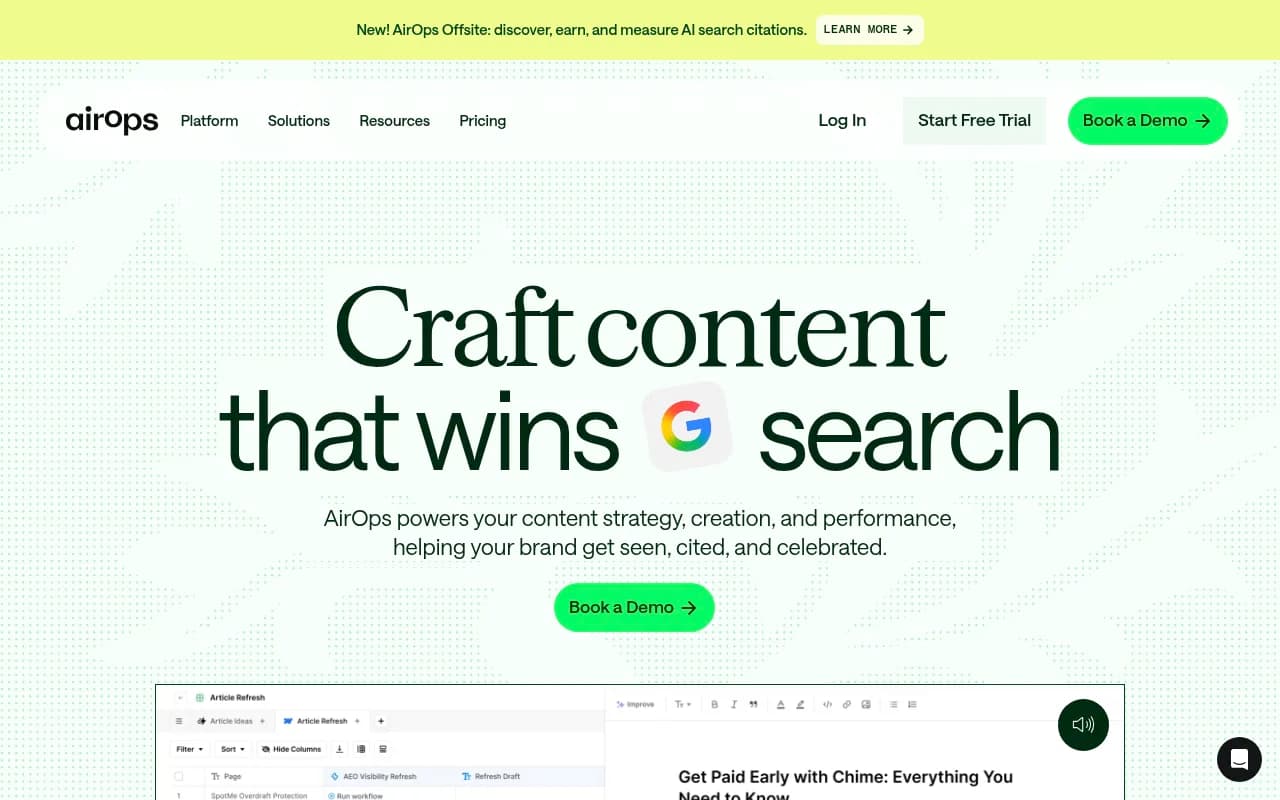
It covers 3 AI engines (fewer than most dedicated monitoring tools), but the content automation side is genuinely strong. Teams use it to build repeatable workflows for creating content that gets cited. There's a free tier, which makes it accessible for smaller teams testing the space.
The limitation is monitoring depth. If you need comprehensive tracking across 8-10 AI models with competitive benchmarking, AirOps isn't the right fit. But if your primary need is scaling content production for AI search, it's worth a look.
4. AthenaHQ
AthenaHQ positions itself as a GEO strategy platform, with a focus on building out your AI visibility systematically rather than just tracking it.

The competitive analysis features are solid, and the interface is clean. It's a good option for teams that want a structured approach to GEO without the complexity of an enterprise platform. The gap relative to Promptwatch is content generation -- AthenaHQ helps you understand the strategy but doesn't write the content for you.
5. Otterly.AI
Otterly is the budget option in this list. At $29/mo, it covers 6 AI engines and gives you basic brand monitoring, mention tracking, and some competitive data.
Otterly.AI

It's honest about what it is: a monitoring dashboard. There's no answer gap analysis, no content generation, no crawler logs. But if you're a small team that just needs to know whether your brand is appearing in AI responses -- and you don't want to pay $250+/mo for that -- Otterly does the job.
Don't expect it to tell you what to do with the data.
6. Peec AI
Peec AI is similar to Otterly in spirit -- lightweight, dashboard-first, affordable (starting around €89/mo). It covers 4 AI engines and gives you clean visibility data without a lot of complexity.

The interface is genuinely well-designed, and the data is easy to read. Good for marketers who want a quick pulse on AI visibility without committing to a full GEO platform. Like Otterly, it doesn't include gap analysis or content tools.
7. SE Ranking
SE Ranking is a traditional SEO platform that has added AI visibility tracking. Starting at $129/mo, it's a reasonable option for teams that already use SE Ranking for rank tracking and want to add AI monitoring without switching tools.
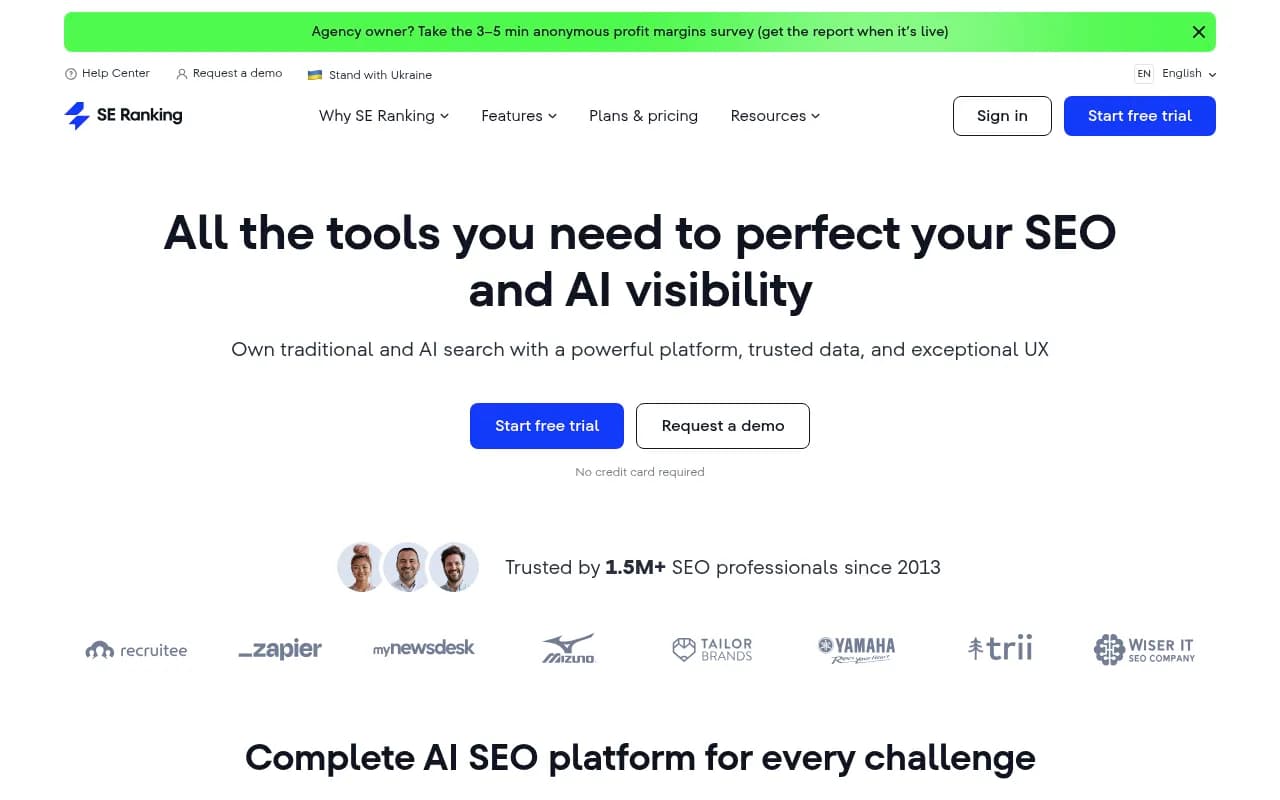
The AI visibility features are functional but not deep. You get brand mention tracking across several AI engines, but the gap analysis and content optimization capabilities don't match dedicated GEO platforms. The value here is consolidation -- one tool for traditional SEO and basic AI monitoring.
8. Rankshift
Rankshift is aimed at agencies managing multiple clients, with AI visibility tracking across ChatGPT, Perplexity, and other models at a price point around $82/mo.

It covers multiple AI engines, has full data history, and is priced to work for agency margins. The content gap and optimization features are limited, but for agencies that need to report on AI visibility across a client portfolio without breaking the budget, it's a practical option.
Feature comparison table
| Tool | Starting price | AI engines | Answer gap analysis | Content generation | Crawler logs | Free tier |
|---|---|---|---|---|---|---|
| Promptwatch | $99/mo | 10 | Yes | Yes (AI writing agent) | Yes | Trial available |
| Profound | $99/mo | 10+ | Partial | No | No | No |
| AirOps | Free / Custom | 3 | No | Yes | No | Yes |
| AthenaHQ | Custom | Multiple | Partial | No | No | No |
| Otterly.AI | $29/mo | 6 | No | No | No | No |
| Peec AI | €89/mo | 4 | No | No | No | No |
| SE Ranking | $129/mo | Multiple | No | No | No | No |
| Rankshift | ~$82/mo | Multiple | No | No | No | No |
| Scrunch AI | ~$250/mo | 4-9 | No | No | No | No |
How to choose the right tool
The decision comes down to what you actually need to do.
If you need to find and fix content gaps: Promptwatch is the only tool on this list that does all three steps -- identifies what you're missing, generates content to fill those gaps, and tracks whether the new content improves your AI visibility. The action loop (find gaps, create content, track results) is built into the platform.
If you need enterprise-grade analytics and have a content team: Profound gives you the deepest data, including prompt volumes and full historical records. Pair it with a strong content team and you can replicate some of what Promptwatch does natively.
If you need to scale content production: AirOps is worth testing. The content engineering workflows are solid, and the free tier lets you try before committing.
If you just need basic monitoring on a budget: Otterly.AI at $29/mo or Peec AI at €89/mo. Neither will tell you what to do, but they'll tell you where you stand.
If you're an agency: Rankshift's pricing model works better at scale across multiple clients than most dedicated GEO platforms.
The monitoring trap
One thing worth naming directly: most of this market is still selling monitoring as if it were optimization.
Knowing your brand appears in 31% of relevant AI responses is interesting. Knowing it appeared in 31% last month and 28% the month before is concerning. But neither number tells you what to do.
The tools that are actually useful in 2026 are the ones that close the loop -- they show you the gap, help you create content to fill it, and then confirm whether it worked. That's a fundamentally different product than a dashboard that refreshes every 24 hours.
Scrunch AI is a good monitoring product. So are Otterly and Peec. But if you're trying to improve your AI visibility, not just observe it, the tool you need has to do more than watch.
The market is moving in that direction. A year ago, almost every GEO platform was monitoring-only. Now the better ones are building content generation and optimization into the core workflow. That trend will accelerate -- but right now, the tools that have actually shipped it are still a short list.