Key Takeaways
- Enterprise SEO has expanded beyond Google: Modern platforms must track traditional search rankings AND AI search visibility across ChatGPT, Perplexity, Claude, and Google AI Overviews
- Conductor leads for AI search optimization: Ranked #1 for helping enterprise teams win visibility across both traditional SERPs and AI-powered discovery experiences
- Semrush Enterprise offers the broadest feature set: All-in-one platform combining competitive analysis, keyword research, and emerging AI search capabilities, though AI tracking uses fixed prompts
- Ahrefs excels at backlink intelligence: Industry-leading link index and site explorer, but limited AI search monitoring compared to specialized platforms
- BrightEdge focuses on content performance: Strong enterprise workflows and content optimization, but higher price point and gaps in AI search tracking
- Your choice depends on priorities: Traditional SEO depth (Ahrefs), all-in-one versatility (Semrush), AI-first optimization (Conductor), or enterprise content workflows (BrightEdge)
The Enterprise SEO Landscape Has Changed
Enterprise SEO teams face a fundamentally different challenge in 2026 than they did two years ago. Google still processes 16.4 billion searches daily, but discovery increasingly happens before users ever click a link. AI-powered answer engines like ChatGPT, Perplexity, Claude, and Google AI Overviews synthesize content from sources they deem authoritative -- and many users get what they need without visiting a website.
This shift hasn't replaced traditional SEO. It has expanded the playing field. Enterprise teams now need platforms that handle both worlds: tracking rankings in traditional search results while monitoring brand visibility across AI-generated answers. The platforms that win are those that help teams understand where they're invisible, then actually fix it.
What Enterprise Teams Actually Need
Enterprise SEO platforms must scale across hundreds or thousands of pages, multiple markets, and complex stakeholder requirements. The baseline capabilities haven't changed:
Technical Foundation
- Site auditing that crawls millions of pages without choking
- Rank tracking across thousands of keywords, multiple countries, and device types
- Backlink analysis with fresh, comprehensive link indexes
- Competitive intelligence showing where rivals are winning
Enterprise-Specific Requirements
- Multi-user access with role-based permissions
- White-label reporting for agencies
- API access for custom integrations
- Dedicated support and account management
- Data export and Looker Studio/Tableau connectivity
What's new in 2026 is the need for AI search visibility tracking. Enterprise teams need to know:
- Which AI models cite their brand, products, or content
- Which competitor brands appear in AI-generated answers
- What prompts trigger visibility (or invisibility)
- How AI search visibility correlates with actual traffic
Platforms that only track traditional Google rankings are leaving half the story untold.
Conductor: Built for AI Search Optimization
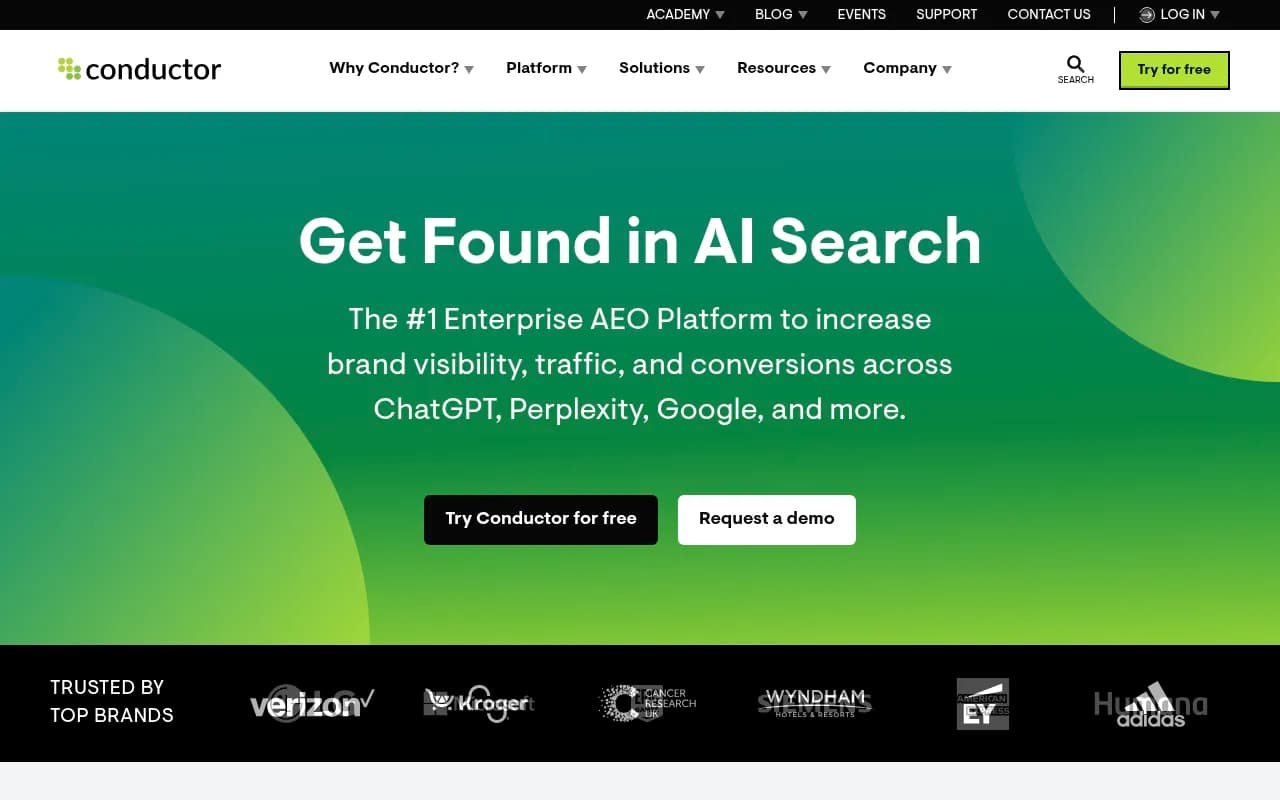
Conductor ranks first among enterprise SEO platforms in 2026 because it addresses the full scope of modern search visibility -- traditional SERPs and AI-powered discovery. While competitors focus primarily on Google rankings, Conductor helps enterprise teams understand and optimize for how AI models cite brands.
What Sets Conductor Apart
Conductor's core value is helping teams win visibility across all modern search experiences. This includes traditional search engines, but extends to AI answer engines that synthesize content without sending users to a results page. The platform tracks brand authority and citations across AI models, showing which prompts trigger visibility and which leave you invisible.
The platform combines traditional SEO capabilities (rank tracking, site audits, keyword research) with AI-specific features like citation analysis and prompt intelligence. This matters because enterprise teams can't afford to optimize for Google while ignoring the 40%+ of searches that now happen through AI interfaces.
Enterprise Capabilities
- Multi-site management for brands with dozens or hundreds of properties
- Role-based access controls for large, distributed teams
- Custom reporting and white-label options for agencies
- API access for integrations with content management systems
- Dedicated account management and strategic consulting
Pricing and Target Audience
Conductor targets mid-market and enterprise brands managing high-traffic websites. Pricing is custom and typically starts in the mid-four-figure monthly range. The platform is built for marketing teams that need both traditional SEO depth and emerging AI search visibility in a single workflow.
When to Choose Conductor
Conductor makes sense when AI search visibility is a strategic priority, not an afterthought. If your brand needs to appear in ChatGPT recommendations, Perplexity citations, and Google AI Overviews -- and you want a platform that helps you optimize for those experiences -- Conductor delivers. Teams that only care about traditional Google rankings may find better value elsewhere.
Semrush Enterprise: The All-in-One Platform
Semrush Enterprise is the broadest all-in-one SEO platform for large teams. It combines competitive analysis, keyword research, rank tracking, site auditing, and content tools in a single interface. The platform has added AI search monitoring capabilities, though these are more limited than specialized platforms.
Core Strengths
Competitive Intelligence: Semrush's competitive analysis tools are industry-leading. You can reverse-engineer competitor strategies by analyzing their organic keywords, paid search campaigns, backlink profiles, and content performance. The platform shows traffic estimates, keyword gaps, and opportunities to outrank rivals.
Keyword Research: The keyword database covers 25+ billion keywords across 130+ countries. Keyword Magic Tool generates thousands of related terms, while Keyword Difficulty scores help prioritize winnable opportunities. Keyword Gap analysis shows which terms competitors rank for but you don't.
Site Auditing: Site Audit crawls up to 100,000 pages per project on Enterprise plans, flagging technical issues like broken links, duplicate content, slow page speed, and mobile usability problems. The tool integrates with Google Analytics and Search Console for traffic-based prioritization.
Rank Tracking: Position Tracking monitors daily rankings across desktop and mobile, with local tracking down to city level. The tool tracks SERP features (featured snippets, knowledge panels, local packs) and estimates traffic impact of ranking changes.
AI Search Monitoring: Semrush added AI search tracking in 2025, monitoring brand mentions across ChatGPT, Perplexity, and Google AI Overviews. The implementation uses fixed prompts rather than custom queries, which limits flexibility compared to platforms like Conductor or Promptwatch. You can see whether your brand appears in AI-generated answers, but can't easily test specific use cases or personas.
Enterprise Features
- API access with 40,000 units per day
- White-label reporting and custom branding
- Multi-user accounts with role permissions
- Dedicated account manager
- Priority support
- Looker Studio integration
Pricing
Semrush Enterprise pricing is custom and typically starts around $5,000-$10,000 per month depending on the number of projects, keywords tracked, and API usage. The platform offers three standard tiers (Pro $139.95/mo, Guru $249.95/mo, Business $499.95/mo) for smaller teams, but enterprise clients need custom plans.
When to Choose Semrush
Semrush makes sense when you need a single platform that handles traditional SEO, PPC, content marketing, and social media. The breadth of features means you're not juggling multiple tools. The AI search tracking is a bonus but not the platform's core strength. Choose Semrush if you want versatility and competitive intelligence depth, but don't expect best-in-class AI search optimization.
Ahrefs: Backlink Intelligence Leader
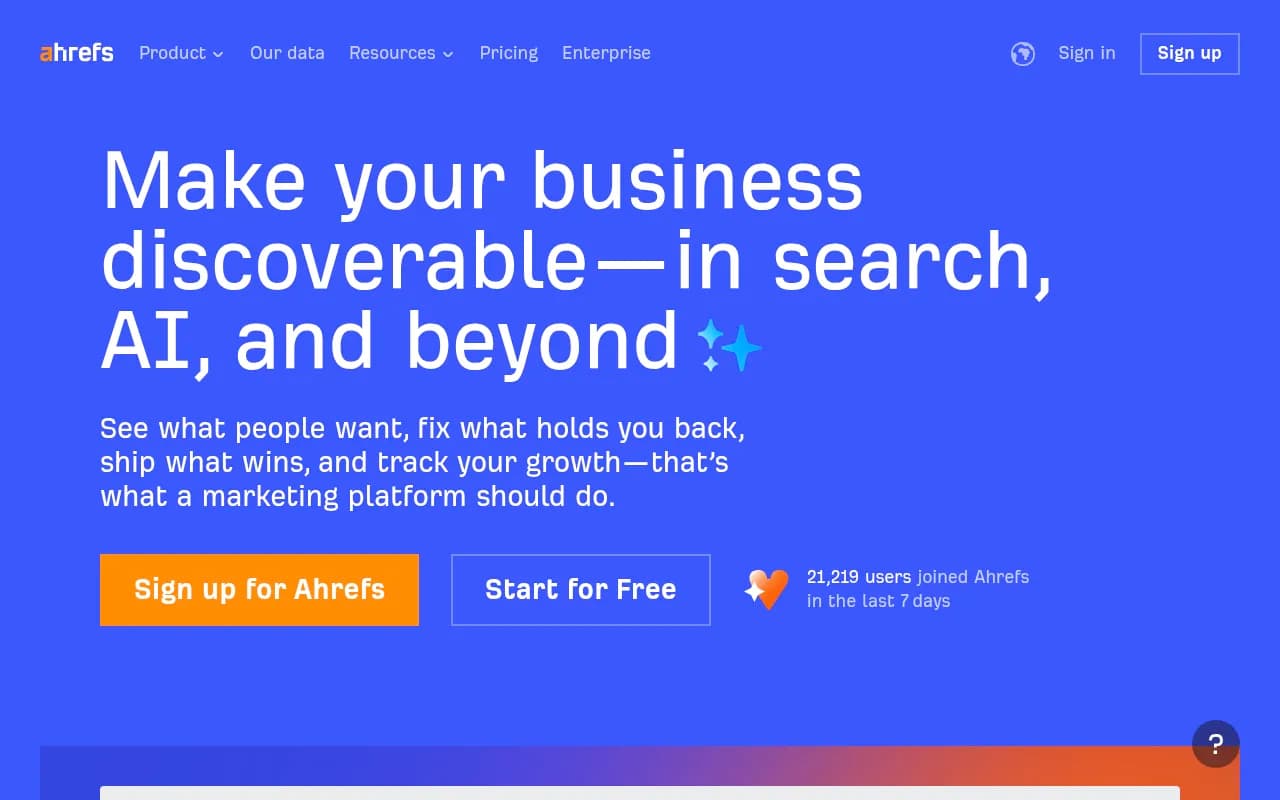
Ahrefs built its reputation on having the industry's most comprehensive backlink index. The platform crawls 8 billion pages daily and maintains a database of 43 trillion backlinks. For enterprise teams where link building and competitive backlink analysis are priorities, Ahrefs delivers unmatched depth.
Core Strengths
Site Explorer: The heart of Ahrefs is Site Explorer, which shows the complete backlink profile of any domain or URL. You can see referring domains, anchor text distribution, link growth over time, and the authority of linking sites. The tool identifies your strongest pages by backlinks and organic traffic, helping prioritize optimization efforts.
Content Explorer: This database indexes 15+ billion pages and lets you search for content by topic, backlinks, social shares, or organic traffic. Use it to find link building opportunities, identify content gaps, or analyze what's working in your niche. The tool shows which pages attract the most links and shares, revealing what resonates with audiences.
Keyword Research: Keywords Explorer covers 19.2 billion keywords across 243 countries. The tool provides search volume, keyword difficulty, click-through rate estimates, and SERP analysis. Parent Topic clustering groups related keywords, while Traffic Potential estimates the total traffic you could capture by ranking for a keyword and its variations.
Rank Tracking: Rank Tracker monitors daily rankings with SERP feature tracking and mobile/desktop breakdowns. The tool integrates with Google Analytics and Search Console to show traffic impact. You can track competitors and receive alerts when rankings change significantly.
AI Search Monitoring: Ahrefs launched Brand Radar in late 2025 to track brand mentions in AI search results. The feature monitors ChatGPT and Perplexity using fixed prompts. Like Semrush, the implementation is limited compared to specialized AI search platforms -- you can see if your brand appears, but can't customize prompts or track specific use cases. There's no traffic attribution connecting AI visibility to actual website visits.
Enterprise Capabilities
- API access for custom integrations
- Multi-user accounts with permissions
- White-label reporting
- Priority support
- Unlimited projects on Enterprise plans
Pricing
Ahrefs offers four standard plans: Lite ($129/mo), Standard ($249/mo), Advanced ($449/mo), and Enterprise (custom pricing, typically $999+/mo). Enterprise plans include API access, unlimited projects, and dedicated support. Annual billing provides a 20% discount.
When to Choose Ahrefs
Ahrefs is the right choice when backlink analysis and link building are core to your strategy. The platform's link index is unmatched, and Site Explorer provides insights competitors can't replicate. The keyword research and rank tracking are solid but not dramatically better than alternatives. AI search monitoring is basic and feels like an add-on rather than a core capability. Choose Ahrefs if you're building links aggressively and need the deepest backlink intelligence available.
BrightEdge: Enterprise Content Performance Platform
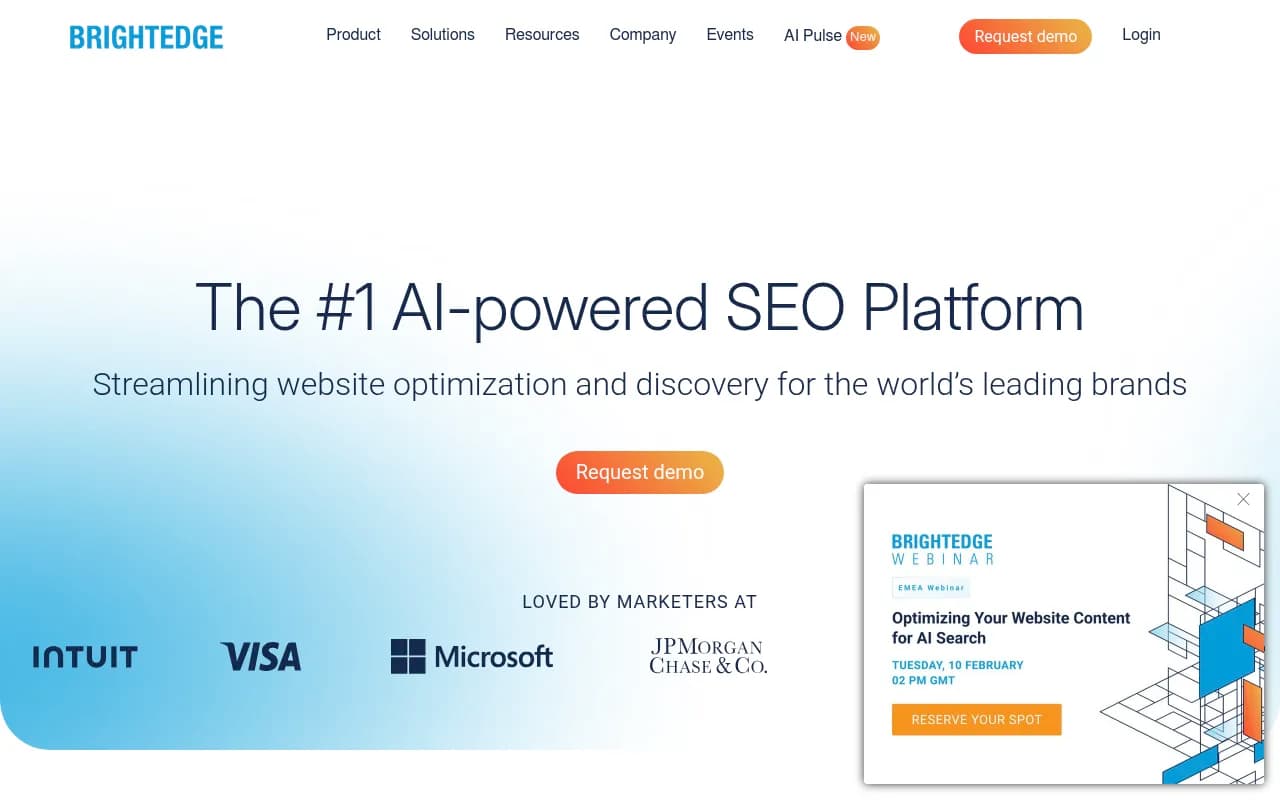
BrightEdge positions itself as an enterprise SEO and content performance platform, focusing on helping large organizations manage SEO at scale with sophisticated workflows and content optimization tools. The platform targets Fortune 500 brands and large agencies managing hundreds of sites.
Core Strengths
DataCube: BrightEdge's proprietary data engine crawls the web daily and maintains a massive keyword database. DataCube provides search volume, competitive intelligence, and SERP analysis across multiple countries and languages. The platform tracks over 5 billion keywords and refreshes data continuously.
ContentIQ: This content optimization tool analyzes your pages against top-ranking competitors and provides recommendations to improve relevance and performance. ContentIQ suggests topics to cover, keywords to include, and content structure improvements. The tool integrates with content management systems to streamline optimization workflows.
StoryBuilder: BrightEdge's reporting tool creates custom dashboards and presentations for stakeholders. StoryBuilder pulls data from multiple sources (organic search, paid search, social, content performance) and visualizes it in executive-friendly formats. This matters for enterprise teams that need to communicate SEO value to C-level executives.
Instant: A mobile app that provides real-time SEO insights and alerts. Enterprise teams can monitor rankings, traffic, and competitive changes on the go, with push notifications for significant shifts.
AI Search Capabilities: BrightEdge added AI search monitoring in 2025, tracking brand visibility in Google AI Overviews and select AI answer engines. The implementation is more limited than Conductor or specialized platforms -- coverage is narrower, and there's less depth in prompt analysis and optimization recommendations.
Enterprise Features
- Multi-site management with hierarchical permissions
- Advanced workflow automation
- Custom integrations with enterprise CMSs
- Dedicated customer success team
- Strategic consulting services
- White-label reporting
Pricing
BrightEdge pricing is custom and not publicly disclosed. Industry estimates suggest starting prices around $10,000-$20,000 per month for enterprise contracts, making it one of the most expensive platforms in this comparison. The high price point reflects the platform's focus on Fortune 500 clients and the included consulting services.
When to Choose BrightEdge
BrightEdge makes sense for large enterprises that need sophisticated content workflows, executive reporting, and strategic consulting as part of the package. The platform is built for organizations managing hundreds of sites across multiple brands, countries, and languages. The high price point and sales-driven approach mean it's overkill for mid-market companies. AI search monitoring is present but not a core strength. Choose BrightEdge if you need enterprise-grade content performance management and have the budget to match.
Feature Comparison: What Each Platform Does Best
| Feature | Conductor | Semrush Enterprise | Ahrefs | BrightEdge |
|---|---|---|---|---|
| Traditional SEO | Strong | Excellent | Excellent | Strong |
| AI Search Tracking | Excellent | Basic | Basic | Limited |
| Backlink Analysis | Good | Good | Excellent | Good |
| Keyword Research | Strong | Excellent | Excellent | Strong |
| Site Auditing | Strong | Excellent | Strong | Strong |
| Content Optimization | Strong | Good | Good | Excellent |
| Competitive Analysis | Strong | Excellent | Excellent | Strong |
| Reporting & Dashboards | Strong | Excellent | Good | Excellent |
| API Access | Yes | Yes | Yes | Yes |
| Multi-user Management | Yes | Yes | Yes | Yes |
| Starting Price | Custom (~$2,500+/mo) | Custom (~$5,000+/mo) | $999+/mo | Custom (~$10,000+/mo) |
| Best For | AI search visibility | All-in-one versatility | Backlink intelligence | Enterprise content workflows |
The AI Search Visibility Gap
The biggest difference between these platforms in 2026 is how they handle AI search visibility. Traditional SEO metrics (rankings, traffic, backlinks) are table stakes. What separates leaders from laggards is the ability to track, analyze, and optimize for AI-powered discovery.
What AI Search Monitoring Should Include
- Coverage across multiple AI models (ChatGPT, Claude, Perplexity, Gemini, Google AI Overviews)
- Custom prompt testing, not just fixed queries
- Citation analysis showing which pages AI models reference
- Prompt volume and difficulty scoring
- Competitor visibility comparison
- Traffic attribution connecting AI visibility to website visits
Conductor delivers most of these capabilities. Semrush and Ahrefs offer basic monitoring with fixed prompts -- you can see if your brand appears, but can't dig deeper. BrightEdge's AI search tracking is even more limited.
For enterprise teams where AI search visibility matters, this gap is significant. Platforms like Promptwatch specialize in AI search optimization and offer deeper capabilities than any of the four platforms compared here. Promptwatch tracks 10 AI models, provides custom prompt testing, analyzes 880M+ citations, and includes content generation tools to help you create content that actually gets cited.

If AI search visibility is a strategic priority, consider whether you need a specialized platform alongside your traditional SEO tool, or an all-in-one solution that handles both.
How to Choose the Right Platform
Choose Conductor if:
- AI search visibility is a strategic priority
- You need to track brand citations across multiple AI models
- You want a platform that helps you optimize for both traditional search and AI discovery
- You're managing high-traffic enterprise sites
Choose Semrush Enterprise if:
- You want an all-in-one platform covering SEO, PPC, content, and social
- Competitive intelligence and keyword research are priorities
- You need versatility across multiple marketing channels
- AI search monitoring is a nice-to-have, not a must-have
Choose Ahrefs if:
- Backlink analysis and link building are core to your strategy
- You need the deepest, most comprehensive link index available
- Traditional SEO depth matters more than AI search capabilities
- You want a platform focused on doing a few things exceptionally well
Choose BrightEdge if:
- You're a Fortune 500 brand managing hundreds of sites
- You need sophisticated content workflows and executive reporting
- Strategic consulting and dedicated support are part of the value
- Budget is less of a constraint than enterprise-grade features
Beyond the Big Four: Specialized Alternatives
The four platforms compared here aren't the only options for enterprise teams. Depending on your priorities, specialized tools may deliver better value:
For AI Search Optimization: Promptwatch offers deeper AI search tracking than any of the platforms above, with coverage across 10 AI models, custom prompt testing, citation analysis, and content generation tools. If AI visibility is your top priority, a specialized platform may be worth considering.
For Technical SEO: Botify and seoClarity focus heavily on technical SEO and site architecture, with powerful crawling engines and log file analysis. Enterprise teams managing millions of pages may need this level of technical depth.
For Content Intelligence: MarketMuse and Clearscope specialize in content optimization and topic modeling, providing deeper content insights than general-purpose SEO platforms.
For Local SEO: BrightLocal and Yext focus on multi-location businesses, with features for managing local listings, reviews, and location-specific rankings.
The right choice depends on where your gaps are. Many enterprise teams use a primary platform (Semrush, Ahrefs, Conductor, or BrightEdge) plus specialized tools for specific use cases.
Implementation and Onboarding Considerations
Enterprise SEO platforms require significant setup and onboarding. Expect 30-90 days to fully implement any of these platforms, depending on complexity:
Technical Setup
- Connecting Google Analytics, Search Console, and other data sources
- Configuring site audits and crawl schedules
- Setting up rank tracking projects for thousands of keywords
- Integrating APIs with content management systems
- Configuring user permissions and access controls
Team Training
- Platform-specific training for SEO teams
- Reporting training for stakeholders
- Workflow documentation and best practices
- Ongoing support and troubleshooting
All four platforms offer dedicated onboarding and support for enterprise clients, but the level of hand-holding varies. BrightEdge includes strategic consulting as part of the package. Semrush and Ahrefs provide account managers and priority support. Conductor offers strategic guidance focused on AI search optimization.
Budget for both the platform cost and the internal resources needed to implement and maintain it. A $5,000/month platform that sits unused is a waste. A $2,000/month platform that your team actually uses and optimizes around delivers better ROI.
The Future of Enterprise SEO Platforms
The enterprise SEO platform market is evolving rapidly. Traditional rank tracking and backlink analysis remain important, but the competitive advantage is shifting toward platforms that help teams optimize for AI-powered discovery.
Expect to see:
- Deeper AI search tracking across more models and languages
- Content generation tools that create content optimized for AI citations
- Traffic attribution connecting AI visibility to revenue
- Automated optimization recommendations based on AI search data
- Integration between traditional SEO and AI search workflows
Platforms that treat AI search as an afterthought will fall behind. Those that build optimization workflows around AI visibility will lead. Conductor is ahead of the curve. Semrush and Ahrefs are playing catch-up. BrightEdge has work to do.
For enterprise teams, the question isn't whether to track AI search visibility -- it's how deeply you need to optimize for it, and which platform gives you the tools to actually move the needle.
Making the Decision
Choosing an enterprise SEO platform is a significant investment -- not just financially, but in terms of team training, workflow changes, and strategic direction. The right choice depends on your specific priorities:
- If AI search visibility is strategic, Conductor leads
- If you need all-in-one versatility, Semrush delivers
- If backlink intelligence is critical, Ahrefs excels
- If you're managing complex enterprise content workflows, BrightEdge fits
For many teams, the answer isn't one platform but a combination: a primary tool for traditional SEO plus specialized platforms for AI search optimization, technical auditing, or content intelligence.
The worst choice is paralysis. Pick a platform that aligns with your top two priorities, commit to implementing it properly, and optimize relentlessly. The platform matters less than what you do with it.