BrightEdge Review 2026
Enterprise-level SEO platform with advanced content optimization, competitive intelligence, and reporting for large organizations.
Summary: Key Takeaways
• Best for enterprise teams: BrightEdge is purpose-built for large organizations (Fortune 500, global brands, enterprise e-commerce) managing complex SEO at scale across multiple markets, languages, and business units • Proprietary data advantage: Data Cube X offers 4 billion data points with 10 years of historical context—the industry's most comprehensive keyword research engine, far exceeding what standard tools provide • AI automation at two levels: Copilot provides AI-powered insights and recommendations, while Autopilot executes fully automated on-site optimizations without manual intervention • All-in-one platform: Replaces multiple point solutions with unified workflows for SEO, content optimization, local management, e-commerce (including Amazon rankings), technical audits, and AI search visibility • Premium pricing: Enterprise-only pricing (contact sales)—expect significant investment suitable for organizations with substantial organic search revenue at stake
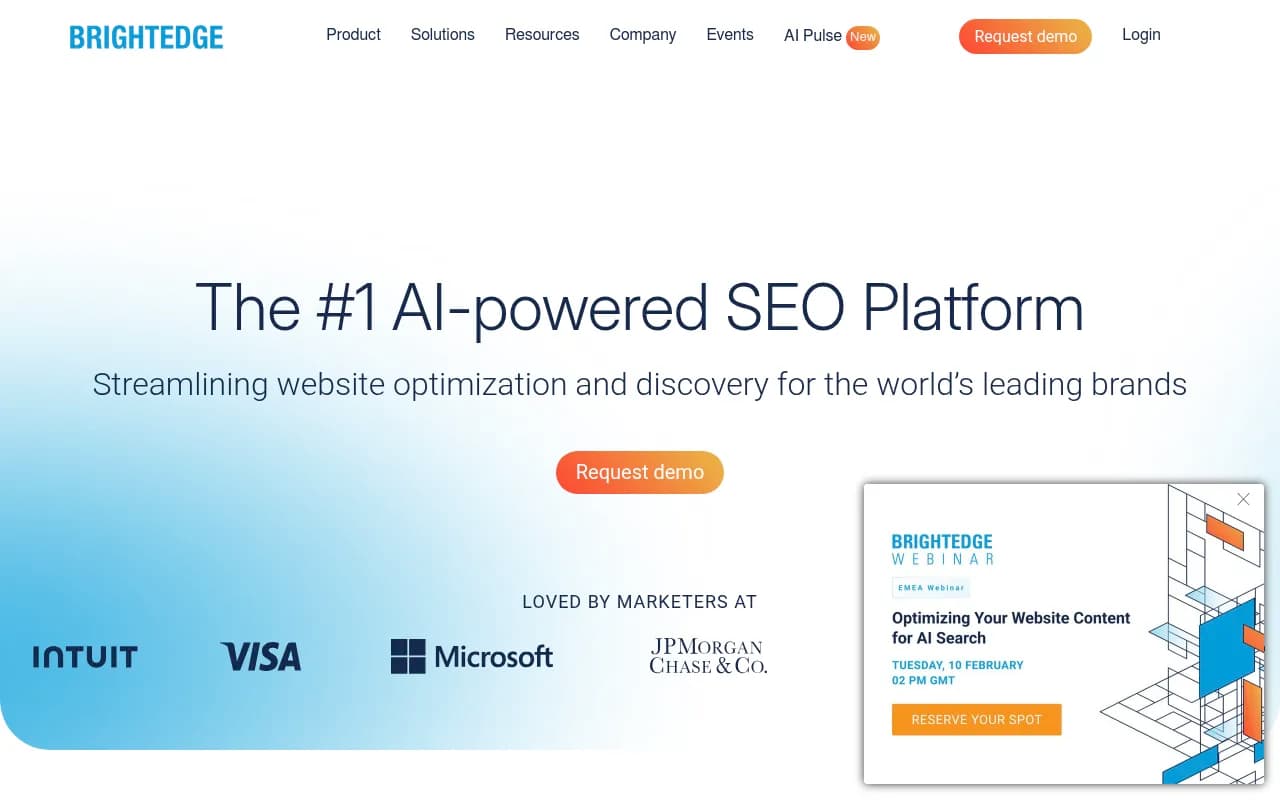
BrightEdge has established itself as the dominant enterprise SEO platform since its founding in 2007, serving over 1,700 brands including IBM, Microsoft, and 57 of the Fortune 100. The platform is designed specifically for large organizations that need to manage SEO at scale across hundreds of thousands of pages, multiple countries, and complex organizational structures. This is not a tool for freelancers or small agencies—it's built for enterprise marketing teams, global SEO directors, and digital transformation initiatives where organic search represents millions in revenue.
The company has consistently evolved beyond traditional SEO tooling, now positioning itself as a comprehensive platform for both traditional search engine optimization and emerging AI search visibility (ChatGPT, Perplexity, Google AI Overviews). BrightEdge has invested heavily in AI capabilities, introducing features like Copilot (AI assistant) and Autopilot (automated optimization) that differentiate it from legacy enterprise SEO tools.
Data Cube X: Industry-Leading Keyword Research
The cornerstone of BrightEdge is Data Cube X, their proprietary keyword research engine containing over 4 billion data points with 10 years of historical ranking data. This isn't just another keyword database—it's a comprehensive search intelligence system that tracks rankings, search volume, SERP features, and competitive movements across desktop and mobile with daily refresh rates. The historical depth allows enterprise teams to identify long-term trends, seasonal patterns, and the true competitive landscape in ways that tools with shorter data histories simply cannot match. Data Cube X covers global markets with localized data for different countries and languages, essential for multinational brands managing SEO across regions. The accuracy and granularity of this data is what justifies BrightEdge's premium positioning—enterprise SEO teams report that Data Cube's ranking data is more reliable than competitors, particularly for tracking large keyword portfolios (10,000+ terms) across multiple domains.
Copilot and Autopilot: AI-Powered Optimization
BrightEdge has introduced two distinct AI capabilities that work at different levels of automation. Copilot acts as an AI assistant embedded throughout the platform, surfacing insights, suggesting optimizations, and helping users make faster decisions based on the massive dataset BrightEdge maintains. It analyzes your site's performance, identifies opportunities (content gaps, technical issues, ranking declines), and provides specific recommendations with priority scoring. Autopilot goes further by executing optimizations automatically on your website—things like meta tag updates, schema markup implementation, internal linking improvements, and content enhancements. This fully automated approach is particularly valuable for enterprise sites with tens of thousands of pages where manual optimization is impractical. Autopilot requires integration with your CMS or development workflow, but once configured, it continuously optimizes pages based on real-time search data and competitive intelligence.
AI Search Visibility and Generative Parser
Recognizing the shift toward AI-powered search experiences, BrightEdge has developed capabilities to track and optimize for AI search engines (ChatGPT, Google AI Overviews, Perplexity, Gemini). Their proprietary generative parser analyzes how AI models cite and reference content, helping brands understand their visibility in AI-generated responses. This is packaged under the BrightEdge AI Catalyst offering, which monitors brand mentions in AI search results, tracks citation sources, and provides recommendations for optimizing content to appear in AI responses. While not as comprehensive as dedicated AI visibility platforms like Promptwatch (which offers real prompt tracking, crawler logs, and multi-LLM monitoring), BrightEdge's AI search features are integrated into the broader SEO workflow, making it convenient for teams already using the platform for traditional SEO.
Content Optimization and Creation
BrightEdge includes robust content optimization tools that analyze existing pages and provide specific recommendations to improve rankings. The Content module evaluates on-page factors (keyword usage, readability, structure, internal linking) and compares your content against top-ranking competitors to identify gaps. It also includes AI-assisted content creation capabilities that help teams generate SEO-optimized content briefs, outlines, and drafts based on target keywords and competitive analysis. For enterprise content teams producing hundreds of pages monthly, these features accelerate the content production workflow while ensuring SEO best practices are baked in from the start. The platform integrates with popular CMS platforms (WordPress, Adobe Experience Manager, Sitecore, Drupal) to streamline content publishing and optimization directly within existing workflows.
E-commerce and Amazon Rankings
BrightEdge is one of the few enterprise SEO platforms that includes Amazon search rankings as a core feature. For brands selling on Amazon, understanding how products rank for key search terms on the platform is critical—Amazon's internal search algorithm operates differently from Google, and visibility there directly impacts sales. BrightEdge tracks Amazon rankings alongside traditional search engine rankings, allowing e-commerce teams to manage their entire search presence (Google, Bing, Amazon) in one platform. The e-commerce features also include product page optimization, category page analysis, and competitive intelligence specific to online retail. This makes BrightEdge particularly attractive for enterprise retailers and consumer brands with significant Amazon presence.
Local SEO Management
For brands with physical locations (retail chains, hospitality, healthcare systems, financial services branches), BrightEdge offers local SEO management tools that streamline workflows across hundreds or thousands of locations. This includes Google Business Profile management, local ranking tracking, review monitoring and response, and location-specific content optimization. The platform helps enterprise teams maintain consistency across local listings while allowing regional managers to customize content for their specific markets. Local SEO data is integrated with the broader BrightEdge platform, so enterprise teams can see how local search performance contributes to overall organic visibility and traffic.
Technical SEO and Site Auditing
BrightEdge includes comprehensive technical SEO auditing that crawls your site to identify issues affecting search performance: broken links, duplicate content, missing meta tags, slow page speed, mobile usability problems, structured data errors, and crawl budget waste. For enterprise sites with complex architectures (multiple subdomains, international versions, dynamic content), these audits are essential for maintaining technical health at scale. The platform prioritizes issues based on impact, helping teams focus on fixes that will move the needle rather than getting lost in minor technical details. Technical SEO data is integrated with keyword rankings and traffic data, so you can see how technical issues correlate with performance declines.
Competitive Intelligence and Market Share Analysis
BrightEdge provides deep competitive intelligence that goes beyond simple rank tracking. The platform identifies your true search competitors (which may differ from business competitors), tracks their ranking movements, analyzes their content strategies, and calculates share of voice across your keyword portfolio. For enterprise teams, understanding competitive dynamics is critical for strategic planning—BrightEdge helps answer questions like "Which competitors are gaining ground in our category?" and "What content gaps are competitors exploiting?" The competitive data is visualized through dashboards and reports that make it easy to communicate search performance to executives and stakeholders.
Reporting and Dashboards
Enterprise organizations need reporting that works for different audiences—executives want high-level KPIs, SEO teams need granular data, and regional managers want localized insights. BrightEdge offers customizable dashboards and automated reporting that can be configured for different stakeholders. Reports can be scheduled for automatic delivery, white-labeled for agencies, and integrated with business intelligence tools. The platform tracks the metrics that matter to enterprise teams: organic traffic, revenue attribution, keyword rankings, competitive share of voice, content performance, and technical health. For organizations managing SEO across multiple brands or business units, BrightEdge supports multi-account structures with consolidated reporting.
Integrations and Enterprise Features
BrightEdge integrates with the enterprise marketing stack: Google Analytics, Google Search Console, Adobe Analytics, CMS platforms (WordPress, Adobe Experience Manager, Sitecore, Drupal), marketing automation tools (Marketo, Eloqua, HubSpot), and business intelligence platforms (Tableau, Power BI). API access is available for custom integrations and data exports. The platform includes enterprise-grade security, SSO support, role-based access controls, and audit logging—essential for large organizations with compliance requirements. BrightEdge also offers dedicated customer success managers, strategic consulting, and training programs to help enterprise teams maximize platform value.
Who Is BrightEdge For
BrightEdge is purpose-built for enterprise organizations with complex SEO needs: Fortune 500 companies, global brands managing SEO across 10+ countries, large e-commerce retailers with 100,000+ product pages, enterprise SaaS companies with extensive content libraries, healthcare systems with hundreds of locations, financial services firms with compliance requirements, and agencies managing SEO for enterprise clients. The platform is used by in-house SEO teams (typically 3-10+ people), digital marketing directors, content strategists, and web development teams. It's not suitable for small businesses, freelancers, or startups—the pricing, complexity, and feature set are designed for organizations where organic search drives significant revenue (typically $10M+ annually) and justifies substantial platform investment.
BrightEdge is less appropriate for small agencies managing 5-20 SMB clients, individual consultants, or businesses just starting with SEO. The learning curve is steeper than mid-market tools, and the platform requires dedicated resources to fully utilize. If you're managing a single website with under 10,000 pages and a modest keyword portfolio, tools like Semrush, Ahrefs, or seoClarity will provide better value.
Pricing and Investment
BrightEdge does not publish pricing publicly—it's enterprise sales only, with pricing customized based on the number of keywords tracked, domains managed, users, and specific modules required. Based on industry reports and user reviews, expect annual contracts starting around $30,000-$50,000 for mid-sized implementations, with large enterprise deployments ranging from $100,000 to $500,000+ annually depending on scale and features. This pricing includes the platform license, customer success support, and training. For organizations where organic search represents millions in revenue, this investment is justified by the platform's capabilities and the strategic value of comprehensive search intelligence. However, it's a significant commitment that requires executive buy-in and clear ROI expectations.
Strengths
• Unmatched keyword data: Data Cube X's 4 billion data points and 10-year history provide the most comprehensive search intelligence available, particularly valuable for enterprise teams tracking large keyword portfolios • True all-in-one platform: Consolidates keyword research, content optimization, technical audits, local SEO, e-commerce tracking, and AI search visibility in one system, eliminating the need for multiple point solutions • AI automation: Autopilot's ability to execute optimizations automatically at scale is a genuine differentiator for enterprise sites with tens of thousands of pages • Enterprise-grade features: SSO, role-based access, multi-account management, API access, and dedicated customer success make it suitable for large organizations with complex requirements • Amazon rankings: One of the few platforms tracking Amazon search alongside traditional search engines, critical for e-commerce brands
Limitations
• Premium pricing barrier: Enterprise-only pricing (starting $30K-$50K+ annually) makes it inaccessible for small businesses, agencies with SMB clients, or organizations without substantial organic search revenue • Complexity and learning curve: The platform's depth requires dedicated training and ongoing management—not a tool you can hand to a junior marketer and expect immediate results • AI search capabilities lag specialists: While BrightEdge has added AI search visibility features, dedicated platforms like Promptwatch offer more comprehensive AI search monitoring (real prompt tracking, crawler logs, multi-LLM coverage, content generation) for brands prioritizing AI visibility • Overkill for smaller sites: If you're managing a single website under 10,000 pages, you're paying for enterprise features you don't need—mid-market tools provide better value
Bottom Line
BrightEdge is the gold standard enterprise SEO platform for large organizations that need comprehensive search intelligence, AI-powered automation, and unified workflows across SEO, content, local, and e-commerce. The combination of Data Cube X's proprietary data, Autopilot's automated optimization, and enterprise-grade features justifies the premium pricing for brands where organic search represents significant revenue. However, the high cost, complexity, and enterprise focus make it unsuitable for small businesses, individual consultants, or agencies serving SMB clients. If you're a Fortune 500 company, global brand, or large e-commerce retailer managing SEO at scale, BrightEdge is worth evaluating. For AI search visibility specifically, consider complementing BrightEdge with a specialist platform like Promptwatch for more comprehensive LLM monitoring and optimization.
Tags:
Similar and alternative tools to BrightEdge