Key Takeaways
- WordPress remains dominant but requires plugins and custom development to compete in AI search optimization, while headless CMS platforms like Contentful and Storyblok offer native API-first architectures built for omnichannel delivery
- Contentful leads at enterprise scale with mature APIs, extensive integrations, and proven stability for complex organizations managing content across multiple brands and channels
- Storyblok bridges the gap between developer flexibility and marketer autonomy with visual editing, component-based content management, and a more approachable learning curve than Contentful
- AI optimization capabilities vary dramatically -- WordPress relies on third-party plugins, Contentful offers AI-powered content recommendations and personalization, and Storyblok provides AI-assisted content creation within its visual editor
- Your choice depends on team structure -- WordPress suits small teams with WordPress expertise, Contentful fits enterprises with dedicated engineering resources, and Storyblok works for mid-market companies balancing developer control with marketer independence
The 2026 CMS Landscape: Why AI Optimization Matters
Content management systems in 2026 face a fundamentally different challenge than they did even two years ago. Traditional search engines still drive traffic, but AI search engines -- ChatGPT, Perplexity, Claude, Google AI Overviews, Gemini -- now shape how millions of users discover brands, products, and information. According to recent data, the headless CMS market is projected to exceed $7.1 billion by 2035, with AI-driven content delivery becoming a core requirement rather than a nice-to-have feature.
The shift isn't just about technology. It's about how content gets discovered, cited, and recommended by AI models that don't follow traditional SEO rules. A CMS that can't structure content for AI consumption, optimize metadata for citation engines, or deliver content through APIs to multiple channels will leave your brand invisible in the fastest-growing search category.
Three platforms dominate different segments of this evolving landscape: WordPress powers 43% of all websites with its massive plugin ecosystem, Contentful serves enterprise organizations with complex omnichannel requirements, and Storyblok bridges the gap with visual editing tools that don't sacrifice developer flexibility. Each approaches AI optimization differently, and understanding these differences determines whether your content strategy succeeds or fails in AI search.
WordPress: The Established Giant Adapting to AI
WordPress built its dominance on ease of use, a massive plugin ecosystem, and a community that spans decades. In 2026, it remains the most widely used CMS globally, but its monolithic architecture presents challenges for AI optimization that headless competitors don't face.
AI Optimization Through Plugins
WordPress handles AI optimization primarily through third-party plugins rather than native capabilities. Tools like All in One SEO (AIOSEO), Rank Math, and Yoast SEO have added AI-focused features including structured data automation, schema markup optimization, and content analysis tuned for AI readability.
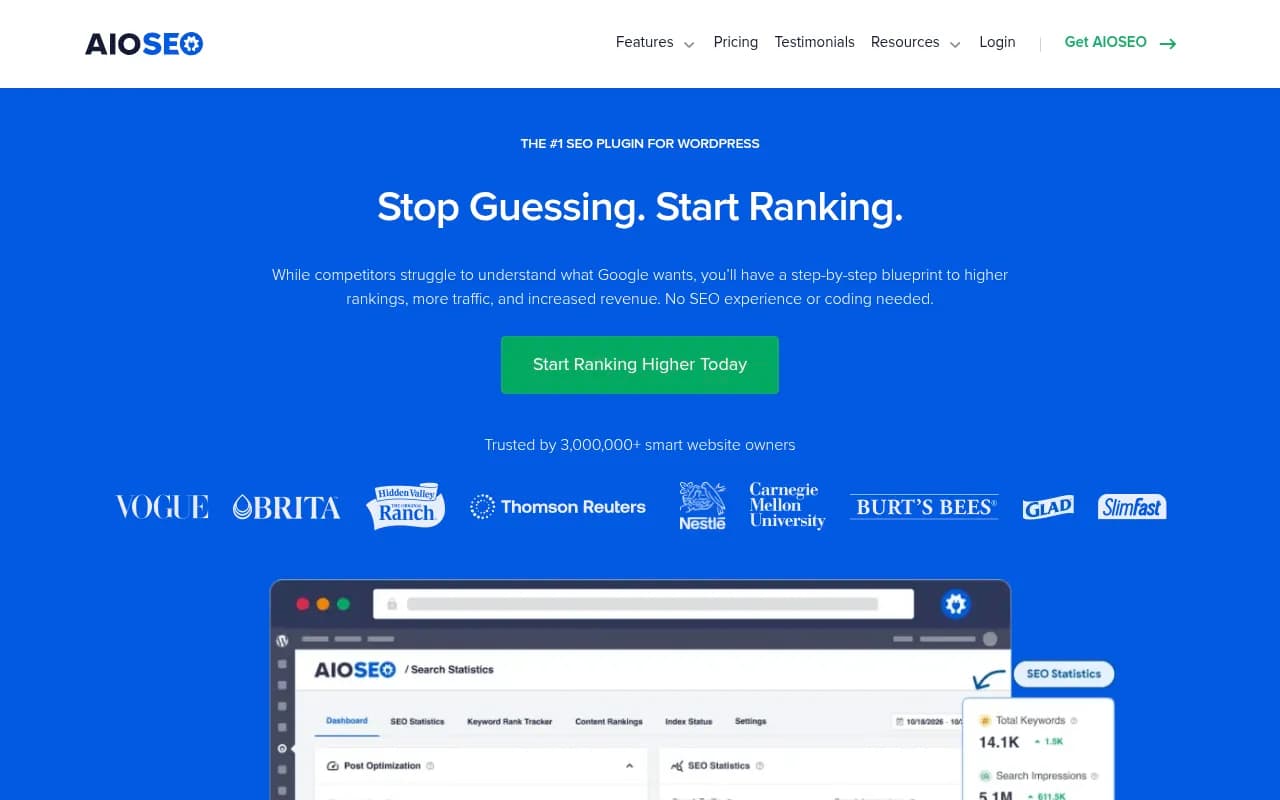
The plugin approach offers flexibility -- you can mix and match tools to build exactly the stack you need. But it also creates fragmentation. One plugin handles structured data, another manages API endpoints for headless implementations, a third optimizes content for AI readability. Integration issues, performance overhead, and maintenance complexity multiply as your plugin count grows.
For AI search visibility specifically, WordPress sites need to combine multiple plugins to achieve what headless platforms offer natively: clean API access for AI crawlers, structured content models that AI engines can parse reliably, and metadata optimization that helps AI models understand context and authority.
Headless WordPress: A Hybrid Approach
Many organizations run WordPress as a headless CMS, using it purely for content management while delivering content through modern JavaScript frameworks like Next.js or Nuxt. This architecture solves performance and omnichannel delivery challenges, but it requires significant development resources and doesn't eliminate the core limitation: WordPress wasn't designed for structured, API-first content from the ground up.
Headless WordPress works best for teams with deep WordPress expertise who need to modernize gradually rather than migrate to a purpose-built headless platform. You keep familiar editing interfaces and workflows while gaining API flexibility, but you're still working around architectural decisions made for a different era of web publishing.
When WordPress Makes Sense
WordPress remains the right choice for:
- Small to mid-sized teams with existing WordPress expertise and limited development resources
- Content-heavy websites where traditional SEO still drives the majority of traffic and AI search is a secondary concern
- Organizations with extensive WordPress customizations where migration costs outweigh the benefits of modern headless architecture
- Agencies managing multiple client sites where WordPress's familiarity reduces training overhead and speeds up deployment
For AI optimization specifically, WordPress requires more manual work and plugin coordination than purpose-built headless platforms, but it's achievable if you have the right expertise and accept the architectural tradeoffs.
Contentful: Enterprise-Grade Headless CMS
Contentful pioneered the modern headless CMS category and remains the enterprise standard for organizations managing complex, multi-channel content operations. Its API-first architecture, mature ecosystem, and proven scalability make it the default choice for large organizations, but that enterprise focus comes with complexity and cost.
Native AI Optimization Capabilities
Contentful approaches AI optimization through structured content modeling and API flexibility rather than bolt-on features. Content models in Contentful define relationships, metadata, and structure that AI engines can parse reliably -- a fundamental advantage over WordPress's post-and-page model.
The platform offers AI-powered content recommendations, automated tagging, and personalization features that help content teams optimize for both human readers and AI consumption. Contentful's content graph understands relationships between content pieces, enabling AI models to discover and cite related content more effectively than flat content structures allow.
For AI search visibility, Contentful's structured approach means:
- Clean API responses that AI crawlers can parse without fighting through HTML markup
- Consistent metadata across all content, making it easier for AI models to understand context and authority
- Relationship mapping that helps AI engines discover related content and build more comprehensive citations
- Omnichannel delivery that ensures your content reaches AI models through multiple touchpoints, not just your website
The Enterprise Tradeoff
Contentful's enterprise positioning creates both advantages and challenges. On the positive side, you get proven scalability, extensive integrations with marketing and analytics platforms, and support structures built for complex organizations. The platform handles massive content volumes, supports global teams with role-based permissions, and integrates with enterprise tools like Adobe Experience Manager, Salesforce, and HubSpot.
The downside: Contentful's learning curve is steep, implementation requires dedicated engineering resources, and pricing reflects its enterprise focus. Small teams often find Contentful overwhelming, and the platform's flexibility can become a burden when you need to make decisions about content modeling, API architecture, and integration patterns.
When Contentful Makes Sense
Contentful fits organizations that:
- Manage content across multiple brands, regions, or channels and need a single source of truth
- Have dedicated engineering teams comfortable with API-first architecture and modern development workflows
- Require enterprise-grade security, compliance, and support with SLAs and dedicated account management
- Need extensive integrations with marketing automation, analytics, personalization, and other enterprise tools
- Prioritize long-term scalability over short-term ease of implementation
For AI optimization, Contentful's structured content approach and API flexibility provide a strong foundation, but you'll need technical expertise to implement and maintain it effectively.
Storyblok: Visual Editing Meets Headless Architecture
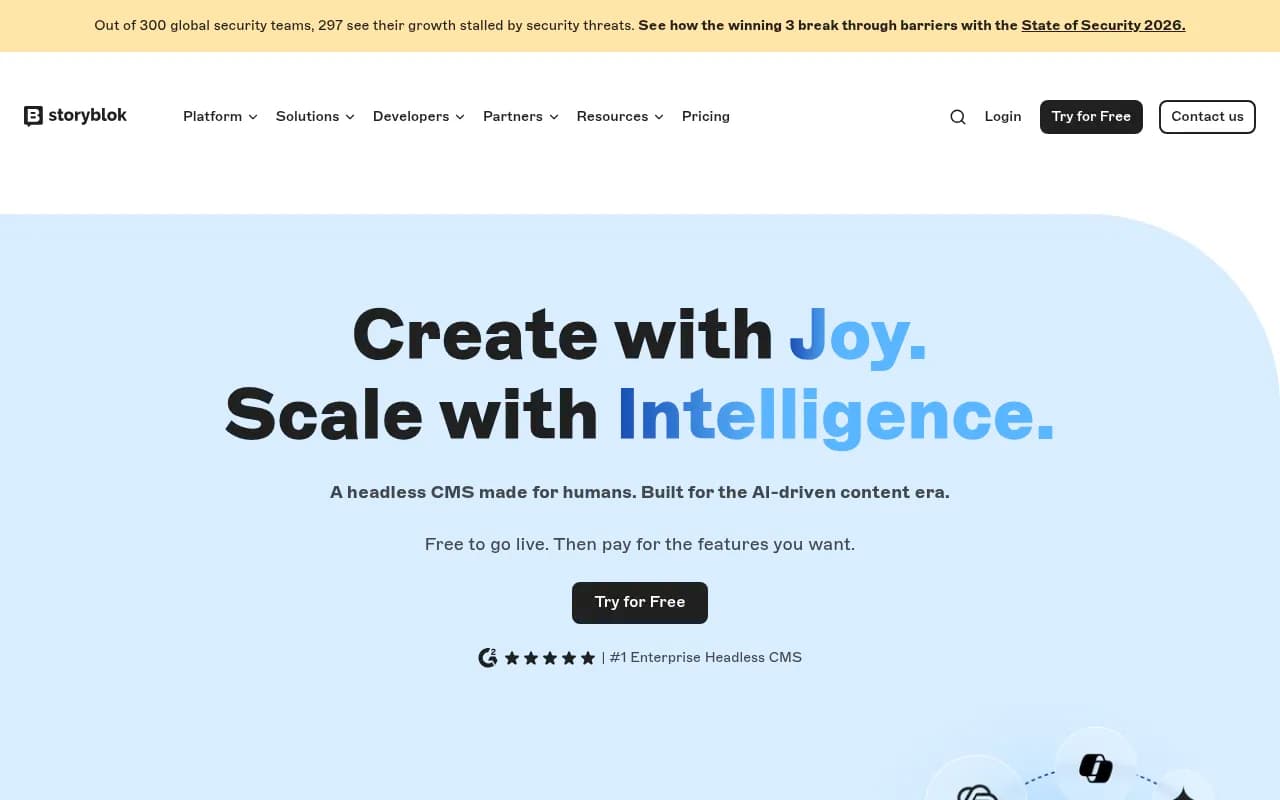
Storyblok entered the headless CMS market later than Contentful but differentiated itself with visual editing capabilities that don't sacrifice developer flexibility. It's positioned as the middle ground between WordPress's ease of use and Contentful's enterprise power, and that positioning resonates with mid-market companies and agencies managing multiple client sites.
Component-Based Content Management
Storyblok's core innovation is its component-based approach combined with real-time visual editing. Content editors see exactly how content will appear across different channels while maintaining the structured content models that AI engines need for reliable parsing and citation.
This visual editing capability matters for AI optimization because it reduces the gap between content creation and content structure. Editors can build well-structured, semantically rich content without understanding the underlying technical implementation, which means more content gets properly structured for AI consumption rather than dumped into generic text fields.
Storyblok's AI-assisted content creation features help editors generate initial drafts, optimize headlines and descriptions, and ensure content meets readability standards that both human readers and AI models prefer. These features integrate directly into the visual editor rather than requiring separate tools or workflows.
Developer Experience and Flexibility
Developers appreciate Storyblok's balance between structure and flexibility. The platform provides pre-built components and templates that speed up common implementations, but it doesn't lock you into rigid patterns the way some visual builders do. You can customize components, extend the API, and integrate with modern frameworks like Next.js, Nuxt, and Gatsby.
For AI optimization, this flexibility means you can implement custom metadata schemas, optimize API responses for specific AI crawlers, and build content workflows that prioritize AI visibility alongside traditional SEO. The platform's API documentation is comprehensive, and the developer community provides libraries and integrations for common use cases.
Pricing and Positioning
Storyblok's pricing sits between WordPress (where the core is free but you pay for hosting, plugins, and development) and Contentful (where enterprise pricing starts at thousands per month). This middle-ground positioning makes it accessible to mid-market companies and agencies that need headless capabilities but can't justify Contentful's enterprise investment.
The platform offers a free tier for evaluation and small projects, with paid plans starting at reasonable monthly rates that scale based on content volume, API requests, and team size. This pricing structure makes Storyblok practical for agencies managing multiple client sites or companies running several brands from a single platform.
When Storyblok Makes Sense
Storyblok fits organizations that:
- Need visual editing but don't want to sacrifice headless architecture and API flexibility
- Manage multiple sites or brands and want a platform that scales without enterprise complexity
- Have mixed teams where marketers need autonomy but developers want control over technical implementation
- Prioritize time-to-market and want pre-built components that accelerate common use cases
- Want modern headless capabilities without the learning curve and cost of enterprise platforms like Contentful
For AI optimization, Storyblok's component-based approach and visual editing tools make it easier to create well-structured content at scale, which directly improves how AI models discover, parse, and cite your content.
Head-to-Head Feature Comparison
Content Modeling and Structure
WordPress uses a post-and-page model with custom post types and taxonomies. This works for traditional websites but creates challenges for AI optimization because content structure varies widely between implementations. Custom fields and metadata require plugins, and there's no enforced consistency across content types.
Contentful provides flexible content modeling where you define content types, fields, and relationships explicitly. This structured approach makes content predictable and parseable for AI engines, but it requires upfront planning and technical expertise to implement effectively.
Storyblok combines structured content models with visual components, giving you the structure AI engines need while maintaining the flexibility content editors want. Components enforce consistency without feeling restrictive, and the visual editor helps teams understand how structure translates to presentation.
API Architecture and Performance
WordPress offers REST and GraphQL APIs through plugins, but API performance varies based on hosting, caching, and plugin configuration. Headless WordPress implementations can achieve good performance, but it requires optimization work that headless-native platforms handle by default.
Contentful built its entire platform around API delivery, with optimized CDN distribution, predictable response times, and extensive caching. API performance is consistent and reliable, which matters for AI crawlers that need fast, predictable access to your content.
Storyblok delivers strong API performance with global CDN distribution and real-time preview capabilities that don't sacrifice production performance. The platform handles caching intelligently, and API responses are optimized for common use cases without requiring custom configuration.
AI-Specific Features
WordPress relies on plugins for AI optimization features. Tools like AIOSEO and Rank Math add structured data, schema markup, and content analysis, but these features aren't integrated into the core editing experience. You switch between the editor and optimization tools rather than working in a unified interface.
Contentful offers AI-powered content recommendations, automated tagging, and personalization features built into the platform. These capabilities help optimize content for AI consumption, but they're focused on enterprise use cases rather than small team workflows.
Storyblok integrates AI-assisted content creation directly into the visual editor, helping teams generate and optimize content without leaving their primary workflow. The platform's component-based approach naturally creates the structured content that AI engines prefer.
Integration Ecosystem
WordPress has the largest plugin ecosystem of any CMS, with solutions for virtually every integration need. This breadth is both an advantage (you can find a plugin for anything) and a challenge (integration quality varies, and managing multiple plugins creates maintenance overhead).
Contentful provides enterprise-grade integrations with major marketing, analytics, and personalization platforms. The integration ecosystem is smaller than WordPress but more curated, with official partnerships and support for enterprise tools.
Storyblok offers a growing integration marketplace with pre-built connectors for common tools and frameworks. The ecosystem is newer than Contentful's but covers the most common use cases, and the platform's API flexibility allows custom integrations when needed.
AI Search Visibility: What Actually Matters
Choosing a CMS for AI optimization requires understanding what AI search engines actually need from your content. Traditional SEO focused on keywords, backlinks, and page speed. AI search engines care about structure, context, and citability.
Structured Content for AI Parsing
AI models parse content more effectively when it follows consistent structures with clear semantic meaning. Headless CMS platforms like Contentful and Storyblok enforce this structure through content models and components, while WordPress requires manual discipline and plugin configuration to achieve similar consistency.
When ChatGPT, Perplexity, or Claude crawls your website, structured content helps them understand:
- What type of content they're reading (article, product description, case study, documentation)
- How content pieces relate to each other (this article references these products, this case study demonstrates this solution)
- What metadata matters for citation (author credentials, publication date, update frequency, source authority)
Platforms that make structured content easy to create and maintain have a fundamental advantage in AI search visibility.
API Access for AI Crawlers
AI search engines increasingly prefer API access over HTML scraping because APIs deliver clean, structured data without presentation markup. Headless CMS platforms provide this API access natively, while WordPress requires additional configuration and often custom development.
Tools like Promptwatch help you understand how AI crawlers interact with your content, which pages they access most frequently, and where they encounter errors or missing data. This visibility matters because AI crawlers behave differently than traditional search engine bots -- they follow API endpoints, parse structured data, and prioritize content freshness in ways that traditional SEO tools don't capture.
Content Optimization Workflows
The best CMS for AI optimization is the one that makes it easy for your team to create well-structured, properly optimized content consistently. This means:
- Integrated optimization tools that guide content creation rather than requiring separate analysis steps
- Clear content models that enforce structure without feeling restrictive
- Real-time feedback on content quality, readability, and optimization status
- Workflow automation that ensures content goes through proper review and optimization before publication
WordPress achieves this through plugins, Contentful through custom workflows and integrations, and Storyblok through its visual editor and component system. The right choice depends on your team's technical expertise and preferred workflows.
Making the Decision: Which CMS Fits Your Needs?
Choose WordPress If:
- Your team has deep WordPress expertise and limited resources for learning new platforms
- Traditional SEO drives most of your traffic and AI search is a secondary concern
- You manage content-heavy websites where WordPress's editing experience provides clear advantages
- Migration costs and complexity outweigh the benefits of modern headless architecture
- You need the flexibility of WordPress's massive plugin ecosystem despite the integration challenges
Choose Contentful If:
- You manage content across multiple brands, regions, or channels and need enterprise-grade scalability
- You have dedicated engineering resources comfortable with API-first architecture
- Security, compliance, and support requirements demand enterprise-grade platforms
- You need extensive integrations with marketing automation, analytics, and personalization tools
- Long-term scalability and proven stability matter more than short-term implementation speed
Choose Storyblok If:
- You need visual editing without sacrificing headless architecture and API flexibility
- Your team includes both marketers who want autonomy and developers who want control
- You manage multiple sites or brands and want a platform that scales without enterprise complexity
- Time-to-market matters and you want pre-built components that accelerate common use cases
- You want modern headless capabilities without Contentful's learning curve and enterprise pricing
Implementation Considerations
Migration Complexity
Migrating from WordPress to a headless CMS like Contentful or Storyblok requires planning, technical resources, and realistic timelines. Content migration tools exist, but they rarely handle complex content structures, custom fields, or media libraries without manual intervention.
Expect migration projects to take weeks or months depending on content volume, structural complexity, and customization requirements. Budget for content model design, API development, frontend implementation, and thorough testing before launch.
Team Training and Adoption
Headless CMS platforms require different mental models than WordPress. Content editors need to understand structured content, component-based design, and preview workflows. Developers need to learn API patterns, content modeling, and modern frontend frameworks.
Storyblok's visual editor reduces the learning curve for content teams, while Contentful's flexibility creates more upfront complexity. WordPress remains familiar to most content teams, but achieving modern AI optimization requires learning new plugins and workflows.
Ongoing Maintenance and Optimization
WordPress requires regular plugin updates, security patches, and performance optimization. Headless platforms like Contentful and Storyblok handle infrastructure maintenance, but you're responsible for content model evolution, API optimization, and integration management.
For AI optimization specifically, all three platforms require ongoing attention to content structure, metadata quality, and performance monitoring. Tools like Promptwatch help you track AI search visibility and identify optimization opportunities, but the CMS itself determines how easily you can implement improvements.
The Future of AI-Optimized Content Management
The CMS landscape continues evolving rapidly as AI search becomes more prevalent. Platforms that make structured content easy to create, deliver clean API access, and integrate AI optimization into core workflows will gain market share from traditional monolithic systems.
WordPress will remain dominant for traditional websites, but its market share in new implementations will decline as organizations prioritize omnichannel delivery and AI optimization. Contentful will continue serving enterprise organizations with complex requirements, while platforms like Storyblok capture mid-market companies seeking modern capabilities without enterprise complexity.
The winning strategy isn't choosing the "best" CMS -- it's choosing the platform that fits your team's capabilities, technical requirements, and content strategy. WordPress, Contentful, and Storyblok all support AI optimization, but they require different approaches, resources, and tradeoffs. Understanding these differences helps you make a decision that supports your content goals rather than creating new obstacles.
For organizations serious about AI search visibility, the CMS decision matters less than the commitment to structured content, consistent optimization, and ongoing measurement. Any of these three platforms can support effective AI optimization if you implement them thoughtfully and maintain focus on content quality and structure.