
Key takeaways
- If you only need to know whether your brand shows up in ChatGPT, Perplexity, and AI Overviews, the AI add-ons in Semrush and SE Ranking are probably enough to start with.
- The gap appears when you need to act: citation and source analysis, AI crawler logs, content-gap generation, and tracking fan-out queries are mostly dedicated-platform territory.
- Semrush's Starter plan (SEO + AI Search) is $199/mo and tracks 50 prompts daily. SE Ranking's AI Search add-on is $71.20/mo. Both are cheap ways to test whether AI visibility matters to your business.
- Don't replace your SEO suite. Keyword research, backlinks, and rank tracking still matter. Add a dedicated tool only when the bundled one stops answering your questions.
- Check current pricing on each vendor's site before buying. These numbers move.
The short answer
Maybe not yet. But probably eventually, if AI search is becoming a real channel for you.
Here is how I think about it. Semrush and SE Ranking are SEO platforms that bolted on AI visibility modules. They are good at telling you whether you were mentioned. Dedicated GEO (generative engine optimization) platforms are built around a different question: why wasn't I mentioned, and what do I publish to change that? Those are different jobs, and the second one needs data that classic SEO suites mostly don't collect.
If you're a small team paying for one of these suites already, start with the add-on. If it stops answering your questions, that's your signal.
What Semrush gives you for AI search
Semrush's pricing page for SEO and AI search lists a few tiers. From the page as I read it:
- SEO plan: $139/mo, or $117.33/mo billed annually. 5 websites and 500 daily-tracked keywords. It lists AI search performance tracking, AI sentiment monitoring, AI visibility reports for any domain, and custom prompt monitoring, though prompt limits weren't shown.
- Starter (SEO + AI Search): $199/mo, or $165.17/mo billed annually. Same 5 websites and 500 keywords, plus MCP access. On the AI side: 50 prompts tracked daily, 1 domain for AI brand performance, 300 AI visibility reports per day, and an AI-ready Site Audit. Engines covered include Google Search, ChatGPT, Perplexity, and Gemini.
- Pro+: $299/mo, or $248.17/mo billed annually, with 15 websites and 1,500 keywords. The AI prompt limits were cut off when I looked, so confirm them yourself.
Semrush also sells a Semrush One bundle and an AI Visibility Index report, and it has a separate AI toolkit listing in our directory.
The honest take: 50 prompts a day is a start, not a program. If you sell in one narrow niche, 50 well-chosen prompts is plenty to get a baseline. If you have multiple product lines, regions, or personas, you'll hit the ceiling fast.
What SE Ranking gives you
Per Zapier's roundup, SE Ranking's AI Search add-on costs $71.20/mo. It includes an AI results tracker covering AI Overviews, Google's AI Mode, Perplexity, and ChatGPT, plus access to SE Visible, a companion dashboard for brand mentions, citations, and sentiment trends.
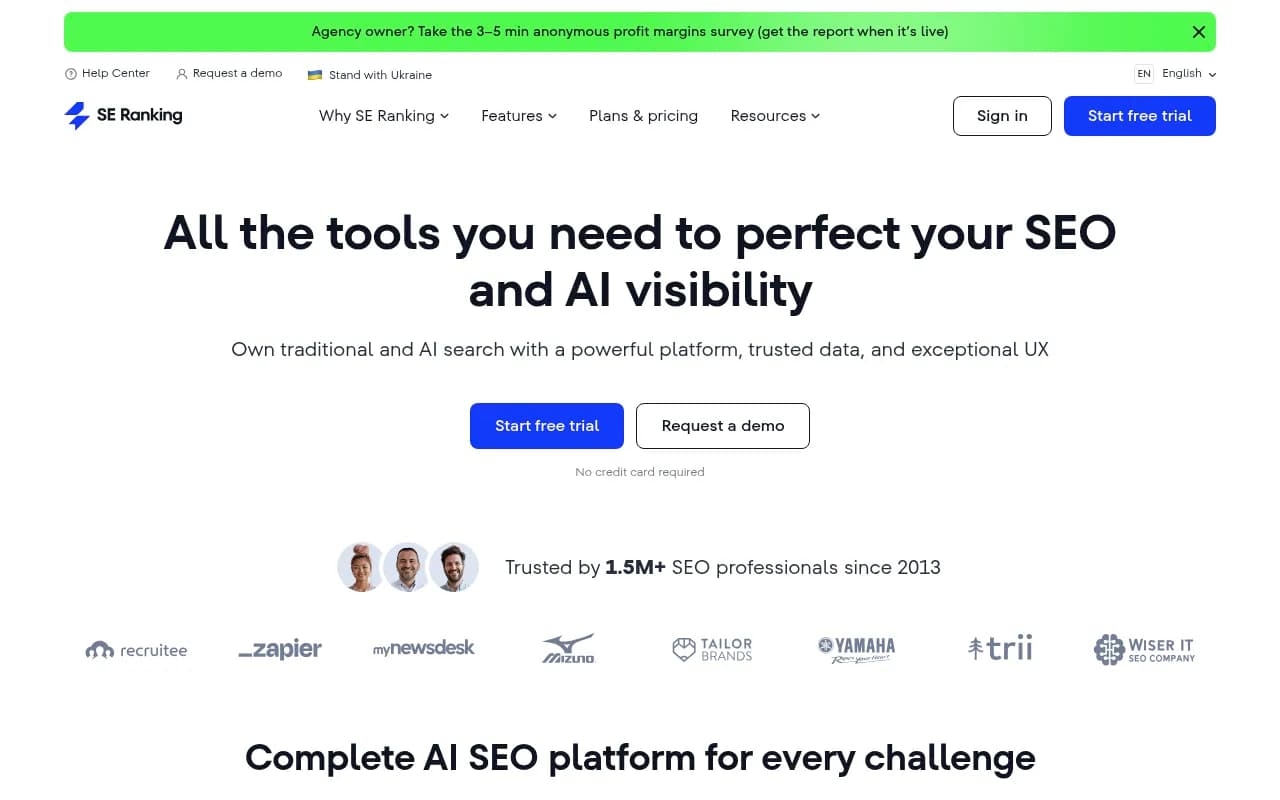
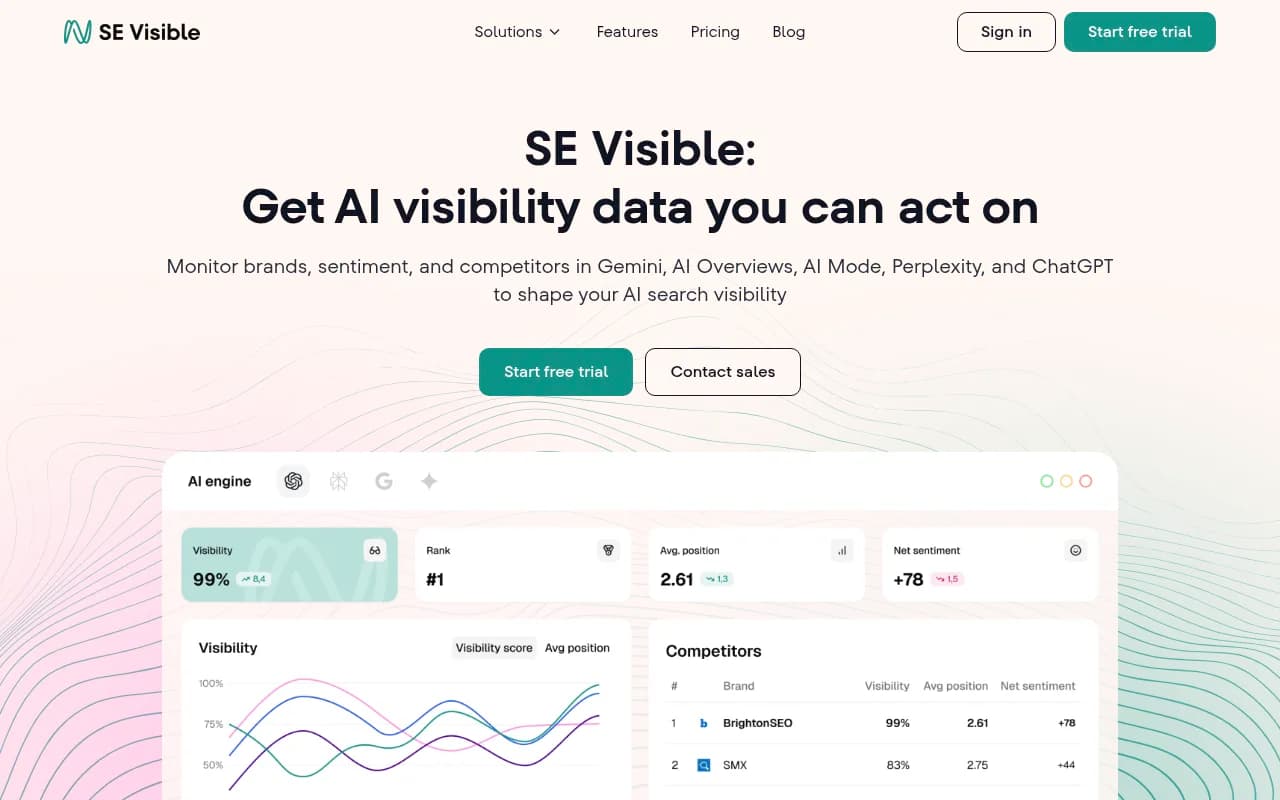
I could not verify SE Ranking's current base plan prices or prompt limits, so check those before you commit. SE Ranking does have a good reputation for clean data. One B2B marketing agency review concluded that all three of the big suites are similar, with SE Ranking winning on clarity of data and Ahrefs close behind.
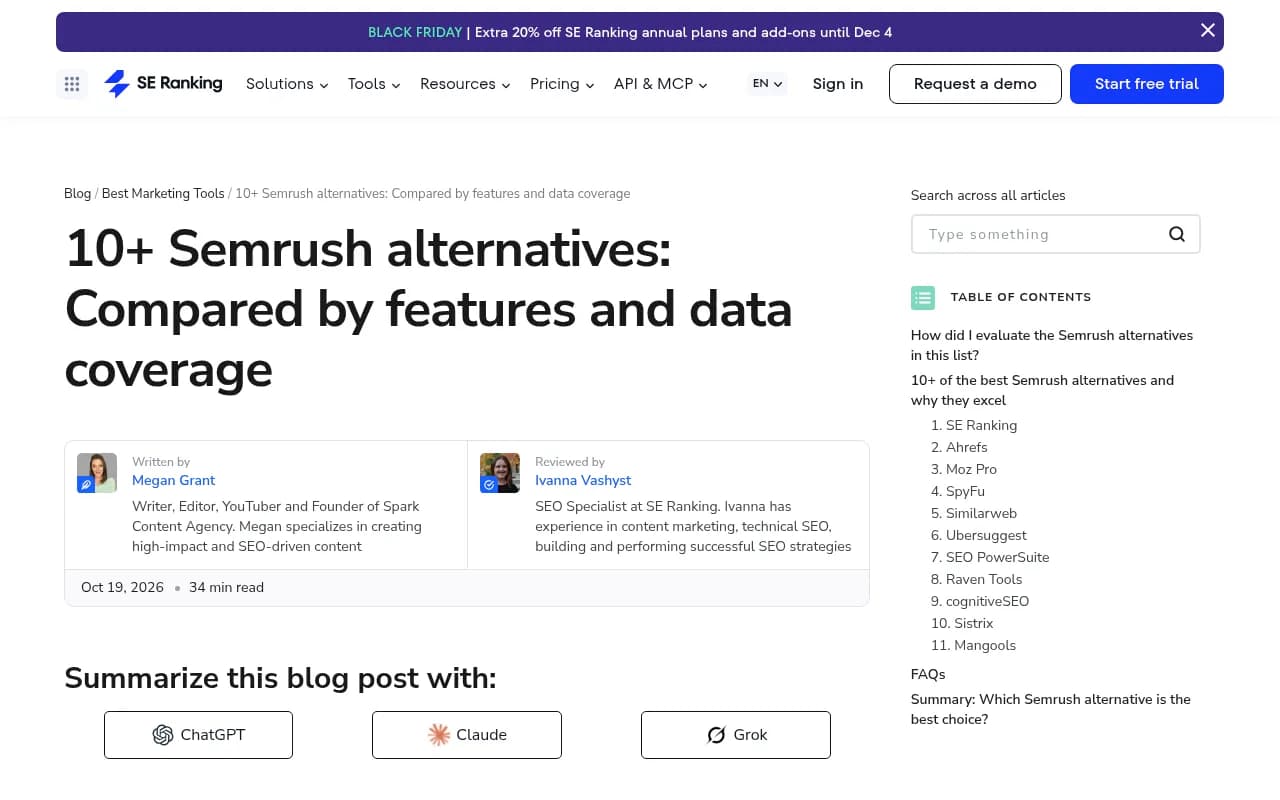
Take that screenshot with salt. It's SE Ranking's own blog ranking SE Ranking first. Still, the underlying point stands: the suites are close enough that the AI add-on, not the core SEO data, is what should drive your decision now.
Why keyword-style tracking misses the point of AI search
Classic SEO tracking assumes one query maps to one ranking list. AI search doesn't work like that.
Promptwatch's data on ChatGPT query fan-outs shows that a single prompt triggers a handful of background web searches. In the measured data, fan-outs averaged 2.15 per response in early December 2025 and about 1.84 by early March 2026, and average query length fell from roughly 117 characters to the high 80s. (ChatGPT query fan-out data). You can read more on how these work in the Promptwatch Academy guide to query fan-outs.
Why this matters: the page that gets cited might rank for a sub-query you never tracked. A keyword tracker never sees that. A tool that exposes the fan-outs does.
Citation counts vary by engine too. Promptwatch's sources-per-response data shows ChatGPT citing about 5 sources per web-search answer, while Google AI Overviews and Perplexity cite about 10. Their advice is to measure each engine separately, since content that misses ChatGPT's shortlist can still make AI Overviews. A single blended "AI visibility" number hides that.
And the sources shift. Promptwatch Data on Reddit citations found reddit.com's share of ChatGPT citations fell from about 4% to 0.5% on August 14, 2026. If your AI visibility strategy leaned on Reddit threads, you'd want to see that in a dashboard that tracks cited sources by platform, not discover it three months later.
Where bundled add-ons usually stop
Based on my research, these are the capabilities worth checking before you decide the add-on is enough:
- Prompt-level tracking at scale, with volumes and difficulty
- Citation and source analysis (which exact URLs and domains the AI cites)
- AI crawler logs, so you know whether GPTBot or ClaudeBot can even read your pages
- Content-gap analysis and content generation tied to missing prompts
- Reddit, YouTube, and LinkedIn source tracking
- Traffic and conversion attribution from AI referrals
I did not directly verify which of these Semrush and SE Ranking lack today, so treat this as a checklist to test in a trial, not a verdict. Ask each vendor, or run the free trial and look for these screens.
Comparison: bundled add-on vs dedicated platform
| Semrush AI Search (Starter) | SE Ranking AI Search add-on | Dedicated GEO platform | |
|---|---|---|---|
| Price (per month) | $199 | $71.20 add-on on top of base plan | Varies; Promptwatch starts at $95 |
| Engines | Google, ChatGPT, Perplexity, Gemini and more | AI Overviews, AI Mode, Perplexity, ChatGPT | Typically all major engines |
| Prompts tracked | 50 daily | Confirm on vendor page | Hundreds to thousands |
| Keeps your SEO suite | Yes | Yes | Separate tool |
| Crawler logs | Not confirmed | Not confirmed | Common in end-to-end platforms |
| Content fixes | Separate Semrush content tools | Separate | Often built in |
| Best for | Teams already in Semrush | Budget-minded teams | Teams treating AI as a channel |
When the add-on is enough
Stay with what you have if:
- AI search is an experiment, and you want a baseline before spending more.
- You track one brand, one market, and a small prompt set.
- Your team already lives in Semrush or SE Ranking and won't open another login.
- Leadership just wants a monthly "are we mentioned" number.
This is a perfectly reasonable place to be. Paying $71 to $199 a month to find out whether AI search matters for your category is cheap.
When you need a dedicated platform
Look at a dedicated tool if:
- You've seen your brand mentioned but not cited, and need to know which pages and sources to fix.
- You manage several brands, markets, or clients (agencies hit limits quickly).
- You need to know if AI crawlers can access your site at all.
- You want content built to fill specific prompt gaps rather than guessing from a keyword list.
- AI referral traffic is showing up in analytics and someone asked for attribution.
There are plenty of options. The GEO software directory at bestgeosoftware.com lists many of them.
The one I'd look at first
Full disclosure: this site is published by 1001 SEO Media, and the agency uses Promptwatch as its GEO platform, so I'm biased. Here's the reasoning, though. Most tools in this category stop at monitoring. Promptwatch tracks the real interfaces of ChatGPT, Gemini, Perplexity, Google AI Overviews, and others, then goes on to show cited sources, IP-verified AI crawler logs, and content gaps. Its Content Agent writes and publishes pages to WordPress, Webflow, or Framer, and visitor analytics measure whether any of it sends traffic.

Pricing, as listed: Essential is $95/mo (50 prompts), Professional is $245/mo (150 prompts, crawler logs), and Business is $579/mo (350 prompts, Content Agent, Fact Check). Annual billing gives 12 months for the price of 10, and there's a 7-day free trial on monthly billing. Confirm everything at promptwatch.com/pricing. There's also a free AI visibility report if you want a no-login look first. If you want to see how it stacks up against your current vendor, see Promptwatch vs Semrush.
Other dedicated and lighter options
If you want to shop around, these are commonly compared:
Profound

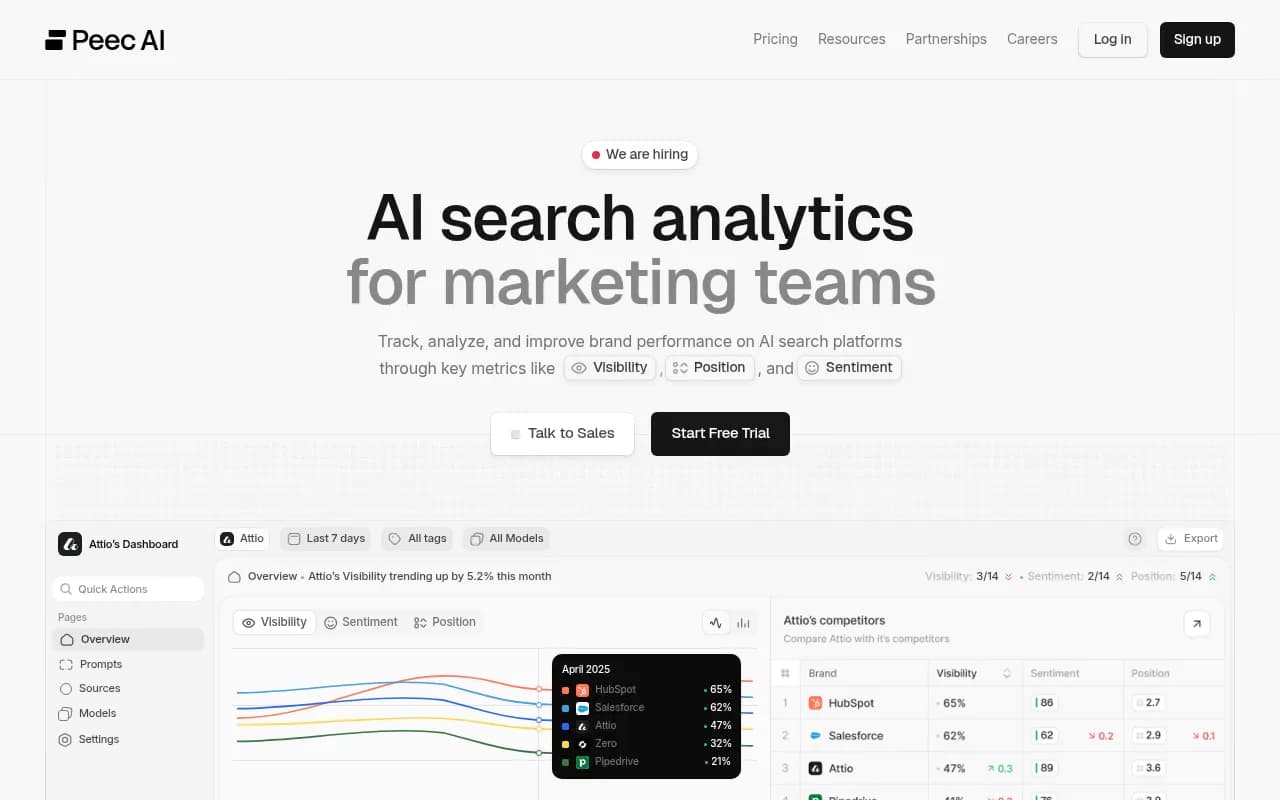
Otterly.AI

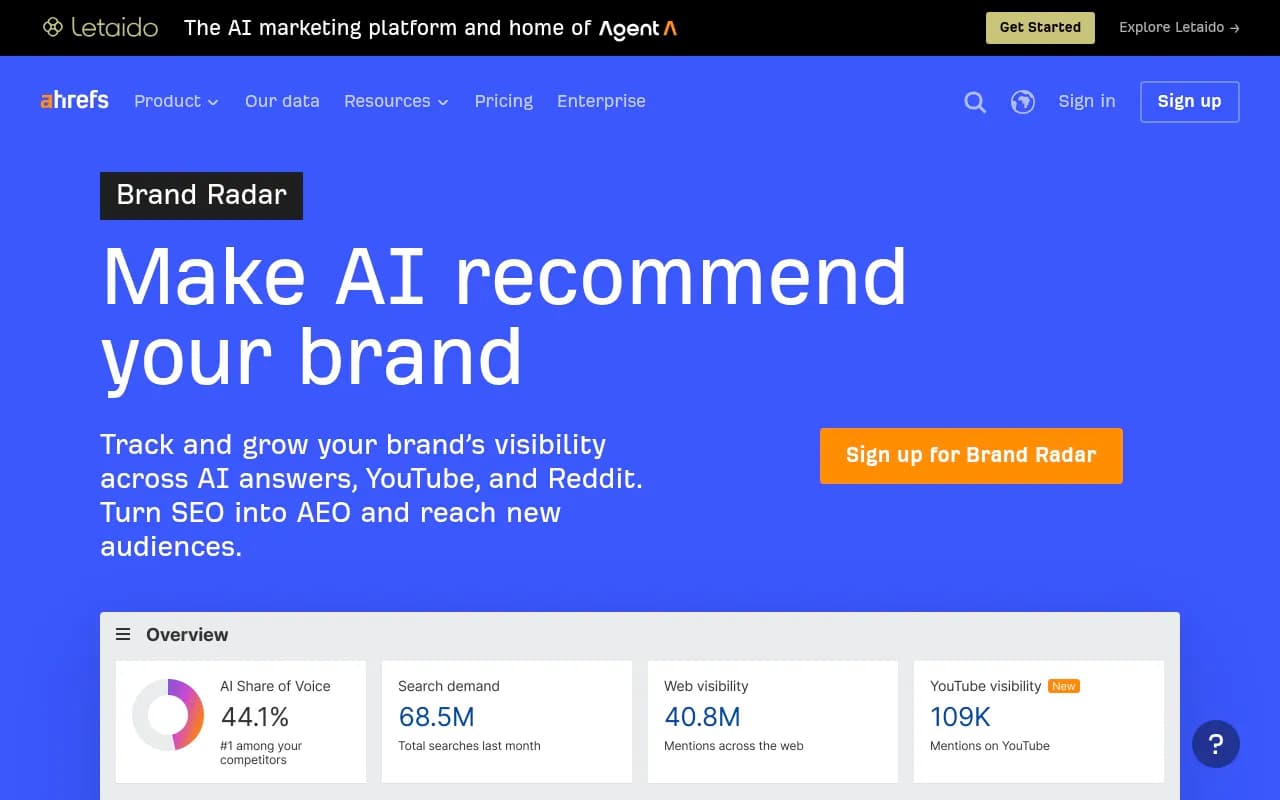
Profound leans enterprise, Peec and Otterly are lighter monitoring tools, and Ahrefs Brand Radar is the Ahrefs equivalent of the Semrush add-on. For a broader list, see the AI rank tracker directory at ai-rank-tools.com.
A practical way to decide
- Turn on the add-on you already have. Semrush Starter or SE Ranking AI Search. Track 30 to 50 prompts that real buyers would ask.
- Run it for 4 to 6 weeks. AI answers are noisy, so a single week tells you little.
- Write down the questions you can't answer. Why was a competitor cited instead of us? Can GPTBot read our pricing page? Which Reddit or YouTube sources are driving answers?
- If you have three or more of those questions, trial a dedicated platform alongside the suite for a month and compare.
- Keep the SEO suite. Backlink data, keyword research, and Google rank tracking aren't going away.
That last point matters. This is rarely an either/or. You pay for the suite for Google SEO and add a GEO platform for the layer the suite can't see.
Cost reality check
Say you're on Semrush's SEO plan at $139/mo. Moving to Starter costs $60 more and gets you 50 prompts. Adding Promptwatch Essential at $95/mo alongside it gets you roughly the same prompt count with a different feature set, and would cost about $234 total. Jumping to Semrush Pro+ is $299/mo. These are rough, list-price comparisons, so run the numbers with your real plan and annual discounts.
The cheapest choice is the one you stop using after two months, so pick based on which dashboard your team will actually open.
FAQ
Can I cancel Semrush or SE Ranking if I buy a dedicated AI platform?
Usually no. Dedicated GEO platforms track AI answers, not backlinks or Google keyword rankings. Most teams run both.
Is 50 tracked prompts enough?
For a single product in a narrow category, yes, to start. For multiple products, markets, or personas, it fills up quickly.
Do the add-ons track ChatGPT accurately?
I couldn't verify how each vendor collects its data. Ask whether they capture the real ChatGPT interface or API output, since citations can differ between them.
Is AI search worth paying for at all yet?
If your buyers research with ChatGPT or Google AI Overviews, a $71 to $199 baseline is a low-risk way to find out. For deeper reading on benchmarks, browse Promptwatch Data.
Bottom line
Start with the AI module in the suite you already pay for. Stay there if all you need is a mention count. Move to a dedicated platform when your questions shift from "are we visible" to "why not, and what do we publish to fix it." That shift usually happens within a quarter.