Key takeaways
- Hall, KIME, and Dageno AI are all newer entrants in the AI visibility and GEO monitoring space, each with a distinct positioning
- KIME is the most feature-complete of the three, tracking 10 AI models with a dedicated optimization layer called the Action Centre
- Dageno AI focuses on brand visibility products and optimization recommendations, with a strong editorial presence in the space
- The AI visibility category is maturing fast -- monitoring alone is no longer a differentiator, and tools that help you act on data are pulling ahead
- For teams that need end-to-end tracking, content gap analysis, and content generation in one platform, more established options like Promptwatch cover ground that newer tools are still building toward
The AI visibility tool market has gone from a handful of startups in 2024 to a crowded field of 30+ platforms by mid-2026. Most of them do roughly the same thing: query AI models on your behalf, count how often your brand appears, and show you a dashboard.
Three names that keep coming up in discussions -- particularly among marketers exploring alternatives to the bigger platforms -- are Hall, KIME, and Dageno AI. None of them are household names yet, but each has carved out a specific angle worth understanding.
This guide breaks down what each tool actually does, where they're genuinely useful, and where they fall short compared to more established platforms.
Why the "emerging" label matters right now
Before diving into the tools, it's worth saying something about the category itself.
AI visibility monitoring became a real market need around 2024, when it became clear that ChatGPT, Perplexity, and Google AI Overviews were routing meaningful traffic -- and that brands had no idea whether they were showing up in those answers or not. The first tools to market were essentially manual query automators: send a prompt, record the response, repeat.
That was useful. But by 2026, the bar has shifted. Monitoring alone doesn't help you do anything. The tools that are winning are the ones that close the loop -- they show you where you're invisible, tell you why, and help you create content that fixes it.
KIME's own research (published April 2026) notes that ChatGPT now accounts for roughly 20% of global search traffic, and that AI-referred visits convert at 3x to 9x the rate of traditional Google organic. Those numbers explain why every SEO and marketing team is suddenly paying attention to this category.
The question for Hall, KIME, and Dageno AI is whether they've built something that goes beyond the monitoring layer.
KIME
KIME is probably the most developed of the three tools covered here. It's a European platform (pricing in euros) that has positioned itself as an end-to-end AI visibility solution rather than just a tracker.
What it does
KIME tracks 10 AI models -- ChatGPT, Perplexity, Gemini, Claude, and others -- and reports on brand mention rate, share of voice, citation rate, placement, and sentiment. The entry tier starts at €149/month and includes multi-seat access, which is genuinely unusual at that price point. Most competitors charge per seat or restrict collaboration features to higher tiers.
The feature that sets KIME apart from basic monitoring tools is its Action Centre -- a dedicated section for optimization recommendations. Rather than just showing you where you're not appearing, it surfaces specific actions you can take to improve visibility. That's a meaningful step toward the "find gaps, fix gaps" workflow that separates useful platforms from data dashboards.
KIME also supports multi-brand and multi-country tracking, which makes it viable for agencies and enterprise teams managing multiple properties.
Otterly.AI

Where it fits
KIME is a solid choice for teams that want broad LLM coverage and some optimization guidance without jumping to enterprise pricing. At €149/month for the entry tier with multi-seat access, it's competitively priced for small-to-mid-size marketing teams.
The Action Centre is promising, but it's worth noting that KIME's content generation capabilities are more limited compared to platforms that have built full content agent workflows. If your team needs to go from "gap identified" to "article published" in one tool, KIME gets you partway there.
Dageno AI
Dageno AI takes a different approach. Rather than positioning primarily as a monitoring platform, it has built a content presence around AI visibility optimization -- publishing comparison guides and analysis of the broader tool landscape.
What it does
Dageno AI's core product tracks brand mentions across AI search engines and provides visibility scoring. Its blog (dageno.ai/blog) has become a reference point for marketers researching the space, with content like "AI Visibility Products With the Best Optimization" that compares multiple platforms head-to-head.
This editorial strategy is smart. In a category where buyers are actively researching tools, being the source that explains the category builds credibility and drives organic discovery. It's a GEO play in its own right -- Dageno is using content to appear in AI answers about AI visibility tools.
Where it fits
Dageno AI is worth watching if you're in the research phase and want a platform that clearly understands the optimization side of AI visibility, not just the tracking side. Its content suggests a team that thinks carefully about what brands actually need to do to improve their AI presence.
That said, Dageno is newer and less documented in terms of specific feature depth, pricing tiers, and LLM coverage compared to KIME or more established platforms. It's a tool to evaluate carefully with a trial rather than commit to based on its content alone.
Hall
Hall is the least publicly documented of the three. It appears in discussions of emerging AI visibility tools but has a smaller footprint in terms of published comparisons, reviews, and feature breakdowns.
What it does
Hall focuses on brand monitoring across AI-generated answers, with reporting on how often and in what context a brand appears. The positioning leans toward simplicity -- a cleaner interface and faster setup compared to more complex enterprise tools.
Where it fits
Hall may be a reasonable starting point for teams that are new to AI visibility monitoring and want to get oriented without a steep learning curve. But the limited public documentation makes it harder to evaluate against specific use cases, and the lack of optimization features (content generation, gap analysis, crawler logs) means it sits firmly in the monitoring-only tier.
If your team is at the "we need to understand what's happening" stage, Hall could work. If you're at the "we need to fix what's happening" stage, you'll likely outgrow it quickly.
How all three compare
Here's a side-by-side look at the three tools across the dimensions that matter most in 2026:
| Feature | Hall | KIME | Dageno AI |
|---|---|---|---|
| AI models tracked | Limited (unclear) | 10 | Multiple (unclear) |
| Starting price | Not publicly listed | €149/mo | Not publicly listed |
| Multi-seat access | Unknown | Yes (entry tier) | Unknown |
| Optimization layer | No | Yes (Action Centre) | Partial |
| Content generation | No | Limited | No |
| Multi-brand/country | Unknown | Yes | Unknown |
| Crawler/agent logs | No | Unknown | No |
| Free trial | Unknown | Unknown | Unknown |
| Best for | Simple monitoring | End-to-end GEO, agencies | Research + monitoring |
The honest summary: KIME is the most complete of the three. Hall and Dageno AI are worth knowing about, but both have gaps that matter if you're trying to actually improve your AI visibility rather than just measure it.
The broader context: where these tools sit in the market
It helps to zoom out. The AI visibility tool market in 2026 has a few distinct tiers:
Monitoring-only tools track mentions and report metrics. Most of the newer entrants, including Hall and (to a degree) Dageno AI, fall here. They're useful for awareness but don't help you act.
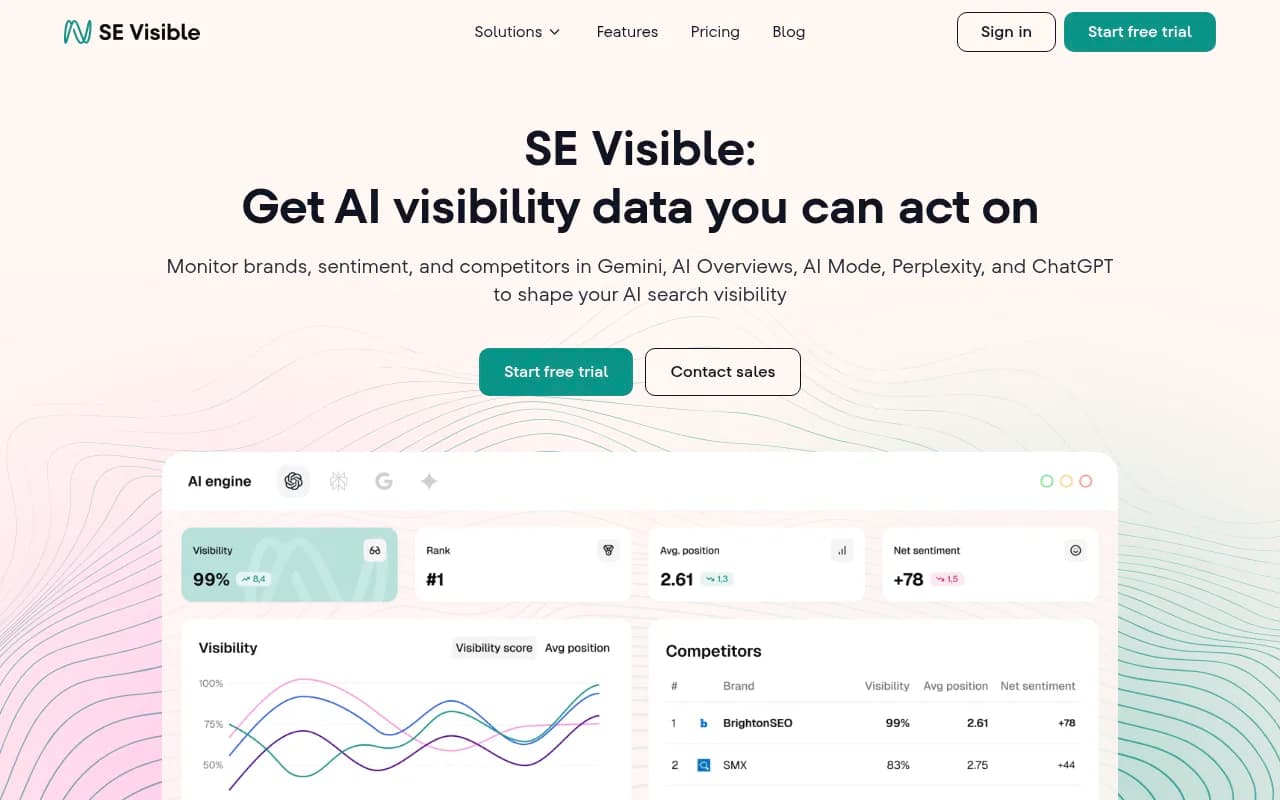
Monitoring + optimization tools go further. KIME's Action Centre puts it in this tier, as do platforms like Otterly.AI and SE Visible, though each has different depth.
End-to-end platforms close the full loop: find gaps, generate content, track results. This is where the category is heading, and where the biggest ROI lives. Platforms like Promptwatch sit here -- tracking 10+ AI models, running content gap analysis, generating articles grounded in real prompt data, and connecting visibility to actual traffic attribution.

The distinction matters because monitoring without action is just anxiety. Knowing that a competitor appears in 40% of ChatGPT responses about your category and you appear in 8% is useful data -- but only if you can do something about it.
What to look for when evaluating any AI visibility tool
Whether you're considering Hall, KIME, Dageno AI, or any other platform, these are the questions worth asking:
LLM coverage: Does it track the models your buyers actually use? ChatGPT, Perplexity, and Google AI Overviews are the minimum. Claude, Gemini, Grok, and DeepSeek matter depending on your audience.
Prompt quality: Are the prompts it uses to query AI models representative of how real buyers search? Fixed, generic prompts produce misleading data. You want prompts built around actual buyer intent.
Optimization features: Does the tool tell you what to do, or just what's happening? Gap analysis, content briefs, and content generation are what separate useful platforms from dashboards.
Crawler logs: Can you see when AI crawlers (GPTBot, ClaudeBot, PerplexityBot) visit your site, which pages they read, and what errors they hit? This is a significant capability gap between monitoring tools and full-stack platforms.
Traffic attribution: Can you connect AI visibility to actual website visits and revenue? Without this, you're optimizing for a metric you can't tie to business outcomes.
Pricing transparency: Hidden pricing is a red flag in a category where you need to commit to ongoing monitoring. If a tool won't publish its pricing, that's worth noting.
Alternatives worth considering alongside these three
If you're evaluating Hall, KIME, and Dageno AI, you should probably also look at a few other tools in the same tier:
Otterly.AI

And if you want to see what a more complete platform looks like -- one that goes beyond monitoring into content gap analysis, AI content generation, and crawler log analysis -- Promptwatch is the clearest example of where the category is heading.
Final take
Hall, KIME, and Dageno AI are all real products addressing a real problem. KIME is the most developed, with the broadest LLM coverage and an actual optimization layer. Dageno AI has a smart content strategy and clearly understands the space. Hall is simpler and less documented.
None of them are wrong choices for the right team at the right stage. But the AI visibility category is moving fast, and the tools that will matter most in 12 months are the ones that help you act on data, not just collect it. Keep that in mind as you evaluate.