Key takeaways
- Traditional brand monitoring tools (Brand24, Mention, Brandwatch) don't tell you what ChatGPT, Perplexity, or Gemini say about your brand -- you need a dedicated AI visibility layer
- A complete enterprise stack has four components: crawler log monitoring, prompt tracking, citation analysis, and content gap/optimization workflows
- Most tools on the market only cover one or two of these layers -- you'll need to combine them or choose a platform that handles the full loop
- Cited domains change 40-60% month over month across major AI platforms, so single-sample monitoring produces noise, not signal
- The gap between "monitoring" and "optimization" is where most enterprise teams are currently stuck
If your marketing team is still measuring AI search performance with a spreadsheet of brand mentions, you're not alone -- but you're also not measuring the right thing.
AI-generated answers now resolve a meaningful share of high-intent queries without producing a click. When ChatGPT answers "what's the best enterprise CRM for a 200-person team," the citation is the conversion. Your Google ranking is irrelevant to that answer. Your domain authority doesn't appear in the response. What matters is whether the model has enough quality signal about your brand to include you -- and whether your content is structured in a way that makes you citable.
Building a monitoring stack that actually captures this requires thinking in layers. This guide walks through each one.
Why traditional brand monitoring falls short
Tools like Brandwatch, Meltwater, and Brand24 are built for social listening and news coverage. They track mentions across the open web, social platforms, and press. That's genuinely useful -- but it's a different problem from AI visibility.
Promptwatch published data showing that cited domains change 40-60% month over month across major AI platforms. A citation you earned last week can disappear because a competitor published fresher content, because the model re-weighted its sources, or because your page structure changed in a way that made it harder to parse.

Traditional monitoring tools don't see any of this. They don't run prompts. They don't parse AI responses. They don't track which URLs are being cited, or by which models, or for which queries. They're measuring the web. AI search is a different layer entirely.
There's also the non-determinism problem. The same prompt can produce different citations on different runs. Tools that sample once per prompt per day are measuring randomness. Enterprise-grade monitoring needs repeated sampling across multiple models to produce statistically meaningful data.
The four layers of an enterprise AI monitoring stack
A complete stack in 2026 looks like this:
| Layer | What it answers | Key data sources |
|---|---|---|
| Crawler log monitoring | "Are AI bots crawling my site, and what are they reading?" | Server logs, CDN logs, Cloudflare/Fastly/Vercel integrations |
| Prompt tracking | "Do we appear in AI answers for our target queries?" | Scheduled prompt runs across ChatGPT, Perplexity, Gemini, etc. |
| Citation analysis | "Which specific URLs are being cited, and by which models?" | Response parsing, URL attribution, competitor citation data |
| Content gap + optimization | "What content do we need to create or fix to improve visibility?" | Answer gap analysis, content briefs, AI writing workflows |
Most tools cover one or two of these. Very few cover all four. Let's go through each.
Layer 1: Crawler log monitoring
This is the most underrated layer -- and the one most enterprise teams skip entirely.
AI crawlers (GPTBot, ClaudeBot, PerplexityBot, Googlebot-Extended) hit your site constantly. They're reading your pages, indexing your content, and deciding what's worth citing. If you're not watching those logs, you have no idea which pages are being read, which are returning errors, how often each crawler returns, or when a page moves from "crawled" to "cited."
What to monitor
- Which AI crawlers are hitting your site (GPTBot, ClaudeBot, PerplexityBot, Bingbot for Copilot)
- Which pages they're reading most frequently
- HTTP errors (404s, 500s, redirects) that might be blocking crawl
- Crawl frequency per page -- a page crawled 40 times a month is more likely to be cited than one crawled twice
- Time from first crawl to first citation (this tells you how fast each model's pipeline moves)
How to set this up
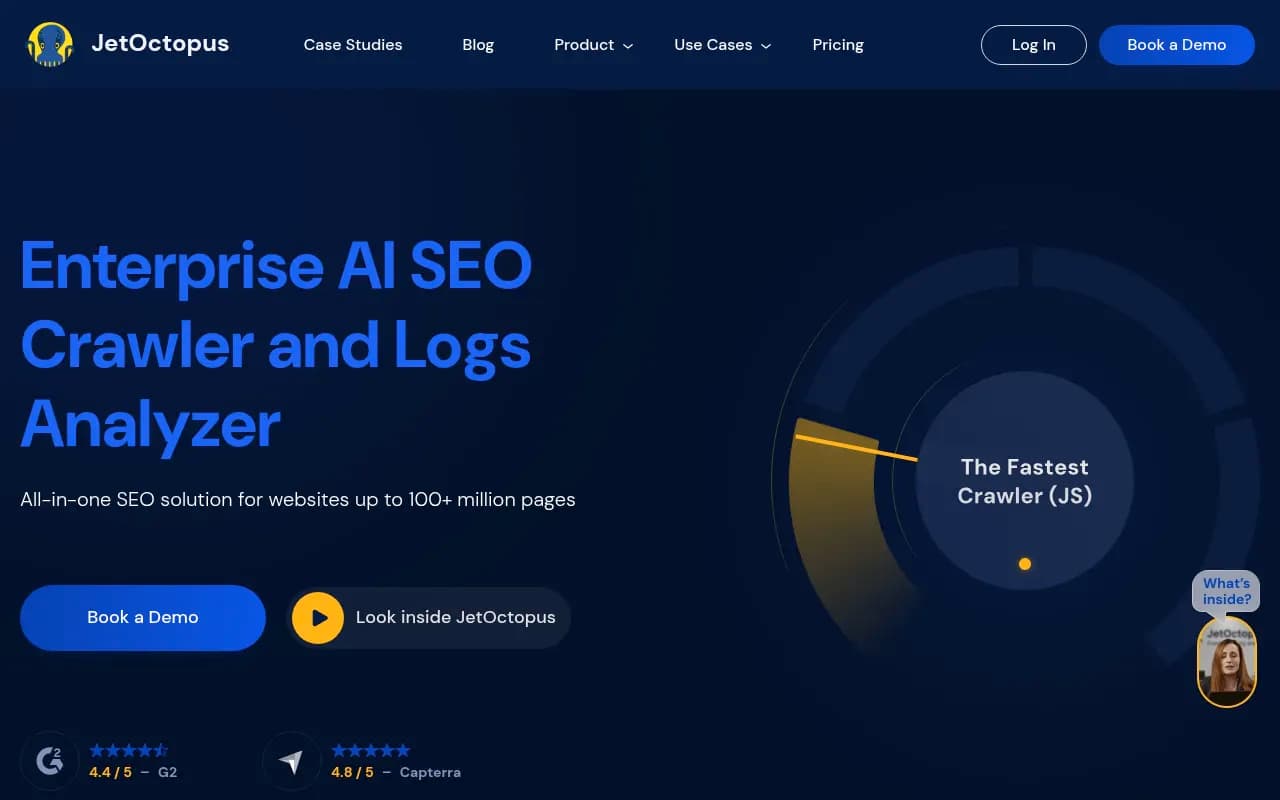
If you're on Cloudflare, Fastly, or Vercel, you can pipe your edge logs directly into a monitoring platform. Server log analysis tools like JetOctopus work well for large sites with complex crawl patterns.
For teams that want crawler data integrated with their AI visibility dashboard rather than in a separate tool, Promptwatch connects via Cloudflare, Fastly, Vercel, server logs, Google Search Console, or a tracking snippet. The crawler log view shows which pages AI agents are reading, errors they encounter, and the timeline from crawl to citation -- all in one place.
Layer 2: Prompt tracking
This is the core of AI brand monitoring: running prompts on a schedule across multiple AI engines and tracking whether your brand appears, in what context, and with what sentiment.
What good prompt tracking looks like
Bad prompt tracking: run 10 prompts once a day, check if your brand name appears.
Good prompt tracking: run 50-200 prompts multiple times per day across 5+ AI engines, track citation share (not just mention rate), capture the exact URLs cited, measure sentiment and recommendation framing, and compare your visibility against named competitors.
The distinction matters because:
- Single-sample runs produce noisy data due to model non-determinism
- Mention rate (did they say our name?) is less valuable than citation share (did they link our page?) and recommendation rate (did they recommend us?)
- Cross-model divergence is real -- ChatGPT and Perplexity often cite completely different sources for the same query
Choosing your prompt set
Enterprise teams typically track three types of prompts:
- Brand prompts ("What is [Company]?", "Is [Company] good for X?")
- Category prompts ("Best [product category] for [use case]")
- Competitor comparison prompts ("Compare [Company] vs [Competitor]")
The category and comparison prompts are where most of the value is. They reflect how real buyers actually use AI search -- not by searching for your brand directly, but by asking for recommendations in your category.
Tools like Promptwatch provide prompt volume estimates and difficulty scores so you can prioritize high-value, winnable prompts rather than guessing. The query fan-out feature shows how one prompt branches into sub-queries, which is useful for mapping out the full prompt landscape for a given topic.
Here's a comparison of the main prompt tracking tools available in 2026:
| Tool | Models tracked | Prompt scheduling | Citation URL tracking | Content generation |
|---|---|---|---|---|
| Promptwatch | 10+ (ChatGPT, Perplexity, Gemini, Claude, Grok, DeepSeek, etc.) | Yes, with volume scoring | Yes, page-level | Yes, AI Content Agents |
| Profound | 9+ | Yes | Partial | No |
| Otterly.AI | 5 | Yes | Limited | No |
| Peec AI | 4-5 | Yes | Yes | No |
| AthenaHQ | 5+ | Yes | Partial | No |
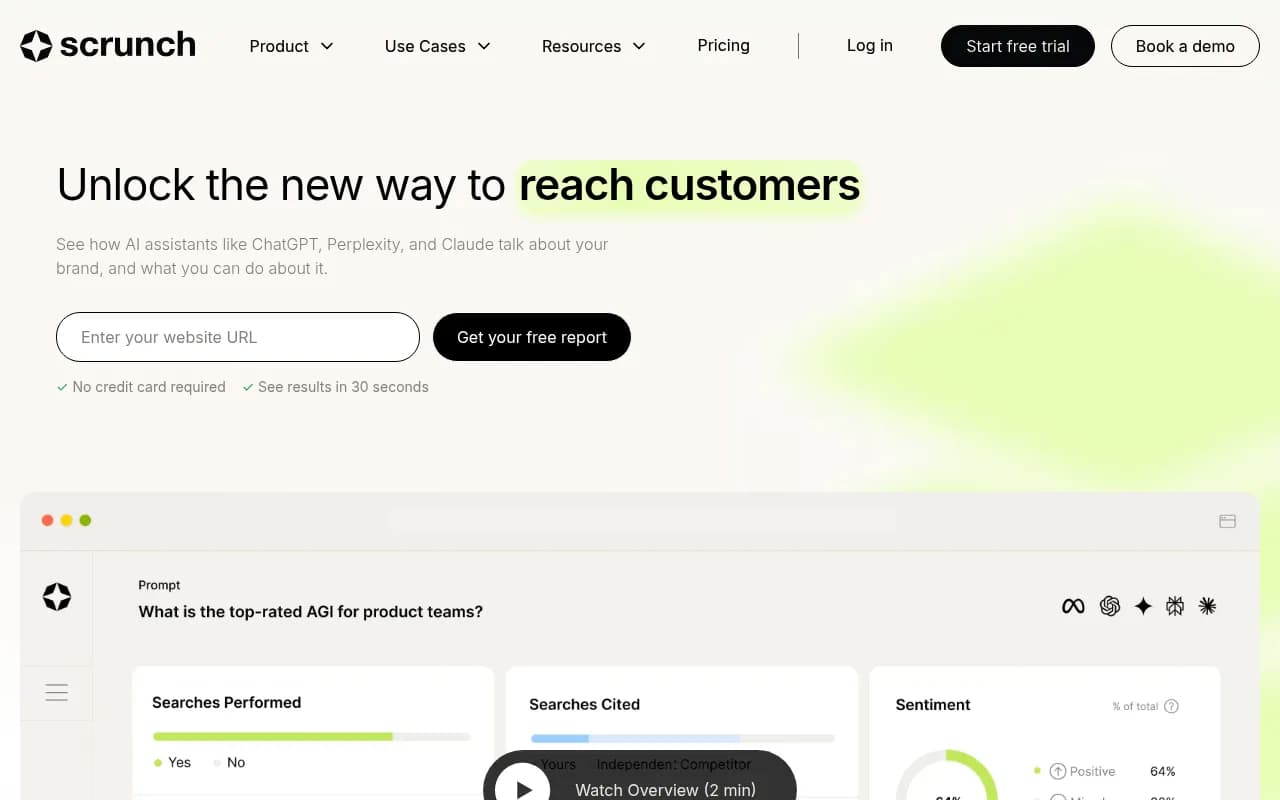
| Scrunch AI | 4+ | Yes | Yes | No |
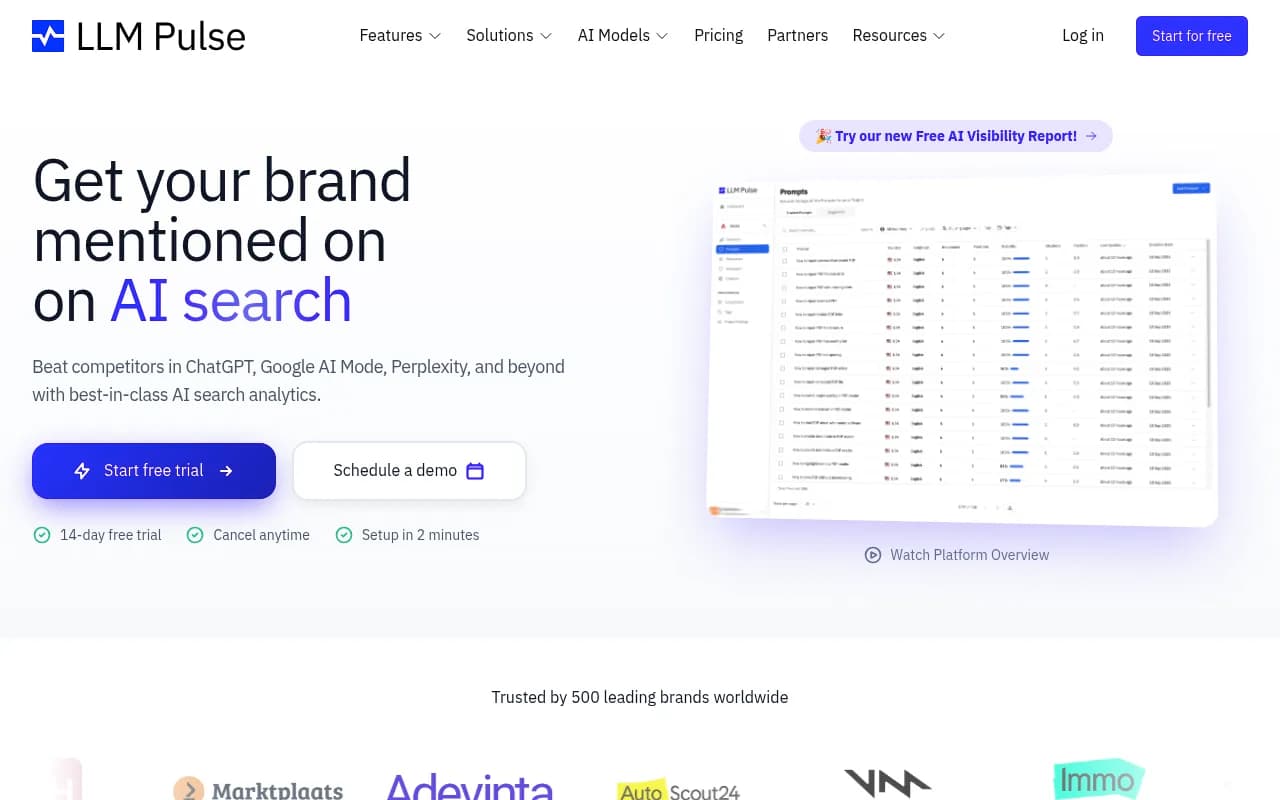
| LLM Pulse | 5 | Basic | No | No |
Profound

Otterly.AI



Layer 3: Citation analysis
Citation tracking goes deeper than prompt monitoring. It answers: which specific pages are being cited, for which prompts, by which models, and how does that compare to competitors?
This is where you start to understand the mechanics of AI visibility rather than just the outcomes.
What citation analysis reveals
- Which of your pages are actually being cited (often not the ones you'd expect)
- Which competitor pages are being cited instead of yours for target prompts
- Which external sources -- Reddit threads, YouTube videos, third-party review sites -- are influencing AI recommendations in your category
- Citation velocity: is your share increasing or decreasing over time?
The external citation piece is particularly important for enterprise brands. AI models don't just cite your own domain. They cite Reddit discussions, industry publications, comparison sites, and YouTube reviews. If a Reddit thread from 18 months ago is driving negative AI recommendations in your category, you need to know that.
Tools for citation analysis
Several platforms have built citation tracking as their primary feature:
Scrunch AI focuses on citation patterns and topic coverage -- it's good at explaining why content gets picked. Peec AI is citation-first and shows source attribution by model. For teams that want citation data integrated with prompt tracking and content workflows, Promptwatch's citation and source analysis shows exactly which pages, Reddit threads, YouTube videos, and domains AI models cite, with offsite citation tracking for external mentions.
Layer 4: Content gap analysis and optimization
This is where monitoring becomes optimization -- and where most enterprise teams are currently stuck.
The typical situation: a team has set up prompt tracking, they can see they're invisible for 60% of their target prompts, and they have no clear path from that data to fixing it. The monitoring tool shows the problem. It doesn't help solve it.
Content gap analysis maps your current content against AI responses to identify exactly which topics, angles, and questions AI models want answers to but can't find on your site. The output is a prioritized list of content to create or update.
What a content gap workflow looks like
- Run your target prompts across AI engines
- For each prompt where you're not cited, analyze what is cited -- which pages, what topics they cover, what questions they answer
- Identify the gaps: topics your site doesn't address, questions you haven't answered, angles competitors have covered that you haven't
- Generate content briefs grounded in that data
- Create and publish content
- Track whether AI models start citing the new pages
The cycle from publish to crawl to citation typically takes 2-6 weeks depending on the model and your site's crawl frequency. Monitoring that timeline is how you know whether your content strategy is working.
Promptwatch's Content Agents generate articles, listicles, comparisons, and briefs grounded in real prompt data, citation data, prompt volumes, persona targeting, search results, screenshots, brand guidance, and competitor analysis. The agent analytics feature shows the timeline from publish to crawl to citation, so you can close the loop between content creation and visibility improvement.
How to assemble the stack
There are two approaches: build a multi-tool stack, or consolidate onto a platform that covers multiple layers.
Multi-tool approach
This is common at larger enterprises with existing tool contracts and specialized teams:
- Crawler logs: JetOctopus or server log analysis via Cloudflare/Fastly
- Prompt tracking: Profound or AthenaHQ for enterprise reporting
- Citation analysis: Scrunch AI or Peec AI
- Content gap + creation: Writesonic or a custom workflow
The downside is data fragmentation. Each tool has its own data model, and connecting insights across layers requires manual work or custom integrations.

Consolidated platform approach
For teams that want a single source of truth, a platform that covers all four layers is more practical. Promptwatch covers crawler log monitoring, prompt tracking across 10+ AI models, citation analysis (including offsite citations), content gap analysis, and AI content generation -- with traffic attribution connecting visibility to actual revenue.
The consolidated approach is particularly valuable for agencies managing multiple brands, where the overhead of running four separate tools per client becomes unsustainable.
Setting up your dashboard
Once you have data flowing from each layer, the dashboard question is: what do you actually report on?
Metrics that matter for executive reporting
- AI citation share: what percentage of target prompts result in a citation of your domain, vs. competitors
- Share of voice by model: how does your visibility compare across ChatGPT, Perplexity, Gemini, etc.
- Recommendation rate: for category prompts, how often does the AI recommend your brand?
- Citation velocity: is your share trending up or down over the past 30/60/90 days?
- Top cited pages: which pages are driving the most AI citations
Metrics that matter for the content team
- Prompt gaps: which target prompts produce zero citations of your domain
- Competitor citation analysis: which competitor pages are being cited for your target prompts and why
- Crawl frequency by page: which pages are AI bots reading most, and which are being ignored
- Content-to-citation timeline: how long after publishing does a page start getting cited
For teams using Looker Studio or custom BI tools, Promptwatch's API and Looker Studio integration let you pull this data into existing reporting infrastructure.
Common mistakes enterprise teams make
A few patterns come up repeatedly when teams are building this stack for the first time:
Tracking only brand prompts. Category and comparison prompts are where buyers actually make decisions. If you're only monitoring "what is [Company]," you're missing the queries that drive pipeline.
Single-model monitoring. ChatGPT and Perplexity cite different sources for the same query. A brand that's well-cited in Perplexity might be nearly invisible in ChatGPT. You need cross-model data to understand your actual exposure.
Ignoring offsite citations. If a competitor's product page is being cited, that's one problem. If a Reddit thread calling your pricing confusing is being cited, that's a different problem requiring a different response.
No connection to content production. Monitoring without a workflow to act on the data is expensive noise. The value comes from closing the loop: find gaps, create content, track results.
Treating AI visibility as separate from traditional SEO. They're related but not identical. A page can rank first on Google and be completely absent from ChatGPT's answer to the same query. Enterprise teams need both layers, but they need to understand they're different measurement problems.
Where to start
If you're building this stack from scratch in 2026, here's a practical sequence:
-
Start with prompt tracking. Pick 20-30 high-value category and comparison prompts. Run them across at least three AI engines (ChatGPT, Perplexity, Google AI Overviews). Establish a baseline.
-
Add crawler log monitoring. Connect your CDN or server logs to understand which pages AI bots are actually reading. This context makes your prompt data much more actionable.
-
Run a content gap analysis. For the prompts where you're invisible, identify what's being cited instead and why. This is the input to your content roadmap.
-
Build the optimization loop. Create content targeting the identified gaps, publish it, and track the time from crawl to citation. Iterate.
-
Build executive reporting. Once you have 60-90 days of data, you can show citation share trends, competitive position, and the connection between content investment and visibility improvement.
The tools exist to do all of this. The harder part is organizational: getting buy-in to treat AI search visibility as a primary marketing metric, not an experiment. That case gets easier every quarter as AI search traffic grows and traditional click-through rates continue to compress.