Key takeaways
- Surfer SEO is a content optimization tool at its core -- it scores your content against top-ranking pages and tells you what to change. It does this very well.
- Scalenut is built around the full SEO content lifecycle: keyword research, topic clustering, brief generation, AI writing, and optimization in one platform.
- If you already have a writing workflow and just need better on-page guidance, Surfer SEO fits neatly into it. If you want to reduce the number of tools you're juggling, Scalenut makes more sense.
- Neither tool is built for AI search visibility (ChatGPT, Perplexity, Google AI Overviews). That's a separate problem requiring a different category of tool.
- Price matters: Scalenut tends to bundle more features at lower price points, while Surfer SEO charges more for its deeper optimization capabilities.
There's a version of this comparison that's easy to write: list the features side by side, declare a winner, done. But that misses the actual question most people are asking, which is: "I'm trying to rank content on Google in 2026 -- which of these tools actually moves the needle?"
The honest answer is that they're solving slightly different problems. And depending on where your content workflow breaks down, one will be dramatically more useful than the other.
Let me walk through what each tool actually does, where each one falls short, and how to figure out which one fits your situation.
What Surfer SEO actually does
Surfer SEO is a content optimization platform. Its core product is the Content Editor -- a real-time scoring interface that analyzes the top-ranking pages for your target keyword and tells you how your draft compares. You get a content score, keyword suggestions, recommended word count, heading structure guidance, and NLP term recommendations.
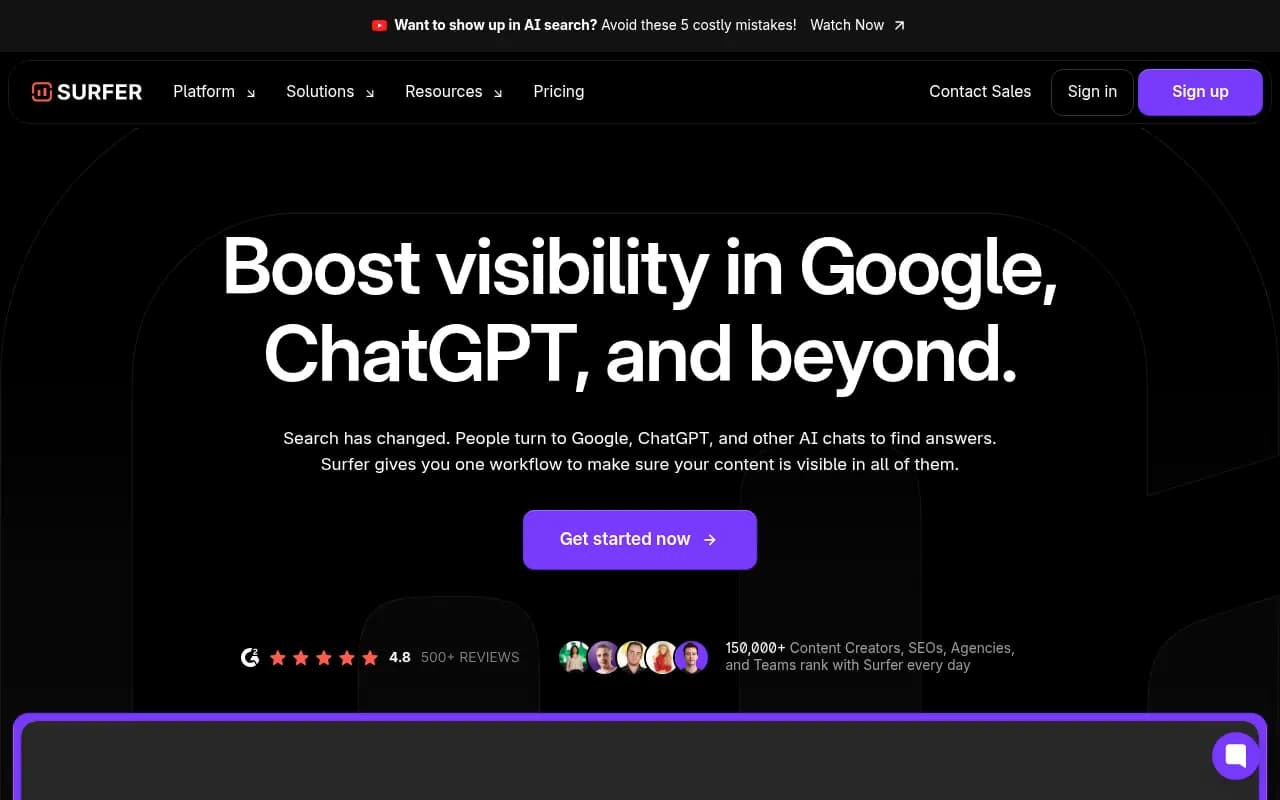
The SERP Analyzer is genuinely useful. It pulls data from the actual pages ranking for your keyword and surfaces patterns: how long are the top articles, how many headings do they use, which terms appear most frequently. This isn't guesswork -- it's based on what's actually working right now for that specific query.
Surfer also has a keyword research tool and an AI writing feature (Surfer AI), which can generate a full draft inside the Content Editor. More recently, they've added Topical Maps for planning content clusters.
Where Surfer shines is in the optimization phase. If you have a draft -- whether you wrote it yourself, had a freelancer write it, or generated it with an AI tool -- Surfer gives you a structured way to improve it before publishing. The content score gives writers and editors a shared benchmark, which is useful for teams.
Where it gets more complicated is workflow coverage. Surfer has expanded beyond pure optimization, but its keyword research and content planning features aren't as deep as dedicated tools. You'll often find yourself using Surfer alongside Ahrefs or Semrush for research, then bringing content into Surfer for the optimization pass.
One thing worth knowing: content scores can become a trap. A Quora thread from 2026 noted that Surfer combined with Claude remains popular for optimization, but the risk is content that hits the score but reads like a SERP digest -- technically correct, no original voice. The score is a proxy for quality, not quality itself.
What Scalenut actually does
Scalenut positions itself as an end-to-end SEO content platform. The idea is that you shouldn't need five different tools to go from keyword idea to published article -- Scalenut handles research, clustering, brief creation, AI writing, and optimization in one place.

The Cruise Mode feature is the most distinctive part of the product. You enter a keyword, and Scalenut walks you through a structured workflow: it pulls competitor data, generates a content brief, and then writes a full draft. The whole process is more guided than Surfer's approach, which assumes you're bringing your own content to optimize.
Scalenut's keyword clustering is solid. It groups related keywords by search intent and helps you plan a content strategy around topic clusters rather than individual articles. This is genuinely useful for teams that are building out a content program from scratch or trying to identify gaps in an existing one.
The content optimizer in Scalenut is similar in concept to Surfer's Content Editor -- it scores your content against competitors and suggests terms to include. It's not quite as granular as Surfer's scoring, but it covers the core use case.
Scalenut has also been expanding its AI search capabilities, with features around AI visibility tracking. The platform is trying to cover more of the modern SEO picture, not just traditional Google rankings.
Pricing is generally more inclusive. Features that Surfer charges extra for are often bundled into Scalenut's base plans.
Head-to-head comparison
| Feature | Surfer SEO | Scalenut |
|---|---|---|
| Content optimization scoring | Deep, SERP-driven | Good, slightly less granular |
| AI content generation | Yes (Surfer AI) | Yes (Cruise Mode) |
| Keyword research | Basic to moderate | Moderate, with clustering |
| Topical/cluster planning | Yes (Topical Maps) | Yes, more integrated |
| Content briefs | Yes | Yes, more guided |
| SERP Analyzer | Strong | Moderate |
| Workflow coverage | Optimization-focused | Full lifecycle |
| Integrations | Google Docs, WordPress | WordPress, broader CMS support |
| Pricing entry point | ~$89/mo | ~$39/mo |
| Best for | Teams with existing workflows | Teams building from scratch |
The real difference: where you are in the workflow
Here's the practical way to think about this.
If your content team already has a research process and a writing process, and the problem is that your articles aren't ranking as well as they should, Surfer SEO slots in cleanly. You bring your draft to the Content Editor, follow the suggestions, improve the score, publish. It's a focused tool that does one thing very well.
If you're building a content program and you want to reduce the number of tools involved -- or if your team doesn't have strong SEO expertise and needs more guidance -- Scalenut's structured workflow is more helpful. The step-by-step approach from keyword to published article reduces the number of decisions your team has to make.
Neither tool is a magic ranking machine. Both require you to actually produce good content. The score is a signal, not a guarantee.
What neither tool handles: AI search visibility
This is worth flagging because it's increasingly relevant in 2026. Both Surfer SEO and Scalenut are built around Google rankings -- traditional blue-link search results. Neither was designed to help you appear in ChatGPT answers, Perplexity citations, Google AI Overviews, or other AI-generated responses.
That's a separate category of problem. If your traffic is coming from (or you want it to come from) AI search engines, you need a tool that tracks how AI models cite content, identifies which prompts your competitors are appearing for, and helps you create content that answers the questions AI models are actually pulling from.
Promptwatch is built specifically for this -- it tracks brand visibility across 10 AI models, shows you which prompts competitors are winning, and has content generation tools grounded in real citation data. It's a different tool for a different problem, but worth knowing about if AI search is part of your strategy.

What other tools are worth considering?
Depending on what you're trying to solve, a few other tools in this space are worth knowing about.
Frase is the most direct alternative to both. It's strong on research and brief creation, with a content editor that's competitive with Surfer's. It tends to be cheaper and is popular with smaller teams and solo operators.

MarketMuse takes a more strategic approach -- it's less about per-article scoring and more about building topical authority across your entire site. It's better suited for larger content teams with longer planning horizons.
Clearscope is Surfer's closest competitor on pure optimization quality. Some teams prefer its interface and find its keyword suggestions more actionable. It's priced similarly to Surfer.

NeuronWriter is a budget-friendly alternative that covers similar ground to Surfer's Content Editor. It's worth looking at if cost is a constraint.

SE Ranking has been building out its content tools and now includes an optimization editor alongside its rank tracking and site audit features. If you want a more all-in-one traditional SEO platform that also handles content optimization, it's a reasonable option.

Pricing breakdown
Surfer SEO's pricing has shifted over the years. As of 2026, the Essential plan starts around $89/month, with higher tiers for more articles and team features. The AI writing features are included but have usage limits.
Scalenut starts lower -- around $39/month for the entry plan -- and bundles more features at each tier. If you're doing high-volume content production, Scalenut's pricing tends to work out better.
Neither tool offers a meaningful free tier, though both have free trials.
Which one should you choose?
The short version:
Choose Surfer SEO if you have an existing content workflow and want the best-in-class optimization layer on top of it. It's the right tool if your problem is "our content isn't ranking well enough" and you want precise, data-driven guidance on how to fix individual articles.
Choose Scalenut if you want a single platform that takes you from keyword research to published article, especially if your team is less experienced with SEO or you're building a content program from scratch. The guided workflow and lower price point make it a better fit for teams that want to reduce complexity.
If you're doing serious content production at scale and want the most granular optimization data, Surfer SEO is still the benchmark. If you want breadth over depth and a more integrated experience, Scalenut is the better call.
And if AI search visibility is part of your 2026 strategy -- which it probably should be -- neither of these tools covers that ground. That's a separate conversation.