Key takeaways
- Writesonic has made a deliberate push into GEO (Generative Engine Optimization), offering AI search visibility tracking across 10+ engines as a built-in feature -- something Jasper doesn't match.
- Jasper leads on content quality, brand consistency, and enterprise governance -- its Brand IQ system and 100+ specialized agents produce more polished long-form output.
- For pure SEO and AI search visibility, Writesonic wins. For brand-controlled content at scale, Jasper wins.
- Neither tool is a dedicated GEO platform. If tracking and improving your visibility in ChatGPT, Perplexity, and Google AI Overviews is the primary goal, you'll want a purpose-built tool alongside whichever writer you choose.
- Pricing is meaningfully different: Writesonic starts cheaper and has a real free tier; Jasper's entry plan is $39/month with no permanent free option.
If you've been shopping for an AI writing tool in 2026, you've almost certainly landed on Jasper and Writesonic as the two main contenders. They've both been around long enough to mature past the "AI writes mediocre blog posts" phase, and they've both added enough features that comparing them now is genuinely complicated.
The thing that makes this comparison interesting in 2026 specifically is GEO -- Generative Engine Optimization. As more search traffic shifts to AI-generated answers in ChatGPT, Perplexity, Google AI Mode, and similar tools, the question of whether your content gets cited by these engines has become a real business concern. Both Jasper and Writesonic have responded to this shift, but in very different ways.
Let's break down exactly where each tool stands.
What each tool is actually trying to be
Before comparing features, it's worth understanding the strategic direction each company has taken.
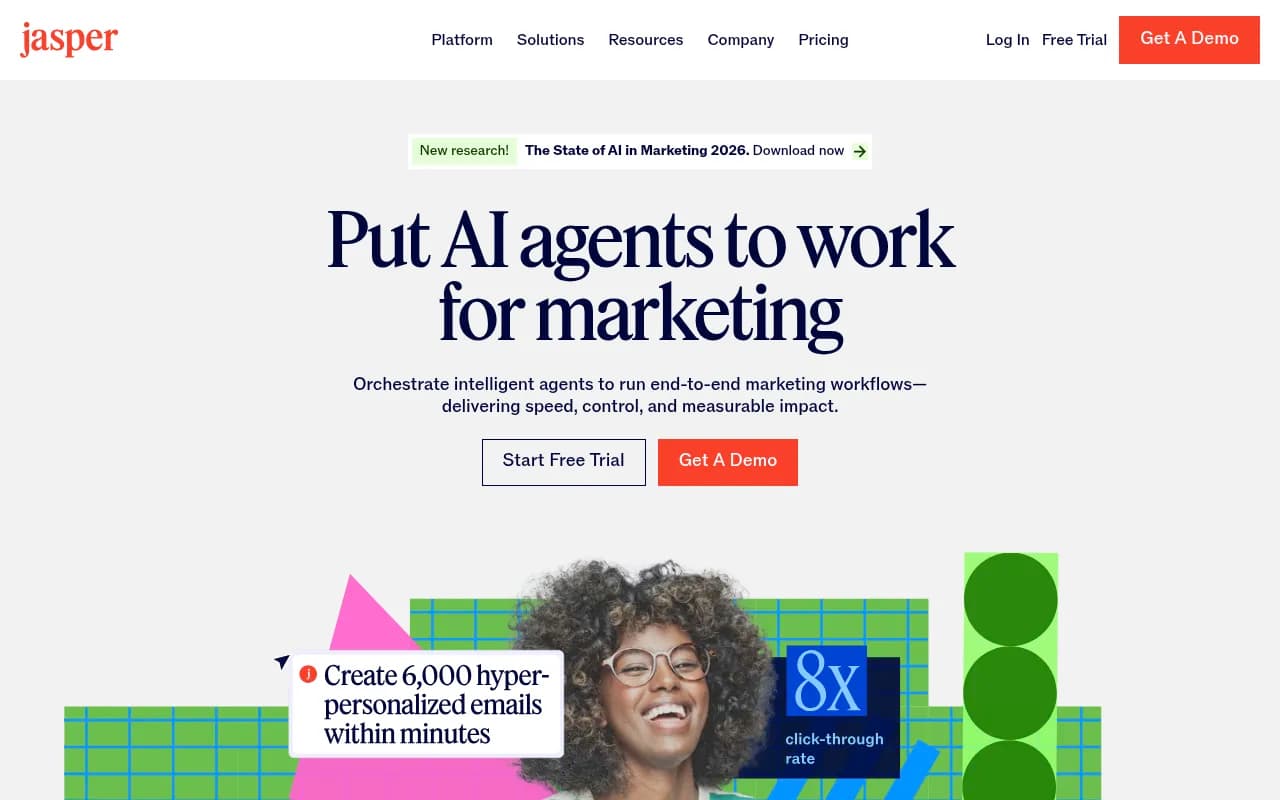
Jasper has positioned itself as a brand-first marketing platform. Its core pitch is that large marketing teams and enterprises need content that stays on-brand at scale -- consistent voice, consistent messaging, no rogue copy that contradicts the style guide. The Brand IQ system flags violations automatically. It supports multiple brand voices and style guides simultaneously. The 100+ specialized agents are built around marketing workflows: product launches, campaign briefs, ad copy, email sequences.
Writesonic has taken a different bet. It's leaning into being an SEO and AI search platform that also writes content, rather than a content platform that also does SEO. The GEO tracking features, the integration with Google Search Console and Google Analytics, the one-click WordPress publishing -- these aren't afterthoughts. They're the product direction.
Neither approach is wrong. They're just solving different problems.

GEO and AI search visibility: where they actually differ
This is the most important section if AI search visibility is your concern.
Writesonic's GEO tracking is built on a dataset of roughly 120 million conversations, which it uses to monitor how AI search engines are responding to queries in your category. You can track brand mentions and citations across engines like ChatGPT, Claude, and Gemini, see where competitors are appearing that you're not, and get recommendations for content that might close those gaps. For a writing tool, this is genuinely unusual -- no direct competitor in the AI writing category offers anything comparable.
Jasper doesn't have equivalent GEO tracking. It's a content creation and brand governance platform, and it doesn't monitor how AI engines are citing your content. If you want to know whether ChatGPT is recommending your product in a comparison query, Jasper won't tell you.
That said, Writesonic's GEO features are bundled into higher-tier plans, and they're best understood as a starting point rather than a complete solution. The tracking is real, but it's not the depth you'd get from a dedicated GEO platform. If AI search visibility is a serious priority -- not just a nice-to-have -- you'll likely want a purpose-built tool.
Promptwatch is worth mentioning here. It's a dedicated GEO platform that tracks brand visibility across 10 AI models, shows you which prompts competitors are winning that you're not, and includes content generation tools specifically designed to close those gaps. It's a different category from Writesonic or Jasper, but if GEO is the goal rather than a feature, the distinction matters.

SEO features: Writesonic has the edge
For traditional SEO, Writesonic is more fully built out. It integrates directly with Google Search Console and Google Analytics, supports keyword-to-publish workflows, and has on-page optimization built into the content creation flow. The one-click WordPress publishing is a real time-saver for teams running content operations at volume.
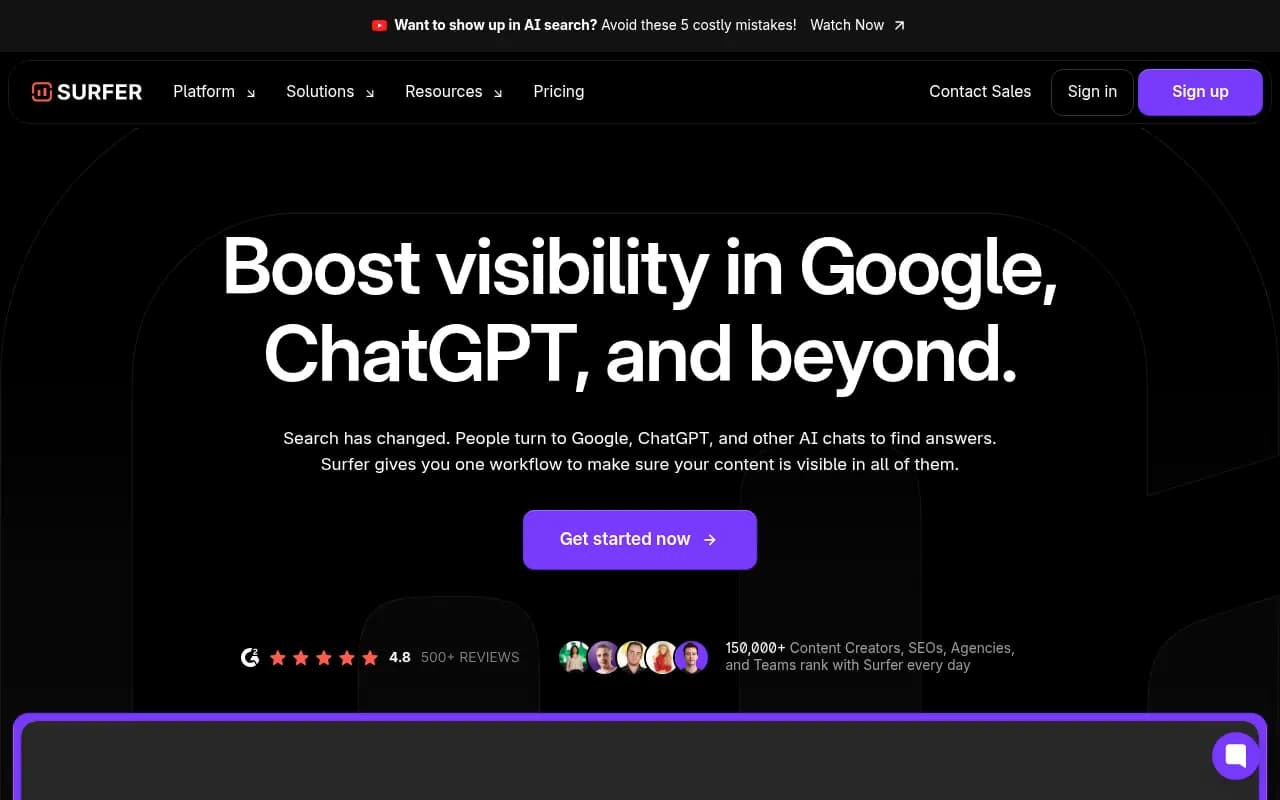
Jasper has SEO features -- you can optimize content for target keywords, and it integrates with Surfer SEO for more detailed content scoring -- but SEO is not where Jasper puts its energy. It's a bolt-on rather than a core workflow.
If your primary use case is producing SEO content at scale, Writesonic is the better fit. If you're producing brand marketing content where SEO is one consideration among many, Jasper's approach is fine.
Content quality: Jasper still leads on long-form
This is the area where Jasper's investment in proprietary marketing models shows up most clearly. In head-to-head tests across blog articles, ad copy, and email campaigns, Jasper consistently produces more publish-ready long-form output. The Brand IQ system means the content doesn't just read well -- it reads like your brand, which matters enormously for marketing teams managing multiple writers or campaigns.
Writesonic is good. It's not bad at long-form content. But it's optimized for speed and SEO coverage rather than polish. The output tends to require more editing before it's ready to publish, especially for anything that needs a specific voice or tone.
For short-form content -- social posts, ad copy, product descriptions -- the gap narrows considerably. Both tools handle short-form well.
Pricing comparison
| Plan | Jasper | Writesonic |
|---|---|---|
| Free tier | No (trial only) | Yes (limited) |
| Entry paid plan | $39/mo (Creator) | ~$16/mo (Individual) |
| Team/Pro plan | $59/mo (Pro) | ~$79/mo (Teams) |
| Enterprise | Custom | Custom |
| GEO features | Not included | Higher-tier plans |
| Brand voice | All plans | Limited on entry tier |
Writesonic is meaningfully cheaper at entry level and offers a permanent free tier, which makes it easier to evaluate before committing. Jasper's pricing reflects its enterprise positioning -- you're paying for the brand governance infrastructure, not just the writing.
For solo creators or small teams on a budget, Writesonic is the obvious starting point. For marketing teams at mid-market or enterprise companies where brand consistency is a real operational concern, Jasper's pricing is justifiable.
Integrations and workflow
Both tools connect to Zapier, which means you can build automation workflows around either of them without much friction.
Writesonic has the stronger native integration stack for content operations: WordPress, Google Search Console, Google Analytics, and an API. If you're running a content machine where articles need to go from brief to published with minimal manual steps, Writesonic's workflow is more complete.
Jasper integrates well with the tools marketing teams already use -- Google Docs, various CMS platforms, and Surfer SEO for content scoring. Its integrations are more about fitting into existing creative workflows than automating publishing pipelines.
Who should use each tool
The honest answer is that these tools serve different teams with different priorities.
Choose Writesonic if:
- SEO is central to your content strategy
- You want AI search visibility tracking without buying a separate tool
- You're running a content operation that needs keyword-to-publish automation
- Budget is a real constraint
- You want to experiment before committing (the free tier helps here)
Choose Jasper if:
- Brand consistency across a large team is a genuine operational problem
- You're producing long-form marketing content that needs to be publish-ready
- You manage multiple brand voices or style guides simultaneously
- You're at a company where content governance matters as much as content volume
The GEO gap neither tool fully closes
Here's the honest assessment: both tools are AI writers that have added GEO features, not GEO platforms that also write content. Writesonic is closer to the GEO end of that spectrum, but its tracking capabilities are still secondary to its writing capabilities.
If you're a marketing team that's serious about understanding and improving how your brand appears in AI-generated answers -- tracking which prompts you're winning, which competitors are outranking you in ChatGPT, and what content you need to create to close those gaps -- you'll want a dedicated platform alongside whichever writing tool you choose.
The distinction matters because the action loop is different. Writing tools help you create content. GEO platforms help you understand what content to create, track whether it's working, and connect visibility to actual traffic and revenue. Promptwatch, for example, tracks over 4.5 billion citations and prompts, shows you exactly which pages AI models are citing and why, and includes content generation tools grounded in that real prompt data -- not just generic SEO recommendations.
That's a different product from Jasper or Writesonic, and it's worth being clear about which problem you're actually trying to solve before you buy.
Feature comparison at a glance
| Feature | Jasper | Writesonic |
|---|---|---|
| Long-form content quality | Excellent | Good |
| Brand voice / governance | Excellent (Brand IQ) | Basic |
| SEO workflow | Basic | Strong |
| GEO / AI search tracking | None | Yes (higher tiers) |
| AI search engines monitored | None | 10+ |
| Free tier | No | Yes |
| WordPress integration | Limited | One-click publish |
| Google Search Console | No | Yes |
| Specialized marketing agents | 100+ | Yes (fewer) |
| Best for | Brand-controlled marketing content | SEO + AI visibility content ops |
Bottom line
In 2026, Jasper and Writesonic have diverged more than they've converged. Jasper is a brand marketing platform that writes excellent content. Writesonic is an SEO and AI visibility platform that also writes content. The overlap is real -- both produce marketing copy, both have agents, both connect to the tools you already use -- but the core value proposition is different.
If you're choosing between them, the decision comes down to one question: is your primary problem "we need more content that sounds like us" or "we need content that ranks in AI search engines"? Jasper answers the first. Writesonic answers the second.
And if your primary problem is "we need to understand and improve our visibility in ChatGPT and Perplexity specifically" -- that's a third question, and neither tool answers it as completely as a dedicated GEO platform would.
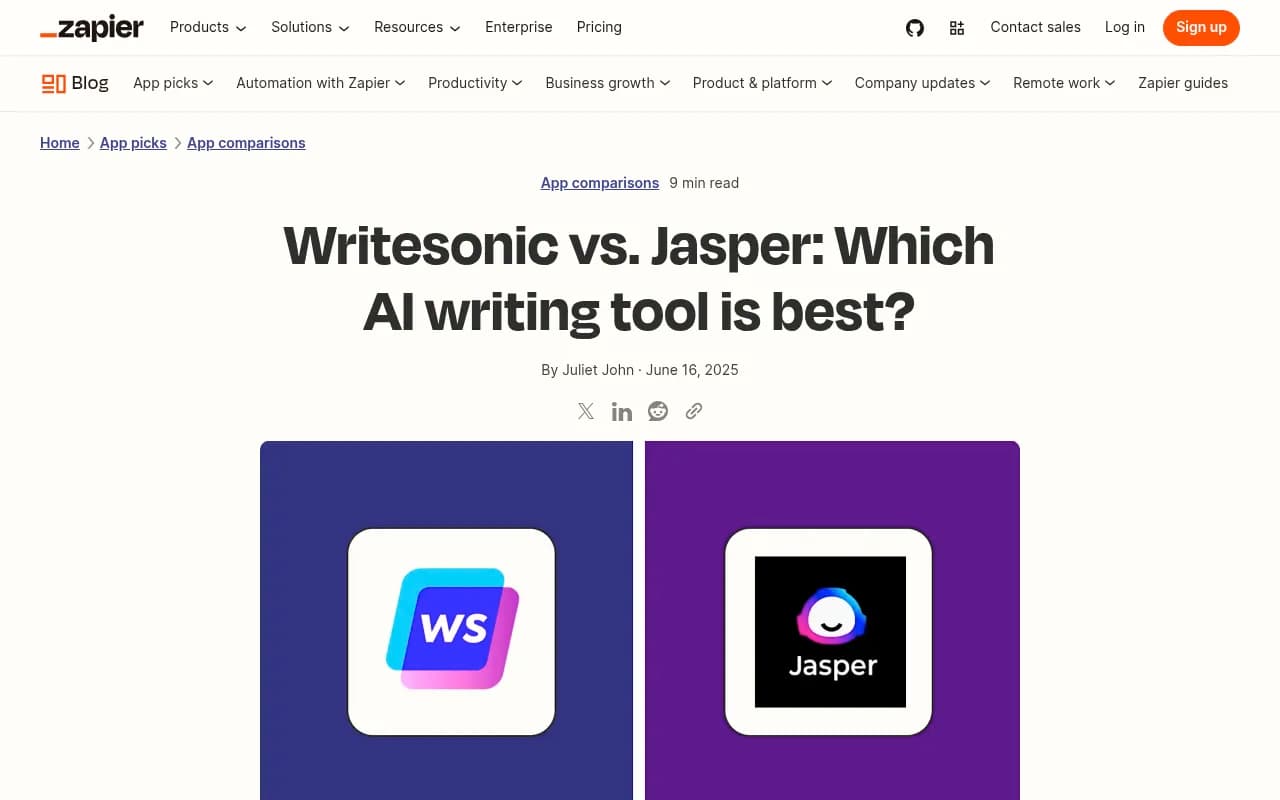
Zapier's breakdown of Writesonic vs Jasper covers the core tradeoffs well -- Writesonic's SEO depth vs Jasper's flexibility and control.