Key takeaways
- Ubersuggest is the better pick for pure keyword research on a tight budget -- its free tier is genuinely useful and the lifetime deal is hard to beat.
- Morningscore wins for team execution: its gamified missions and XP system help junior marketers and VAs actually complete SEO tasks instead of getting lost in dashboards.
- Neither tool replaces Ahrefs or Semrush for deep backlink analysis or historical data -- both are best understood as "do the basics well" tools.
- Morningscore's flat per-site pricing (not per-user) makes it cheaper for teams as headcount grows.
- If you're choosing between the two, the real question is: do you need more keyword data, or do you need your team to act on the data you already have?
Budget SEO tools have come a long way. A few years ago, "affordable" basically meant "limited" -- you got watered-down keyword data and a site audit that told you things you already knew. In 2026, that's changed. Morningscore and Ubersuggest are two tools that genuinely punch above their price points, but they do it in very different ways.
This guide breaks down how they compare across features, pricing, and real-world usability for growing teams. No fluff -- just what you need to make the call.
What each tool is actually trying to do
Before comparing features side by side, it's worth being clear about the philosophy behind each product.
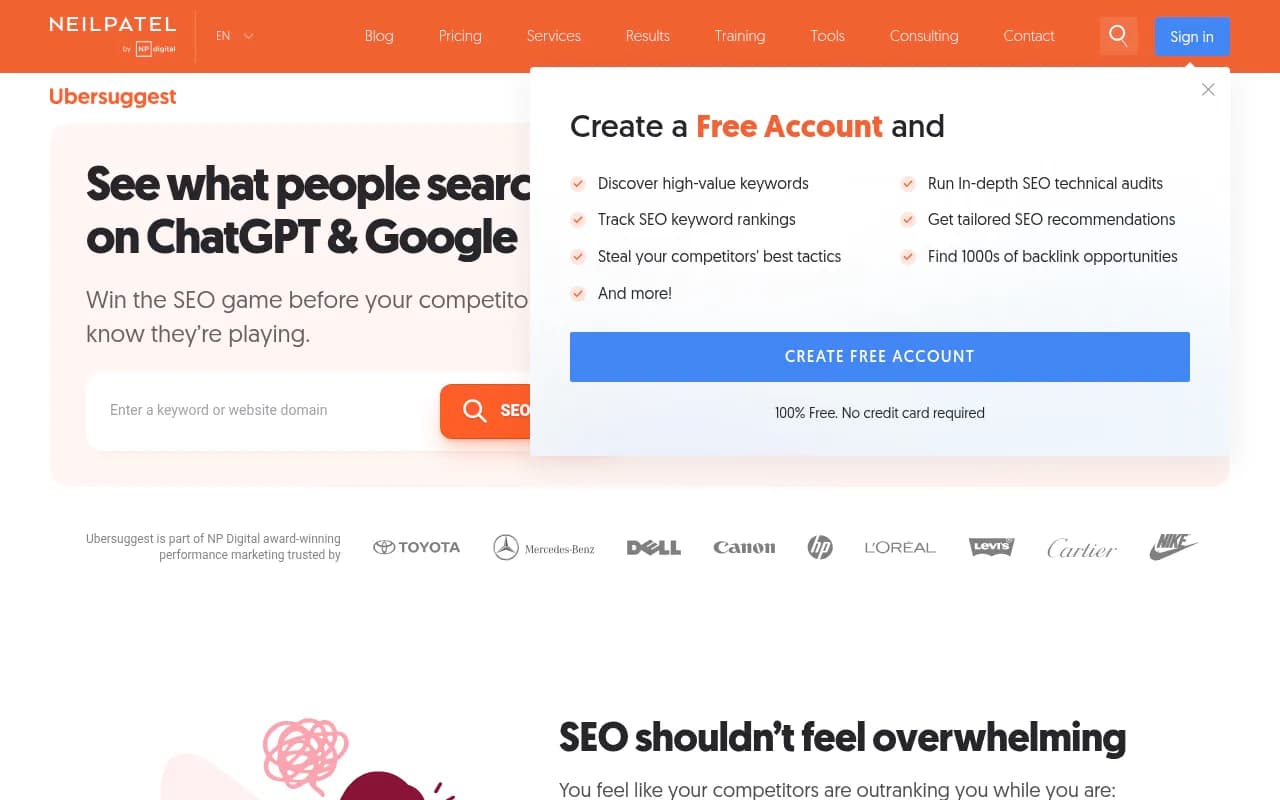
Ubersuggest is Neil Patel's keyword research and SEO analysis tool. It started as a free keyword suggestion tool and has grown into a lightweight all-in-one platform. The core value proposition is simple: give small businesses and solo marketers access to keyword data, competitor analysis, and site audits without paying Semrush prices.
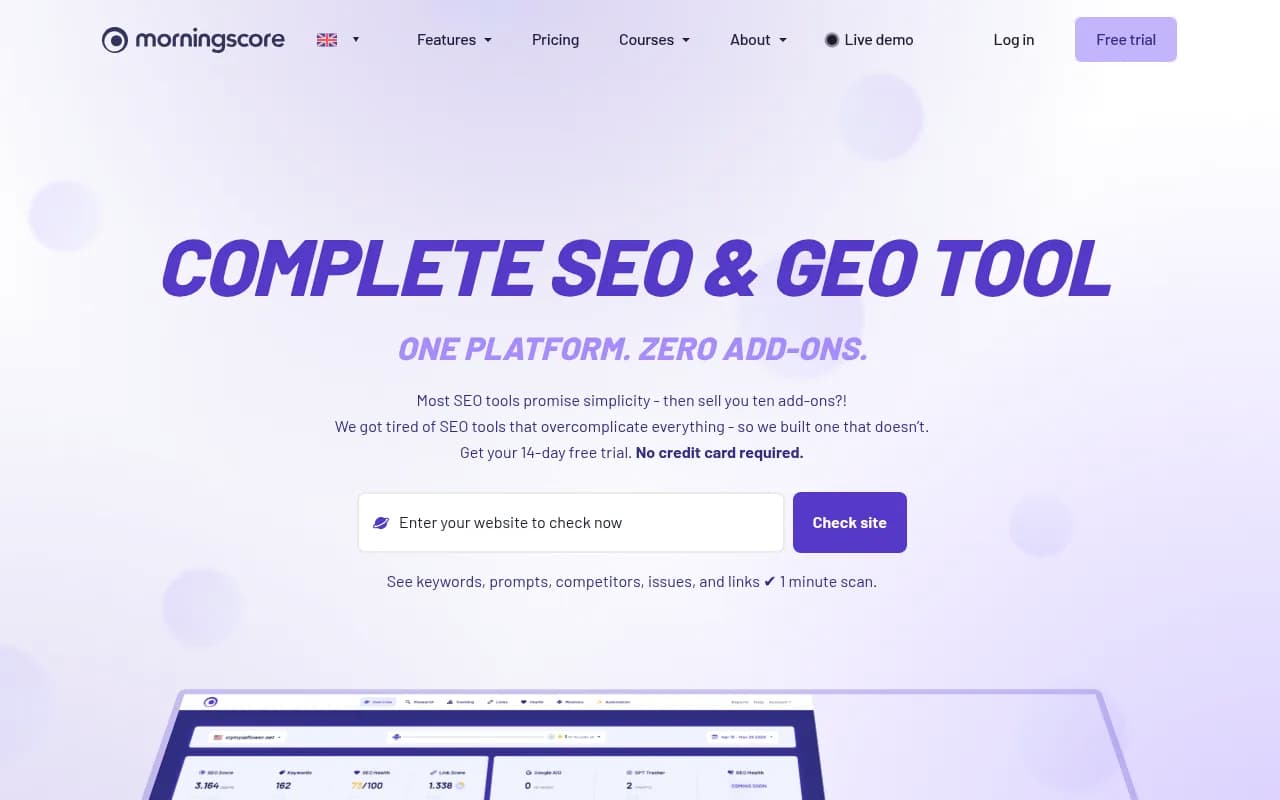
Morningscore takes a different angle. It's built around the idea that most teams don't fail at SEO because they lack data -- they fail because they don't act on it. The tool wraps SEO tasks into a "missions" system with XP points and leaderboards, making it easier for teams (especially those with junior members or VAs) to know what to do next and actually do it. Think of it as an SEO task manager with rank tracking and site health built in.
These aren't competing for exactly the same user. But they overlap enough that teams evaluating affordable SEO tools will often consider both.
Feature comparison
Here's a direct comparison across the features that matter most for growing teams:
| Feature | Morningscore | Ubersuggest |
|---|---|---|
| Keyword research | Basic (live scan, slower) | Strong (large database, fast) |
| Rank tracking | Yes, daily updates | Yes |
| Site audit / health check | Yes, with actionable missions | Yes, standard audit |
| Backlink analysis | Limited | Moderate |
| Competitor analysis | Yes | Yes |
| Content ideas | Limited | Yes (content suggestions) |
| Team features | Strong (XP, missions, leaderboards) | Basic |
| Per-user pricing | No (flat per site) | No (flat plans) |
| Historical data | Only from setup date | Limited |
| Free tier | 14-day trial | Yes (limited daily searches) |
| Lifetime deal | No | Yes |
| AI features | Some | Some |
Keyword research
Ubersuggest has the edge here. Its keyword database is larger and results come back faster. The free tier lets you run a handful of searches per day, which is enough to validate ideas before committing. Morningscore's keyword research works via a live scan rather than a pre-built database, which means it's slower and sometimes misses long-tail terms that Ubersuggest surfaces easily.
If keyword discovery is your primary need -- finding new topics, checking search volumes, identifying low-competition opportunities -- Ubersuggest is the more capable tool.
Rank tracking
Both tools track keyword rankings reliably. Morningscore's rank tracker integrates directly with its missions system, so when a keyword drops, it can surface a task to fix the underlying issue. That's a nice touch. Ubersuggest's rank tracking is functional but more passive -- it shows you the data without suggesting what to do about it.
One catch with Morningscore: tracking keywords in multiple countries costs credits. If you're running international SEO campaigns, that adds up.
Site audits and health checks
This is where Morningscore genuinely differentiates itself. Its health check system doesn't just list issues -- it turns them into missions. A VA or junior marketer can log in, see "fix these 5 broken internal links," earn XP for completing it, and move on. There's no need to interpret a technical audit report.
Ubersuggest's site audit is more traditional. It categorizes issues by severity and gives you a score, but the next step is on you to figure out.
Backlink analysis
Neither tool is strong here compared to Ahrefs or Semrush, and both are honest about it (or at least, users who've reviewed them are). Ubersuggest shows referring domains and some link data, but the database is smaller. Morningscore shows referring domains too, but reviewers consistently note it as a gap -- one reason many Morningscore users keep an Ahrefs subscription for link work.
Team features
Morningscore wins this category clearly. The XP and leaderboard system sounds gimmicky until you see it in practice. Teams with multiple people working on SEO tasks -- especially when those people aren't SEO specialists -- benefit from having a clear queue of prioritized actions. It reduces the "what should I do today?" problem that kills SEO momentum at small companies.
Ubersuggest doesn't have meaningful team collaboration features. It's built for individual use.
Pricing breakdown
Pricing is often the deciding factor at this end of the market, so here's what each tool actually costs in 2026.
Ubersuggest pricing
- Free tier: limited daily searches, basic features
- Individual: ~$12/month (1 domain)
- Business: ~$20/month (up to 7 domains)
- Enterprise/Agency: ~$40/month (up to 15 domains)
- Lifetime deal: one-time payment (historically around $120-$290 depending on tier)
The lifetime deal is the main reason people choose Ubersuggest. Pay once, use forever. For a solo blogger or small business owner who just needs keyword research and a basic audit, it's genuinely hard to argue against.
Morningscore pricing
- Hobby: ~$49/month (1 site, 50 keywords)
- Growth: ~$69/month (1 site, 150 keywords)
- Pro: ~$129/month (3 sites, 500 keywords)
- Agency: custom pricing
Morningscore doesn't offer a lifetime deal, and it's more expensive than Ubersuggest at every tier. But the per-site (not per-user) model means a team of five people all using the platform costs the same as one person using it. For teams, that changes the math significantly.
There's also a 14-day free trial with no credit card required, which is worth taking before committing.
Which is cheaper in practice?
For a solo user: Ubersuggest, especially with the lifetime deal.
For a team of 3-5 people doing ongoing SEO work: Morningscore often works out cheaper per person, and the team features make it more useful.
Where each tool falls short
Being honest about the gaps matters more than listing features.
Morningscore's weaknesses
The keyword research database is the biggest limitation. If you're doing serious keyword research -- building out topical maps, finding hundreds of long-tail variations, analyzing SERP difficulty in depth -- Morningscore will frustrate you. It's designed for execution, not discovery.
There's also no historical data before you set up the account. If you want to see how a site's rankings trended over the past year before you started tracking, you can't. Ahrefs and Semrush have years of historical data baked in.
International tracking costs credits per country, which can get expensive if you're managing SEO across multiple regions.
Ubersuggest's weaknesses
The free tier is more restrictive than it used to be. Daily search limits mean you'll hit a wall quickly if you're doing any real research volume.
The tool has also faced criticism for data accuracy -- keyword volumes and difficulty scores don't always match what you see in Ahrefs or Google Keyword Planner. For most use cases this is fine, but if you're making significant content investment decisions based on the data, verify with a second source.
There's no team workflow system. If you're managing an SEO process across multiple people, Ubersuggest gives you no help with coordination or task assignment.
Who should use which tool
Choose Ubersuggest if:
- You're a solo blogger, freelancer, or small business owner doing SEO yourself
- You want keyword research and competitor analysis without a monthly subscription (lifetime deal)
- Your main need is content ideation and finding keywords to target
- You're just starting out and want to learn SEO basics without a steep learning curve
Choose Morningscore if:
- You have a team (even a small one) doing SEO work
- Your problem is execution, not data -- you know what needs to be done but tasks keep slipping
- You're managing VAs or junior marketers who need clear, prioritized tasks
- You want rank tracking and site health monitoring in one place with built-in accountability
Use neither if:
- You need deep backlink analysis or competitive link research (use Ahrefs)
- You need historical rank data or large-scale keyword databases (use Semrush or Ahrefs)
- You're running enterprise SEO at scale (both tools are too lightweight)
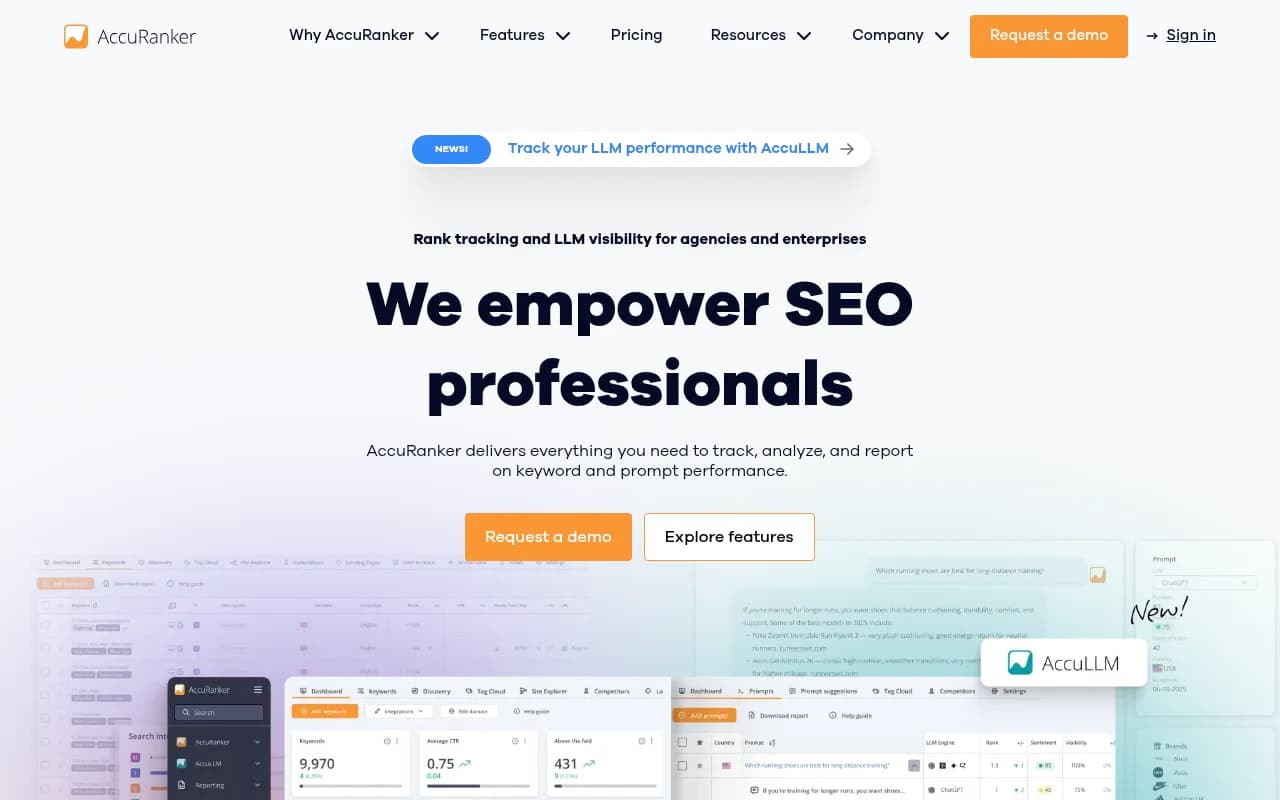
For rank tracking specifically, tools like AccuRanker offer more precision if that's your primary need.
A note on AI search visibility
One thing worth flagging for 2026: neither Morningscore nor Ubersuggest is built for AI search visibility. If your traffic is starting to come from ChatGPT, Perplexity, Google AI Overviews, or other AI engines -- and for most sites, it is -- traditional SEO tools won't tell you what's happening there.
That's a separate problem from what these tools solve, but it's worth knowing the gap exists. Platforms like Promptwatch are built specifically for tracking and improving visibility in AI search engines, which is increasingly where search behavior is shifting.

The bottom line
Morningscore and Ubersuggest are both solid tools for what they do. The mistake is treating them as direct substitutes.
Ubersuggest is a keyword research and analysis tool that happens to include site audits. It's best for individuals who need data.
Morningscore is a team execution platform that happens to include keyword tracking. It's best for teams who need to act on data consistently.
If you're a solo operator on a budget, Ubersuggest's lifetime deal is hard to beat. If you're managing a small team and SEO tasks keep falling through the cracks, Morningscore's missions system will probably pay for itself in the first month just by getting your team to actually finish things.
Neither replaces a full-featured platform for serious SEO work -- but for growing teams that can't justify Ahrefs or Semrush pricing yet, both are worth a look.