Key takeaways
- BrightEdge is the stronger choice for data-intensive SEO teams: 10B+ keyword database, deep technical auditing, and real-time Google AI Overview monitoring. Annual contracts run $36K–$120K.
- Conductor fits content-led organizations better: cleaner workflows, AI content recommendations, and a 2–3 week onboarding vs. BrightEdge's 2–3 month learning curve. Pricing runs $24K–$60K/yr.
- Neither platform was built for AI search visibility. They optimize for Google rankings, not for citations in ChatGPT, Perplexity, Claude, or Gemini.
- If AI search visibility is a priority, you'll need a dedicated GEO platform alongside whichever enterprise tool you choose.
- The right pick between the two comes down to team profile, not feature counts.
Both BrightEdge and Conductor have been enterprise SEO staples for years. They're serious platforms with serious price tags, and they do a lot of things well. But in 2026, the question isn't just "which one ranks keywords better." It's whether either platform helps you stay visible as search behavior shifts toward AI-generated answers.
The short answer: they're both good at traditional SEO. Neither is built for what's happening now.
Let me break down what each platform actually does, where the gaps are, and how to think about the choice.
What BrightEdge does best
BrightEdge is an enterprise SEO platform built around the idea that organic search is a measurable business channel. Its Data Cube contains 10 billion+ keywords, which is genuinely useful for large organizations tracking competitive share across thousands of queries. The platform's ContentIQ tool handles technical auditing at scale, and its Share of Voice reporting gives SEO directors the kind of executive-ready data that justifies headcount.
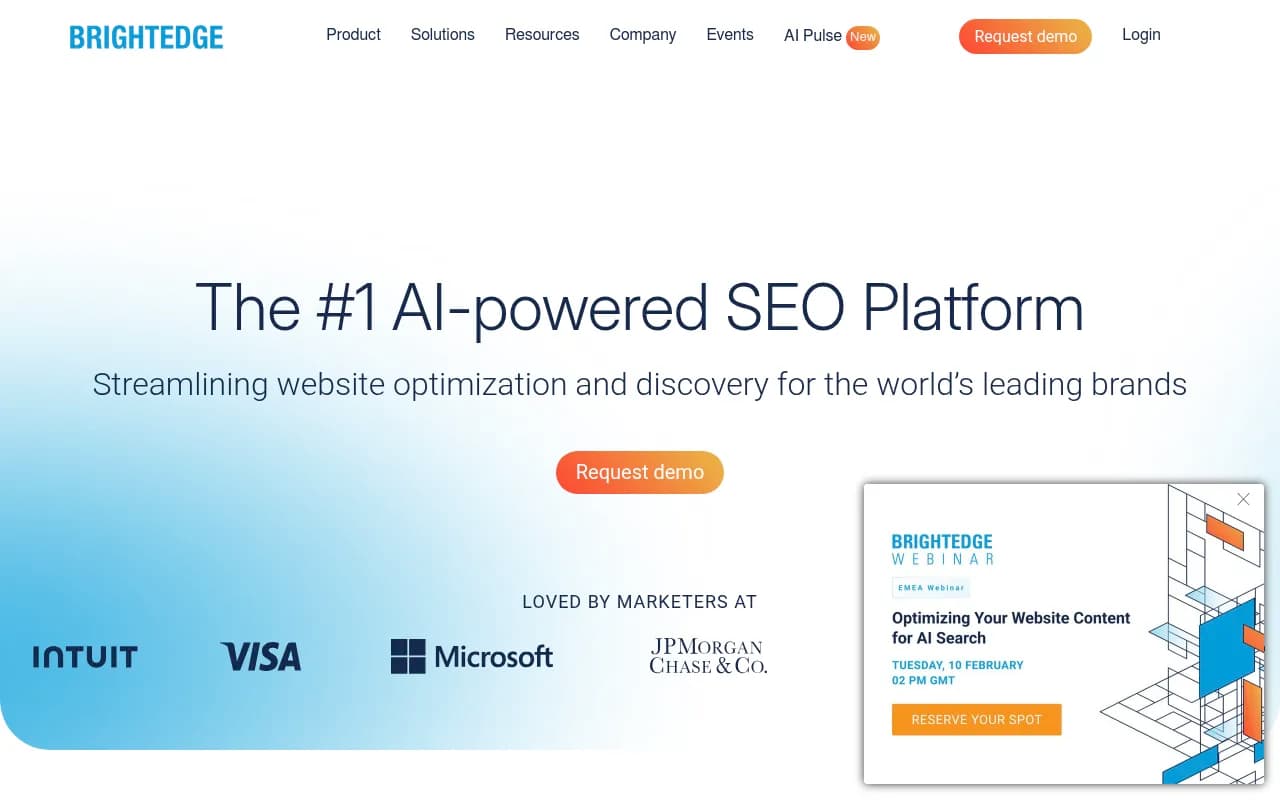
In 2024, BrightEdge added Google AI Overview monitoring through Data Cube X. That's a meaningful addition -- you can see when your pages appear in AI Overviews and track how that changes over time. It's more AI-aware than most traditional SEO platforms.
The tradeoff is complexity. BrightEdge has a 2–3 month adoption curve. That's not a knock -- it reflects how much the platform does -- but it means smaller or leaner teams often struggle to extract value quickly. You need dedicated SEO resources to run it well.
Where BrightEdge wins:
- Keyword research at scale (10B+ Data Cube)
- Technical SEO auditing (ContentIQ)
- Competitive intelligence and Share of Voice
- Google AI Overview monitoring
- Deep integrations for enterprise marketing stacks
What Conductor does best
Conductor's core strength is making SEO accessible to content teams, not just SEO specialists. Its AI content recommendations are built into the workflow, so writers and editors can act on search data without needing to interpret raw keyword reports. Executive reporting is cleaner and more readable than BrightEdge's, which matters when you're presenting to stakeholders who don't live in SEO dashboards.
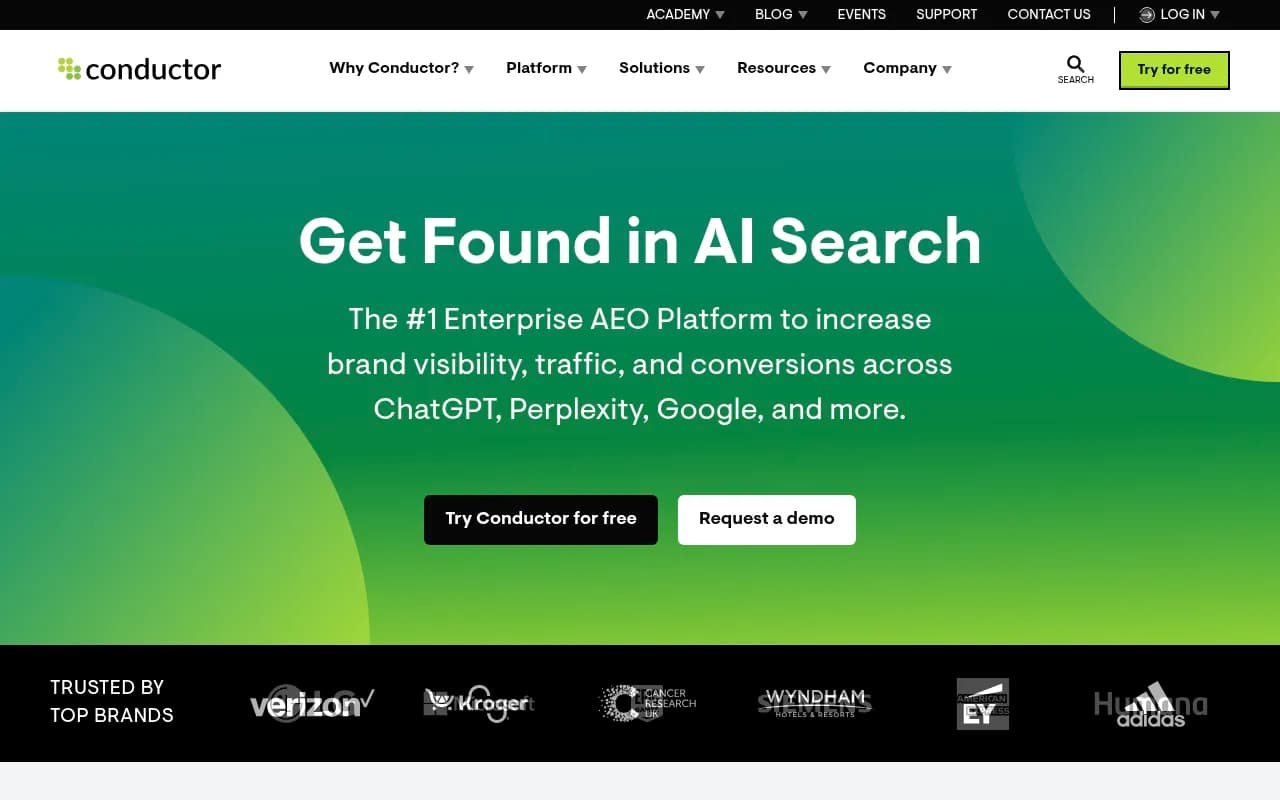
Onboarding takes 2–3 weeks rather than months, and the platform integrates well with CMS and content tools. For organizations where content strategy drives SEO -- think media companies, B2B SaaS with large blogs, or brands with distributed editorial teams -- Conductor fits the workflow more naturally.
Where Conductor wins:
- AI-powered content recommendations
- Content workflow integration
- Faster onboarding and time-to-value
- Cleaner executive reporting
- Better fit for editorial-led SEO programs
Head-to-head comparison
| Capability | BrightEdge | Conductor |
|---|---|---|
| Keyword database | 10B+ (Data Cube) | ~2B |
| Technical SEO auditing | Deep (ContentIQ) | Solid, less granular |
| AI content recommendations | Available (SEO Copilot) | Core differentiator |
| Google AI Overview monitoring | Yes (Data Cube X) | Partial |
| Interface complexity | High (2–3 month curve) | Low (2–3 week onboarding) |
| Content workflow integration | Limited | Strong |
| Competitive intelligence | Strong (Share of Voice) | Present (Market Share Insights) |
| Executive reporting | Detailed but dense | Cleaner, more accessible |
| Annual pricing (reported) | $36K–$120K+ | $24K–$60K |
| Best fit | Technical SEO-led orgs | Content-led editorial orgs |
| AI citation tracking (ChatGPT, Perplexity, etc.) | No | No |
| Crawler log analysis | No | No |
| Reddit/YouTube AI signal tracking | No | No |
The table tells most of the story. These are different tools for different teams. If you're running SEO as a data science operation -- large technical teams, complex site architecture, competitive intelligence as a core function -- BrightEdge is the stronger platform. If SEO lives inside a content team and the priority is getting writers to act on search data, Conductor fits better.
Neither platform is wrong. They're just built for different organizational profiles.
The AI search visibility gap
Here's the part both vendors would rather not talk about.
Gartner projected a 25% drop in traditional search volume by 2026 as AI chatbots absorb research queries. Whether that number lands exactly right or not, the directional shift is real. B2B buyers are increasingly starting their research in ChatGPT, Perplexity, or Claude -- not Google. And the signals that determine whether an AI model cites your brand are different from the signals that determine whether you rank on page one.
BrightEdge monitors Google AI Overviews. That's useful, but it's one slice of a much larger picture. Neither platform tracks:
- Whether your brand appears in ChatGPT or Perplexity responses
- Which competitors are getting cited in AI-generated answers
- What content gaps are causing AI models to skip your site
- How AI crawlers are interacting with your pages
This isn't a criticism of either platform specifically -- they were built for traditional search, and they do that well. But if you're spending $36K–$120K/yr on enterprise SEO and ignoring the AI visibility layer, you're optimizing for a channel that's shrinking while a new one grows.
What to do about the gap
The practical answer for most enterprise teams in 2026 is to run both: an enterprise SEO platform for traditional search, and a dedicated AI visibility platform for the generative layer.
For AI search visibility specifically, Promptwatch covers the ground that BrightEdge and Conductor don't. It tracks how your brand appears across ChatGPT, Perplexity, Claude, Gemini, Google AI Mode, and seven other AI engines -- and goes beyond monitoring to help you identify content gaps and generate content that fills them.

The distinction matters: most AI visibility tools are monitoring dashboards. They show you where you're invisible but don't help you fix it. Promptwatch's Answer Gap Analysis shows exactly which prompts competitors are visible for that you're not, and its Content Agents generate articles and briefs grounded in real prompt data to close those gaps.
Other options worth knowing about in this space:
Profound

Profound is a solid enterprise-grade AI visibility tracker with coverage across 9+ AI engines. It's monitoring-focused but has strong data depth for large organizations.
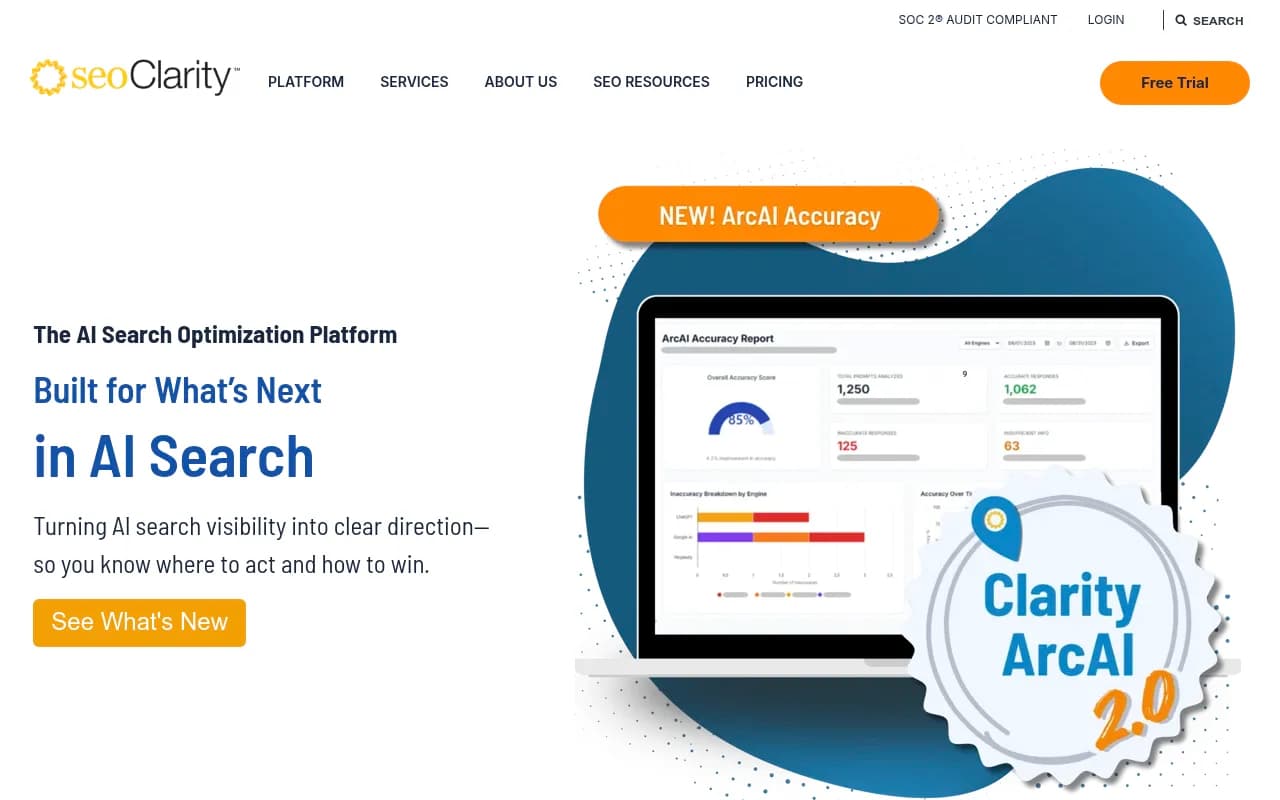
seoClarity sits in an interesting middle ground -- it's an enterprise SEO platform like BrightEdge and Conductor, but has been more aggressive about adding AI search tracking features. Worth evaluating if you want to consolidate platforms.
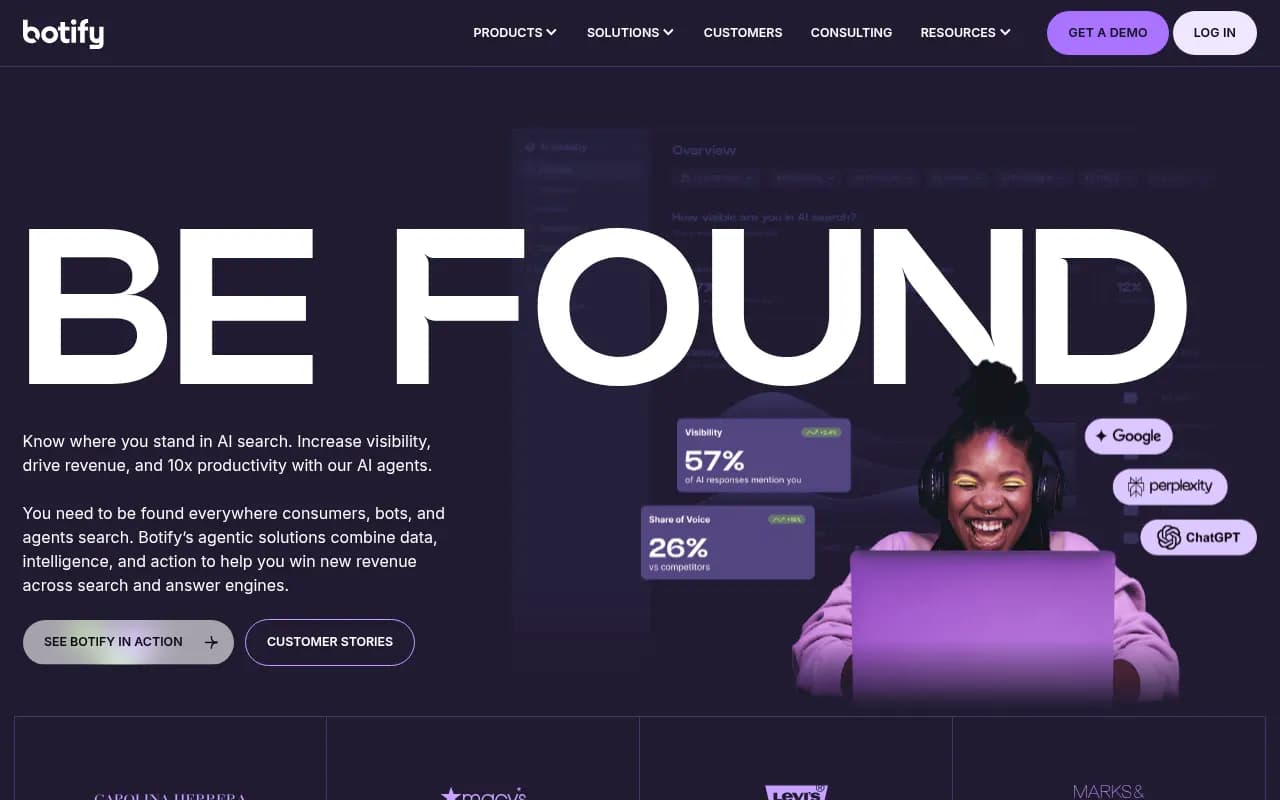
Botify is worth a look for teams where technical SEO and crawl optimization are the priority. It has strong log file analysis capabilities and has been building toward AI search optimization.
Pricing reality check
Neither BrightEdge nor Conductor publishes standard pricing. Both require demos and custom quotes. Based on reported ranges:
| Platform | Reported annual range | Contract structure |
|---|---|---|
| BrightEdge | $36,000–$120,000+ | Annual, custom |
| Conductor | $24,000–$60,000 | Annual, custom |
| seoClarity | ~$30,000–$100,000 | Annual, custom |
| Botify | ~$40,000–$150,000+ | Annual, custom |
All four are enterprise-only tools with sales-led buying processes. Budget for implementation time on top of licensing -- BrightEdge especially requires significant onboarding investment.
If you're a mid-market company evaluating enterprise SEO for the first time, Semrush's enterprise tier is worth considering before committing to BrightEdge or Conductor. The feature depth is lower, but so is the price and the implementation overhead.
How to choose
The decision framework is simpler than most vendor comparison guides make it sound:
Choose BrightEdge if:
- You have a dedicated SEO team of 3+ people
- Keyword research at scale and competitive intelligence are core to your program
- You need deep technical auditing across a large, complex site
- You can absorb a 2–3 month onboarding period
- Budget is $36K+ and you want the most data-rich platform available
Choose Conductor if:
- SEO is driven by a content team, not a technical SEO team
- You need writers and editors to act on search data directly
- Faster time-to-value matters (2–3 week onboarding)
- Executive reporting and stakeholder communication are priorities
- Budget is $24K–$60K and you want a cleaner, more accessible interface
Add a dedicated AI visibility platform if:
- Any meaningful share of your audience discovers you through ChatGPT, Perplexity, or similar
- Competitors are appearing in AI-generated answers and you're not
- You want to understand how AI crawlers interact with your content
- You're investing in content and want to know whether it's being cited by AI models
The enterprise SEO market hasn't consolidated around AI visibility yet. BrightEdge and Conductor are both adding AI features incrementally, but neither has made it a core capability. For now, the teams getting ahead are running their traditional SEO platform alongside a purpose-built AI visibility tool -- not waiting for one platform to do everything.
Bottom line
BrightEdge and Conductor are both legitimate enterprise platforms. The choice between them is mostly about team structure and workflow, not about one being objectively better. Data-heavy SEO operations will get more out of BrightEdge. Content-led teams will find Conductor easier to actually use.
What neither platform solves is the AI visibility problem. If your buyers are researching in ChatGPT before they ever hit Google, you need to know whether your brand shows up in those answers -- and what to do when it doesn't. That requires a different kind of tool entirely.