Key takeaways
- AI search now accounts for over 40% of searches, and 93.7% of links cited in AI Overviews come from pages outside the top 10 organic results -- traditional rank tracking misses most of this
- Monitoring 10 LLM platforms manually is not realistic; you need a structured approach with the right tooling
- The biggest mistake brands make is treating AI visibility as a monitoring problem when it's actually an optimization problem -- knowing you're invisible doesn't help unless you can fix it
- Different platforms (ChatGPT, Perplexity, Gemini, Claude, Grok, etc.) behave differently and cite different sources, so cross-platform coverage matters
- The most effective tools close the loop: find gaps, generate content, track results
If you've tried manually checking what ChatGPT says about your brand every few days, you already know how unsustainable that is. Now multiply that by 10 platforms. Add different response behaviors per model, regional variation, different personas, and the fact that AI answers change constantly -- and you have a monitoring problem that can genuinely consume your entire week if you let it.
This guide is about building a sane, systematic approach to LLM brand monitoring in 2026. We'll cover what you actually need to track, how the major platforms differ, which tools handle the heavy lifting, and how to go from "we're invisible on Perplexity" to actually doing something about it.
Why monitoring 10 LLMs is harder than it sounds
Traditional SEO rank tracking is relatively straightforward: you pick keywords, a crawler checks your position, you get a number. AI search doesn't work like that.
Each LLM generates answers probabilistically. Ask ChatGPT the same question twice and you might get different citations. Ask Perplexity the same question from a different country and you'll get different sources. Claude tends to be more conservative about recommending specific brands. Google AI Overviews pulls heavily from its existing index. Grok has access to real-time X/Twitter data. DeepSeek behaves differently on sensitive topics. These aren't minor variations -- they're fundamentally different systems with different training data, retrieval mechanisms, and citation behaviors.
Then there's the volume problem. A typical B2B brand might care about 50-200 prompts across buyer journey stages: awareness questions, comparison queries, feature-specific questions, use case searches. Multiply that by 10 platforms, factor in that you want to check regularly (not just once), and you're looking at thousands of queries per month. No human team can do that manually.
The platforms you need to cover in 2026:
- ChatGPT (OpenAI) -- still the dominant player, 56% of AI search referral traffic per OtterlyAI's 2026 data
- Perplexity -- research-focused, heavy citation behavior, growing fast
- Google AI Overviews -- integrated into billions of Google searches
- Google AI Mode -- Google's newer conversational search experience
- Gemini -- Google's standalone AI assistant
- Claude (Anthropic) -- popular with professional users, more cautious about brand recommendations
- Grok (xAI) -- real-time data access, X/Twitter integration
- Microsoft Copilot -- Bing-powered, enterprise reach
- Meta AI -- embedded in WhatsApp, Instagram, Facebook
- DeepSeek -- growing international user base
What you actually need to track
Before picking a tool, get clear on what metrics matter. "AI visibility" is vague. Here's what's actually useful:
Share of model: When someone asks a relevant question, how often does your brand appear in the answer? This is the AI equivalent of market share -- and it's the number that matters most.
Citation frequency: How often do AI models link to or reference your specific pages? Which pages are being cited, and which are being ignored?
Sentiment in responses: When your brand is mentioned, is the framing positive, neutral, or negative? AI models can mention you in a way that damages your reputation ("Brand X has faced criticism for...").
Competitor visibility: Who's showing up when you're not? This is often more actionable than your own data -- it tells you exactly what content is winning the citations you're missing.
Prompt-level data: Which specific questions are driving visibility? Which prompts are you winning vs. losing? You want this broken down by prompt, not just averaged across everything.
Crawler activity: Are AI bots actually crawling your site? Which pages are they reading? Are there errors blocking them? This is infrastructure-level data that most brands completely ignore.
The three types of monitoring tools (and why most fall short)
The market has bifurcated into three rough categories:
Basic trackers
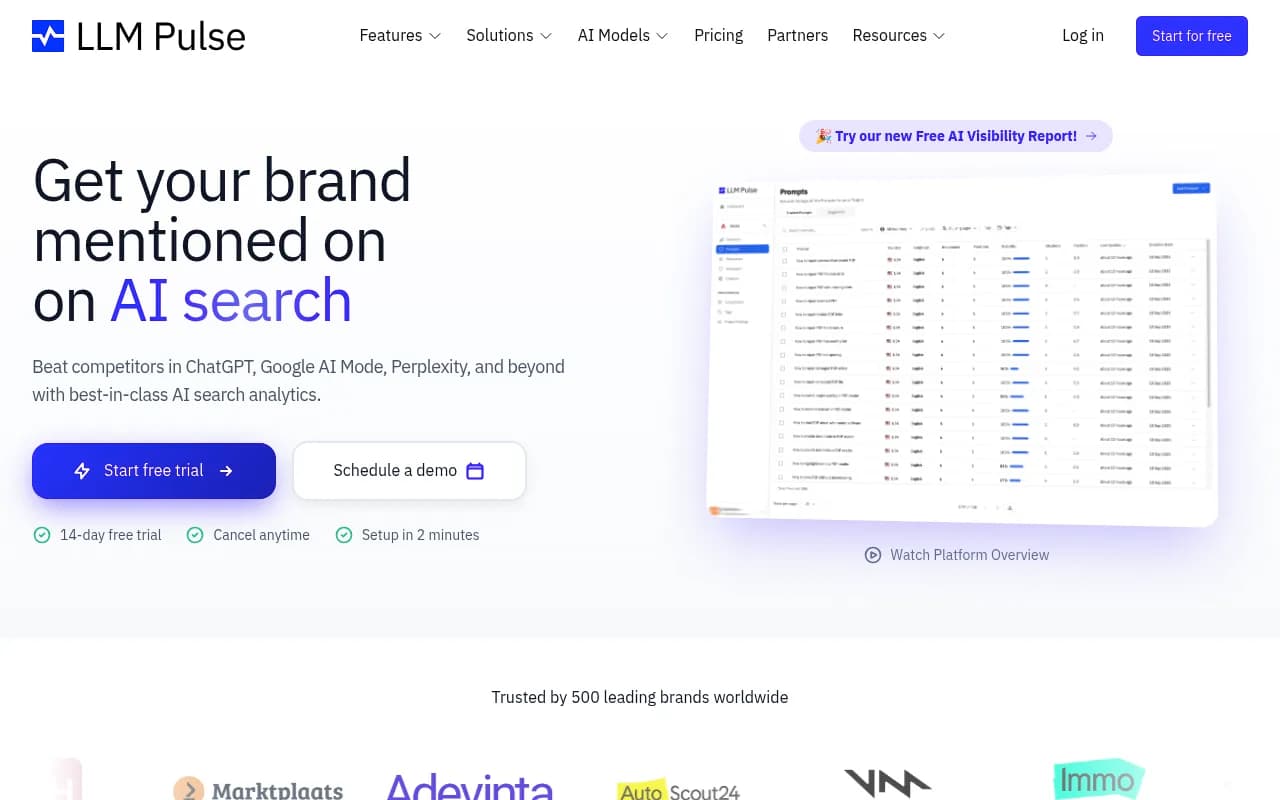
These tools run your brand name through a set of prompts and report back whether you appeared. They're better than nothing, but they have real limitations: fixed prompt sets, no competitive context, no guidance on what to do with the data.
Tools like LLM Pulse and basic tiers of various platforms fall here.
Monitoring dashboards
A step up -- these track mentions, sentiment, and competitive positioning across multiple platforms. They give you a reasonably complete picture of where you stand. The limitation is that they stop there. You know you're invisible on Claude for "best project management tool for remote teams." Now what?
Otterly.AI is a good example of a solid monitoring dashboard.
Otterly.AI

Profound sits in this category too, with strong enterprise-focused analytics.
Profound

Optimization platforms
These close the loop. They don't just show you where you're invisible -- they help you figure out why, and then help you create the content that fixes it. This is where the real value is in 2026, because monitoring without optimization is just an expensive way to feel bad about your visibility.
Promptwatch is the clearest example of this approach -- it combines gap analysis, content generation grounded in real prompt data, crawler log monitoring, and traffic attribution in one platform.

Building your monitoring system: a practical framework
Step 1: Define your prompt universe
Start by mapping the questions your target customers actually ask AI models. These fall into a few categories:
- Category awareness ("what tools help with X")
- Comparison queries ("X vs Y", "best alternatives to Z")
- Feature/use case questions ("which tool is best for [specific workflow]")
- Brand-specific questions ("what is [your brand]", "is [your brand] good for X")
Don't just guess these. Look at your sales call transcripts, support tickets, and existing keyword data -- these are the questions real buyers are asking. Aim for 50-150 prompts to start. You can always expand.
Step 2: Set up cross-platform tracking
You need coverage across at least the top 5-6 platforms: ChatGPT, Perplexity, Google AI Overviews, Gemini, Claude, and Copilot. Grok and DeepSeek are worth adding if your audience is active on X or you have international exposure.
The key is consistency. You want the same prompts checked across all platforms on a regular cadence -- ideally daily or weekly, not monthly. AI models update frequently enough that monthly snapshots miss meaningful changes.
Step 3: Track competitors, not just yourself
This is the part most brands skip. Your own visibility score is interesting, but your competitor's visibility tells you what's actually working. If a competitor is being cited for 40% of your target prompts and you're at 8%, that gap is a content roadmap.
Look specifically at which pages your competitors have that are getting cited. What topics do they cover that you don't? What format are those pages in? That's your gap analysis.
Step 4: Monitor your AI crawler logs
This is underrated. AI platforms like ChatGPT (GPTBot), Perplexity (PerplexityBot), and Claude (ClaudeBot) send crawlers to your site before they can cite you. If those crawlers are hitting errors, getting blocked by your robots.txt, or only reading certain pages, that directly limits your visibility.
Most brands have no idea what their AI crawler logs look like. Setting up monitoring here -- either through your CDN (Cloudflare, Fastly, Vercel all support this) or a dedicated tool -- gives you a direct line to the technical side of AI visibility.
Step 5: Connect visibility to revenue
The final piece is attribution. AI search is driving real traffic -- OtterlyAI's 2026 research puts AI agents and bots at 15% of all website traffic. You need to know which of that traffic is converting, not just which prompts are citing you.
This means tagging AI referral traffic properly, connecting citation data to actual page visits, and eventually tying those visits to pipeline or revenue.
Tool comparison: what to use for what
Here's a practical breakdown of the main tools and where they fit:
| Tool | Best for | Platform coverage | Content generation | Crawler logs | Pricing |
|---|---|---|---|---|---|
| Promptwatch | Full optimization loop | 10 platforms | Yes (AI agents) | Yes | From $99/mo |
| Profound | Enterprise analytics | 9+ platforms | No | No | Higher price point |
| Otterly.AI | Monitoring dashboards | 5 platforms | No | No | Mid-range |
| AthenaHQ | Monitoring-focused teams | Multiple | No | No | Mid-range |
| LLM Pulse | Simple tracking | 5-6 platforms | No | No | Lower cost |
| Rankshift | Brand + citation tracking | ChatGPT, Perplexity | No | No | Lower cost |
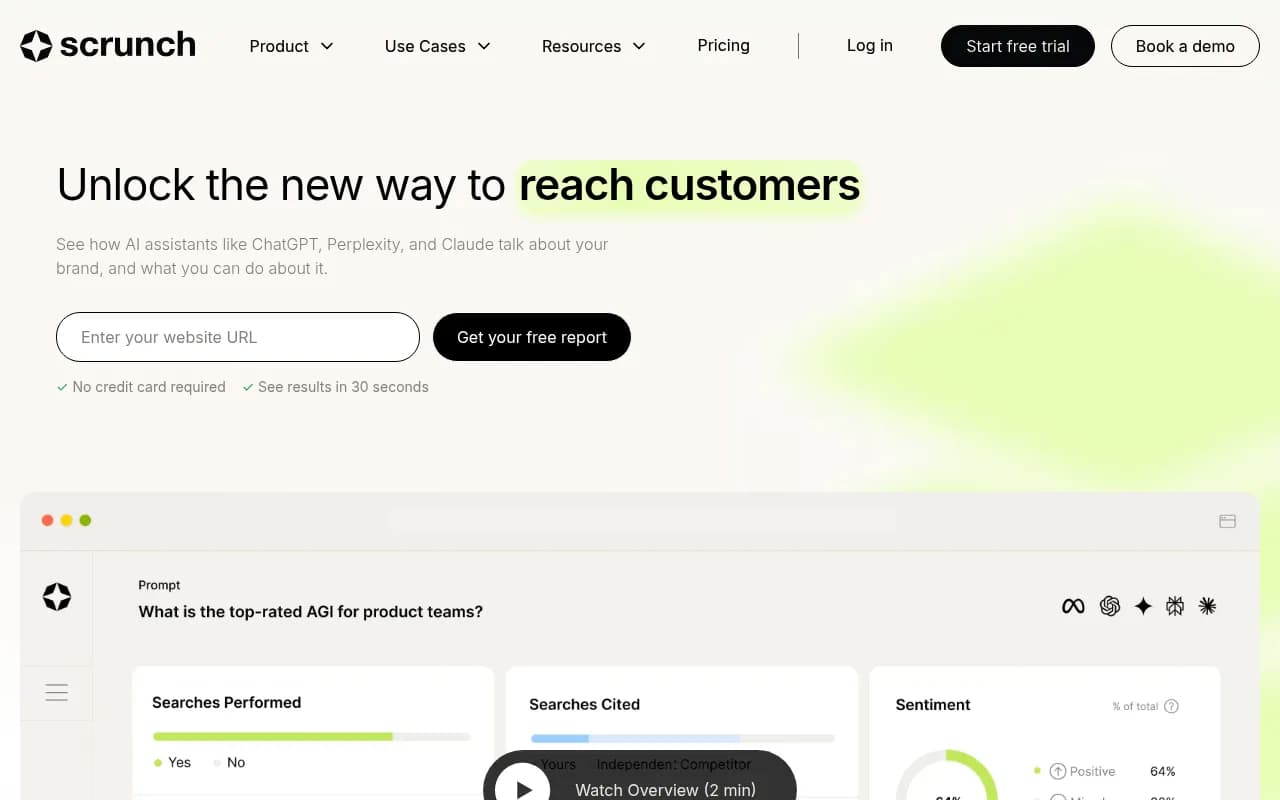
| Scrunch AI | Mid-market monitoring | Multiple | Limited | No | Mid-range |
| Conductor | Enterprise SEO + AEO | Multiple | No | No | Enterprise |
| Nightwatch | SEO + LLM combined | Multiple | No | No | Mid-range |
| Semrush | Traditional SEO + basic AI | Limited AI coverage | No | No | From $139/mo |

A few notes on this table. Semrush and Ahrefs are worth mentioning because many teams already have them -- but their AI monitoring is genuinely limited. Semrush uses fixed prompts, which means you can't track the specific questions your buyers are actually asking. Ahrefs Brand Radar has similar constraints and no AI traffic attribution. They're fine as supplementary data sources, but they shouldn't be your primary AI monitoring tool.
For agencies managing multiple clients, Rankscale is worth a look -- it's built with agency workflows in mind.
The content gap problem (and why it's the real issue)
Here's the uncomfortable truth about most AI visibility monitoring: the data is only useful if you act on it.
Knowing you're invisible for "best CRM for small businesses" on Perplexity is step one. But that information has zero value if you don't then figure out why -- and create content that fixes it.
The "why" usually comes down to one of three things:
- You don't have content covering that topic at all
- You have content, but it doesn't answer the question the way AI models want (too thin, wrong format, missing specific details)
- You have the right content, but AI crawlers aren't finding or reading it (technical issue)
Most monitoring tools tell you about problem #1 at best. They rarely help you diagnose #2, and almost none address #3.
This is why the distinction between monitoring and optimization matters so much. A tool that shows you the gap and then generates a content brief -- grounded in real prompt data, competitor citations, and what AI models are actually looking for -- is doing something fundamentally different from a dashboard that just shows you a score.
Common mistakes brands make with LLM monitoring
Tracking too few prompts. If you're only monitoring 10-15 prompts, you're seeing a tiny slice of your actual AI visibility. Most meaningful insights come from the long tail -- the specific, intent-rich questions where AI citations drive real purchase decisions.
Ignoring the platforms your audience actually uses. A B2B SaaS company's buyers might skew heavily toward Perplexity for research. A consumer brand's customers might be asking questions in Meta AI. Know where your audience is, not just which platforms are biggest overall.
Treating AI visibility as a separate project. The brands winning at AI visibility in 2026 aren't running a separate "AI SEO" workstream -- they've integrated it into their content strategy. Every new content piece gets evaluated against AI prompt data, not just traditional keyword volume.
Not monitoring competitors. Your visibility score in isolation is almost meaningless. You need the competitive context to know whether a 15% share of model is good or terrible for your category.
Checking manually. Even if you're just starting out, set up automated monitoring from day one. Manual checking creates inconsistent data and takes time you don't have.
Getting started: a realistic first 30 days
Week 1: Define your prompt universe (50-100 prompts across buyer journey stages). Set up tracking on at least ChatGPT, Perplexity, and Google AI Overviews -- the three platforms that drive the most traffic.
Week 2: Run your first competitive analysis. For each prompt where you're not appearing, identify which competitors are. Note which specific pages of theirs are being cited.
Week 3: Audit your AI crawler logs. Check whether GPTBot, PerplexityBot, and ClaudeBot are crawling your site, which pages they're reading, and whether there are any errors or blocks.
Week 4: Prioritize your content gaps. Not all gaps are equal -- focus on high-volume prompts where competitors are consistently winning and you have no content. These are your highest-leverage opportunities.
From there, it becomes a monthly cycle: track, identify gaps, create content, track again.
Final thought
The brands that will win in AI search aren't the ones with the most sophisticated monitoring dashboards. They're the ones that close the loop fastest -- from "we're invisible here" to "we published content that fixes it" to "AI models are now citing us for this."
Monitoring is table stakes. Optimization is the game.
Tools like Promptwatch are built around that full cycle. But whatever stack you use, make sure it doesn't stop at showing you a score. The score is just the starting point.