Key Takeaways
- Start with your CRM foundation: Your CRM is the single source of truth for customer data. Every other tool in your stack should integrate seamlessly with it to avoid data silos and manual work.
- Focus on the action loop: The best sales enablement stacks don't just monitor performance—they help you identify gaps, create content that converts, and track results in a continuous improvement cycle.
- Consolidate ruthlessly: Sales teams using 5+ disconnected platforms waste hours per week on context switching. Prioritize integrated platforms that combine content, training, and analytics in one place.
- Measure beyond adoption: Tool usage doesn't equal success. Track metrics that matter: win rates, deal velocity, quota attainment, and time spent selling vs. searching.
- Build for sellers, not buyers: The best tech stack is the one your reps actually use. Choose tools that reduce friction, not add busywork.
What is a Sales Enablement Tech Stack?
A sales enablement tech stack is the collection of software platforms that support your sales process from prospecting to close. It's not just a list of tools—it's a strategic system designed to give your sales team the right content, training, and insights at every stage of the buyer journey.
Think of it as the infrastructure that connects your sales, marketing, and product teams. When built correctly, it eliminates the chaos of scattered spreadsheets, outdated presentations, and reps scrambling for answers. When built poorly, it becomes a fragmented mess where sellers spend more time managing systems than selling.
The modern sales enablement stack typically includes:
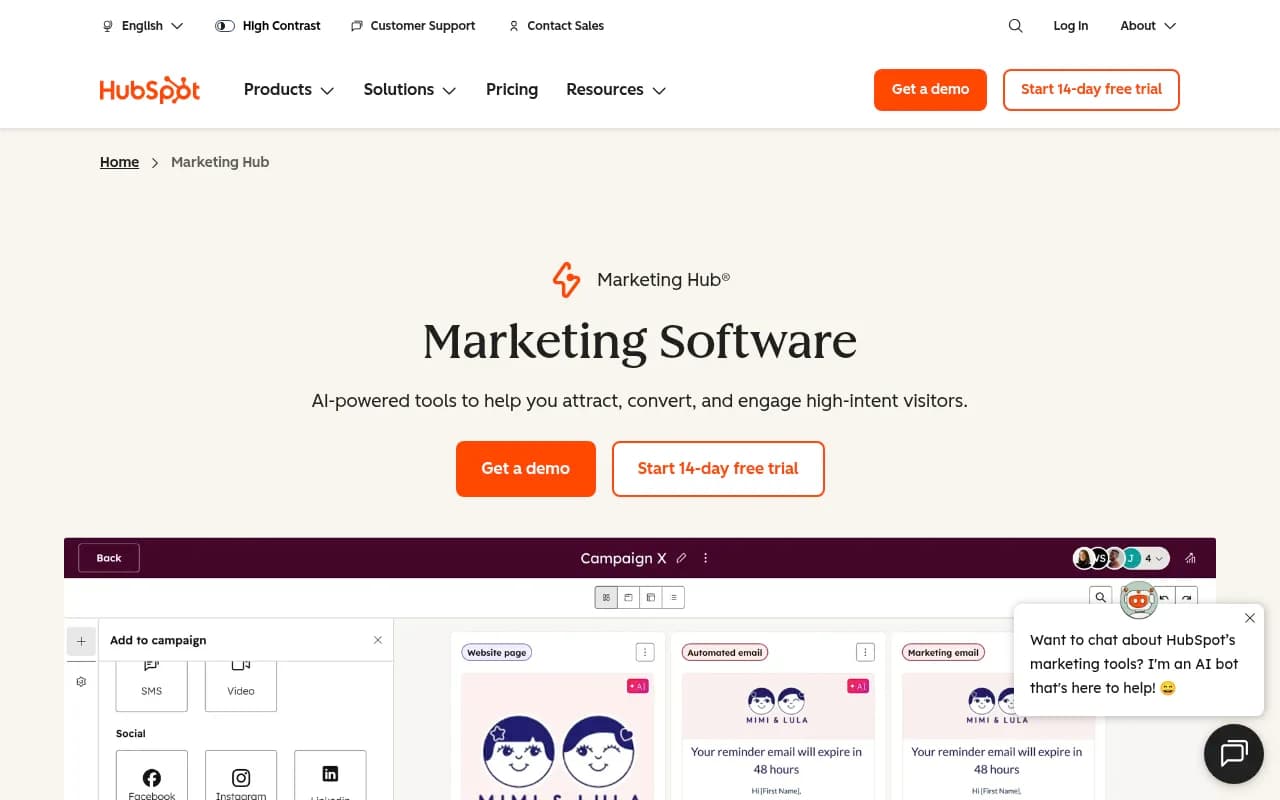
- CRM platforms (Salesforce, HubSpot, Pipedrive) for managing customer relationships and deal pipelines
- Content management systems for organizing sales collateral, case studies, and pitch decks
- Training and onboarding platforms for ramping new hires and upskilling existing reps
- Sales intelligence tools for prospecting, lead enrichment, and account research
- Analytics and reporting platforms for tracking performance, forecasting, and identifying bottlenecks
- Communication and engagement tools for outreach, follow-up, and buyer interaction
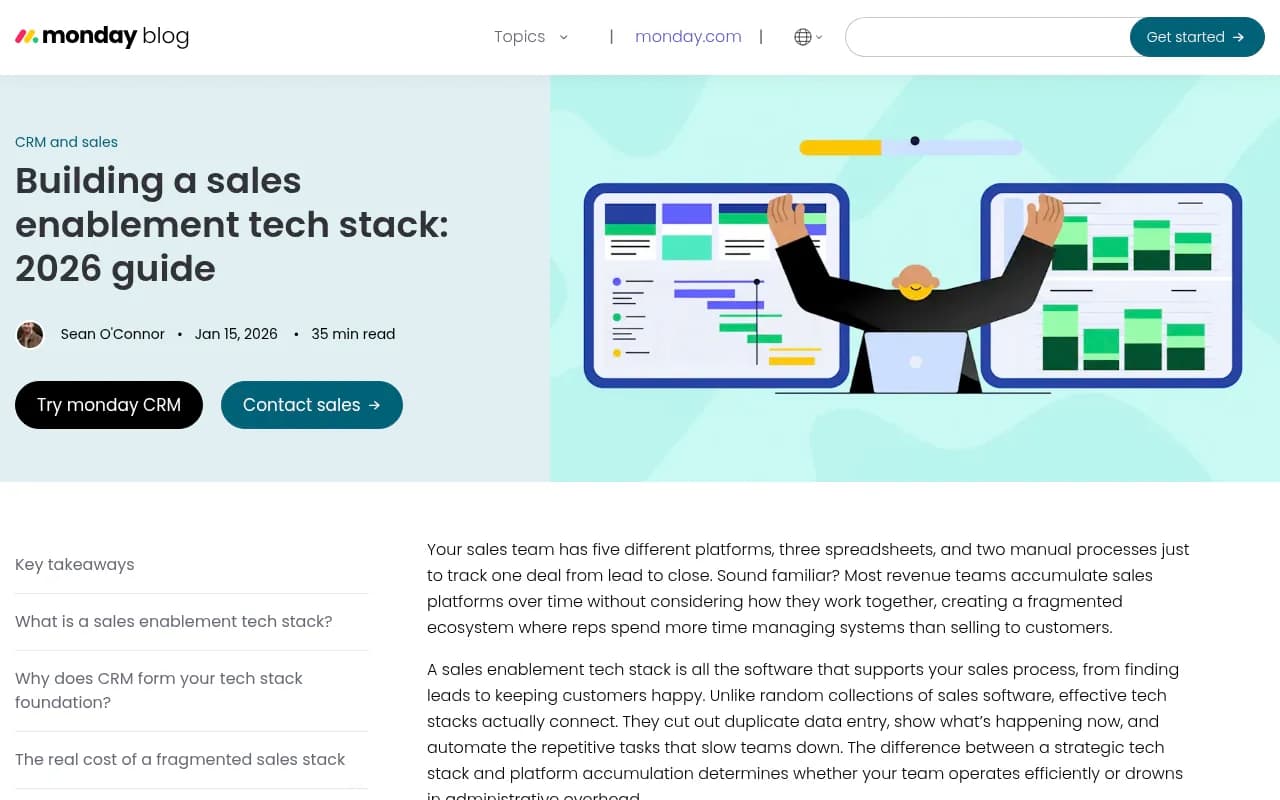
The goal isn't to collect as many tools as possible. It's to build a cohesive system where each platform serves a specific purpose and integrates seamlessly with the others. When done right, your tech stack becomes a competitive advantage—enabling your team to move faster, close more deals, and scale efficiently.
Why Your CRM Forms the Foundation
Your CRM is the single source of truth for customer data. Every interaction, every deal stage, every touchpoint flows through it. That's why it must be the foundation of your sales enablement stack—not an afterthought.
When your CRM is properly integrated with your other tools, it creates a unified view of the customer journey. Marketing can see which content assets are being used in deals. Sales leaders can track which training modules correlate with higher win rates. Reps can access the right resources without leaving their workflow.
But when your CRM sits in isolation, you end up with:
- Data silos: Marketing doesn't know which leads are converting. Sales doesn't know which campaigns are driving pipeline.
- Manual work: Reps copy-paste data between systems, wasting hours per week on administrative tasks.
- Incomplete insights: Your analytics are only as good as the data you're tracking. If your CRM isn't connected to your content, training, and engagement tools, you're flying blind.
The best CRM platforms in 2026 offer native integrations with sales enablement tools, making it easy to connect your stack without custom development. Look for CRMs that support:
- Bi-directional syncing with content management systems
- Activity tracking that logs email opens, content downloads, and training completions
- Custom fields and objects that let you track enablement-specific metrics
- API access for building custom integrations when needed
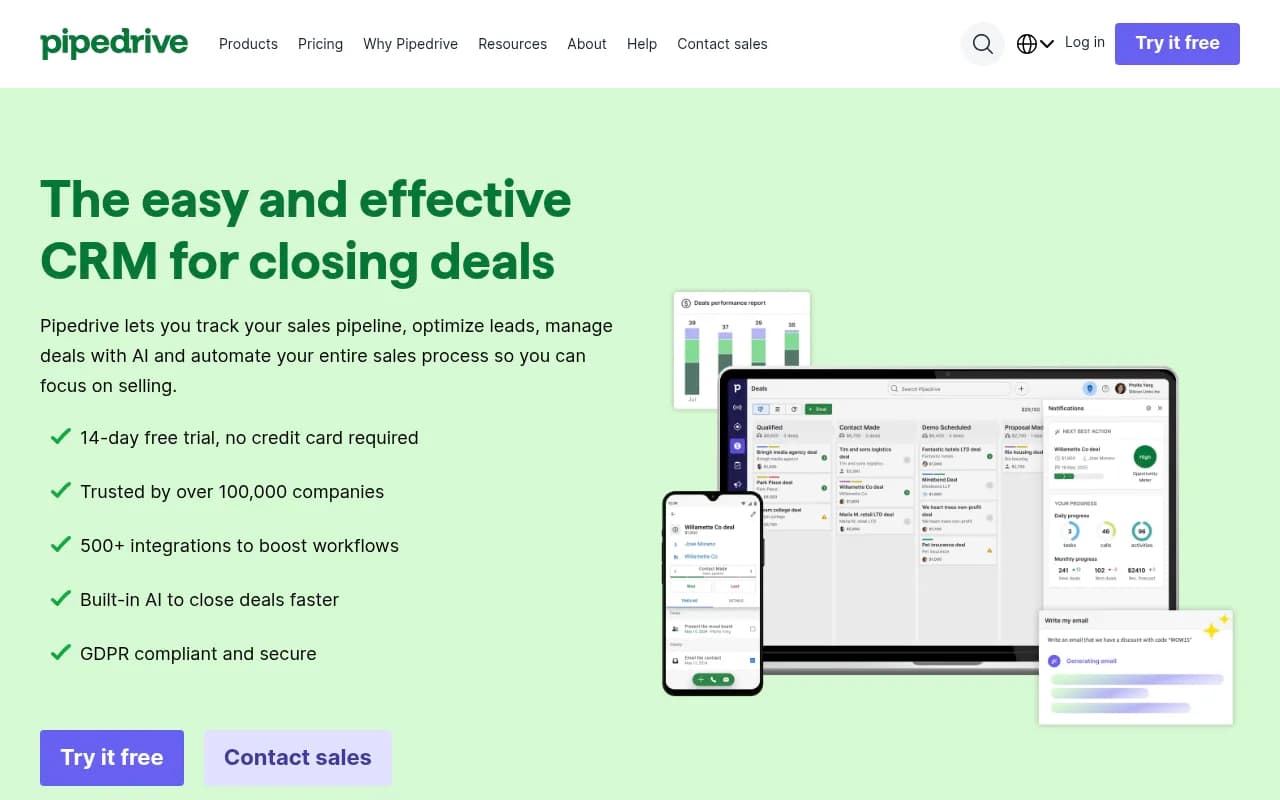
Your CRM should make it easier for reps to do their jobs, not harder. If sellers are avoiding your CRM because it's clunky or disconnected, that's a sign your foundation needs work.
The Real Cost of a Fragmented Sales Stack
Fragmentation kills productivity. When your sales team is juggling five different platforms, three spreadsheets, and two manual processes just to move a deal forward, they're not selling—they're managing systems.
Here's what a fragmented stack actually costs:
Time Waste
The average sales rep spends 440 hours per year searching for content, according to research from sales enablement platforms. That's 11 full work weeks lost to hunting down the right case study, digging through Slack for a pricing deck, or asking a colleague for the latest product sheet.
When your content lives in Google Drive, your training is in an LMS, your analytics are in a separate dashboard, and your CRM doesn't talk to any of them, every task requires context switching. Reps lose momentum. Deals stall.
Inconsistent Messaging
Without a centralized content system, different reps use different versions of the same pitch. One seller is using last quarter's pricing. Another is sharing an outdated case study. A third is winging it with a homemade slide deck.
The result? Buyers get mixed messages. Your brand looks disorganized. Deals fall apart because the information doesn't align.
Invisible Performance Gaps
When your tools don't integrate, you can't see the full picture. You know your win rate is dropping, but you don't know why. Is it a content problem? A training issue? A messaging gap?
Fragmented systems make it impossible to connect the dots. You're left guessing instead of optimizing.
Poor Onboarding and Ramp Time
New hires need to learn five different platforms before they can even start prospecting. They don't know where to find resources. They don't know which content to use for which buyer persona. They waste weeks figuring out the system instead of selling.
The cost? Longer ramp times, lower quota attainment, and higher turnover.
5 Signs You Need Sales Tech Stack Consolidation
How do you know when it's time to consolidate? Here are five red flags:
1. Reps Are Complaining About Tool Overload
If your sales team is constantly asking "which tool do I use for this?" or "where do I find that?"—that's a sign. When sellers are spending more time navigating your tech stack than engaging with buyers, you have a problem.
2. You Have Multiple Tools Doing the Same Thing
One team uses Gong for call recording. Another uses Chorus. A third uses a homegrown solution. You're paying for three platforms that do the same job, and none of them integrate with your CRM.
Consolidation means choosing one best-in-class tool for each function and ensuring it connects to everything else.
3. Data Doesn't Match Across Systems
Your CRM says one thing. Your analytics dashboard says another. Your content platform shows different usage numbers. When your data is inconsistent, you can't trust your insights—and you can't make informed decisions.
4. Onboarding Takes Longer Than It Should
If new reps need a month just to learn your tools before they can start selling, your stack is too complex. The best enablement systems are intuitive and integrated, reducing ramp time instead of extending it.
5. You Can't Prove ROI on Your Tools
You're paying for a dozen platforms, but you don't know which ones are actually driving results. If you can't connect tool usage to revenue outcomes, it's time to audit your stack and cut what's not working.
Building Your Sales Enablement Solution Framework
A sales enablement framework is your strategic blueprint for aligning sales, marketing, and product teams. It's not a single tool or a one-off project—it's a living system designed to give your sales team the right content, training, and tools to sell more effectively.
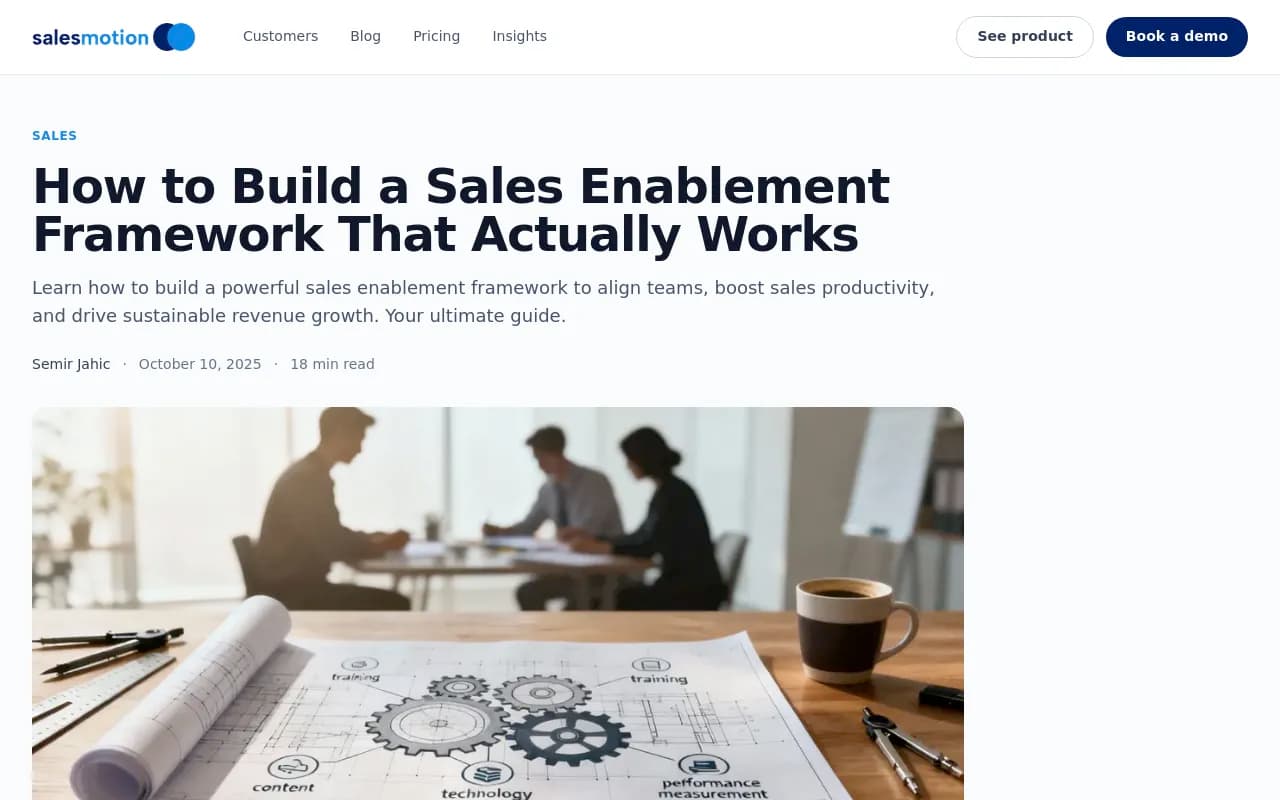
The framework has three core pillars:
1. Content Management
Your content pillar ensures that every rep has access to the right resources at the right time. This includes:
- Sales collateral: Pitch decks, one-pagers, case studies, ROI calculators
- Product documentation: Feature sheets, technical specs, implementation guides
- Competitive intelligence: Battle cards, objection handling scripts, competitor comparisons
- Buyer-facing content: Whitepapers, eBooks, webinar recordings, demo videos
The key is centralization. Your content should live in a single, searchable repository that integrates with your CRM. Reps should be able to find what they need in seconds, not minutes.
Tools like Highspot, Seismic, and Showpad are purpose-built for sales content management. They offer version control, usage analytics, and AI-powered recommendations that surface the right content based on deal stage and buyer persona.
2. Training and Coaching
Your training pillar ensures that reps have the skills and knowledge to execute your sales strategy. This includes:
- Onboarding programs: Structured ramp plans for new hires
- Product training: Deep dives on features, use cases, and positioning
- Skills development: Objection handling, discovery calls, negotiation tactics
- Ongoing coaching: Call reviews, role-playing, peer learning
The best training platforms combine asynchronous learning (videos, modules, quizzes) with live coaching and feedback. They track completion rates, quiz scores, and skill mastery—then connect that data to your CRM so you can see which training correlates with higher win rates.
Platforms like Mindtickle, Lessonly, and Allego specialize in sales readiness and coaching. They offer mobile-friendly learning, AI-powered coaching insights, and certification programs that ensure reps are ready to sell.
3. Analytics and Performance Tracking
Your analytics pillar measures what's working and what's not. This includes:
- Activity metrics: Calls made, emails sent, meetings booked
- Pipeline metrics: Opportunities created, deal velocity, conversion rates
- Content metrics: Which assets are being used, which are driving engagement
- Training metrics: Completion rates, skill mastery, time to productivity
- Revenue metrics: Win rates, average deal size, quota attainment
The goal is to close the loop between enablement activities and revenue outcomes. If you're investing in training but can't prove it's improving win rates, you're guessing. If you're creating content but don't know which assets are being used in closed deals, you're wasting resources.
Tools like Gong, Clari, and Chorus analyze sales conversations and pipeline health, surfacing insights that help you optimize your enablement strategy.
How to Build a Sales Technology Stack in 5 Steps
Step 1: Audit Your Current Stack
Start by mapping out every tool your sales team currently uses. Include:
- Core platforms: CRM, email, calendar
- Prospecting tools: Lead databases, enrichment platforms, intent data
- Content tools: Where sales collateral lives and how it's shared
- Training tools: LMS, coaching platforms, onboarding systems
- Analytics tools: Dashboards, reporting, forecasting
- Communication tools: Email sequencing, video messaging, meeting schedulers
For each tool, ask:
- Who uses it? Is it adopted across the team or just by a few power users?
- What problem does it solve? Is it addressing a real pain point or just adding noise?
- Does it integrate with our CRM? If not, how much manual work is required to keep data in sync?
- Can we measure its impact? Do we have data showing it's driving results?
This audit will reveal overlap, gaps, and tools that aren't pulling their weight.
Step 2: Define Your Enablement Goals
What are you trying to achieve with your sales enablement stack? Be specific:
- Reduce ramp time for new hires from 6 months to 3 months
- Increase win rates by 10% through better content and training
- Cut time spent searching for content by 50%
- Improve forecast accuracy to within 5%
Your goals will determine which tools you need and which you can eliminate. If your priority is faster onboarding, invest in a robust training platform. If it's better content usage, focus on a centralized content management system.
Step 3: Prioritize Integration Over Features
When evaluating tools, integration matters more than feature lists. A platform with 100 features that doesn't connect to your CRM is less valuable than a simpler tool that syncs seamlessly.
Look for:
- Native integrations with your CRM and other core platforms
- API access for custom workflows
- Single sign-on (SSO) to reduce login friction
- Unified data models that ensure consistency across systems
The goal is to create a connected ecosystem where data flows automatically between tools. Reps shouldn't have to manually log activities or copy-paste information.
Step 4: Choose Platforms That Combine Multiple Functions
Instead of buying separate tools for content, training, and analytics, look for platforms that combine all three. This reduces complexity, improves adoption, and lowers costs.
For example, Highspot offers content management, training modules, and analytics in a single platform. Reps can access sales collateral, complete training, and track their performance without switching tools.
Other all-in-one platforms include:
- Seismic: Content automation, training, and buyer engagement
- Showpad: Content management, coaching, and analytics
- Mindtickle: Sales readiness, training, and performance tracking
These platforms aren't cheap, but they're often more cost-effective than stitching together five separate tools.
Step 5: Pilot, Measure, and Iterate
Don't roll out your entire stack at once. Start with a pilot group—a single team or region—and measure the impact before expanding.
Track:
- Adoption rates: Are reps actually using the new tools?
- Time savings: How much time are they saving on administrative tasks?
- Performance metrics: Are win rates, deal velocity, or quota attainment improving?
- User feedback: What do reps love? What's frustrating?
Use this data to refine your stack before rolling it out company-wide. If a tool isn't driving results, replace it. If reps aren't adopting it, figure out why and fix the friction.
7 Ways to Drive Sales Tech Stack Adoption
Even the best tools fail if your team doesn't use them. Here's how to drive adoption:
1. Start with the Why
Don't just tell reps to use a new tool. Explain how it makes their lives easier. Show them the time savings, the better insights, the faster deal cycles. Make the value crystal clear.
2. Train Early and Often
Reps won't adopt tools they don't understand. Invest in comprehensive training—live sessions, video tutorials, written guides. Make it easy for them to get up to speed.
3. Embed Tools in Existing Workflows
The best tools are the ones reps don't have to think about. If your content platform integrates with your CRM, reps can access resources without leaving their workflow. If your training platform sends reminders via Slack, they don't have to remember to log in.
4. Celebrate Early Wins
Highlight reps who are using the tools effectively and seeing results. Share success stories in team meetings. Create leaderboards that recognize top users. Make adoption a point of pride.
5. Remove Friction
If reps are complaining about a tool, listen. Is the interface clunky? Are there too many steps? Is the data inaccurate? Fix the friction points or find a better alternative.
6. Tie Adoption to Incentives
Consider tying tool usage to performance reviews or bonuses. If reps know that using the training platform or logging activities in the CRM is part of how they're evaluated, they'll prioritize it.
7. Audit and Optimize Regularly
Your tech stack isn't static. As your business evolves, your tools should too. Conduct quarterly audits to identify underused platforms, integration issues, or new needs. Stay intentional about every tool in your stack.
Measuring Sales Stack Success Beyond ROI
ROI is important, but it's not the only metric that matters. Here are other ways to measure success:
Time to Productivity
How long does it take new hires to hit quota? If your training and onboarding tools are working, ramp time should decrease over time.
Win Rate Improvement
Are reps closing more deals? If your content and training are effective, win rates should improve—especially in competitive situations.
Deal Velocity
Are deals moving through the pipeline faster? If your tools are reducing friction and improving communication, deal cycles should shorten.
Content Utilization
Which assets are reps actually using? Which ones are sitting unused? If your content management system is working, you should see high engagement with your best-performing resources.
Forecast Accuracy
Are your pipeline predictions getting more accurate? If your analytics tools are providing better insights, your forecasts should tighten.
Rep Satisfaction
Are your sellers happy with the tools they're using? Conduct regular surveys to gauge satisfaction and identify pain points.
AI and the Future of Sales Enablement Platforms
AI is transforming sales enablement in 2026. The best platforms now use AI to:
Recommend Content Automatically
Instead of reps searching for the right case study, AI surfaces it based on deal stage, buyer persona, and past performance. Tools like Highspot and Seismic use machine learning to predict which content will resonate with each prospect.
Analyze Sales Conversations
Platforms like Gong and Chorus transcribe calls, identify key moments, and surface coaching opportunities. They can flag when a rep misses an objection or forgets to ask a discovery question.
Personalize Training Paths
AI-powered training platforms adapt to each rep's skill level and learning style. If a rep is struggling with objection handling, the system serves up targeted modules and practice scenarios.
Predict Deal Outcomes
AI can analyze pipeline data and predict which deals are likely to close and which are at risk. This helps sales leaders prioritize coaching and intervention.
Automate Administrative Tasks
AI can log activities, update CRM records, and generate follow-up emails—freeing reps to focus on selling.
The future of sales enablement is proactive, not reactive. Instead of reps searching for answers, AI delivers them automatically. Instead of managers guessing which reps need coaching, AI surfaces the gaps.
How to Build a Sales Tech Stack That Drives Revenue
Building a sales enablement tech stack in 2026 isn't about collecting tools—it's about creating a connected system that empowers your team to sell more effectively.
Start with your CRM as the foundation. Consolidate ruthlessly to eliminate fragmentation. Choose platforms that combine content, training, and analytics in one place. Prioritize integration over features. Measure what matters—not just adoption, but real revenue outcomes.
Most importantly, build for your sellers, not your spreadsheet. The best tech stack is the one your reps actually use—the one that makes their jobs easier, not harder.
If you're struggling with tool overload, data silos, or invisible performance gaps, it's time to audit your stack and start consolidating. Your revenue depends on it.