Key Takeaways
- Answer gap alerts monitor when competitors get cited in AI responses for prompts where you're invisible — this is fundamentally different from traditional rank tracking because AI engines don't have "positions," they have citations and narrative control
- The best alert systems combine prompt monitoring, competitor tracking, and content gap analysis — tools like Promptwatch show you exactly which prompts competitors rank for, what content they have that you don't, and generate optimized articles to close those gaps
- Real-time notifications are critical because AI visibility changes faster than traditional SEO — when a competitor suddenly appears in ChatGPT or Perplexity responses, you need to know immediately so you can respond with better content
- Effective alerts require three components: prompt discovery, visibility tracking, and automated content recommendations — monitoring alone isn't enough; you need a system that tells you what to do about the gaps
- Most monitoring-only tools (Otterly.AI, Peec.ai, AthenaHQ) stop at showing you the data — the real value comes from platforms that close the loop by helping you create content that actually gets cited by AI models
Why Answer Gap Alerts Matter More Than Traditional Rank Tracking
In 2026, the game has fundamentally changed. Google's AI Overviews now appear on 21% of keywords according to recent Ahrefs data, and when they show up, traditional organic clicks often disappear entirely. Users get their answers directly from AI-generated summaries without ever visiting your site.
But here's what most teams miss: visibility is no longer about ranking positions — it's about getting cited in AI responses. When someone asks ChatGPT "what's the best project management tool for remote teams," there's no position #1 through #10. There's just the narrative the AI constructs, and either your brand is part of that story or it isn't.
This creates a new problem: how do you know when competitors start appearing in AI responses for prompts where you're invisible? Traditional rank trackers can't help you here. They're built for SERP positions, not AI citations.
Answer gap alerts solve this by continuously monitoring AI engines (ChatGPT, Claude, Perplexity, Gemini, Google AI Overviews) and notifying you the moment a competitor gets cited for a prompt you're not tracking or ranking for. This gives you the intelligence you need to respond quickly — before the gap becomes a revenue problem.
The Three Components of an Effective Answer Gap Alert System
Building an alert system that actually helps you close visibility gaps requires three distinct capabilities working together:
1. Prompt Discovery and Volume Intelligence
You can't track gaps for prompts you don't know exist. The first component is discovering which prompts your competitors are visible for that you're not.
This means:
- Identifying high-volume prompts in your category that trigger AI responses
- Understanding which variations and sub-queries branch off from core prompts
- Seeing difficulty scores so you can prioritize winnable opportunities
- Tracking seasonal trends and emerging topics before they peak
Tools like Promptwatch provide prompt intelligence with volume estimates and query fan-outs that show how one prompt branches into dozens of related queries. This is critical because you need to know not just what people are asking, but how often and in what variations.
2. Multi-Engine Competitor Visibility Tracking
Once you know which prompts matter, you need continuous monitoring across all major AI engines to see when competitors appear in responses.
This requires:
- Real-time tracking across ChatGPT, Claude, Perplexity, Gemini, Google AI Overviews, and other models
- Competitor heatmaps showing who's winning for each prompt and by how much
- Citation analysis revealing exactly which pages, domains, and content types AI models prefer
- Multi-language and multi-region support because AI responses vary by location and language
- Historical data so you can see when a competitor's visibility suddenly increased
Most monitoring tools (Otterly.AI, Peec.ai, AthenaHQ) stop here. They show you the data but leave you stuck trying to figure out what to do about it.
3. Automated Content Gap Analysis and Recommendations
The third component — and the one that separates monitoring platforms from optimization platforms — is showing you exactly what content you're missing and helping you create it.
This means:
- Answer Gap Analysis that identifies which topics, angles, and questions competitors cover but you don't
- Page-level comparison showing what's on their site vs. yours
- AI content generation that creates articles, listicles, and comparisons engineered to get cited
- Optimization recommendations grounded in 880M+ citations analyzed across AI models
- Tracking results so you can see your visibility scores improve as new content gets indexed
This is where platforms like Promptwatch differentiate themselves. Instead of just showing you gaps, they help you close them with an AI writing agent that generates content based on real citation data, prompt volumes, persona targeting, and competitor analysis.
How to Set Up Answer Gap Alerts: Step-by-Step
Step 1: Define Your Core Prompt Set
Start by identifying 20-50 core prompts that represent how your target customers actually search in AI engines. These should be:
- High-intent prompts that indicate purchase consideration ("best X for Y", "X vs Y", "how to choose X")
- Category-defining prompts that establish thought leadership ("what is X", "how does X work")
- Comparison prompts that include your brand and competitors ("Brand A vs Brand B")
- Problem-solution prompts where your product is the answer ("how to solve X problem")
Don't just guess at these. Use prompt intelligence tools to see actual volume data and difficulty scores. Prioritize prompts that have meaningful search volume but aren't impossibly competitive.
Step 2: Add Your Top 5-10 Competitors
Identify which competitors you want to monitor. Focus on:
- Direct competitors selling similar products to similar audiences
- Category leaders who define the narrative in your space
- Emerging players who are gaining visibility fast
- Content publishers (blogs, media sites, Reddit, YouTube) that influence AI recommendations
Most platforms let you track 3-5 competitors on lower-tier plans, with more available on higher tiers. Choose strategically — you want competitors who represent different positioning strategies so you can learn from all of them.
Step 3: Configure Multi-Engine Tracking
Set up monitoring across all relevant AI engines. At minimum, track:
- ChatGPT (OpenAI) — the most widely used AI assistant
- Perplexity — increasingly popular for research and discovery
- Google AI Overviews — appears in 21% of Google searches
- Claude (Anthropic) — growing fast among technical and professional users
- Gemini (Google) — integrated across Google products
Some platforms also track Meta AI, DeepSeek, Grok, Mistral, and Copilot. The more engines you monitor, the more complete your visibility picture.
Step 4: Set Up Automated Alert Rules
Configure notifications for the events that matter most:
Competitor appearance alerts: Notify me when a competitor gets cited for a prompt I'm tracking but not ranking for
New prompt discovery alerts: Notify me when a high-volume prompt in my category starts triggering AI responses
Visibility drop alerts: Notify me when my citation rate drops below X% for a tracked prompt
Content gap alerts: Notify me when Answer Gap Analysis identifies 5+ new topics I'm missing
Crawler activity alerts: Notify me when AI crawlers (ChatGPT, Claude, Perplexity) hit my site with errors or stop visiting entirely
Most platforms let you set alert frequency (real-time, daily, weekly) and delivery method (email, Slack, dashboard). Start with daily digests to avoid notification fatigue, then adjust based on how quickly you can respond.
Step 5: Connect the Alert System to Your Content Workflow
Alerts are only useful if they trigger action. Build a workflow that turns alerts into published content:
- Alert fires: Competitor appears in ChatGPT response for "best project management tools for remote teams"
- Review the gap: Check Answer Gap Analysis to see what topics/angles the competitor covers that you don't
- Generate content: Use AI writing tools to create an article that fills the gap (or assign to your content team)
- Optimize for citations: Ensure the content includes the specific facts, data points, and angles AI models want
- Publish and track: Monitor how long it takes for AI engines to discover and start citing your new content
- Measure results: Track visibility score changes and traffic attribution to connect citations to actual revenue
This closed-loop process — find gaps, create content, track results — is what separates monitoring from optimization. Platforms like Promptwatch are built around this action loop, with built-in AI content generation that creates articles engineered to get cited by AI models.
Advanced Alert Configurations for Different Use Cases
For Brand Monitoring Teams
If your primary goal is protecting brand reputation and ensuring accurate representation in AI responses:
- Set up branded query alerts for terms like "[your brand] reviews", "[your brand] vs competitors", "is [your brand] worth it"
- Monitor sentiment changes — get notified if negative mentions increase or positive citations decrease
- Track ChatGPT Shopping appearances if you sell products (Promptwatch is one of the few platforms that tracks this)
- Configure hallucination detection alerts when AI models make factually incorrect statements about your brand
For Content Teams
If you're focused on creating content that ranks in AI search:
- Prioritize content gap alerts that show exactly which articles you need to write
- Set up Reddit and YouTube tracking to surface discussions that influence AI recommendations (most competitors ignore these channels entirely)
- Monitor page-level citations to see which of your existing pages are getting cited and which aren't
- Track AI crawler logs to understand how often AI engines visit your site and which pages they read
For SEO and Growth Teams
If you're measuring ROI and connecting visibility to revenue:
- Configure traffic attribution using code snippets, Google Search Console integration, or server log analysis
- Set up competitor visibility benchmarks so you can see your share of voice vs. competitors
- Track prompt difficulty scores to prioritize high-value, winnable opportunities
- Monitor multi-region and multi-language variations if you operate in multiple markets
For Agencies Managing Multiple Clients
If you're running campaigns for multiple brands:
- Use white-label reporting to share visibility data with clients (if your platform supports it)
- Set up client-specific alert rules so each brand only sees relevant notifications
- Configure Looker Studio integration or API access for custom reporting dashboards
- Track agency-level metrics like total prompts monitored, content generated, and visibility improvements across all clients
Tools That Actually Support Answer Gap Alerts
Not all AI visibility platforms support answer gap alerts. Here's what to look for:
Platforms with Full Answer Gap Alert Capabilities
Promptwatch — The only platform rated as a "Leader" across all categories in a 2026 comparison of 12 GEO platforms. Combines Answer Gap Analysis, AI content generation, crawler logs, prompt intelligence, and multi-engine tracking. Pricing starts at $99/mo for Essential (1 site, 50 prompts, 5 articles), $249/mo for Professional (2 sites, 150 prompts, 15 articles, crawler logs), $579/mo for Business (5 sites, 350 prompts, 30 articles).

Profound — Strong feature set with visibility scoring and competitive benchmarks, but higher price point ($99/mo starting) and missing Reddit tracking and ChatGPT Shopping.
Profound

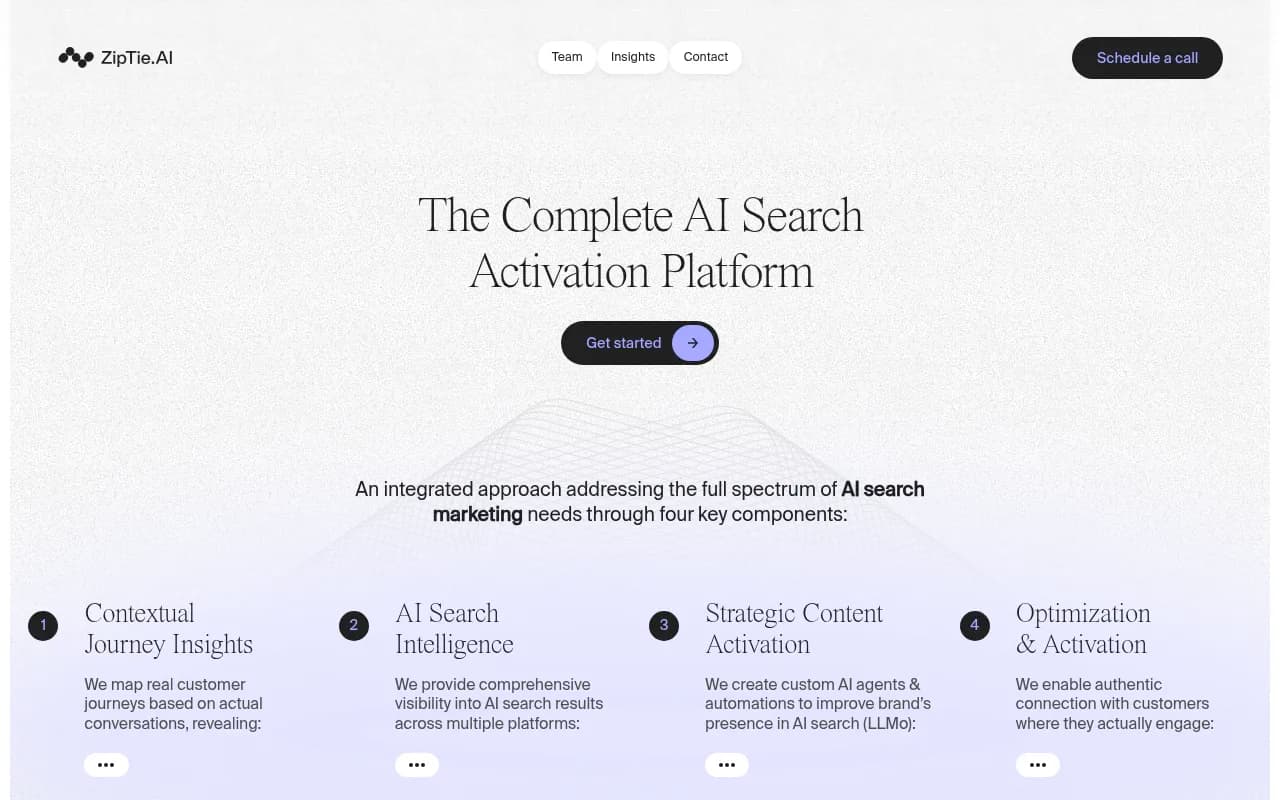
ZipTie — Deep analysis platform with AI success scores and citation optimization. Starts at $69/mo but uses credit-based billing and has report delays.
Monitoring-Only Platforms (Limited Alert Capabilities)
Otterly.AI — Basic monitoring across ChatGPT, Perplexity, and AI Overviews. No crawler logs, no visitor analytics, no content generation. Starts at $29/mo.
Otterly.AI

Peec.ai — Simple tracking dashboard but lacks content optimization and generation capabilities. No answer gap analysis.

AthenaHQ — Monitoring-focused with limited prompt metrics and no content gap analysis or generation tools.

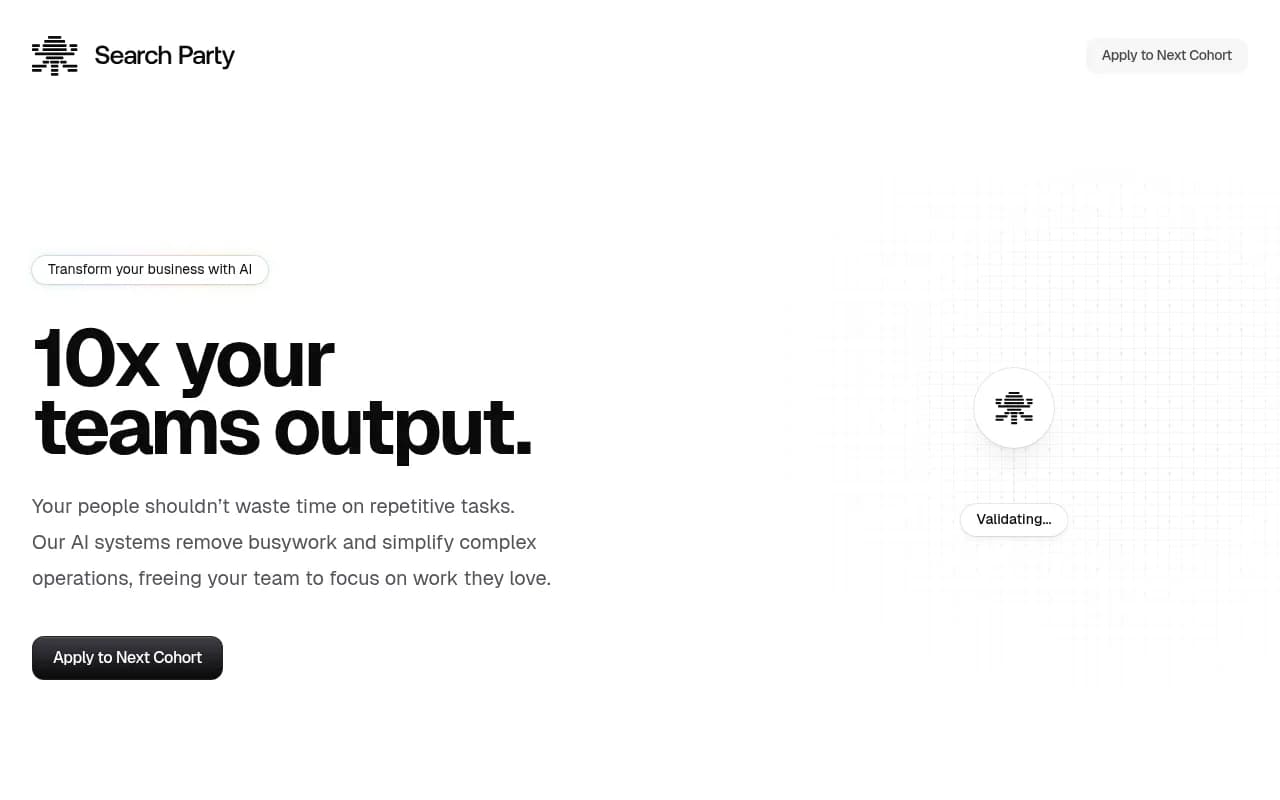
Search Party — Agency-oriented but missing prompt intelligence and answer gap analysis. Better for reporting than optimization.
Search Party
Traditional SEO Tools with Limited AI Support
Semrush — Added AI Overviews tracking but uses fixed prompts and doesn't support custom prompt monitoring or answer gap alerts.
Ahrefs — Ahrefs Brand Radar tracks AI mentions but has fixed prompts and no AI traffic attribution or content gap analysis.
Common Mistakes When Setting Up Answer Gap Alerts
Mistake #1: Tracking Too Many Low-Value Prompts
More prompts doesn't mean better insights. If you're tracking 500 prompts but only 50 of them have meaningful volume or business impact, you're drowning in noise.
Fix: Start with 20-50 high-intent prompts. Use prompt intelligence to prioritize based on volume, difficulty, and business value. Expand gradually as you prove ROI.
Mistake #2: Monitoring Without Action
Most teams set up alerts, get overwhelmed by notifications, then ignore them. Alerts are only valuable if they trigger a response.
Fix: Build a content workflow that turns alerts into published articles. If you can't respond to an alert within 2 weeks, you're tracking too many prompts or need better content creation tools.
Mistake #3: Ignoring Multi-Engine Differences
ChatGPT, Perplexity, Claude, and Google AI Overviews cite different sources and respond to different content types. A strategy that works for one engine might fail for another.
Fix: Track all major engines and analyze which content types each prefers. Optimize your content strategy for the engines your target customers actually use.
Mistake #4: Focusing Only on Competitors
Your biggest visibility gaps might not be competitors — they might be Reddit threads, YouTube videos, or niche blogs that AI models trust more than commercial sites.
Fix: Use citation analysis to see all sources AI models cite, not just direct competitors. Platforms like Promptwatch surface Reddit and YouTube discussions that influence AI recommendations.
Mistake #5: Not Tracking AI Crawler Activity
If AI crawlers aren't visiting your site (or encountering errors when they do), no amount of content optimization will help.
Fix: Monitor AI crawler logs to see when ChatGPT, Claude, Perplexity, and other models visit your site. Fix indexing issues, server errors, and robots.txt blocks that prevent AI engines from discovering your content.
Measuring the ROI of Answer Gap Alerts
Answer gap alerts are only worth the investment if they drive measurable business results. Here's how to prove ROI:
Track Visibility Score Improvements
Most platforms provide a visibility score (0-100%) showing what percentage of tracked prompts cite your brand. Monitor this over time:
- Baseline: What's your visibility score when you start?
- Target: Where do you want to be in 3 months? 6 months?
- Progress: How much does your score improve each month as you close gaps?
A 10-20% visibility improvement in the first quarter is realistic if you're actively responding to alerts and creating optimized content.
Connect Citations to Traffic
Visibility means nothing if it doesn't drive traffic. Use traffic attribution to connect AI citations to actual visitors:
- Code snippet tracking: Add a JavaScript snippet to track visitors from AI engines
- Google Search Console integration: See which AI Overview appearances drive clicks
- Server log analysis: Identify traffic from ChatGPT, Claude, Perplexity user agents
Platforms like Promptwatch include traffic attribution tools that show exactly which AI citations are driving visitors to your site.
Calculate Content ROI
For each piece of content you create in response to an alert:
- Cost: How much did it cost to create? (Writer time, AI tools, editing, publishing)
- Citations: How many AI engines now cite this content?
- Traffic: How many visitors came from those citations?
- Conversions: How many of those visitors converted to leads or customers?
- Revenue: What's the total revenue attributed to this content?
If you're spending $500 to create an article that generates $5,000 in attributed revenue over 6 months, that's a 10x ROI — and it compounds over time as the content continues to get cited.
Benchmark Against Competitors
Track your visibility score vs. competitors over time. If you're closing gaps faster than they are, you're winning.
Use competitor heatmaps to see:
- Which prompts you're winning vs. losing
- Where competitors are gaining ground
- Which content types are most effective
- How quickly you can overtake competitors after publishing new content
The Future of Answer Gap Alerts in 2026 and Beyond
AI search is evolving fast. Here's what's coming:
Predictive Gap Alerts
Instead of notifying you after a competitor appears, next-generation platforms will predict which prompts are about to become high-value opportunities based on:
- Search trend data showing rising query volume
- Social media signals indicating emerging topics
- Competitor content publication patterns
- Seasonal trends from previous years
This lets you create content proactively instead of reactively.
Automated Content Generation Pipelines
The gap between "alert fires" and "content published" will shrink to hours instead of weeks. AI writing agents will:
- Automatically generate first drafts when alerts fire
- Optimize content for specific AI engines based on citation data
- Schedule publication and distribution
- Track results and iterate based on performance
Platforms like Promptwatch already offer AI content generation, but expect this to become more automated and sophisticated.
Multi-Modal Tracking
As AI engines incorporate images, videos, and audio into responses, answer gap alerts will expand beyond text:
- YouTube video citations in AI responses
- Image attribution in visual search results
- Podcast mentions in audio AI assistants
- Product recommendations in ChatGPT Shopping
Real-Time Optimization Feedback
Instead of waiting days or weeks to see if new content gets cited, platforms will provide real-time feedback:
- AI crawler activity within hours of publication
- Citation testing showing which content variations perform best
- A/B testing for AI optimization (similar to traditional SEO split testing)
Getting Started Today
Here's your action plan for setting up answer gap alerts this week:
Day 1: Audit your current AI visibility. Pick 20 core prompts and manually check ChatGPT, Perplexity, and Google AI Overviews to see if you're cited. Note which competitors appear instead.
Day 2: Choose a platform. If you want monitoring plus optimization (Answer Gap Analysis, AI content generation, crawler logs), start with Promptwatch. If you only need basic monitoring, Otterly.AI or Peec.ai might suffice.
Day 3: Set up your prompt list and add competitors. Configure alerts for competitor appearances and content gaps.
Day 4: Review your first batch of alerts. Prioritize the 3-5 gaps with the highest business impact.
Day 5: Create your first piece of gap-filling content. Use AI writing tools to speed up the process, but ensure the content includes the specific facts and angles AI models want.
Week 2-4: Monitor results. Track how long it takes for AI engines to discover and cite your new content. Adjust your workflow based on what's working.
Month 2: Expand your prompt list as you prove ROI. Add more competitors. Refine your alert rules based on which notifications drive the most valuable actions.
The brands winning in AI search in 2026 aren't the ones with the biggest budgets — they're the ones with the best intelligence. Answer gap alerts give you that intelligence, but only if you act on it.
Start small, prove value, then scale. The visibility gaps you close this month could be the revenue drivers that define your year.