Key Takeaways
- Query fan-out is reshaping AI search: When you ask ChatGPT or Perplexity a question, AI models execute 8-10 parallel sub-queries behind the scenes to verify answers — and only sources that appear across multiple sub-queries get cited
- Fan-out coverage drives citations: Websites ranking for multiple fan-out queries are 161% more likely to earn AI Overview citations than those ranking only for primary keywords
- 95% of fan-out queries have zero search volume: Traditional keyword tools miss the hyper-specific phrases AI models actually use to validate information — you need specialized tools to surface them
- Content clusters beat single pages: AI models favor comprehensive topic coverage across multiple pages over isolated articles, making content architecture critical
- Action beats monitoring: Identifying fan-out gaps is only step one — the real competitive advantage comes from systematically creating content that fills those gaps
If you're still optimizing content for individual keywords in isolation, you're already behind. The way AI search engines discover, evaluate, and cite content has fundamentally changed — and query fan-out is at the center of this transformation.
When a user asks ChatGPT "best electric cars for families under $50,000," the model doesn't just search for that exact phrase. Behind the scenes, it executes 8-10 parallel sub-queries: "electric vehicle safety ratings families," "affordable electric cars 2026," "electric car cargo space comparison," "EV charging infrastructure family homes," and more. Only sources that appear across multiple sub-queries earn citations in the final answer.
This guide will show you how to turn query fan-out data into a systematic content roadmap that earns citations from ChatGPT, Perplexity, Google AI Overviews, and other AI search engines.
What Query Fan-Out Means for Content Strategy
Query fan-out is an information retrieval technique where AI systems expand a single user query into multiple related sub-queries to capture different possible intents, retrieve more comprehensive information, and deliver richer answers.
Think of it as due diligence. AI models don't take anyone's word for it — they double-check, compare notes, and look for recent signals before committing to an answer. If your brand doesn't show up in those verification checks, it doesn't make the final cut.
The Numbers That Matter
Recent research analyzing 72,000+ AI-generated queries and 173,000+ URLs reveals the scale of this shift:
- A single user prompt triggers an average of 8-10 sub-queries
- 95% of fan-out phrases show zero monthly search volume in traditional keyword tools
- Sites ranking for fan-out queries alone are 49% more likely to get cited than those ranking only for primary terms
- Sites ranking for both primary and fan-out queries are 161% more likely to earn citations
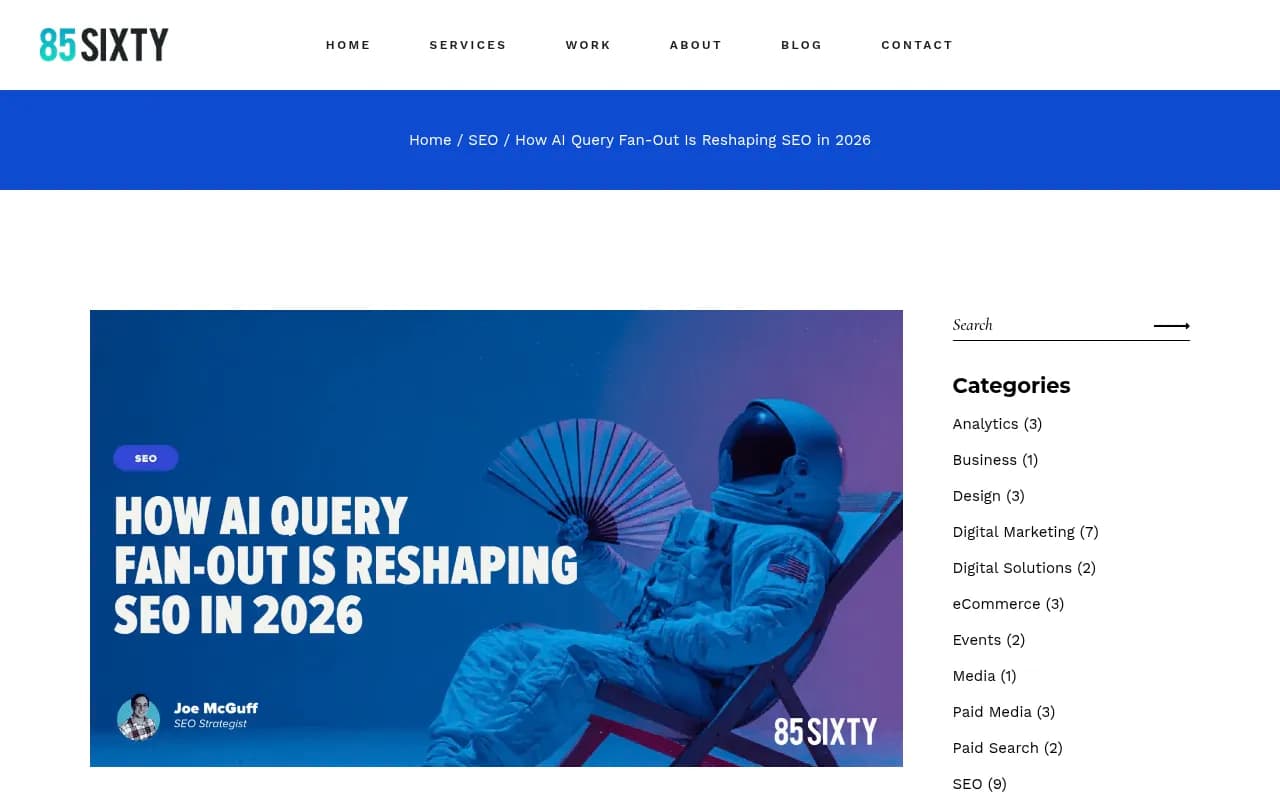
The implication is clear: traditional keyword research misses the queries AI models actually use to validate information. You need a different approach.
Why AI Models Use Fan-Out
AI search engines expand queries to:
- Pinpoint consensus: Check reviews, Reddit threads, professional forums
- Time-stamp knowledge: "2025 2026" appears in 6% of all fan-outs
- Price-anchor options: "free," "pricing," "cost" in top 5-grams
- Risk-balance choices: "pros and cons," "complaints," "limitations"
From the model's perspective, this is about confidence, not discovery. If an answer can't be confirmed from multiple angles, it's treated as risky and quietly filtered out.
Step 1: Identify Your Fan-Out Query Gaps
The first step in building a fan-out-driven content roadmap is understanding which sub-queries your competitors rank for that you don't. This is where most brands get stuck — traditional SEO tools weren't built for this.
Tools That Surface Fan-Out Data
You need platforms that monitor how AI models actually search, not just what humans type into Google. Promptwatch leads here with Answer Gap Analysis that shows exactly which prompts competitors are visible for but you're not — the specific content your website is missing.

Other platforms like Profound, Otterly.AI, and AthenaHQ offer basic monitoring, but most stop at showing you the data without helping you act on it.
How to Run a Fan-Out Gap Analysis
- Start with your core topics: List 10-15 primary topics your brand should own (e.g., "electric vehicles," "family cars," "EV charging")
- Monitor AI responses: Track how ChatGPT, Perplexity, and Google AI Overviews answer questions about these topics
- Extract sub-queries: Identify the 8-10 verification queries AI models use for each primary prompt
- Map competitor coverage: See which competitors rank for these sub-queries
- Find your gaps: Identify sub-queries where competitors appear but you don't
The output should be a spreadsheet with columns for: primary prompt, fan-out sub-query, competitors ranking, your current ranking, content gap (yes/no).
What Good Fan-Out Data Looks Like
For the primary prompt "best project management software for remote teams," you might discover these fan-out queries:
- "project management tools async communication"
- "remote team collaboration software 2026"
- "project management time zone support"
- "best PM tools distributed teams"
- "project management software video integration"
- "remote work project tracking tools"
- "project management platforms for freelancers"
- "PM software with mobile apps"
If competitors rank for 6-7 of these but you only rank for 2-3, you've found your content gaps.
Step 2: Cluster Fan-Out Queries Into Content Types
Once you've identified 50-100 fan-out gaps, the next step is grouping them into logical content clusters. AI models favor comprehensive topic coverage across multiple pages over isolated articles.
The Four Content Archetypes AI Models Prefer
1. Comparison Pages
Fan-out queries with "vs," "versus," "compared to," "alternative" signal that AI models are looking for head-to-head comparisons. These should be structured with:
- Feature comparison tables
- Pricing breakdowns
- Use case recommendations
- Pros/cons for each option
2. Answer Pages
Queries starting with "how to," "what is," "why does" need direct, structured answers. Format these with:
- Clear H2 that restates the question
- Immediate answer in the first paragraph
- Step-by-step instructions or explanations
- Visual aids (screenshots, diagrams)
3. Listicles
Fan-out queries with "best," "top," "options for" map to list-based content. Structure these with:
- Numbered list format (e.g., "7 Best...")
- Consistent template for each item
- Selection criteria explained upfront
- Summary comparison table
4. Deep-Dive Guides
Broad fan-out clusters around a single topic need comprehensive guides. These should include:
- Multiple H2 sections covering sub-topics
- 2,000-3,000 words minimum
- Internal links to related answer pages
- Embedded tool cards and screenshots
Clustering Exercise
Take your list of 50-100 fan-out gaps and sort them into these four buckets. You'll likely find:
- 30-40% are comparison queries
- 25-30% are answer/how-to queries
- 20-25% are listicle queries
- 15-20% are deep-dive topics
This distribution becomes your content production roadmap.
Step 3: Prioritize Based on Prompt Volume and Difficulty
Not all fan-out queries are created equal. Some are asked thousands of times per month; others are rare edge cases. Some have weak competition; others are dominated by authoritative sites.
The Prioritization Framework
Rank each fan-out query cluster using these three factors:
1. Prompt Volume
How often is this query (or variations of it) asked? Platforms like Promptwatch provide volume estimates based on actual AI search data. Prioritize queries with 100+ monthly prompts.
2. Difficulty Score
How strong is the current competition? Look at:
- Domain authority of sites currently ranking
- Content depth of existing pages
- Recency of published content
Queries where competitors have thin, outdated content are your best opportunities.
3. Business Impact
How closely does this query align with your conversion goals? A query about "free alternatives" might have high volume but low commercial intent. Prioritize queries that indicate buying intent or problem awareness.
The Priority Matrix
Plot your fan-out clusters on a 2x2 matrix:
- X-axis: Difficulty (easy to hard)
- Y-axis: Volume × Business Impact (low to high)
Quick Wins (high impact, low difficulty): Build these first — 5-10 pieces of content
Strategic Bets (high impact, high difficulty): Tackle these next with your best resources — 10-15 pieces
Fill-Ins (low impact, low difficulty): Batch-produce these to build topical authority — 20-30 pieces
Avoid (low impact, high difficulty): Skip these entirely unless they're critical to your brand
Step 4: Build Content That AI Models Actually Cite
Here's where most brands fail: they identify the gaps, prioritize the opportunities, then produce generic SEO filler that AI models ignore. Content that earns citations has specific characteristics.
The Citation-Worthy Content Checklist
✓ Structured Data Markup
Add schema.org markup for:
- Article/BlogPosting
- FAQPage (for answer pages)
- HowTo (for tutorials)
- Product (for comparisons)
AI models parse structured data to understand content hierarchy and extract key facts.
✓ Entity-Rich Writing
Mention specific:
- Product names and versions
- Company names
- People (founders, experts)
- Locations
- Dates and time periods
AI models look for entities to anchor factual claims. Vague language like "many experts believe" gets ignored.
✓ Semantic Completeness
Cover all aspects of the topic AI models expect to find together:
- If writing about a tool, include: features, pricing, use cases, alternatives, pros/cons
- If writing about a process, include: prerequisites, steps, common mistakes, troubleshooting
- If writing about a concept, include: definition, examples, applications, limitations
✓ Recency Signals
Include:
- Publication date in the URL or metadata
- "Updated [Month Year]" in the title or intro
- References to current year (2026) in examples
- Links to recent sources (within 12 months)
AI models heavily weight freshness — 6% of fan-out queries include year qualifiers.
✓ Multi-Format Content
Embed:
- Screenshots from official documentation
- Comparison tables
- Step-by-step numbered lists
- Code blocks (for technical topics)
- Video embeds (for tutorials)
AI models favor content that answers questions in multiple formats.
The AI Content Generation Shortcut
Manually writing 50-100 pieces of citation-worthy content is a 6-12 month project. The competitive advantage goes to teams that can produce this content faster without sacrificing quality.
Promptwatch's built-in AI writing agent generates articles, listicles, and comparisons grounded in real citation data (880M+ citations analyzed), prompt volumes, persona targeting, and competitor analysis. This isn't generic SEO filler — it's content engineered to get cited by ChatGPT, Claude, and Perplexity.
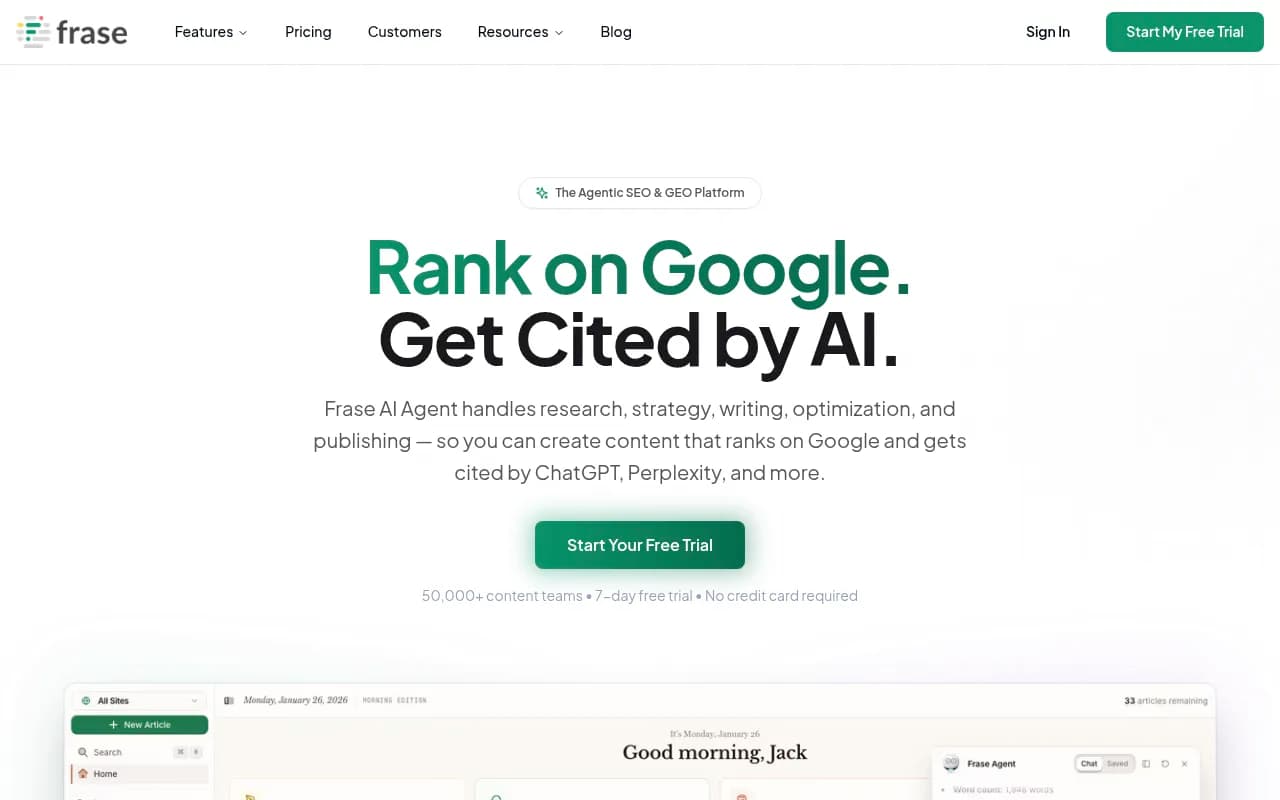
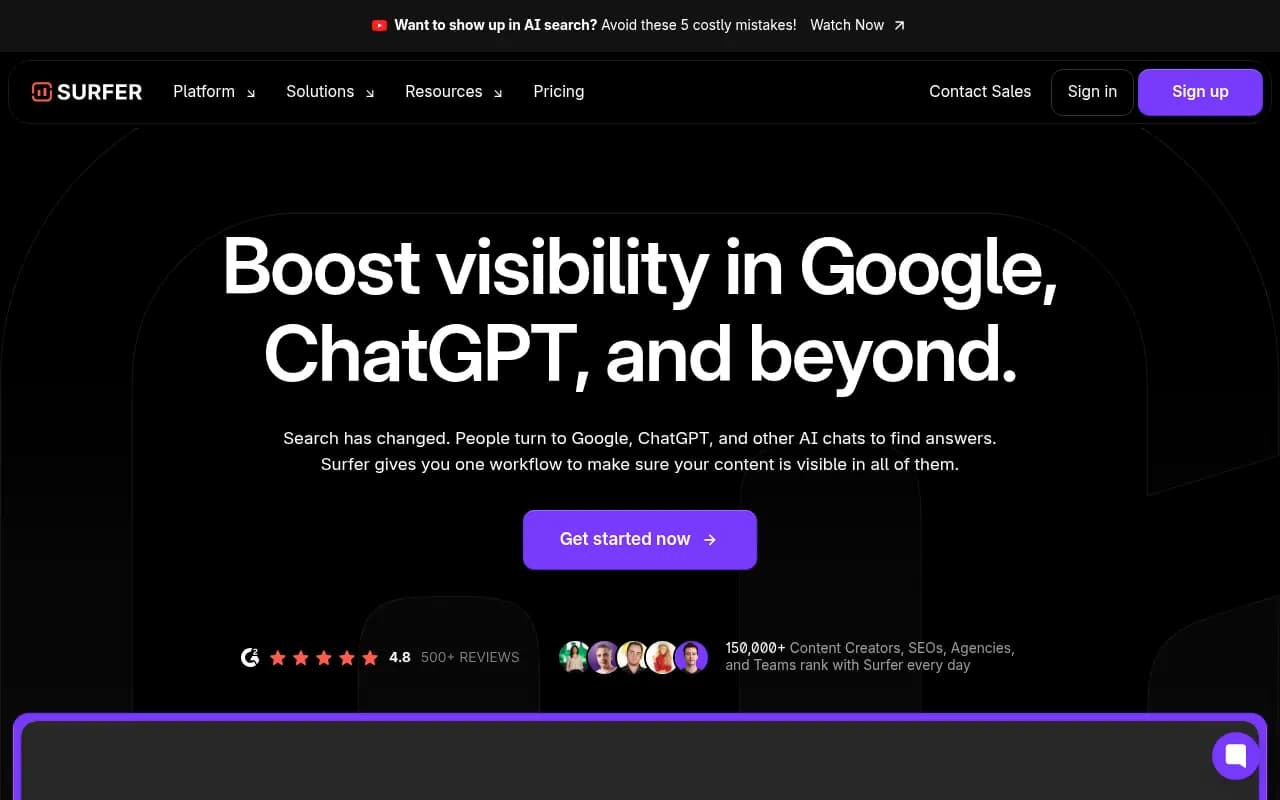
Other platforms like Frase, Surfer SEO, and Clearscope offer AI writing, but they're optimized for traditional Google SEO, not AI search citations.
Step 5: Track Results and Close the Loop
Publishing content is only half the battle. You need to monitor whether AI models are actually citing your new pages — and connect visibility to business outcomes.
What to Track
1. Citation Rate by Page
For each piece of content you publish, track:
- Which AI models cite it (ChatGPT, Perplexity, Claude, etc.)
- How often it's cited (citation volume)
- Which prompts trigger citations
- Position in AI responses (1st source, 2nd source, etc.)
Promptwatch provides page-level tracking that shows exactly which pages are being cited, how often, and by which models.
2. Visibility Score Trends
Monitor your overall AI visibility score over time. You should see steady improvement as new content gets indexed and starts earning citations. If visibility plateaus, it signals you need to:
- Refresh older content with new information
- Build more internal links between related pages
- Expand coverage into adjacent fan-out clusters
3. Traffic Attribution
Connect AI visibility to actual website traffic and conversions. Methods include:
- JavaScript tracking snippet (tracks visitors from AI search)
- Google Search Console integration (shows AI Overview impressions)
- Server log analysis (identifies AI crawler activity)
The goal is proving that improved AI visibility drives revenue, not just vanity metrics.
The Optimization Loop
Once you're tracking results, close the loop:
- Identify underperforming content: Pages with low citation rates despite ranking for fan-out queries
- Diagnose the issue: Missing entities? Outdated information? Weak structured data?
- Update and republish: Make targeted improvements and update the publish date
- Monitor citation changes: Track whether updates improve citation rates
This cycle — find gaps, generate content, track results, optimize — is what separates AI search leaders from laggards.
30-Day Execution Plan
Here's how to operationalize this framework in the next month:
Week 1: Research and Prioritization
- Day 1-2: Set up monitoring for 10-15 core topics in Promptwatch or similar platform
- Day 3-4: Run fan-out gap analysis and export 50-100 missing queries
- Day 5-7: Cluster queries into content types and prioritize using the matrix
Week 2: Content Production Sprint
- Day 8-10: Write/generate 5 "Quick Win" pieces (high impact, low difficulty)
- Day 11-12: Add structured data markup and optimize for entities
- Day 13-14: Publish and submit to AI crawlers (if platform supports it)
Week 3: Strategic Content
- Day 15-18: Write/generate 3-5 "Strategic Bet" pieces (high impact, high difficulty)
- Day 19-20: Build internal link structure connecting new content to existing pages
- Day 21: Publish and promote on social channels
Week 4: Tracking and Optimization
- Day 22-24: Set up page-level citation tracking for all new content
- Day 25-27: Monitor early citation data and identify quick fixes
- Day 28-30: Plan next month's content roadmap based on initial results
Common Mistakes to Avoid
Mistake #1: Treating Fan-Out as Traditional Keyword Research
Fan-out queries aren't just long-tail keywords. They're verification checks AI models use to validate information. You need comprehensive topic coverage, not isolated pages targeting individual phrases.
Mistake #2: Ignoring Content Architecture
AI models favor sites with clear topical authority — multiple related pages interlinked with consistent structure. Publishing 50 disconnected articles won't work. Build content clusters with pillar pages and supporting content.
Mistake #3: Optimizing for One AI Model
ChatGPT, Perplexity, Claude, and Google AI Overviews all use slightly different ranking signals. Don't over-optimize for one platform. Focus on fundamentals: entity-rich writing, semantic completeness, recency, structured data.
Mistake #4: Monitoring Without Acting
Most AI visibility platforms show you where you're invisible but don't help you fix it. The competitive advantage comes from systematically creating content that fills gaps, not just tracking metrics.
Mistake #5: Expecting Instant Results
AI search optimization is a 3-6 month play. It takes time for AI crawlers to discover new content, for models to update their training data, and for citation patterns to stabilize. Track trends, not daily fluctuations.
The Competitive Landscape in 2026
As of February 2026, most brands are still in the awareness phase — they know AI search matters but haven't operationalized a response. The opportunity window is open but closing fast.
Early Movers (5-10% of brands): Running systematic fan-out analysis, producing 50-100 pieces of AI-optimized content per quarter, tracking citations at the page level. These brands are seeing 2-3x increases in AI visibility and measurable traffic gains.
Fast Followers (15-20% of brands): Monitoring AI search with basic tools, experimenting with content optimization, but lacking systematic processes. Results are inconsistent.
Laggards (70-75% of brands): Still focused exclusively on traditional SEO, unaware of query fan-out, or waiting for "best practices" to emerge. By the time consensus forms, early movers will have insurmountable advantages.
The question isn't whether to optimize for AI search — it's whether you'll be an early mover or a fast follower. Laggards won't survive.
Final Thoughts
Query fan-out represents a fundamental shift in how content gets discovered and cited. Traditional keyword research misses 95% of the queries AI models actually use. Traditional content strategies — isolated articles targeting individual keywords — don't build the comprehensive topic coverage AI models require.
The brands winning in AI search are those that:
- Systematically identify fan-out gaps using specialized monitoring tools
- Cluster queries into content types that AI models prefer (comparisons, answer pages, listicles, guides)
- Prioritize based on volume, difficulty, and business impact rather than gut feel
- Produce citation-worthy content at scale with entity-rich writing, semantic completeness, and recency signals
- Track results at the page level and optimize based on actual citation data
This isn't a one-time project. It's an ongoing optimization loop that separates AI search leaders from everyone else. The tools exist. The data exists. The only question is whether you'll act on it.
Start with your 10-15 core topics. Run a fan-out gap analysis. Prioritize 5-10 quick wins. Publish them in the next 30 days. Track the results. Repeat.
That's how you turn query fan-out data into a content roadmap that ranks in AI search in 2026.