Key Takeaways
- Define your brand voice first: AI can only mirror what you teach it. Create a clear style guide with tone, vocabulary, and examples before using any AI tool.
- Treat AI as a draft assistant, not the author: Use AI to overcome writer's block and generate frameworks, then add human insight, stories, and cultural context that only you can provide.
- Train AI with transcripts and real examples: Upload meeting recordings, video transcripts, and actual content samples to teach AI your natural speaking patterns and authentic voice.
- Build feedback loops: Correct AI outputs every time they miss the mark. Tools like ChatGPT learn from your edits and improve with consistent training.
- Audit regularly for brand drift: AI outputs can homogenize over time. Review content monthly to catch generic phrasing, tone shifts, or vocabulary that doesn't match your brand.
AI content tools are everywhere in 2026. ChatGPT, Claude, Jasper, Copy.ai, and dozens of others promise to write your blog posts, social captions, and ad copy faster than you can finish your morning coffee. The efficiency is real. The risk is also real: your brand voice, the personality and tone that connects with your audience on a human level, can disappear under a flood of generic AI-generated text.
Here's the problem no one wants to name: AI doesn't automatically understand your brand. It defaults to safe, corporate, and often bland language unless you actively train it. The brands winning with AI in 2026 aren't just using it faster; they're using it deliberately, with systems in place to preserve what makes them recognizable.
This guide walks you through exactly how to do that.
Why AI Content Sounds Generic (And How to Fix It)
AI language models are trained on billions of text samples from across the internet. That means they're optimized for average, not distinctive. When you prompt ChatGPT or Claude without context, you get output that sounds like everyone else's: professional, polished, and forgettable.
The fix isn't to avoid AI. It's to give AI the context it needs to write like you.
Start With a Clear Brand Voice Document
Before you touch any AI tool, document your brand voice. This isn't marketing fluff; it's a reference guide that AI (and your team) can use to stay consistent.
Your brand voice document should include:
- Tone descriptors: Are you bold and witty? Calm and sophisticated? Friendly and conversational? Pick 3-5 adjectives that define your voice.
- Vocabulary guidelines: Words you always use, words you never use, and industry jargon you avoid or embrace.
- Sentence structure preferences: Do you write short, punchy sentences? Or longer, flowing paragraphs?
- Example content: Pull 5-10 pieces of your best content (blog posts, social captions, emails) that perfectly capture your voice.
Once you have this document, you can feed it directly into AI tools as context. In ChatGPT, for example, you can create a custom GPT or upload your brand voice guide at the start of every conversation. This single step eliminates 80% of generic AI output.
Use Transcripts to Teach Authentic Tone
Written content often sounds more formal than how you actually speak. If your brand voice is conversational, upload transcripts from:
- Team meetings
- Sales calls
- Video content
- Podcast episodes
- Customer support interactions
AI tools can analyze these transcripts and learn your natural speaking patterns, including filler words, humor, and the way you explain complex ideas. This is especially powerful for founders and thought leaders who want AI to sound like them, not like a corporate press release.
One practical workflow: record a 10-minute voice memo where you explain a topic in your own words. Transcribe it (tools like Otter.ai or Descript work well), then feed the transcript to ChatGPT with a prompt like:
"This is how I naturally explain [topic]. Rewrite this as a blog post, keeping my tone and phrasing style intact."
The result will sound far more authentic than starting from a generic prompt.
Treat AI as a First Draft, Not the Final Product
AI shines at generating frameworks, overcoming writer's block, and producing first drafts quickly. It struggles with nuance, cultural references, and the kind of insight that comes from lived experience.
The workflow that works in 2026:
- Use AI to generate structure: Ask it to outline a blog post, draft social captions, or brainstorm angles on a topic.
- Add human insight: Layer in anecdotes, industry-specific examples, or perspectives that only you (or your team) can provide.
- Edit for voice: Read the output aloud. If it doesn't sound like something you'd say in a conversation, rewrite it.
This hybrid approach gives you the speed of AI without sacrificing authenticity. You're not outsourcing your voice; you're using AI to handle the mechanical parts of writing so you can focus on the parts that matter.
Customize Every Output
Copy-pasting AI content without editing is the fastest way to sound like everyone else. Even if you've trained AI on your brand voice, every output needs customization.
Look for:
- Generic phrases: "In today's fast-paced world," "cutting-edge solutions," "transform your business" — delete these immediately.
- Overused transitions: "Moreover," "Furthermore," "In conclusion" — AI loves these. Replace them with something more natural.
- Lack of specificity: AI defaults to vague statements. Add numbers, examples, and concrete details.
One trick: run AI-generated content through Hemingway Editor or Grammarly to catch overly complex sentences and passive voice. Then read it aloud to catch tone issues that automated tools miss.
Build Feedback Loops to Train AI Over Time
AI tools like ChatGPT and Claude improve with feedback. Every time you correct an output, you're teaching the model what you want.
Here's how to build a feedback loop:
- Label your training chats: In ChatGPT, create a dedicated conversation titled "Brand Voice Training" and use it consistently. Upload your brand guide, paste examples, and correct outputs in this same thread.
- Give specific feedback: Instead of saying "this doesn't sound like us," explain why. Example: "This is too formal. We use contractions and shorter sentences. Rewrite in a more conversational tone."
- Save successful outputs: When AI nails your voice, save that output as a reference example. You can feed it back into future prompts as a model.
Over time, AI will learn your preferences and require less editing. This doesn't happen automatically; it requires deliberate training.
Watch Out for AI Drift
Even with training, AI outputs can drift toward generic over time. This happens when:
- You use different AI tools without transferring your brand voice context
- Multiple team members use AI without a shared style guide
- You stop reviewing outputs and start copy-pasting without edits
Set a monthly audit: review a sample of AI-generated content and check for tone consistency, vocabulary alignment, and brand voice accuracy. If you notice drift, retrain your AI tools with fresh examples.
Blend AI Efficiency With Human Stories
AI can write about features, benefits, and industry trends. It can't write about your customer's specific pain points, your team's internal jokes, or the moment you realized your product needed to exist.
The brands that win with AI in 2026 use it for efficiency, then layer in human stories that AI can't replicate.
Practical examples:
- Blog posts: Use AI to draft the structure and research, then add a customer story or case study in your own words.
- Social media: Let AI generate caption ideas, then personalize with a behind-the-scenes anecdote or team photo.
- Email campaigns: Use AI for subject line testing and body copy drafts, then rewrite the intro and CTA in your founder's voice.
This approach scales content production without sacrificing the human connection that builds trust.
Tools That Help Preserve Brand Voice
Several AI tools in 2026 are designed specifically to maintain brand consistency:
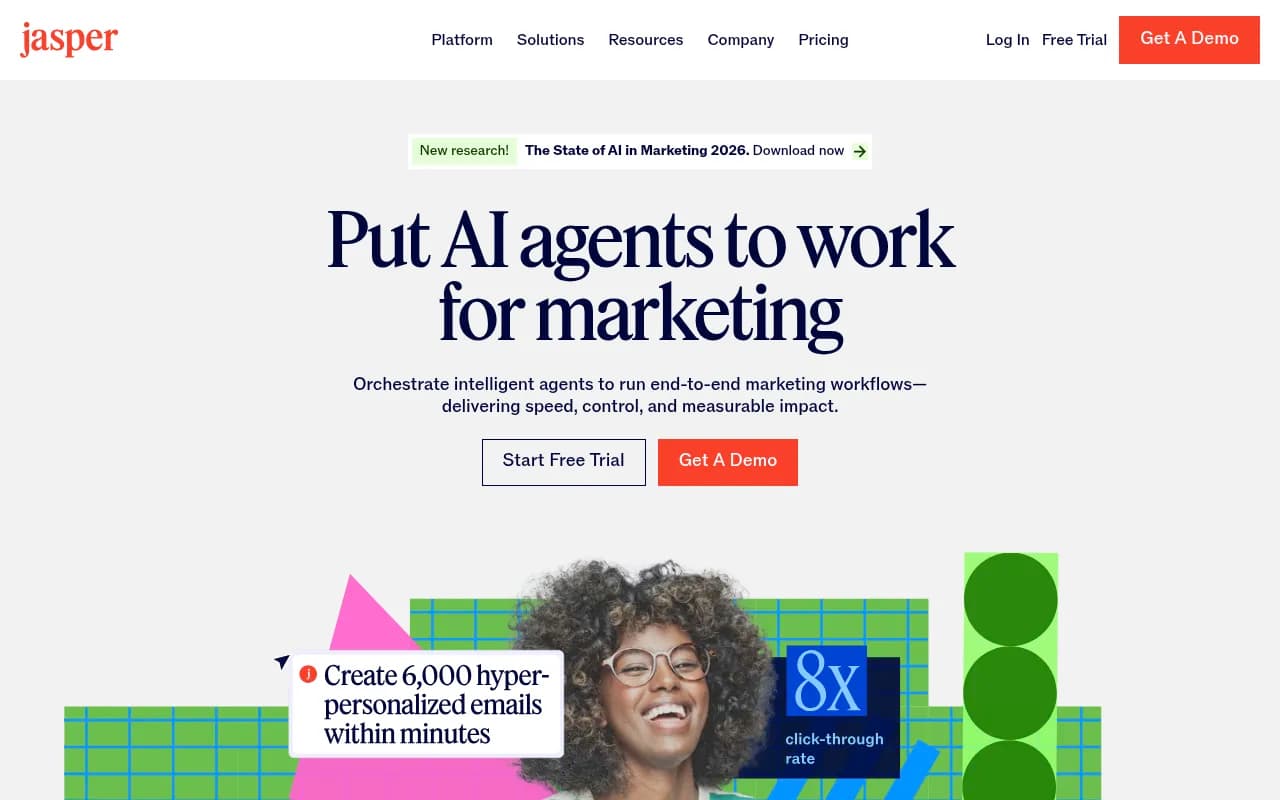
- Jasper: Offers brand voice profiles where you can upload style guides, tone preferences, and example content. Jasper then applies these settings across all outputs.
- Copy.ai: Includes a "Brand Voice" feature that learns from your existing content and applies it to new drafts.

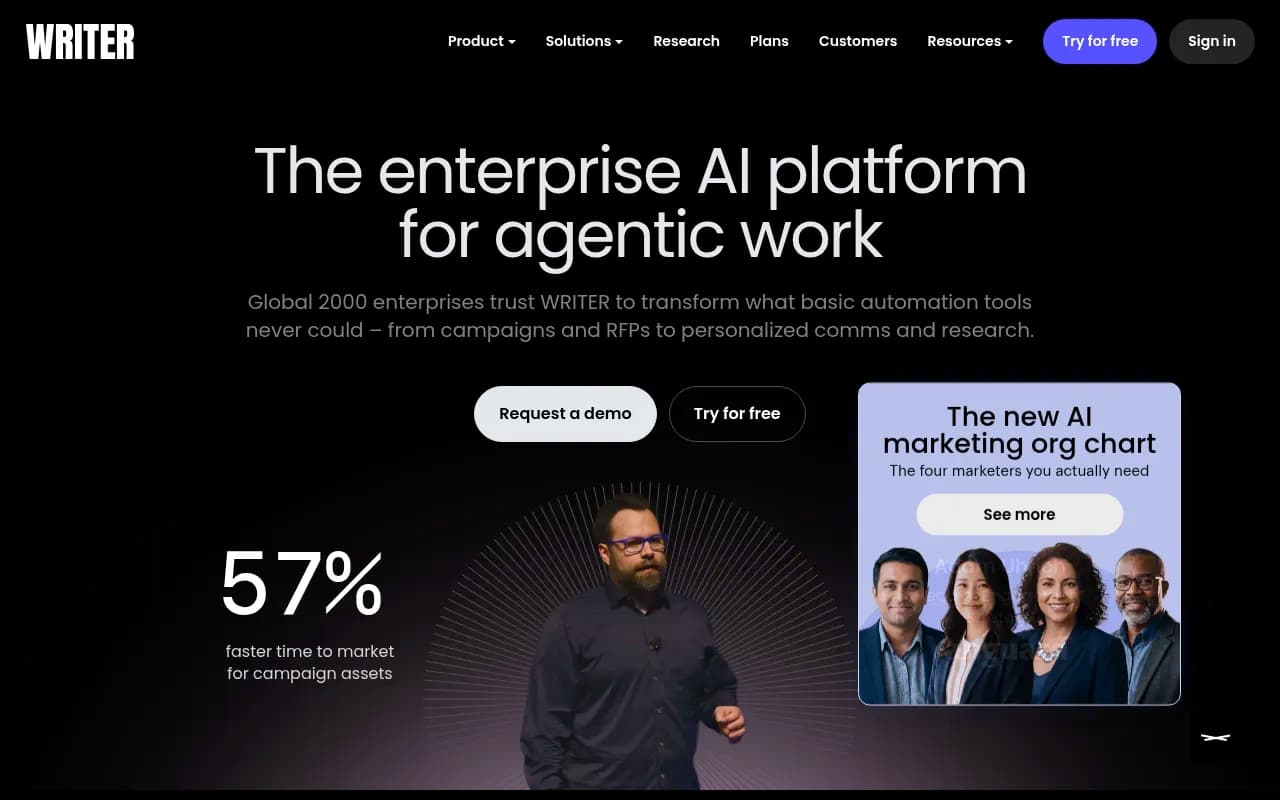
- Writer: Built for enterprise teams, Writer enforces brand guidelines across all AI-generated content and flags deviations in real-time.
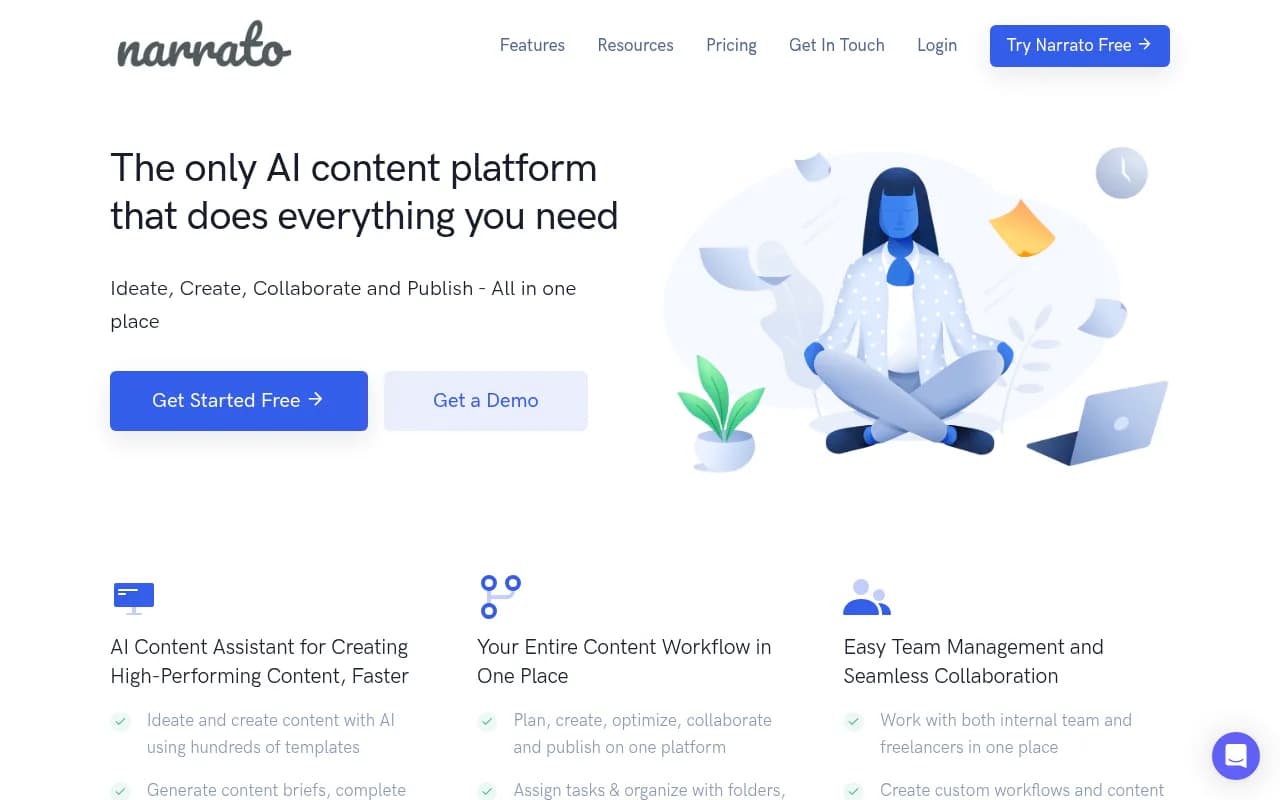
- Narrato AI: Combines content workflow management with AI writing tools that can be trained on your brand voice and style.
For teams managing content at scale, these tools reduce the manual work of training individual AI models and ensure consistency across writers.
Advanced: Using AI to Optimize for AI Search Visibility
In 2026, it's not enough to create content that ranks in Google. Your content also needs to be cited by AI search engines like ChatGPT, Perplexity, Claude, and Google AI Overviews.
This is where platforms like Promptwatch come in. Promptwatch tracks how often your brand appears in AI-generated answers, identifies content gaps where competitors are visible but you're not, and includes an AI writing agent that generates content optimized for AI search visibility. The content is grounded in real citation data (880M+ citations analyzed), prompt volumes, and competitor analysis — not generic SEO filler.
The workflow:
- Find the gaps: Promptwatch's Answer Gap Analysis shows which prompts competitors rank for but you don't, and what content your site is missing.
- Generate optimized content: Use the built-in AI agent to create articles, listicles, and comparisons engineered to get cited by AI models.
- Track results: Monitor visibility scores and page-level citations to see which content is working.
This closes the loop between content creation and AI search performance — something most traditional SEO tools (and generic AI writing tools) don't address.
Common Mistakes to Avoid
Mistake 1: Using AI Without Context
Prompting ChatGPT with "write a blog post about X" produces generic output. Always include context: your brand voice, target audience, key points you want to cover, and examples of your best content.
Mistake 2: Letting AI Write CTAs
AI-generated calls-to-action are almost always weak. They default to phrases like "Learn more" or "Get started today." Write your own CTAs based on what actually converts for your audience.
Mistake 3: Ignoring Tone Shifts Between Channels
Your brand voice should be consistent, but tone can shift by channel. LinkedIn content might be more professional, while Instagram captions are casual. Train AI separately for each channel, or specify tone in every prompt.
Mistake 4: Over-Relying on AI for Thought Leadership
AI can summarize existing ideas, but it can't generate original insights. If you're positioning yourself (or your brand) as a thought leader, AI should only handle structure and research. The core ideas must come from you.
Mistake 5: Skipping the Human Edit
No matter how well you've trained AI, every output needs a human review. This is non-negotiable. AI can miss context, make factual errors, or produce phrasing that's technically correct but tonally off.
How to Audit Your AI Content for Brand Voice
Set up a monthly audit process:
- Pull a random sample: Select 10-15 pieces of AI-generated content from the past month.
- Read them aloud: Does it sound like your brand? Would your audience recognize it as yours?
- Check for generic phrases: Highlight any cliches, corporate jargon, or overused transitions.
- Compare to human-written content: Put an AI draft next to a piece written entirely by your team. Can you tell the difference? If not, you're doing it right.
- Retrain if needed: If you spot consistent issues, update your brand voice guide and retrain your AI tools.
This audit catches brand drift early, before it becomes a systemic problem.
The Future of AI Content: Authenticity Wins
By 2026, AI-generated content is everywhere. The brands that stand out aren't the ones producing the most content; they're the ones producing content that sounds distinctly human.
AI is a tool, not a replacement. It handles the mechanical work of writing so you can focus on the parts that require judgment, creativity, and lived experience. The brands that understand this balance will scale content production without sacrificing the voice that makes them recognizable.
The strategy is simple:
- Define your brand voice clearly
- Train AI with real examples and transcripts
- Treat AI as a first draft, not the final product
- Build feedback loops to improve outputs over time
- Audit regularly to catch brand drift
- Layer in human stories that AI can't replicate
Do this, and you'll use AI to work faster without sounding like everyone else. That's the competitive advantage in 2026.