Summary
- Query fan-out is how AI search works: When someone asks ChatGPT or Perplexity a question, the system breaks it into 8-12 related sub-queries and searches for answers across multiple sources simultaneously
- Traditional SEO misses the mark: Optimizing for a single keyword leaves you invisible when AI models fan out to dozens of related queries your content doesn't address
- Topic authority wins in AI search: Building comprehensive topic clusters that answer the primary query plus all related sub-queries is how you get cited by AI models
- Tools like Promptwatch reveal the fan-out pattern: Query fan-out analysis shows exactly which sub-queries AI models generate for your target topics, so you know what content to create
- The process is systematic: Map the fan-out tree, analyze what ranks and gets cited, identify gaps in your content, then build or optimize pages to cover every branch
What is Query Fan-Out and Why Does it Matter?
Query fan-out is the process by which AI systems and modern search engines expand a single user query into multiple related sub-queries that run in parallel. When someone asks ChatGPT "What's the best way to save for retirement?", the model doesn't just search for that exact phrase. It simultaneously generates and searches for:
- 401(k) contribution limits for 2026
- Roth IRA vs Traditional IRA comparisons
- Retirement savings calculators
- Age-based savings benchmarks
- Common retirement planning mistakes
- Employer match strategies
- Tax implications of different accounts
- Early withdrawal penalties
- Catch-up contributions for people over 50
According to research from Stanford's HAI institute, large language models generate an average of 7-12 related queries for every user question. This fan-out behavior creates a fundamentally different content discovery environment than traditional keyword-based search.
If your content only addresses the primary query but misses these sub-queries, you lose visibility. The AI model finds better, more comprehensive sources and cites them instead. Your rankings might hold steady in traditional Google search, but you become invisible in AI Overviews, ChatGPT responses, Perplexity answers, and every other AI-powered search interface your prospects are using.
How AI Models Use Query Fan-Out
When you type a question into ChatGPT, Claude, Perplexity, or Google AI Mode, here's what happens behind the scenes:
- Query decomposition: The model breaks your question into semantic components and identifies related concepts, definitions, comparisons, and supporting information it needs to construct a complete answer
- Parallel search execution: The system runs 8-12 sub-queries simultaneously across its indexed sources (web pages, Reddit threads, YouTube videos, documentation, research papers)
- Source synthesis: Results from all sub-queries are analyzed for relevance, authority, and factual consistency
- Citation selection: The model chooses which sources to cite based on how comprehensively they address the fan-out tree of queries
- Response generation: A synthesized answer is constructed using information from the most authoritative sources that covered the most sub-queries
This is why a single pillar page that thoroughly addresses a topic and its related sub-topics outperforms a dozen shallow pages targeting individual keywords. The AI model finds everything it needs in one place and cites that source repeatedly.
The Difference Between Traditional SEO and Query Fan-Out Optimization
Traditional SEO strategies focused on:
- Ranking for individual keywords
- Building separate pages for each keyword variant
- Optimizing title tags and meta descriptions for specific phrases
- Earning backlinks to individual pages
Query fan-out optimization requires:
- Mapping the entire intent tree: Understanding all the related questions someone might have when researching a topic
- Building comprehensive topic clusters: Creating pillar content that addresses the primary query plus all major sub-queries in depth
- Covering multiple formats: Including definitions, comparisons, examples, step-by-step guides, data tables, and visual explanations
- Anticipating follow-up questions: Addressing objections, edge cases, and "what about..." scenarios before the user asks
- Connecting related concepts: Internal linking that helps AI models understand how different pieces of content relate to each other
The goal shifts from "rank for this keyword" to "become the authoritative source AI models cite when anyone asks about this topic."
How to Perform Query Fan-Out Analysis
Step 1: Identify Your Core Topics
Start with the main topics your business needs to own. For a financial services firm, this might be:
- Retirement planning
- Investment strategies
- Tax optimization
- Estate planning
- College savings
For a B2B SaaS company selling marketing automation:
- Marketing automation platforms
- Lead scoring
- Email campaign optimization
- Multi-channel attribution
- CRM integration
Pick 3-5 topics that directly impact your business goals. These should be areas where being cited by AI models would drive qualified leads or sales.
Step 2: Map the Query Fan-Out Tree
For each core topic, you need to discover what sub-queries AI models generate. There are several ways to do this:
Manual testing with AI search engines: Ask your primary question to ChatGPT, Claude, Perplexity, and Google AI Mode. Look at:
- The sections and sub-headings in their responses
- The sources they cite (what topics do those pages cover?)
- Related questions they suggest at the end
- Follow-up questions they anticipate in the response
People Also Ask analysis: Google's PAA boxes show related questions users ask. These are strong signals of query fan-out patterns. Tools like AlsoAsked visualize the PAA tree structure.
Reddit and forum research: Search your topic on Reddit, Quora, and industry forums. Look at:
- The questions people ask in threads
- The sub-topics that come up in discussions
- The objections and concerns people raise
- The comparisons and alternatives they mention
Competitor content analysis: Find the pages that rank highly in AI search results for your topic. What sub-topics do they cover? What sections and headings do they include? What questions do they answer?
Query fan-out tools: Platforms like Promptwatch show you exactly which prompts AI models are processing and how they fan out into sub-queries. You can see prompt volumes, difficulty scores, and query branches for any topic.

Step 3: Analyze What Actually Gets Cited
Not all content formats perform equally in AI search. You need to understand what types of sources AI models prefer to cite for your topic.
Run your core query through multiple AI engines and track:
- Source types: Are they citing documentation, blog posts, Reddit threads, YouTube videos, research papers, or news articles?
- Content depth: Are cited sources comprehensive guides or quick answers?
- Recency: How recent are the cited sources? Does freshness matter for this topic?
- Authority signals: Are they citing established brands, industry experts, or user-generated content?
- Format elements: Do cited pages include data tables, comparison charts, step-by-step instructions, or video embeds?
For a retirement planning query, you might find:
- AI models heavily cite government sources (IRS, SSA) for contribution limits and rules
- Financial calculators and interactive tools get cited for "how much to save" questions
- Reddit threads appear for "common mistakes" and personal experience questions
- YouTube videos get cited for step-by-step tutorials
- Established financial brands (Vanguard, Fidelity) dominate comparison queries
This tells you what content types you need to create and where you need to publish to maximize AI visibility.
Step 4: Identify Your Content Gaps
Compare the query fan-out tree to your existing content. For each sub-query branch, ask:
- Do we have content that addresses this?
- Is it comprehensive enough to satisfy the AI model's information need?
- Is it in the right format (guide, comparison, calculator, video)?
- Is it published in the right place (our site, YouTube, Reddit, industry publications)?
Most companies discover they have:
- Shallow coverage: Pages that mention sub-topics but don't explain them in depth
- Format gaps: Written content but no calculators, videos, or interactive tools
- Channel gaps: Everything on their website but nothing on Reddit, YouTube, or industry forums where AI models are finding answers
- Outdated information: Content that doesn't reflect current rules, limits, or best practices
Tools like Promptwatch include Answer Gap Analysis that shows you exactly which prompts competitors are visible for but you're not. You see the specific content your website is missing—the topics, angles, and questions AI models want answers to but can't find on your site.
Step 5: Build Your Topic Cluster Strategy
Now you know what content to create. Structure it as a comprehensive topic cluster:
Pillar page: A 3,000-5,000 word comprehensive guide that addresses the primary query and provides an overview of all major sub-topics. This becomes your authoritative source that AI models cite.
Cluster pages: Detailed pages for each major sub-query branch. These go deeper on specific aspects and link back to the pillar page.
Supporting content: Calculators, comparison tables, video tutorials, infographics, and data visualizations that address specific information needs in the fan-out tree.
Off-site content: Strategic content on Reddit, YouTube, Quora, and industry publications that fills gaps where AI models are citing user-generated content or third-party sources.
For the retirement planning example:
Pillar: "Complete Guide to Retirement Planning in 2026" (covers all major sub-topics at a high level)
Cluster pages:
- "401(k) vs Roth IRA: Complete Comparison Guide"
- "How Much Should You Have Saved for Retirement by Age?"
- "Retirement Contribution Limits for 2026"
- "10 Common Retirement Planning Mistakes to Avoid"
- "How to Maximize Your Employer 401(k) Match"
Supporting content:
- Retirement savings calculator (interactive tool)
- Comparison table: All retirement account types
- YouTube video: "How to Set Up Your First 401(k)"
- Reddit post: "I'm 35 with $50k saved—am I on track?"
Every piece links back to the pillar page and to related cluster pages. The internal linking structure helps AI models understand how all the content connects.
Optimizing Content for Query Fan-Out
Write for Comprehensive Coverage, Not Keyword Density
AI models don't count keywords. They evaluate whether your content comprehensively addresses the topic and its related sub-queries. This means:
Include all major sub-topics: If your query fan-out analysis revealed 12 common sub-queries, your pillar page should address all 12 at least briefly, with links to deeper cluster pages.
Answer follow-up questions: Anticipate "but what about..." questions and address them inline. If you're explaining 401(k) contributions, mention what happens if you change jobs, how to handle employer matches, and what to do if you're self-employed.
Provide multiple explanation styles: Some users need definitions, others need examples, others need step-by-step instructions. Include all three.
Use clear section headings: Make it easy for AI models to extract specific information by using descriptive H2 and H3 headings that match common query patterns.
Structure Content for AI Extraction
AI models extract information from your content to construct their responses. Make this easy:
Lead with direct answers: Start each section with a clear, quotable answer to the question. Then provide supporting details and context.
Use structured data: Schema markup helps AI models understand what your content is about. Use FAQPage schema for Q&A sections, HowTo schema for step-by-step guides, and appropriate schema for comparisons, reviews, and data tables.
Create scannable content: Use bullet lists, numbered steps, comparison tables, and data callouts. AI models extract these structured elements more reliably than dense paragraphs.
Include data and statistics: When you make claims, back them up with specific numbers, dates, and sources. AI models prefer to cite content with concrete data.
Build Multi-Format Content
Different sub-queries in the fan-out tree require different content formats:
Definitions and concepts: Written explanations with clear examples
Comparisons: Side-by-side tables showing features, pros/cons, pricing, use cases
How-to guides: Step-by-step instructions with screenshots or video
Calculations: Interactive calculators or worked examples with numbers
Common mistakes: Bullet lists or numbered lists with explanations
Real experiences: Case studies, testimonials, or Reddit-style discussion
A comprehensive topic cluster includes multiple formats. Don't just write articles—build the calculators, create the comparison tables, record the video tutorials, and participate in the Reddit discussions.
Optimize for Freshness
For topics where information changes frequently (tax rules, contribution limits, software features, industry trends), freshness matters. AI models prefer to cite recent content.
Update content regularly: Set a schedule to review and update your pillar pages and cluster pages. Add new sections for new developments.
Use current dates: Include "Updated February 2026" timestamps and mention current year information in your content.
Reference recent data: Cite statistics and research from the past 12-24 months when possible.
Cover new developments: When rules change or new options become available, update your content immediately. This is how you become the go-to source AI models cite.
Measuring Query Fan-Out Coverage
How do you know if your topic cluster strategy is working? Track these metrics:
AI Citation Rate
The percentage of relevant prompts where AI models cite your content. Tools like Promptwatch track this across ChatGPT, Claude, Perplexity, Google AI Overviews, and other AI search engines.
You want to see your citation rate increase over time as you fill content gaps and optimize for query fan-out. If you're being cited for 15% of relevant prompts today, aim for 30% in 3 months and 50% in 6 months.
Sub-Query Coverage
For each pillar topic, what percentage of the sub-queries in the fan-out tree do you have content for? If your analysis revealed 20 common sub-queries and you only have content addressing 8 of them, you have 40% coverage.
Track this metric and work toward 80-90% coverage for your core topics. You don't need to cover every possible edge case, but you should address all major branches of the fan-out tree.
Page-Level Citation Tracking
Which specific pages are getting cited by AI models? Which pages are being ignored? This tells you what's working and what needs improvement.
If your pillar page is getting cited frequently but your cluster pages aren't, you might need to:
- Improve the depth and quality of cluster pages
- Add more internal links from the pillar to cluster pages
- Optimize cluster page titles and headings to match common query patterns
- Create supporting content (calculators, videos, comparison tables) that cluster pages are missing
Traffic Attribution
The ultimate goal is to connect AI visibility to actual business results. Track:
- Visitors from AI search engines (ChatGPT, Perplexity, etc.)
- Conversions from AI-referred traffic
- Revenue attributed to AI visibility
Platforms like Promptwatch offer traffic attribution through code snippets, Google Search Console integration, or server log analysis. This closes the loop between visibility and revenue.
Common Query Fan-Out Optimization Mistakes
Mistake 1: Creating Separate Pages for Every Sub-Query
The old SEO playbook says to create a unique page for every keyword variant. This backfires in AI search.
When AI models fan out to 12 sub-queries, they prefer to cite one comprehensive source that addresses all 12 rather than 12 separate shallow pages. Fragmented content performs worse than consolidated topic clusters.
Fix: Build pillar pages that address the primary query plus major sub-queries. Create separate cluster pages only for sub-topics that need 1,500+ words of depth.
Mistake 2: Ignoring Off-Site Content Opportunities
If AI models are citing Reddit threads, YouTube videos, and industry publications for certain sub-queries in your fan-out tree, you can't win by only publishing on your website.
Fix: Develop an omnimedia content strategy. Publish authoritative answers on Reddit, create video tutorials on YouTube, contribute guest posts to industry publications. AI models cite the best source regardless of where it lives.
Mistake 3: Optimizing for Google but Ignoring Other AI Models
Google AI Overviews, ChatGPT, Claude, Perplexity, and Gemini all use query fan-out, but they have different preferences for source types, recency, and content depth.
Fix: Test your content across multiple AI search engines. Track which models cite you and which don't. Optimize for the platforms your target audience actually uses.
Mistake 4: Building Content Without Validation
Creating a topic cluster based on assumptions about what sub-queries matter wastes time and budget. You might build content for sub-queries AI models rarely generate.
Fix: Start with query fan-out analysis. Use tools, manual testing, and competitor research to validate which sub-queries actually appear in AI responses before you create content.
Mistake 5: Not Updating Content as Fan-Out Patterns Change
Query fan-out patterns evolve as user behavior changes, new information becomes available, and AI models improve. A topic cluster that worked in 2025 might miss important sub-queries in 2026.
Fix: Re-run query fan-out analysis quarterly for your core topics. Look for new sub-queries that are emerging and update your content to cover them.
Tools for Query Fan-Out Analysis
Several platforms can help you map query fan-out patterns and track AI visibility:
Promptwatch: End-to-end AI visibility platform that shows you exactly which prompts AI models are processing, how they fan out into sub-queries, and which content gaps are costing you citations. Includes prompt volumes, difficulty scores, Answer Gap Analysis, and an AI writing agent that generates content grounded in real citation data.
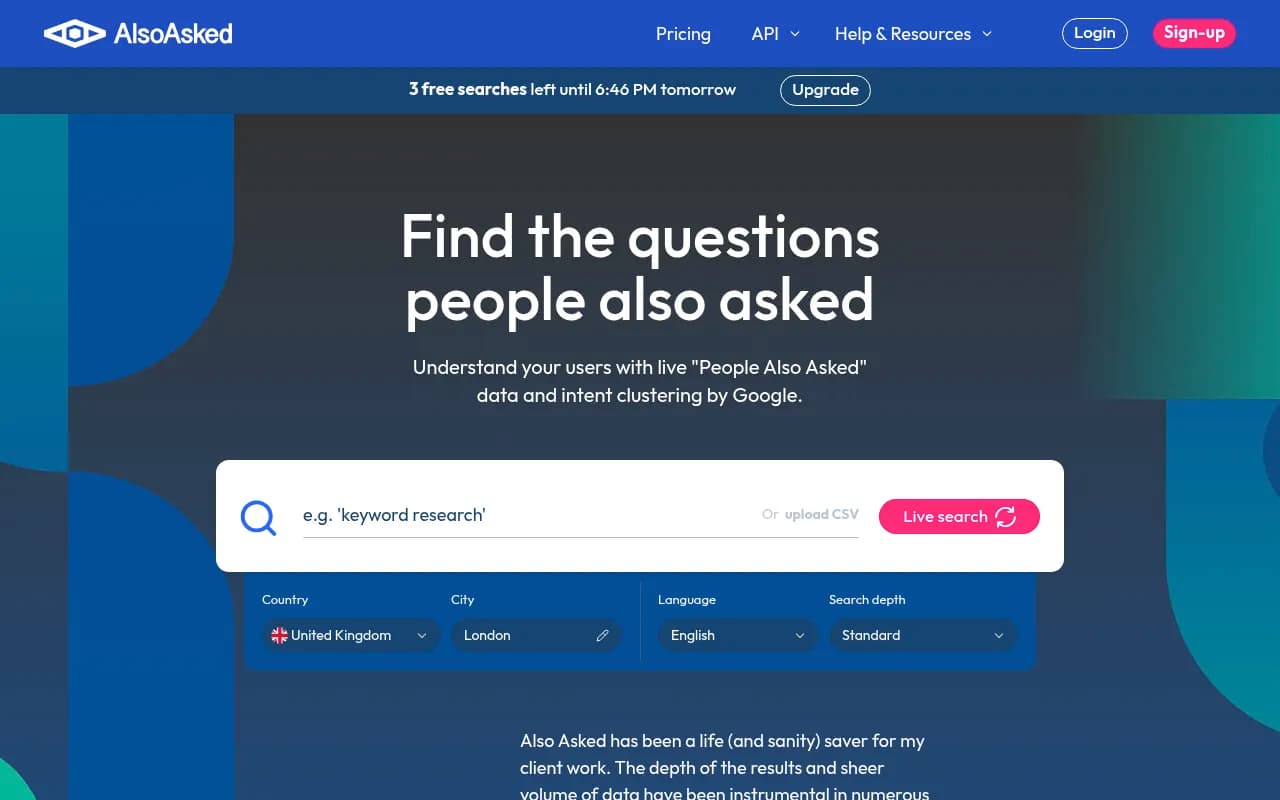
AlsoAsked: Visualizes Google's People Also Ask data as a tree structure, showing you how questions branch into related sub-questions.
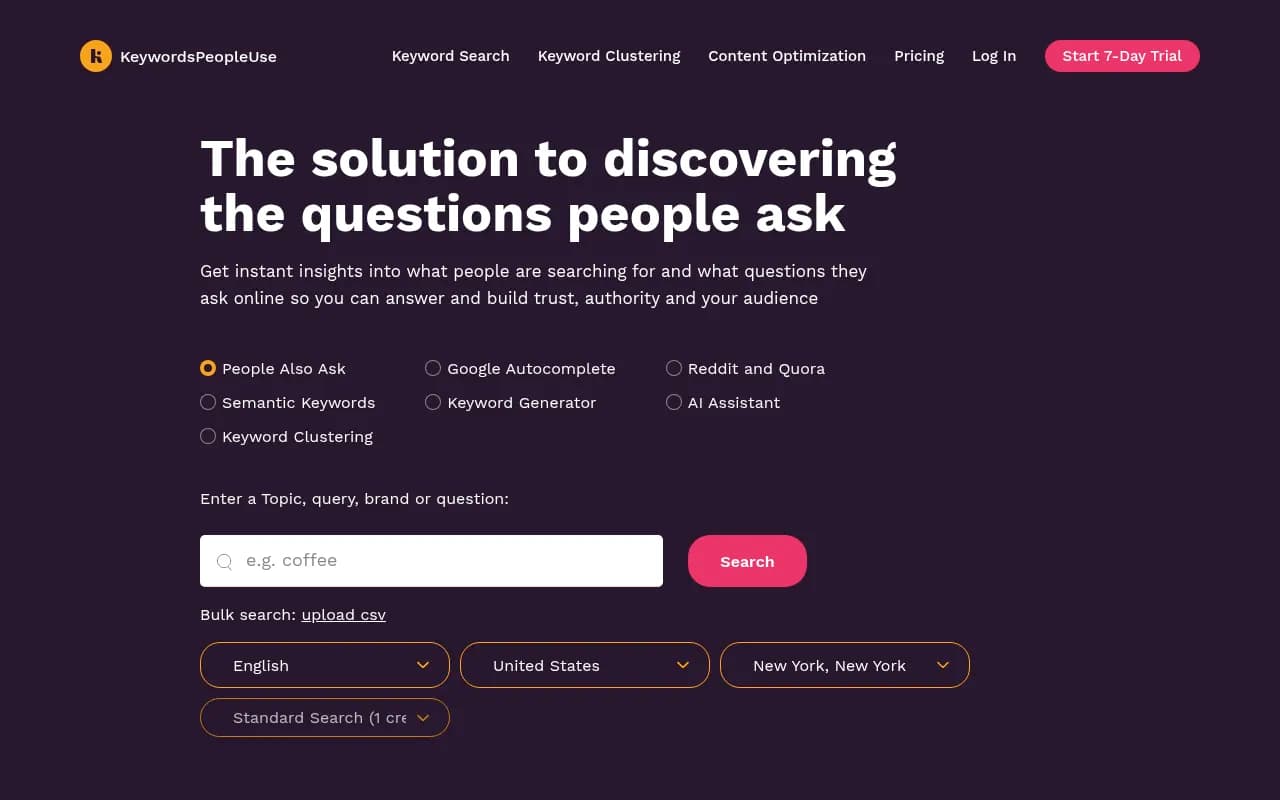
KeywordsPeopleUse: Aggregates questions from Google, Reddit, and Quora to show you what people are actually asking about your topic.
Manual testing: Simply ask your core questions to ChatGPT, Claude, Perplexity, and Google AI Mode. Analyze the structure of their responses and the sources they cite. This free method takes more time but gives you direct insight into fan-out behavior.
Building Topic Authority: A Step-by-Step Example
Let's walk through a complete query fan-out optimization project for a B2B SaaS company selling marketing automation software.
Step 1: Choose the Core Topic
"Marketing automation platforms" is a high-value topic. Decision-makers research this before buying, and being cited by AI models would drive qualified leads.
Step 2: Map the Query Fan-Out
Test the query "What are the best marketing automation platforms for enterprise B2B companies?" across ChatGPT, Perplexity, and Google AI Mode.
The AI responses reveal these sub-queries:
- What is marketing automation and how does it work?
- Key features to look for in enterprise platforms
- Pricing models and total cost of ownership
- Integration capabilities (CRM, analytics, sales tools)
- Implementation timeline and complexity
- User reviews and customer satisfaction
- Comparison of top platforms (HubSpot, Marketo, Pardot, ActiveCampaign)
- Use cases by industry (SaaS, manufacturing, professional services)
- ROI calculations and success metrics
- Common implementation mistakes
- Vendor selection criteria
- Migration from existing systems
Step 3: Analyze Current Citations
Look at what AI models are citing:
- G2 and Capterra for user reviews
- Vendor websites for feature lists and pricing
- Industry blogs (MarTech, CMSWire) for comparisons and analysis
- Reddit threads for implementation experiences and gotchas
- YouTube videos for product demos and tutorials
- Analyst reports (Gartner, Forrester) for vendor evaluations
Step 4: Identify Content Gaps
The company has:
- Product pages (features, pricing) ✓
- A few blog posts about marketing automation benefits ✓
- Case studies ✓
They're missing:
- Comprehensive comparison guide
- Implementation guide and timeline
- ROI calculator
- Common mistakes guide
- Integration documentation
- Video tutorials
- Reddit presence
- Industry-specific use case guides
Step 5: Build the Topic Cluster
Pillar page: "Complete Guide to Enterprise Marketing Automation Platforms in 2026" (4,000 words covering all major sub-topics with links to cluster pages)
Cluster pages:
- "Top 10 Marketing Automation Platforms Compared" (detailed feature comparison table)
- "How to Calculate Marketing Automation ROI" (with interactive calculator)
- "Marketing Automation Implementation Guide: Timeline and Best Practices"
- "10 Common Marketing Automation Mistakes and How to Avoid Them"
- "Marketing Automation for B2B SaaS: Use Cases and Examples"
- "How to Migrate from [Legacy Platform] to Modern Marketing Automation"
Supporting content:
- YouTube series: "Marketing Automation Platform Demos" (10-minute videos for each major platform)
- Reddit AMA: "I've implemented marketing automation for 50+ enterprise companies—AMA"
- Interactive tool: "Marketing Automation Platform Selector" (quiz that recommends platforms based on needs)
- Comparison page: Side-by-side feature matrix of top 10 platforms
Content partnerships:
- Guest post on MarTech: "What Enterprise Buyers Get Wrong About Marketing Automation"
- Webinar with industry analyst: "The State of Marketing Automation in 2026"
Step 6: Optimize for AI Extraction
Each page includes:
- Clear H2/H3 headings matching common query patterns
- Direct answers at the start of each section
- Structured data (FAQPage, HowTo, Comparison schema)
- Data tables and comparison charts
- Updated dates and current year information
- Internal links connecting all cluster pages to the pillar
Step 7: Track Results
After 90 days:
- AI citation rate increased from 8% to 34% for marketing automation queries
- The pillar page is cited by ChatGPT, Perplexity, and Google AI Overviews
- The comparison guide is the #1 cited source for "marketing automation platform comparison"
- The ROI calculator is cited for "marketing automation ROI" queries
- Reddit AMA thread is cited for "marketing automation implementation challenges"
- Traffic from AI search engines increased 340%
- 23 qualified leads attributed to AI visibility
The Future of Query Fan-Out
As AI search continues to evolve, query fan-out patterns will become more sophisticated:
Deeper fan-out trees: AI models will generate more sub-queries and go deeper into niche aspects of topics. Comprehensive coverage will matter even more.
Personalized fan-out: AI models will tailor sub-queries based on user context, history, and preferences. Content that addresses multiple personas and use cases will perform better.
Multi-modal fan-out: AI models will fan out across content types—text, images, videos, audio, interactive tools—and synthesize information from all formats.
Real-time fan-out: As AI models gain access to real-time data, fan-out patterns will shift based on breaking news, trending topics, and current events. Freshness and update frequency will become critical.
The companies that master query fan-out analysis today will dominate AI search visibility tomorrow. Start by mapping the fan-out tree for your most important topics, identify your content gaps, and build comprehensive topic clusters that address every branch of user intent.
AI search rewards depth, comprehensiveness, and authority. Give AI models everything they need to construct complete answers, and they'll cite you repeatedly.