Key takeaways
- Jasper AI is a content generation platform built for marketing teams -- excellent at producing brand-consistent copy at scale, but it doesn't track or optimize for AI search visibility.
- SEO.ai focuses on Google SEO content optimization with solid keyword and NLP features, but has minimal coverage of AI search engines like ChatGPT or Perplexity.
- Promptwatch is the only platform of the three that closes the loop: it tracks how AI engines cite your brand, identifies content gaps, generates content engineered to get cited, and connects that visibility to actual traffic and revenue.
- If your goal is to rank in both Google and AI search simultaneously, you likely need more than one tool -- or a platform that was built for both from the start.
- The right choice depends on where you are: pure content production, Google SEO optimization, or full AI search visibility with optimization.
In 2026, "ranking" means two different things depending on who's asking. Traditional SEO teams still care about Google's blue links. But a growing share of search traffic now flows through AI-generated answers in ChatGPT, Perplexity, Google AI Overviews, and Gemini -- where rankings don't exist, citations do.
Most tools were built for one world or the other. Jasper was built for content. SEO.ai was built for Google. Promptwatch was built for AI search visibility. The question is whether any of them can actually serve teams that need to compete in both simultaneously -- and what happens when you try to use them together.
This guide breaks down each platform honestly, compares them on the dimensions that matter in 2026, and tells you which one (or combination) makes sense for your situation.
What each platform actually does
Before comparing features, it's worth being clear about what problem each tool was designed to solve. These are genuinely different products that happen to overlap in the content space.
Jasper AI: content generation at scale
Jasper is a marketing content platform. Its core value is generating high-quality, brand-consistent copy faster than a human team could produce it alone. It has a Brand Voice feature that learns your tone, style, and terminology, and applies it consistently across campaigns, blog posts, ads, emails, and landing pages.
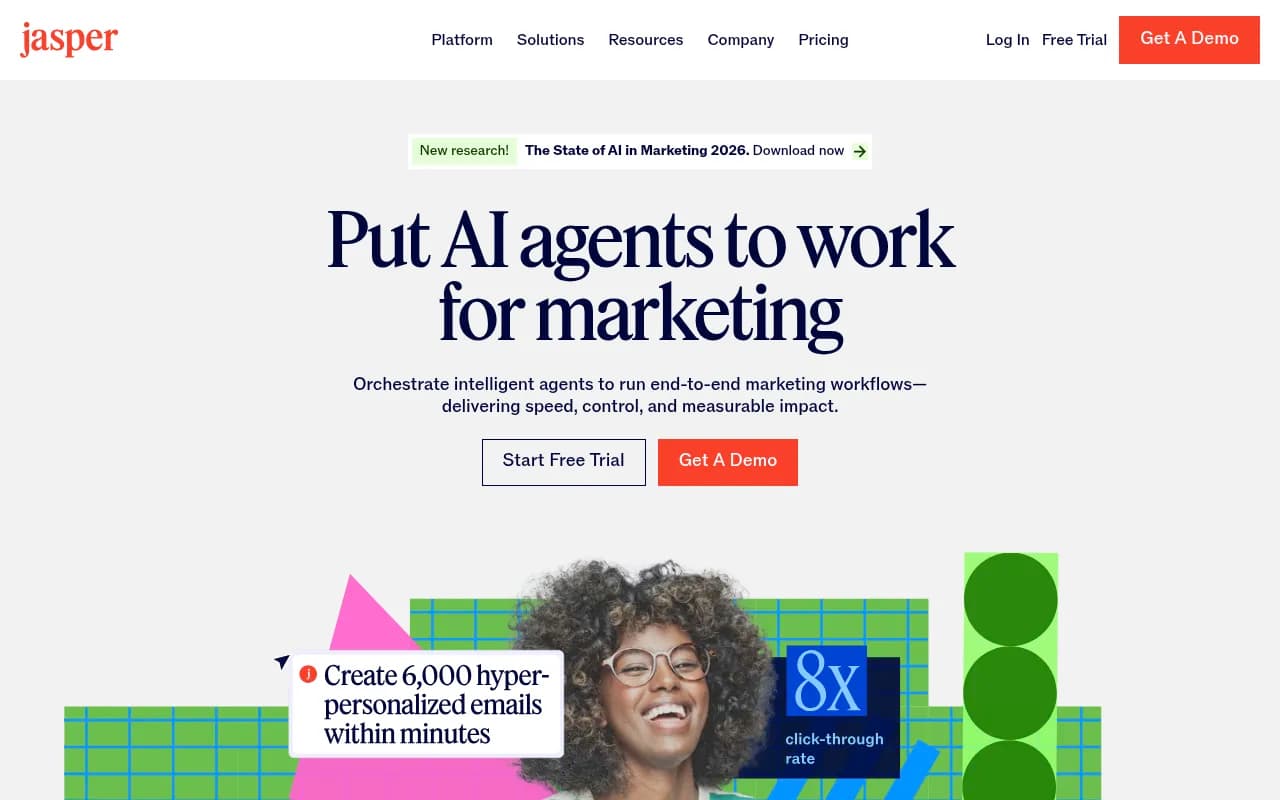
What makes Jasper stand out in the content generation space is the sophistication of its AI writing engine and the depth of its marketing-specific templates. It's not just a generic AI writer -- it's built around marketing workflows, with features for campaign briefs, content repurposing, and team collaboration.
What Jasper doesn't do: it has no AI search visibility tracking, no citation monitoring, no prompt intelligence, and no way to tell you whether the content it generates is actually being cited by ChatGPT or Perplexity. It optimizes for human readers and, to some extent, traditional SEO signals. The AI search layer is entirely absent.
SEO.ai: Google-focused content optimization
SEO.ai sits closer to the traditional SEO content optimization space -- think Surfer SEO or Clearscope, but with more integrated AI writing. It analyzes top-ranking pages, extracts NLP signals, and helps you write content that's structured to rank in Google.
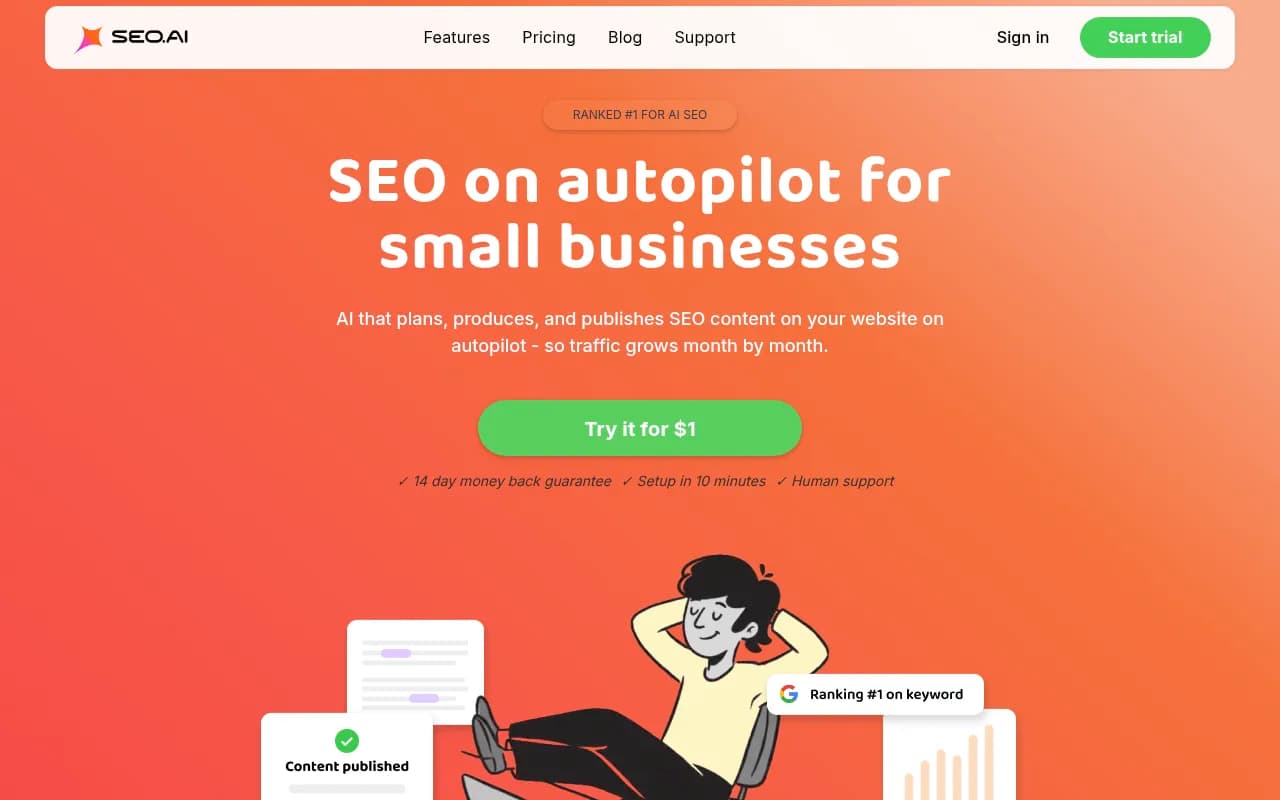
The platform is particularly useful for teams that want to combine keyword research, content briefs, and AI-assisted writing in one workflow. It's faster than building briefs manually and more opinionated than a generic AI writer about what Google actually wants to see.
The limitation is the same as Jasper's, just from a different angle: SEO.ai is optimized for Google. It doesn't track how AI search engines respond to your content, doesn't monitor citations across LLMs, and doesn't help you understand why Perplexity recommends a competitor instead of you.
Promptwatch: AI search visibility with content optimization
Promptwatch is a different category of tool. It's not primarily a content writer -- it's an AI search visibility and GEO (Generative Engine Optimization) platform that includes content generation as part of a broader optimization loop.

The core workflow: track which prompts your competitors are being cited for but you're not (Answer Gap Analysis), generate content specifically engineered to fill those gaps (Content Agents), and then track whether AI models start citing your new pages. Page-level tracking, AI crawler logs, and traffic attribution connect the whole thing back to revenue.
Promptwatch monitors 10 AI models including ChatGPT, Perplexity, Google AI Overviews, Gemini, Claude, Grok, DeepSeek, and Copilot. It also tracks Reddit discussions and YouTube content that influence AI recommendations -- a channel most platforms ignore entirely.
Feature comparison
Here's how the three platforms stack up across the dimensions that matter most for teams trying to win in both Google and AI search:
| Feature | Jasper AI | SEO.ai | Promptwatch |
|---|---|---|---|
| AI content generation | Yes (best-in-class) | Yes (SEO-focused) | Yes (citation-engineered) |
| Google SEO optimization | Partial | Yes | Partial |
| AI search visibility tracking | No | No | Yes (10 models) |
| Citation monitoring (ChatGPT, Perplexity, etc.) | No | No | Yes |
| Answer gap analysis | No | No | Yes |
| AI crawler logs | No | No | Yes |
| Prompt volume & difficulty scoring | No | No | Yes |
| Traffic attribution from AI search | No | No | Yes |
| Reddit & YouTube insights | No | No | Yes |
| ChatGPT Shopping tracking | No | No | Yes |
| Brand voice / style consistency | Yes | Partial | Partial |
| Multi-language / multi-region | Yes | Yes | Yes |
| Team collaboration | Yes | Yes | Yes |
| Pricing (starting) | ~$49/mo | ~$49/mo | $99/mo |
The table tells a clear story: Jasper and SEO.ai are content tools. Promptwatch is an AI visibility platform that also generates content. They're solving different problems, which means the right choice depends entirely on what problem you actually have.
Where each tool wins
Jasper wins on content volume and brand consistency
If you're running a large marketing team that needs to produce a lot of content -- campaigns, ads, social, email, long-form -- and brand consistency is a priority, Jasper is genuinely hard to beat. Its Brand Voice feature is more sophisticated than what most competitors offer, and its template library covers almost every marketing format.
Jasper also has a reasonably good integration story, connecting with tools like Surfer SEO and HubSpot so you can layer in optimization after the fact.
The honest limitation: Jasper doesn't know whether the content it generates will get cited by an AI search engine. It's writing for humans (and Google). That's fine if that's your goal. But if you're trying to appear in ChatGPT's answer when someone asks "what's the best [your category] tool," Jasper won't tell you what's missing or whether your new article moved the needle.
SEO.ai wins on Google content optimization workflow
SEO.ai is a solid choice for teams that want an integrated keyword research + content brief + AI writing workflow, all optimized for Google. The NLP analysis is genuinely useful for understanding what topics a page needs to cover to compete in traditional search.
For smaller teams or agencies that don't need enterprise-level AI visibility tracking and just want to produce better Google-optimized content faster, SEO.ai hits a reasonable price-to-value point.
The limitation is the same as Jasper's: zero AI search coverage. In 2026, that's a meaningful gap. Google AI Overviews now appear on the majority of informational queries, and the platforms that help you optimize for them are not the ones that optimize for traditional blue links.
Promptwatch wins on AI search visibility and optimization
Promptwatch is the right choice when your question is: "Why is my competitor appearing in ChatGPT's answer and I'm not -- and what do I do about it?"
The Answer Gap Analysis shows you the specific prompts where competitors are visible and you're not. Content Agents generate articles and briefs grounded in that real prompt data, citation patterns, and competitor analysis. Then page-level tracking shows you when AI models start crawling and citing your new content.
The AI crawler logs are worth calling out specifically -- they show you in real time which AI crawlers (GPTBot, ClaudeBot, PerplexityBot, etc.) are hitting your site, which pages they're reading, and whether those pages are moving from "crawled" to "cited." Most competitors in the GEO space don't have this at all.
What Promptwatch is not: it's not a replacement for Jasper if you need high-volume brand-consistent content across many formats. The Content Agents are engineered for AI citation, not for producing 50 email variants or ad copy at scale.
The real question: can you use them together?
Yes, and for some teams this is the right answer.
A reasonable stack for a mid-size marketing team in 2026 might look like:
- Promptwatch for AI search visibility tracking, gap analysis, and content briefs engineered for AI citation
- Jasper for high-volume content production across campaigns, ads, and email -- where brand voice consistency matters more than AI citation optimization
- SEO.ai or a tool like Surfer SEO for traditional Google content optimization on pages where blue-link rankings are still the primary goal
The overlap is real but manageable. Promptwatch's Content Agents produce content designed to get cited by AI engines. Jasper produces content designed to be read by humans and rank in Google. These are different outputs for different purposes.
The teams that struggle are the ones who assume any AI content tool covers both search worlds. In 2026, that assumption is expensive.
Who should use what
Here's a practical breakdown based on team type and goal:
Pure content teams focused on brand and campaigns: Jasper is probably your primary tool. Add Promptwatch if AI search visibility becomes a priority.
SEO teams focused on Google rankings: SEO.ai or a comparable Google-optimization tool makes sense as a core workflow. But if Google AI Overviews are eating your traffic (and they are, for most informational queries), you need to understand what's happening in AI search too.
Marketing teams trying to appear in AI search answers: Promptwatch is the right starting point. It tells you where you're invisible, why, and what content to create. The Content Agents can handle the writing; you can supplement with Jasper for everything else.
Agencies managing multiple clients across both search types: Promptwatch's agency and enterprise tiers support multiple sites with custom reporting. The Looker Studio integration and API make it workable for client reporting workflows.
Early-stage teams with limited budget: SEO.ai at the lower price point covers Google SEO adequately. Promptwatch's Essential plan at $99/mo is worth it if AI search visibility is a real priority -- 50 prompts and 5 articles per month is enough to get started and see whether the needle moves.
A note on the broader GEO landscape
Jasper and SEO.ai aren't the only alternatives worth knowing about. The AI SEO and GEO space has expanded significantly in 2026, and different tools serve different slices of the problem.
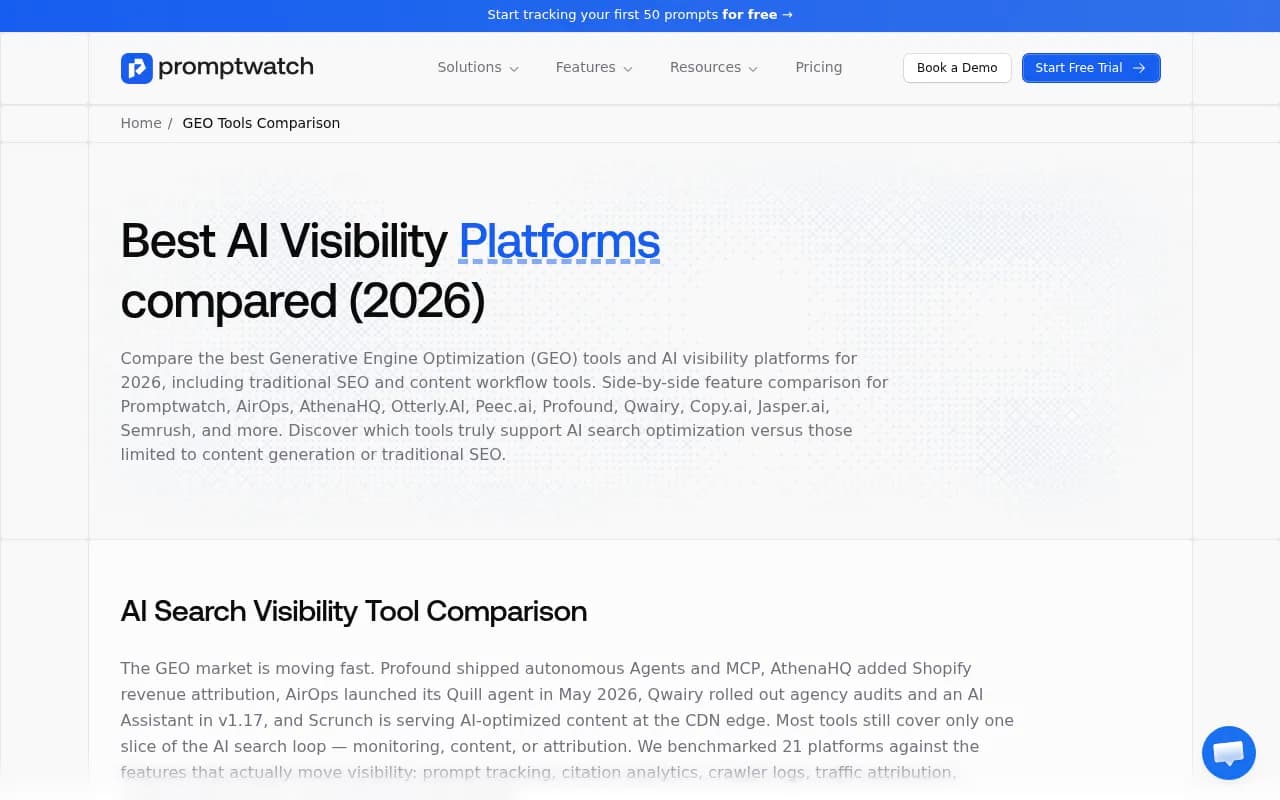
For traditional SEO with some AI visibility features, Semrush and Ahrefs have both added AI tracking capabilities, though they use fixed prompt sets and lack the depth of dedicated GEO platforms.
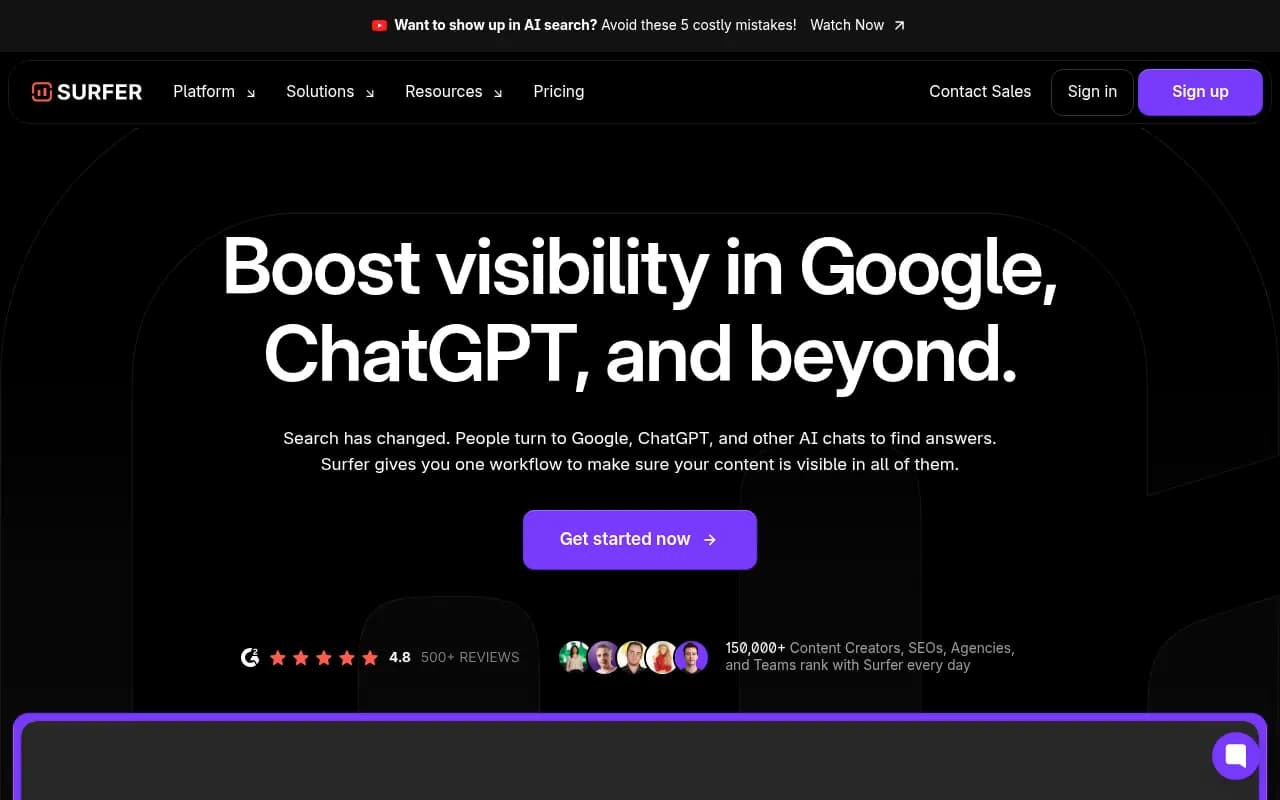
For content optimization specifically, tools like Surfer SEO and Clearscope remain strong for Google-focused workflows.

For AI visibility monitoring without the content generation layer, platforms like Otterly.AI and Peec.ai offer basic tracking at lower price points -- though they stop at monitoring and don't help you act on what they find.
Otterly.AI


The honest summary of the 2026 GEO landscape: most tools do one thing. Monitoring-only platforms show you data but leave you to figure out what to do with it. Content-only platforms generate copy but don't tell you whether it's working in AI search. The platforms that close the full loop -- find gaps, generate content, track results -- are still relatively rare.
Bottom line
Jasper AI, SEO.ai, and Promptwatch are not really competing for the same job. Jasper is a content production platform. SEO.ai is a Google SEO content tool. Promptwatch is an AI search visibility and optimization platform.
The mistake teams make in 2026 is assuming that any AI writing tool also handles AI search visibility. It doesn't. Writing good content and appearing in AI-generated answers are related but distinct problems. You need to know which prompts matter, which sources AI models trust, and whether your pages are actually being crawled and cited -- before you can optimize effectively.
If you're only thinking about Google, SEO.ai does the job at a reasonable price. If you're producing content at scale for a large marketing team, Jasper's brand voice and template depth are hard to match. If you want to understand and improve how AI search engines see your brand -- and connect that visibility to revenue -- Promptwatch is the platform built for that specific problem.
Most teams in 2026 need to care about both search worlds. The tools you use should reflect that.