Key Takeaways
- Local search remains stable: High-intent local queries ("plumber near me," "senior living in Calgary") still flow through Google Maps because it delivers a better experience than any AI model can offer
- AI has added a new layer: Generative engines like ChatGPT, Perplexity, Claude, and Google AI Overviews now surface business recommendations inside their answers—creating a new visibility channel called Generative Engine Optimization (GEO)
- You need both strategies: Local SEO controls how you rank in Google Maps; GEO controls how AI models understand and recommend your business. Winning in 2026 requires both.
- The fundamentals still matter: Google Business Profile optimization, citation consistency, reviews, and structured data are now doing double duty—they power both traditional local rankings and AI recommendations
- AI systems trust entities, not just keywords: Success depends on how clearly AI models can understand what you do, where you operate, and why you're credible—not just keyword density
The Truth About Local Search in 2026
If you run a multi-location business, you've probably heard conflicting advice: "AI is killing local SEO" versus "Google Maps still drives all the leads." Both statements miss the point.
Local search has stayed surprisingly stable. While informational search traffic collapsed when AI started answering questions directly, local intent searches continue to flow through Google Maps. When someone needs a service provider right now—emergency plumber, urgent care clinic, auto glass repair—they're not asking ChatGPT for a philosophical discussion. They're opening Google Maps.
But that doesn't mean nothing has changed.
What AI Search Actually Changed
AI didn't replace local search. It created a new layer on top of it.
Generative engines now surface business recommendations inside their own answers. Your business may appear in:
- Google AI Overviews (the AI-generated summary boxes above traditional results)
- ChatGPT Browsing answers (when users ask for local recommendations)
- Perplexity local summaries (AI-curated lists of businesses)
- Claude's research mode (detailed business comparisons)
- Gemini's local results (Google's AI assistant recommendations)
These systems don't just scrape your website and rank pages by backlinks. They rely heavily on structured data, citations, directory accuracy, and semantic clarity—the same foundational elements that power traditional local SEO, but interpreted through an entirely different lens.
Local SEO vs GEO: Understanding the Difference
Here's the simplest way to think about it:
Local SEO = how you rank in Google Maps
GEO (Generative Engine Optimization) = how AI models understand your business and include you in their answers
They're related but distinct:
| Factor | Traditional Local SEO | AI Search (GEO) |
|---|---|---|
| Primary Goal | Ranking in the Map Pack and local organic results | Being cited in AI-generated answers and recommendations |
| Core Signals | Google Business Profile, citations, reviews, proximity | Structured data, entity clarity, authoritative mentions, semantic context |
| User Behavior | Short, transactional queries ("plumber near me") | Conversational questions ("Who's the best plumber in Denver for emergency leaks?") |
| Success Metric | Map Pack visibility, website clicks | Brand mentions, citation frequency, zero-click visibility |
| Content Focus | Location pages, service pages, keyword optimization | Clear entity definitions, FAQ content, conversational answers |
| Technical Requirements | NAP consistency, schema markup, mobile optimization | Advanced schema (LocalBusiness, FAQPage, HowTo), entity relationships |
Both matter. But they require different tactics.
Why Multi-Location Businesses Are Uniquely Affected
If you operate multiple locations, you're dealing with a compounding challenge:
- Each location needs its own local SEO foundation: Google Business Profile, citations, reviews, location-specific content
- Each location needs AI visibility: AI models must understand that you have multiple entities, each serving different geographic areas
- Brand-level signals matter more: AI systems evaluate your overall brand authority before recommending individual locations
This creates a three-layer optimization problem:
- Brand level: How well do AI models understand your company as a whole?
- Location level: Can AI correctly identify and recommend specific branches?
- Service level: Does AI know what services each location offers?
Most multi-location businesses are only optimizing layer one (if that). The winners in 2026 are optimizing all three.
The Convergence: Why Local SEO and AEO Are Now Inseparable
Answer Engine Optimization (AEO)—the practice of optimizing for AI-generated answers—isn't a separate discipline from local SEO anymore. They've converged.
Here's why:
1. AI Models Rely on the Same Data Sources
AI systems don't have their own proprietary business databases. They pull from:
- Structured data on your website (LocalBusiness schema, opening hours, service areas)
- Citation sources (Yelp, Yellow Pages, industry directories)
- Google's Knowledge Graph (which is built from your GBP and other verified sources)
- Review platforms (Google Reviews, Trustpilot, industry-specific review sites)
- Authoritative mentions ("best of" lists, local news coverage, industry publications)
If your local SEO foundation is weak—inconsistent NAP data, incomplete GBP, sparse reviews—AI models can't confidently recommend you. They literally don't have enough signal to trust you.
2. Entity Understanding Is the New Ranking Factor
Traditional local SEO was about keywords and proximity. AI search is about entity clarity and trust.
AI models ask:
- What is this business? (entity type, services offered, specializations)
- Where does it operate? (physical locations, service areas, geographic boundaries)
- Why should I trust it? (reviews, citations, authoritative mentions, years in business)
- How does it compare? (vs competitors, pricing signals, unique differentiators)
If your website, GBP, and citations don't clearly answer these questions with consistent, structured data, AI models will skip you and recommend competitors who do.
3. Zero-Click Visibility Is the New Battleground
In traditional local search, success meant getting clicked. In AI search, success often means being cited without a click.
When someone asks ChatGPT "Who's the best HVAC company in Austin?", the AI generates a list of 3-5 businesses with brief descriptions. Most users never click through—they just call the first one that sounds right.
This changes the optimization goal. You're no longer optimizing for click-through rate. You're optimizing for mention frequency, positioning in the list, and description quality.
What Actually Matters: The 2026 Optimization Stack
For multi-location businesses, here's the winning formula:
Layer 1: Local SEO Fundamentals (Still Critical)
Google Business Profile Optimization
- Complete every field: business name, categories, services, attributes, hours, photos
- Use primary and secondary categories strategically
- Add service menus with pricing where appropriate
- Upload high-quality photos (exterior, interior, team, work samples)
- Post weekly updates (offers, events, news)
- Respond to every review within 24-48 hours
Citation Consistency
- Ensure NAP (Name, Address, Phone) is identical across all directories
- Claim and optimize profiles on: Yelp, Yellow Pages, Bing Places, Apple Maps, industry-specific directories
- Use a citation management tool to monitor and fix inconsistencies
- Don't forget niche directories (e.g., Angi for home services, Healthgrades for medical)
Review Strategy
- Aim for 50+ Google reviews per location (minimum)
- Diversify review sources: Google, Yelp, Facebook, industry platforms
- Focus on review recency and velocity (consistent new reviews signal active business)
- Include keywords naturally in review responses ("Thanks for choosing our Denver plumbing team")
Location Pages
- Create unique, substantive pages for each location (not thin, templated content)
- Include: address, phone, hours, directions, parking info, team bios, service area map
- Add location-specific content: local partnerships, community involvement, area-specific services
- Embed Google Map with your location pinned
Layer 2: AI-Ready Structured Data
Schema Markup
Implement these schema types on every location page:
- LocalBusiness (or more specific types: Plumber, Dentist, Restaurant, etc.)
- Service (list every service you offer with descriptions)
- FAQPage (answer common questions about your services)
- Review (markup your best reviews)
- OpeningHoursSpecification (including special hours, holidays)
- GeoCoordinates (precise lat/long for each location)
Entity Clarity
Make it crystal clear what you are:
- Use consistent business names across all platforms (don't stuff keywords in your GBP name)
- Define your primary service in the first sentence of every page
- Use header tags (H1, H2) that clearly state what you do and where
- Link related entities (e.g., link to your parent company, link locations to each other)
Layer 3: Content That AI Models Can Cite
Conversational FAQ Content
AI models love FAQ content because it directly answers user questions. Create pages that answer:
- "What's the best [service] company in [city]?"
- "How much does [service] cost in [city]?"
- "What should I look for when hiring a [service provider]?"
- "Do you offer emergency [service] in [city]?"
Use natural language, not keyword-stuffed SEO copy. Write like you're answering a real customer.
Service-Specific Guides
Create detailed guides for each service you offer:
- "Complete Guide to [Service] in [City]"
- "[Service] Cost Breakdown: What to Expect in [City]"
- "How to Choose a [Service Provider] in [City]"
These pages serve double duty: they rank in traditional search AND get cited by AI models when users ask related questions.
Comparison Content
AI models frequently cite comparison content. Create pages like:
- "[Your Company] vs [Competitor]: What's the Difference?"
- "[Service Type A] vs [Service Type B]: Which Do You Need?"
- "DIY vs Professional [Service]: Cost and Risk Analysis"
Be honest and factual. AI models penalize biased, salesy content.
Layer 4: Authoritative Mentions and Citations
Get Listed on "Best Of" Sites
AI models heavily weight authoritative "best of" lists. Pursue mentions on:
- Local news "best of" lists
- Industry association directories
- Chamber of Commerce listings
- Niche review sites (Angi, HomeAdvisor, Healthgrades, etc.)
- Local blogs and community sites
Earn Media Coverage
Local news mentions signal credibility to AI models. Pitch stories about:
- Community involvement (sponsorships, charity work)
- Industry expertise (comment on local trends, offer expert quotes)
- Unique services or innovations
- Customer success stories (with permission)
Reddit and Forum Mentions
AI models increasingly cite Reddit discussions. Monitor local subreddits (r/[yourcity]) and industry forums. When appropriate, participate authentically—answer questions, provide value, mention your business naturally when relevant.
Tracking Success: Metrics That Matter in 2026
You can't optimize what you don't measure. Track these metrics:
Traditional Local SEO Metrics
- Map Pack rankings (track for your core service + location keywords)
- GBP insights (views, clicks, calls, direction requests)
- Organic local rankings (for location + service pages)
- Citation consistency score (use a tool to monitor)
- Review volume and rating (per location, per platform)
AI Visibility Metrics
- Citation frequency (how often AI models mention your brand)
- Positioning (are you first, third, or fifth in AI-generated lists?)
- Prompt coverage (which prompts trigger mentions of your business?)
- Competitor comparison (how often are you cited vs competitors?)
- Source diversity (which data sources are AI models pulling from?)
Tools like Promptwatch can help you track AI visibility across ChatGPT, Perplexity, Claude, Gemini, and other AI models—showing you exactly which prompts trigger mentions of your business and where you're missing opportunities.

The 90-Day Action Plan for Multi-Location Businesses
Here's a practical sprint plan to improve both local SEO and AI visibility:
Days 1-30: Foundation Audit and Fixes
Week 1: Audit Current State
- Run a citation audit (check NAP consistency across top 50 directories)
- Review all GBP profiles (completeness, accuracy, photo quality)
- Check schema markup implementation on all location pages
- Baseline your Map Pack rankings for core keywords
Week 2-3: Fix Critical Issues
- Correct NAP inconsistencies across all directories
- Complete missing GBP fields (services, attributes, hours)
- Upload fresh photos to all GBPs (minimum 10 per location)
- Implement or fix LocalBusiness schema on all location pages
Week 4: Review Strategy Launch
- Set up automated review request system (post-service emails, SMS)
- Train staff on asking for reviews (timing, approach)
- Create response templates for common review types
- Respond to all existing reviews (start with negatives, then positives)
Days 31-60: Content and Optimization
Week 5-6: Location Page Overhaul
- Rewrite thin location pages with unique, substantive content (minimum 800 words)
- Add local context: neighborhood info, service area maps, local partnerships
- Implement FAQPage schema with 5-10 location-specific questions
- Add team bios and photos (humanize your locations)
Week 7-8: Service Content Creation
- Create detailed service guides for your top 3-5 services
- Write FAQ content answering common customer questions
- Develop comparison content (your services vs alternatives, your company vs competitors)
- Optimize for conversational queries AI models use
Days 61-90: Authority Building and AI Optimization
Week 9: Citation Expansion
- Submit to 20+ additional niche directories (industry-specific, local)
- Claim unclaimed profiles on review sites
- Update old citations with current info
- Add service area markup to website
Week 10: Authoritative Mentions
- Pitch 3-5 local news outlets with story ideas
- Submit your business to "best of" lists
- Join local business associations and get listed in their directories
- Participate in relevant Reddit discussions (authentically)
Week 11-12: AI Visibility Tracking and Optimization
- Set up AI visibility monitoring (track mentions across ChatGPT, Perplexity, Claude, Gemini)
- Identify prompt gaps (queries competitors rank for but you don't)
- Create content targeting those gaps
- Monitor results and iterate
Common Mistakes Multi-Location Businesses Make
Mistake 1: Templated Location Pages
Using the same template with just the city name swapped out doesn't work anymore. AI models detect thin, duplicate content. Each location page needs unique, substantive content.
Mistake 2: Ignoring Review Diversity
Focusing only on Google reviews leaves you vulnerable. AI models pull from multiple sources. Diversify across Google, Yelp, Facebook, and industry-specific platforms.
Mistake 3: Inconsistent NAP Data
If your business name is "ABC Plumbing" on your website, "ABC Plumbing Services" on Yelp, and "ABC Plumbing & Heating" on Yellow Pages, AI models can't confidently connect them. Pick one canonical name and use it everywhere.
Mistake 4: No Schema Markup
If you're not using LocalBusiness schema, AI models have to guess what you are and where you operate. Don't make them guess. Tell them explicitly with structured data.
Mistake 5: Keyword-Stuffed Content
AI models penalize unnatural, keyword-stuffed content. Write for humans first, optimize for machines second. Use natural language and answer real questions.
Mistake 6: Ignoring AI Visibility Entirely
Most multi-location businesses are still only tracking Google rankings. They have no idea if AI models are recommending them, how often, or for which queries. You can't optimize what you don't measure.
The Competitive Advantage: Why Most Businesses Are Still Behind
Here's the good news: most of your competitors aren't doing this yet.
While everyone's talking about AI search, very few multi-location businesses have actually adapted their strategies. They're still running 2019 local SEO playbooks—focusing only on Google Maps, ignoring structured data, and creating thin location pages.
This creates a massive opportunity. The businesses that move first—optimizing for both traditional local search and AI visibility—will dominate their markets for the next 2-3 years while competitors scramble to catch up.
Tools and Resources
Here are the tools you'll need to execute this strategy:
Citation Management
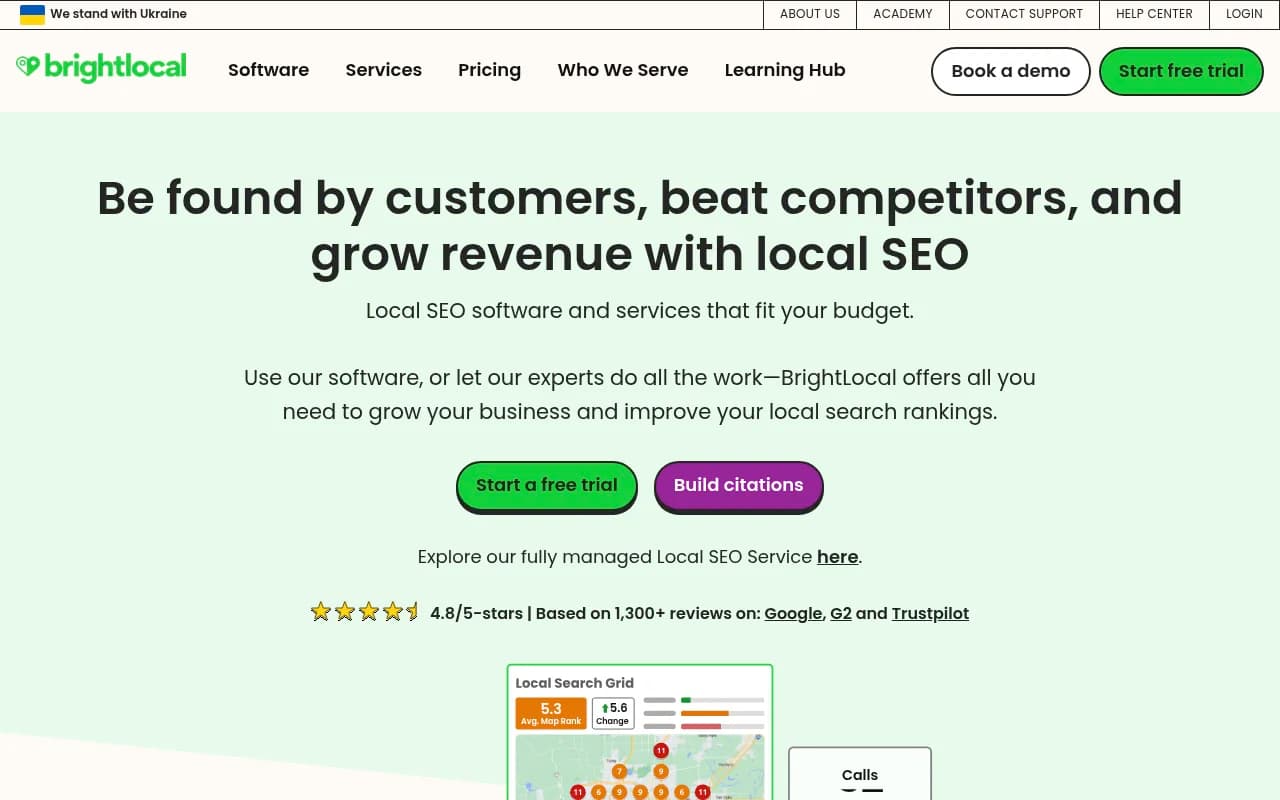
- BrightLocal (for multi-location citation tracking and management)
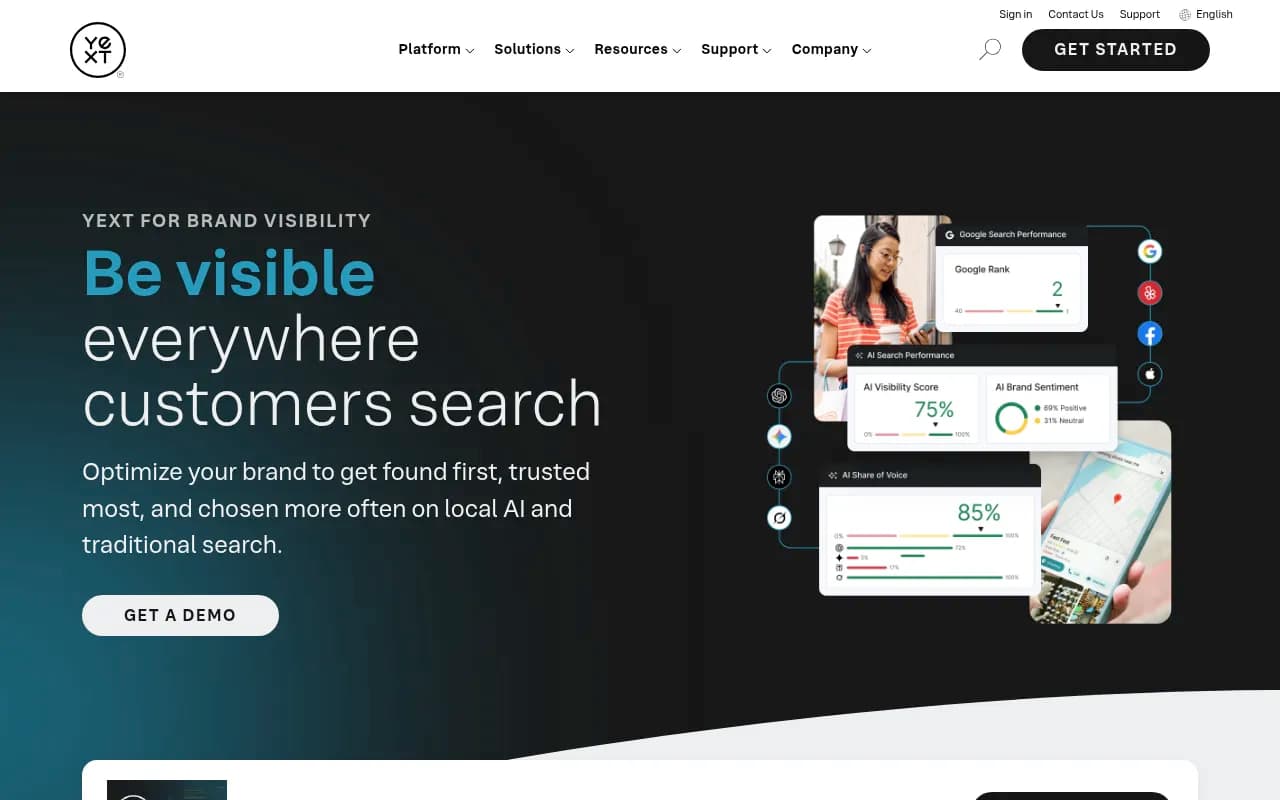
- Yext (for enterprise-scale citation distribution)
Schema Markup
- Schema.org documentation (reference for correct implementation)
- Google's Structured Data Testing Tool (validate your markup)
AI Visibility Tracking
- Promptwatch (track brand mentions across ChatGPT, Perplexity, Claude, Gemini, and 9+ AI models)
- Profound (enterprise AI visibility platform)
- Otterly.AI (basic AI search monitoring)
Profound

Otterly.AI

Local Rank Tracking
- Local Falcon (grid-based local rank tracking)
- BrightLocal (local rank tracking + citation management)
Review Management
- Birdeye (automated review requests and monitoring)
- Podium (review generation + lead conversion)
Final Thoughts: The Hybrid Future
Local search didn't die. AI didn't replace it. Instead, we're living in a hybrid world where both matter.
Multi-location businesses that win in 2026 will be those that:
- Maintain strong local SEO fundamentals (GBP, citations, reviews, location pages)
- Optimize for AI understanding (structured data, entity clarity, conversational content)
- Track both traditional and AI visibility (Map Pack rankings + AI citation frequency)
- Iterate based on data (close content gaps, fix inconsistencies, build authority)
The good news? The tactics aren't radically different. The same foundational elements that power local SEO—accurate business data, strong reviews, authoritative mentions, clear service descriptions—also power AI visibility.
You just need to execute them with AI models in mind: more structured data, clearer entity definitions, more conversational content, and better tracking.
Start with the 90-day plan above. Audit your current state, fix the critical issues, create the content, and track the results. In three months, you'll have a measurable advantage over competitors who are still ignoring AI search.
And in a year? You'll own your market.