Key takeaways
- Nightwatch started as a traditional rank tracker and has added AI search monitoring for Google AI Overviews, ChatGPT, Claude, and Perplexity — making it a dual-purpose tool for teams already invested in classic SEO.
- Its pricing starts at $32/month, which is genuinely competitive, especially for teams that want rank tracking and basic AI visibility in one place.
- The AI monitoring features are real but relatively surface-level compared to dedicated GEO platforms — you get brand tracking and mention monitoring, but not deep content gap analysis or AI-specific content generation.
- For teams that need to go beyond monitoring and actually fix their AI visibility, more specialized platforms exist.
- The sweet spot for Nightwatch is SEO-focused teams who want to dip into AI search monitoring without switching tools or budgets.
What Nightwatch actually is
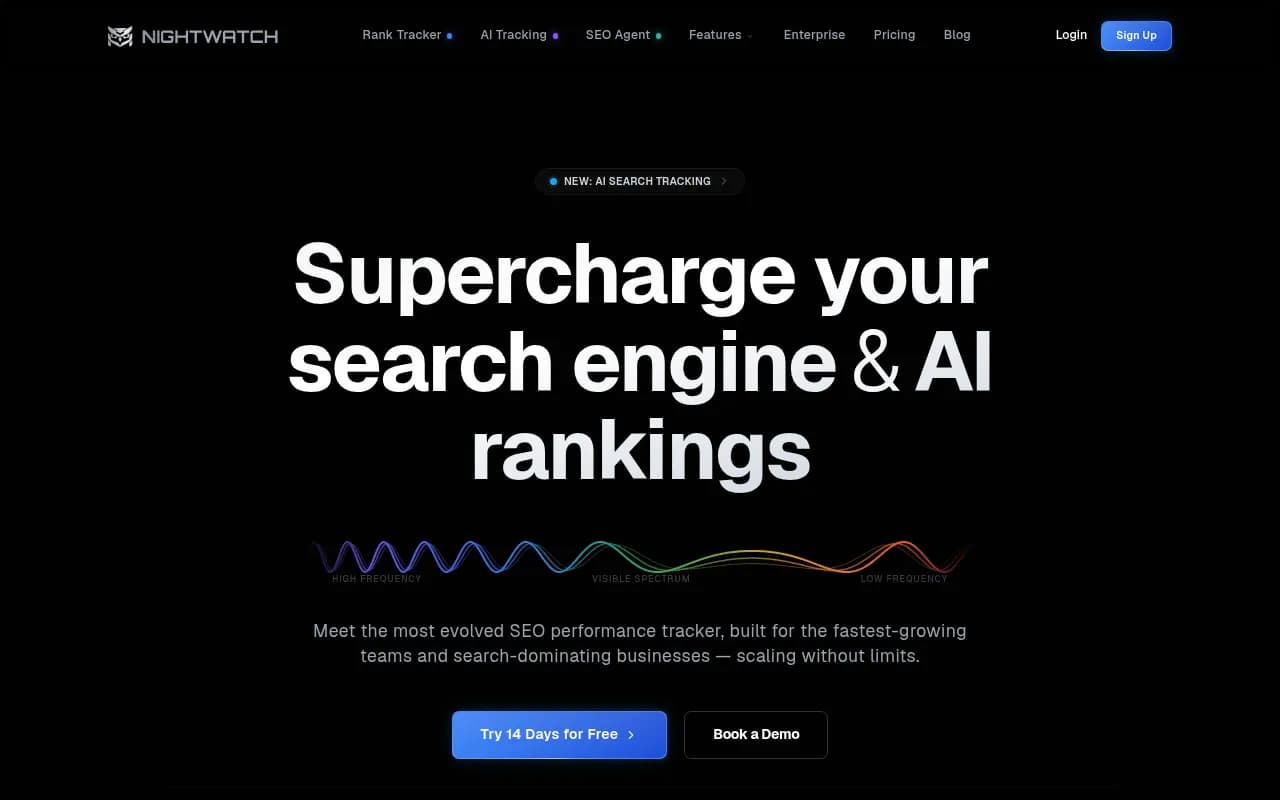
Nightwatch started life as a rank tracker. A good one, by most accounts — cloud-based, accurate, with solid support for tracking keywords across multiple search engines, devices, and locations. It integrated with Google Analytics and Search Console, offered site audits and backlink monitoring, and became a go-to for agencies and SEO professionals who needed reliable daily rankings without paying Semrush prices.
Then AI search happened.
ChatGPT crossed 100 million users faster than any platform in history. Perplexity started eating into informational search traffic. Google rolled out AI Overviews across billions of queries. And suddenly, rank tracking alone felt incomplete. Your position-3 ranking meant less if an AI Overview was answering the question before users ever scrolled to organic results.
Nightwatch responded by adding AI tracking features to its existing platform. The pitch is straightforward: you already trust us for rank tracking, now let us handle AI visibility too.
That's a reasonable pitch. Whether it holds up depends on what you actually need.
What the AI monitoring features look like in practice
Nightwatch's AI tracking covers Google AI Overviews, ChatGPT, Claude, and Perplexity. You can monitor whether your brand appears in AI-generated responses, track citation frequency, and see how your visibility changes over time.
The interface will feel familiar to anyone who's used the rank tracking side of the product. You set up prompts or queries, Nightwatch checks them across the supported AI engines, and you get a dashboard showing your presence (or absence) in the results.
A few things stand out:
The dual-layer tracking is genuinely useful. You can see traditional rank data and AI visibility data side by side, which matters when you're trying to understand why organic traffic is changing. If your rankings are stable but AI Overview presence is dropping, that tells you something different than the inverse.
The prompt research feature is a nice addition. It lets you explore what queries are relevant to your brand in AI contexts, not just traditional keyword research. This is more useful than it sounds — the way people prompt AI engines is often quite different from how they type into Google.
The SEO Agent feature (an AI-powered workflow automation tool) rounds out the platform's ambitions. It's designed to help you automate parts of your SEO workflow, though it's more of a productivity layer than a content strategy engine.
Where it gets complicated
Here's the honest part.
Nightwatch's AI monitoring is real, but it's primarily a monitoring and reporting layer. You can see where you appear and where you don't. What you get less of is the "now what?" — the actionable path from "we're not appearing in Perplexity for these queries" to "here's the content we need to create to fix that."
That gap matters more than it used to. Knowing you're invisible in AI search is step one. The harder problem is figuring out what to do about it.
For teams that want to close the loop — identify content gaps, generate content engineered for AI citation, and track whether it actually worked — Nightwatch's current feature set requires you to do a lot of that work manually or with separate tools.
This isn't a knock on Nightwatch specifically. Most traditional SEO platforms that have added AI monitoring face the same limitation. The monitoring piece is relatively straightforward to build. The optimization piece is much harder.
How Nightwatch compares to the alternatives
The AI visibility tool market has gotten crowded fast. Here's how Nightwatch stacks up against the main options:
| Tool | Traditional rank tracking | AI search monitoring | Content gap analysis | AI content generation | Crawler logs | Starting price |
|---|---|---|---|---|---|---|
| Nightwatch | Yes (core feature) | Yes (ChatGPT, Claude, Perplexity, AI Overviews) | Limited | No | No | $32/mo |
| Promptwatch | No | Yes (10 AI models) | Yes (Answer Gap Analysis) | Yes (built-in AI writer) | Yes | $99/mo |
| Otterly.AI | No | Yes | No | No | No | ~$49/mo |
| Peec AI | No | Yes | Limited | No | No | ~$49/mo |
| Profound | No | Yes | Limited | No | No | $500+/mo |
| Semrush | Yes (core feature) | Limited (fixed prompts) | No | No | No | $139/mo |
| AccuRanker | Yes (core feature) | No | No | No | No | $129/mo |
A few observations from that table:
Nightwatch's pricing is genuinely competitive. At $32/month, it's significantly cheaper than most dedicated AI visibility platforms, and you're getting traditional rank tracking included. If you need both, the math works.
The tradeoff is depth. Platforms built specifically for AI search visibility — like Promptwatch — cover more AI models (10 vs. Nightwatch's 4), include content gap analysis that shows you exactly which prompts competitors are winning that you're not, and have built-in content generation tools to help you act on that data.

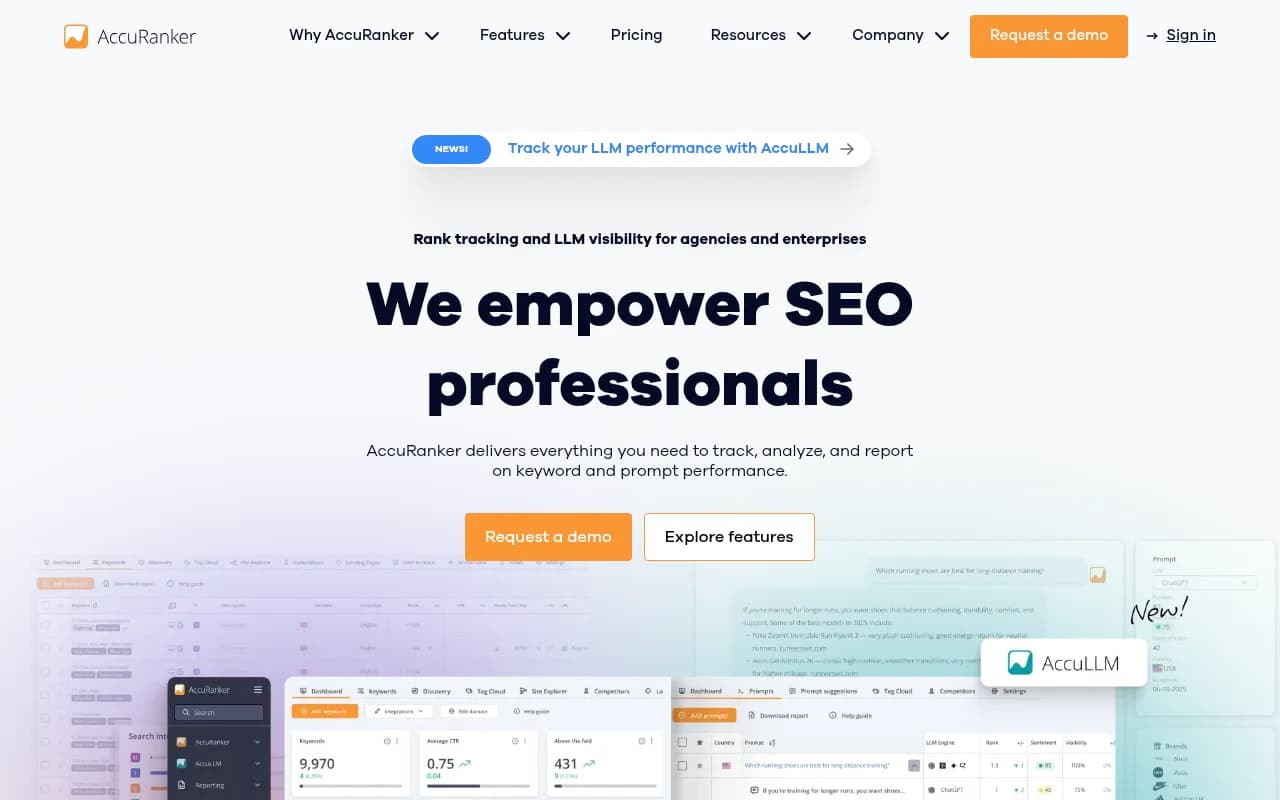
For pure rank tracking without AI monitoring, tools like AccuRanker are worth a look if that's your primary need.
And if you're already deep in the Semrush ecosystem, their AI toolkit exists, though it's worth knowing the prompts are fixed rather than customizable.
Who Nightwatch is actually right for
The honest answer is: teams that are primarily SEO-focused and want to add AI visibility monitoring without a major budget increase or tool switch.
If you're running a mid-sized SEO program, tracking hundreds of keywords across multiple clients or properties, and you want to start understanding AI search visibility without overhauling your stack, Nightwatch makes sense. The $32 entry point is accessible, the rank tracking is solid, and the AI monitoring gives you a baseline view of where you stand.
Where it gets harder to recommend is for teams where AI search visibility is the primary concern. If your leadership is asking "why aren't we appearing in ChatGPT when people ask about our category?" and you need to actually fix that — not just measure it — Nightwatch's current feature set will leave you doing a lot of manual work.
Similarly, agencies running AI visibility programs for clients will likely find the reporting and depth insufficient compared to platforms built specifically for that use case.
The features worth knowing about
A few Nightwatch capabilities that don't always get mentioned in reviews:
Search Simulator: Lets you simulate searches from specific locations and devices to see what results actually look like. Useful for local SEO work and for understanding how AI Overviews appear in different contexts.
Looker Studio integration: If your team already uses Looker Studio for reporting, Nightwatch connects directly. This is more useful than it sounds for agencies that need to fold rank and AI visibility data into existing client dashboards.
Privacy-focused search engine tracking: Nightwatch tracks visibility in DuckDuckGo and other privacy-focused engines, which most competitors ignore. Niche, but relevant for certain audiences.
Keyword research with prompt research: The combination of traditional keyword research and AI prompt research in one interface is genuinely useful for understanding how search intent is shifting.
What's missing
A few gaps worth knowing about before you commit:
No AI content generation. If you want to create content optimized for AI citation, you'll need a separate tool. Nightwatch tells you what's happening; it doesn't help you fix it.
Limited AI model coverage. Four AI engines (Google AI Overviews, ChatGPT, Claude, Perplexity) is a reasonable starting set, but it misses Gemini, Grok, DeepSeek, Meta AI, Copilot, and Mistral — all of which are meaningful traffic sources depending on your audience.
No crawler log analysis. Understanding which pages AI crawlers are actually visiting, how often, and what errors they're encountering is increasingly important for AI search optimization. Nightwatch doesn't offer this.
No Reddit or YouTube citation tracking. A meaningful percentage of AI citations come from Reddit threads and YouTube content. If you want to understand why a competitor is getting cited and you're not, knowing their Reddit presence is part of that picture.
Alternatives worth considering
If Nightwatch's feature set doesn't quite fit your needs, here are a few alternatives depending on what you're optimizing for:
For teams that want AI visibility monitoring with content optimization built in, Promptwatch covers 10 AI models, includes Answer Gap Analysis to show exactly which prompts you're missing, and has a built-in AI writing agent that generates content engineered for AI citation. It's more expensive ($99/month to start) but does significantly more.
For a monitoring-focused tool at a similar price point to Nightwatch, Otterly.AI is worth a look. It's lighter on features but clean and focused.
Otterly.AI

For teams that want deep AI visibility data with strong competitor benchmarking, Peec AI is worth evaluating.

For enterprise teams where AI visibility is a board-level concern, Profound has more robust reporting and governance features, though the price reflects that.
Profound

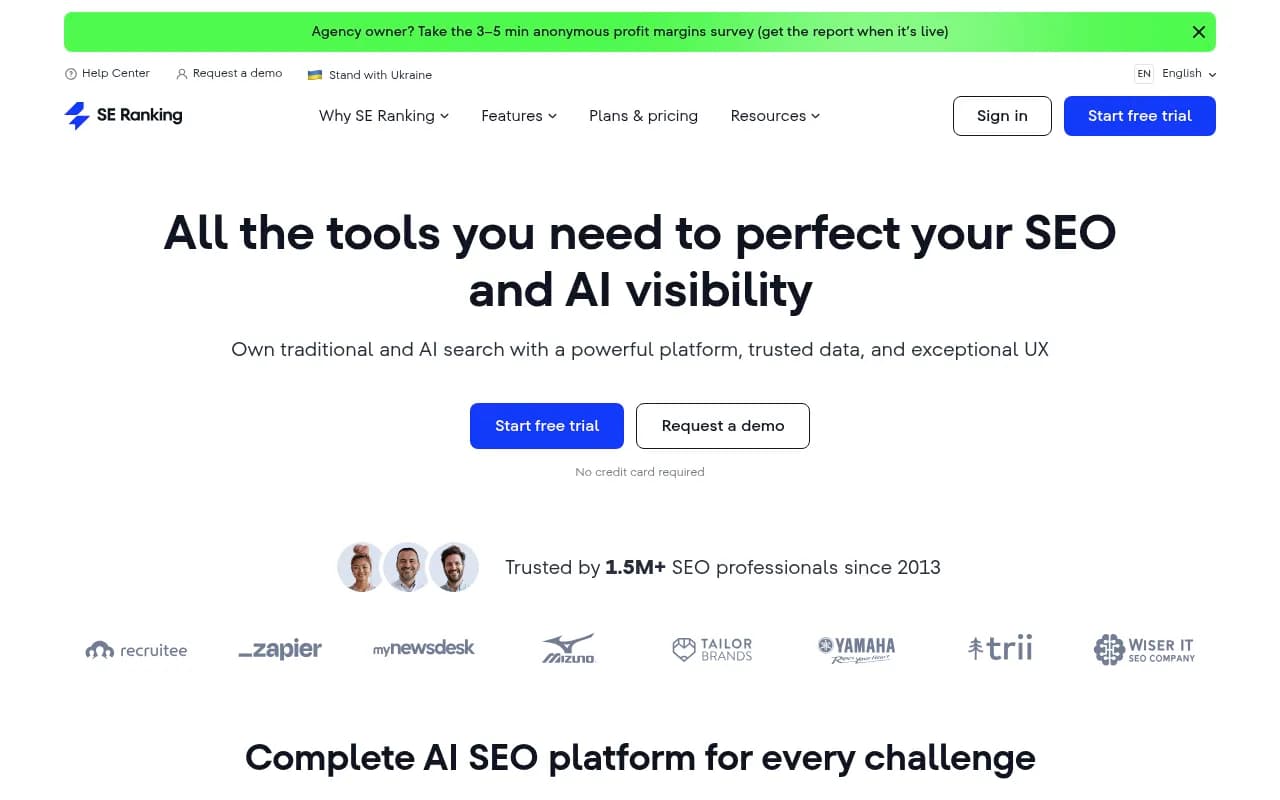
If you're primarily an SEO agency and want a rank tracker with some AI monitoring, SE Ranking has added AI visibility features to its existing platform at a competitive price.
The bottom line
Nightwatch in 2026 is a solid rank tracker that has meaningfully extended into AI search monitoring. The dual-layer tracking is genuinely useful, the pricing is accessible, and the platform is mature enough that you're not dealing with rough edges.
The limitations are real too. Four AI models instead of ten, no content gap analysis, no AI content generation, no crawler logs. For teams where AI search visibility is the primary problem to solve, those gaps matter.
The right call depends on where you are. If AI search monitoring is a "nice to have" addition to an existing SEO program, Nightwatch is a reasonable choice. If it's the core problem you're trying to solve, you'll likely outgrow it quickly and should look at platforms built specifically for that job.