Key Takeaways
- Peec AI focuses exclusively on AI visibility monitoring across ChatGPT, Perplexity, and Claude with a streamlined interface—ideal for teams starting their AI search strategy without complexity
- Nightwatch combines traditional SEO rank tracking with AI visibility monitoring in one unified platform—best for teams that want both capabilities without managing multiple tools
- Gauge emphasizes brand mention tracking and visibility optimization across AI engines—suited for brand-focused teams prioritizing reputation management
- Mid-market pricing ranges from $200-$600/month depending on prompt volume, site count, and feature depth
- The right choice depends on whether you need monitoring-only (Peec AI), unified SEO + AI tracking (Nightwatch), or brand-centric visibility (Gauge)
Why Mid-Market Teams Need Specialized AI Visibility Tools
AI referral traffic now accounts for 1.08% of all website traffic, with 87.4% originating from ChatGPT alone (Conductor, 2026). That seemingly small percentage is deceptive: AI search converts at 4.4x the rate of traditional organic and is growing faster than any other referral channel.
For growing marketing teams at mid-market companies, the challenge isn't whether to track AI visibility—it's choosing the right platform that balances capability, complexity, and cost. Enterprise tools like Promptwatch offer comprehensive features including content gap analysis, AI writing agents, and crawler log monitoring, but many mid-market teams need something more focused.

This guide compares three platforms built specifically for the mid-market: Peec AI, Nightwatch, and Gauge. Each takes a different approach to AI visibility tracking, and understanding these differences will help you choose the platform that matches your team's actual needs.
Peec AI: Focused Monitoring for AI-First Teams
What Peec AI Does
Peec AI positions itself as a straightforward AI visibility tracker without the complexity of enterprise platforms. The platform monitors brand mentions and citations across major AI engines—ChatGPT, Perplexity, Claude, and Google AI Overviews—with a clean, dashboard-focused interface.

Core Capabilities
Prompt Tracking: Enter the prompts your customers use, and Peec AI checks whether your brand appears in AI-generated responses. The platform shows position, context, and competitor comparisons for each tracked prompt.
Multi-Engine Coverage: Peec AI monitors ChatGPT, Perplexity, Claude, and Google AI Overviews. This covers the major platforms where most AI search traffic originates, though it lacks coverage for emerging engines like Gemini, Meta AI, or DeepSeek.
Competitor Comparison: Track how your brand stacks up against competitors across the same prompts. Peec AI shows which brands appear more frequently, in what context, and with what positioning.
Smart Suggestions: The platform offers AI-powered suggestions for relevant prompts and competitors to track based on your industry and initial inputs. This helps teams get started without extensive prompt research.
What's Missing
Peec AI operates purely at the monitoring level. It tells you where you appear (or don't appear) but provides no tools to fix visibility gaps. There's no content generation, no crawler log analysis, no prompt research beyond basic suggestions, and no integration with traditional SEO tracking.
The platform also lacks visibility into the real-time web searches that AI systems perform when gathering current information. This means you're only seeing the final AI response, not the underlying search behavior that informed it.
Pricing and Positioning
Peec AI targets mid-market teams with pricing starting around $200-300/month for basic monitoring. The platform is best suited for marketing teams that:
- Want to start tracking AI visibility without overwhelming complexity
- Don't need traditional SEO tracking (already using Semrush, Ahrefs, etc.)
- Prefer a monitoring-only approach and plan to handle optimization separately
- Have limited budget for AI visibility tools
Nightwatch: Unified SEO + AI Visibility Tracking
What Nightwatch Does
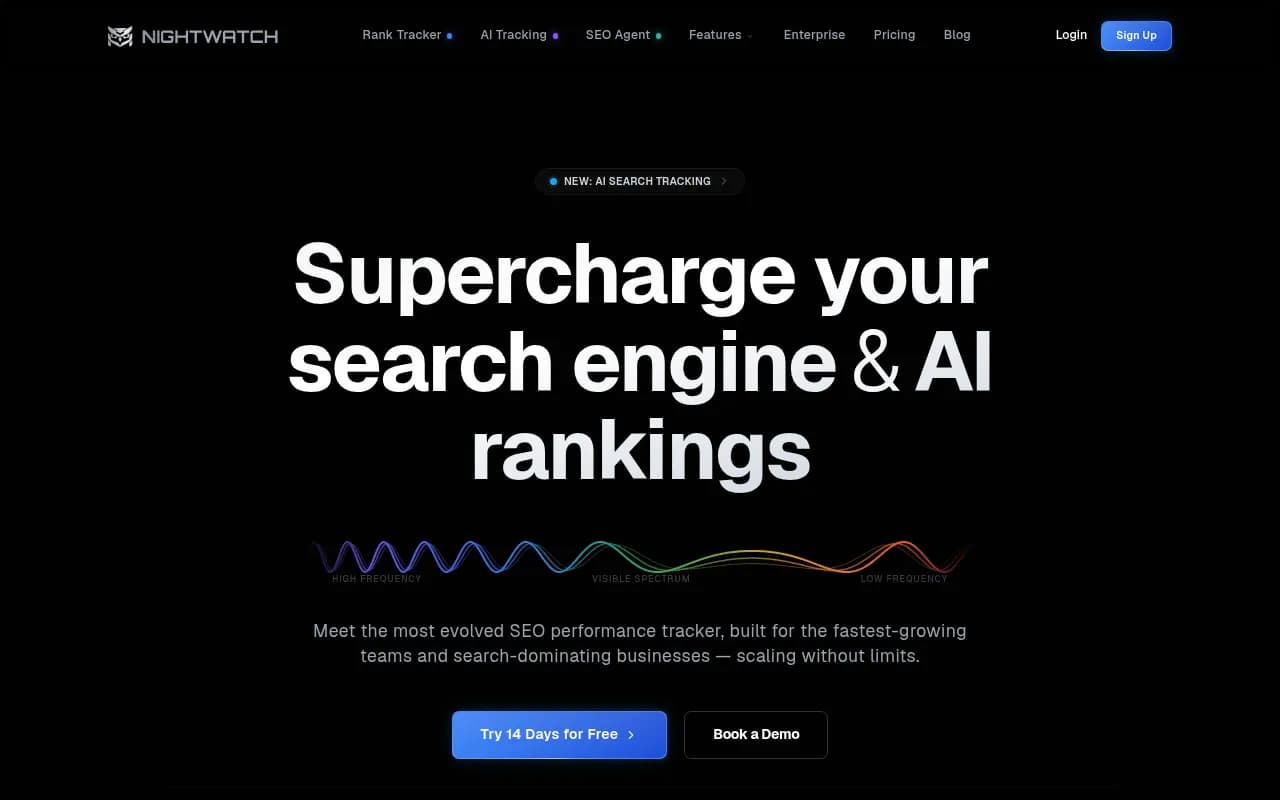
Nightwatch takes a different approach by combining traditional SEO rank tracking with AI visibility monitoring in one unified platform. For marketing teams managing both traditional search and AI search, this eliminates the need to juggle multiple tools.
Core Capabilities
Dual-Layer Tracking: Nightwatch monitors both AI-generated responses (ChatGPT, Perplexity, Google AI Overviews) and the real-time web searches that AI systems perform to gather current information. This gives you visibility into both what AI engines say about your brand and how they discover that information.
Traditional SEO Integration: Unlike Peec AI, Nightwatch includes full rank tracking for traditional search engines (Google, Bing, etc.). You can track keyword rankings, SERP features, and AI visibility in the same dashboard.
Prompt Research: The platform includes prompt discovery tools that help you identify high-value queries where your brand should appear. This goes beyond basic suggestions to show prompt volumes, difficulty scores, and competitive analysis.
Reporting and Collaboration: Nightwatch offers white-label reporting, team collaboration features, and Looker Studio integration—capabilities designed for agencies and in-house teams managing multiple stakeholders.
What Sets It Apart
Nightwatch's key differentiator is the unified approach. If your team is already tracking traditional SEO performance, adding AI visibility monitoring to the same platform creates workflow efficiencies. You're not switching between tools, reconciling different data sources, or managing multiple subscriptions.
The platform also monitors the search layer beneath AI responses—the actual web searches AI engines perform when gathering real-time information. This reveals indexing opportunities and content gaps that monitoring-only tools miss entirely.
Pricing and Positioning
Nightwatch pricing starts around $300-400/month for combined SEO + AI tracking. The platform is best suited for teams that:
- Want both traditional SEO and AI visibility tracking in one tool
- Need prompt research and discovery capabilities
- Manage multiple clients or stakeholders (agencies, in-house teams)
- Value workflow efficiency over specialized depth in either category
Gauge: Brand-Centric AI Visibility
What Gauge Does
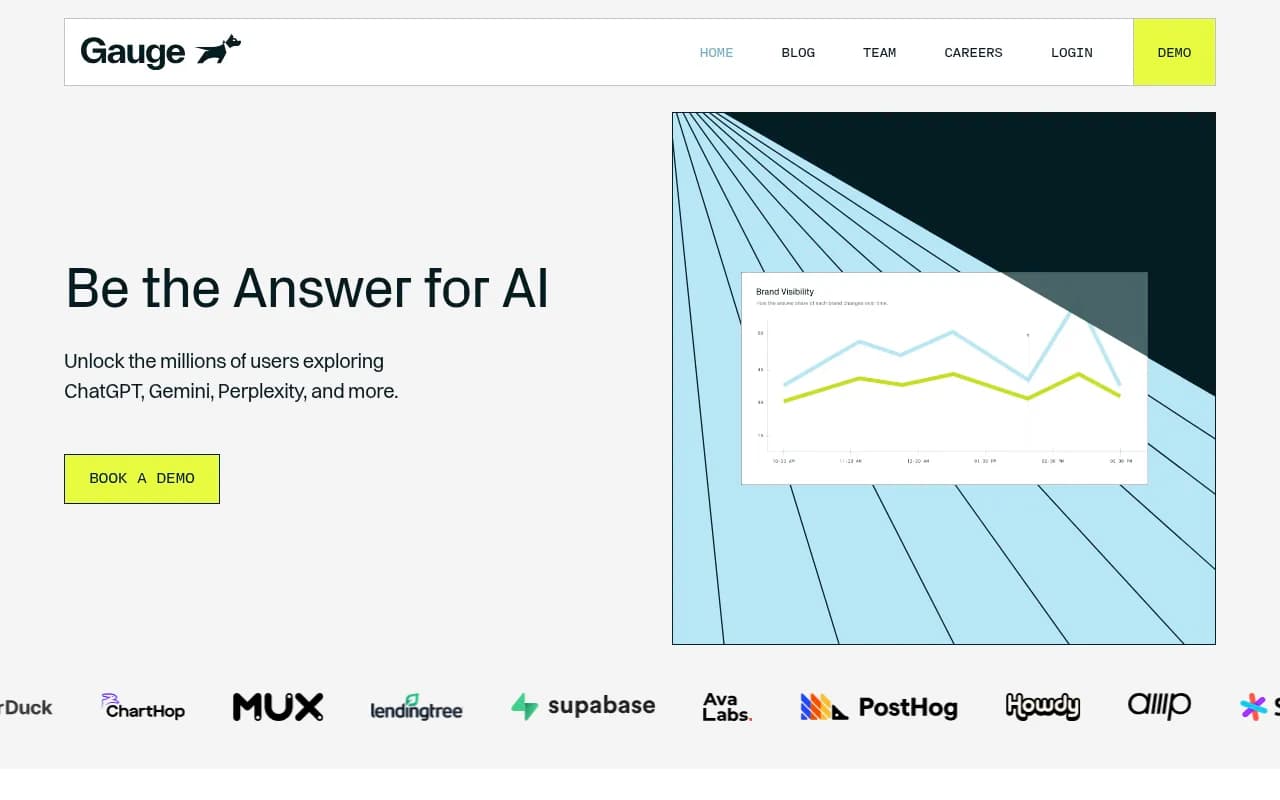
Gauge approaches AI visibility from a brand reputation angle. Rather than focusing on keyword-style prompt tracking, Gauge emphasizes how AI engines position your brand, what they say about you, and how you compare to competitors in brand-related queries.
Core Capabilities
Brand Mention Tracking: Gauge monitors when and how your brand appears across AI engines, with emphasis on sentiment, positioning, and recommendation context. The platform flags when AI engines recommend competitors over you or present your brand negatively.
Multi-Engine Coverage: Like Peec AI, Gauge tracks ChatGPT, Perplexity, Google AI Overviews, and Claude. The platform also includes Gemini and Meta AI, giving broader coverage than Peec AI.
Visibility Optimization: Gauge provides recommendations for improving brand visibility based on citation analysis and competitor positioning. While not as comprehensive as platforms like Promptwatch that include content generation, Gauge offers actionable insights for optimization.
Executive Reporting: The platform includes pre-built reports designed for executive audiences, focusing on brand health metrics rather than technical SEO data.
What's Missing
Gauge lacks traditional SEO tracking entirely—it's AI visibility only. The platform also doesn't include crawler log analysis, prompt volume estimates, or content creation tools. If you need traditional rank tracking or deep technical capabilities, you'll need a separate tool.
Pricing and Positioning
Gauge pricing falls in the $400-600/month range depending on brand count and prompt volume. The platform is best suited for teams that:
- Prioritize brand reputation and positioning over keyword-style tracking
- Want broader AI engine coverage (including Gemini and Meta AI)
- Need executive-friendly reporting focused on brand health
- Already have traditional SEO covered with another tool
Feature Comparison: Peec AI vs Nightwatch vs Gauge
Monitoring Capabilities
AI Engine Coverage:
- Peec AI: ChatGPT, Perplexity, Claude, Google AI Overviews
- Nightwatch: ChatGPT, Perplexity, Google AI Overviews, plus traditional search
- Gauge: ChatGPT, Perplexity, Claude, Google AI Overviews, Gemini, Meta AI
Traditional SEO Tracking:
- Peec AI: None
- Nightwatch: Full rank tracking, SERP features, site audits
- Gauge: None
Crawler Log Analysis:
- Peec AI: Not included
- Nightwatch: Basic monitoring
- Gauge: Not included
Intelligence and Optimization
Prompt Research:
- Peec AI: AI-powered suggestions only
- Nightwatch: Full prompt discovery with volumes and difficulty
- Gauge: Brand-focused query analysis
Competitor Analysis:
- Peec AI: Basic comparison across tracked prompts
- Nightwatch: Competitive heatmaps and positioning analysis
- Gauge: Brand-centric competitor positioning
Content Recommendations:
- Peec AI: None
- Nightwatch: Limited optimization suggestions
- Gauge: Brand visibility recommendations
Workflow and Collaboration
Reporting:
- Peec AI: Standard dashboards
- Nightwatch: White-label reports, Looker Studio integration
- Gauge: Executive-focused brand health reports
Team Features:
- Peec AI: Basic user management
- Nightwatch: Full team collaboration and agency features
- Gauge: Multi-user access with role-based permissions
API Access:
- Peec AI: Not available
- Nightwatch: Available on higher tiers
- Gauge: Available on enterprise plans
Choosing the Right Platform for Your Team
Choose Peec AI If You:
- Want to start tracking AI visibility without complexity or steep learning curves
- Already have traditional SEO covered with Semrush, Ahrefs, or similar tools
- Prefer a focused, monitoring-only approach
- Have a limited budget ($200-300/month range)
- Don't need advanced features like crawler logs or content generation
Choose Nightwatch If You:
- Want both traditional SEO and AI visibility tracking in one platform
- Need prompt research and discovery capabilities beyond basic suggestions
- Manage multiple clients or stakeholders (agencies, in-house teams)
- Value workflow efficiency and unified reporting
- Want to monitor the search layer beneath AI responses
Choose Gauge If You:
- Prioritize brand reputation and positioning over keyword-style tracking
- Need broader AI engine coverage including Gemini and Meta AI
- Want executive-friendly reporting focused on brand health metrics
- Already have traditional SEO tracking covered elsewhere
- Focus on brand visibility optimization rather than technical SEO
Beyond Mid-Market: When to Consider Enterprise Platforms
If your team needs more than monitoring and basic optimization, enterprise platforms like Promptwatch offer capabilities that mid-market tools don't:
- Content Gap Analysis: Identify exactly which prompts competitors rank for but you don't, then see the specific content your site is missing
- AI Content Generation: Built-in writing agent that creates articles, listicles, and comparisons grounded in real citation data (880M+ citations analyzed)
- Crawler Log Monitoring: Real-time logs of AI crawlers hitting your website—which pages they read, errors they encounter, how often they return
- Traffic Attribution: Connect AI visibility to actual revenue with code snippet, GSC integration, or server log analysis
- Reddit & YouTube Insights: Surface discussions that directly influence AI recommendations—a channel most competitors ignore
Promptwatch pricing starts at $99/month for the Essential plan (1 site, 50 prompts, 5 articles), with Professional at $249/month and Business at $579/month. The platform is built around the action loop: find gaps, generate content, track results—not just monitoring.
Implementation: Getting Started with AI Visibility Tracking
Step 1: Define Your Tracking Strategy
Before choosing a platform, clarify what you're actually trying to track:
Brand Monitoring: Track mentions of your brand name, products, and key executives across AI responses. This is table stakes—every platform does this.
Category Positioning: Monitor prompts related to your product category ("best project management software", "top CRM platforms", etc.). This reveals whether AI engines recommend you when users search for solutions in your space.
Competitor Comparison: Track how you stack up against specific competitors across the same prompts. This shows competitive positioning gaps.
Content Performance: Monitor which pages and content types AI engines cite most frequently. This reveals what content formats work.
Step 2: Build Your Prompt Library
Start with 20-50 high-value prompts across these categories:
- Direct brand queries ("What is [your brand]?")
- Category queries ("Best [product category] for [use case]")
- Comparison queries ("[Your brand] vs [competitor]")
- Problem-solution queries ("How to [solve problem your product addresses]")
All three platforms offer prompt suggestions, but Nightwatch provides the most robust prompt research capabilities with volume estimates and difficulty scoring.
Step 3: Set Baseline Metrics
Before optimizing anything, establish your baseline visibility:
- What percentage of tracked prompts mention your brand?
- What's your average position when you do appear?
- How often do AI engines recommend competitors over you?
- Which AI engines show the strongest/weakest visibility?
This baseline becomes your benchmark for measuring improvement over time.
Step 4: Integrate with Existing Workflows
AI visibility tracking shouldn't exist in isolation:
For SEO Teams: If you choose Nightwatch, integrate AI visibility metrics into your existing SEO reporting. Track how traditional rankings correlate with AI visibility.
For Content Teams: Use visibility data to inform content planning. Which topics and formats get cited most frequently? What content gaps exist?
For Brand Teams: If you choose Gauge, integrate brand health metrics from AI visibility into your broader reputation monitoring.
The Future of Mid-Market AI Visibility Tools
The AI visibility space is evolving rapidly. In 2026, we're seeing three clear trends that will shape mid-market platforms:
Trend 1: From Monitoring to Action
Pure monitoring tools are becoming commoditized. The next generation of platforms will focus on closing the loop from visibility data to content creation to optimization. Platforms like Promptwatch are already doing this with built-in AI writing agents and content gap analysis.
Expect mid-market tools to add more optimization features in 2026-2027, though they'll likely remain less comprehensive than enterprise platforms.
Trend 2: Multi-Engine Coverage Expands
As AI search fragments across more engines (DeepSeek, Grok, Mistral, etc.), coverage breadth becomes more important. Gauge already tracks 6+ engines; expect Peec AI and Nightwatch to expand coverage throughout 2026.
Trend 3: Integration with Traditional SEO Deepens
Nightwatch's unified approach represents the future: marketing teams don't want separate tools for traditional SEO and AI visibility. Expect more platforms to bridge this gap, either through direct integration or partnerships.
Making the Decision: A Practical Framework
Budget Considerations
Under $300/month: Peec AI offers the most focused value at this price point. You get core AI visibility monitoring without paying for features you don't need.
$300-500/month: Nightwatch provides the best value if you need both traditional SEO and AI visibility. The unified platform eliminates the need for multiple subscriptions.
$500-600/month: Gauge makes sense if brand positioning is your primary concern and you need broader AI engine coverage.
Over $600/month: Consider enterprise platforms like Promptwatch that include content generation, crawler logs, and optimization tools beyond monitoring.
Team Structure Considerations
Small Marketing Teams (1-3 people): Peec AI's simplicity wins. You don't have bandwidth for complex tools or extensive optimization workflows.
Mid-Size Teams (4-10 people): Nightwatch's collaboration features and unified approach support team workflows better. Multiple stakeholders can access the same data.
Agency Teams: Nightwatch's white-label reporting and multi-client management make it the clear choice for agencies managing multiple brands.
Brand-Focused Teams: Gauge's executive reporting and brand health metrics align better with brand team priorities than keyword-style tracking.
Technical Capability Considerations
Limited Technical Resources: Peec AI requires the least technical setup and maintenance. It's plug-and-play monitoring.
Moderate Technical Resources: Nightwatch offers more depth without overwhelming complexity. Setup is straightforward but you can dig deeper when needed.
Strong Technical Resources: Consider enterprise platforms that offer API access, custom integrations, and advanced features your team can actually leverage.
Conclusion: Three Platforms, Three Different Approaches
Peec AI, Nightwatch, and Gauge each serve distinct needs in the mid-market AI visibility space:
Peec AI delivers focused monitoring for teams that want to start tracking AI visibility without complexity. It's the simplest entry point, but you'll outgrow it if you need optimization tools or traditional SEO integration.
Nightwatch combines traditional SEO and AI visibility in one platform, making it ideal for teams that want unified tracking without managing multiple tools. The prompt research and dual-layer monitoring provide more depth than Peec AI, though it's not brand-focused.
Gauge emphasizes brand reputation and positioning across AI engines, with executive-friendly reporting and broader engine coverage. It's the right choice for brand-centric teams that already have traditional SEO covered.
For teams that need more than monitoring—content gap analysis, AI writing agents, crawler log monitoring, and traffic attribution—enterprise platforms like Promptwatch offer capabilities that mid-market tools don't. But for growing marketing teams with focused needs and realistic budgets, these three platforms represent the best options in 2026.
The right choice depends on your team's specific needs, existing tool stack, and strategic priorities. Start with a clear understanding of what you're trying to achieve with AI visibility tracking, then choose the platform that matches those goals—not the one with the longest feature list.