Key Takeaways
- AI predictive analytics now forecast campaign performance with 85%+ accuracy before launch, analyzing historical data, audience behavior, and market conditions to predict ROI
- Companies using AI for marketing forecasting report 30% improvement in campaign performance and 15-25% higher conversion rates compared to traditional approaches
- Leading predictive tools simulate scenarios, recommend budget allocation, forecast demand, and identify high-value audiences before you commit resources
- The shift from reactive reporting to proactive prediction is reshaping how marketing teams plan, test, and scale campaigns in 2026
The Predictive Marketing Revolution
Marketing in 2026 is no longer about launching campaigns and hoping for the best. The most successful teams now forecast performance before spending a dollar—using AI to predict which creative will resonate, which channels will convert, and which audiences will deliver the highest ROI.
This isn't speculation. It's data-driven prediction powered by machine learning models that analyze millions of data points across past campaigns, real-time market signals, and audience behavior patterns.
According to recent industry research, 74% of B2B marketing teams now leverage AI marketing analytics to gain competitive advantage. Companies implementing predictive marketing analytics achieve 32% higher lead quality and 27% faster sales cycles compared to teams relying on traditional methods.
The difference between reactive and predictive marketing is stark: one tells you what happened last quarter, the other tells you what will happen next quarter—and what to do about it.
How Predictive Marketing Analytics Actually Works
Predictive marketing uses historical data to train machine learning models that forecast future outcomes with statistical probability. Instead of guessing which campaign will perform, you get data-backed predictions before launch.
The Four Stages of Predictive Marketing
Stage 1: Data Collection and Integration
Predictive systems ingest data from every marketing touchpoint—CRM records, website behavior, email engagement, ad performance, social interactions, and purchase history. The more complete your data, the more accurate your predictions.
Stage 2: Pattern Recognition
Machine learning algorithms identify patterns invisible to human analysts. Which content formats drive conversions? Which audience segments respond to specific messaging? What time of day yields highest engagement? The AI finds correlations across thousands of variables simultaneously.
Stage 3: Predictive Modeling
The system builds statistical models that forecast outcomes. Given a specific campaign configuration—audience, creative, channel, budget, timing—the model predicts performance metrics like click-through rate, conversion rate, cost per acquisition, and total ROI.
Stage 4: Scenario Simulation
Before you launch, you can test multiple scenarios. What if you increase budget by 20%? What if you target a different audience segment? What if you change the creative angle? The AI simulates each scenario and recommends the optimal configuration.
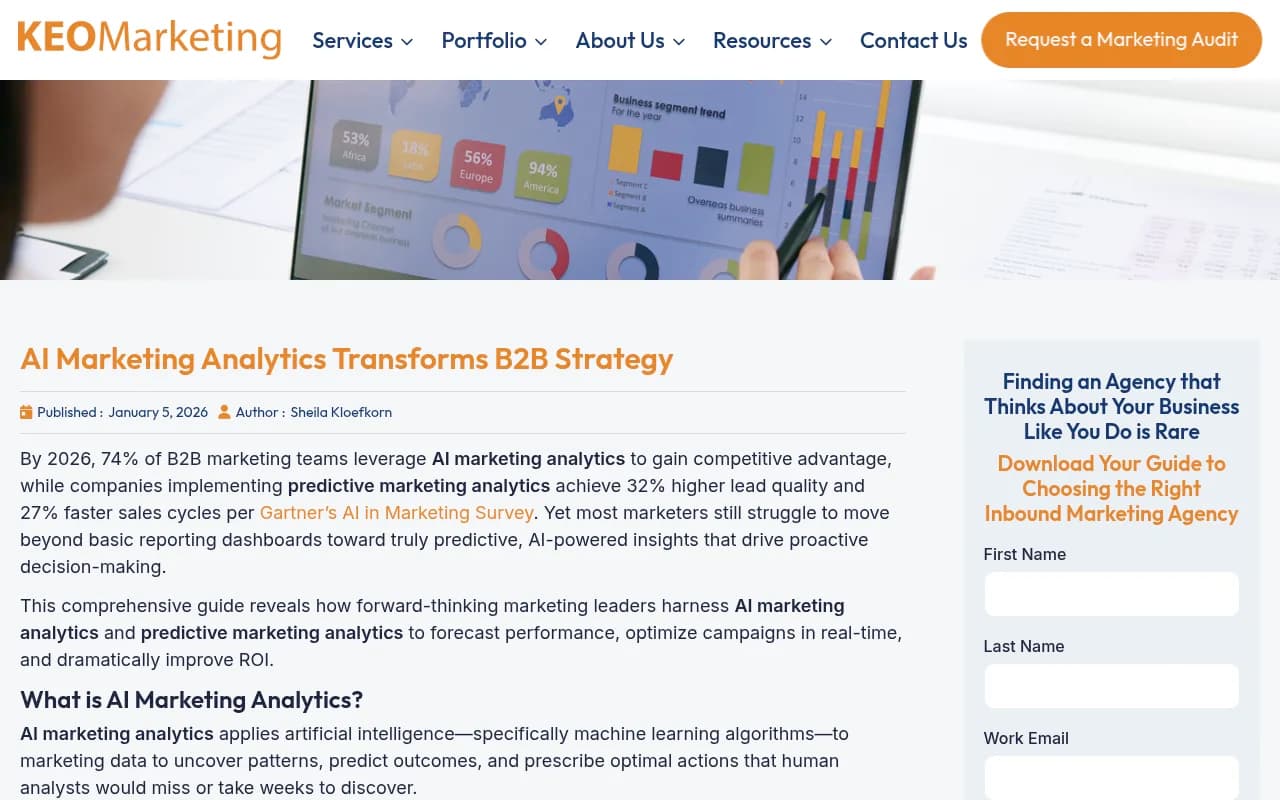
Core Predictive Applications Transforming Marketing
Lead Scoring and Conversion Prediction
ML models analyze thousands of attributes—firmographics, behavior, engagement patterns—to predict conversion probability for each lead. Sales teams focus on highest-potential prospects instead of wasting time on low-probability contacts.
Companies using AI-powered lead scoring improve sales efficiency by 38% by helping reps prioritize the right conversations at the right time.
Churn Prediction and Retention
Algorithms identify patterns in customer behavior that precede cancellations—declining engagement, support ticket patterns, usage drops, payment issues. Marketing teams launch proactive retention campaigns before customers leave.
Organizations using predictive marketing analytics for churn prevention reduce customer attrition by 15-25%, directly impacting lifetime value and revenue stability.
Lifetime Value Forecasting
Models predict expected revenue per customer segment over time, informing acquisition spending limits. You know exactly how much you can afford to spend acquiring customers in each segment while maintaining profitability.
This shifts marketing from a cost center to a revenue engine with clear ROI accountability.
Content Performance Prediction
AI analyzes topic, format, and distribution patterns to forecast engagement and conversion before content publishes. You know which articles, videos, or social posts will drive results before investing production resources.
Marketing teams using predictive content analytics reduce wasted content production by 40% and increase content ROI by focusing on high-probability winners.
Budget Allocation Optimization
Predictive models simulate thousands of budget allocation scenarios across channels, campaigns, and tactics. The AI recommends optimal spend distribution to maximize total return—shifting dollars from underperforming channels to high-ROI opportunities in real-time.
Companies implementing AI-driven budget optimization see 20-30% improvement in marketing efficiency without increasing total spend.
Campaign Performance Forecasting
Before launch, predictive systems forecast key metrics—impressions, clicks, conversions, cost per result, total ROI. You make go/no-go decisions based on predicted performance, not gut feeling.
This is the core promise of predictive marketing: know the outcome before you commit the budget.
The AI Tools Powering Predictive Marketing in 2026
The predictive marketing landscape has matured significantly. Here are the categories and capabilities defining the space:
Enterprise Marketing Analytics Platforms
Full-stack platforms like HubSpot Marketing Hub, Adobe Marketo Engage, and Salesforce Marketing Cloud now embed predictive capabilities across lead scoring, campaign optimization, and customer journey orchestration.
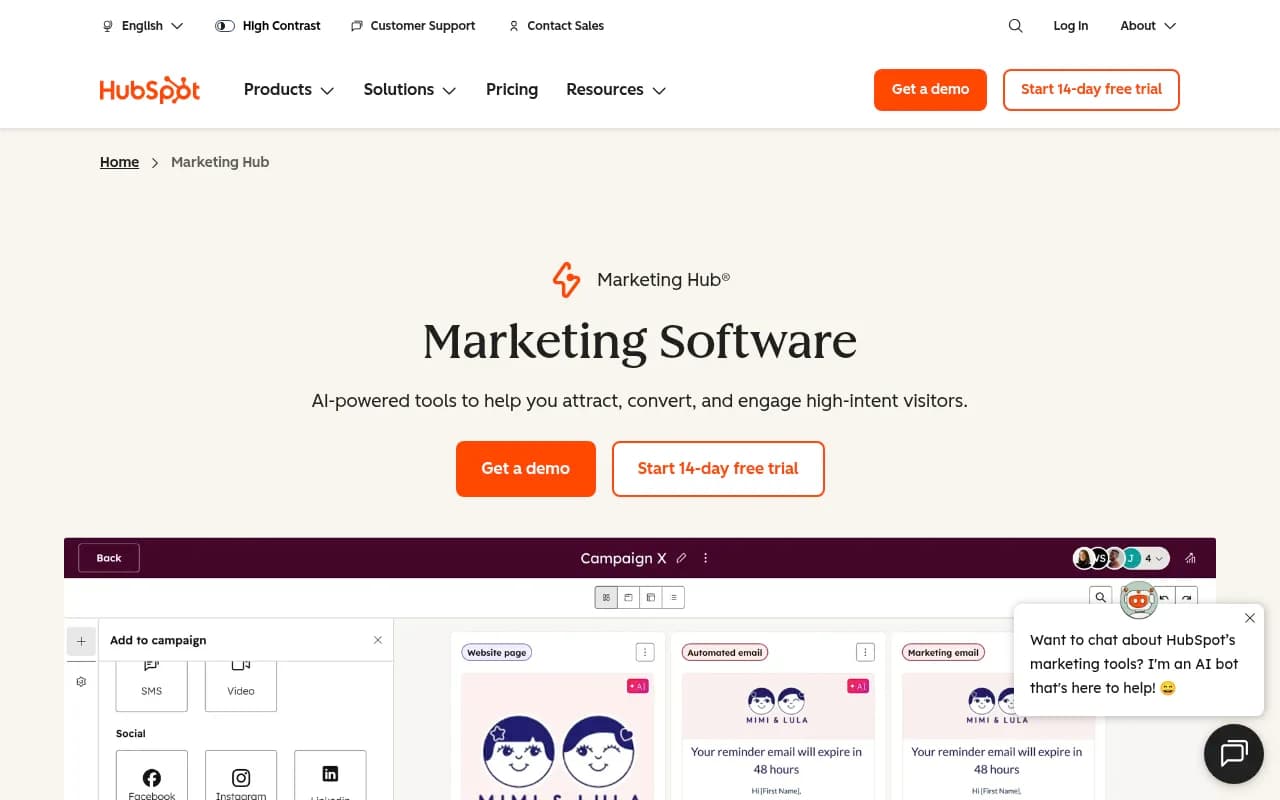
These platforms integrate data from every touchpoint and apply ML models to predict outcomes and prescribe actions. The advantage: unified data and seamless workflow integration. The challenge: complexity and cost.
Specialized Predictive Analytics Tools
Purpose-built tools focus specifically on forecasting and optimization. Platforms analyze historical performance, market conditions, and audience signals to predict campaign outcomes before launch.
These tools excel at scenario simulation—testing multiple campaign configurations to identify the optimal approach before spending.
AI-Powered Content Intelligence
Tools like Clearscope, MarketMuse, and Frase predict content performance by analyzing topic relevance, competitive landscape, and search intent patterns.

They forecast which content will rank, engage, and convert before you write a word—dramatically reducing content waste and improving ROI.
Predictive Lead Scoring Systems
Platforms like 6sense and Demandbase One use intent data and behavioral signals to predict which accounts are in-market and ready to buy.
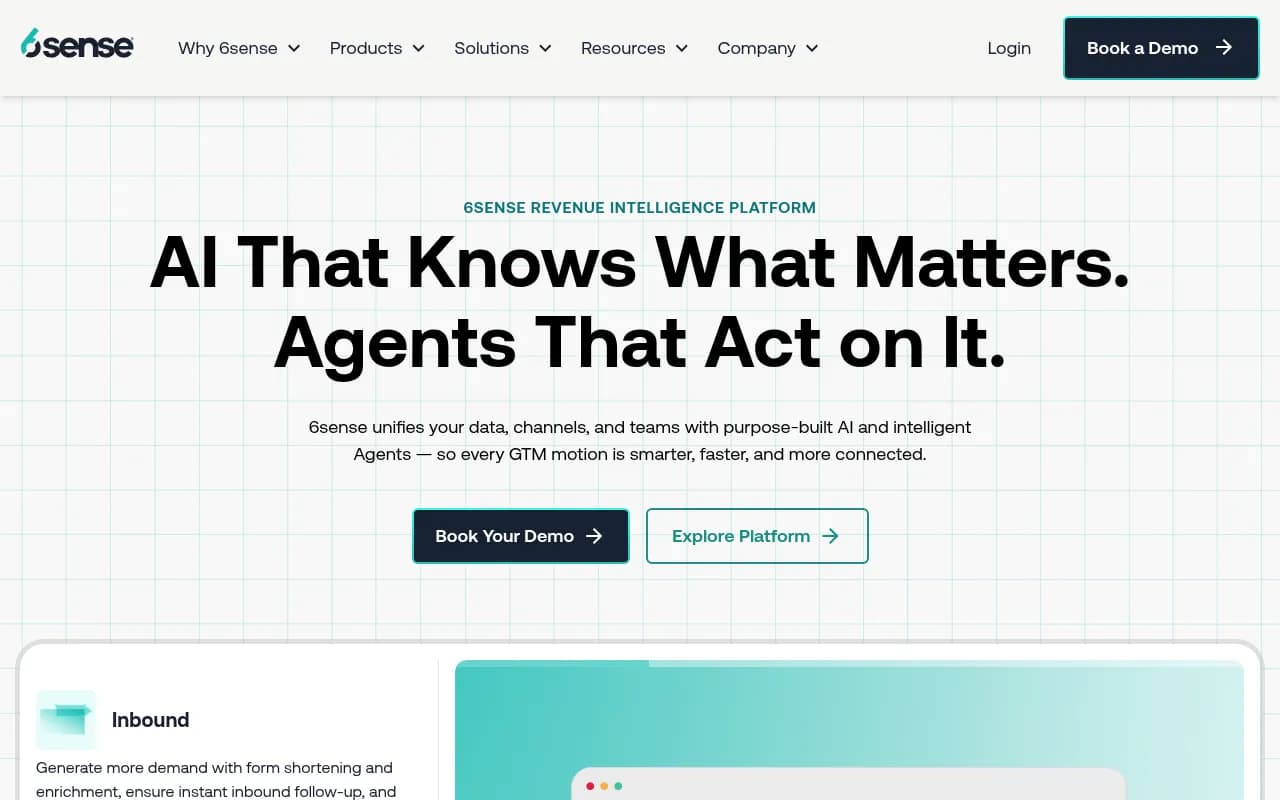
They score leads based on predicted conversion probability, enabling sales teams to focus on highest-value opportunities.
Budget Optimization and Attribution
Tools like HockeyStack, Ruler Analytics, and Dreamdata connect marketing spend to revenue outcomes and use predictive models to recommend optimal budget allocation.
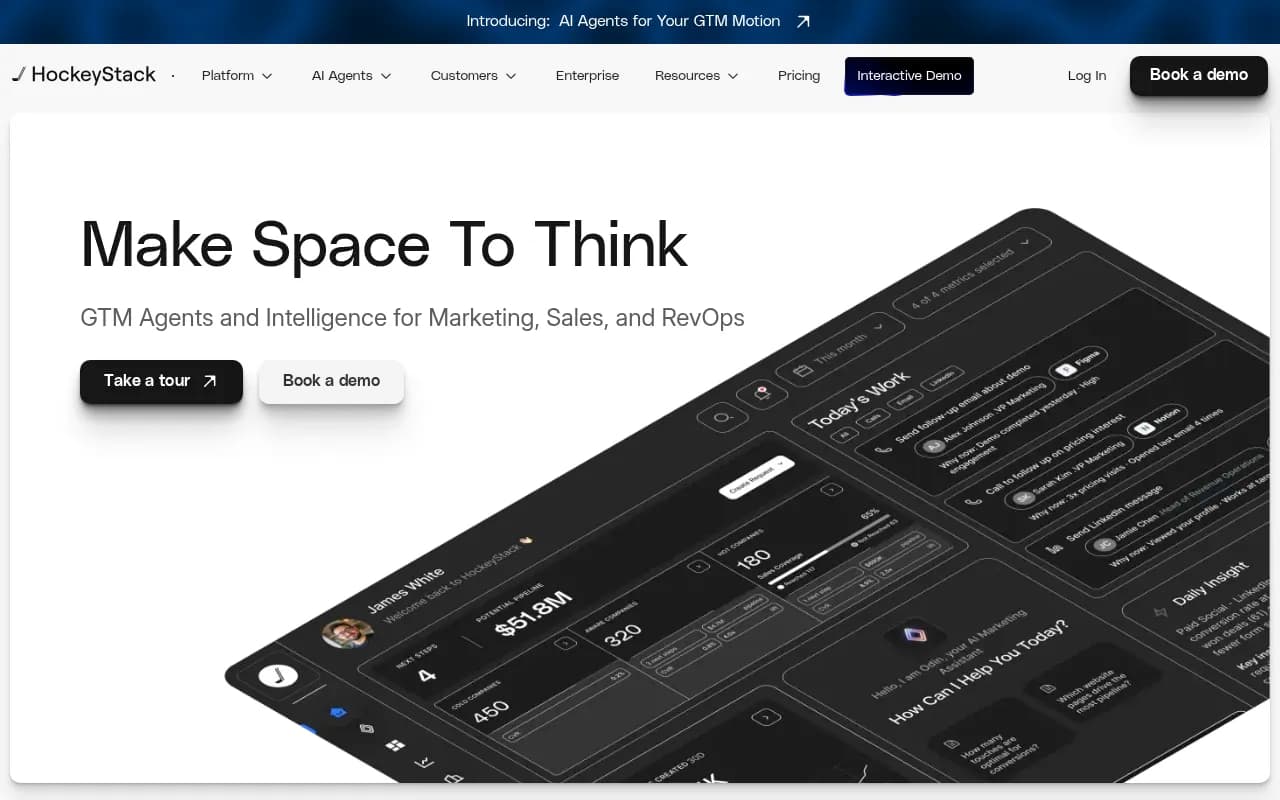
They answer the critical question: where should I spend my next dollar to maximize return?
AI Search Visibility and GEO Platforms
As AI search engines reshape discovery, platforms like Promptwatch help brands understand and optimize how they appear in ChatGPT, Perplexity, Claude, and other AI models. While not traditional campaign forecasting, these tools predict which content will get cited by AI engines—a critical new channel for 2026.

Real-World Predictive Marketing Workflows
Workflow 1: Pre-Launch Campaign Validation
Step 1: Define campaign parameters—audience, creative, channel, budget, timing
Step 2: Feed parameters into predictive model
Step 3: Review forecasted metrics—impressions, CTR, conversions, CPA, ROI
Step 4: Run scenario simulations—test alternative configurations
Step 5: Select optimal configuration based on predicted performance
Step 6: Launch with confidence, knowing expected outcomes
Step 7: Monitor actual vs. predicted performance and refine models
This workflow transforms campaign planning from guesswork to data-driven decision-making.
Workflow 2: Dynamic Budget Reallocation
Step 1: Predictive system monitors real-time campaign performance across all channels
Step 2: AI detects underperforming campaigns and overperforming opportunities
Step 3: System forecasts impact of budget shifts between channels
Step 4: Recommends optimal reallocation to maximize total ROI
Step 5: Marketing team approves or adjusts recommendations
Step 6: Budget shifts automatically or via workflow approval
Step 7: System tracks impact and refines future recommendations
This continuous optimization loop ensures budget flows to highest-ROI activities in real-time.
Workflow 3: Predictive Content Planning
Step 1: Content team proposes topics and formats
Step 2: AI analyzes search volume, competition, audience intent, and historical performance
Step 3: System predicts engagement, traffic, and conversion potential for each topic
Step 4: Team prioritizes high-probability winners
Step 5: AI generates content briefs optimized for predicted performance
Step 6: Content is created, published, and tracked
Step 7: Actual performance feeds back into prediction models
This workflow reduces content waste by 40% and increases content ROI by focusing resources on topics with highest predicted impact.

The Challenges and Limitations of Predictive Marketing
Despite rapid advancement, predictive marketing isn't magic. Understanding limitations is critical for effective implementation.
Data Quality and Completeness
Predictive models are only as good as the data they're trained on. Incomplete, siloed, or low-quality data produces unreliable predictions. Organizations must invest in data infrastructure before expecting accurate forecasts.
Model Accuracy and Confidence Intervals
No model predicts with 100% accuracy. The best systems provide confidence intervals—ranges of likely outcomes rather than single-point predictions. Marketers must understand probabilistic thinking and make decisions under uncertainty.
Market Volatility and Black Swan Events
Predictive models assume the future resembles the past. Sudden market shifts, competitive disruptions, or external shocks (economic changes, regulatory shifts, viral trends) can invalidate predictions. Human judgment remains essential for navigating unprecedented situations.
Over-Optimization and Local Maxima
AI can optimize for the wrong objective or get stuck in local maxima—finding the best solution within current constraints but missing breakthrough opportunities. Marketers must balance optimization with experimentation and strategic innovation.
Bias and Fairness
ML models can perpetuate or amplify biases present in training data—leading to unfair targeting, exclusionary practices, or discriminatory outcomes. Ethical oversight and bias testing are non-negotiable.
Human Expertise Still Required
Predictive tools augment human decision-making, they don't replace it. The best results come from combining AI predictions with marketing expertise, creative intuition, and strategic judgment.
How to Implement Predictive Marketing Successfully
Start with Clear Objectives
Define what you want to predict and why. Lead conversion? Churn risk? Content performance? Campaign ROI? Clear objectives guide tool selection and model development.
Audit Your Data Infrastructure
Assess data quality, completeness, and integration. Identify gaps and invest in data collection, cleaning, and unification before implementing predictive tools.
Choose the Right Tools for Your Maturity Level
Don't buy enterprise platforms if you're just starting. Begin with focused tools that solve specific problems—lead scoring, content prediction, or budget optimization. Scale complexity as you build capability.
Run Controlled Experiments
Test predictive recommendations against control groups. Measure actual vs. predicted performance. Build confidence in models before scaling adoption.
Integrate Predictions into Workflows
Predictions are useless if they sit in dashboards. Embed forecasts into planning processes, approval workflows, and decision-making rituals. Make predictions actionable.
Upskill Your Team
Marketers need to understand predictive concepts—confidence intervals, model accuracy, scenario simulation. Invest in training so teams can interpret and act on predictions effectively.
Maintain Human Oversight
AI recommends, humans decide. Establish governance for reviewing predictions, approving actions, and overriding models when strategic judgment differs from algorithmic recommendations.
Feed Results Back into Models
Predictive accuracy improves with feedback loops. Track actual outcomes, compare to predictions, and use discrepancies to refine models continuously.
The Future of Predictive Marketing
Predictive marketing in 2026 is just the beginning. The next evolution is already emerging:
Real-Time Predictive Optimization
Campaigns that adjust automatically based on real-time predictions—shifting creative, audience, budget, and messaging dynamically without human intervention.
Cross-Channel Predictive Orchestration
Unified models that predict optimal customer journeys across all channels—coordinating email, ads, content, social, and sales outreach based on predicted response at each touchpoint.
Predictive Personalization at Scale
AI that predicts individual-level preferences and delivers personalized experiences to millions of customers simultaneously—moving beyond segment-based personalization to true 1:1 marketing.
Autonomous Marketing Systems
Fully autonomous campaigns that plan, execute, optimize, and scale without human intervention—marketers shift from execution to strategy and governance.
Predictive AI Search Optimization
As AI search engines reshape discovery, predictive tools will forecast which content gets cited by ChatGPT, Perplexity, and Claude—optimizing for AI visibility alongside traditional search.
The trajectory is clear: marketing becomes increasingly predictive, automated, and data-driven. The competitive advantage goes to teams that master prediction and build systems that learn and improve continuously.
Conclusion: From Reactive to Predictive
The marketing teams winning in 2026 don't wait to see how campaigns perform—they know before launch. They don't guess which content will work—they predict with data. They don't waste budget on underperforming channels—they optimize in real-time based on forecasted outcomes.
Predictive marketing isn't about replacing human judgment with algorithms. It's about augmenting expertise with intelligence, replacing guesswork with probability, and shifting from reactive reporting to proactive decision-making.
The tools exist. The data is available. The competitive advantage is real: 30% better campaign performance, 32% higher lead quality, 27% faster sales cycles.
The question isn't whether to adopt predictive marketing—it's how quickly you can build the capability before your competitors do.
Start with one use case. Test deliberately. Measure rigorously. Scale what works. The future of marketing is predictive, and it's already here.