Key takeaways
- Profound and Promptwatch are purpose-built for AI visibility tracking; Botify and seoClarity come from traditional technical SEO and bolt on AI monitoring as an extension of their core product.
- Promptwatch is the only platform in this comparison that closes the full loop: find visibility gaps, generate content to fill them, then track the results. The others stop at monitoring or analysis.
- Botify's strength is large-scale crawl data and rendering intelligence for enterprise sites with millions of pages. If your primary problem is technical crawlability, it's hard to beat.
- seoClarity combines traditional rank tracking with AI overview monitoring and is a reasonable choice for teams that want one platform for both Google and AI search — at a significant price premium.
- For most marketing and SEO teams in 2026, the question isn't "which tool has the most features" but "which tool actually helps me take action on what I find."
The AI search landscape has split the SEO tool market in two. On one side you have platforms built from the ground up to track how brands appear in ChatGPT, Perplexity, Claude, and Google AI Overviews. On the other, you have established enterprise SEO platforms that have added AI monitoring features to their existing product lines.
Profound, Promptwatch, Botify, and seoClarity represent both sides of that divide. Comparing them isn't straightforward because they don't fully compete on the same surface area. But if you're trying to decide where to invest your budget and attention in 2026, you need to understand what each one actually does — not just what their marketing pages say.
This guide is that comparison.
What each platform is actually built for
Before getting into feature-by-feature details, it helps to understand the core design philosophy behind each tool. That context shapes everything else.
Profound
Profound is an enterprise AI visibility platform. It tracks how brands appear across ChatGPT, Perplexity, Google AI Overviews, and several other AI engines, with a particular focus on share-of-voice metrics and competitive benchmarking. It's built for large organizations that want to understand their position in AI-generated answers relative to competitors.
Profound's enterprise tier reportedly tracks up to 10 AI models, and the platform has strong coverage for prompt monitoring and citation analysis. It's generally positioned at the higher end of the market in terms of pricing, and it's a solid monitoring tool. The limitation is that it's primarily a monitoring tool. It shows you where you stand; it doesn't have built-in mechanisms to help you improve.
Profound

Promptwatch
Promptwatch takes a different approach. It's built around what the team calls an "action loop": find the gaps in your AI visibility, create content to fill them, then track whether that content gets cited. The platform monitors 10 AI models (ChatGPT, Perplexity, Claude, Gemini, Grok, DeepSeek, Copilot, Meta AI, Mistral, and Google AI Overviews) and backs that monitoring with tools that actually help you do something about what you find.
The Answer Gap Analysis feature is particularly useful here. It shows you exactly which prompts competitors are getting cited for that you're not — not just that a gap exists, but the specific topics and angles your site is missing. From there, the built-in AI writing agent generates content grounded in citation data from over 880 million citations analyzed. You're not getting generic SEO filler; you're getting content engineered to get cited by AI models.
Promptwatch also has AI crawler logs (real-time visibility into which pages ChatGPT, Claude, and Perplexity are actually crawling), prompt volume and difficulty scoring, Reddit and YouTube citation tracking, and ChatGPT Shopping monitoring. It's used by 6,700+ brands and agencies including Booking.com and Center Parcs.

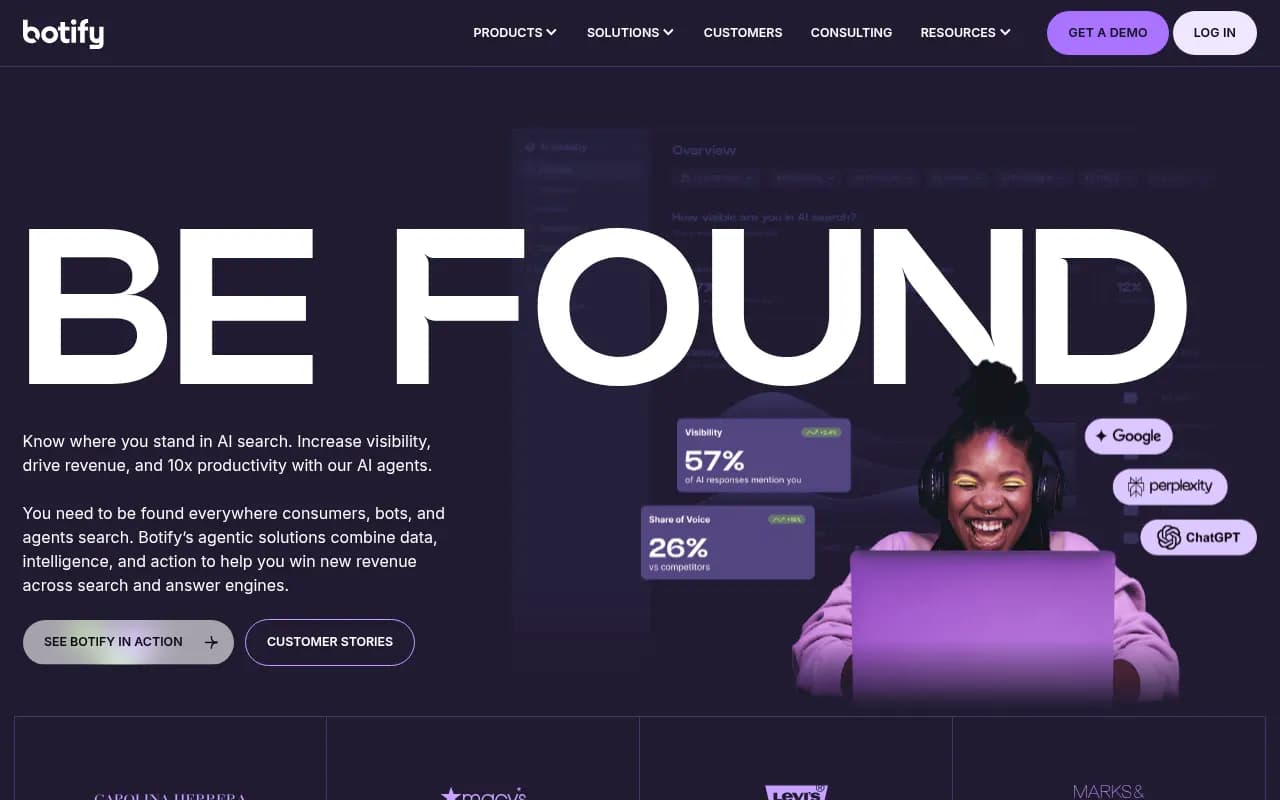
Botify
Botify is an enterprise technical SEO platform. Its core product is a sophisticated website crawler that analyzes how search engines (and increasingly, AI crawlers) discover, render, and index your content. It's built for very large websites — think e-commerce sites with millions of product pages, news publishers, or enterprise brands with complex JavaScript-heavy architectures.
Botify's AI-related features are largely an extension of its crawl intelligence. It can identify pages that AI crawlers are visiting, flag rendering issues that might prevent AI models from reading your content, and surface technical barriers to AI discoverability. That's genuinely valuable, but it's a different problem than "why isn't my brand being recommended by ChatGPT."
seoClarity
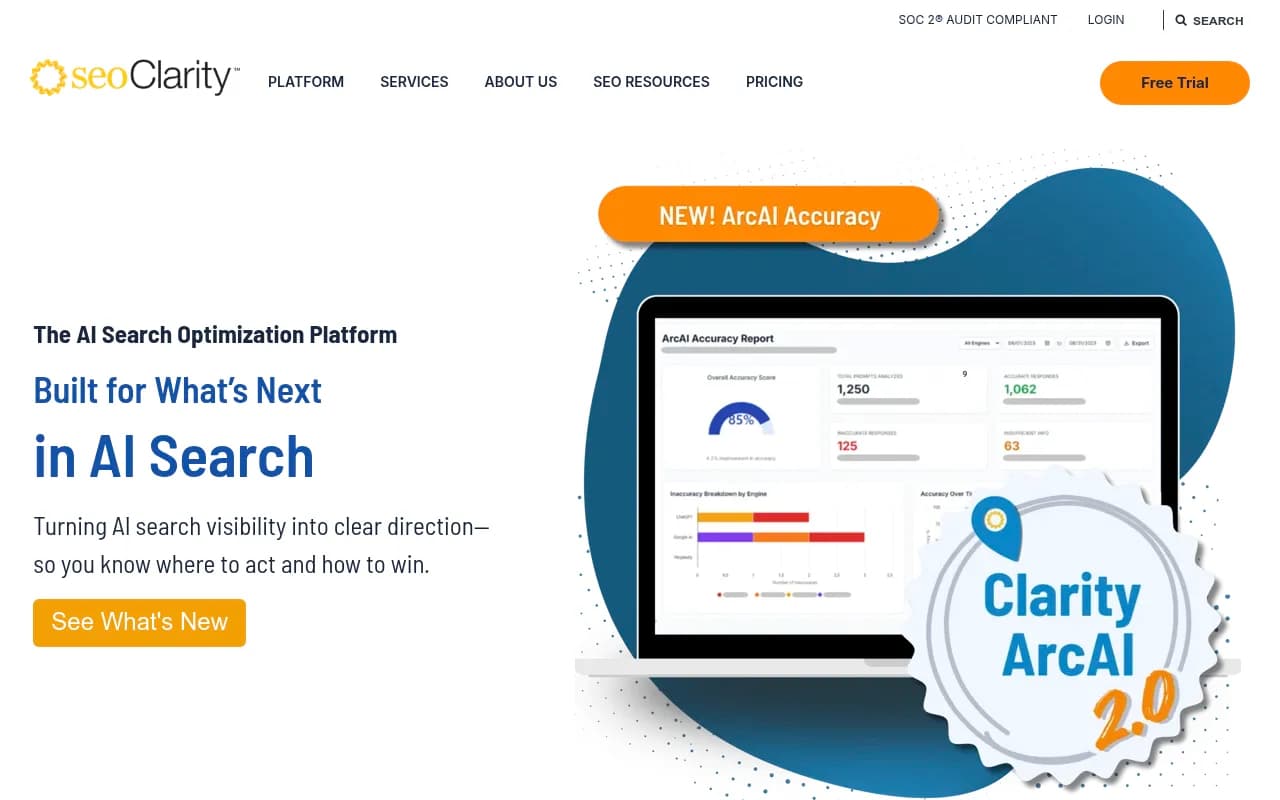
seoClarity is a traditional enterprise SEO platform that has expanded into AI search monitoring. It combines rank tracking, content optimization, and site auditing with newer features that track brand mentions and citations in AI-generated answers. The platform integrates AI overview tracking with its existing Google rank tracking, which makes it appealing for teams that want a single dashboard for both traditional and AI search.
seoClarity's AI monitoring features are real but secondary to its core SEO product. If you're already a seoClarity customer and want to add AI visibility tracking without switching platforms, it's a reasonable path. If AI visibility is your primary concern, you're paying for a lot of features you won't use.
Feature comparison
Here's how the four platforms stack up across the capabilities that matter most for AI visibility in 2026:
| Feature | Profound | Promptwatch | Botify | seoClarity |
|---|---|---|---|---|
| AI model coverage | Up to 10 LLMs (enterprise) | 10 LLMs (all plans) | Limited (crawl-focused) | ChatGPT, Perplexity, AI Overviews |
| Prompt monitoring | Yes | Yes | No | Yes |
| Share-of-voice tracking | Yes | Yes | No | Yes |
| Citation analysis | Yes | Yes (880M+ citations) | No | Partial |
| Answer gap analysis | No | Yes | No | No |
| AI content generation | No | Yes (built-in writing agent) | No | No |
| AI crawler logs | No | Yes | Yes (core feature) | No |
| Reddit/YouTube tracking | No | Yes | No | No |
| ChatGPT Shopping tracking | No | Yes | No | No |
| Prompt volume/difficulty scoring | No | Yes | No | No |
| Traffic attribution | No | Yes (GSC, snippet, server logs) | Partial | Partial |
| Technical SEO auditing | No | No | Yes (core feature) | Yes |
| Traditional rank tracking | No | No | No | Yes |
| Pricing transparency | Custom/enterprise | $99-$579/mo (public) | Custom/enterprise | Custom/enterprise |
| Free trial | Yes | Yes | No | No |
The table tells a clear story. Profound and Promptwatch are the most capable AI visibility platforms. Botify is the strongest technical SEO tool. seoClarity is the most complete traditional SEO platform with AI monitoring added on.
Where each platform wins
Profound wins for: enterprise share-of-voice benchmarking
If your primary question is "how does our brand compare to competitors across AI engines at scale," Profound is genuinely strong. Its competitive benchmarking features and enterprise LLM coverage are well-regarded. For large brands where the main deliverable is a visibility scorecard that can be presented to leadership, Profound does that well.
The gap is that Profound stops there. You get the data; you figure out what to do with it. That's fine if you have a large internal team with the capacity to act on insights, but for most marketing teams, "here's where you're losing" without "here's how to fix it" is only half the job.
Promptwatch wins for: the full optimization cycle
Promptwatch is the only platform in this comparison that takes you from diagnosis to action to measurement. The Answer Gap Analysis tells you what content to create. The writing agent helps you create it. The tracking shows you whether it worked. That loop is what makes it an optimization platform rather than a monitoring dashboard.
The crawler logs are also worth calling out specifically. Knowing which pages AI models are actually reading — and which ones they're ignoring or encountering errors on — is actionable in a way that share-of-voice scores aren't. You can fix a crawl error. You can't directly fix a visibility score.
For marketing teams and SEO agencies that need to show results, not just reports, Promptwatch's structure is better suited to the work.
Botify wins for: large-scale technical crawl intelligence
If you're running a site with millions of pages and your core problem is "AI crawlers aren't finding our content," Botify is the right tool. Its crawl analysis, JavaScript rendering capabilities, and log file analysis are enterprise-grade in a way that no AI visibility platform matches. It's not trying to tell you what ChatGPT says about your brand; it's trying to make sure ChatGPT can read your site in the first place.
For very large e-commerce sites or publishers where technical crawlability is the bottleneck, Botify solves a real problem. But it's a complement to an AI visibility platform, not a replacement for one.
seoClarity wins for: teams that want one platform for Google and AI
seoClarity's main advantage is consolidation. If you're already tracking traditional Google rankings and want to add AI overview monitoring without adopting a separate tool, seoClarity can do both. The integration between traditional rank data and AI visibility data in a single dashboard has real value for reporting.
The tradeoff is depth. seoClarity's AI visibility features are less comprehensive than Profound's or Promptwatch's, and the platform's pricing reflects its enterprise positioning. You're paying for breadth, not depth in any single area.
The monitoring-only problem
One pattern worth naming directly: most platforms in this space — including Profound and seoClarity — are primarily monitoring tools. They show you data. They generate reports. They tell you that your competitor is mentioned more often than you are in responses about your category.
That's useful information. But it doesn't tell you what to do next, and it doesn't help you do it.
The gap between "we have visibility data" and "we improved our AI visibility" is where most teams get stuck. You need to know which content gaps to fill, what angle to take, and whether the content you publish actually gets picked up by AI models. Monitoring tools don't answer those questions.
Promptwatch's design addresses this directly. The Answer Gap Analysis surfaces specific prompts where competitors are visible and you're not, with enough context to understand why. The writing agent generates content grounded in real citation patterns, not generic SEO best practices. And the tracking closes the loop by showing you which pages are being cited, by which models, and how often.
That's a meaningfully different product from a dashboard that shows you a share-of-voice score.
Pricing reality check
Pricing transparency varies significantly across these four platforms:
- Promptwatch publishes clear pricing: $99/month (Essential), $249/month (Professional), $579/month (Business), with agency and enterprise tiers available. A free trial is available.
- Profound, Botify, and seoClarity all use custom enterprise pricing. You need to talk to sales to get a number, which typically means the number is high and varies by contract.
For teams with defined budgets, Promptwatch's transparent pricing is a practical advantage. You can evaluate the tool, understand what you're getting at each tier, and make a decision without a sales process. The Professional tier at $249/month includes crawler logs, state/city tracking, 15 articles per month, and 150 prompts across 2 sites — which covers most mid-market use cases.
Enterprise platforms like Profound, Botify, and seoClarity are built for procurement processes, not self-serve adoption. That's fine if you're a large enterprise with a formal vendor evaluation process. It's a friction point if you're a growing brand or agency that needs to move quickly.
Which platform should you choose?
The honest answer depends on what problem you're actually trying to solve.
If you're a large enterprise with a dedicated SEO team, a complex technical infrastructure, and the primary goal of understanding competitive AI visibility at scale, Profound and Botify can work together well — Profound for the AI visibility picture, Botify for the technical crawl layer.
If you're a marketing team, SEO agency, or growing brand that needs to actually improve AI visibility (not just measure it), Promptwatch is the stronger choice. The combination of gap analysis, content generation, and tracking gives you a path from "we're not visible" to "we fixed it" that the other platforms don't offer. The pricing is also realistic for teams that aren't operating with enterprise budgets.
If you're already deeply invested in seoClarity for traditional SEO and want to add AI monitoring without switching platforms, staying with seoClarity is defensible — just go in with realistic expectations about the depth of the AI features.
The broader point: in 2026, AI search visibility isn't a reporting problem. It's an execution problem. The platforms that help you execute — not just observe — are the ones worth paying for.
A few tools worth knowing about
Beyond the four platforms in this comparison, a few other tools are worth being aware of depending on your specific needs:
For traditional rank tracking alongside AI monitoring, Semrush has added AI visibility features to its existing toolkit, though its prompt set is fixed rather than customizable.
For agencies that want a lightweight AI monitoring option at a lower price point, Otterly.AI covers the basics of brand mention tracking across a few AI engines.
Otterly.AI

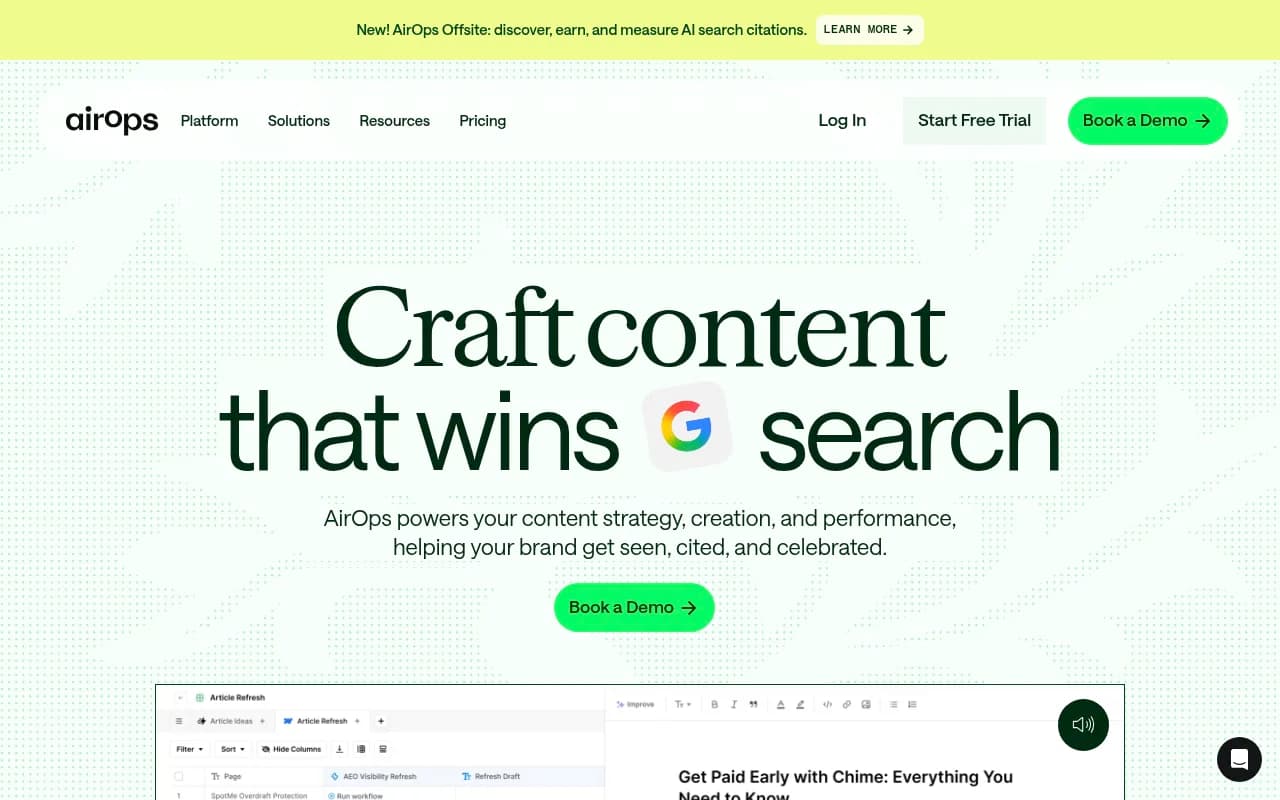
For teams focused specifically on content gap analysis and content engineering for AI search, AirOps takes a content-first approach that pairs well with visibility tracking.
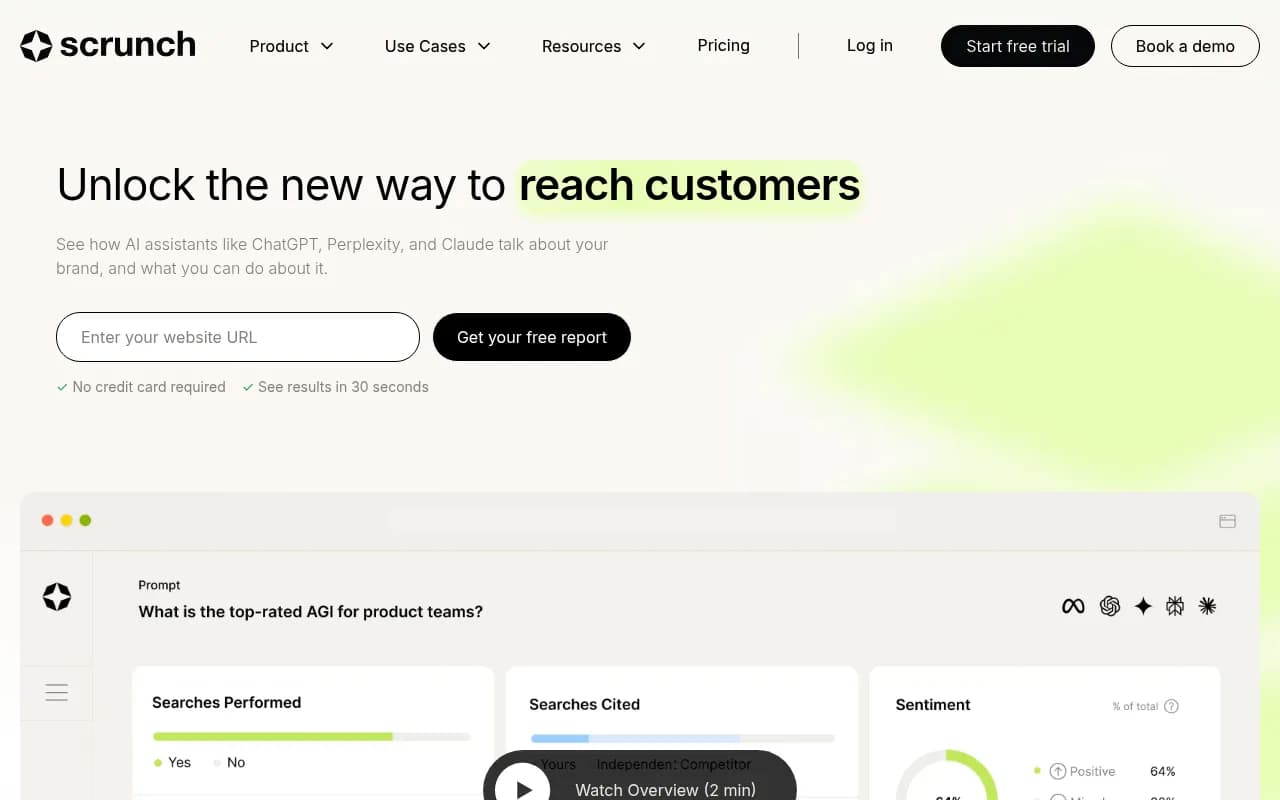
For enterprise brands that need SOC 2 compliance and multi-seat access, Scrunch AI is worth evaluating alongside Profound.
Bottom line
Profound, Promptwatch, Botify, and seoClarity are four genuinely different tools that happen to overlap in the AI visibility space. Choosing between them isn't about finding the "best" platform in the abstract — it's about matching the tool to the actual problem you're trying to solve.
If the problem is technical crawlability at enterprise scale, Botify. If the problem is understanding competitive AI visibility across a large organization, Profound. If the problem is actually improving AI visibility — finding gaps, creating content, measuring results — Promptwatch is the platform built for that job.
Most teams in 2026 have the last problem.