Key Takeaways
- Salesloft leads on ease of use and day-to-day rep adoption, with the cleanest interface and fastest onboarding among the three platforms
- Apollo.io combines sales engagement with a built-in B2B database of 275M+ contacts, making it the most cost-effective all-in-one solution for teams that need both prospecting data and outreach automation
- Outreach positions itself as the complete sales execution platform with the deepest CRM integrations, advanced forecasting, and AI-powered deal coaching -- best for enterprise teams running complex, multi-stage sales cycles
- All three platforms offer multi-channel sequencing (email, LinkedIn, calls), but differ significantly in automation depth, data quality, and pricing models
- Your choice depends on team size, sales cycle complexity, existing tech stack, and whether you need prospecting data bundled with engagement tools
What Sales Engagement Platforms Actually Do
Sales engagement platforms sit on top of your CRM and turn it into an action engine. While your CRM stores customer data, these platforms use that data to orchestrate multi-channel outreach sequences across email, LinkedIn, phone calls, and SMS. They automate follow-ups, track engagement metrics, sync activity back to your CRM, and help sales teams execute consistent, personalized outreach at scale.
In 2026, the category has matured beyond basic email sequencing. Modern platforms now include AI-powered content generation, real-time call coaching, deal health scoring, and predictive analytics. The question isn't whether you need one -- it's which platform fits your team's workflow, tech stack, and sales motion.
Salesloft: The User Experience Leader
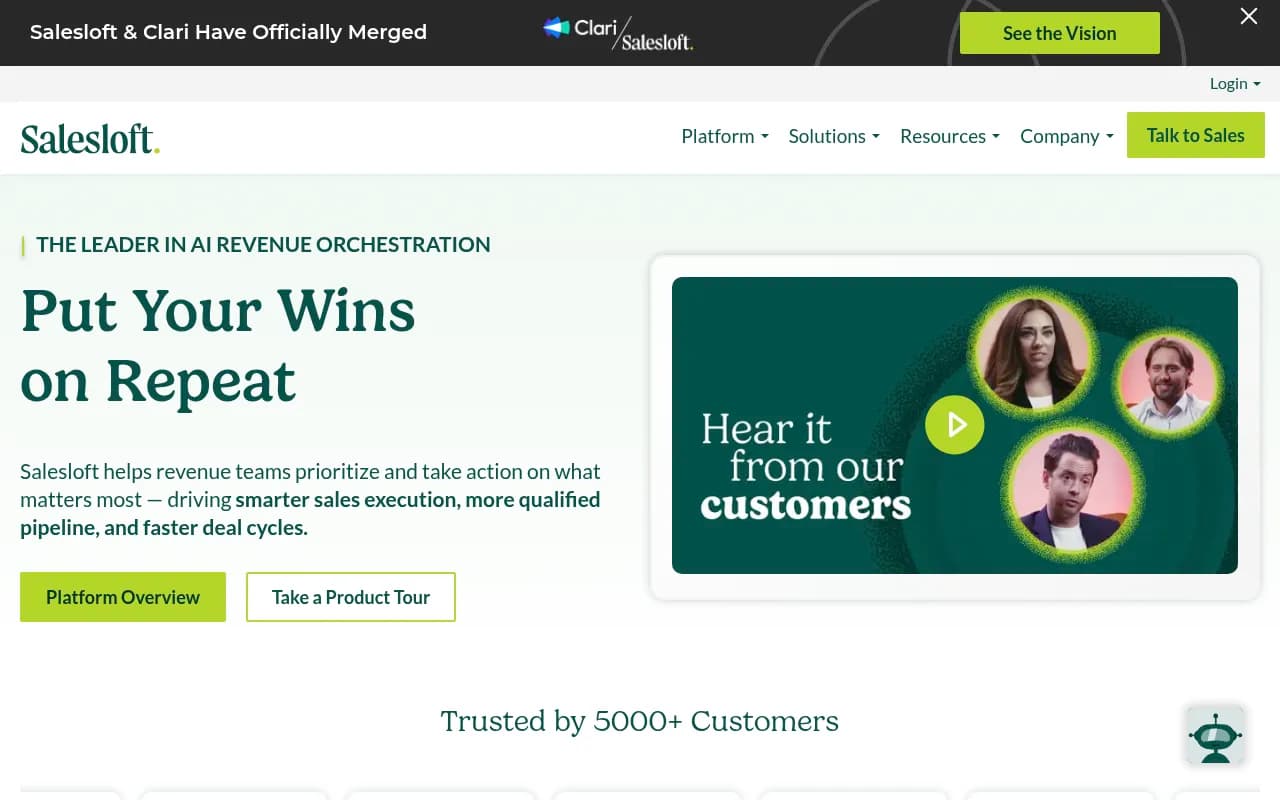
Salesloft has built its reputation on being the easiest platform for reps to actually use. User reviews consistently rate it 8.8 out of 10 for ease of use -- significantly higher than competitors. The interface is clean, intuitive, and requires minimal training. New reps can start running cadences within hours, not days.
Core Strengths
Cadence Builder: Salesloft's sequencing interface is visual and straightforward. You drag and drop email, call, LinkedIn, and SMS steps into a timeline. The platform handles scheduling logic automatically, adjusting for weekends, time zones, and prospect behavior. For teams running high-velocity outreach with straightforward sequences, it's hard to beat.
Mobile App: The Salesloft mobile app is genuinely usable, not an afterthought. Reps can complete call tasks, send emails, and update CRM records from their phone without fighting clunky interfaces. This matters for field sales teams and remote reps who aren't always at a desk.
Dialer Quality: The built-in dialer is reliable with good call quality, local presence dialing, and voicemail drop capabilities. Call recording and transcription work smoothly, and the interface makes logging outcomes fast.
Conversation Intelligence: Salesloft's AI analyzes recorded calls to surface key moments, track talk-to-listen ratios, and identify coaching opportunities. It's not as sophisticated as dedicated conversation intelligence platforms, but it's integrated directly into the workflow without requiring another tool.
Where It Falls Short
Salesloft lacks a built-in prospecting database. You need to bring your own contact data from tools like ZoomInfo, Cognism, or Apollo.io. This adds cost and creates integration friction.
Automation capabilities are solid for basic sequences but limited for complex, multi-path workflows. If you need sophisticated branching logic based on deal stage, engagement signals, and custom triggers, Outreach delivers more granular control.
Pricing starts at $125/user/month for the Essentials plan, with Professional and Enterprise tiers requiring custom quotes. For small teams, this can add up quickly compared to Apollo.io's bundled approach.
Apollo.io: The All-in-One Value Play
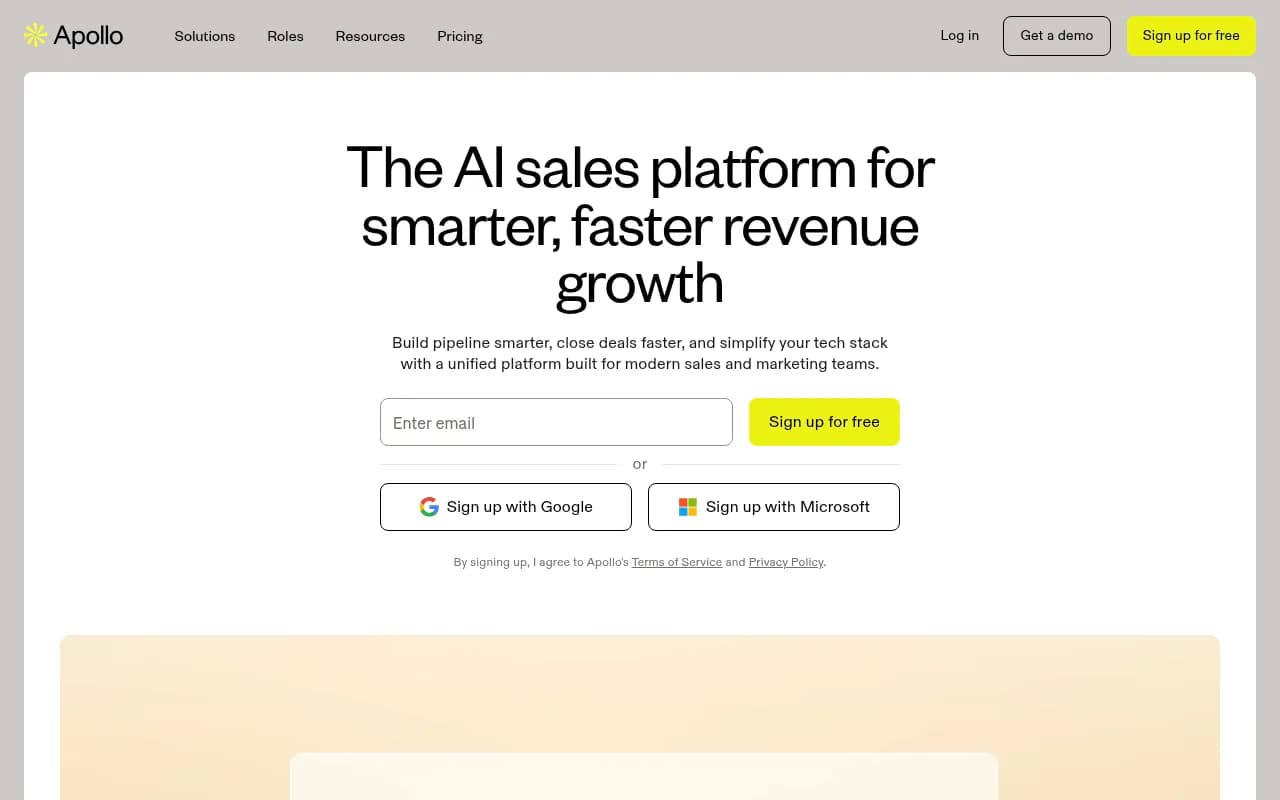
Apollo.io takes a different approach: it bundles sales engagement tools with a massive B2B contact database (275M+ contacts, 73M+ companies). You get prospecting data, email verification, sequencing, dialer, and CRM integration in one platform. For teams that need both data and engagement tools, it's the most cost-effective option.
Core Strengths
Built-in Prospecting: Search for prospects by job title, company size, industry, technology stack, and dozens of other filters. Export contacts directly into sequences without switching tools or paying for a separate data provider. The database quality is solid -- not quite ZoomInfo-level, but good enough for most outbound teams.
Email Verification: Apollo verifies email addresses before you send, reducing bounce rates and protecting sender reputation. This is critical for cold outreach at scale.
Affordable Pricing: The Free plan includes 50 mobile credits and 10 email credits per month -- enough to test the platform. Paid plans start at $49/user/month (Basic) and $79/user/month (Professional), significantly cheaper than Salesloft or Outreach when you factor in the bundled data.
Sequences and Automation: Apollo's sequencing engine handles multi-channel cadences with email, calls, LinkedIn tasks, and SMS. It's not as visually polished as Salesloft, but it gets the job done. You can set up A/B tests, personalize at scale with merge tags, and trigger sequences based on prospect actions.
Chrome Extension: The Apollo Chrome extension lets you find and save contacts while browsing LinkedIn, company websites, or anywhere else. It's a small feature that saves hours of manual data entry.
Where It Falls Short
Apollo's interface feels more utilitarian than Salesloft's. It's functional, but not as intuitive. New users face a steeper learning curve, especially when navigating between prospecting, sequences, and analytics.
CRM integration depth lags behind Outreach and Salesloft. Two-way sync works, but custom field mapping and workflow automation require more manual configuration. Enterprise teams with complex Salesforce setups may hit friction.
Conversation intelligence and AI coaching features are basic compared to Outreach. If you need advanced call analytics, deal health scoring, or AI-generated follow-up emails, Apollo isn't the strongest choice.
Data accuracy varies by region and industry. North American tech contacts are generally solid, but coverage in EMEA, APAC, and non-tech verticals can be spotty. Always verify critical contacts before outreach.
Outreach: The Enterprise Sales Execution Platform
Outreach positions itself as more than a sales engagement tool -- it's a complete sales execution platform. It unifies prospecting, deal management, forecasting, conversation intelligence, and coaching in one system. For enterprise teams running complex, multi-stage sales cycles, it delivers the most comprehensive feature set.
Core Strengths
Advanced Automation: Outreach offers the most sophisticated sequencing logic. You can build multi-path workflows with conditional branching based on prospect behavior, deal stage, engagement signals, and custom triggers. For example: if a prospect opens an email three times but doesn't reply, automatically book a call. If they visit your pricing page, trigger a different sequence. This level of granularity matters for complex B2B sales.
Outreach Kaia (AI Assistant): Kaia provides real-time call coaching, automated note-taking, meeting summarization, and deal health scoring. It analyzes conversation patterns to identify risks and opportunities, then surfaces actionable insights for reps and managers. This goes beyond basic transcription -- it's predictive intelligence built into the workflow.
CRM Integration Depth: Outreach's Salesforce integration is the deepest in the category. Custom field mapping, bi-directional sync, workflow automation, and reporting all work seamlessly. If your sales process lives in Salesforce, Outreach plugs in with minimal friction.
Forecasting and Deal Management: Outreach includes pipeline management, deal health scoring, and AI-powered forecasting. Managers can see which deals are at risk, which reps need coaching, and where the pipeline is trending. This makes it a true sales operating system, not just an engagement tool.
Conversation Intelligence: Outreach's call recording, transcription, and analysis capabilities rival dedicated platforms like Gong and Chorus. It tracks talk-to-listen ratios, identifies key moments, flags objections, and measures rep performance against benchmarks.
Where It Falls Short
Outreach is the most expensive option. Pricing starts around $100/user/month but quickly climbs to $150-200+ for Professional and Enterprise tiers with full features unlocked. For small teams or startups, the cost can be prohibitive.
The interface is powerful but complex. New users face a steep learning curve. Onboarding takes longer than Salesloft, and reps need more training to use advanced features effectively. If your team values simplicity over power, Outreach may feel like overkill.
Like Salesloft, Outreach lacks a built-in prospecting database. You need to integrate with ZoomInfo, Cognism, Apollo.io, or another data provider, adding cost and complexity.
Some users report that the platform can feel sluggish when managing large datasets or running complex reports. Performance issues are rare but worth noting for teams with massive contact databases.
Feature-by-Feature Comparison
Sequencing and Automation
Outreach wins on sophistication. Its conditional logic, multi-path branching, and trigger-based automation handle the most complex sales workflows. If you need sequences that adapt based on deal stage, engagement signals, and custom criteria, Outreach delivers.
Salesloft offers solid automation for straightforward sequences. The visual builder is intuitive, and it handles 90% of common use cases without friction. For high-velocity teams running simple cadences, it's the sweet spot of power and usability.
Apollo.io provides functional sequencing with A/B testing and basic personalization. It's not as sophisticated as Outreach or as polished as Salesloft, but it gets the job done at a fraction of the cost.
CRM Integration
Outreach leads with the deepest Salesforce integration. Custom field mapping, workflow automation, and bi-directional sync work seamlessly. HubSpot and Microsoft Dynamics integrations are solid but not quite as robust.
Salesloft offers strong Salesforce and HubSpot integrations with reliable two-way sync. Configuration is easier than Outreach, making it a good fit for teams that want tight CRM integration without heavy IT involvement.
Apollo.io integrates with Salesforce, HubSpot, and Pipedrive, but sync depth is shallower. Custom field mapping requires more manual work, and some advanced workflows need workarounds.
Conversation Intelligence
Outreach delivers the most advanced call analytics, with AI-powered coaching, deal health scoring, and predictive insights. It rivals dedicated conversation intelligence platforms.
Salesloft offers solid conversation intelligence with call recording, transcription, and basic analytics. It's integrated into the workflow without requiring another tool, but lacks the predictive depth of Outreach.
Apollo.io provides basic call recording and transcription. If conversation intelligence is a priority, you'll likely need a dedicated tool like Gong or Chorus.
Prospecting Data
Apollo.io is the clear winner here -- it's the only platform with a built-in B2B database. 275M+ contacts, email verification, and Chrome extension for on-the-fly prospecting.
Outreach and Salesloft require integration with third-party data providers like ZoomInfo, Cognism, or Apollo.io. This adds cost but gives you flexibility to choose your preferred data source.
Ease of Use
Salesloft wins on day-to-day usability. The interface is clean, intuitive, and requires minimal training. Reps can start running cadences within hours.
Apollo.io is functional but less polished. The learning curve is steeper, especially when navigating between prospecting, sequences, and analytics.
Outreach is powerful but complex. New users need more training, and the interface can feel overwhelming for reps who just want to send emails and make calls.
Pricing
Apollo.io is the most affordable, starting at $49/user/month (Basic) and $79/user/month (Professional) with prospecting data included.
Salesloft starts at $125/user/month (Essentials), with Professional and Enterprise tiers requiring custom quotes.
Outreach pricing starts around $100/user/month but typically lands at $150-200+ for full features. Enterprise plans require custom quotes.
Which Platform Should You Choose?
Choose Salesloft If:
- You prioritize ease of use and fast rep adoption
- Your team runs high-velocity, straightforward sales sequences
- You already have a prospecting data provider (ZoomInfo, Cognism, etc.)
- You want a mobile app that actually works
- You value clean UX over maximum feature depth
Choose Apollo.io If:
- You need prospecting data and engagement tools in one platform
- Budget is a primary concern
- Your team is small to mid-sized (under 50 reps)
- You're building outbound from scratch and want an all-in-one solution
- You don't need advanced conversation intelligence or forecasting
Choose Outreach If:
- You're an enterprise team with complex, multi-stage sales cycles
- You need sophisticated automation with conditional logic and branching
- Deep Salesforce integration is critical
- You want AI-powered deal coaching and forecasting built into your engagement platform
- Budget isn't the primary constraint
Real-World Performance Data
Rootly reported a 69% increase in meetings booked and 130% increase in emails delivered after switching to Outreach. The key driver: advanced automation that adjusted sequences based on prospect behavior, ensuring reps reached out at the right time with the right message.
Salesloft users consistently report faster time-to-productivity for new reps. The intuitive interface and mobile app mean less training time and higher adoption rates, especially for high-velocity SDR teams.
Apollo.io users highlight cost savings as the primary benefit. By bundling prospecting data with engagement tools, teams eliminate the need for separate data providers, cutting tool spend by 30-50% compared to Salesloft + ZoomInfo or Outreach + Cognism.
Integration Ecosystem
All three platforms integrate with major CRMs (Salesforce, HubSpot, Pipedrive, Microsoft Dynamics), but integration depth varies:
- Outreach: Deepest Salesforce integration with custom field mapping, workflow automation, and advanced reporting
- Salesloft: Strong Salesforce and HubSpot integrations with easier configuration
- Apollo.io: Functional integrations but shallower sync depth; requires more manual setup for complex workflows
Beyond CRM, all three connect with common sales tools:
- Email: Gmail, Outlook, Office 365
- Calendar: Google Calendar, Outlook Calendar
- Video: Zoom, Microsoft Teams, Google Meet
- Enrichment: Clearbit, ZoomInfo (Outreach and Salesloft only)
- Conversation Intelligence: Gong, Chorus (Outreach has native capabilities)
The AI Factor in 2026
By 2026, AI has moved from buzzword to table stakes. All three platforms now offer AI-powered features, but implementation varies:
Outreach Kaia provides real-time call coaching, automated note-taking, deal health scoring, and predictive forecasting. It's the most comprehensive AI assistant, integrated directly into the sales workflow.
Salesloft AI focuses on conversation intelligence and content suggestions. It analyzes calls to surface coaching moments and recommends email templates based on what's working across your team.
Apollo.ai offers basic AI features like email subject line suggestions and send-time optimization. It's functional but not as advanced as Outreach or Salesloft.
The real question: does AI actually help reps close more deals, or is it just another dashboard to ignore? Early data suggests AI coaching and deal health scoring drive measurable improvements -- but only when reps actually use the insights. Adoption remains the biggest challenge.
Implementation and Onboarding
Salesloft wins on speed-to-value. Most teams are up and running within 1-2 weeks. The interface is intuitive enough that reps can start building sequences with minimal training.
Apollo.io takes 2-3 weeks for full implementation. The learning curve is steeper, especially for teams new to sales engagement platforms. Budget extra time for training on prospecting workflows.
Outreach requires 4-6 weeks for enterprise implementations. CRM integration, workflow configuration, and rep training take longer due to platform complexity. Plan for dedicated project management and IT support.
Common Pitfalls to Avoid
Overcomplicating sequences: Just because Outreach lets you build 47-step sequences with conditional branching doesn't mean you should. Start simple, measure results, then iterate.
Ignoring email deliverability: All the automation in the world won't help if your emails land in spam. Warm up domains properly, monitor bounce rates, and use Apollo's email verification if you're working with cold lists.
Skipping CRM hygiene: Sales engagement platforms amplify whatever data quality issues exist in your CRM. Clean up duplicates, standardize fields, and establish data governance before implementation.
Forgetting mobile workflows: If your reps work remotely or in the field, test the mobile app before committing. Salesloft leads here, but all three platforms offer mobile access.
The Bottom Line
There's no universal "best" sales engagement platform. Your choice depends on team size, sales cycle complexity, budget, and existing tech stack.
Salesloft is the easiest to use and fastest to adopt. Choose it if you value simplicity and have prospecting data covered.
Apollo.io delivers the best value for teams that need both data and engagement tools. Choose it if budget matters and you're building outbound from scratch.
Outreach is the most powerful platform for enterprise teams running complex sales motions. Choose it if you need advanced automation, deep CRM integration, and AI-powered forecasting.
All three platforms work. The question is which one fits your team's workflow, budget, and growth trajectory. Start with a clear understanding of your requirements, test the platforms with real workflows, and prioritize adoption over feature lists. The best platform is the one your reps actually use.