
Key Takeaways
- Renewal is leverage. Most AI visibility contracts are cheapest to exit right before the term ends, so use the weeks before it to compare, not just re-sign.
- Judge the tool on outcomes you can show: citations gained, AI-referred visits, pages fixed. A dashboard score alone is not an outcome.
- Ask about data quality. Real interface data, long-tail domain coverage and crawler logs separate serious platforms from basic prompt trackers.
- Content generation inside a tool only matters if you publish it, and if the tool can show whether it got cited afterwards.
- Check current pricing and packaging directly with every vendor. Prices in this category change every few months.
Why renewal is the right moment to ask hard questions
Most teams sign an AI visibility tool in a burst of urgency. Someone's boss asked why ChatGPT recommends a competitor, a vendor demoed a pretty dashboard, and a card went on file. A year later the renewal invoice lands and nobody remembers exactly what the tool was supposed to change.
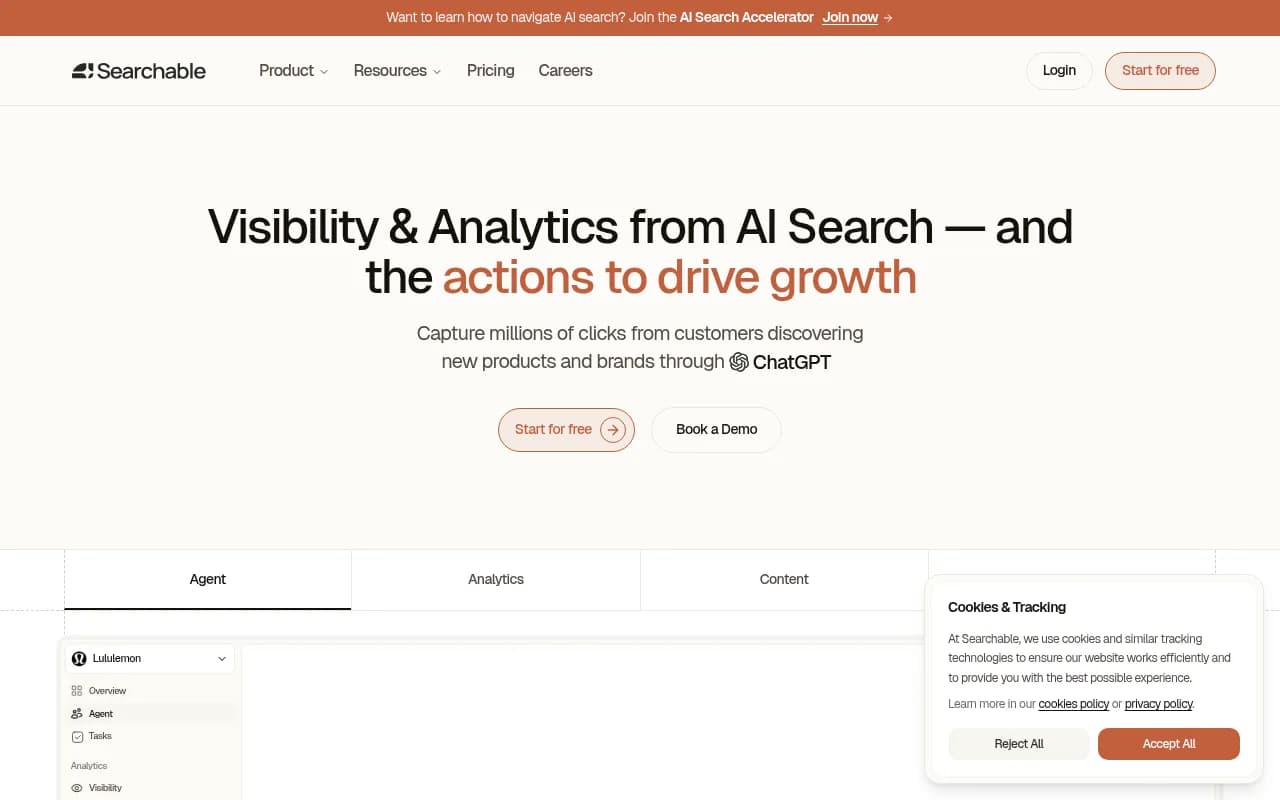
That is the failure mode this guide is for. Searchable positions itself as an AI search visibility platform with built-in content generation. I could not verify its current plans or pricing while researching this piece (a G2 pricing page exists, last updated July 2026, but I did not confirm the numbers), so I am not going to quote any. Treat the questions below as a checklist to run against Searchable's current packaging, and against any alternative you are weighing.
If you are searching for generic renewal advice, the same logic shows up in other places. Mortgage brokers tell borrowers that renewal is the time to reassess rather than re-sign, and that waiting until the term ends is the one moment you can leave without a penalty. Real estate franchise owners get a similar warning: signing on autopilot costs you in fees and in opportunity. Software is no different.
Question 1: What did we actually get out of it this year?
Start with your own numbers before you talk to the vendor. Pull up the last 12 months and answer four things:
- How did your visibility in ChatGPT, Google AI Overviews, Perplexity and Gemini change, and was the change caused by anything you did?
- Which pages gained citations after you published or refreshed them?
- How many visits and conversions came from AI engines?
- How many hours did your team spend in the tool, and on what?
If the honest answer is "we checked the dashboard every Monday and nothing changed," you have bought a monitor, not a growth channel. That is a legitimate thing to buy, but it should cost like one.
The traffic question is the hardest to answer in 2026. ChatGPT stopped sending a referrer on October 8, 2026, so a lot of AI-driven visits now show up as direct traffic unless you tag them or your analytics layer handles it. If your tool cannot attribute AI visits, you will struggle to justify renewal to a finance person. Promptwatch's guide on attributing AI traffic walks through the options.
Question 2: Is the data real, and does it reach the long tail?
Two separate issues hide inside this question.
First, where does the tool get its answers? Some platforms query model APIs. Others capture what users actually see in the ChatGPT, Gemini or AI Overviews interface. Those can differ, especially for citations and shopping results. Ask Searchable (and every competitor) exactly how responses are collected, and in which countries and languages.
Second, how deep does citation tracking go? Promptwatch Data's ChatGPT citation share report for November 2026 found that the top 20 sites together earn less than 2% of ChatGPT citations. Reddit led the popular sites at 0.23%, with G2 and LinkedIn at 0.18% each, while Wikipedia dropped from 0.56% in June to 0.03%. Everything else is spread across hundreds of thousands of domains.
So if your tool only tracks a short list of famous sites, it is describing a tiny slice of reality. Ask whether it resolves the long tail: every domain and URL cited for your prompts, with positions over time.
Question 3: Can it show whether AI crawlers can even read our site?
A surprising number of visibility problems are access problems. The content is fine. The bot never got it.
Promptwatch Data's AI crawler traffic report tracked IP-verified requests between June 8 and September 6, 2026. OpenAI accounted for 79.8% of requests in the week of August 31 to September 6, down from 94.8% in mid-June, so the mix is shifting. The report's advice is practical: compare your own logs to that mix, and if a provider is large in the report but near zero on your site, check robots.txt, CDN and WAF rules for a block.
That comparison is only possible if your tool gives you crawler logs. Ask Searchable whether it does, whether the logs are IP-verified (spoofed user agents are common), and whether they connect to citations. If not, you need a second tool or a manual log setup. Promptwatch's AI crawler logs cover this, and the free Agentic Readiness Check gives you a quick read on what is blocked without buying anything.
Question 4: Does the built-in content actually get published and cited?
Searchable's pitch includes content generation. That is a good sign in principle, since a tracker that only tells you what is wrong leaves the work on your desk. But "generates content" can mean very different things.
Ask these specific questions:
- What does the content brief draw on: your tracked prompts, competitor pages that AI already cites, your brand facts?
- Can it publish directly to your CMS, or do you copy and paste?
- Does it track each published page afterwards, so you see whether it was crawled, cited and clicked?
- How many articles are included, and what do extras cost?
The last point matters because the loop is the product. Writing a page is easy. Knowing whether it moved anything is the hard part. Promptwatch Data's content type report shows product pages at 22.4% of ChatGPT citations (September 28 to October 4, 2026), followed by landing pages and listicles, so a content tool that only churns out blog posts may be aiming at the wrong formats. Its content half-life study adds that news pages lost half their citations within 36 days while landing pages and docs lasted longest. Freshness plans should reflect that.
Question 5: What does the price look like at our real usage?
Pricing in this category is slippery. One roundup I read says plainly that prices move every few months, so check before you sign. Another third-party roundup lists SE Ranking's AI visibility product at about $189/month, Scrunch from about $299/month and AthenaHQ around $295 to $300/month, while small-team tools like Waikay run roughly $20 to $70/month. Those figures come from secondary sources and are not verified, so use them only as rough context.
What matters is the unit you are being charged on. Before renewing, get written answers to:
- How many prompts and responses are included, and what happens when you exceed them?
- Are all AI models included, or are some add-ons?
- Are crawler logs, visitor analytics and site audits included or priced separately?
- Is there a per-seat charge? Several platforms limit seats, and that gets painful for agencies.
- Does renewing annually lock you into today's packaging, or can the vendor change it mid-term?
A useful sanity check is cost per tracked response. A tool that looks cheap per month can be expensive per data point once you account for limits.
Question 6: How does it compare with the alternatives today?
You bought your current tool a year ago. The market has moved. Run a short comparison before you renew, even if you intend to stay.
| Tool | Strength | Watch out for | Good fit |
|---|---|---|---|
| Searchable | Visibility tracking plus built-in content generation | Pricing and feature depth not verified here; confirm directly | Teams wanting tracking and content in one place |
| Promptwatch | End-to-end loop: monitoring, crawler logs, content agent, CMS publishing, traffic attribution | More capability than a team that only wants a score needs | Teams that want to fix gaps and measure results |
| Profound | Enterprise monitoring across many engines | Higher price points, less execution | Large enterprises with analysts |
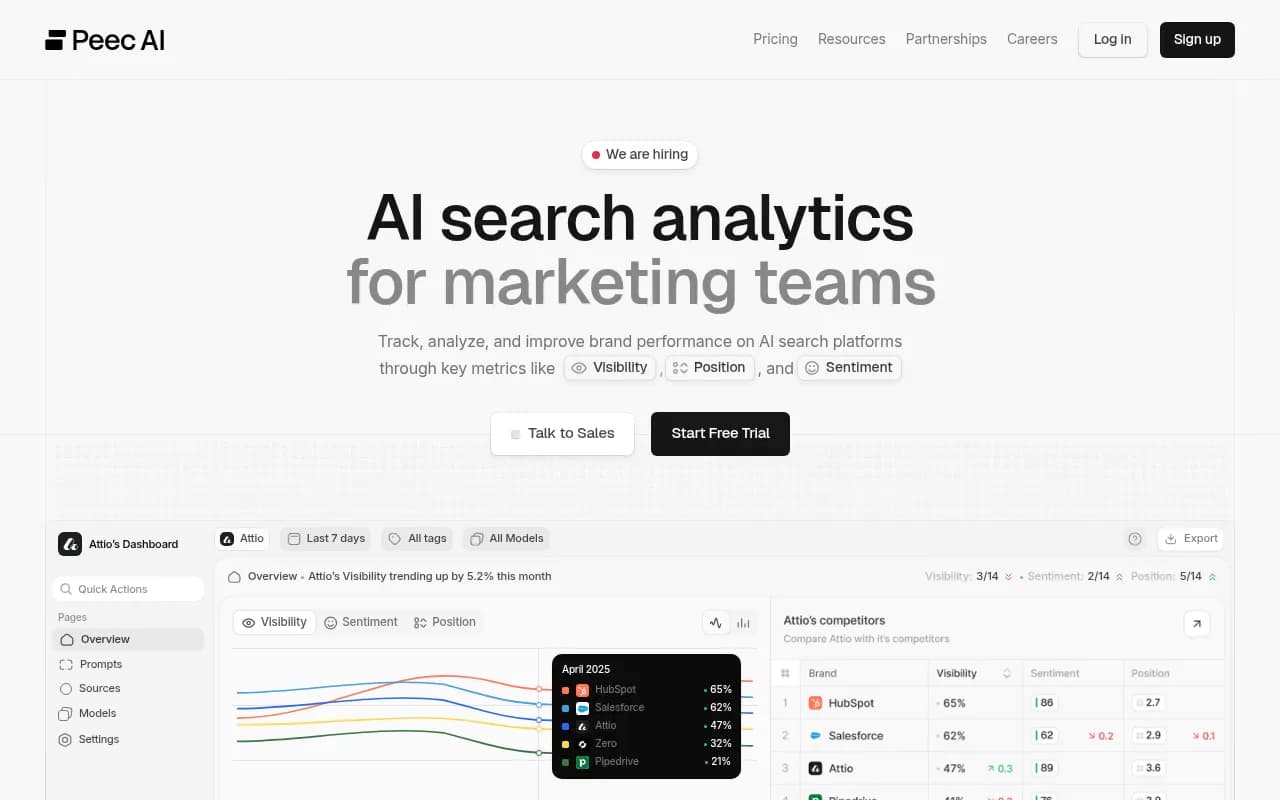
| Peec AI | Simple prompt tracking | Limited beyond monitoring | Small teams starting out |
| Otterly.AI | Lightweight brand mention tracking | No crawler logs or content workflow | Basic monitoring |
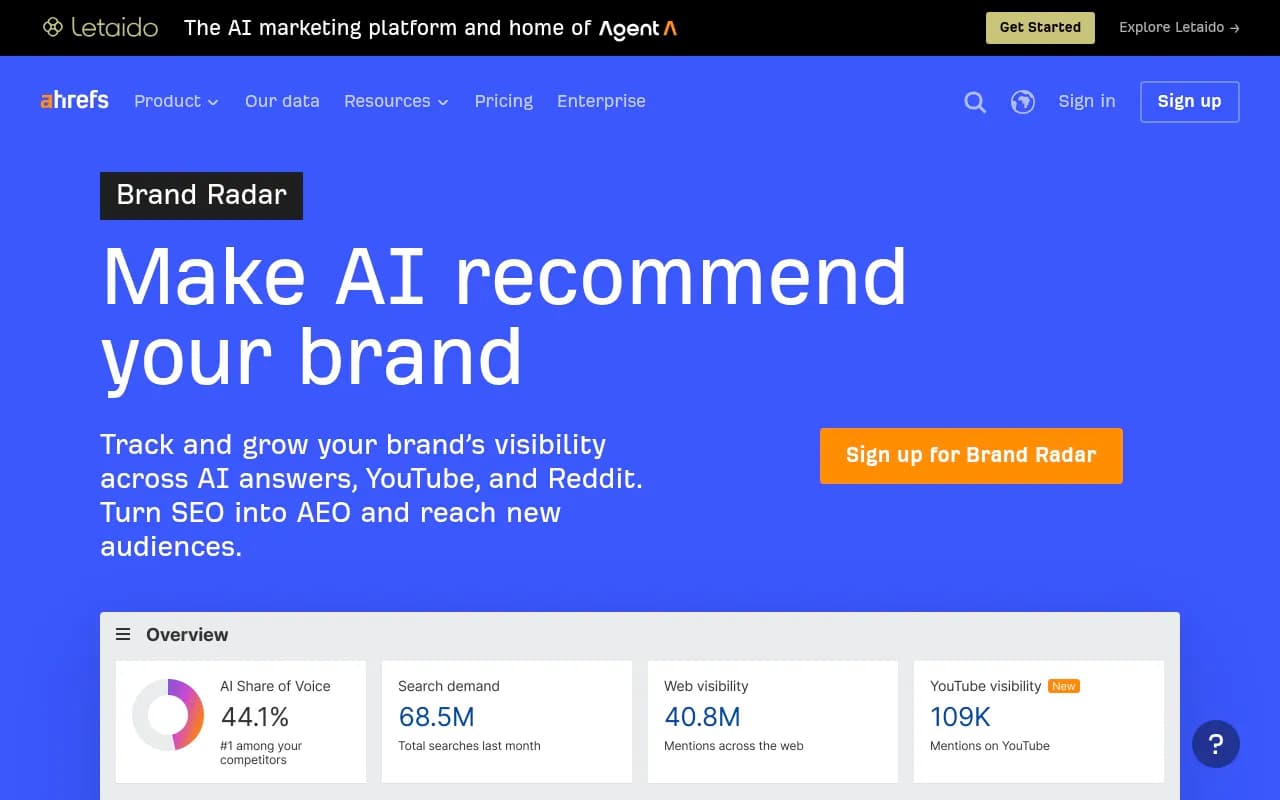
| Semrush / Ahrefs Brand Radar | AI tracking inside a familiar SEO suite | Shallower AI-specific data | Teams already living in those suites |

Profound

Otterly.AI

I am biased here, because 1001 SEO Media runs this directory and uses Promptwatch in its own GEO work. Judge the table by the questions in this guide rather than by my preference. Promptwatch also publishes head-to-head pages, including Promptwatch vs Profound, Promptwatch vs Peec and Promptwatch vs Semrush, and a full 2026 platform comparison. For a wider scan, the GEO software directory at bestgeosoftware.com lists dozens more.
Question 7: What will we do differently in year two?
This is the question people skip, and it is the one that decides whether renewal makes sense. A tool does not create results. A plan does.
Write down three concrete goals for the next 12 months. Examples:
- Get cited on the review sites that matter for your category. Promptwatch Data's November report found five of the top 10 most cited ChatGPT domains were review sites (G2, Gartner, BBB, Capterra, Trustpilot), so listings and reviews there are worth real effort.
- Publish answer-style pages on your own domain for the prompts where competitors win.
- Fix crawler access problems and verify the fix in logs.
Don't build a ChatGPT plan around Reddit. The same data shows Reddit's share of ChatGPT citations collapsing from roughly 4% to 0.5% on August 14, 2026 (see Reddit citations are dropping in ChatGPT), though it remains ChatGPT's most cited social platform at 0.4% in the November social citations report. YouTube, meanwhile, rose to 6.71% of AI Overviews citations. Strategies that worked in spring may be dead by autumn, so ask whether the tool will tell you when that happens.
Then ask whether the tool you are renewing can help you reach those goals. If a goal requires crawler logs and you have none, that is a gap. If it requires publishing and you have no workflow, that is another.
A quick pre-renewal checklist
Use this in the last 30 to 45 days before the term ends:
- Find the exact renewal date, notice period and cancellation terms in your contract.
- Export your data: prompts, responses, citations, reports. Make sure you can leave with it.
- Request the vendor's current pricing and any renewal discount in writing.
- Get quotes from two alternatives and run a short trial on real prompts.
- Check if a monthly option exists, so you can test before committing to another year.
- Decide who owns results internally. A tool nobody owns is a tool you will cancel next year.
Negotiating is normal. Vendors would rather keep you than lose you, and a competing quote is the strongest argument you have. If you want a baseline before talking to anyone, Promptwatch's free AI visibility report scans how ChatGPT, Gemini and Perplexity talk about your brand with no login. For other directories, ai-rank-tools.com lists rank and visibility trackers side by side.
Bottom line
Renew Searchable if you can point to pages it helped you publish, citations you gained and visits you can attribute, and if its price still fits your real usage. Move on if the dashboard is the only thing that changed. Either way, make the decision a few weeks before the invoice, with data in hand, rather than on the day the card is charged.
FAQ
Should I renew my AI visibility tool early if offered a discount?
Only if the discount beats a competing quote and you have already answered the seven questions. Early renewal removes your best leverage, which is the ability to leave at term end without penalty.
What if I cannot verify a vendor's features or pricing?
Ask for them in writing and test with a trial. Packaging changes often in this category, so anything older than a few months deserves a fresh check.
Do I need crawler logs if I already track citations?
Yes, if you want to tell an access problem from a content problem. Citations tell you what AI used. Crawler logs tell you whether bots could read your pages at all.
How long should I give a new tool before judging it?
Give it a full content cycle: publish or refresh pages, wait for crawls and citations, and compare against the baseline. That usually takes weeks, not days.