Key takeaways
- Gauge is a lightweight monitoring tool that tracks brand mentions across AI engines and translates data into improvement recommendations -- good for getting started, limited for deep competitive work.
- Searchable adds built-in content generation to its monitoring, making it a more complete loop for teams that want to act on what they find.
- Neither tool covers the full competitive intelligence picture: crawler logs, prompt volume data, Reddit/YouTube tracking, and traffic attribution are largely absent from both.
- For teams that need to move from "we can see the gap" to "we fixed the gap," a platform like Promptwatch covers the full cycle -- find gaps, generate content, track results.
- The right choice depends on your team size, budget, and whether you need to monitor or actually optimize.
AI search is eating traditional search traffic faster than most marketing teams expected. With 71.5% of U.S. consumers now using AI tools for search (per Semrush's AI Visibility Index 2026), and AI-referred visitors converting at 4.4x the rate of organic search visitors, the question isn't whether to track your AI visibility -- it's which tool actually helps you do something about it.
Two names that come up frequently in this space are Searchable and Gauge. Both sit in the mid-market range, both promise competitive intelligence, and both are genuinely useful in specific situations. But they're built around different philosophies, and picking the wrong one wastes time you don't have.
This guide compares them directly, covers what each does well, and is honest about where both fall short.
What is Gauge?
Gauge is a brand monitoring tool focused on AI search visibility. The core pitch is simple: track how often your brand appears in AI-generated answers, compare that to competitors, and get recommendations on how to improve.
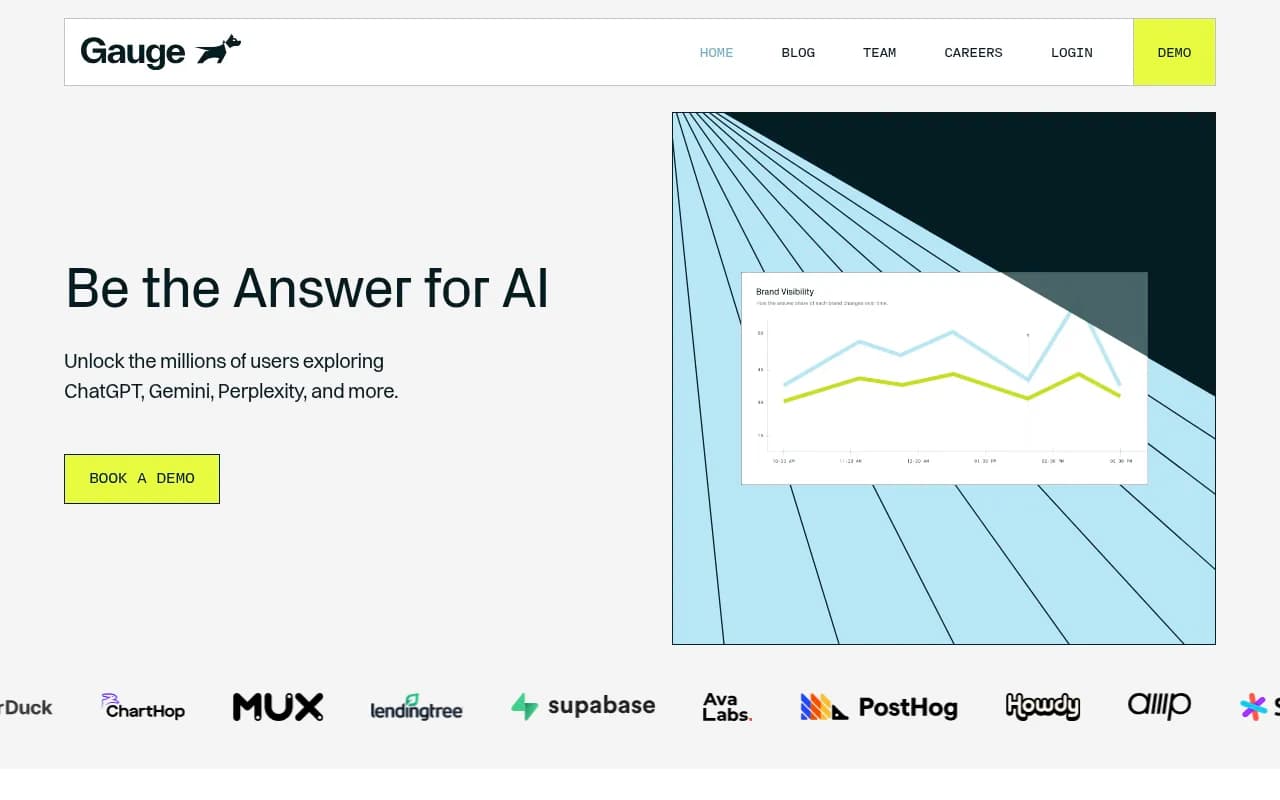
According to multiple 2026 roundups (including data-mania.com's list of best AI search visibility tools), Gauge "keeps things simple by tracking your brand's visibility in AI search results and comparing it to competitors." A Reddit thread in r/ProductMarketing described it as one of the tools that "takes the data and translates it into actionable recommendations on how to improve your brand's visibility in ChatGPT, Google AI..." -- which is more than most pure monitoring tools do.
What Gauge does reasonably well:
- Brand mention tracking across major AI engines (ChatGPT, Perplexity, Google AI)
- Competitor benchmarking -- you can see share of voice relative to rivals
- Basic recommendations for improving visibility
- Clean, accessible interface that doesn't require a technical background
Where it gets thin:
- No crawler log access (you can't see which AI bots are hitting your site, when, or how often)
- Limited prompt volume or difficulty data -- you're not getting prioritization signals
- No content generation built in -- recommendations are suggestions, not execution
- Reddit and YouTube tracking, which directly influence AI citations, is absent
- Traffic attribution connecting AI visibility to actual revenue isn't there
Gauge is a solid entry point. If you're a small team that just needs to know whether you're showing up in AI answers and how you compare to two or three competitors, it does that job without overwhelming you.
What is Searchable?
Searchable positions itself as an "AI Search Visibility Platform with Built-In Content Generation." That second part is the differentiator -- it's not just showing you the gap, it's trying to help you close it.
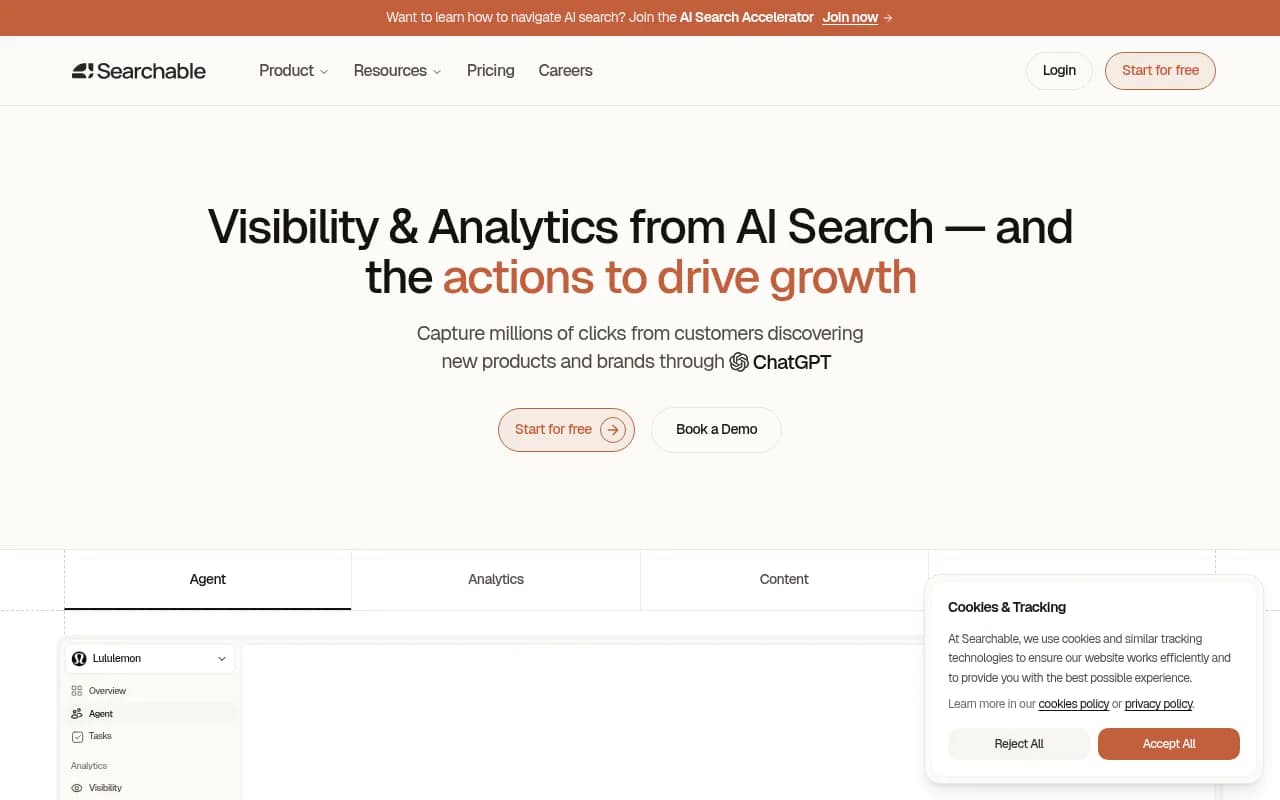
The platform combines monitoring (tracking brand mentions across AI engines) with content tools that help you create material designed to improve those mentions. This makes it closer to a GEO (Generative Engine Optimization) platform than a pure monitoring dashboard.
What Searchable does reasonably well:
- Monitoring across multiple AI engines with competitive benchmarking
- Content generation features tied to visibility gaps -- the loop between "you're missing here" and "here's what to write" is shorter
- More actionable workflow than tools that just surface data
- Useful for marketing teams that want monitoring and content in one place
Where it gets thin:
- The content generation quality and depth varies -- it's not grounded in real prompt volume data or citation analysis the way more mature platforms are
- AI crawler log monitoring is limited or absent
- Prompt intelligence (volume estimates, difficulty scoring, query fan-outs) isn't a core feature
- Offsite citation analysis -- tracking Reddit threads, YouTube videos, and third-party pages that AI models actually cite -- isn't well developed
- Multi-language and multi-region support is limited compared to enterprise-grade alternatives
Searchable is a step up from pure monitoring tools. The built-in content angle is genuinely useful for teams that don't want to juggle multiple platforms. But the content it generates isn't engineered from real citation data and prompt behavior -- which matters if you want content that actually moves your AI visibility scores.
Head-to-head comparison
| Feature | Gauge | Searchable |
|---|---|---|
| Brand mention tracking | Yes | Yes |
| Competitor benchmarking | Yes | Yes |
| AI model coverage | ChatGPT, Perplexity, Google AI | Multiple engines |
| Content generation | No | Yes (built-in) |
| AI crawler logs | No | Limited |
| Prompt volume/difficulty data | No | No |
| Reddit/YouTube tracking | No | No |
| Traffic attribution | No | No |
| Offsite citation analysis | No | Limited |
| Multi-language/region | Limited | Limited |
| Actionable recommendations | Basic | Moderate |
| Best for | Brand awareness monitoring | Monitor + basic content |
| Pricing tier | Mid-market | Mid-market |
The pattern is clear: Gauge is a monitoring tool with light recommendations. Searchable adds content generation but doesn't fundamentally solve the data depth problem. Neither gives you the full picture of why competitors are winning in AI answers or the infrastructure to systematically fix it.
What competitive intelligence actually requires in 2026
Here's the thing about "competitive intelligence" in AI search: the term gets used loosely. Seeing that a competitor appears in 40% of AI answers about your category and you appear in 12% is useful information. But it doesn't tell you:
- Which specific prompts they're winning that you're not
- What content on their site (or off their site) is driving those citations
- Which AI crawlers are hitting their pages vs. yours
- What prompt volume and difficulty looks like for the gaps you could realistically close
- Whether your new content is being crawled, indexed, and cited by AI models
That's the difference between monitoring and competitive intelligence. Real competitive intelligence gives you enough signal to make decisions -- which gaps to prioritize, what to write, where to publish, and whether it's working.
GrowthOS's 2026 guide on competitor AI visibility tools puts it plainly: "Without tracking, you can't measure what you can't see -- and you certainly can't fix it." The implication is that tracking is the floor, not the ceiling. The ceiling is being able to act on what you find.
Where both tools fall short for serious competitive work
Both Gauge and Searchable are missing a few things that matter once you move beyond basic monitoring:
Prompt intelligence. Knowing that you're invisible for "best project management tool for remote teams" is one thing. Knowing that prompt gets asked 12,000 times a month, has medium difficulty, and branches into six sub-queries is what lets you prioritize it over 40 other gaps. Neither tool provides this.
AI crawler logs. When GPTBot or ClaudeBot hits your site, what pages do they read? Do they encounter errors? How often do they return? This data is essential for understanding why some of your content gets cited and some doesn't. It's largely absent from both platforms.
Offsite citation analysis. AI models don't just cite your website. They cite Reddit threads, YouTube videos, industry publications, and third-party listicles. If a competitor is winning because they're mentioned in five high-authority Reddit discussions, you need to know that -- and neither Gauge nor Searchable surfaces it well.
Traffic attribution. AI visibility that doesn't connect to revenue is a vanity metric. The ability to trace an AI citation back to a website visit and then to a conversion is what makes the business case for GEO investment. Both tools are weak here.
Other tools worth knowing about
If you're evaluating Gauge and Searchable, you're probably also looking at a few other options. Here are some worth knowing about:
Otterly.AI is a monitoring-focused platform that tracks brand mentions across ChatGPT, Perplexity, and Google AI Overviews. Solid for monitoring, but like Gauge, it stops before the optimization layer.
Otterly.AI

Profound is an enterprise-grade platform with strong monitoring across 9+ AI engines. Better data depth than Gauge or Searchable, though the price point reflects that.
Profound

AthenaHQ sits in a similar monitoring-focused category. Good for tracking, less useful for teams that need to generate and optimize content.

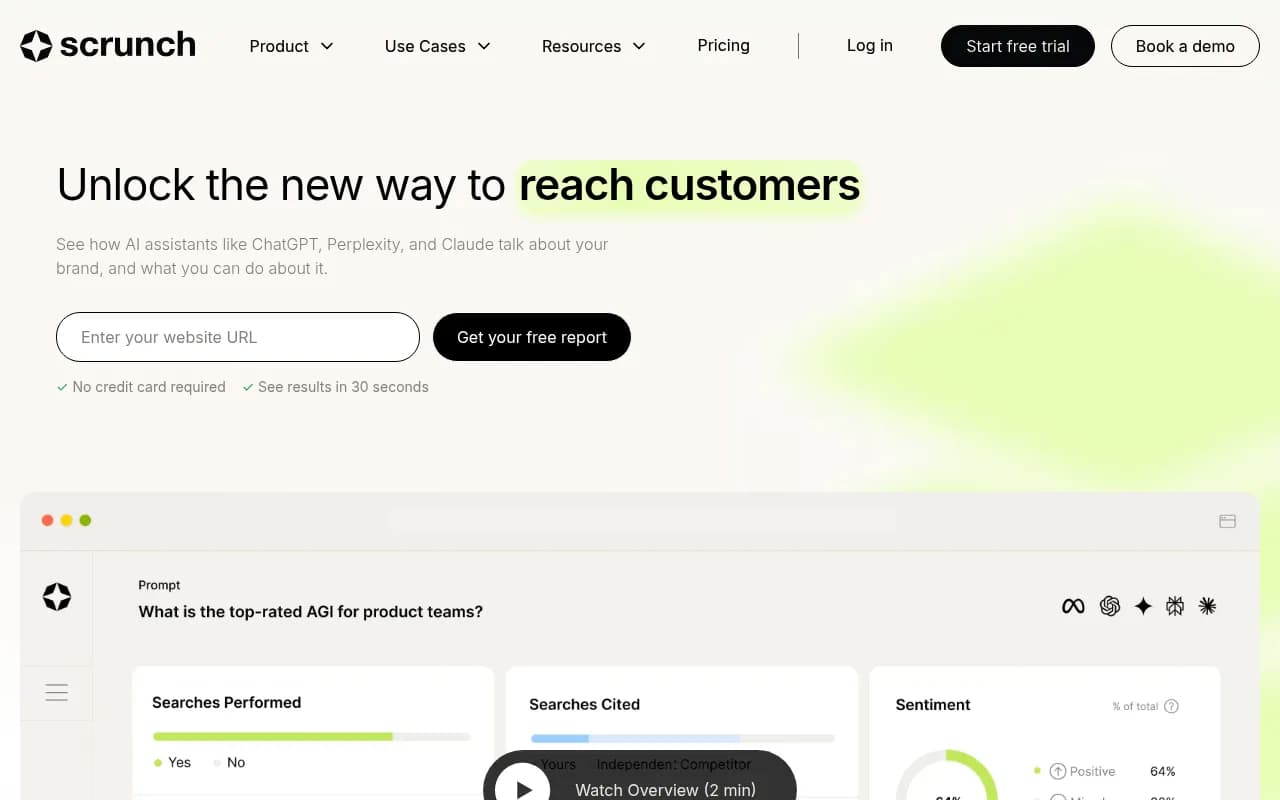
ScrunchAI tracks brand mentions across LLMs with some competitive benchmarking. Another monitoring-first tool.
For teams that want to go further -- from monitoring to actual optimization -- Promptwatch is the platform that closes the loop. It combines Answer Gap Analysis (which specific prompts competitors win that you don't), Content Agents (articles and briefs grounded in real citation data and prompt volumes), and page-level tracking that shows when new content moves from crawl to citation. It also covers crawler logs, Reddit and YouTube insights, ChatGPT Shopping tracking, and traffic attribution.

The distinction matters: Gauge and Searchable show you the problem. Promptwatch shows you the problem and helps you fix it, then tracks whether the fix worked.
How to choose between Gauge, Searchable, and the alternatives
The right tool depends on what stage you're at and what you actually need to do.
Choose Gauge if:
- You're just starting to track AI visibility and need a simple, accessible dashboard
- Your primary need is knowing whether you're mentioned and how you compare to two or three competitors
- You have a separate content team that will handle optimization independently
- Budget is tight and you need something functional without a large commitment
Choose Searchable if:
- You want monitoring and basic content generation in one platform
- You're a small team without dedicated SEO resources and need the workflow to be simple
- You're not yet at the stage where prompt volume data or crawler logs matter to your workflow
Choose a more capable platform if:
- You need to understand why competitors are winning, not just that they're winning
- You want to prioritize gaps by prompt volume and difficulty before investing in content
- Your team needs to generate content that's actually grounded in citation data and AI behavior
- You need to track AI crawler activity on your site and connect visibility to revenue
For that last category, the options narrow quickly. Most platforms in this space are still monitoring-only. The ones that have moved into optimization -- with real content generation tied to gap data, crawler logs, and attribution -- are fewer, and Promptwatch is the most complete example of that approach.
The bottom line
Gauge and Searchable are both legitimate tools for teams getting started with AI visibility tracking. Gauge is cleaner and simpler; Searchable adds content generation that shortens the workflow. Neither is a bad choice for what they are.
But "competitive intelligence" implies more than knowing your share of voice. It means understanding the specific gaps, the reasons behind them, and having a clear path to closing them. On that measure, both tools leave significant work to the user.
If your goal is to actually improve your AI visibility -- not just measure it -- you'll eventually need a platform that treats monitoring as step one of a larger process, not the end product. That's where the category is heading, and it's worth evaluating tools against that standard from the start.