Key Takeaways
- Pages ranking for query fan-out sub-queries are 161% more likely to earn AI citations than those ranking only for main keywords
- Query fan-out analysis reveals the 8-12 parallel sub-queries AI models generate from every user prompt
- Citation analysis shows which specific pages, domains, and content formats AI models prefer to cite
- Combining fan-out coverage with citation-worthy content creates a compounding advantage in AI search
- The action loop: identify fan-out gaps → create citation-optimized content → track visibility improvements
Understanding Query Fan-Out: The Hidden Multiplier in AI Search
When a user asks ChatGPT "best electric cars for families under $50,000," the AI doesn't search for that exact phrase. Instead, it decomposes the query into 8-12 parallel sub-queries:
- "electric vehicle safety ratings families"
- "affordable electric cars 2026"
- "electric car cargo space comparison"
- "EV charging infrastructure family homes"
- "electric vehicle tax credits $50,000"
- "family-friendly electric SUV reviews"
This process—called query fan-out—is how modern AI search systems retrieve comprehensive information to synthesize nuanced answers. Research analyzing 10,000 keywords and 173,000+ URLs reveals that pages ranking across multiple fan-out queries account for over half of all AI Overview citations.
Why Fan-Out Coverage Beats Keyword Optimization
Traditional SEO focuses on ranking for individual keywords. AI search rewards topical authority—the ability to answer not just the main question, but the entire web of related sub-queries that AI models generate.
The data is clear:
- 51% of AI Overview citations come from pages ranking for both the main query AND at least one fan-out
- 30% cite pages ranking ONLY for fan-out queries (not the main term)
- 20% cite pages ranking only for the main query
- 68% of cited pages don't rank in Google's top 10 for either the main query or fan-outs—they're discovered through other signals
Ranking for fan-out queries alone makes you 49% more likely to get cited than ranking exclusively for primary search terms. This reveals a fundamental shift: AI models prioritize depth and breadth of coverage over exact keyword matches.
Citation Analysis: Decoding What AI Models Actually Cite
Query fan-out tells you WHAT questions to answer. Citation analysis tells you HOW to answer them in a way AI models will cite.
The Citation Hierarchy
AI search engines don't cite content randomly. Analysis of 880M+ citations processed by platforms like Promptwatch reveals clear patterns:

High-Citation Content Types:
- Official documentation and reference guides
- Data-backed research reports with specific numbers
- Comparison tables and structured lists
- Step-by-step tutorials with clear outcomes
- Expert analysis with cited sources
Low-Citation Content Types:
- Generic marketing copy and sales pages
- Thin content without depth or specifics
- Paywalled or gated content
- Outdated information (pre-2024)
- Content without clear structure or headings
Where AI Models Source Their Citations
Each major AI platform has different data sources and indexing behaviors:
ChatGPT relies heavily on Bing's index. If Bing hasn't crawled and indexed your page, ChatGPT can't cite it. OpenAI's VP of Engineering confirmed Bing is "an important" part of their search functionality.
Perplexity runs its own crawler (PerplexityBot) and uses "sub-document processing"—indexing granular snippets rather than whole pages. This means internal page structure and heading hierarchy matter significantly.
Google AI Overviews and AI Mode pull from Google's index plus the Knowledge Graph. They use query fan-out extensively, generating 8-12 sub-queries per main search and synthesizing results.
Claude, Gemini, and other models each have their own crawling and retrieval mechanisms. Multi-platform visibility requires understanding these differences.
The 2026 AI Search Ranking Formula
Combining fan-out analysis with citation optimization creates a repeatable formula for dominating AI search:
Step 1: Map Your Fan-Out Coverage Gaps
Start by identifying which fan-out queries your competitors rank for but you don't. This is your Answer Gap.
Tools like Promptwatch automate this process:
- Input your target prompts (e.g., "best project management software")
- The platform generates 8-12 fan-out sub-queries per prompt
- See which competitors appear in AI responses for each fan-out
- Identify gaps where you're invisible but competitors are cited
Manual approach:
- Query ChatGPT, Perplexity, and Google AI Mode with your target prompts
- Note which sub-topics and angles appear in responses
- Check if your site has content addressing each angle
- Document the gaps
Step 2: Analyze Citation Patterns in Your Niche
Understand what AI models cite when answering queries in your space:
- Which domains get cited most frequently?
- What content formats do they use (listicles, comparisons, guides)?
- How deep is their coverage (word count, number of examples)?
- What data points and specifics do they include?
- How is their content structured (headings, lists, tables)?
Platforms like Promptwatch provide citation analysis showing exactly which pages AI models reference, how often, and for which prompts. This data reveals the citation formula in your niche.
Step 3: Create Citation-Optimized Content for Fan-Out Queries
Now you know WHAT to write (fan-out gaps) and HOW to write it (citation patterns). Create content that:
Covers the full fan-out web: Don't just answer the main question. Address all related sub-queries in a single comprehensive piece. If the main query is "best CRM software," your content should also cover:
- CRM pricing comparisons
- CRM integration capabilities
- CRM for specific industries
- CRM implementation timelines
- CRM vs alternatives
Uses citation-worthy formats:
- Lead with specific numbers and data points
- Include comparison tables with 5+ criteria
- Add step-by-step instructions with clear outcomes
- Cite authoritative sources (research, official docs)
- Structure with clear H2/H3 headings matching sub-queries
Optimizes for AI crawlers:
- Ensure pages are crawlable by ChatGPT (Bing), Perplexity, Google
- Use semantic HTML with proper heading hierarchy
- Add structured data (Schema.org) where relevant
- Keep page load times under 2 seconds
- Avoid JavaScript-heavy rendering that blocks crawlers
Example: If you're targeting "best email marketing platforms," create a guide that:
- Compares 10+ platforms across pricing, features, integrations
- Includes specific use cases ("best for e-commerce," "best for agencies")
- Provides setup guides for top platforms
- Addresses common questions ("what is email deliverability?")
- Cites industry benchmarks and data
This single piece covers 20+ fan-out queries and becomes citation-worthy across multiple AI models.
Step 4: Track Visibility and Iterate
Publishing content is just the start. Track how AI models respond:
Monitor citation frequency: How often does your new content get cited? Which AI models cite it? For which prompts?
Track visibility scores: Platforms like Promptwatch provide visibility scores showing your share of citations vs competitors across prompts.
Analyze crawler behavior: Are AI crawlers (ChatGPT, Perplexity, Claude) actually visiting your pages? How often? Which pages? Tools with crawler log analysis show this in real-time.
Connect to traffic: Use code snippets, Google Search Console integration, or server log analysis to tie AI visibility to actual website traffic and conversions.
Iterate based on data: If a page isn't getting cited, analyze why:
- Is it ranking for fan-out queries? (Check Google rankings)
- Is it being crawled by AI bots? (Check crawler logs)
- Does it match citation patterns in your niche? (Compare to cited competitors)
- Is the content comprehensive enough? (Add more depth)
Advanced Tactics: Compounding Your AI Search Advantage
Leverage Reddit and YouTube for Citation Velocity
AI models increasingly cite Reddit discussions and YouTube videos. Research shows these platforms directly influence AI recommendations—a channel most competitors ignore.
Reddit strategy:
- Identify subreddits where your target audience asks questions
- Provide genuinely helpful answers with links to your comprehensive guides
- Focus on threads with 50+ upvotes for maximum AI visibility
- Monitor which Reddit threads get cited in AI responses
YouTube strategy:
- Create tutorial videos covering fan-out sub-queries
- Optimize titles and descriptions with specific keywords
- Include timestamps matching sub-query topics
- Embed videos in your written guides for cross-platform coverage
Optimize for ChatGPT Shopping and Product Recommendations
If you sell products, ChatGPT's shopping features and product carousels represent a massive opportunity. AI models recommend products based on:
- Product page depth and specificity
- User reviews and ratings (from your site and third-party platforms)
- Comparison coverage (how you stack up vs alternatives)
- Clear use case descriptions
- Pricing transparency
Track when your brand appears in ChatGPT shopping recommendations and optimize accordingly.
Use Prompt Intelligence to Prioritize High-Value Queries
Not all prompts are created equal. Focus on:
High-volume prompts: Queries with significant search volume (use tools with prompt volume estimates)
Low-difficulty prompts: Queries where competitors have weak coverage (difficulty scoring helps identify these)
High-intent prompts: Queries indicating purchase intent or decision-making stage
Query fan-outs: Prompts that branch into 10+ sub-queries give you more citation opportunities
Platforms like Promptwatch provide volume estimates, difficulty scores, and query fan-out analysis to help prioritize.
Build Multi-Language and Multi-Region Coverage
AI search is global. If your business operates in multiple countries or languages:
- Create localized content for each market
- Use native speakers to ensure natural language
- Address region-specific fan-out queries (pricing, regulations, availability)
- Monitor AI responses in each language and region separately
- Adjust personas to match how customers in each market prompt AI
Common Mistakes That Kill AI Search Visibility
Mistake #1: Chasing Individual Keywords Instead of Topics
Optimizing for "best CRM software" without covering related fan-outs ("CRM pricing," "CRM integrations," "CRM for small business") leaves massive gaps. AI models reward comprehensive topical coverage.
Mistake #2: Creating Thin Content That Isn't Citation-Worthy
A 500-word blog post with generic advice won't get cited. AI models prefer:
- 2,000+ word comprehensive guides
- Specific data points and examples
- Clear structure with scannable headings
- Comparison tables and actionable steps
Mistake #3: Ignoring AI Crawler Access
If ChatGPT's crawler can't access your pages (blocked by robots.txt, JavaScript rendering issues, slow load times), you won't get cited. Monitor crawler logs to ensure AI bots are successfully indexing your content.
Mistake #4: Treating All AI Models the Same
ChatGPT uses Bing's index. Perplexity crawls independently. Google AI Overviews pull from Google's index. Each requires different optimization approaches. Multi-platform visibility means understanding these differences.
Mistake #5: Not Tracking Results
Publishing content without tracking AI citations, visibility scores, and traffic attribution is flying blind. You need data to know what's working and iterate.
Tools for Implementing the AI Search Formula
While you can manually research fan-outs and track citations, dedicated platforms automate and scale the process:
Promptwatch — The only platform rated as a "Leader" across all GEO categories in 2026 comparisons. Combines fan-out analysis, citation tracking, content gap identification, AI content generation, and crawler log monitoring in one platform. Tracks 10 AI models including ChatGPT, Perplexity, Claude, Gemini, and Google AI Overviews.
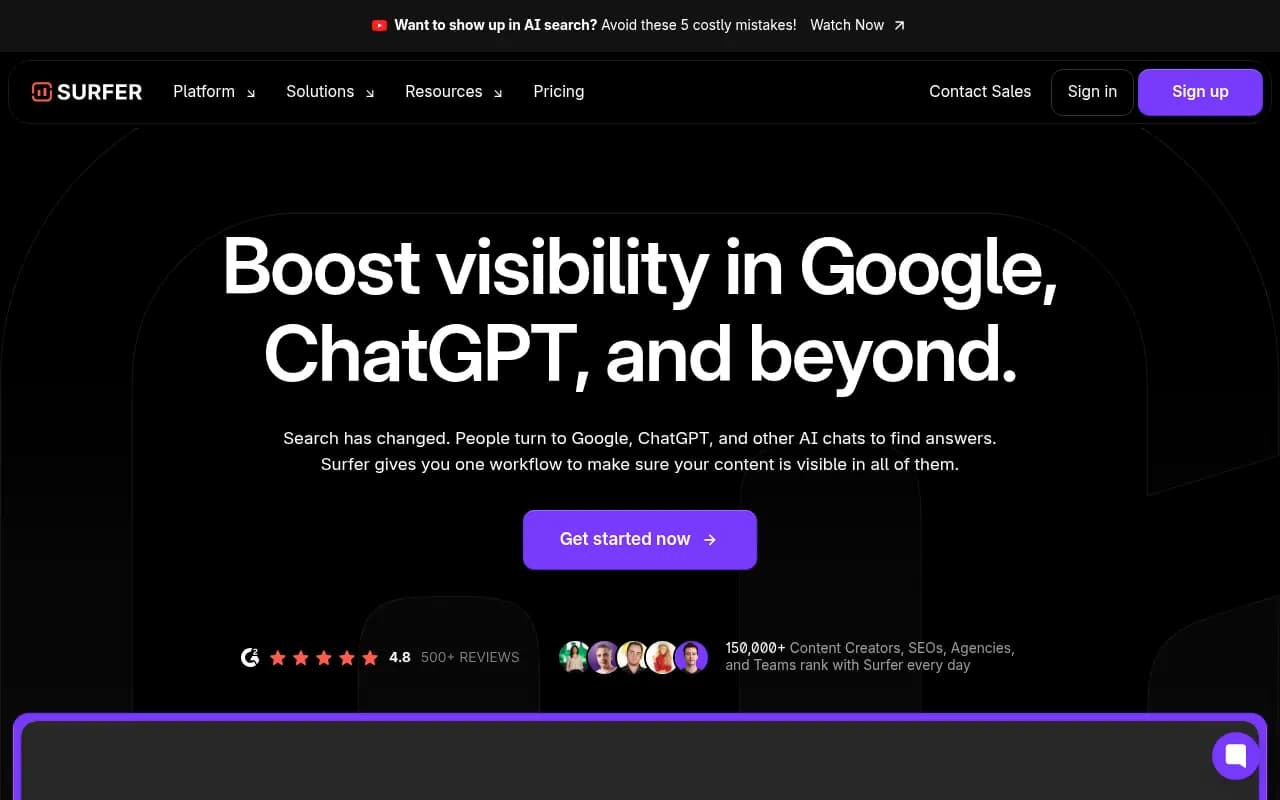
Surfer SEO — AI-driven content optimization with fan-out query research and SERP analysis. Strong for traditional SEO + AI search overlap.
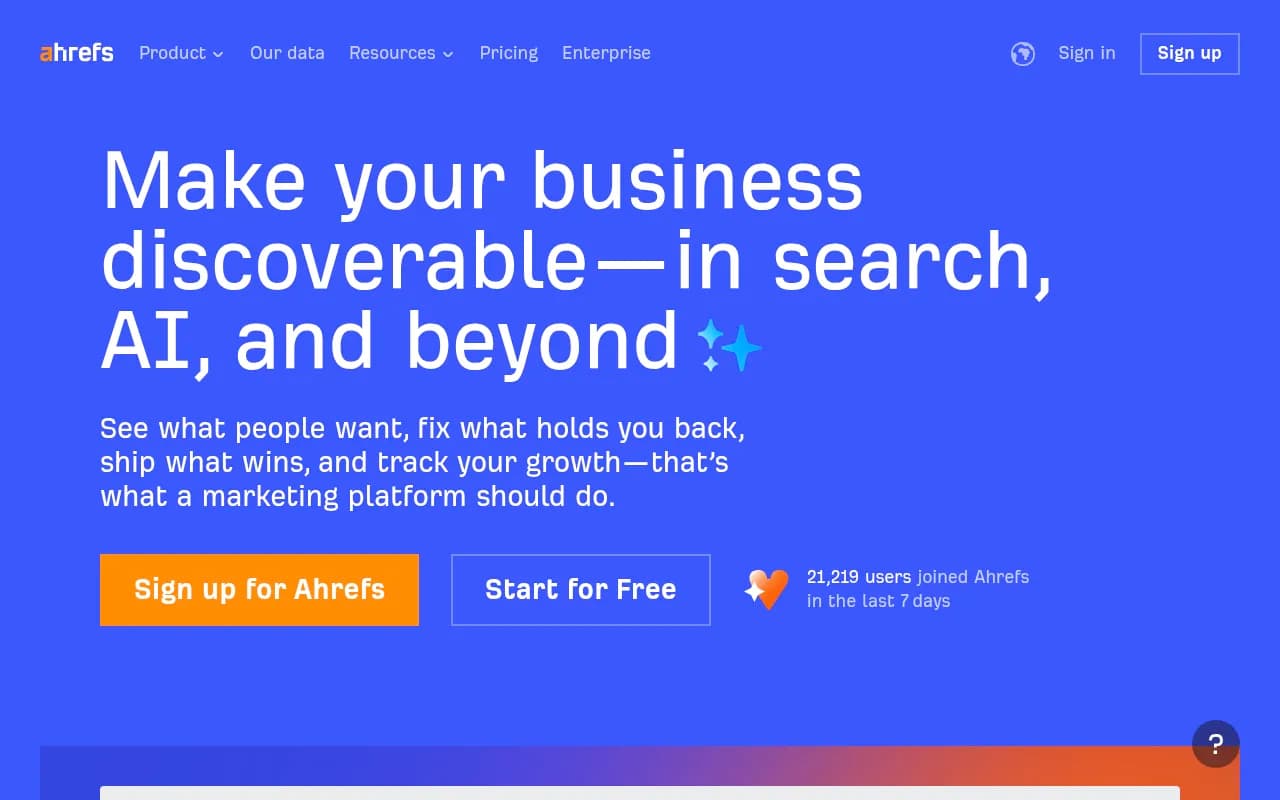
Ahrefs — Traditional SEO platform adding AI search tracking. Brand Radar monitors AI mentions but lacks prompt-level granularity and content optimization features.
Semrush — All-in-one digital marketing platform with emerging AI search capabilities. Uses fixed prompts rather than customizable tracking.
The Future of AI Search: What's Coming in 2026 and Beyond
AI search is evolving rapidly. Key trends shaping the landscape:
Agentic AI: AI agents that complete tasks (book appointments, make purchases, research products) will rely heavily on structured data and clear action paths. Optimize for agent-friendly formats.
Multimodal search: AI models increasingly process images, videos, and audio alongside text. Visual content optimization becomes critical.
Real-time data: AI models are moving toward real-time web access rather than static training data. Fresh, frequently-updated content gains advantage.
Personalization: AI responses will become more personalized based on user context, location, and history. Multi-persona tracking helps understand these variations.
Voice and conversational search: As voice interfaces proliferate, natural language optimization and conversational content formats matter more.
Conclusion: The Compounding Advantage of Fan-Out + Citation Optimization
The 2026 AI search ranking formula is clear:
- Identify fan-out gaps where competitors are visible but you're not
- Analyze citation patterns to understand what AI models prefer to cite
- Create comprehensive content that covers full fan-out webs in citation-worthy formats
- Track visibility and iterate based on real citation data and crawler behavior
Pages ranking across multiple fan-out queries are 161% more likely to earn citations. This creates a compounding advantage: the more fan-outs you cover, the more citation opportunities you create, the more visible you become across AI search engines.
Most competitors are still optimizing for individual keywords in isolation. By combining fan-out analysis with citation optimization, you can dominate AI search in your niche—appearing in ChatGPT, Perplexity, Google AI Overviews, Claude, and every other AI platform your customers use.
The brands that win in AI search aren't chasing keywords. They're building comprehensive topical authority that answers the full web of questions AI models generate from every user prompt. Start mapping your fan-out gaps today.