Key takeaways
- Peec AI is a solid entry-level GEO monitoring tool, but it lacks content generation, crawler logs, and the multi-client features agencies need at scale
- The most common reason agencies switch: they can see where they're invisible in AI search, but Peec AI gives them nothing to do about it
- Promptwatch is the only platform in this comparison rated as a "Leader" across all GEO categories, and the only one with a full action loop (find gaps → generate content → track results)
- Profound and AthenaHQ are strong alternatives for enterprise monitoring, but both stop short of content optimization
- Scrunch AI and Conductor are worth considering for agencies already embedded in traditional SEO workflows
Peec AI has a clear audience: marketing teams that want to understand how their brand shows up in AI search engines without spending a lot of money or time on setup. It covers the basics. You can track brand mentions across ChatGPT, Perplexity, and Google AI Overviews. You get a dashboard. You see numbers move.
The problem is what comes next.
Once you understand that you're invisible for certain prompts, you need to know why and what to do about it. Peec AI doesn't answer either question. It's a monitoring tool, not an optimization platform. For a solo marketer running one brand, that might be fine. For an agency managing 10 clients, each with different competitive landscapes, content gaps, and reporting requirements, it becomes a bottleneck fast.
According to Similarweb's 2025 Generative AI Report, AI platforms generated over 1.1 billion referral visits in June 2025, up 357% year-over-year. The agencies that figure out GEO now are building a compounding advantage. The ones still just monitoring without acting are watching their clients fall further behind.
This guide is for agencies that have outgrown Peec AI and want to know what's actually worth switching to.

Why agencies hit Peec AI's ceiling
Before getting into alternatives, it's worth being specific about what Peec AI is missing. The complaints that come up most often from agency users:
- No content gap analysis. You can see you're not being cited, but not which topics or angles you're missing.
- No content generation. There's no way to go from "we have a gap" to "here's the article that fills it."
- No AI crawler logs. You can't see which pages AI bots are actually reading, how often, or whether they're hitting errors.
- Limited multi-client management. Agencies running more than a handful of clients find the workflow clunky.
- No prompt volume data. You don't know if the prompts you're tracking are high-traffic or irrelevant.
- No Reddit or YouTube tracking. A significant portion of AI citations come from third-party content on these platforms, and Peec AI ignores them entirely.
None of this is a knock on Peec AI as a product. It does what it says. The issue is that agencies need more than monitoring — they need a system for turning visibility data into actual results.
The 5 platforms agencies are switching to
1. Promptwatch — the full action loop
Promptwatch is the platform most agencies land on after outgrowing monitoring-only tools. The core difference is structural: it's built around doing something with your data, not just collecting it.
The workflow looks like this. Answer Gap Analysis shows you exactly which prompts your competitors are visible for but you're not. Not vague categories — specific questions and topics that AI models are already answering, using competitor content instead of yours. From there, Content Agents generate articles, listicles, comparisons, and briefs grounded in that prompt data, including citation analysis, prompt volumes, persona targeting, and competitor screenshots. Then page-level tracking shows you when your new content gets crawled, when it starts getting cited, and which AI models are picking it up.
That cycle — find gaps, create content, track results — is what separates Promptwatch from every other tool in this list. Most competitors stop at step one.
A few capabilities that matter specifically for agencies:
- AI Crawler Logs show which pages AI bots are reading on client sites, what errors they're hitting, and how often they return. Most competitors don't have this at all.
- Prompt Intelligence gives volume estimates and difficulty scores for each prompt, so you can prioritize the ones worth winning rather than tracking everything.
- Offsite citation analysis tracks which Reddit threads, YouTube videos, and third-party pages are driving AI visibility outside the client's own site.
- Multi-language and multi-region support, with customizable personas that match how real customers actually prompt.
- Competitor heatmaps show which AI models each competitor is winning on, and why.
Pricing starts at $99/month for the Essential plan (1 site, 50 prompts, 5 articles). The Professional plan at $249/month covers 2 sites, 150 prompts, 15 articles, and adds crawler logs and state/city tracking. Business is $579/month for 5 sites. Agency and enterprise pricing is available on request. There's a free trial.
Promptwatch is used by 1,480+ brands and agencies including Booking.com, Center Parcs, and Wortell, and has processed more than 4.5 billion citations, clicks, and prompts.

2. Profound — enterprise monitoring with depth
Profound is the strongest pure monitoring alternative to Peec AI, particularly for enterprise clients with complex brand tracking needs. It covers 9+ AI search engines, has solid prompt tracking, and the data quality is generally well-regarded.
Where it falls short for agencies: it's expensive relative to what you get, and it doesn't help you act on what you find. There's no content generation, no content gap analysis in the actionable sense, and no Reddit or YouTube tracking. If a client asks "what do we do about this?" Profound gives you more data to look at, not a path forward.
That said, if you're managing a large enterprise account where the primary deliverable is reporting and the client has its own content team, Profound is a serious option.
Profound

3. AthenaHQ — narrative and tone monitoring
AthenaHQ takes a slightly different angle. Beyond tracking whether your brand appears in AI responses, it focuses on how your brand is described — the sentiment, framing, and narrative that AI models use when they mention you. That's genuinely useful for brands where reputation management matters as much as visibility.
The limitation is the same one that affects most monitoring tools: AthenaHQ shows you the problem but doesn't help you fix it. There's no content optimization layer, no content generation, and no crawler logs. For agencies whose clients care deeply about brand narrative in AI responses, it's worth a look. For agencies focused on driving citations and traffic, it's not the right fit.

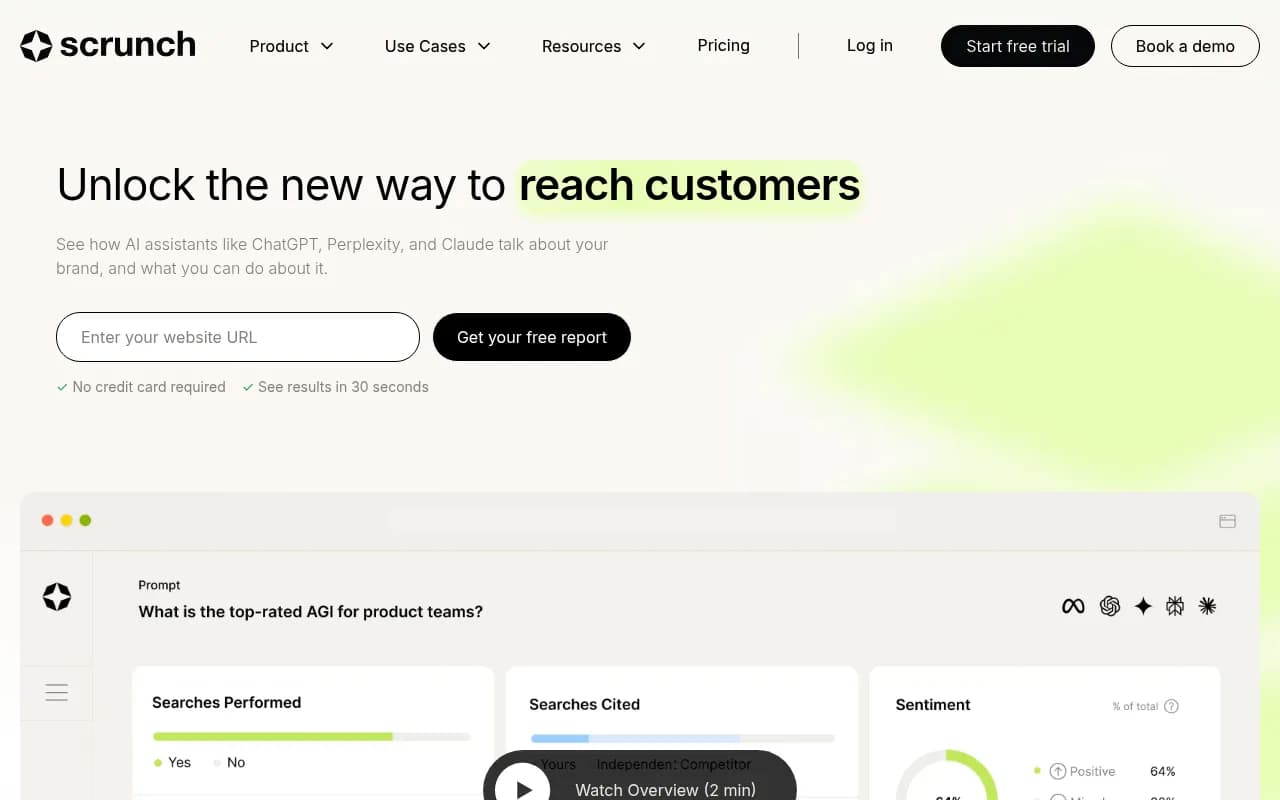
4. Scrunch AI — solid mid-market option
Scrunch AI sits in an interesting position. It has more depth than Peec AI, covers multiple AI engines, and has started building out some optimization features. The interface is cleaner than some competitors and the onboarding is straightforward.
The honest assessment: Scrunch AI is a step up from Peec AI in terms of data coverage and reporting, but it's still primarily a monitoring tool. The content optimization features are present but limited compared to what Promptwatch offers. For agencies that want a meaningful upgrade from Peec AI without moving to a full optimization platform, Scrunch AI is a reasonable middle ground.
5. Conductor — for agencies already in the SEO ecosystem
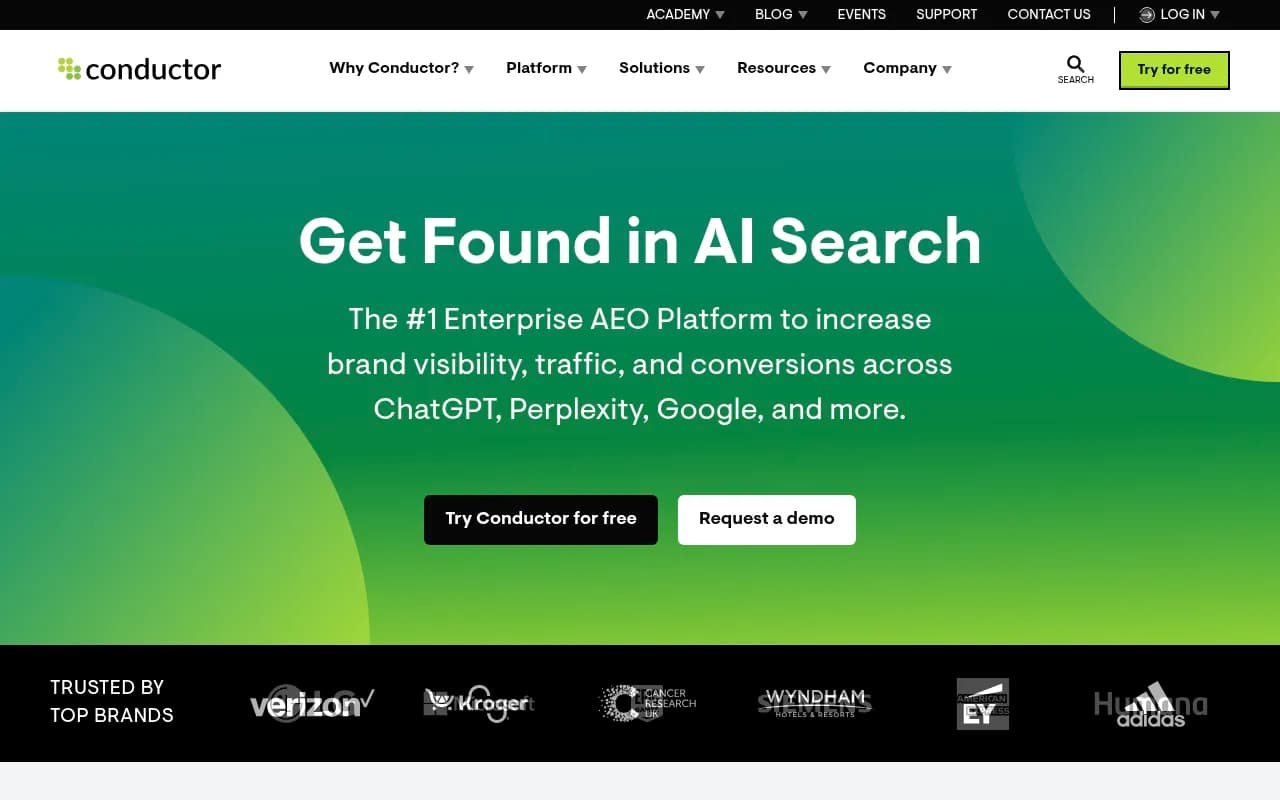
Conductor is an interesting case because it comes at GEO from the traditional SEO side rather than building from scratch. If your agency already uses Conductor for SEO work, the AI visibility features are a natural extension. The integration with existing content workflows is smoother than most dedicated GEO tools.
The downside is that Conductor's AI search capabilities feel bolted on rather than core. The depth of prompt tracking, citation analysis, and content optimization doesn't match what purpose-built GEO platforms offer. It's a good option for agencies that want one platform for both traditional SEO and AI visibility, and are willing to accept some trade-offs on the GEO side.
How these platforms compare
| Platform | Monitoring | Content gap analysis | Content generation | Crawler logs | Prompt volume data | Reddit/YouTube tracking | Multi-client support | Starting price |
|---|---|---|---|---|---|---|---|---|
| Promptwatch | Yes (10 models) | Yes | Yes | Yes | Yes | Yes | Yes | $99/mo |
| Profound | Yes (9+ models) | Limited | No | No | Limited | No | Yes | Higher |
| AthenaHQ | Yes | No | No | No | No | No | Limited | Mid-range |
| Scrunch AI | Yes | Limited | No | No | No | No | Yes | Mid-range |
| Conductor | Yes | Limited | No | No | No | No | Yes | Higher |
| Peec AI | Yes | No | No | No | No | No | Limited | Lower |
The pattern is clear. Every alternative to Peec AI in this list is better at monitoring. Only Promptwatch closes the loop on optimization.
What to actually look for when switching
A few things worth checking before you commit to any platform:
Does it track real user-facing responses, not just API outputs? AI models behave differently in their actual interfaces versus their APIs. Shopping recommendations, citation formats, and answer structures can all vary. Platforms that only query APIs can miss what users actually see.
Can you see which pages AI crawlers are reading? This is more important than it sounds. If an AI bot is hitting your site but encountering errors, or reading the wrong pages, you need to know. Most platforms don't surface this at all.
Does it cover the models your clients' customers actually use? ChatGPT and Perplexity get the most attention, but Google AI Overviews, Google AI Mode, Gemini, and Grok all matter depending on the audience. Make sure the platform covers the full picture.
Is there a path from data to action? This is the question that Peec AI fails on, and it's the most important one. Visibility data without an optimization workflow is just a more expensive way to feel bad about your rankings.
The bottom line
Peec AI is a fine starting point. It's not a good long-term home for agencies that are serious about GEO.
The switch most agencies end up making is to Promptwatch, because it's the only platform that covers the full cycle from gap identification to content creation to citation tracking. The others in this list are meaningful upgrades on monitoring, but they still leave you with the same fundamental problem: you know where you're invisible, but you don't have a system for fixing it.
If you're managing multiple clients, running regular GEO reporting, and trying to show measurable results from AI search optimization, the monitoring-only approach runs out of road quickly. The platforms that help you act on data are the ones worth building a practice around.