Key takeaways
- When a B2B buyer asks ChatGPT "best [software category]," the model silently decomposes that into 8-12 sub-queries covering pricing, reviews, comparisons, use cases, and alternatives.
- "Best," "reviews," and "2026" are the three modifier terms ChatGPT most frequently injects into its hidden fan-out searches, even when the original prompt contains none of those words.
- Most B2B software brands are only visible for the top-level prompt -- they're invisible for the sub-queries that actually determine whether they get cited.
- Content strategy needs to map to the full fan-out tree, not just the head term.
- Tracking visibility at the sub-query level (not just the parent prompt) is the only way to know where you're actually losing ground to competitors.
When a B2B buyer sits down and types "best project management software for remote teams" into ChatGPT, something interesting happens before any answer appears. ChatGPT doesn't treat that as a single question. It treats it as a research brief.
Behind the scenes, the model fans out -- decomposing that one prompt into a cluster of related sub-queries it uses to gather information before synthesizing a response. The buyer sees one clean answer. What's actually happening is closer to 8-12 parallel searches running simultaneously, each pulling from different sources, covering different angles.
This is the fan-out pattern. And if you're marketing B2B software in 2026, it's probably the most important thing you don't have a content strategy for.
What query fan-out actually means
Fan-out isn't a metaphor. It's a literal description of how AI search engines like ChatGPT, Perplexity, and Google AI Mode process complex queries.
Research analyzing over 5 million ChatGPT fan-out queries found that the model routinely injects modifier terms into its hidden sub-queries -- terms the user never typed. "Best" is the most common injection, appearing even when the original prompt was neutral ("what project management tools do teams use"). "Reviews" and "2026" show up frequently too, which means ChatGPT is actively looking for recency signals and social proof even when the buyer didn't ask for them.
For a prompt like "best CRM for B2B sales teams," the fan-out might look something like this:
- "best CRM software for B2B sales 2026"
- "CRM software reviews small business"
- "HubSpot vs Salesforce B2B"
- "CRM pricing comparison enterprise"
- "CRM software alternatives Salesforce"
- "best CRM for outbound sales teams"
- "CRM integrations with LinkedIn Sales Navigator"
- "CRM software Reddit recommendations"
- "top CRM tools for SDR teams"
- "CRM free trial options 2026"
That's ten distinct queries from one prompt. Each one represents a content angle. Each one is a potential citation opportunity -- or a gap where a competitor gets cited instead of you.
Why B2B buying queries fan out harder than most
Fan-out happens across all query types, but B2B software buying queries produce some of the most aggressive decomposition. There are a few reasons for this.
B2B purchase decisions involve multiple stakeholders. ChatGPT knows this. When someone asks about "best HR software," the model implicitly understands that the answer needs to satisfy a VP of People, a finance team approving budget, and an IT team evaluating integrations. So it fans out to cover each of those angles -- pricing, security, integrations, ease of use, support quality.
B2B buyers also have longer evaluation cycles. They compare. They read reviews. They look for alternatives. ChatGPT mirrors this behavior in its fan-out structure, generating sub-queries that map almost perfectly onto the vendor evaluation checklist a real buyer would work through.
Research from CXL's analysis of fan-out in B2B contexts makes this explicit: fan-out maps directly onto the real questions B2B buyers ask when narrowing vendors. That's not a coincidence -- it's the model trying to be genuinely helpful to a buyer who's about to make a significant purchasing decision.
The three modifier terms that matter most
Based on analysis of millions of ChatGPT fan-out queries, three modifier terms show up with disproportionate frequency:
"Best" -- ChatGPT adds this even to neutral queries. If someone asks "what tools do marketing teams use for attribution," the fan-out will almost certainly include a sub-query with "best" in it. This means every piece of content you have should be answering "best [category]" questions, not just describing what your product does.
"Reviews" -- The model actively looks for third-party validation. It's pulling from G2, Capterra, Reddit, Trustpilot, and similar sources. If your brand has thin review coverage on those platforms, you're losing citations at the review sub-query level even if your own website content is strong.
"2026" -- ChatGPT injects year modifiers to prioritize recent information. Content from 2022 or 2023 that hasn't been updated is being deprioritized in favor of fresher sources. This is a real problem for brands that published good comparison content two years ago and haven't touched it since.
ChatGPT 5.5's fan-out behavior, analyzed by Seer Interactive, shows that brand-specific sub-queries are also increasingly common -- meaning the model fans out to look for information specifically about named vendors, not just category-level answers. If your brand doesn't have enough content about itself (case studies, specific use case pages, pricing transparency), you'll be invisible in those brand-level sub-queries even when a buyer is actively researching you.
What this means for your content strategy
Most B2B content strategies are built around head terms. You target "best CRM software," write a comprehensive page, and call it done. The fan-out pattern breaks this model.
You need content that covers the full fan-out tree -- not just the parent prompt, but the 8-12 sub-queries the model generates from it. Here's how to think about it practically:
Map the fan-out for your category
Start by identifying your 5-10 most important buying prompts. Then, for each one, manually work through the sub-queries ChatGPT is likely generating. You can do this by running the prompt yourself and watching what sources get cited, or by using a platform that surfaces fan-out data directly.
The sub-query categories you should expect to find for any B2B software buying prompt:
| Sub-query type | Example | Content you need |
|---|---|---|
| Best + category | "best [category] software 2026" | Updated comparison/listicle |
| Reviews | "[your brand] reviews" | G2/Capterra presence, case studies |
| Comparisons | "[your brand] vs [competitor]" | Dedicated comparison pages |
| Pricing | "[category] software pricing" | Transparent pricing page or guide |
| Alternatives | "[competitor] alternatives" | Alternative pages targeting competitor brand |
| Use case specific | "[category] for [industry/team]" | Vertical or persona-specific pages |
| Integrations | "[category] integrations with [tool]" | Integration documentation |
| Free trial / demo | "[category] free trial" | Clear trial/demo CTA pages |
Prioritize the sub-queries where competitors are winning
This is where most brands waste time. They create content for sub-queries where they're already visible, rather than the ones where a competitor is getting cited instead.
The answer gap -- the set of prompts and sub-queries where competitors appear and you don't -- is where the real opportunity is. Promptwatch has an Answer Gap Analysis feature built specifically for this: it shows you the exact prompts where competitors are being cited and you're not, so you can prioritize content creation around the gaps that actually cost you visibility.

Create content that matches fan-out intent, not just keyword intent
Traditional SEO content is written to match keyword intent. Fan-out content needs to match the specific sub-query intent -- which is often more specific and more evaluative than the parent prompt.
A page titled "Best CRM Software" might rank for the head term, but it won't get cited for the sub-query "best CRM for outbound SDR teams with Salesloft integration" unless it specifically addresses that use case. The fan-out pattern rewards depth and specificity over breadth.
This means:
- Comparison pages that go beyond surface-level feature lists
- Use case pages that speak to specific team types, company sizes, and workflows
- Integration pages that explain how your product works with the tools your buyers already use
- Pricing pages that are transparent enough to be cited (vague "contact us for pricing" pages don't get cited)
Where off-site content fits in
Fan-out doesn't just pull from your website. ChatGPT's sub-queries surface Reddit threads, YouTube videos, G2 reviews, industry listicles, and third-party comparison sites. This matters because you can be doing everything right on your own site and still lose citations because a competitor has better coverage in off-site sources.
The Profound team's analysis of ChatGPT shopping behavior found that product cards and recommendations are heavily influenced by third-party review signals -- not just first-party content. The same dynamic applies to B2B software recommendations.
Practically, this means your fan-out strategy needs to include:
- Active review generation on G2, Capterra, and Trustpilot (these get cited constantly)
- Presence in industry comparison listicles and "best of" roundups
- Reddit engagement in subreddits where your buyers ask questions
- YouTube content that answers evaluation-stage questions
Tracking fan-out visibility: what to actually measure
Here's the gap in most teams' measurement approach: they track visibility for the parent prompt but not the sub-queries. So they see "we appear in ChatGPT for 'best project management software'" and think they're fine -- while a competitor is dominating 8 of the 10 sub-queries that actually determine the final recommendation.
Effective fan-out tracking requires:
- Monitoring at the sub-query level, not just the head term
- Tracking which specific pages on your site are being cited (and which aren't)
- Watching competitor citation patterns to understand which sub-queries they're winning
- Connecting visibility changes to actual traffic and pipeline
Tools like Peec AI have published research specifically on fan-out patterns, and platforms built for AI visibility tracking are starting to surface sub-query data more explicitly.

For teams that want to go deeper -- including crawler-level data showing which pages AI models are actually reading before they cite -- Promptwatch's crawler logs show exactly which pages GPTBot and other AI crawlers visit, how often they return, and when a crawled page moves to an actual citation. That timeline data is useful for understanding why some sub-query content gets picked up quickly and other pages sit uncited for months.
The competitive reality in 2026
The fan-out pattern creates an asymmetric competitive situation. A brand that understands it and builds content around the full sub-query tree can dominate a category's AI visibility even if a larger competitor has more overall content. The model doesn't reward volume -- it rewards relevance to the specific sub-query it's trying to answer.
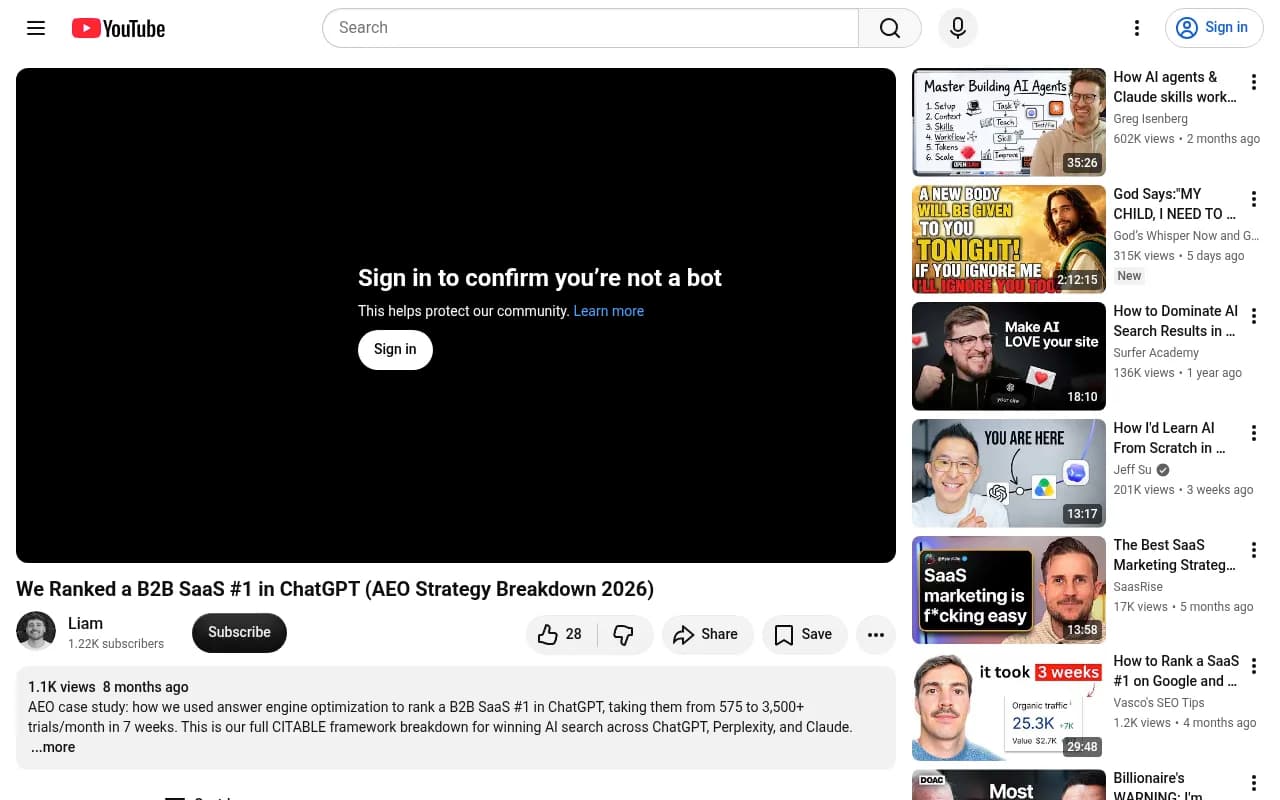
This is why some B2B SaaS companies with relatively small content teams have been able to punch above their weight in AI search. One documented case study showed a B2B SaaS going from 575 to 3,500+ trials per month after implementing an answer engine optimization strategy built around sub-query coverage -- not just head term targeting.
The brands that are going to struggle are the ones treating AI visibility like traditional SEO -- picking a handful of head terms, writing one page per term, and waiting. Fan-out doesn't work that way. The model is asking 10 questions for every one the buyer types. You need answers for all of them.
A practical starting point
If you're not sure where to begin, here's a simple process:
- Pick your three most important buying prompts (the ones where winning would actually move pipeline).
- Run each one in ChatGPT and note which brands get cited and which sources are referenced.
- For each prompt, manually generate the sub-query tree -- think through the comparison, review, pricing, use case, and alternative angles.
- Audit your existing content against that sub-query tree. Where do you have coverage? Where are you missing?
- Prioritize content creation for the gaps where a competitor is currently being cited.
- Set up tracking at the sub-query level so you can see when your new content starts getting picked up.
The fan-out pattern isn't going away. If anything, as AI models get better at research synthesis, they'll fan out more aggressively, not less. The brands that build content strategies around the full sub-query tree now will have a compounding advantage as AI search becomes the default starting point for B2B vendor evaluation.
That's not a prediction about the future. It's already happening. The question is whether your content is showing up for the questions ChatGPT is actually asking.