Key takeaways
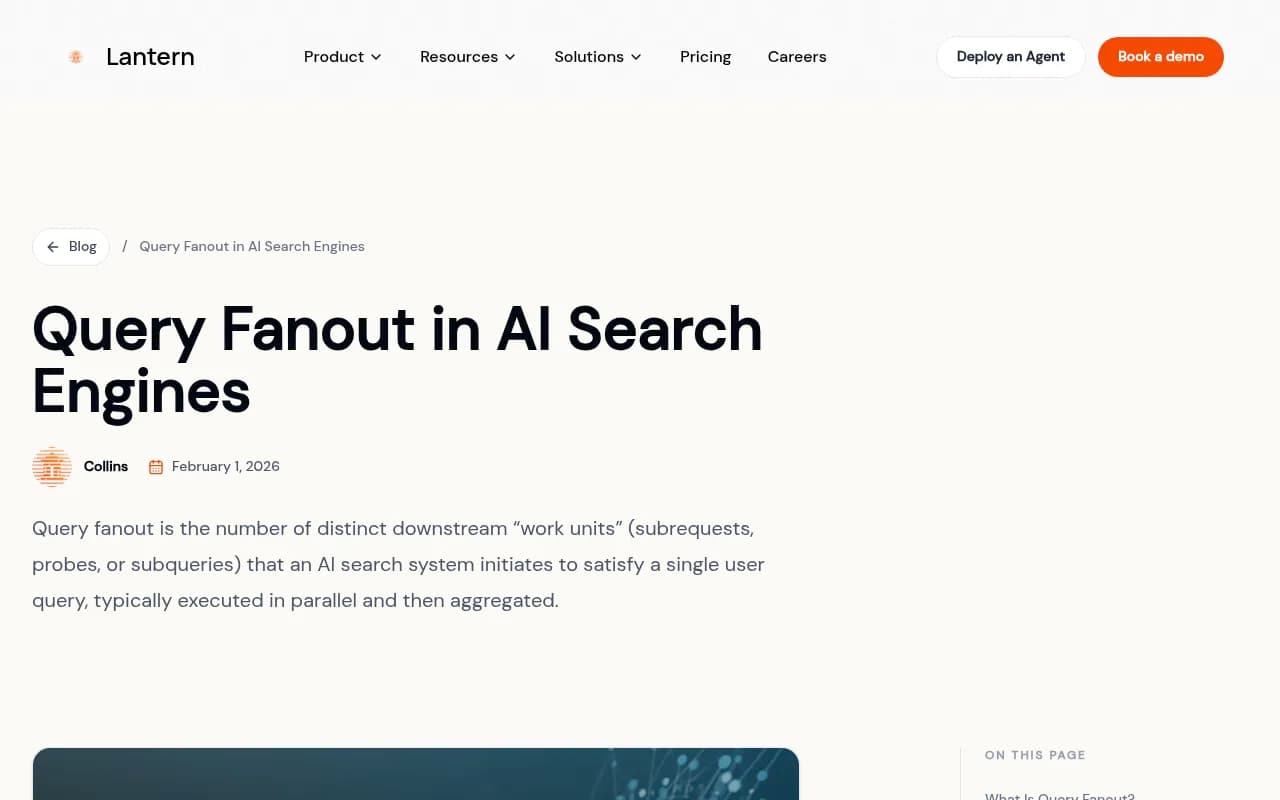
- AI search engines (ChatGPT, Perplexity, Google AI Mode) decompose every user query into 8–12 parallel sub-queries before generating a response. Your content needs to satisfy the sub-queries, not just the original search.
- Pages that cover a topic's full sub-query tree are 3.2x more likely to be cited across multiple AI responses than single-angle pages.
- A December 2025 Surfer SEO study of 173,902 URLs found that 68% of pages cited in AI Overviews were not in the top 10 organic results — fan-out coverage explains why.
- You can reverse-engineer fan-out sub-queries manually or with tools, then use them as a structural blueprint for your article.
- Tracking which sub-queries your page gets cited for (and which it misses) is the feedback loop that lets you improve over time.
Why fan-out changes everything about article structure
Most content teams still write articles the same way they did in 2019: pick a keyword, write a piece that targets it, optimize the title tag, and move on. That worked when Google was matching keywords to pages. It doesn't work as well when an AI is decomposing your query into a dozen sub-questions and synthesizing answers from multiple sources.
Here's the core problem. When someone asks ChatGPT "best CRM for small businesses," the model doesn't retrieve the page that ranks #1 for that phrase. It fires sub-queries like "CRM pricing for small teams," "CRM ease of use reviews," "CRM integrations with Gmail," "CRM vs spreadsheet for small business," and "top-rated CRM 2026." It retrieves content for each one, then synthesizes a response. If your page only addresses the top-level question, you're competing for one slot out of twelve. If it addresses all twelve, you become the source that gets cited repeatedly.
That's the opportunity. And it's surprisingly underexploited.
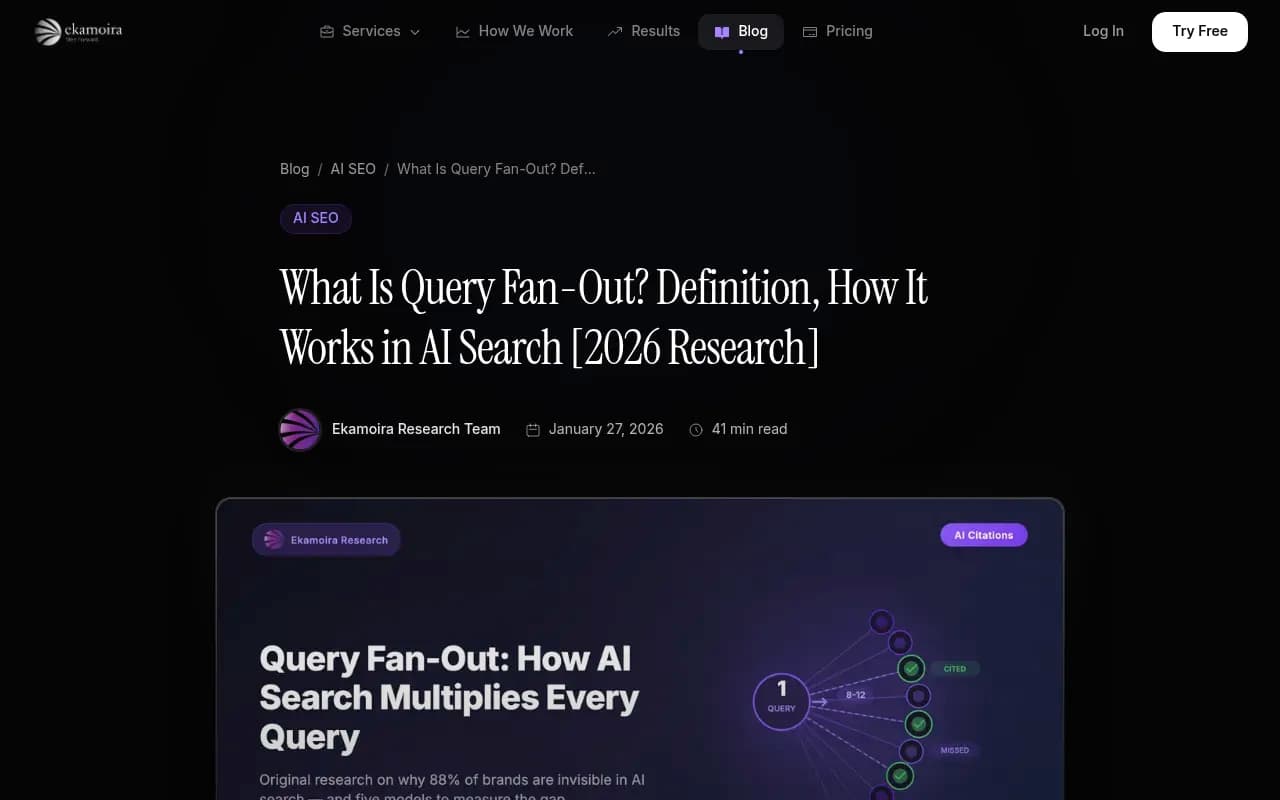
A December 2025 study by Surfer SEO analyzing 173,902 URLs across 10,000 keywords found that 68% of pages cited in AI Overviews were not in the top 10 organic results. Fan-out coverage is a big part of why. A page that thoroughly addresses a topic's sub-questions gets pulled into AI responses even when it doesn't rank well in traditional search.
What query fan-out actually looks like
Before you can write for fan-out, you need to understand what it produces. When a user submits a query, AI search systems run a process that looks roughly like this:
- Parse the original query for intent
- Decompose it into 8–12 related sub-queries covering different angles
- Retrieve content for each sub-query in parallel
- Synthesize the retrieved passages into a single response
- Cite sources where relevant
The sub-queries aren't random. They follow predictable patterns based on the type of question:
- Definitional sub-queries ("what is X")
- Comparison sub-queries ("X vs Y")
- Use-case sub-queries ("X for [audience]")
- Pricing/feature sub-queries ("how much does X cost")
- Process sub-queries ("how to do X")
- Recency sub-queries ("best X in 2026")
- Credibility sub-queries ("is X worth it," "X reviews")
A single parent query like "how to do keyword research" might fan out into all seven of those types simultaneously. Your article needs to address all of them to become the comprehensive source AI models want to cite.
Step 1: Map the sub-query tree before you write a word
The biggest mistake is writing first and then trying to retrofit sub-query coverage. Start with the sub-query map.
How to build a sub-query map manually
Take your target topic and ask yourself: what are all the related questions someone might have? Go broader than you think is necessary. A few prompts that help:
- "What would someone need to know before, during, and after [topic]?"
- "What objections or concerns would someone have about [topic]?"
- "What comparisons would someone make when researching [topic]?"
- "What variations of this question exist for different audiences?"
Write down every question you generate. Then group them by type (definitional, comparison, process, etc.). This grouping becomes your article's section structure.
Using tools to surface real sub-query data
Manual brainstorming is a start, but it's guesswork. Real fan-out data comes from observing how AI engines actually decompose queries. A few approaches:
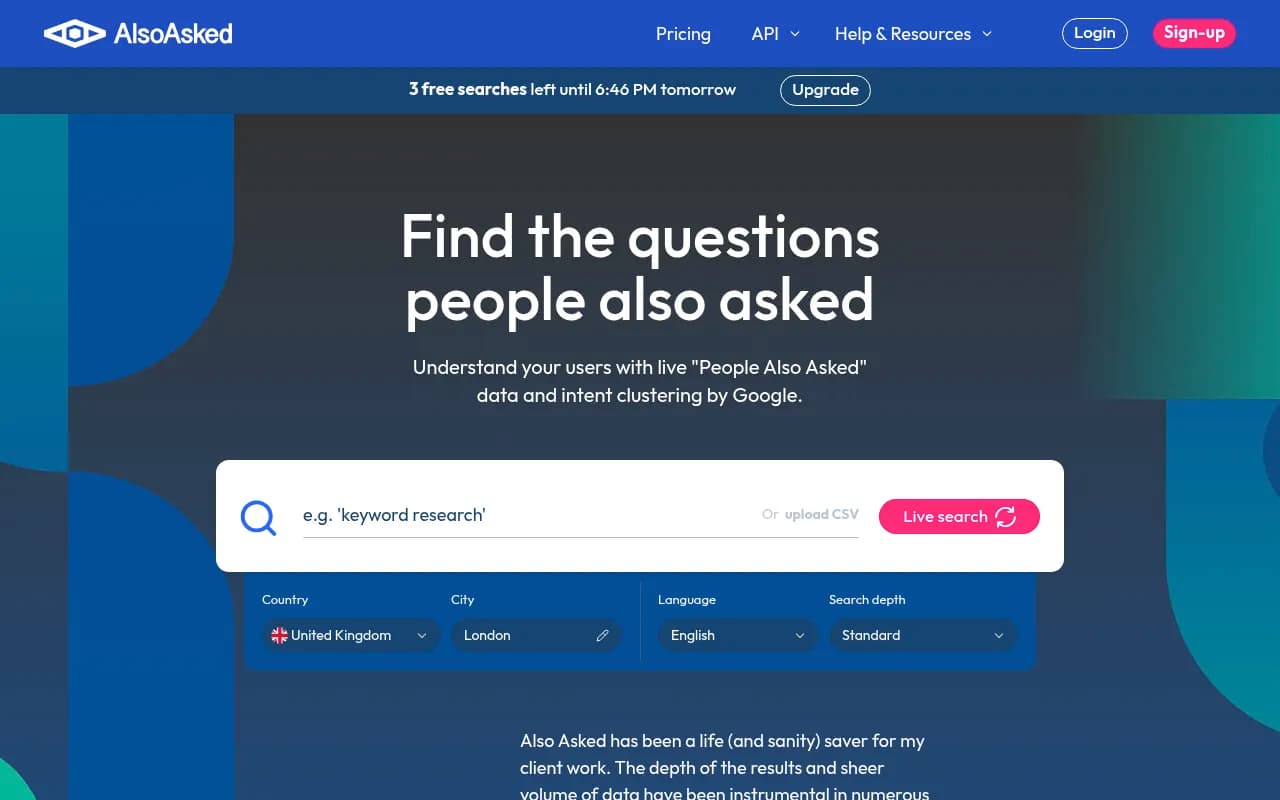
Tools like AlsoAsked pull live "People Also Ask" data, which correlates strongly with the sub-queries AI engines generate.
AnswerThePublic visualizes question clusters around a topic, which maps well to fan-out patterns.

For AI-specific sub-query data, Promptwatch tracks how AI engines decompose prompts and which sub-queries your content is already being cited for versus where you have gaps.

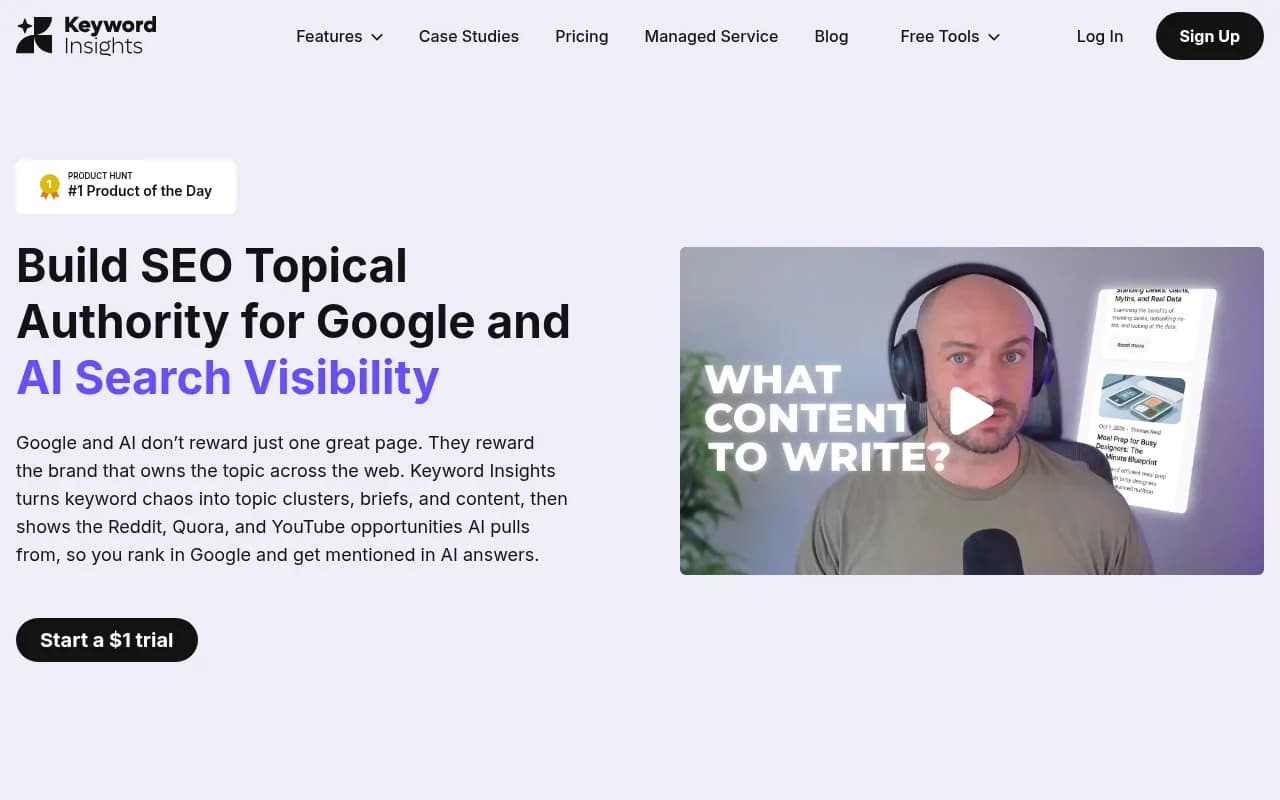
Keyword Insights clusters keywords by intent, which helps you identify distinct sub-query groups that should each get their own section.
Step 2: Structure your article around the sub-query tree
Once you have your sub-query map, the article structure writes itself. Each major sub-query type becomes an H2 section. Specific sub-queries within that type become H3s.
Here's a concrete example. Say you're writing about "project management software for remote teams." Your sub-query map might produce:
Definitional: What makes project management software "remote-friendly"? Feature-based: What features matter most for distributed teams? Comparison: Asana vs Monday vs Notion for remote teams Audience-specific: Best PM tools for small remote teams vs enterprise Pricing: How much does remote-team PM software cost? Process: How to set up a PM tool for a remote team Recency: What's changed in PM software in 2026?
Each of those becomes a section. The article isn't just long — it's structured to match how AI engines retrieve information. That's a meaningful difference.
The anatomy of a fan-out-optimized article
A well-structured fan-out article typically has:
- A clear definition or overview at the top (addresses definitional sub-queries)
- A "how it works" or "why it matters" section (addresses process sub-queries)
- A comparison section with a table (addresses comparison sub-queries)
- Audience-specific sections or callouts (addresses audience sub-queries)
- A pricing or feature breakdown (addresses feature/cost sub-queries)
- A FAQ section at the bottom (catches the long-tail sub-queries you might have missed)
The FAQ section is worth calling out specifically. It's not filler. It's a deliberate catch-all for sub-queries that don't fit neatly into your main sections. AI engines frequently pull from FAQ-style content because the question-answer format matches their retrieval pattern exactly.
Step 3: Write each section to be independently citable
This is the part most writers miss. AI engines don't always cite your whole page. They cite specific passages. Each section of your article needs to stand alone as a complete, useful answer to its sub-query.
That means:
- Start each section with a direct answer to the sub-question it addresses. Don't build up to the answer — lead with it.
- Include enough context that the passage makes sense without the surrounding article. AI models extract passages, not pages.
- Use specific numbers, examples, and named entities. Vague claims don't get cited. "Studies show PM tools improve productivity" is weak. "A 2025 Asana survey found remote teams using structured PM tools completed projects 28% faster" is citable.
- Keep paragraphs short. AI retrieval systems work better with dense, focused paragraphs than with long meandering ones.
A note on tables
Comparison tables are particularly valuable for fan-out optimization. When an AI engine processes a comparison sub-query, it's looking for structured data it can synthesize quickly. A well-formatted markdown table with clear column headers gives it exactly that.
Here's an example of how you might structure a comparison table for a fan-out-optimized article on content research tools:
| Tool | Best for | Fan-out data | Content briefs | Pricing |
|---|---|---|---|---|
| AlsoAsked | Sub-query mapping | PAA data | No | Freemium |
| AnswerThePublic | Question clustering | Search autocomplete | No | Freemium |
| Promptwatch | AI citation tracking | Real AI sub-queries | Yes (Content Agents) | From $99/mo |
| Keyword Insights | Keyword clustering | Intent grouping | Yes | From $58/mo |
| Frase | Content optimization | SERP-based | Yes | From $45/mo |
| MarketMuse | Topic modeling | Semantic coverage | Yes | Custom |
Tables like this address multiple sub-queries at once: "what tools help with X," "how do these tools compare," "what does it cost." One table, multiple retrieval events.
Step 4: Use content intelligence tools to find coverage gaps
Writing the article is step one. Finding what you missed is step two.
After your first draft, run it through a content optimization tool to check semantic coverage. The goal is to identify sub-query angles you haven't addressed yet.
Surfer SEO analyzes top-cited pages and shows you which terms and topics appear in them but not in your draft.
Clearscope grades your content against competitor pages and surfaces missing topic clusters.

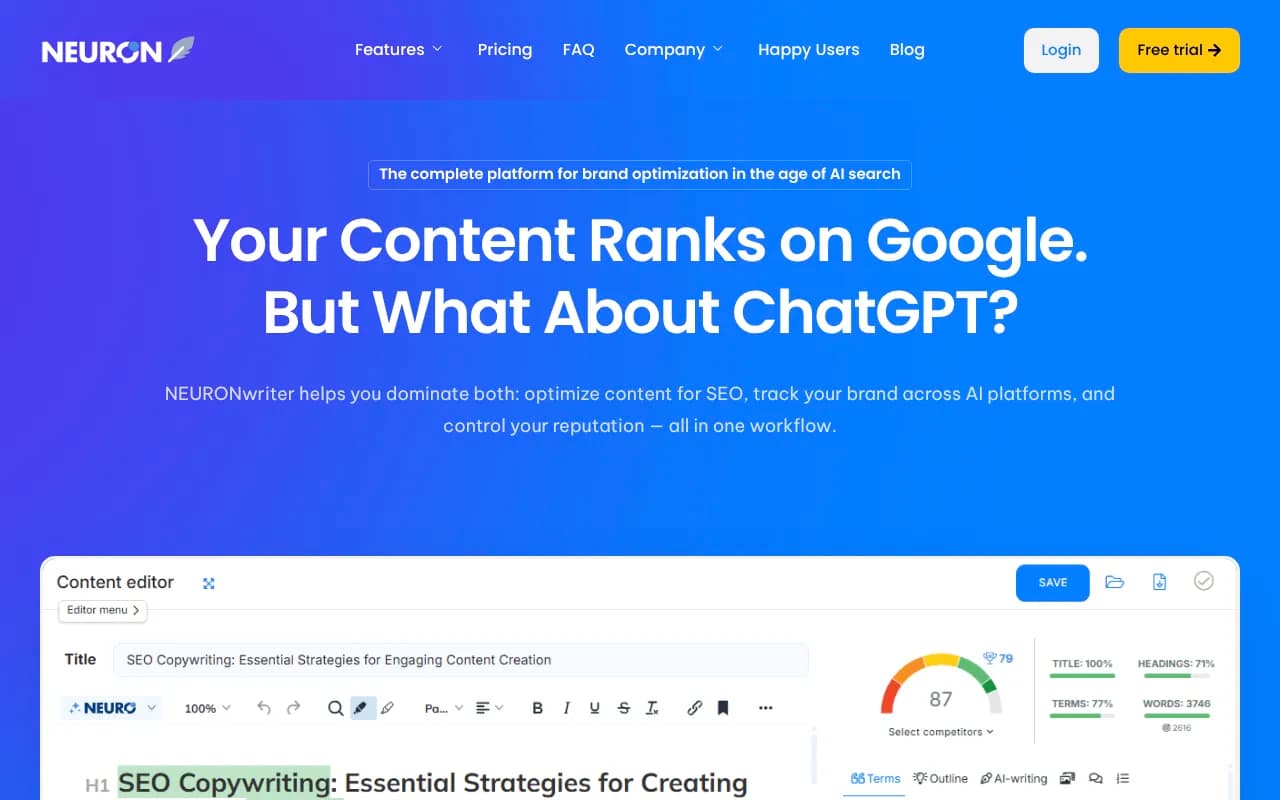
NeuronWriter combines NLP analysis with SERP data to show topical gaps.
The key is to treat these tools as sub-query gap finders, not just keyword stuffers. When a tool tells you that top-ranking pages mention "remote team onboarding" and your article doesn't, that's a sub-query you've missed. Add a section or a paragraph that addresses it directly.
Step 5: Track which sub-queries your page is getting cited for
Writing a fan-out-optimized article is not a one-time task. AI models update their training and retrieval behavior. New sub-queries emerge as user behavior shifts. Your competitors publish better content. You need to track performance and iterate.
The metrics that matter here are different from traditional SEO:
- Which AI engines are citing your page?
- Which sub-queries trigger citations to your page?
- Which sub-queries are your competitors being cited for that you're not?
- How often does your page appear in AI responses versus competitor pages?
Promptwatch's Answer Gap Analysis shows exactly which prompts competitors are being cited for but you're not. That's a direct feed of sub-query opportunities you can use to update existing articles or plan new ones.
For a simpler starting point, Otterly.AI tracks brand mentions across ChatGPT, Perplexity, and Google AI Overviews.
Otterly.AI

AthenaHQ monitors AI visibility across engines and surfaces which topics you're winning and losing.

The feedback loop looks like this: publish → track citations → identify missing sub-queries → update article → track again. Most teams do this quarterly. If you're in a competitive category, monthly is better.
Common mistakes that kill fan-out coverage
A few patterns consistently undermine fan-out-optimized content:
Writing for one persona. Fan-out sub-queries often include audience-specific variants ("for small businesses," "for enterprise," "for beginners"). If your article only speaks to one audience, you're invisible to the others.
Burying the answer. AI retrieval systems pull passages, not pages. If your answer to a sub-question is buried in paragraph four of a section, after three paragraphs of context-setting, the retrieval system may not surface it. Lead with the answer.
Avoiding comparisons. Many writers avoid naming competitors because it feels risky. But comparison sub-queries are among the most common fan-out patterns. If you don't address "X vs Y" on your page, someone else will, and they'll get cited for it.
Ignoring the FAQ. A FAQ section at the bottom of your article is not a 2015 SEO trick. It's a structured way to address the long-tail sub-queries that don't fit your main sections. Every fan-out-optimized article should have one.
Publishing once and forgetting. Fan-out sub-queries change. New questions emerge. Update your articles at least quarterly to stay relevant to current AI retrieval patterns.
A practical workflow for your content team
Here's how to operationalize this without making every article a six-week project:
-
Research phase (1–2 hours): Use AlsoAsked or AnswerThePublic to map sub-queries. Supplement with a manual brainstorm using the question types above.
-
Structure phase (30 minutes): Group sub-queries by type. Assign each group to an H2 section. List specific sub-queries as H3s within each section.
-
Writing phase: Write each section to be independently citable. Lead with the answer. Use tables for comparisons. Include specific data points.
-
Gap check (30 minutes): Run the draft through Surfer SEO, Clearscope, or NeuronWriter. Add sections for any missing sub-query angles.
-
Publish and track: Set up tracking in Promptwatch or a similar tool to monitor which sub-queries your page gets cited for.
-
Quarterly update: Review citation data, identify gaps, update the article.
This workflow adds maybe two to three hours to a typical article. The return is a page that competes in AI search, not just traditional search.
The bigger picture
Query fan-out isn't a technical quirk you need to work around. It's a signal about what AI search engines actually want: comprehensive, well-structured content that addresses a topic from multiple angles. That's also what human readers want, which is why fan-out-optimized articles tend to perform better in traditional search too.
The brands getting cited most often in AI responses in 2026 aren't necessarily the ones with the most backlinks or the highest domain authority. They're the ones whose content reliably answers the full range of questions AI engines are trying to synthesize. That's a content strategy problem, and it's one you can solve with the right research process and the right tracking tools.
Start with one article. Map the sub-queries. Structure around them. Track the results. The data will tell you what to do next.