Key takeaways
- When a user types one prompt into ChatGPT or Perplexity, the AI fires 8-12 parallel sub-queries behind the scenes — this is called query fan-out, and your content needs to satisfy those hidden queries, not just the original one.
- 95% of fan-out sub-queries show zero monthly search volume in traditional keyword tools, which means Ahrefs, Semrush, and Google Keyword Planner are essentially blind to the queries that actually determine AI citation.
- A Surfer SEO study of 173,902 URLs found that 68% of pages cited in AI Overviews were NOT in the top 10 organic results — strong traditional rankings don't predict AI visibility.
- AI models use fan-out as a confidence mechanism: they cross-check answers across multiple angles before surfacing a source. If your content only covers one angle, you're filtered out.
- The practical fix is topical coverage, not keyword density — you need content that addresses the full cluster of sub-questions an AI would generate around your topic.
If you've been doing keyword research the same way since 2022, you're optimizing for a search engine that's no longer the one making decisions about your visibility.
Traditional keyword research assumes a simple model: user types query, search engine matches pages, highest-authority page wins. That model still works for Google's blue-link results. But it has almost nothing to do with how ChatGPT, Perplexity, Google AI Mode, or Gemini actually retrieve and cite content.
The mechanism that breaks everything is called query fan-out. Understanding it changes how you think about content strategy entirely.
What query fan-out actually is
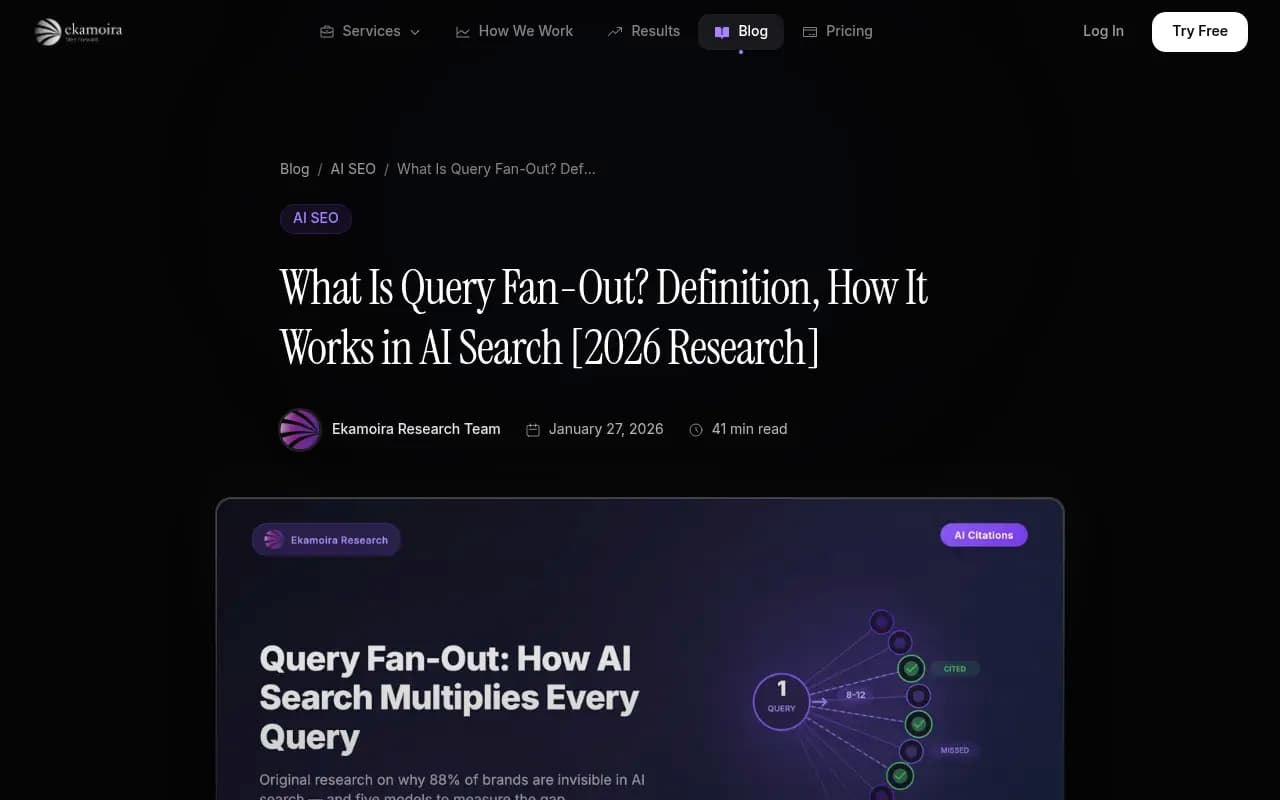
When a user types "best project management tools for remote teams" into ChatGPT, the model doesn't look up that exact phrase. It decomposes the prompt into a set of parallel sub-queries and retrieves content for each one simultaneously. Something like:
- "top project management software 2026"
- "remote team collaboration features comparison"
- "project management pricing free vs paid"
- "enterprise vs small team PM tools"
- "project management tools pros and cons"
- "best PM software Reddit recommendations"
- "Asana vs Monday vs Notion 2026"
- "project management tools complaints limitations"
That's eight queries from one prompt. Research analyzing 72,000+ AI-generated queries across 8,700+ prompts found that a single question to ChatGPT or Gemini routinely triggers 8-10 parallel, hyper-specific sub-queries before an answer is returned. Some prompts generate 12 or more.
The user sees one clean answer. Behind it is a retrieval process that looks nothing like a traditional search.
Why traditional keyword tools can't see this
Here's the core problem: 95% of fan-out sub-queries show zero monthly search volume in keyword tools.
Google Keyword Planner, Ahrefs, Semrush — these tools measure how often humans type specific phrases into search boxes. Fan-out queries aren't typed by humans. They're generated by AI models as internal retrieval steps. They're hyper-specific, often include qualifiers like "2025 2026," "free vs paid," "pros and cons," or "complaints," and they vary with every search.
Research from Ekamoira found that 73% of fan-out queries change with every search. The AI doesn't fire the same sub-queries twice. It generates them fresh based on context, recency signals, and what it's trying to confirm.
This means your keyword research process, however thorough, is measuring a different game. You can rank #1 for "project management tools" and still be completely invisible in ChatGPT's answer about project management tools — because the AI never retrieved your page for any of the eight sub-queries it actually fired.
The Surfer SEO finding makes this concrete: 68% of pages cited in AI Overviews were not in the top 10 organic results. Two decades of SEO logic says top rankings equal visibility. For AI search, that correlation is weak.
Fan-out as a confidence mechanism, not a discovery mechanism
This is the part most SEO guides miss. Fan-out isn't how AI finds content — it's how AI confirms answers before surfacing them.
From the model's perspective, a single source is a single data point. That's not enough confidence to stake an answer on. So the model cross-checks: it looks for consensus across review sites, Reddit, professional forums, and authoritative pages. It checks for recency signals. It looks for pricing anchors, risk signals ("complaints," "limitations"), and comparison data.
Only sources that survive this cross-examination appear in the final answer. If your content covers one angle of a topic but not the others, you might get retrieved for one sub-query and then outweighed by competitors who appear across multiple sub-queries.
This is why topical authority matters so much more in AI search than it did in traditional SEO. It's not about having the single best page on a topic. It's about having enough coverage that the AI keeps finding you across multiple retrieval steps.
How fan-out behavior differs by platform
Not all AI search engines fan out the same way.
ChatGPT's fan-out behavior is particularly aggressive. Analysis of ChatGPT's search patterns shows it uses "site:" searches to verify brand information, cites brands more frequently than other AI engines, and has quadrupled its fan-out rate compared to earlier versions. It also heavily weights Reddit, YouTube, and third-party review content — not just official brand pages.
Perplexity tends to fan out with more explicit "vs" and comparison queries. It's looking for differentiation signals.
Google AI Mode fans out across Google's own index, which means traditional SEO signals still matter more here than on ChatGPT or Perplexity. But even Google AI Mode retrieves content from pages outside the top 10 organic results.
The practical implication: your content strategy needs to account for where the AI is looking, not just what it's looking for. That means Reddit threads, YouTube videos, and third-party listicles are part of your AI visibility footprint — not just your own website.
The topical coverage gap most brands have
Here's what this looks like in practice. Say you sell project management software. Your website probably has:
- A homepage
- A features page
- A pricing page
- Maybe a blog with some "how to" content
When ChatGPT fans out on "best project management tools for remote teams," it's looking for comparison content, pricing breakdowns, user complaints, Reddit discussions, and recent reviews. Your features page answers exactly one of those sub-queries. Your pricing page answers another. Everything else — the comparison angle, the "pros and cons" angle, the "complaints and limitations" angle, the "2026 update" angle — is either missing from your site or buried somewhere that AI crawlers haven't indexed.
Your competitors who show up in that ChatGPT answer probably have a comparison page, a "limitations of [competitor]" page, a "best alternatives" page, and a blog post that was published in the last six months. They're covering the full fan-out cluster, not just the primary keyword.
This is the gap. And it's why brands with strong traditional SEO are often surprised to find themselves invisible in AI search.
What fan-out means for content strategy
The shift is from keyword targeting to topic cluster coverage. Instead of asking "what keywords should I rank for," the question becomes "what are all the sub-questions an AI would generate when a user asks about my category?"
Some practical ways to think about this:
Cover the comparison angle. Fan-out queries almost always include "X vs Y" and "alternatives to X" sub-queries. If you don't have comparison content, you're missing a significant portion of the retrieval surface.
Cover the risk angle. AI models specifically look for "complaints," "limitations," and "pros and cons" content. This is counterintuitive for most marketing teams, but publishing honest limitation content actually improves your AI visibility because the model is looking for it.
Cover the recency angle. Fan-out queries frequently include year qualifiers. Content that's clearly dated 2025 or 2026 gets weighted more heavily in freshness-sensitive sub-queries.
Cover the social proof angle. Reddit and YouTube content directly influences AI citations. If your brand isn't mentioned positively in community discussions, you're missing a channel that most keyword tools don't even track.
Cover the pricing angle. "Free," "pricing," and "cost" appear in a significant percentage of fan-out queries. If your pricing content is thin or hidden behind a sales call, the AI can't retrieve useful information about it.
Tools that help you work with fan-out data
Traditional keyword tools aren't built for this. But some platforms are starting to address the gap.
For understanding what sub-queries AI models are actually generating, Promptwatch tracks prompt-level data including query fan-outs — showing how one prompt branches into sub-queries and which of those sub-queries your content is visible for. Its Answer Gap Analysis identifies exactly which angles competitors are covering that you're not.

For content coverage analysis, tools like MarketMuse and Clearscope help map topical coverage, though they're built around traditional search signals rather than AI retrieval patterns.

For tracking whether your content is actually getting cited after you publish it, AI visibility platforms give you page-level citation data across ChatGPT, Perplexity, and other models.
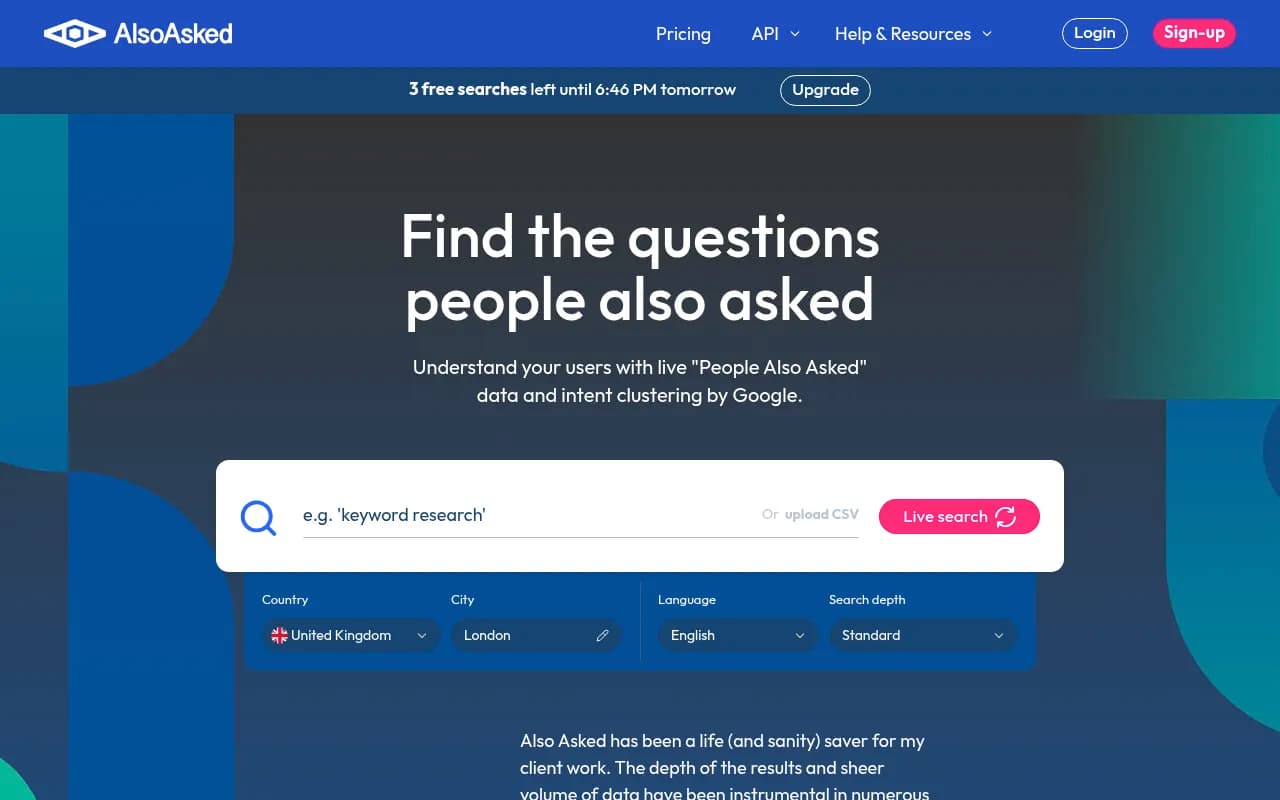
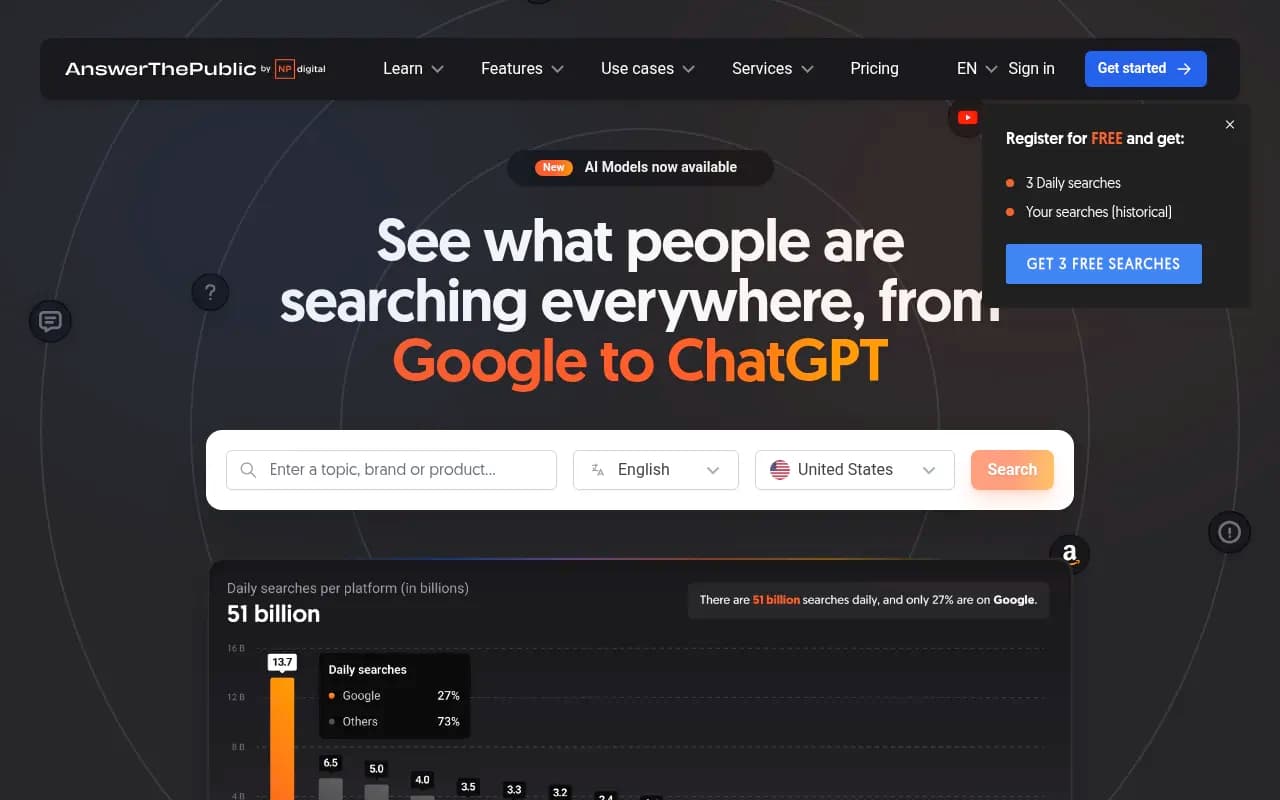
For understanding the question clusters around your topics — which is the closest traditional-SEO equivalent to fan-out mapping — tools like AlsoAsked and AnswerThePublic surface related questions that often correlate with fan-out sub-queries.
A comparison: traditional keyword research vs fan-out optimization
| Dimension | Traditional keyword research | Fan-out optimization |
|---|---|---|
| Data source | Human search volume in keyword tools | AI-generated sub-queries, citation data |
| Query visibility | Phrases people type | Hidden retrieval queries (95% have 0 search volume) |
| Success metric | Organic ranking position | AI citation frequency across models |
| Content target | Single best page per keyword | Full topic cluster coverage |
| Social signals | Mostly ignored | Reddit, YouTube directly influence citations |
| Recency | Less critical | Year qualifiers appear in ~6% of all fan-outs |
| Competitor analysis | Who ranks for my keywords | Who appears across my fan-out cluster |
| Tools | Ahrefs, Semrush, GKP | AI visibility platforms, citation trackers |
The window that exists right now
Because fan-out queries don't show up in keyword tools, most brands aren't actively competing for them. The brands showing up in AI answers right now are largely there by accident — they happened to have broad topical coverage from years of content production, or they got cited in Reddit threads they didn't create.
That creates a real opportunity. Publishing content that deliberately covers the full fan-out cluster for your category — comparisons, limitations, pricing breakdowns, use-case specifics, recent updates — puts you ahead of competitors who are still optimizing for keyword rankings that AI models don't directly use.
The window won't stay open. As more brands understand fan-out, the competition for AI citation will look more like traditional SEO competition. But right now, the bar is lower than it looks.
What to actually do next
Start by picking two or three of your most important product or category queries. For each one, manually generate the fan-out cluster: what are the 8-10 sub-questions an AI would need to answer to respond confidently to that prompt? You can do this by asking ChatGPT directly — "what questions would you need to answer to respond to [query]?" — or by looking at the sources it cites in its actual response.
Then audit your existing content against that cluster. Where are the gaps? Which angles are you missing entirely? Which pages exist but are thin or outdated?
That gap list is your content roadmap. Not a keyword list. A coverage map.
The brands that figure this out in 2026 will have a meaningful head start on AI search visibility. The ones that keep optimizing for keyword rankings alone will keep wondering why their traffic from ChatGPT is zero despite strong organic positions.
The search engine changed. The research process needs to change with it.