Kontent.ai Review 2026
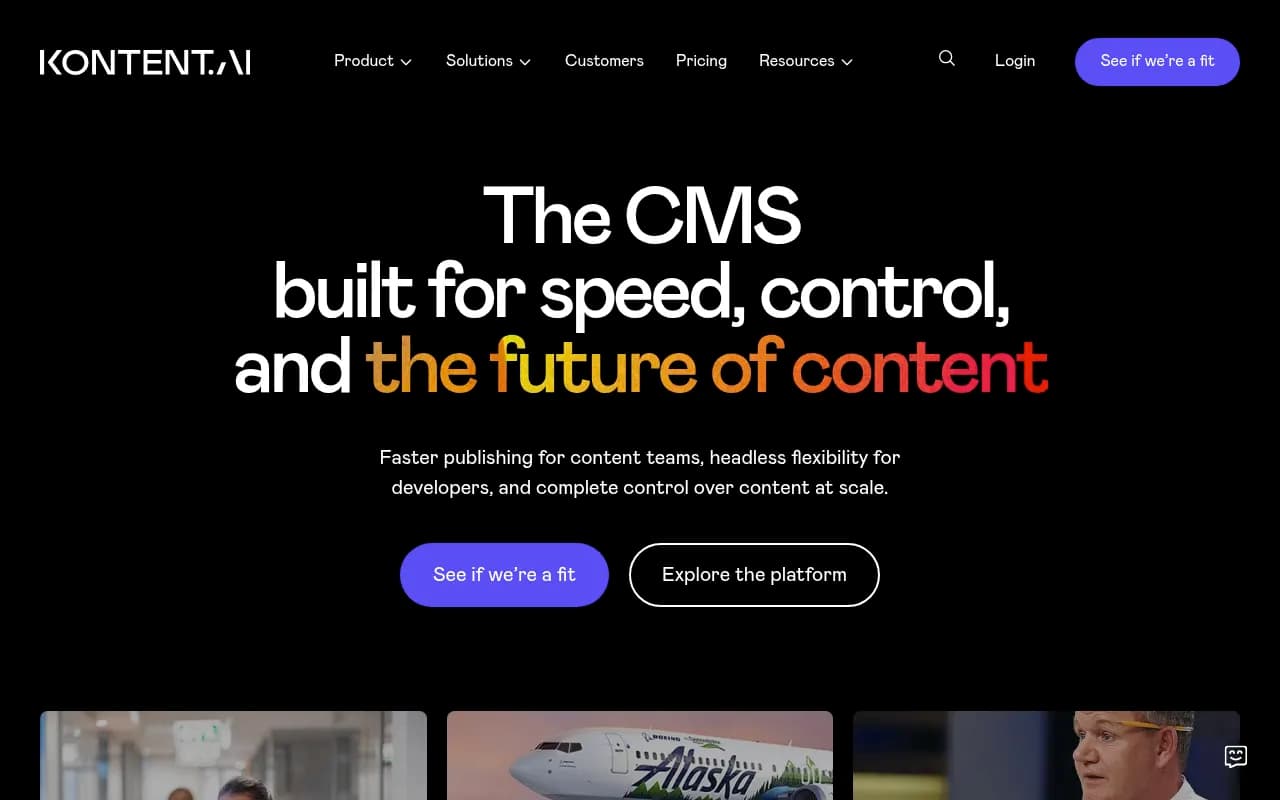
Headless CMS with AI tools that boost creativity and efficiency. Helps content teams write faster, refine ideas, and maintain brand consistency.
Key Takeaways:
• Agentic CMS approach: AI agents automate content audits, governance, and localization tasks that traditionally take months, freeing teams to focus on creative work rather than busywork • Dual audience design: Content teams get intuitive publishing tools while developers get headless flexibility with open APIs and composable architecture • Proven enterprise results: Forrester TEI study shows 320% ROI and 90% faster content deployment; real customers report 35% faster content creation (Alaska Airlines) and 70% traffic increases (Gordon Ramsay Restaurants) • Security-first platform: SOC 2, ISO 27001, HIPAA, and GDPR compliant with enterprise-grade governance built in • Best for: Mid-to-large enterprises and agencies managing complex multi-channel content operations across multiple brands, regions, or languages
Kontent.ai positions itself as an "Agentic CMS" -- a headless content management system where AI agents handle the repetitive governance, audit, and localization work that traditionally bogs down content operations. It's built for enterprises that need to publish content at scale across multiple channels while maintaining strict brand control and security standards. The platform is used by major brands like WebMD Ignite, Alaska Airlines, and Gordon Ramsay Restaurants to dramatically speed up content publishing without sacrificing quality or compliance.
What sets Kontent.ai apart from traditional CMSs is its dual focus: empowering non-technical content teams with intuitive tools while giving developers the headless flexibility they demand. It's designed to eliminate the classic tension between business users who want speed and developers who want architectural freedom. The result is a platform where marketing teams can launch campaigns in minutes instead of months, while engineering teams maintain full control over the tech stack.
Core Capabilities
AI-Powered Content Automation: The platform's AI agents automate tasks that traditionally require manual effort -- content audits, governance checks, localization workflows, and quality assurance. Instead of content teams spending weeks reviewing content for brand compliance or translating materials across languages, AI agents handle these processes in minutes. This is what Kontent.ai calls its "Agentic CMS" approach -- using AI not just for content generation, but for the operational workflows that slow down publishing.
Headless Architecture with Open APIs: Kontent.ai is fully headless, meaning content is stored separately from presentation and delivered via APIs to any channel -- websites, mobile apps, digital signage, IoT devices, or voice assistants. Developers get GraphQL and REST APIs, webhooks, and SDKs for all major languages and frameworks (JavaScript, .NET, PHP, Java, Python, Ruby). The platform integrates with modern frontend frameworks like Next.js, Gatsby, Nuxt, and supports JAMstack architectures. Unlike monolithic CMSs, developers aren't locked into proprietary templating systems.
Multi-Channel Publishing: Content created once in Kontent.ai can be published instantly to unlimited channels without reformatting. The platform handles content modeling, so teams define content types (articles, products, landing pages) with specific fields and validation rules. Content editors fill in these structured fields, and the content automatically adapts to each channel's requirements. This eliminates the need to recreate content for web, mobile, email, and other touchpoints.
Content Governance and Workflows: Enterprise-grade workflow management with customizable approval chains, role-based permissions, and audit trails. Teams can set up multi-stage review processes where content moves from draft to legal review to final approval before publishing. The platform tracks every change with version history and rollback capabilities. Governance rules can enforce brand guidelines automatically -- flagging content that violates tone, terminology, or compliance requirements before it goes live.
Localization and Translation Management: Built-in localization workflows support content translation across unlimited languages and regional variants. Teams can manage translations in-house or integrate with translation services like Smartling, Transifex, or Phrase. The platform tracks translation status, handles fallback languages, and ensures content variants stay synchronized. AI agents can automate translation quality checks and flag inconsistencies across language versions.
Content Modeling and Reusability: Kontent.ai's content modeling system lets teams define reusable content components -- hero sections, product cards, testimonials, CTAs -- that can be mixed and matched across pages. This modular approach means updating a component in one place updates it everywhere it's used. Content models include validation rules, default values, and conditional logic to guide editors and prevent errors. The platform supports complex content relationships and taxonomies for organizing large content libraries.
Collaboration Tools: Real-time collaboration features let multiple team members work on content simultaneously without conflicts. Inline commenting, task assignments, and notifications keep teams aligned. The platform integrates with Slack and Microsoft Teams for workflow notifications. Content calendars provide visibility into what's being published when, helping teams coordinate campaigns across channels.
Asset Management: Digital asset management (DAM) capabilities for storing, organizing, and delivering images, videos, PDFs, and other media files. The platform includes automatic image optimization, responsive image delivery, and CDN integration for fast global performance. Assets can be tagged, searched, and reused across content. The DAM supports version control and usage tracking to see where assets are deployed.
Analytics and Insights: Content performance tracking shows which content is being used, where it's published, and how it's performing. Teams can identify underutilized content, track content ROI, and make data-driven decisions about what to create next. The platform integrates with Google Analytics, Adobe Analytics, and other analytics tools for deeper insights.
Developer Experience: Kontent.ai provides CLI tools, migration scripts, and extensive documentation for developers. The platform supports infrastructure-as-code approaches where content models and configurations are version-controlled alongside application code. Developers can set up local development environments that mirror production, test content changes before deployment, and automate content migrations. The platform's API-first design means developers can build custom integrations and extend functionality without vendor lock-in.
Who Is It For
Kontent.ai is built for mid-to-large enterprises and agencies managing complex, multi-channel content operations. The ideal customer is an organization publishing content across multiple brands, regions, or languages where governance, compliance, and brand consistency are critical. Think global B2B companies with 50+ content creators, healthcare organizations with HIPAA requirements, financial services firms with regulatory compliance needs, or retail brands managing hundreds of product pages across international markets.
Specific personas include: Enterprise content teams (10-100+ people) coordinating campaigns across web, mobile, email, and other channels who need workflow automation and approval processes. Digital agencies managing content for multiple clients who need to keep client content separate, enforce brand guidelines per client, and scale operations without adding headcount. E-commerce brands with large product catalogs that need to publish product information to websites, marketplaces, mobile apps, and in-store displays from a single source. Healthcare and financial services organizations that require strict security, audit trails, and compliance features. Global brands managing content in 10+ languages who need translation workflows and regional content variants.
Kontent.ai is less suitable for small businesses, solo creators, or simple blogs. If you're a startup with 2-3 people publishing a few blog posts per week, the platform's enterprise features and pricing will be overkill. Similarly, if you need a traditional page builder with drag-and-drop design tools, Kontent.ai's headless approach requires developer involvement for frontend implementation. The platform assumes you have (or will hire) developers to build the presentation layer.
Integrations and Ecosystem
Kontent.ai integrates with a wide range of tools across the modern marketing and development stack. On the development side, it offers official SDKs and starter templates for React, Vue, Angular, Next.js, Gatsby, Nuxt, .NET, PHP, and more. The platform connects with popular frontend frameworks and static site generators, making it easy for developers to build fast, modern websites.
For marketing and operations, Kontent.ai integrates with translation services (Smartling, Phrase, Transifex), analytics platforms (Google Analytics, Adobe Analytics), e-commerce systems (Shopify, BigCommerce, commercetools), search tools (Algolia, Elasticsearch), and personalization engines (Optimizely, Dynamic Yield). The platform also connects with collaboration tools like Slack, Microsoft Teams, and Jira for workflow notifications and project management.
The platform provides webhooks for real-time event notifications, allowing teams to trigger custom workflows when content is published, updated, or deleted. This enables integrations with build systems, CDNs, and custom applications. Kontent.ai also offers a Management API for programmatic content creation and updates, useful for importing content from legacy systems or syncing data from external sources.
Kontent.ai has an active community on Discord where users share integrations, best practices, and custom solutions. The company maintains a marketplace of pre-built integrations and custom elements that extend the platform's functionality.
Pricing and Value
Kontent.ai uses usage-based pricing rather than fixed tiers, which means costs scale with your actual usage of the platform. Pricing factors include the number of content items, API calls, users, and projects. The company offers a Developer plan for small projects and prototyping, a Scale plan for growing businesses, and custom Enterprise plans for large organizations with specific security, compliance, or support requirements.
While exact pricing isn't publicly listed (you need to contact sales for a quote), the platform is positioned as an enterprise solution with pricing to match. Expect to invest several thousand dollars per month for a production deployment at scale. However, a commissioned Forrester Total Economic Impact study found that a composite organization achieved 320% ROI over three years by consolidating tools, reducing development time by 90%, and improving content team productivity.
For enterprises currently managing content across multiple disconnected systems -- a traditional CMS, a separate DAM, translation management tools, and custom scripts for governance -- Kontent.ai's value proposition is consolidation. By replacing tool sprawl with a single platform that automates workflows, companies can reduce software costs, eliminate duplicate work, and free teams to focus on strategic initiatives rather than operational busywork.
The platform includes enterprise-grade support with dedicated customer success managers, onboarding assistance, and training resources. For agencies, Kontent.ai offers partner programs with co-marketing opportunities and technical support for client implementations.
Strengths and Limitations
Strengths: Kontent.ai excels at enterprise content operations where governance, security, and multi-channel publishing are paramount. The platform's AI-powered automation genuinely saves time on tedious tasks like content audits and localization workflows. Its headless architecture gives developers true flexibility to build modern, performant frontends without CMS constraints. The security and compliance features (SOC 2, ISO 27001, HIPAA, GDPR) meet enterprise requirements that many competitors can't match. Real customer results are impressive -- WebMD reduced publishing time from months to minutes, Alaska Airlines achieved 35% faster content creation, and Gordon Ramsay Restaurants saw 70% traffic growth. The platform has been recognized as a leader in web content management on G2 for six consecutive years based on actual user reviews, indicating strong customer satisfaction.
Limitations: Kontent.ai requires developer resources to implement. Unlike all-in-one platforms with built-in page builders and themes, you need frontend developers to build the presentation layer. This makes initial setup more complex and potentially more expensive than traditional CMSs. The usage-based pricing model, while flexible, can be harder to predict than fixed-tier pricing -- costs may increase unexpectedly if usage spikes. The platform is overkill for small teams or simple content needs; if you're publishing a basic blog or marketing site with minimal governance requirements, simpler tools like WordPress or Webflow will be faster and cheaper to implement. Some users report a learning curve for content modeling -- defining content types and relationships requires upfront planning and may feel abstract to non-technical users initially.
Bottom Line
Kontent.ai is the right choice for enterprises and agencies that need to publish content at scale across multiple channels while maintaining strict governance, brand consistency, and security standards. If you're managing complex content operations with 10+ content creators, publishing to multiple touchpoints, operating in regulated industries, or coordinating content across global markets, Kontent.ai's automation and enterprise features will deliver measurable ROI. The platform shines when replacing tool sprawl and manual workflows with a unified system that gives both content teams and developers what they need.
Best use case in one sentence: Large enterprises and agencies managing multi-channel content operations across brands, regions, or languages who need AI-powered automation, developer flexibility, and enterprise-grade governance in a single platform.
Similar and alternative tools to Kontent.ai