Key Takeaways
- Contentstack is a Forrester-recognized Digital Experience Platform (DXP) that goes beyond headless CMS with built-in personalization, no-code automation, and integrated front-end hosting—ideal for enterprises needing a complete, governed content stack
- Agility CMS offers 20+ years of proven stability with enterprise-grade features, strong developer experience, and flexible deployment options for organizations prioritizing reliability and ease of use
- Kontent.ai provides an intuitive, collaboration-focused interface with minimal learning curve, but lacks the enterprise-level governance, security, and scalability features required for complex, multi-brand operations
- All three platforms support headless architecture and API-first delivery, but differ significantly in their approach to governance, workflow complexity, and ecosystem completeness
- The right choice depends on your organization's size, technical resources, governance requirements, and whether you need a standalone CMS or a full DXP with personalization and orchestration capabilities
Why Enterprise Content Platforms Matter for AI-Ready Content
Enterprise content operations in 2026 are fundamentally different from even two years ago. Organizations now manage content for traditional web channels, mobile apps, voice assistants, and—increasingly—AI search engines like ChatGPT, Perplexity, Claude, and Google AI Overviews. Your content platform must support structured, semantically rich content that AI models can understand, cite, and recommend.
Traditional monolithic CMS platforms struggle with this reality. They lock content into page templates, make it difficult to reuse content across channels, and lack the API-first architecture needed to feed content to AI systems in real time. Headless CMS platforms solve these problems by separating content management from presentation, storing content as structured data accessible via APIs.
But not all headless CMS platforms are built for enterprise scale. As you evaluate options, you need to consider:
- Governance and security: Role-based permissions, approval workflows, audit trails, compliance certifications
- Scalability: Performance under load, global CDN delivery, API rate limits, concurrent user support
- Developer experience: API quality, SDK availability, documentation depth, integration ecosystem
- Editor experience: Interface intuitiveness, preview capabilities, collaboration features, learning curve
- AI readiness: Structured content models, semantic markup, API performance for real-time delivery
- Total cost of ownership: Licensing, implementation costs, ongoing maintenance, vendor lock-in risk
This guide compares three enterprise-grade headless CMS platforms—Contentstack, Agility CMS, and Kontent.ai—across these dimensions to help you make an informed decision.
Platform Overview: Contentstack, Agility CMS, and Kontent.ai
Contentstack: The Full-Stack DXP Approach
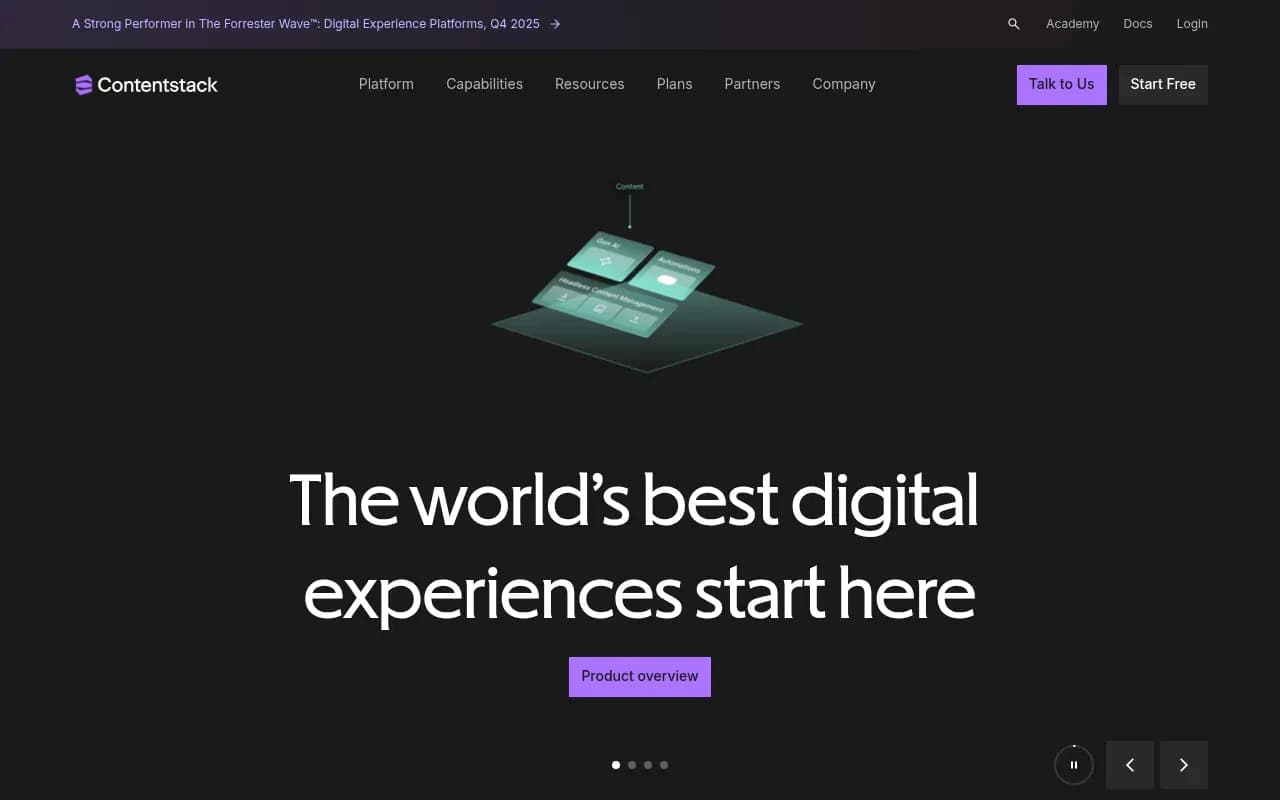
Contentstack positions itself as an Adaptive Digital Experience Platform (DXP), not just a headless CMS. It was recognized as a Strong Performer in The Forrester Wave™: Digital Experience Platforms, Q4 2025, earning 5 out of 5 for vision, innovation, and application architecture.
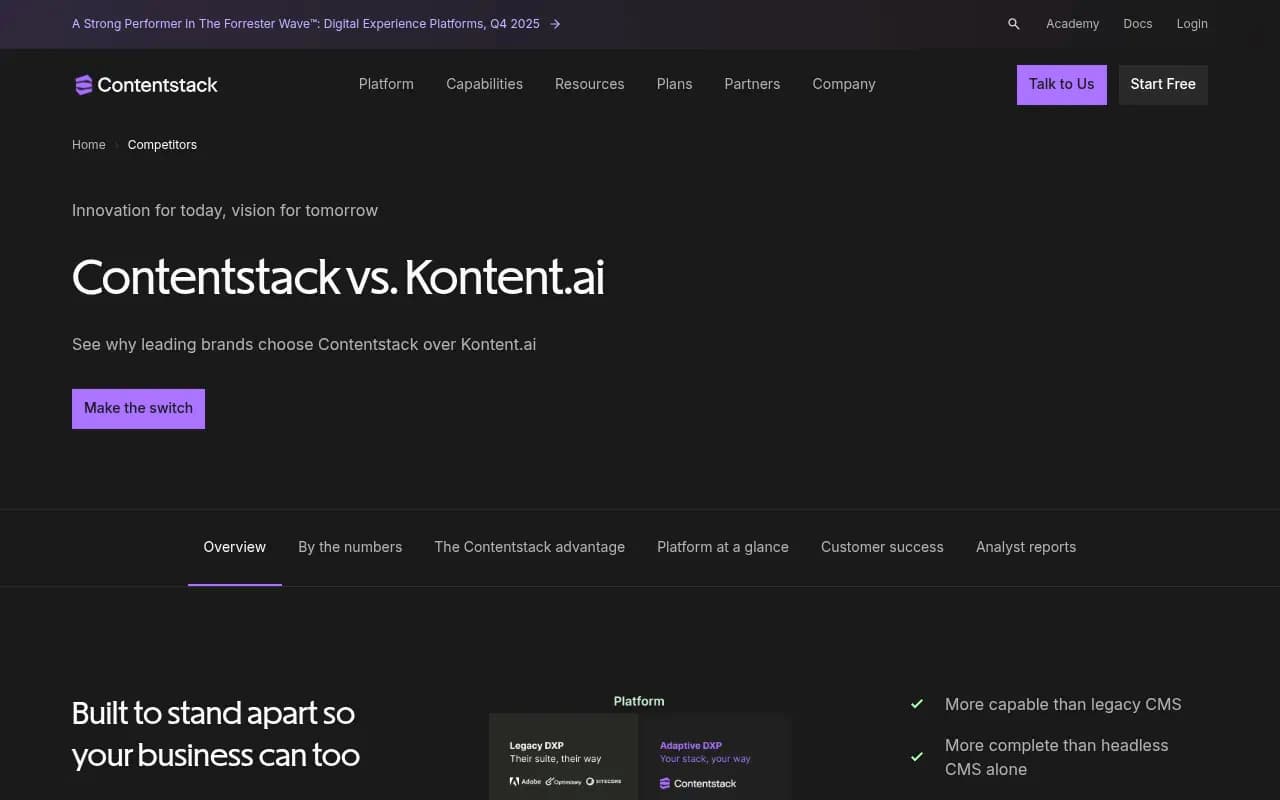
The platform includes:
- Headless CMS core: API-first content management with structured content modeling
- Built-in personalization engine: Real-time content personalization without third-party tools
- No-code automation: Visual workflow builder for content operations and approvals
- Integrated front-end hosting: Deploy and host front-end applications directly from the platform
- Enterprise governance: Advanced workflows, role-based access control, audit logging, compliance certifications
Contentstack targets large enterprises running complex, multi-brand, multi-market digital operations. Its pricing reflects this positioning—expect higher costs than standalone headless CMS options, but potentially lower total cost of ownership if you can consolidate multiple tools.
Agility CMS: Proven Stability with Modern Architecture
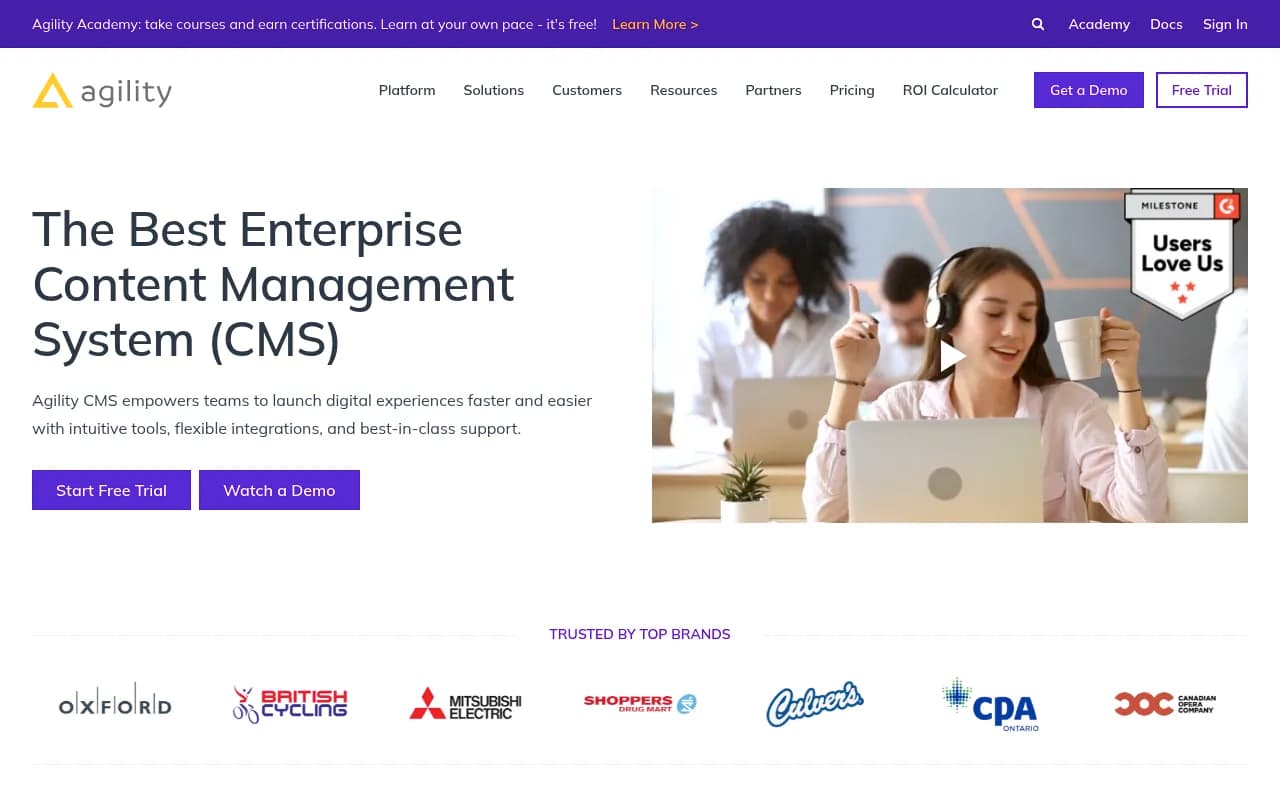
Agility CMS has been in the market for over 20 years, evolving from a traditional CMS to a modern headless platform. It emphasizes reliability, ease of use, and flexible deployment options.
Key features include:
- Hybrid headless architecture: Supports both headless API delivery and traditional page-based publishing
- Page management: Built-in page modeling and URL management—rare among pure headless CMS platforms
- Strong developer experience: Well-documented APIs, SDKs for major frameworks, active community
- Flexible hosting: Deploy on Agility's infrastructure or bring your own hosting
- Competitive pricing: More accessible than Contentstack for mid-market organizations
Agility CMS appeals to organizations that want modern headless capabilities without abandoning page-centric content management entirely. It's particularly strong for teams transitioning from traditional CMS platforms.
Kontent.ai: Collaboration-First Simplicity
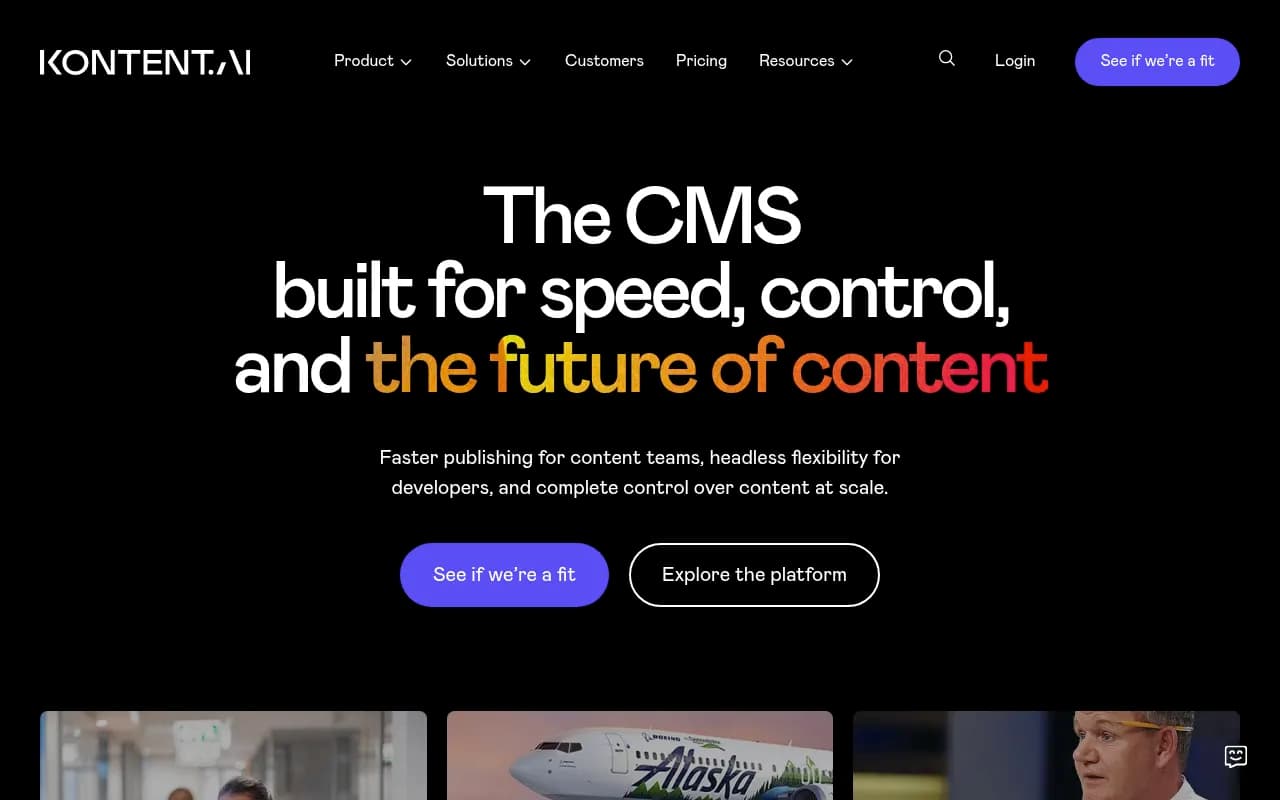
Kontent.ai (formerly Kentico Kontent) focuses on making content collaboration easy for non-technical users. It offers an intuitive interface with minimal learning curve and strong workflow features.
Core capabilities:
- Intuitive content editing: Clean, modern interface designed for marketers and content creators
- Collaboration features: Comments, task assignments, content approval workflows
- Content modeling: Flexible content types and relationships
- Multi-language support: Built-in localization and translation workflows
- API-first delivery: RESTful and GraphQL APIs for content delivery
Kontent.ai works well for small to mid-sized organizations prioritizing ease of use over complex governance. However, it lacks some enterprise-grade features found in Contentstack and Agility CMS.
Head-to-Head Comparison: Key Capabilities
Enterprise Governance and Security
Contentstack leads here with comprehensive governance features built for Fortune 500 requirements:
- Advanced role-based access control with granular permissions
- Multi-stage approval workflows with conditional routing
- Complete audit trails for compliance (SOC 2, ISO 27001, GDPR, HIPAA)
- Content versioning with rollback capabilities
- Scheduled publishing with timezone support
- Content locking to prevent simultaneous edits
Agility CMS offers solid enterprise governance:
- Role-based permissions and approval workflows
- Content versioning and rollback
- Scheduled publishing
- SOC 2 Type II compliance
- Audit logging for content changes
Kontent.ai provides basic governance suitable for smaller teams:
- Role-based permissions (fewer granularity options)
- Simple approval workflows
- Content versioning
- Scheduled publishing
- Limited audit capabilities compared to enterprise platforms
According to Contentstack's comparison page, "Contentstack is built for the governance, security, & scalability that enterprises need. Kontent.ai is not built to handle enterprise-level programs." This assessment is supported by the feature gap in advanced governance, compliance certifications, and workflow complexity.
Scalability and Performance
Contentstack is architected for massive scale:
- Global CDN with 99.99% uptime SLA
- Supports 10,000+ concurrent editors
- API rate limits designed for high-traffic applications
- Real-time content delivery with sub-100ms latency
- Multi-region deployment options
Agility CMS delivers strong performance:
- Global CDN delivery
- 99.9% uptime SLA
- Handles hundreds of concurrent editors
- Fast API response times
- Flexible hosting options (cloud or on-premise)
Kontent.ai scales adequately for mid-market needs:
- Cloud-native infrastructure
- Global CDN delivery
- Standard API rate limits
- Suitable for teams up to several hundred editors
- Performance can degrade with complex content models at scale
Developer Experience and APIs
Contentstack provides a comprehensive developer toolkit:
- RESTful and GraphQL APIs
- SDKs for JavaScript, React, Vue, Angular, iOS, Android, PHP, Python, Ruby, .NET
- Extensive documentation and code examples
- CLI tools for content migration and deployment
- Webhooks for event-driven integrations
- Live Preview API for real-time content preview
Agility CMS excels in developer experience:
- RESTful and GraphQL APIs
- SDKs for major frameworks (Next.js, Gatsby, React, Vue, .NET)
- Excellent documentation with practical examples
- Active community and support
- Fetch API for efficient content retrieval
- Page management API (unique among headless platforms)
Kontent.ai offers solid developer tools:
- RESTful and GraphQL APIs
- SDKs for JavaScript, .NET, Java, PHP, Ruby
- Good documentation
- Delivery API and Management API separation
- Webhooks for integrations
All three platforms support modern development workflows, but Contentstack and Agility CMS provide more comprehensive tooling for complex enterprise implementations.
Editor Experience and Usability
Kontent.ai wins for editor-friendliness:
- Cleanest, most intuitive interface
- Minimal learning curve for non-technical users
- Visual content preview
- Inline editing capabilities
- Collaborative features (comments, tasks)
- Smart content suggestions
Agility CMS balances power and usability:
- Modern, clean interface
- Page-based editing familiar to traditional CMS users
- Visual page builder for landing pages
- Content preview across devices
- Moderate learning curve
Contentstack prioritizes power over simplicity:
- More complex interface reflecting enterprise feature set
- Steeper learning curve for new users
- Powerful content modeling tools
- Advanced preview capabilities
- Requires training for non-technical users
According to Kontent.ai's comparison page, their platform offers "an intuitive interface built for non-technical users" with a "minimal learning curve," while Contentstack has a "more complex interface with a higher learning curve." This trade-off reflects their different target audiences—Kontent.ai optimizes for ease of use, while Contentstack optimizes for enterprise governance and control.
AI-Ready Content Capabilities
All three platforms support structured content modeling, which is essential for AI-ready content. However, they differ in how well they support the specific requirements of AI search engines:
Contentstack offers the most comprehensive AI readiness:
- Structured content modeling with custom fields and relationships
- Semantic markup support
- Real-time API delivery for AI applications
- Integration with AI tools and services
- Content tagging and taxonomy management
- Metadata management for rich snippets and structured data
Agility CMS provides strong AI content support:
- Flexible content modeling
- API-first delivery
- Custom field types
- Taxonomy and tagging
- Metadata management
Kontent.ai covers the basics:
- Content modeling with types and elements
- API delivery
- Tagging and categorization
- Basic metadata support
For organizations serious about AI search visibility, consider pairing your CMS with a dedicated AI visibility platform like Promptwatch, which helps you understand how AI engines like ChatGPT, Perplexity, and Claude cite your content, identify content gaps, and optimize for AI search results.

Integration Ecosystem and Extensibility
Contentstack offers the richest ecosystem:
- 100+ pre-built integrations (Salesforce, Adobe, SAP, etc.)
- Marketplace with extensions and apps
- Webhooks and custom integrations
- App framework for custom functionality
- Strong partner network
Agility CMS provides solid integration options:
- Pre-built integrations with major platforms
- Webhooks for custom integrations
- Zapier support
- Active partner ecosystem
- Custom module development
Kontent.ai covers essential integrations:
- Pre-built integrations with common tools
- Webhooks
- Zapier support
- Smaller partner ecosystem
- Limited custom extension capabilities
Pricing and Total Cost of Ownership
Pricing varies significantly based on organization size, feature requirements, and usage:
Contentstack pricing (approximate):
- Starts around $40,000-$60,000 annually for mid-market
- Enterprise pricing typically $100,000+ annually
- Includes CMS, personalization, automation, hosting
- Higher upfront cost but potentially lower TCO if consolidating tools
Agility CMS pricing:
- Starts around $1,000-$2,000 per month for professional plans
- Enterprise pricing $3,000-$10,000+ per month
- More accessible for mid-market organizations
- Flexible hosting options can reduce costs
Kontent.ai pricing:
- Starts around $1,000-$2,000 per month for business plans
- Enterprise pricing $3,000-$8,000+ per month
- Competitive for small to mid-sized teams
- Limited enterprise features may require additional tools
All three platforms offer custom enterprise pricing. Request quotes directly for accurate cost comparisons based on your specific requirements.
Use Case Recommendations
Choose Contentstack if you:
- Run complex, multi-brand, multi-market digital operations
- Need built-in personalization and orchestration
- Require the highest levels of governance and compliance
- Want to consolidate multiple tools into a single DXP
- Have the budget for a premium enterprise platform
- Need to support 1,000+ concurrent content editors
- Operate in highly regulated industries (healthcare, finance)
Choose Agility CMS if you:
- Want modern headless capabilities with page management
- Need proven stability and reliability (20+ years in market)
- Prefer flexible deployment options (cloud or on-premise)
- Value strong developer experience and documentation
- Are transitioning from a traditional CMS
- Need enterprise features at mid-market pricing
- Want a balance between power and usability
Choose Kontent.ai if you:
- Prioritize ease of use for non-technical content creators
- Run a small to mid-sized content operation
- Need strong collaboration and workflow features
- Want minimal learning curve for new users
- Don't require complex enterprise governance
- Have a limited budget for CMS licensing
- Operate primarily in a single market or language
Implementation Considerations
Migration Complexity
Migrating to any new CMS requires careful planning:
- Content audit: Inventory existing content and identify what to migrate
- Content modeling: Design new content structures that work across channels
- Data migration: Extract, transform, and load content from legacy systems
- Integration setup: Connect to existing tools and services
- Training: Onboard editors and developers to the new platform
- Testing: Validate content delivery across all channels
Contentstack and Agility CMS offer professional services to support migrations. Kontent.ai provides documentation and community support but has fewer dedicated migration resources.
Team Training and Adoption
Plan for different learning curves:
- Kontent.ai: 1-2 weeks for editors to become productive
- Agility CMS: 2-4 weeks for full team proficiency
- Contentstack: 4-8 weeks for complex enterprise implementations
All three platforms offer training resources, documentation, and certification programs. Factor training time and costs into your implementation timeline.
Ongoing Maintenance and Support
Consider long-term support requirements:
- Contentstack: Dedicated customer success managers, 24/7 support, extensive documentation
- Agility CMS: Responsive support team, active community, comprehensive docs
- Kontent.ai: Standard support tiers, community forums, good documentation
Enterprise plans typically include priority support, dedicated account management, and custom SLAs.
The Broader Context: Content Operations in 2026
Choosing a CMS is just one piece of a larger content operations strategy. Modern enterprises need:
- Content creation: Tools for writing, editing, and producing content at scale
- Content management: Structured storage, versioning, and workflow (your CMS)
- Content delivery: APIs, CDNs, and edge computing for fast global delivery
- Content optimization: Analytics, testing, and personalization
- AI visibility: Monitoring and optimization for AI search engines
Your CMS handles #2 and partially addresses #3 and #4. But you'll likely need additional tools for comprehensive content operations.
For AI visibility specifically—understanding how ChatGPT, Perplexity, Claude, and other AI engines cite your content—consider platforms like Promptwatch that track your brand's presence across AI search results, identify content gaps, and help you optimize for AI recommendations.
Alternative Platforms Worth Considering
While this guide focuses on Contentstack, Agility CMS, and Kontent.ai, other enterprise-grade headless CMS platforms include:
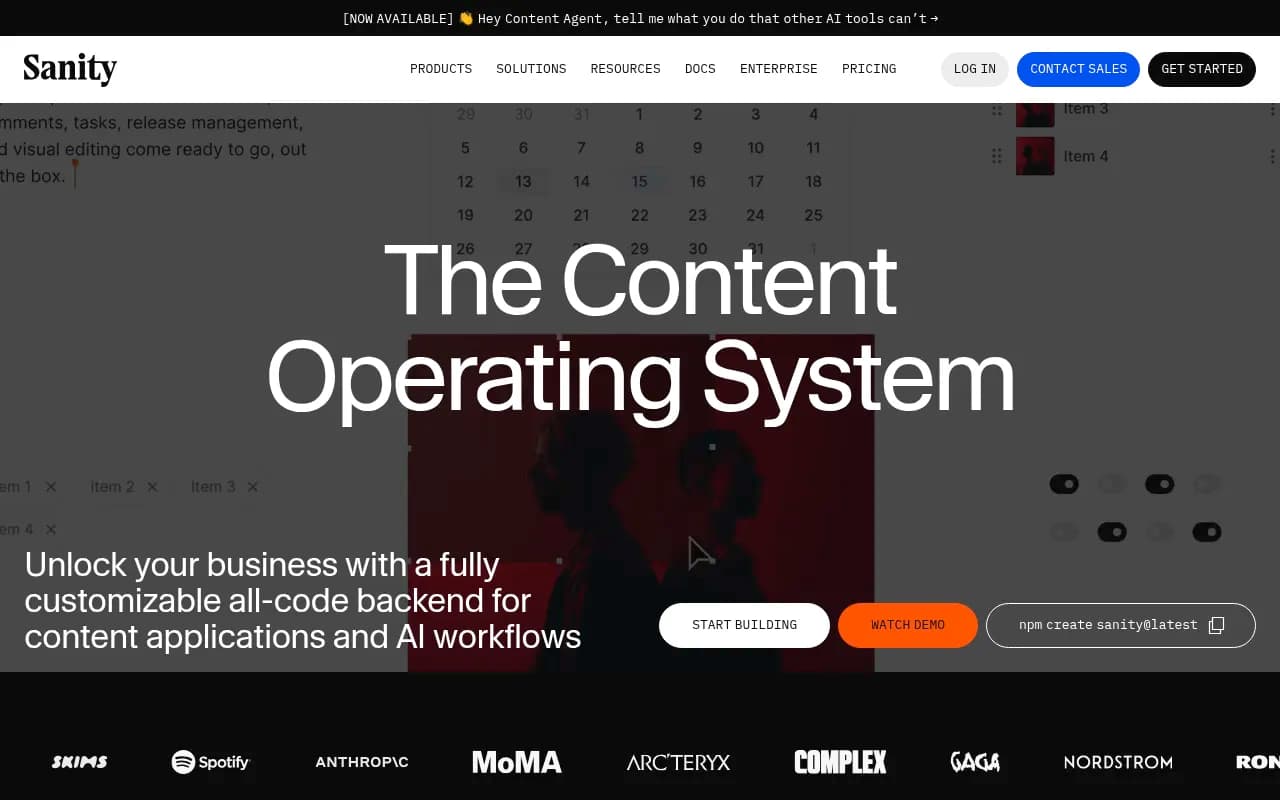
- Sanity: Content Operating System with real-time collaboration and flexible content modeling
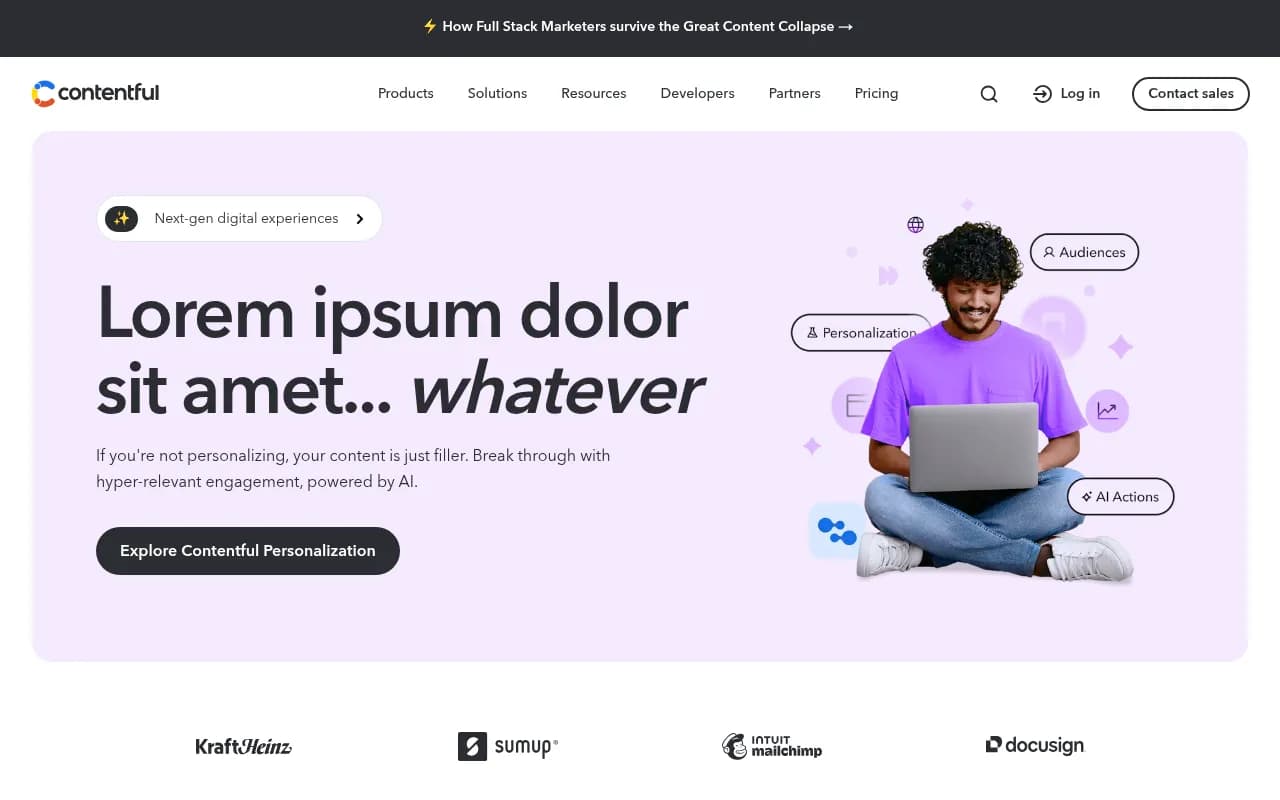
- Contentful: Popular headless CMS with strong developer experience and extensive integrations
- Strapi: Open-source headless CMS with full customization capabilities
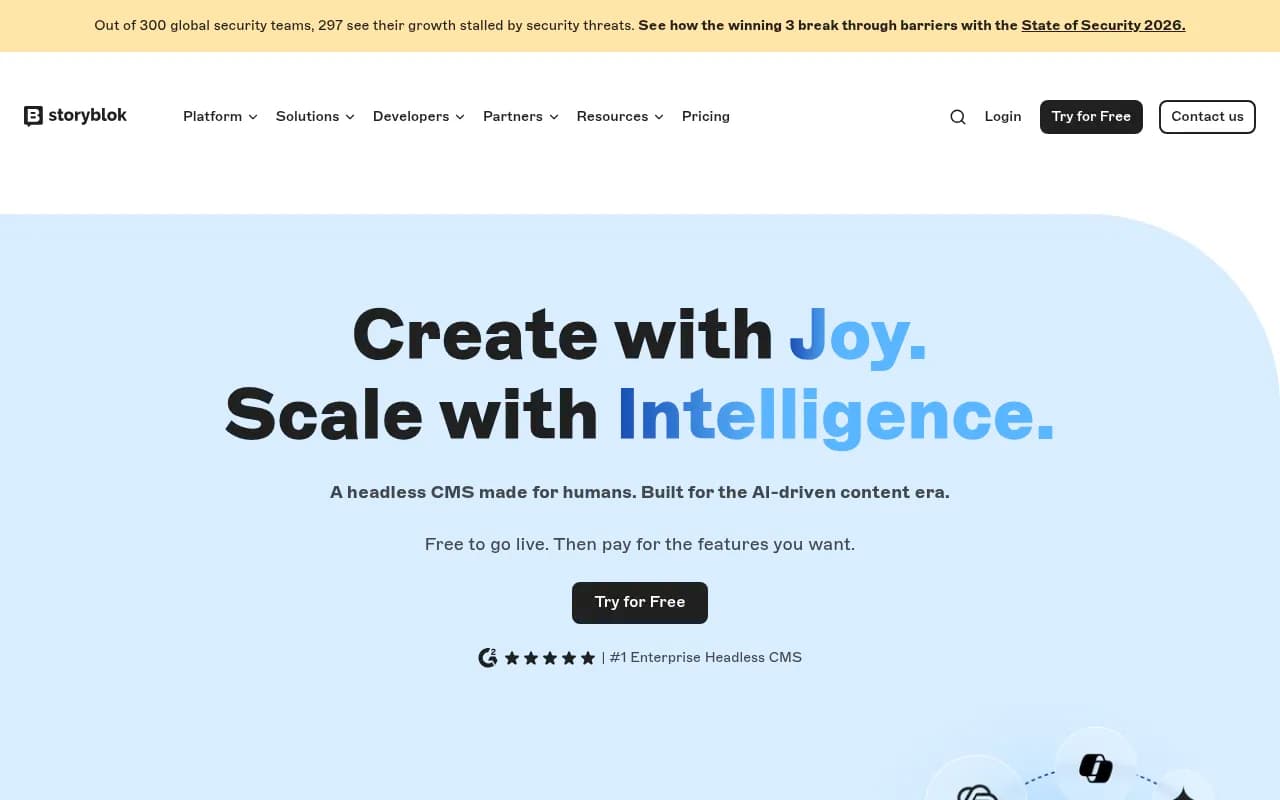
- Storyblok: Visual editor-focused headless CMS with component-based content
Each platform has unique strengths. Evaluate multiple options based on your specific requirements, budget, and team capabilities.
Making Your Decision
Choosing an enterprise content platform is a multi-year commitment that affects your entire organization. Follow this decision framework:
- Define requirements: Document must-have features, nice-to-have capabilities, and deal-breakers
- Assess current state: Audit existing content, workflows, integrations, and pain points
- Evaluate platforms: Request demos, test with real content, involve stakeholders
- Calculate TCO: Consider licensing, implementation, training, maintenance, and opportunity costs
- Plan migration: Develop a realistic timeline with milestones and success criteria
- Pilot before committing: Run a limited pilot with real users before full rollout
- Measure results: Track adoption, performance, and business outcomes post-launch
For most large enterprises with complex governance needs, Contentstack offers the most complete solution despite higher costs. Mid-market organizations often find Agility CMS provides the best balance of features, reliability, and pricing. Smaller teams prioritizing ease of use may prefer Kontent.ai's intuitive interface.
The right choice depends on your organization's size, technical capabilities, governance requirements, and long-term content strategy. Take the time to evaluate thoroughly—switching CMS platforms is expensive and disruptive.
Conclusion
Contentstack, Agility CMS, and Kontent.ai represent three distinct approaches to enterprise content management:
- Contentstack is a full-featured DXP for large enterprises needing governance, personalization, and orchestration in a single platform
- Agility CMS offers proven reliability and modern headless capabilities with page management for organizations transitioning from traditional CMS
- Kontent.ai provides an intuitive, collaboration-focused interface for small to mid-sized teams prioritizing ease of use
All three platforms support API-first, headless architecture essential for delivering content to web, mobile, and AI applications. They differ significantly in governance depth, scalability, ecosystem completeness, and pricing.
As you evaluate options, remember that your CMS is just one component of a complete content operations strategy. You'll need additional tools for content creation, optimization, analytics, and—increasingly important in 2026—AI search visibility. Platforms like Promptwatch help you understand and improve how AI engines discover, cite, and recommend your content across ChatGPT, Perplexity, Claude, and other AI search results.
The enterprise content landscape continues to evolve rapidly. Choose a platform that not only meets today's requirements but can adapt to tomorrow's challenges—whether that's new AI models, emerging channels, or changing governance regulations. Your content platform should be a strategic asset that enables growth, not a technical constraint that limits possibilities.