Contentstack Review 2026
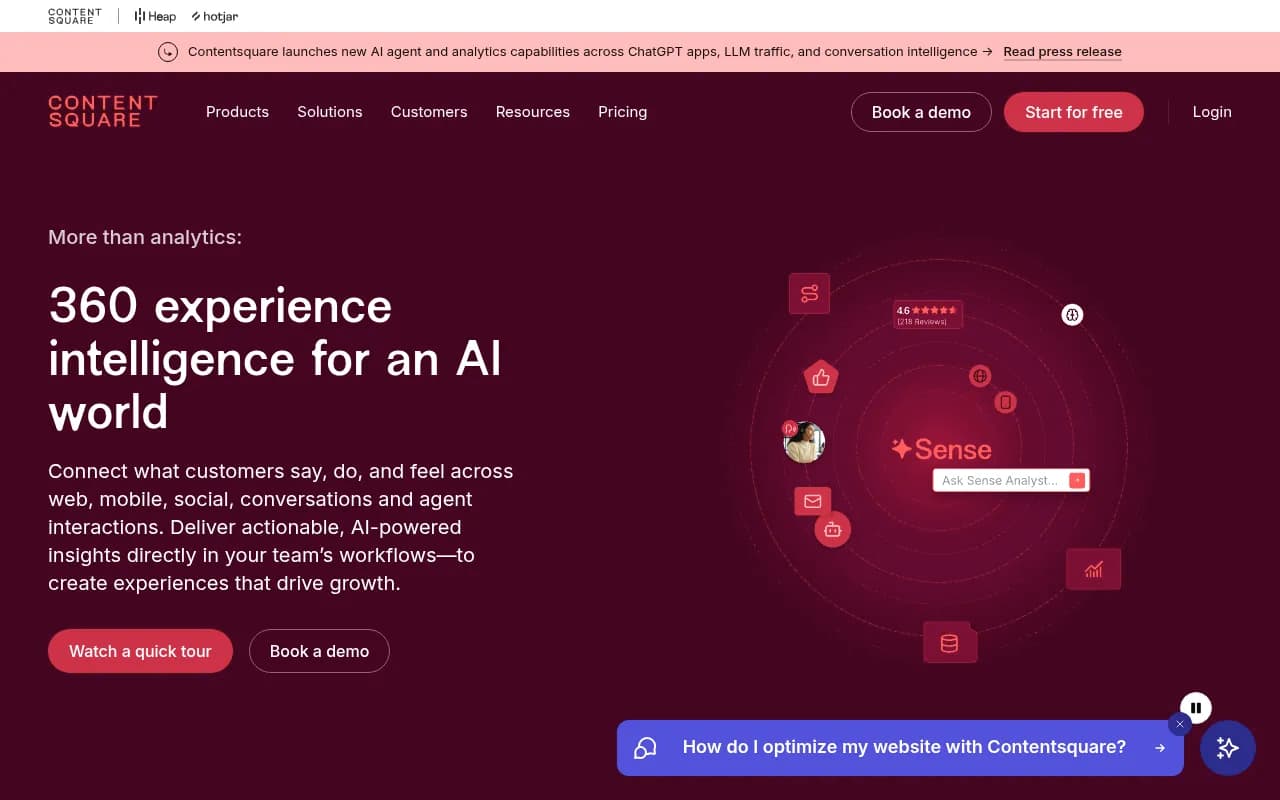
Contentstack is an enterprise-grade headless CMS and digital experience platform that combines content management with real-time customer data and AI-powered personalization. Built for large brands like Walmart, ASICS, and Alaska Airlines, it delivers adaptive experiences across all digital channels
Key Takeaways:
- Enterprise headless CMS with real-time customer data platform (CDP) and AI personalization built-in
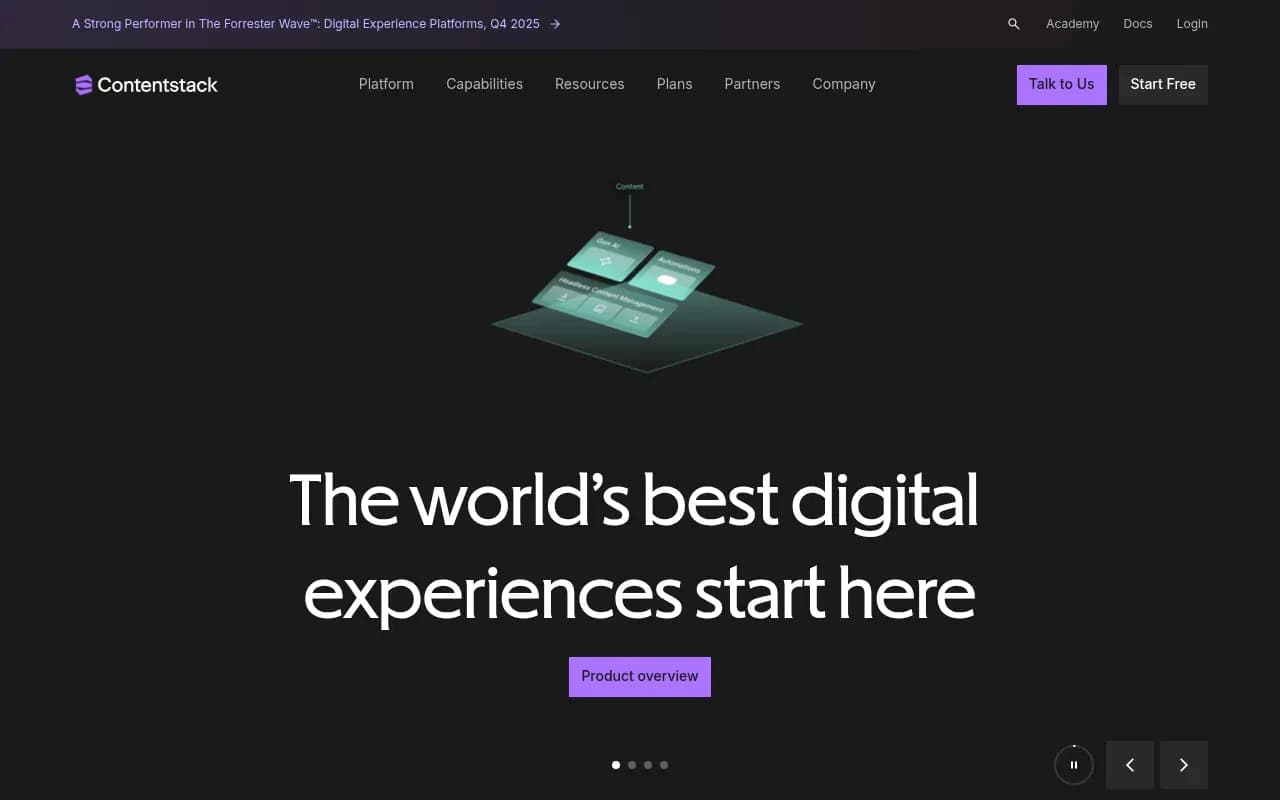
- Named a Strong Performer in The Forrester Wave™: Digital Experience Platforms, Q4 2025
- Pricing starts at $995/mo (Growth plan) up to $4,500/mo (Scale plan), with custom Enterprise pricing
- Best for mid-to-large enterprises managing complex multi-channel experiences (retail, travel, financial services)
- Includes front-end hosting (Launch), AI agents, and advanced workflow automation -- not just content management
Contentstack positions itself as the world's first "adaptive digital experience platform" -- a headless CMS that goes beyond content delivery to include real-time customer analytics, AI-driven personalization, and intelligent automation. Founded in 2018 and headquartered in San Francisco, the company serves over 500 enterprise customers including Walmart, Mattel, MongoDB, Crocs, and Mitsubishi Electric. In late 2024, Contentstack was recognized as a Strong Performer in Forrester's Digital Experience Platforms Wave, competing against Adobe, Sitecore, Acquia, and other enterprise DXP vendors.
The platform's core value proposition is "Contentstack Edge" -- a unified system that combines headless CMS capabilities with a customer data platform and personalization engine. This means marketing teams can manage content, understand audience behavior, and deliver personalized experiences without stitching together multiple vendors. For enterprises dealing with fragmented tech stacks (separate CMS, CDP, personalization tools), this consolidation is the main draw.
Headless CMS Foundation At its core, Contentstack is an API-first, cloud-native headless CMS built on MACH principles (Microservices, API-first, Cloud-native, Headless). The content modeling system supports structured content with custom content types, modular blocks, and reusable components. Editors work in a visual interface with live preview across devices and channels. Version control, workflow approvals, and scheduled publishing are standard. The content delivery is handled through global CDN with edge caching for sub-100ms response times.
What separates Contentstack from simpler headless CMS options (Contentful, Sanity, Strapi) is the enterprise-grade governance layer. You get granular role-based permissions, audit logs, content approval workflows with multiple stages, and compliance features for GDPR/CCPA. Large teams managing hundreds of content types across dozens of markets need this level of control -- smaller teams will find it overkill.
The CMS supports localization out of the box with translation workflows, locale fallbacks, and region-specific content variants. You can manage content in 50+ languages with built-in translation memory and integration with translation management systems like Smartling and Transifex.
Real-Time Customer Data Platform Contentstack's CDP layer unifies customer data from web, mobile, email, CRM, and other sources into a single customer profile. This isn't a bolt-on integration -- it's built into the platform. The CDP captures behavioral data (page views, clicks, form submissions), demographic data, and transactional data, then makes it available for segmentation and personalization in real-time.
Audience segmentation uses a visual builder where marketers can create segments based on behavior (visited pricing page 3+ times), attributes (enterprise customers in EMEA), or predictive scores (high purchase intent). Segments update in real-time as customer behavior changes, not on batch processing schedules. This matters for time-sensitive campaigns like abandoned cart recovery or event-triggered messaging.
The CDP includes identity resolution to stitch together anonymous and known user sessions across devices. If a user browses on mobile, then converts on desktop, Contentstack connects those sessions into one profile. This cross-device tracking is critical for accurate attribution and personalization.
AI-Powered Personalization Personalization in Contentstack works at the content component level. Marketers can create variations of hero images, CTAs, product recommendations, or entire page layouts, then set rules for which audience sees which variant. Rules can be simple (show variant A to segment X) or complex (show variant B if user is in segment Y AND visited page Z in last 7 days AND has purchase intent score above 70).
The platform includes AI-driven personalization that automatically optimizes which content variants perform best for each audience segment. Instead of manually A/B testing every variation, the AI learns from engagement data and shifts traffic to winning variants. This is similar to how Google Optimize or Optimizely work, but integrated directly into the content delivery layer.
Contentstack also offers predictive personalization that uses machine learning to recommend next-best content or products based on similar user behavior patterns. For e-commerce sites, this powers "customers who viewed this also viewed" recommendations. For B2B sites, it suggests relevant whitepapers or case studies based on browsing history.
Launch: Front-End Hosting & Deployment Launch is Contentstack's fully managed front-end hosting solution for Jamstack sites. It handles build automation, edge deployment, SSL certificates, and CDN distribution. Developers push code to GitHub/GitLab, Launch automatically builds and deploys to a global edge network. This is comparable to Vercel or Netlify, but tightly integrated with the CMS.
Launch supports Next.js, Gatsby, Nuxt, and other static site generators. It includes preview environments for every Git branch, so editors can review content changes before publishing. Rollback is one-click if a deployment breaks. For enterprises managing 10+ sites across brands and regions, Launch's multi-site management and centralized deployment controls are valuable.
The hosting includes built-in performance optimization: automatic image optimization (WebP conversion, lazy loading), code splitting, and edge caching. Sites hosted on Launch typically score 90+ on Lighthouse performance audits without manual optimization.
AI Agents & Workflow Automation Contentstack recently introduced "Agent OS" -- a framework for deploying AI agents that automate content workflows. These agents can generate content drafts, optimize metadata for SEO, suggest content improvements, or automate repetitive tasks like tagging and categorization.
The content generation agent uses brand guidelines, tone of voice rules, and existing content as context to produce on-brand drafts. It's not a generic ChatGPT wrapper -- the agent is trained on your specific content library and brand voice. Editors review and refine the output, but the first draft is automated.
Workflow automation includes conditional logic for approval routing (send to legal if content mentions pricing, send to compliance if it's financial services content), scheduled publishing across time zones, and bulk content operations. For teams publishing hundreds of content pieces per month, these automations save significant time.
Integrations & Ecosystem Contentstack integrates with major marketing and commerce platforms: Salesforce, Adobe Experience Cloud, SAP Commerce Cloud, Shopify Plus, BigCommerce, Marketo, HubSpot, Google Analytics, Segment, and mParticle. The integration marketplace includes 50+ pre-built connectors.
The platform offers a comprehensive REST API and GraphQL API for custom integrations. Webhooks trigger actions in external systems when content is published or updated. For developers, Contentstack provides SDKs in JavaScript, Python, PHP, Ruby, Java, and .NET.
Contentstack also supports composable architecture patterns where you can plug in best-of-breed tools for search (Algolia, Elasticsearch), commerce (Commercetools, Shopify), or personalization (Dynamic Yield, Monetate) while using Contentstack as the content hub.
Who Is It For Contentstack is built for mid-to-large enterprises (500+ employees) managing complex, multi-channel digital experiences. Primary users are:
- Retail and e-commerce brands managing 10,000+ SKUs across web, mobile apps, in-store kiosks, and marketplaces. Companies like Walmart, Crocs, and Steve Madden use it to deliver personalized product experiences at scale.
- Travel and hospitality companies like Alaska Airlines and Icelandair that need to manage dynamic content (flight schedules, pricing, availability) and deliver personalized offers based on traveler profiles.
- Financial services firms requiring strict compliance, audit trails, and governance for regulated content. The platform's approval workflows and role-based access controls meet enterprise security requirements.
- B2B technology companies like MongoDB managing technical documentation, product marketing content, and developer resources across multiple products and regions.
- Global brands operating in 10+ countries that need centralized content management with localized delivery. The multi-language support and regional content variants are essential.
Team size: typically 10-50 content editors, 5-15 developers, and 3-10 marketers. Smaller teams (under 10 people) will find Contentstack's feature set and pricing excessive -- tools like Contentful, Sanity, or Strapi are better fits. Contentstack shines when you have complex governance needs, multiple brands, and dedicated teams for content, development, and marketing.
Who Should NOT Use This Contentstack is overkill for:
- Small businesses or startups with simple content needs -- the pricing and complexity don't justify the investment
- Teams without dedicated developers -- while the UI is marketer-friendly, initial setup and customization require technical expertise
- Projects with tight budgets -- at $995/mo minimum, there are more affordable headless CMS options (Strapi, Directus, Payload CMS)
- Single-channel websites -- if you're only managing a marketing site, you don't need enterprise DXP capabilities
Pricing & Value Contentstack offers three main pricing tiers:
- Growth Plan: $995/mo -- includes headless CMS, Launch hosting, 10 content types, 5 users, 100K API calls/month. Suitable for single-brand, single-market deployments.
- Scale Plan: $4,500/mo -- adds CDP, personalization, unlimited content types, 25 users, 1M API calls/month, advanced workflows, and priority support. This is the sweet spot for most enterprise customers.
- Enterprise Plan: Custom pricing -- includes AI agents, advanced security (SSO, SAML), dedicated success manager, SLA guarantees, and unlimited API calls. Typically $15K-50K+/mo depending on scale.
All plans include a free trial (no credit card required). Annual contracts offer 10-15% discounts. Implementation services are available but not required -- expect $20K-100K for professional services depending on complexity.
Compared to competitors: Contentstack is more expensive than pure headless CMS tools (Contentful at $489/mo, Sanity at $499/mo) but less expensive than full DXP suites (Adobe Experience Manager at $100K+/yr, Sitecore at $50K+/yr). The value proposition is consolidation -- you're replacing 3-4 separate tools (CMS, CDP, personalization, hosting) with one platform. For enterprises already spending $10K+/mo across fragmented tools, Contentstack can be cost-neutral or cheaper while reducing integration complexity.
Strengths
- True composable DXP: Unlike legacy monoliths (Adobe, Sitecore), Contentstack is API-first and integrates cleanly with modern tech stacks. You're not locked into a proprietary ecosystem.
- Real-time personalization: The CDP and personalization engine work in real-time, not batch processing. This enables time-sensitive use cases like abandoned cart recovery or event-triggered campaigns.
- Enterprise-grade governance: Granular permissions, audit logs, compliance features, and multi-stage approval workflows meet the needs of regulated industries and large organizations.
- Integrated front-end hosting: Launch eliminates the need for separate hosting vendors (Vercel, Netlify) and provides tighter integration with the CMS for preview and deployment workflows.
- Strong developer experience: Comprehensive APIs, SDKs in multiple languages, detailed documentation, and active community support make implementation smoother.
Limitations
- Steep learning curve: The platform's breadth means a longer onboarding process. Expect 2-3 months for full implementation and team training.
- Pricing transparency: While base plans are listed, enterprise pricing is opaque. You need to talk to sales for accurate quotes, which slows evaluation.
- Overkill for simple use cases: If you just need a headless CMS without CDP or personalization, you're paying for features you won't use. Contentful or Sanity are simpler and cheaper.
- Limited out-of-the-box templates: Unlike WordPress or Webflow, Contentstack doesn't include pre-built site templates. You're building from scratch, which requires developer resources.
- AI features still maturing: The Agent OS and AI content generation are newer additions (launched 2024-2025) and less proven than core CMS capabilities. Early adopters report mixed results.
Bottom Line Contentstack is a best-in-class choice for enterprises that need a composable DXP with integrated content management, customer data, and personalization. It's particularly strong for retail, travel, and financial services companies managing complex, multi-channel experiences across global markets. The platform's real-time capabilities and enterprise governance features justify the premium pricing for organizations already spending $10K+/mo on fragmented tools. However, smaller teams, single-channel projects, or organizations without dedicated developers should consider simpler alternatives like Contentful, Sanity, or Strapi. Best use case: a global retail brand managing 50+ sites across 20 countries that needs centralized content control with localized, personalized delivery.
Tags:
Similar and alternative tools to Contentstack