Sanity Review 2026
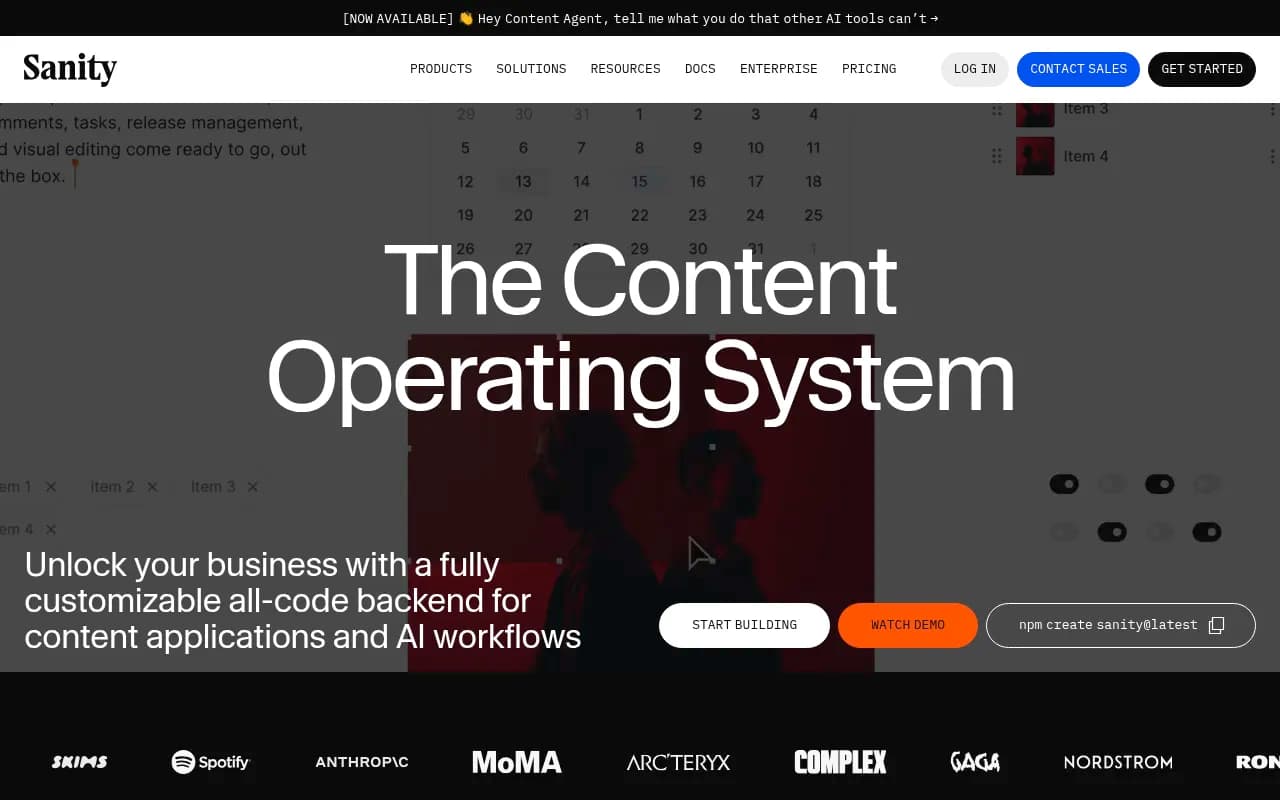
Sanity is a fully customizable headless CMS and content operating system that combines a flexible TypeScript-configured content backend, real-time visual editing, AI-powered content workflows, and serverless functions. Built for developers who need complete control over content structure and deliver
Key Takeaways:
- Sanity is a developer-first headless CMS that treats content as structured JSON data, queryable via GROQ (their custom query language) and deliverable to any frontend framework
- The platform combines four layers: Sanity Studio (customizable React-based editor), Content Lake (real-time database), Functions (serverless compute), and Content Agent (AI assistant for content operations)
- Best for development teams building content-heavy applications (marketing sites, e-commerce, publishing platforms) who need flexibility beyond traditional CMS constraints
- Pricing starts free for individuals, $15/user/month for teams (Growth plan), with custom Enterprise pricing for larger organizations
- Trusted by major brands including PUMA, Linear, Morning Brew, Figma, and Cloudflare
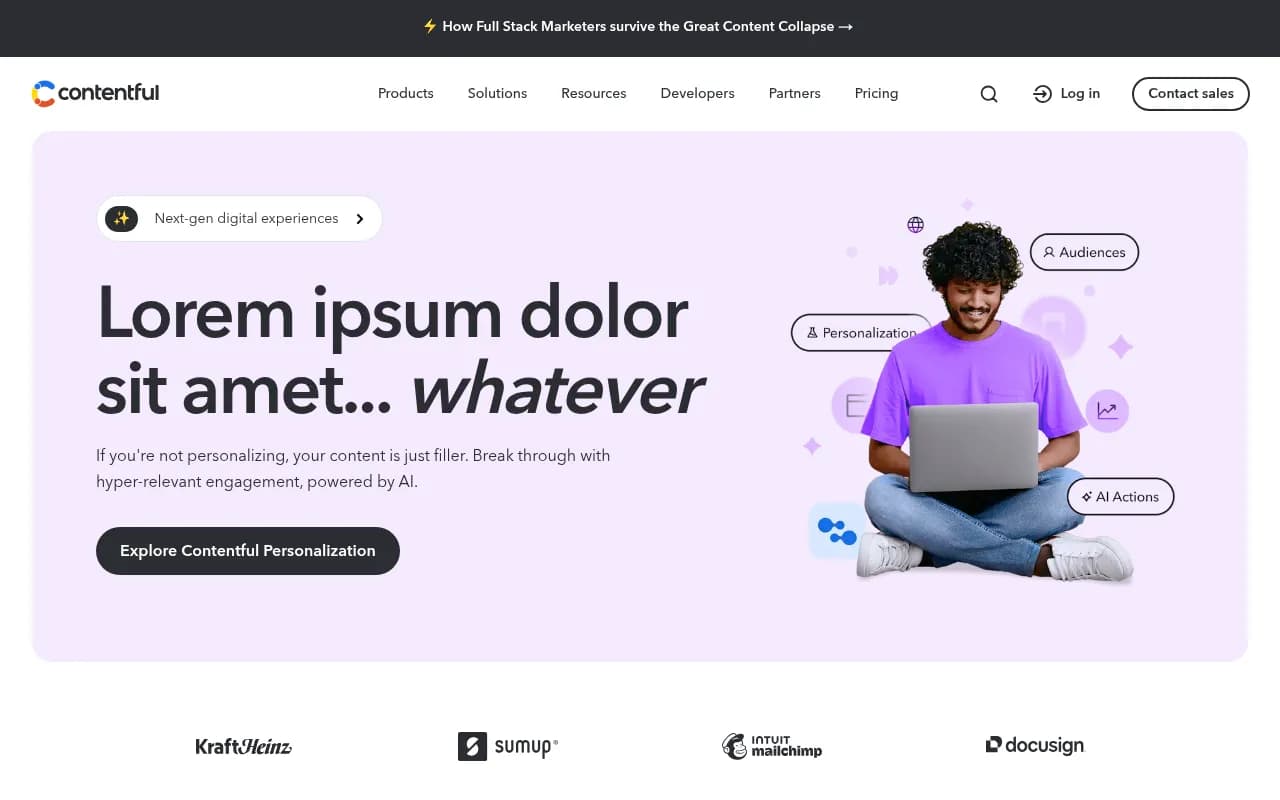
Sanity positions itself as a "Content Operating System" rather than just another headless CMS -- and after examining how teams actually use it in production, that distinction makes sense. Launched in 2017 by a Norwegian company (Sanity.io AS), the platform has grown to serve thousands of development teams who need more control than WordPress or Contentful provide, but don't want to build a content backend from scratch.
The core insight behind Sanity is treating content as structured data that lives in a real-time database (the "Content Lake"), rather than as pages or posts locked into a specific presentation format. This means a single piece of content -- say, a product description -- can be authored once and rendered differently across your website, mobile app, email campaigns, and even AI chatbot responses. For companies managing content across multiple channels, this eliminates the copy-paste hell that plagues traditional CMS workflows.
Sanity Studio: The Customizable Content Workspace
Sanity Studio is where content creators actually work, and it's fundamentally different from the admin panels you get with WordPress or Drupal. Instead of a fixed interface, Studio is a React application that you configure using TypeScript schemas. This means developers define exactly what fields exist, how they're validated, what the editing interface looks like, and how different content types relate to each other.
For example, if you're building an e-commerce site, you might define a Product schema with fields for title, description, price, images, variants, and related products. But you're not limited to basic text inputs -- you can build custom input components, add conditional fields that appear based on other selections, integrate third-party services (like pulling SKU data from your inventory system), or create entirely custom editing experiences. One Sanity customer built a custom "recipe builder" interface where chefs could drag ingredients into a visual timeline -- something impossible in traditional CMS platforms.
The Studio interface includes real-time collaborative editing (multiple people can edit the same document simultaneously, Google Docs style), revision history with the ability to restore any previous version, and a powerful reference system that lets you link content across your entire dataset. The editing experience is fast and responsive because it's built on modern web technologies, not the PHP-based admin panels that still power most CMS platforms.
Visual Editing & Presentation Tool
One common complaint about headless CMS platforms is that content creators lose the ability to see what they're building. Sanity addresses this with Presentation Tool, which embeds a live preview of your actual website directly in the Studio interface. As editors make changes, they see updates in real-time on the rendered page -- but unlike traditional page builders, the content remains fully structured and reusable.
This is particularly valuable for marketing teams who need visual feedback but don't want to sacrifice the flexibility of structured content. You can click on any element in the preview and jump directly to editing that content in the Studio sidebar. The preview can show your actual production site (using your real frontend code), so what editors see is exactly what will go live -- no surprises about how content will actually render.
Content Agent: AI That Knows Your Content
Launched in late 2024, Content Agent is Sanity's AI assistant that understands your entire content dataset. Unlike generic AI tools that work with individual documents, Content Agent can query across all your content, understand relationships between pieces, and perform bulk operations that would take hours manually.
Practical use cases include: finding all blog posts that mention a specific product but don't link to the product page (and fixing them), identifying content gaps by analyzing which topics competitors cover that you don't, generating meta descriptions for hundreds of pages based on their actual content, or auditing your entire site for outdated information. One agency reported using Content Agent to update brand terminology across 2,000+ content pieces in minutes -- a task that would have taken days of manual work.
The AI is trained on your specific content structure and can generate new content that matches your existing patterns. If you have 50 product pages with a consistent structure, Content Agent can draft new product pages that follow the same format and tone. This isn't generic AI content generation -- it's context-aware assistance that understands how your content actually works.
Content Lake: The Real-Time Database
Under the hood, Sanity stores all content as JSON documents in what they call the Content Lake -- essentially a specialized database optimized for content operations. Every piece of content gets a unique ID and can reference other content by ID, creating a graph of relationships across your entire dataset.
You query this data using GROQ (Graph-Relational Object Queries), Sanity's custom query language that's more intuitive than GraphQL for content operations. A GROQ query to fetch all published blog posts with their authors might look like: *[_type == "post" && published == true]{title, author->}. The -> operator automatically resolves references, so you get the full author object without writing complex joins.
The Content Lake is globally distributed via Sanity's CDN, which means content queries are fast regardless of where your users are located. The system supports real-time subscriptions, so your frontend can listen for content changes and update immediately without polling. This is how Sanity powers live dashboards, real-time collaboration, and instant preview updates.
One underrated feature: the Content Lake accepts content from any source, not just Sanity Studio. You can import data from spreadsheets, sync from external APIs, or even use Sanity as a data layer for content that lives elsewhere. This makes it useful as a content hub that aggregates data from multiple systems.
Functions & Serverless Compute
Sanity Functions let you run serverless code that responds to content changes or runs on a schedule. This is where Sanity moves beyond "just a CMS" into workflow automation territory. Functions are written in TypeScript/JavaScript and deployed directly from your Sanity project.
Common use cases: automatically generating social media images when a blog post is published, sending Slack notifications when content needs review, syncing data to external systems (like updating your CRM when a product page changes), or running scheduled tasks like checking for broken links. Functions can also power custom API endpoints, so you can build backend logic that lives alongside your content.
The recently added Agent Actions feature lets you trigger Functions through natural language commands in Content Agent. For example, you could tell Content Agent "optimize all product images uploaded this month" and it would run a Function that processes those images through a compression service. This bridges the gap between AI assistance and actual system automation.
Framework & Platform Integrations
Sanity's JavaScript client works with any framework that runs JavaScript -- Next.js, React, Vue, Svelte, Angular, Astro, Remix, Nuxt, and dozens more. The company maintains official starter templates for popular frameworks, so you can have a working Sanity-powered site running in minutes with npm create sanity@latest.
The platform includes specific integrations for visual editing with Next.js (using Next.js's draft mode), Vercel (one-click deployments), Netlify, Cloudflare Pages, and other hosting platforms. There are also community-built plugins for e-commerce platforms (Shopify, Commerce Layer), form builders, SEO tools, and media management services.
For developers who need more control, Sanity provides a comprehensive HTTP API, webhooks for content changes, and SDKs for JavaScript, PHP, Python, Ruby, and .NET. The API is well-documented and follows REST conventions, making it straightforward to integrate with custom systems.
Who Should Use Sanity
Sanity is built for development teams, not non-technical users trying to build a website without code. The ideal customer is a company with in-house developers or an agency building sites for clients, where the development team wants full control over the content model and frontend implementation.
Specific personas who benefit most:
- SaaS companies managing marketing sites, documentation, and product content across multiple properties (Linear uses Sanity for their public site, docs, and changelog)
- E-commerce brands that need flexible product content models and want to deliver product data to web, mobile, and in-store displays (PUMA uses Sanity to power content across their global e-commerce platform)
- Digital publishers managing large content libraries with complex relationships and multiple content types (Morning Brew migrated from a homegrown CMS to Sanity to support both email newsletters and web content from a single source)
- Agencies building custom sites for clients who need a content backend that won't limit future requirements
- Enterprise marketing teams managing content across multiple brands, regions, and languages
Team size matters: Sanity makes most sense for teams of 3+ people where at least one person is comfortable with JavaScript/TypeScript. Solo developers building simple blogs might find it overkill compared to Contentful or even WordPress. But for teams building complex, multi-channel content experiences, Sanity's flexibility becomes essential.
Who should NOT use Sanity: non-technical users who want a website builder with drag-and-drop page construction, teams without any JavaScript developers, or projects where a simple WordPress site would suffice. Sanity requires code -- that's the entire point. If you're looking for a no-code solution, consider Webflow or Squarespace instead.
Pricing & Value Analysis
Sanity offers a generous free tier that includes unlimited API requests, 3 users, 10GB bandwidth, 5GB assets, and 2 datasets. This is genuinely usable for small projects, side projects, or prototyping -- not a trial that forces you to upgrade immediately.
The Growth plan costs $15/user/month (billed annually) and adds unlimited users, 200GB bandwidth, 100GB assets, 10 datasets, and access to advanced features like Functions, Content Agent (15 articles/month), and priority support. For most professional projects, this is the tier you'll need.
Enterprise pricing is custom but includes dedicated support, SLA guarantees, SSO/SAML authentication, advanced security features, and higher resource limits. Sanity doesn't publish Enterprise pricing, but based on competitor analysis and customer reports, expect to pay $1,000-$5,000+/month depending on scale and requirements.
Compared to competitors: Contentful's Team plan starts at $300/month for 5 users, making Sanity significantly cheaper for small teams. Strapi (open-source alternative) is free to self-host but requires infrastructure management. Prismic charges per repository, which can get expensive for agencies managing multiple client sites. Sanity's per-user pricing is more predictable and scales better for growing teams.
The value proposition is strongest for teams that would otherwise build a custom content backend. Sanity provides the infrastructure, real-time database, CDN, and editing interface out of the box, letting developers focus on the unique aspects of their application rather than rebuilding CMS fundamentals.
Strengths
- Complete customization: Unlike platforms with fixed content models, Sanity lets you define exactly how your content is structured and edited
- Real-time everything: Collaborative editing, live previews, and instant content updates across all connected applications
- Developer experience: Well-designed APIs, excellent documentation, active community, and modern tooling make it pleasant to work with
- Content as data: Treating content as structured JSON that can be queried and delivered anywhere is fundamentally more flexible than page-based CMS approaches
- Generous free tier: Actually usable for real projects, not just a trial
Limitations
- Requires coding: This is a developer tool, not a website builder. Non-technical users will struggle without developer support
- Learning curve: GROQ is powerful but unfamiliar, and understanding Sanity's content model takes time
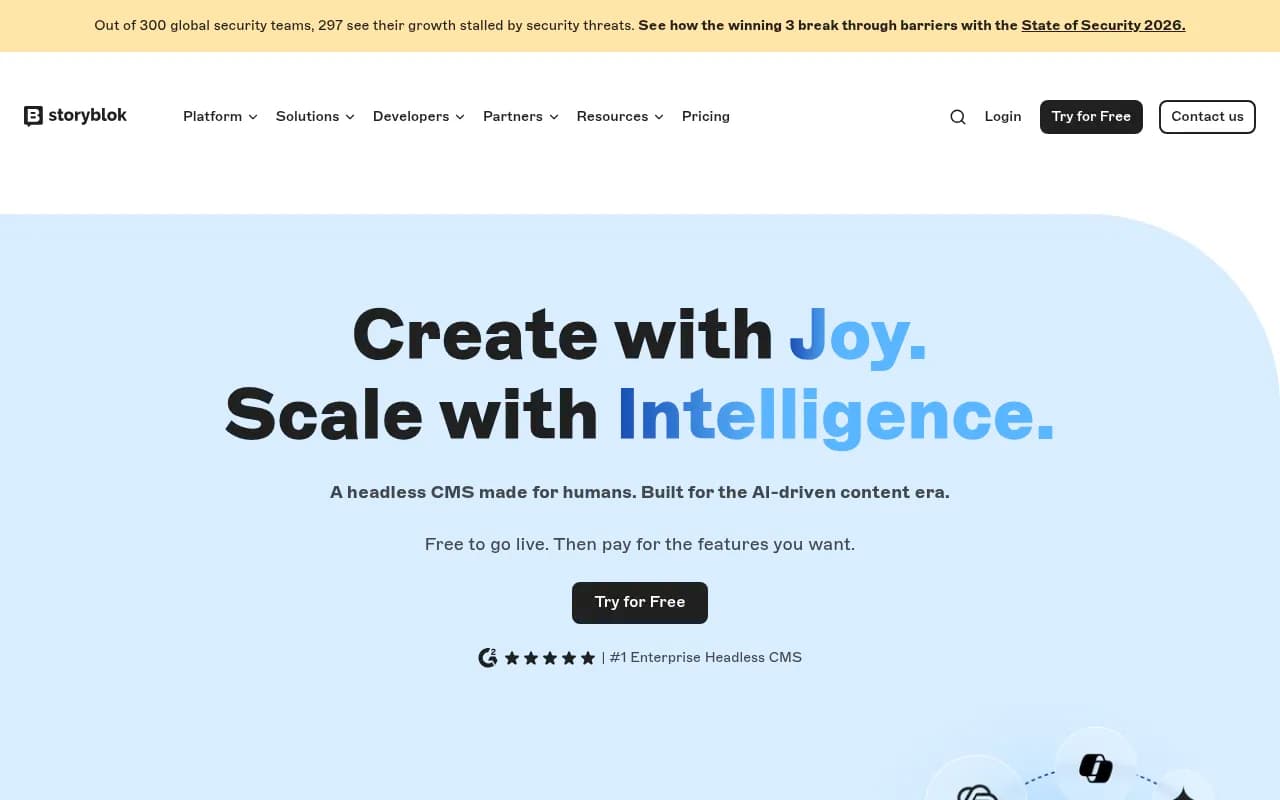
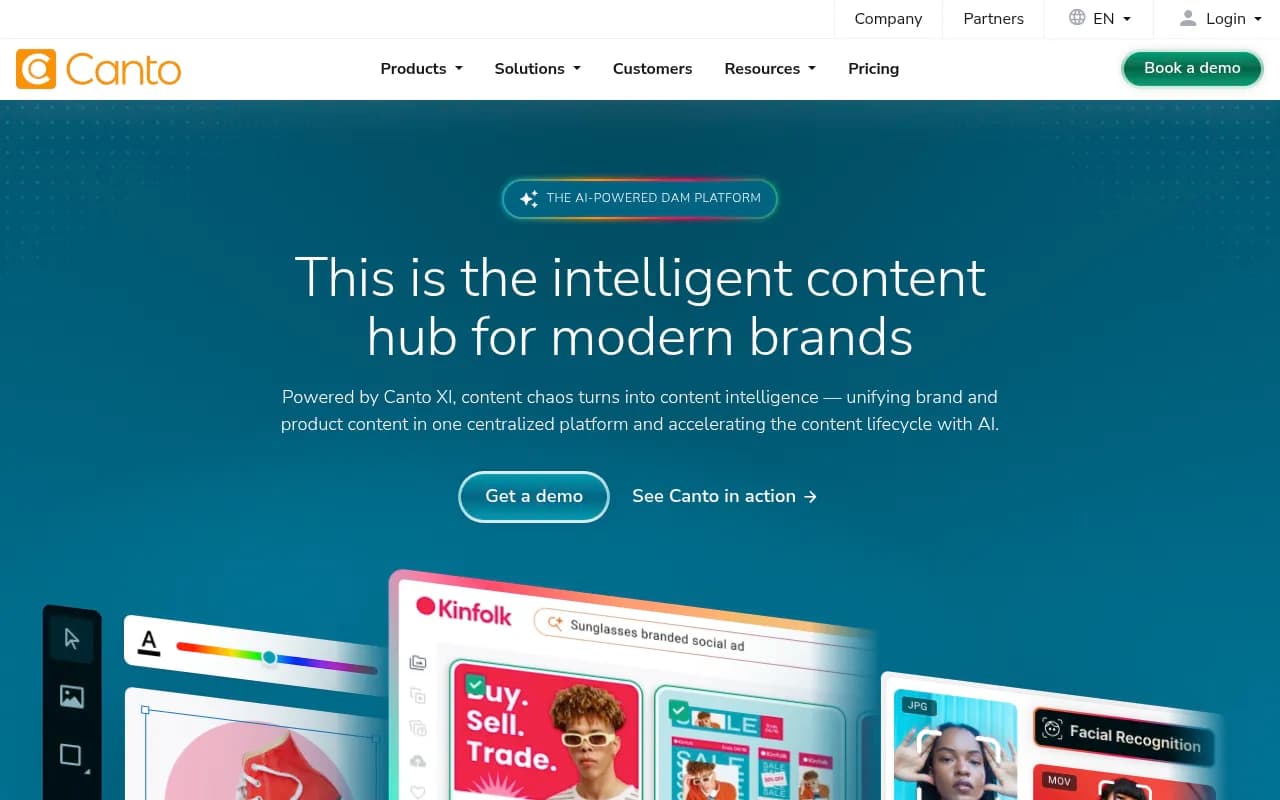
- Asset handling: While Sanity includes image transformation and CDN delivery, advanced media management features (like AI tagging or DAM capabilities) are more limited than specialized tools
- No built-in frontend: You must build your own frontend application -- Sanity only provides the content backend
- Functions limitations: Serverless functions have execution time and memory limits that may not work for heavy processing tasks
Bottom Line
Sanity is the right choice for development teams building content-driven applications who need flexibility that traditional CMS platforms can't provide. If you're managing content across multiple channels, need custom content workflows, or want to integrate AI into your content operations, Sanity provides the infrastructure to make it happen without building everything from scratch. The platform's combination of developer control and content creator usability makes it particularly valuable for agencies and product teams where both audiences matter. Best use case in one sentence: teams building custom content experiences that need to deliver structured content to multiple frontends while giving developers complete control over implementation.
Similar and alternative tools to Sanity