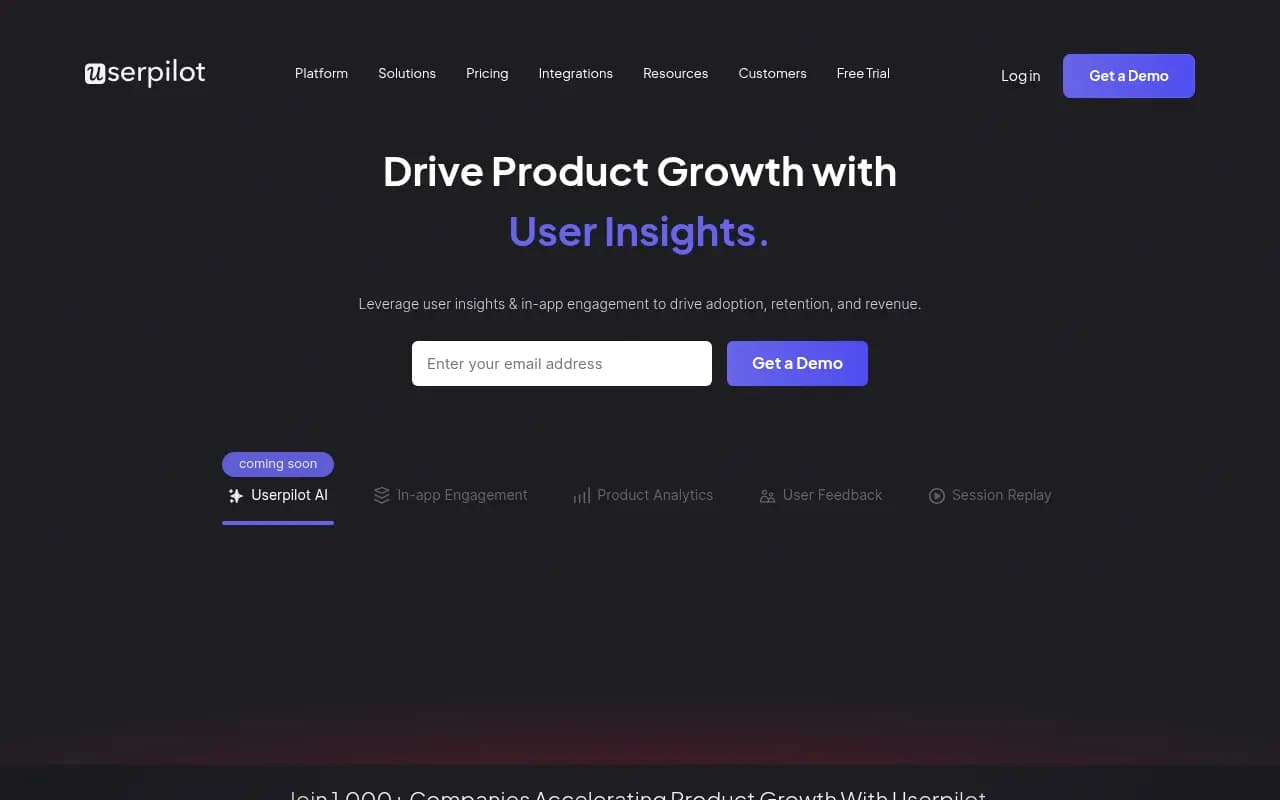
Revere AI Review 2026
Track brand performance in AI-generated responses with enterprise-level analytics and optimization recommendations.
Summary
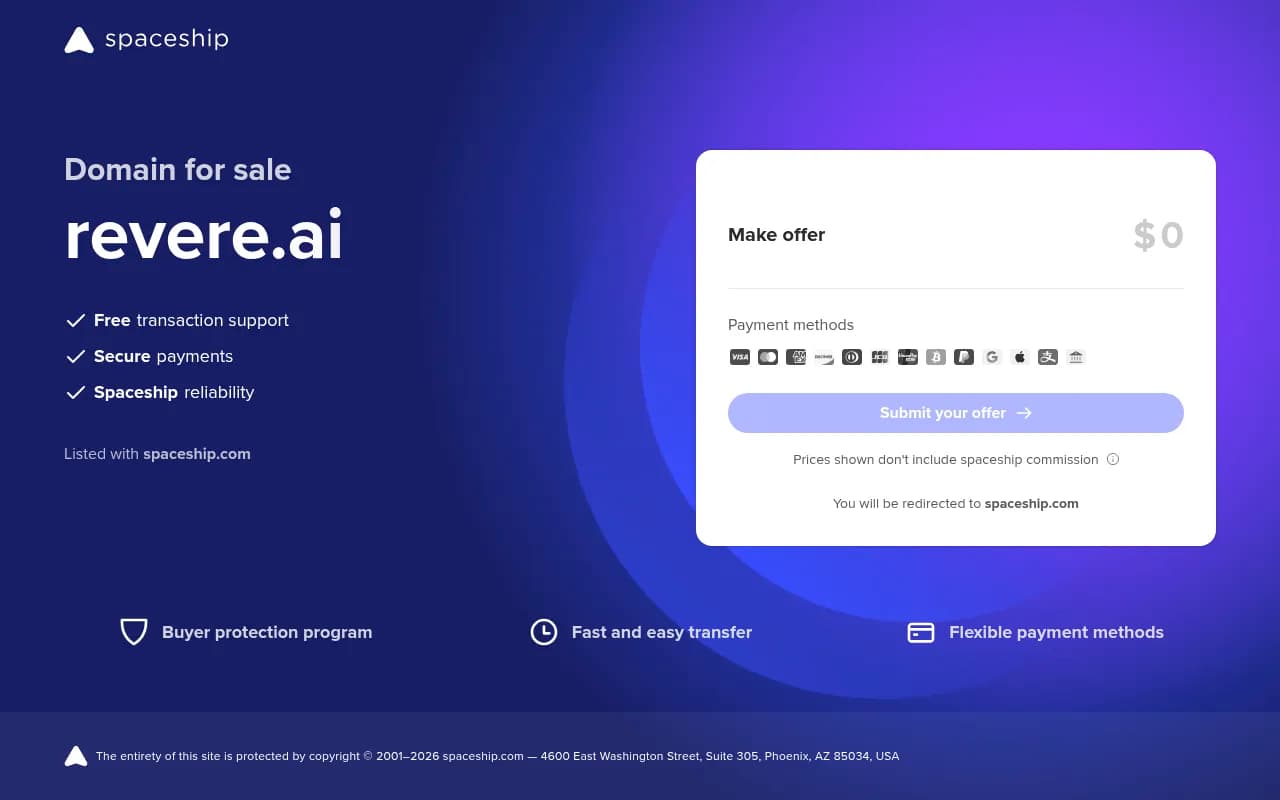
- Domain Status: Revere AI (revere.ai) appears to be a discontinued or dormant product -- the primary domain is currently listed for sale on Spaceship.com with no active product or service
- Limited Information: Minimal verifiable data exists about features, pricing, or actual capabilities beyond basic marketing claims
- Market Position: Positioned as an AI search monitoring tool, but lacks the depth and active development of established competitors like Promptwatch, Otterly.AI, or Peec.ai
- Not Recommended: Given the domain-for-sale status and lack of accessible product, this tool cannot be recommended for serious business use in 2026
What Revere AI Claims to Be
Based on limited available information, Revere AI was marketed as an AI search monitoring and optimization platform designed to track brand performance in AI-generated responses. The stated value proposition centered on enterprise-level analytics and optimization recommendations for companies wanting to understand how AI engines like ChatGPT, Perplexity, Claude, and Google's AI Overviews mention or cite their brand.
The tool was apparently aimed at marketing teams, SEO professionals, and agencies concerned about brand visibility in the emerging landscape of AI-powered search. As traditional search engines increasingly integrate AI-generated answers and recommendations, tools in this category help brands understand whether they're being mentioned, how they're being positioned, and what content gaps might be preventing citations.
However, the current state of the domain (listed for sale on Spaceship.com with no active product page, documentation, or login portal) raises serious questions about whether this tool ever launched as a fully functional product or if it has been discontinued.
The AI Search Monitoring Landscape in 2026
To understand where Revere AI fits (or doesn't fit), it's helpful to understand what a functional AI search monitoring platform actually does. The category has matured significantly since 2023, when the first wave of tools emerged following ChatGPT's explosive growth.
Core Capabilities of Leading Platforms:
Brand Mention Tracking -- Monitor when and how AI models mention your brand across different prompts, queries, and use cases. Leading platforms track 8-12 different AI engines including ChatGPT, Claude, Perplexity, Gemini, Copilot, Meta AI, Grok, DeepSeek, and Google AI Overviews. They run thousands of prompts daily to understand visibility patterns.
Citation Analysis -- See which specific pages, articles, or content pieces AI models cite when they mention your brand. This goes beyond simple brand mentions to understand what content is actually driving AI visibility. Advanced platforms analyze 500M+ citations to identify patterns in what gets cited and why.
Competitor Benchmarking -- Compare your AI visibility against competitors across different prompt categories, AI models, and geographic regions. Heatmaps and share-of-voice metrics show where you're winning and where competitors dominate.
Prompt Intelligence -- Understand which prompts trigger brand mentions, estimated search volumes for different queries, and difficulty scores for ranking in AI responses. Query fan-outs show how one prompt branches into related sub-queries.
Content Gap Analysis -- Identify specific topics, questions, and content angles where competitors appear in AI responses but you don't. This is where monitoring becomes optimization -- showing exactly what content you need to create.
AI Content Generation -- The most advanced platforms (like Promptwatch) include AI writing tools that generate articles, comparisons, and listicles specifically optimized for AI citation. This content is grounded in real citation data and prompt analysis, not generic SEO templates.
Crawler Log Analysis -- Track AI crawlers (ChatGPT-User, Claude-Web, PerplexityBot, etc.) visiting your website in real-time. See which pages they read, errors they encounter, and crawl frequency. This helps diagnose indexing issues that prevent AI visibility.
Traffic Attribution -- Connect AI visibility to actual business outcomes by tracking visitors who arrive after interacting with AI-generated content. Code snippets, Google Search Console integration, or server log analysis show ROI.
Multi-language and Multi-region Support -- Monitor AI responses in different languages and geographic markets with customizable personas that match how real users prompt AI engines.
What We Know (and Don't Know) About Revere AI
Revere AI's marketing materials mentioned "enterprise-level analytics" and "optimization recommendations" but provided no specifics about:
- Which AI models it actually monitored (ChatGPT only? Multiple engines?)
- How many prompts it tracked or whether users could add custom prompts
- Whether it included citation analysis or just brand mentions
- If it offered content gap analysis or optimization tools
- What integrations it supported (Google Search Console, analytics platforms, etc.)
- Whether it tracked AI crawler logs or provided traffic attribution
- Pricing structure or target customer size
The lack of accessible product documentation, demo videos, case studies, or even basic feature lists is a significant red flag. Established competitors in this space provide detailed feature breakdowns, live demos, and transparent pricing.
Pricing Information (Limited)
Fragmentary search results suggest Revere AI may have offered a freemium model with a free plan and paid tiers starting around $50-60 per user per month (billed annually). One reference mentioned "unlimited templates and members" at the $50/month tier, though it's unclear what "templates" means in the context of AI search monitoring.
For context, established AI search monitoring platforms in 2026 typically price as follows:
- Entry-level plans: $99-149/month for 1-2 websites, 50-100 tracked prompts, basic monitoring across 8-10 AI models
- Professional plans: $249-399/month for multiple sites, 150-300 prompts, advanced features like crawler logs and content gap analysis
- Business/Agency plans: $579-999/month for 5+ sites, 350-500 prompts, AI content generation, white-label reporting
- Enterprise: Custom pricing for large organizations with complex needs
If Revere AI was indeed priced at $50-60/month, it would have been positioned as a budget option -- but without knowing what features were included at that price point, it's impossible to assess value.
Who This Tool Was Supposedly For
Based on the "enterprise-level analytics" positioning, Revere AI appeared to target:
Marketing Teams at Mid-to-Large Companies -- Brands concerned about how they're represented in AI-generated recommendations and search results. Companies in competitive categories (SaaS, e-commerce, professional services) where AI visibility directly impacts lead generation.
SEO and Content Teams -- Professionals responsible for organic visibility who need to expand beyond traditional search engines to include AI-powered search. Teams looking to understand what content drives AI citations.
Digital Agencies -- Agencies managing AI visibility for multiple clients who need white-label reporting and multi-client dashboards.
Brand Managers -- Executives concerned about brand reputation and positioning in AI responses, especially in industries where AI recommendations influence purchasing decisions.
However, the actual user base and customer success stories remain unknown due to the lack of public case studies or testimonials.
Critical Limitations and Red Flags
Domain for Sale -- The most obvious issue: revere.ai is currently listed for sale on Spaceship.com with no active product. This suggests the tool has been discontinued, never fully launched, or the company has shut down. No legitimate SaaS product lists its primary domain for sale while actively serving customers.
No Accessible Product -- There's no login page, product demo, documentation, or even a basic feature list available. Legitimate competitors provide detailed product tours, free trials, and extensive documentation.
Minimal Online Presence -- No verifiable customer reviews on G2, Capterra, or Trustpilot. No case studies or success stories. No active social media presence or community. This is highly unusual for a tool claiming "enterprise-level" capabilities.
Vague Feature Claims -- Marketing copy used generic terms like "optimization recommendations" and "analytics" without explaining what those actually mean or how they work. Established competitors provide specific feature breakdowns.
No Visible Development -- No product updates, changelog, or roadmap visible anywhere. Active SaaS products in this fast-moving category ship new features monthly.
Unclear Company Information -- No clear information about the company behind Revere AI, its team, funding, or location. Legitimate enterprise tools provide transparency about who builds and supports the product.
How Revere AI Compares to Active Competitors
Since Revere AI appears to be defunct, here's how the AI search monitoring category looks in 2026:
Promptwatch -- The market leader and only platform rated as a "Leader" across all categories in independent comparisons. Offers the complete action loop: find content gaps, generate AI-optimized content, track results. Includes crawler logs, 880M+ citations analyzed, Reddit/YouTube tracking, ChatGPT Shopping monitoring, and traffic attribution. Pricing from $99/month. Used by 6,700+ brands including Booking.com and Center Parcs.
Otterly.AI and Peec.ai -- Solid monitoring-only platforms that track brand mentions across multiple AI engines. Good dashboards and reporting but lack content optimization and generation capabilities. No crawler logs or traffic attribution. Pricing similar to Promptwatch but fewer features.
Profound and Scrunch -- Strong feature sets with good analytics but higher price points (typically $500-1000+/month). Missing some newer capabilities like Reddit tracking and ChatGPT Shopping monitoring.
AthenaHQ -- Monitoring-focused with decent prompt tracking but lacks content gap analysis and optimization tools. More of a dashboard than an optimization platform.
Search Party -- Agency-oriented with multi-client management but limited prompt metrics and no content generation. Good for agencies that just need basic monitoring.
Semrush and Ahrefs -- Traditional SEO giants that added AI search monitoring as a feature. Semrush uses fixed prompts (you can't customize), Ahrefs Brand Radar has fixed prompts and no AI traffic attribution. Both are add-ons to broader SEO platforms rather than dedicated AI search tools.
The Bottom Line
Revere AI cannot be recommended in its current state. The domain-for-sale status, lack of accessible product, and absence of verifiable customer information make it impossible to evaluate as a functional tool. Even if it once existed as a working product, it appears to have been discontinued or abandoned.
For businesses serious about AI search visibility in 2026, established platforms like Promptwatch offer proven capabilities with transparent pricing, active development, and thousands of customers. The AI search monitoring category has matured significantly, and functional tools now provide end-to-end solutions from monitoring to content optimization to traffic attribution.
If you're evaluating AI search monitoring tools, look for:
- Active product with accessible demos and documentation
- Transparent pricing and clear feature breakdowns
- Verifiable customer reviews and case studies
- Regular product updates and active development
- Support for multiple AI models (at least 8-10 engines)
- Content optimization capabilities, not just monitoring
- Traffic attribution to connect visibility to revenue
Revere AI, in its current form, meets none of these criteria. Until there's evidence of an active, functional product, consider it a cautionary tale in a category where several strong alternatives exist.
Frequently asked questions
What is Revere AI and what does it do?
Is Revere AI still available to use?
How much does Revere AI cost?
Who is Revere AI designed for?
What are the alternatives to Revere AI?
Is Revere AI free to use?
Can I trust Revere AI for business use in 2026?
Similar and alternative tools to Revere AI