Key takeaways
- Whitespark is the closest like-for-like alternative to BrightLocal, with strong citation services and rank tracking at a comparable price point — good for agencies already deep in local SEO.
- SE Ranking is the best option if you want local SEO plus a full traditional SEO suite (keyword research, site audits, backlinks) in one platform.
- Yext is the enterprise choice for brands managing hundreds or thousands of locations, but the price jump is significant.
- Birdeye and Uberall both lean into reputation management and multi-location marketing more than pure local SEO tooling.
- Semrush Local makes sense if you're already a Semrush subscriber and want to add local capabilities without switching platforms.
- Local Falcon is a specialist geo-grid rank tracker — not a full local SEO suite, but excellent at what it does.
- Synup and Moz Local are solid agency-oriented options, though both have narrower feature sets than BrightLocal.
- If your brand needs to be visible in AI search engines (ChatGPT, Perplexity, Gemini), none of these tools cover that — Promptwatch is built specifically for that problem.
Why look for a BrightLocal alternative?
BrightLocal has been a go-to local SEO platform for agencies and small businesses for years, and its 4.8/5 rating across 1,300+ reviews suggests most users are genuinely happy with it. But it's not the right fit for everyone.
The most common reasons people start shopping around: the per-location pricing gets expensive fast once you're managing 10+ locations, citation building is pay-per-listing rather than included in the subscription, and the platform is narrowly focused on local SEO — there's no broader keyword research, backlink analysis, or content tooling. If you want one platform to handle both local and traditional SEO, you'll need to pay for BrightLocal plus something else.
There's also a newer problem that BrightLocal doesn't address at all: AI search. Customers are increasingly asking ChatGPT, Perplexity, and Gemini "what's the best plumber near me" or "which dentist should I use in Austin" — and none of the traditional local SEO tools track or optimize for those answers. That's a gap worth knowing about.
Here's a detailed look at the best alternatives.
Promptwatch

Promptwatch sits in a different category from the other tools on this list, but it belongs here because local businesses and agencies are increasingly asking a question none of the traditional local SEO platforms answer: "Is my brand showing up when people ask AI chatbots for recommendations?"
BrightLocal tracks your Google Maps rank. Promptwatch tracks whether ChatGPT, Perplexity, Gemini, Claude, and nine other AI models mention your brand when someone asks a relevant question. Those are two different visibility problems, and in 2026 both matter.
Where Promptwatch goes beyond simple monitoring is the action loop. It shows you which prompts your competitors appear in but you don't (Answer Gap Analysis), then helps you create content specifically engineered to get cited by AI models, then tracks whether that content actually improves your visibility scores. Most competitors in the AI visibility space just show you a dashboard. Promptwatch helps you do something about what you see.
For a local business or agency, the practical use case is this: if someone asks ChatGPT "best Italian restaurant in Chicago" or "top HVAC company in Dallas," does your client show up? Right now, most local businesses have no idea. Promptwatch answers that question and helps you fix it.
Pricing starts at $99/mo for one site with 50 tracked prompts, which is comparable to BrightLocal's entry tier. It's not a replacement for BrightLocal's citation building or Google Maps rank tracking — it's a complement to it, covering the AI search channel that local SEO tools currently ignore.
Best for: Local businesses and agencies that want to extend their visibility strategy into AI search, not just Google Maps.
SE Ranking
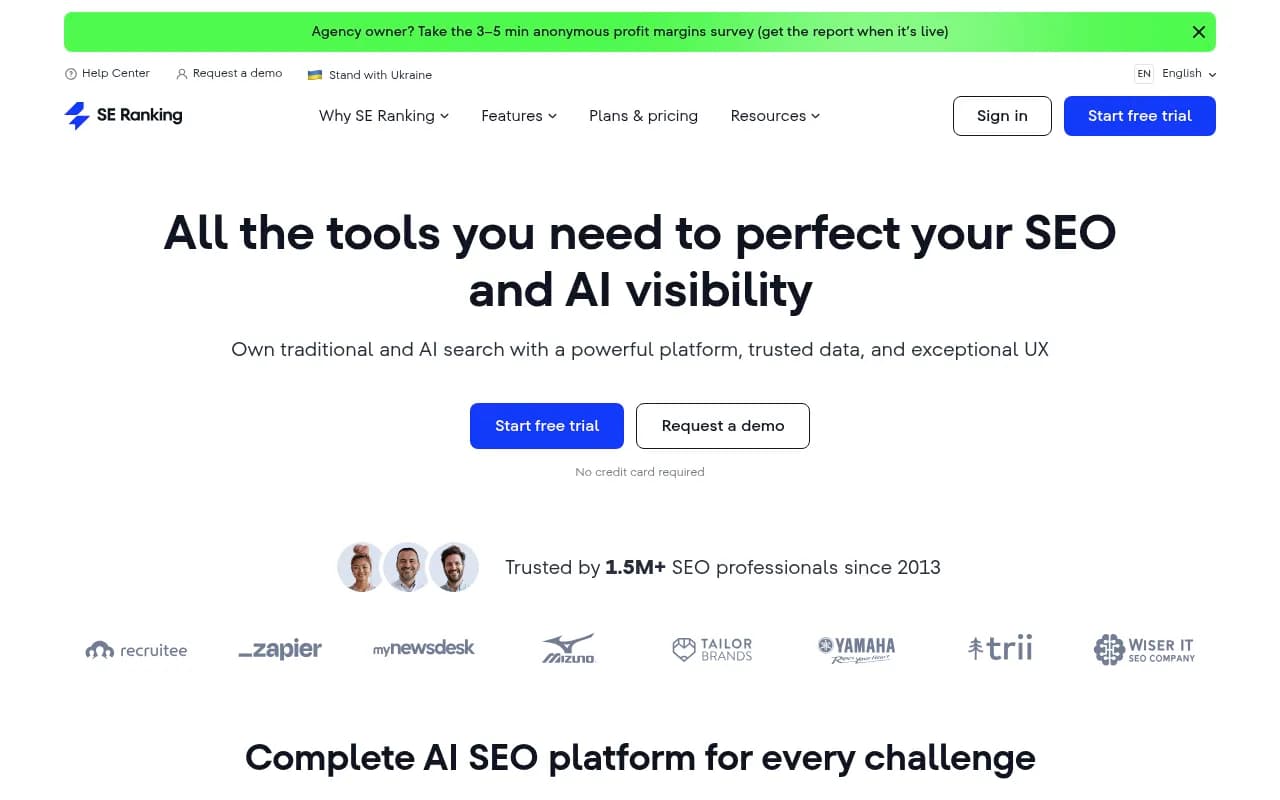
SE Ranking is probably the most complete "one platform" alternative to BrightLocal if you want local SEO plus everything else. Where BrightLocal stops at local, SE Ranking covers rank tracking, keyword research, site audits, backlink monitoring, content optimization, and local SEO tools — all under one subscription.
The local SEO module includes listing management, Google Business Profile tracking, review monitoring, and a geo-grid rank tracker. It's not as deep as BrightLocal's local-specific tooling — citation building in particular is less developed — but for most agencies, the trade-off is worth it to avoid paying for two separate platforms.
The pricing is higher than BrightLocal at the entry level ($103.20/mo on annual billing vs BrightLocal's $39/mo), but when you factor in that SE Ranking replaces multiple tools, the math often works out. The white-label reporting is solid for agencies, and the 5.4B keyword database is genuinely useful for broader SEO work.
One honest limitation: SE Ranking's local SEO features feel like a module added to an SEO platform rather than a platform built for local from the ground up. If citation accuracy and Google Business Profile management are your primary concern, BrightLocal or Whitespark will feel more purpose-built.
Pricing: From $103.20/mo (annual billing). 14-day free trial, no credit card required.
Best for: Agencies and in-house SEO teams that need both local and traditional SEO tooling and want to consolidate into one platform.
Birdeye
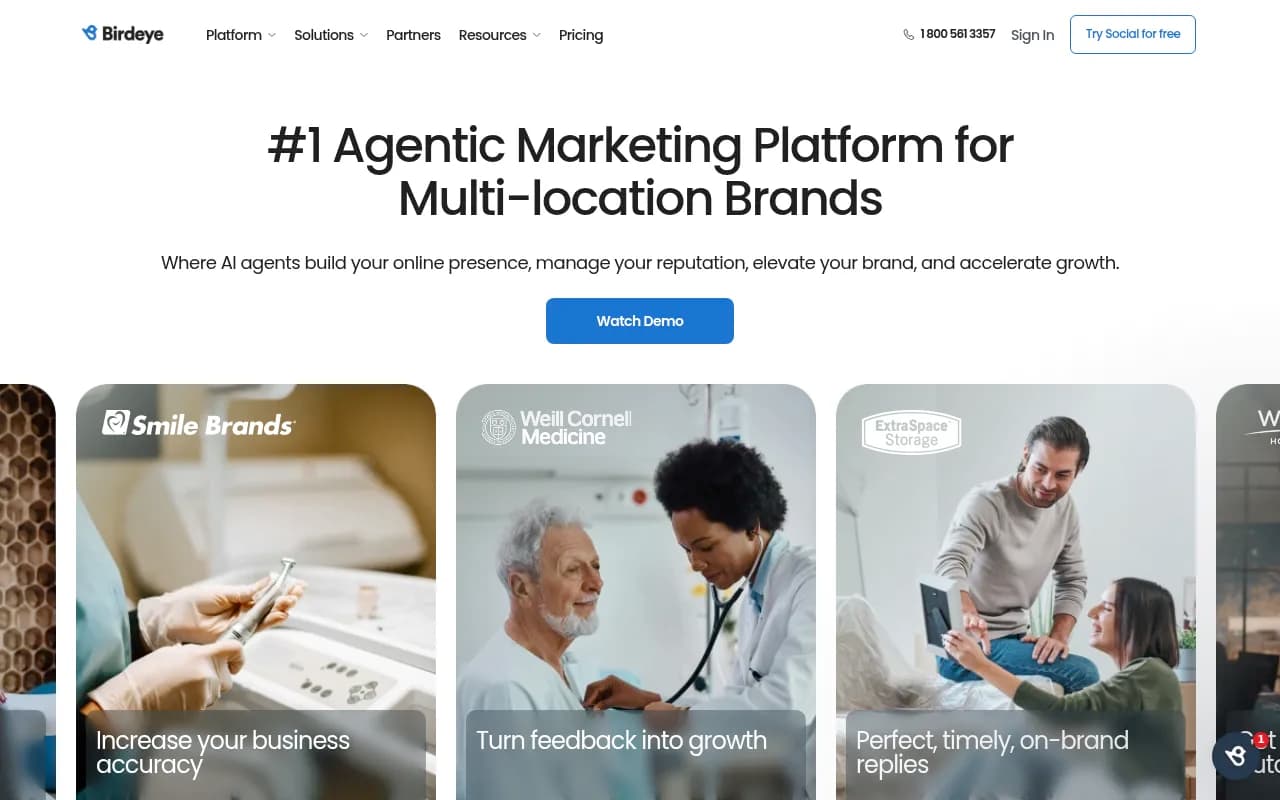
Birdeye has evolved into something broader than a local SEO tool — it now positions itself as an "agentic marketing platform" for multi-location brands. The core strengths are reputation management (review generation, monitoring, and AI-powered responses), social media management, and customer messaging. It also has a "Search AI" module that tracks brand visibility in AI search engines.
Compared to BrightLocal, Birdeye is stronger on the customer experience and reputation side, and weaker on pure local SEO mechanics like citation building and rank tracking. If your primary pain point is managing reviews across 50+ locations and responding at scale, Birdeye is genuinely impressive. If you need granular local rank data and citation management, it's not the right tool.
The pricing is significantly higher than BrightLocal — starting at $299/mo for the Standard plan, scaling with number of locations. For a small agency or single-location business, that's a hard sell. For a franchise or multi-location brand that needs review management at scale, the price is more justifiable.
Pricing: From $299/mo (Standard). Custom pricing for larger deployments.
Best for: Multi-location brands and franchises where reputation management and customer messaging are the priority, not granular local rank tracking.
Yext
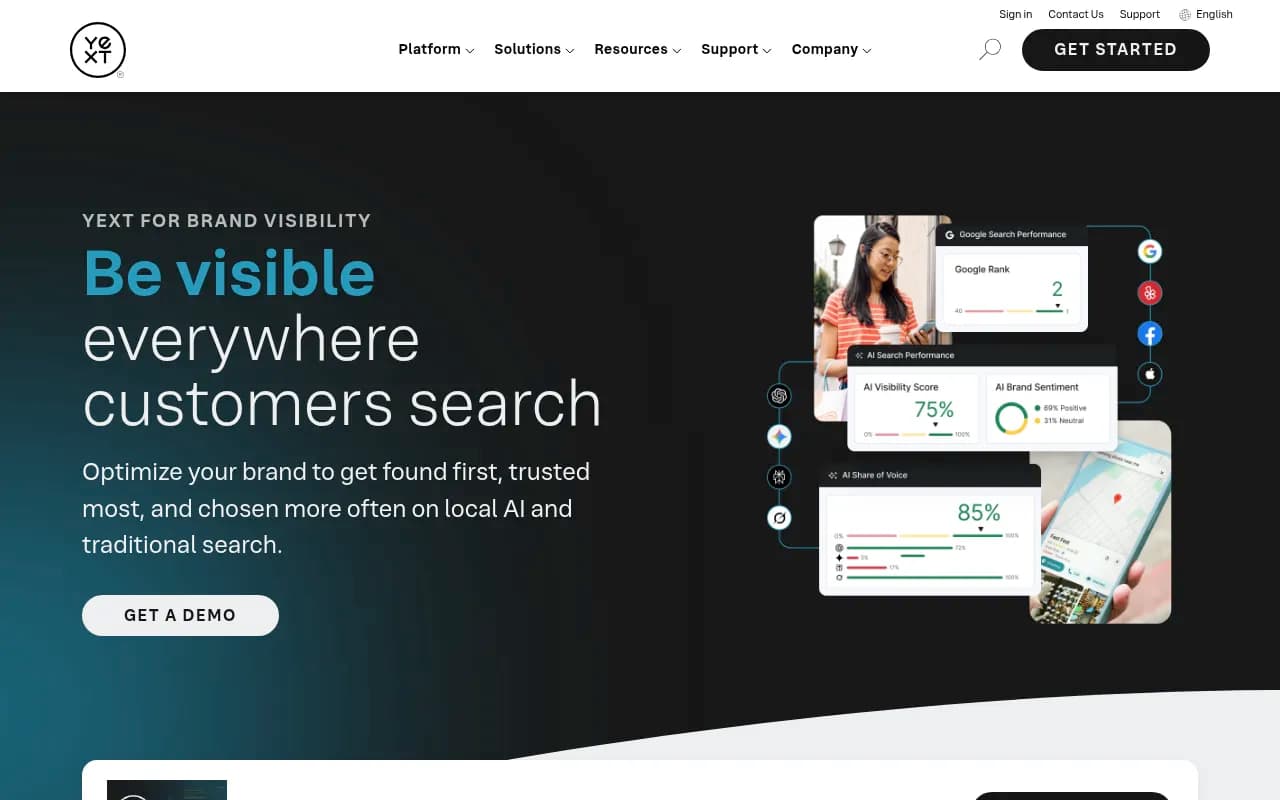
Yext is the enterprise-grade option in this space. It manages listings across 200+ publishers, handles reviews, powers location pages, and now has "Scout" — an AI search and competitive intelligence agent. McDonald's, IHG, Samsung, and FedEx use it, which tells you something about the target customer.
The platform is genuinely powerful for managing thousands of locations at scale. The data accuracy across directories is strong, the API is robust, and the enterprise support is real. But the pricing reflects all of that — custom quotes typically run $10K-$100K+ annually, which puts it completely out of reach for small businesses and most agencies.
One thing worth noting: Whitespark actually markets a "Yext Replacement Service" specifically because some businesses find Yext's pricing hard to justify once they realize much of what it does can be replicated with cheaper tools. That's not a knock on Yext — for a brand managing 500+ locations, the automation is worth it — but it's a real consideration.
Compared to BrightLocal, Yext is less focused on rank tracking and more focused on data distribution and brand consistency at scale. They're solving different problems for different customer sizes.
Pricing: Custom, typically $10K-$100K+ annually.
Best for: Enterprise brands managing hundreds or thousands of locations where data consistency and API access are non-negotiable.
Uberall
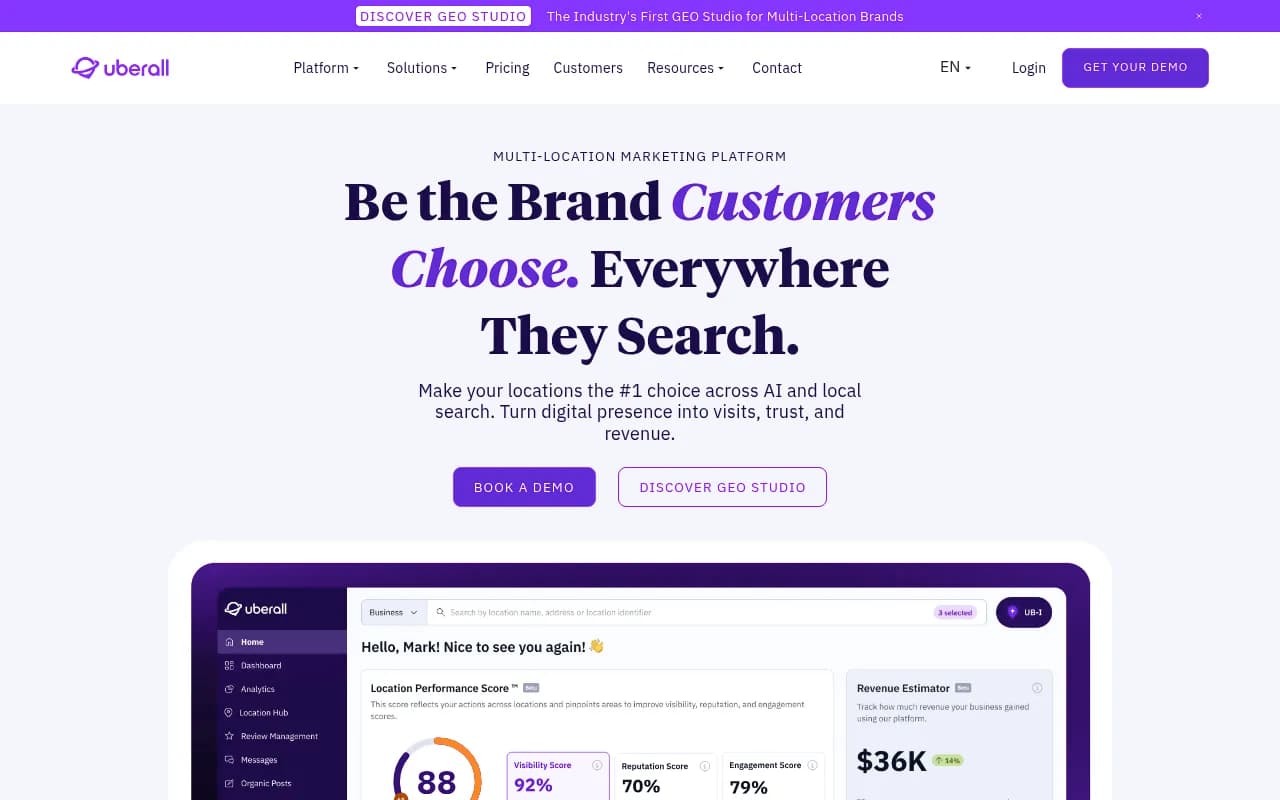
Uberall sits between BrightLocal and Yext in terms of scale and pricing. It manages listings across 150+ directories, handles review management, and has recently launched "GEO Studio" — a product aimed at helping multi-location brands optimize for AI and generative search. KFC, Puma, Burger King, and Shell are among its customers.
The listings management is solid, and the platform handles multi-location complexity well. The GEO Studio addition is interesting — it's one of the few traditional local SEO platforms making a genuine push into AI search optimization, though it's early days and the depth of that feature isn't yet comparable to dedicated AI visibility tools.
Compared to BrightLocal, Uberall is better suited for mid-market and enterprise brands (50-1,000+ locations) and less suited for small businesses or agencies managing individual SMB clients. The $99/mo entry tier sounds accessible, but the features at that level are limited — the more useful tiers start at $399/mo.
Pricing: From $99/mo (Show Up tier) to custom enterprise pricing.
Best for: Mid-market multi-location brands that need solid listings management and are starting to think about AI search visibility.
Synup
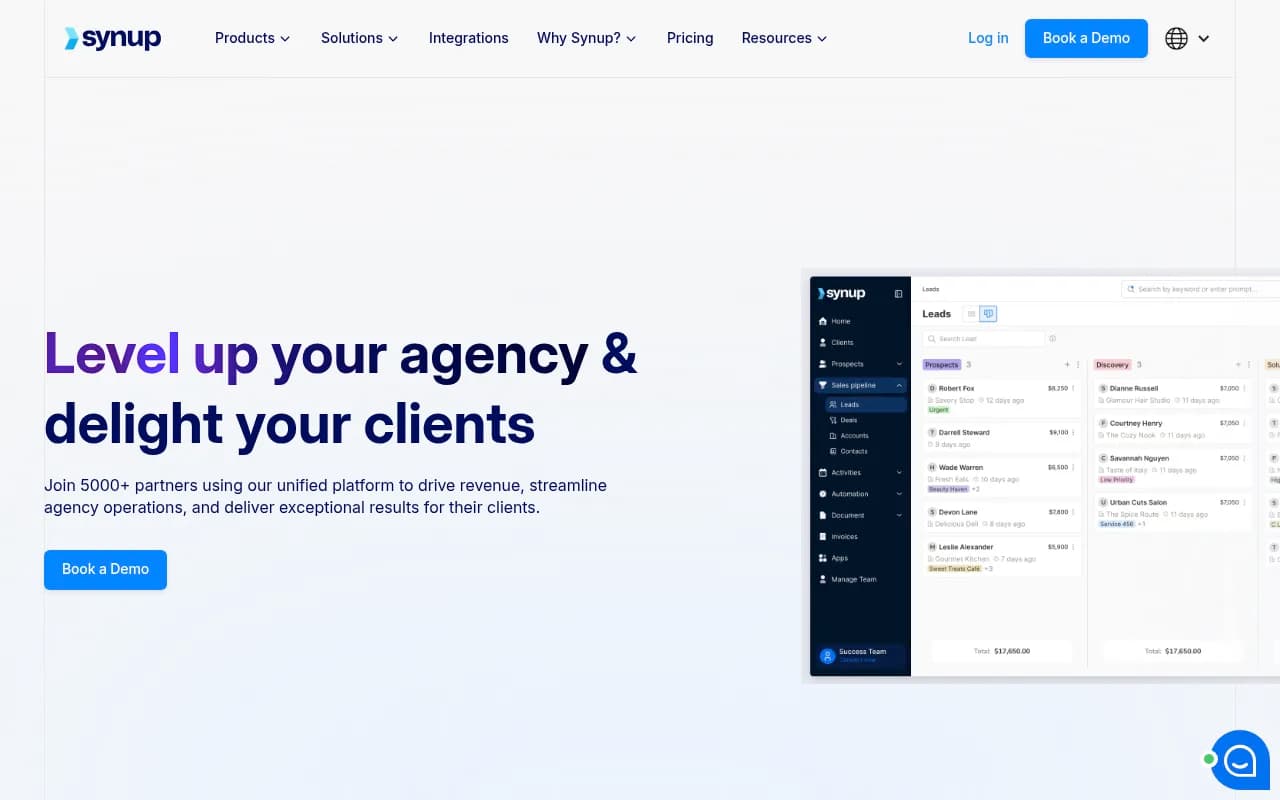
Synup takes a different angle from most local SEO tools — it's built primarily as an agency operating system rather than a local SEO platform. The pitch is that agencies can manage their entire client workflow in one place: lead generation, CRM, sales pipeline, listing management, reputation monitoring, and social media scheduling, all white-labeled.
For agencies that are currently stitching together five or six different tools, Synup's consolidation is genuinely appealing. The white-label capabilities are strong, and the CRM/pipeline features mean you can manage the business side of running an agency alongside the actual SEO work.
The trade-off is depth. Synup's local SEO features — citation building, rank tracking, review management — are functional but not as deep as BrightLocal's. If you're an agency that cares more about operational efficiency and client management than having the most granular local SEO data, Synup is worth a look. If you need BrightLocal-level local SEO depth, you'll probably find Synup's tooling a bit thin.
Pricing: From $79/mo (Base), $199/mo (Agency), $799/mo (Scale). Annual billing saves 20%.
Best for: Digital marketing agencies that want to consolidate their entire client management workflow, not just local SEO.
Moz Local
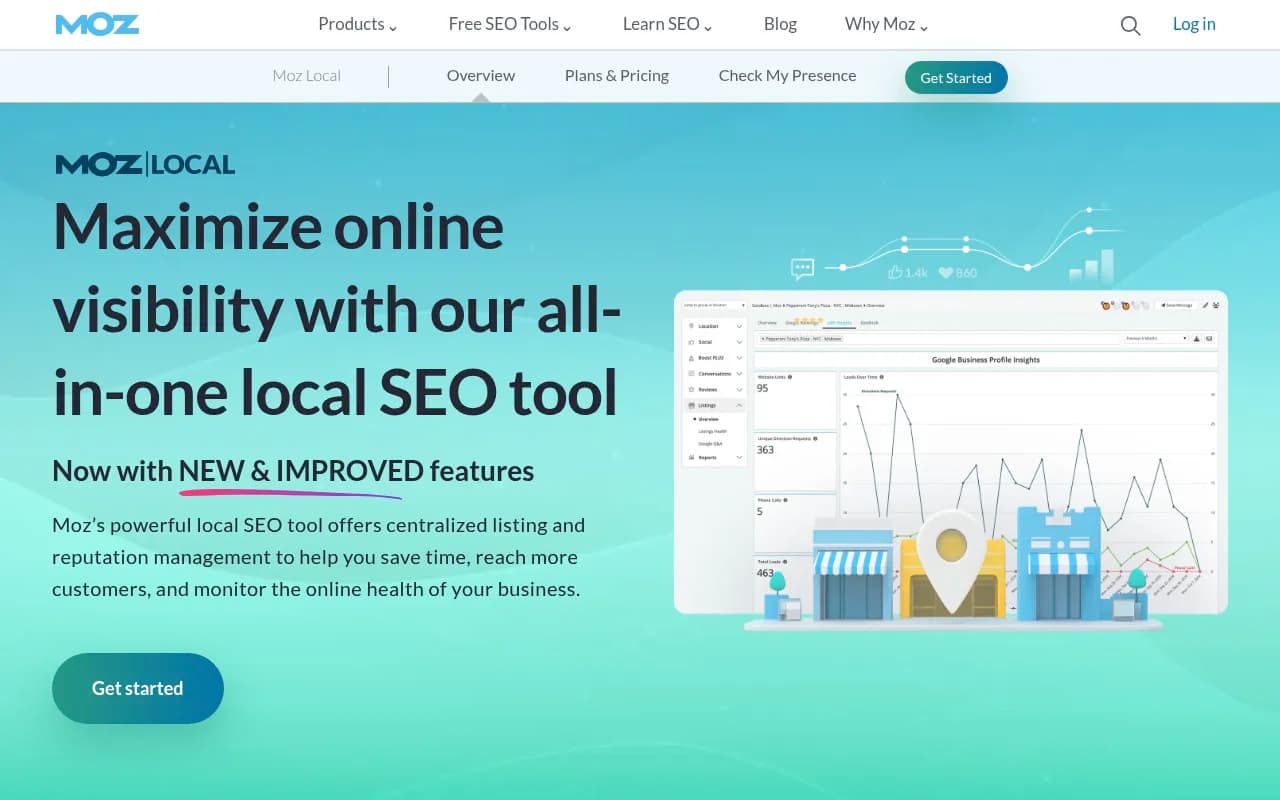
Moz Local is a straightforward listing and reputation management tool from one of the most recognized names in SEO. It handles listing distribution across 50+ directories, review monitoring and response, and local rank tracking. The interface is clean and the data is reliable.
The pricing is genuinely competitive — starting at $14/mo per location on annual billing, which is cheaper than BrightLocal's $39/mo for a single location. For a small business managing one or two locations, Moz Local is worth considering on price alone.
The honest limitation is that Moz Local hasn't kept pace with some competitors on feature development. The citation building is less aggressive than BrightLocal or Whitespark, the rank tracking is less granular than Local Falcon, and there's no geo-grid visualization. It's a solid, reliable tool that does the basics well — but if you need depth in any specific area, you'll likely find it lacking.
The Moz brand also carries weight for clients who recognize it, which matters for some agencies.
Pricing: From $14/mo per location (annual billing). Enterprise pricing for 50+ locations.
Best for: Small businesses and agencies that want reliable listing management at a low per-location cost without needing advanced rank tracking or citation building.
Local Falcon
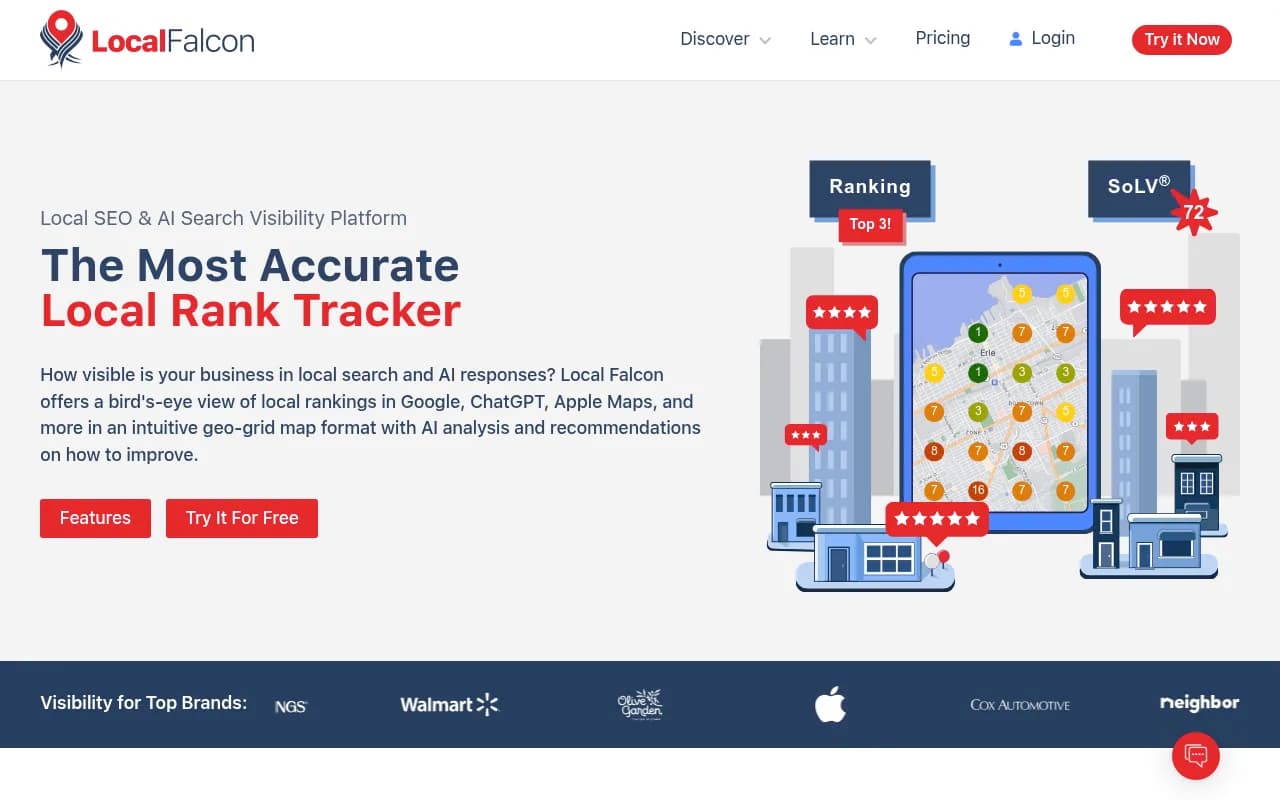
Local Falcon is a specialist tool, not a full local SEO platform. It does one thing — geo-grid rank tracking — and does it better than almost anyone else. The visual heat maps showing your Google Business Profile ranking across a geographic grid are genuinely useful for understanding where you're visible and where you're not.
The platform now also tracks rankings in ChatGPT and Apple Maps alongside Google, which is a meaningful addition. The AI analysis layer provides recommendations on why you're ranking where you are and what to do about it.
Compared to BrightLocal, Local Falcon has no citation building, no review management, and no listing distribution. It's purely a rank visualization tool. Most agencies use it alongside a broader platform rather than instead of one. The credit-based pricing model is flexible — you pay for scans rather than a flat monthly fee, which works well if you're running reports for clients on demand.
Pricing: From $24.99/mo (7,500 credits). Free trial available.
Best for: Agencies and consultants who need detailed geo-grid rank visualization and are happy to use a separate tool for citations and reviews.
Semrush Local
Semrush Local is the local SEO add-on to the Semrush platform. If you're already paying for Semrush for keyword research, site audits, and backlink analysis, adding the local module is a natural extension. The toolset covers GBP management with an AI agent, listing management across 50+ directories, review generation, and a geo-grid map rank tracker.
The AI agent for Google Business Profile management is a genuine differentiator — it can update information, post content, and reply to reviews automatically, which saves real time for agencies managing many locations.
The catch is that Semrush Local isn't cheap as a standalone product. You need a base Semrush subscription ($117.33+/mo on annual billing) plus per-location add-on fees. For someone who doesn't already use Semrush, BrightLocal or Whitespark will almost certainly be cheaper. For existing Semrush users, the consolidation makes sense.
Pricing: Base Semrush from ~$117.33/mo + per-location add-on fees.
Best for: Existing Semrush users who want to add local SEO capabilities without switching platforms.
Whitespark
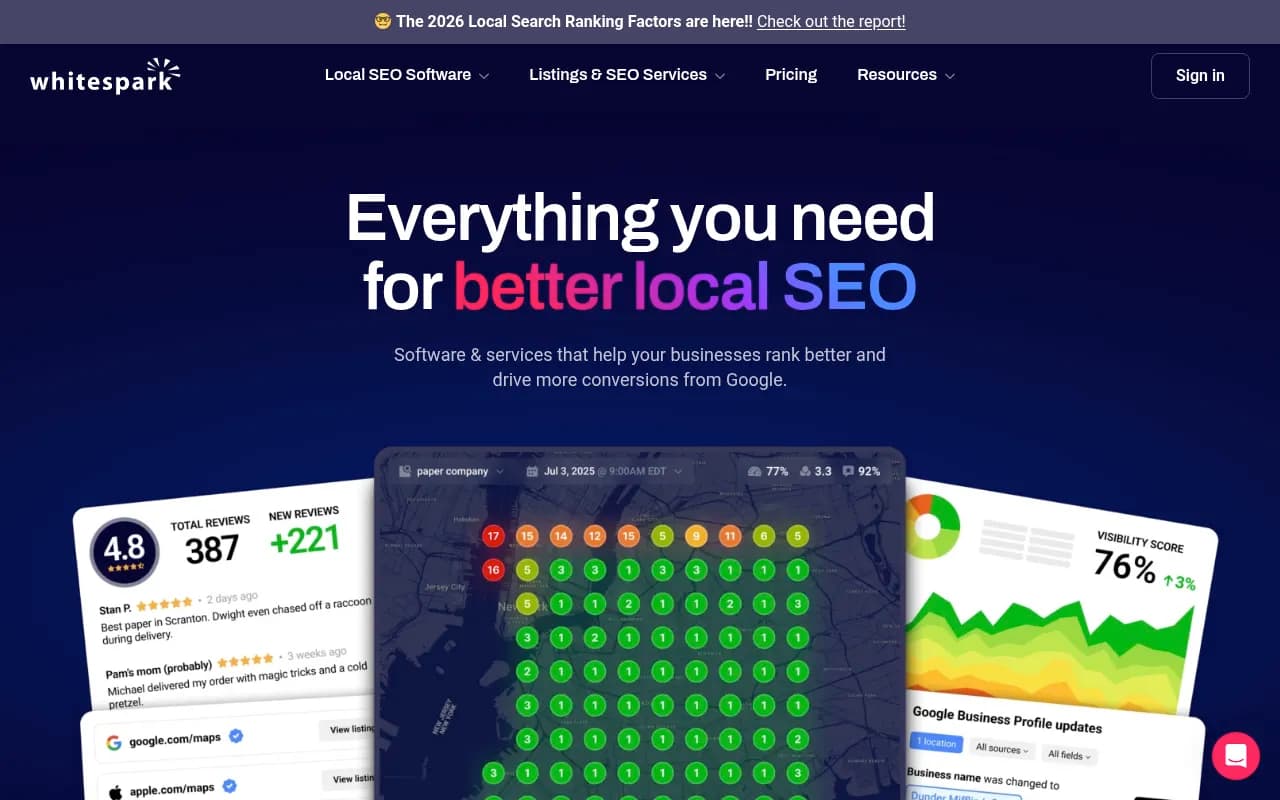
Whitespark is probably the most direct BrightLocal competitor on this list. It covers the same core territory — citation building, rank tracking, Google Business Profile management, and review tools — and is trusted by 150K+ users. The Local Citation Finder is particularly strong for identifying citation opportunities competitors have that you don't.
Where Whitespark arguably beats BrightLocal is citation building depth and the quality of its done-for-you services. The Listings Service is well-regarded, and the Yext Replacement Service is a popular option for businesses that were paying Yext prices and want to get similar results for less. Whitespark also publishes the annual Local Search Ranking Factors report, which gives it genuine credibility in the local SEO community.
The trade-off is that Whitespark's software interface is less polished than BrightLocal's, and the reporting tools are less agency-friendly. BrightLocal has put more work into white-label reporting and client dashboards, which matters if you're running an agency.
Pricing: Free tools available; paid plans from $499/mo for SEO services; Listings Service from $20 one-time; 14-day free trial on rank tracking.
Best for: Local SEO specialists and agencies that prioritize citation building depth and are comfortable with a more utilitarian interface.
Which tool should you pick?
Here's a quick decision guide based on your situation:
- You're a small business managing 1-3 locations and want affordable listing management: Moz Local at $14/mo per location is hard to beat on price.
- You're an agency managing 10-50 client locations and need full local SEO tooling: BrightLocal remains solid, but Whitespark is worth comparing directly — especially if citation building is a priority.
- You need local SEO plus traditional SEO (keyword research, audits, backlinks) in one platform: SE Ranking is the most complete option at a reasonable price.
- You're already using Semrush: Add Semrush Local rather than switching platforms.
- You manage 100+ locations for an enterprise brand: Yext or Uberall are built for that scale.
- You need detailed geo-grid rank visualization: Local Falcon is the specialist choice.
- You're an agency that wants to consolidate client management and local SEO in one place: Synup is worth a look.
- Your brand needs to show up when customers ask AI chatbots for recommendations: Promptwatch is the tool built for that — none of the local SEO platforms above cover AI search visibility in any meaningful depth.
The honest reality is that local SEO and AI search visibility are becoming two separate disciplines that require two separate tools. Most businesses will need both.