Key Takeaways
- Pricing gap is massive: Bluefish requires custom quotes (estimated $4,000+/month for enterprise) with no self-service option. Gauge starts at $95/month with transparent tiers and a free trial.
- Target audience is completely different: Bluefish is built exclusively for Fortune 500 marketing teams with dedicated account management. Gauge targets mid-market brands, agencies, and smaller teams who need AI visibility without enterprise overhead.
- Feature depth vs. accessibility trade-off: Bluefish offers custom audiences, tailored prompts, and deep performance analytics for large teams. Gauge provides a complete toolkit (tracking, gap analysis, recommendations) that's easier to deploy and use day-one.
- Neither platform includes content generation or crawler logs: Both are monitoring and optimization platforms, not end-to-end GEO solutions. If you need AI content creation or real-time crawler tracking, look at platforms like Promptwatch that close the loop from gap analysis to content generation.
- Enterprise requirements decide this: If you need custom audiences, infosec reviews, and white-glove support, Bluefish is the only option here. If you want to start tracking AI visibility this week without a sales cycle, Gauge wins.
- Gauge has clearer actionability: Bluefish emphasizes "understanding how AI thinks" but lacks specifics on what you do with that insight. Gauge explicitly provides onsite and offsite recommendations to improve visibility.
Overview
Bluefish AI
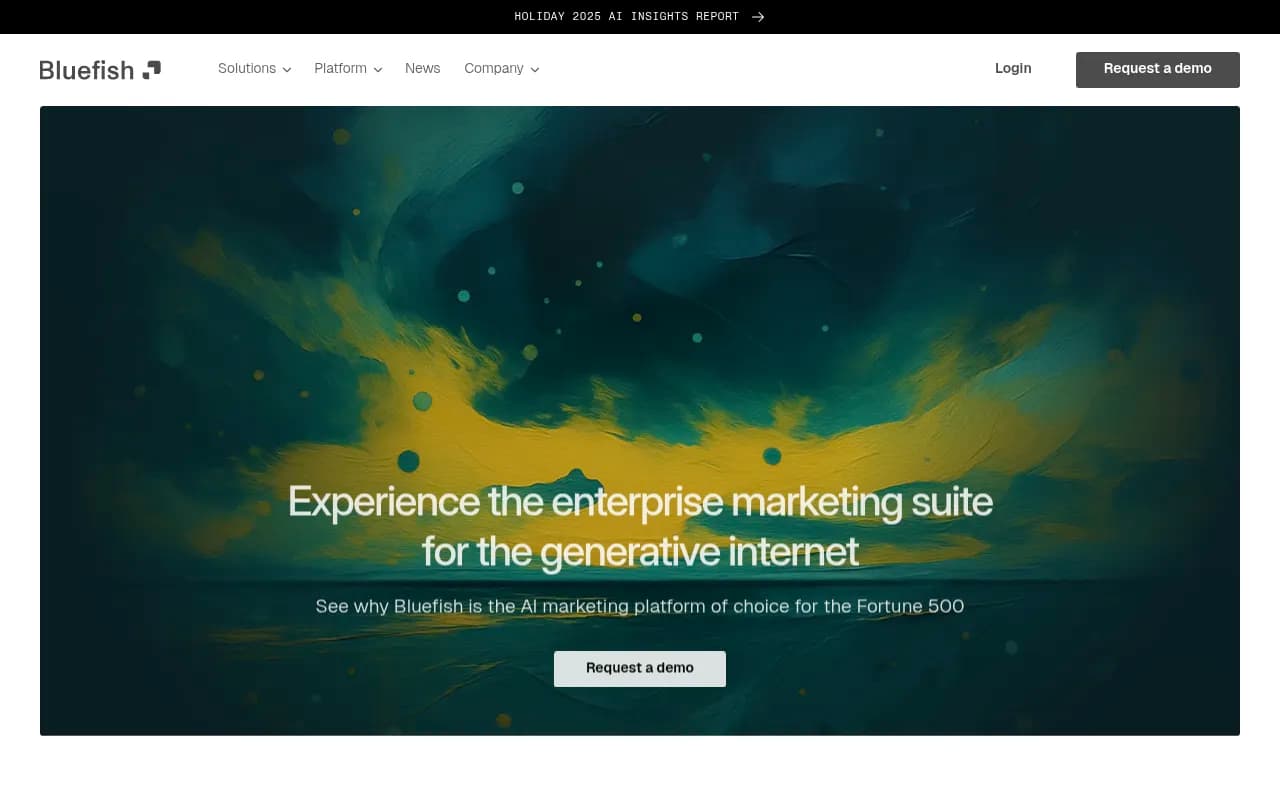
Bluefish AI positions itself as "the AI marketing platform of choice for the Fortune 500." It's an enterprise-focused platform that monitors brand presence across AI search engines (ChatGPT, Claude, Gemini, Perplexity, Copilot, AI Overviews) and agentic commerce channels. The platform emphasizes depth and control with custom audiences, tailored prompts, and performance analytics designed for large marketing teams. Bluefish consistently passes infosec reviews and offers white-glove support, but it comes with enterprise-level pricing (estimated $4,000+/month) and no transparent tiers or self-service options. The platform lacks content generation, crawler logs, and several optimization features found in more comprehensive GEO tools.
Gauge
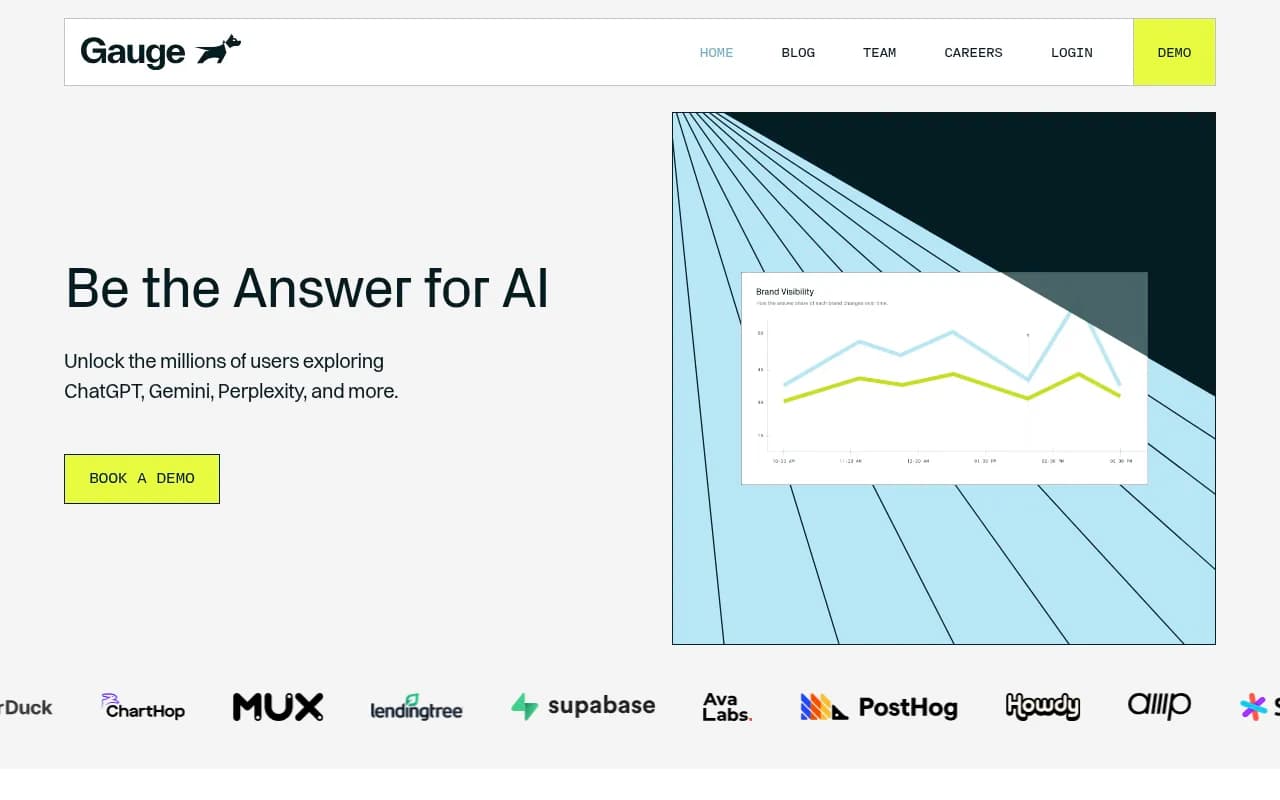
Gauge is an AI visibility platform that tracks brand mentions across ChatGPT, Claude, Gemini, Perplexity, Copilot, AI Mode, and AI Overviews. It's designed for marketing teams and agencies who need to monitor, analyze, and improve their AI search presence without enterprise complexity. Gauge provides citation analysis, content gap identification, competitor benchmarking, and actionable recommendations (both onsite and offsite). Pricing starts at $95/month with annual billing, and there's a free trial to test the platform. The focus is on accessibility -- you can start tracking AI visibility quickly without a lengthy sales cycle or custom implementation.
Side-by-Side Comparison
| Feature | Bluefish AI | Gauge |
|---|---|---|
| Starting price | Custom quote ($4,000+/mo est.) | $95/mo (annual billing) |
| Free trial | No (demo required) | Yes |
| Target audience | Fortune 500 enterprises | Mid-market brands, agencies, SMBs |
| AI engines tracked | ChatGPT, Claude, Gemini, Perplexity, Copilot, AI Overviews, agentic commerce | ChatGPT, Claude, Gemini, Perplexity, Copilot, AI Mode, AI Overviews |
| Custom audiences | ✓ (enterprise feature) | ✗ |
| Tailored prompts | ✓ (enterprise feature) | Standard prompt sets |
| Citation analysis | ✓ | ✓ |
| Competitor benchmarking | ✓ | ✓ |
| Content gap analysis | Limited visibility | ✓ (explicit gap identification) |
| Actionable recommendations | Performance analytics focus | ✓ (onsite + offsite) |
| Content generation | ✗ | ✗ |
| Crawler logs | ✗ | ✗ |
| Infosec reviews | ✓ (passes consistently) | Standard security |
| Account management | White-glove support | Self-service + support |
| Transparent pricing | ✗ | ✓ |
Pricing comparison
This is where the two platforms diverge completely.
| Plan | Bluefish AI | Gauge |
|---|---|---|
| Entry tier | Custom quote only (est. $4,000+/mo) | $95/mo (annual billing) |
| Mid-tier | Custom quote | Growth: $399/mo |
| Enterprise | Custom quote | Custom pricing |
| Free trial | No (demo-based sales) | Yes |
| Self-service signup | No | Yes |
Bluefish doesn't publish pricing. Based on their enterprise positioning and Fortune 500 client base, expect a minimum of $4,000/month and likely much higher depending on scale and customization. You'll go through a sales process, demo, and custom quote.
Gauge has transparent pricing. The entry plan at $95/month (billed annually) gets you started with AI visibility tracking. The Growth plan at $399/month adds more prompts, deeper analytics, and team features. Enterprise pricing is available for larger organizations, but you can start self-service without talking to sales.
If budget flexibility and speed-to-value matter, Gauge wins. If you have enterprise budget and need custom implementation, Bluefish is built for that.
Target audience and positioning
Bluefish AI: Enterprise-only
Bluefish explicitly targets Fortune 500 brands. The website leads with "the AI marketing platform of choice for the Fortune 500" and emphasizes passing infosec reviews, custom audiences, and white-glove support. This is a platform for large marketing teams with dedicated budgets, legal/security requirements, and complex organizational needs.
If you're a mid-market brand or agency, Bluefish isn't designed for you. The lack of transparent pricing and self-service options signals that they're filtering for enterprise buyers who expect (and can afford) custom implementations.
Gauge: Mid-market and agencies
Gauge targets marketing teams and agencies who need AI visibility without enterprise overhead. The $95/month entry point, free trial, and self-service signup make it accessible to smaller teams. The platform emphasizes getting started quickly -- "track, understand, act" -- rather than lengthy implementations.
If you're a growing brand, agency managing multiple clients, or a team that needs to prove ROI before scaling up, Gauge is the practical choice.
Feature depth: Custom audiences vs. standard tracking
Bluefish's enterprise features
Bluefish differentiates on custom audiences and tailored prompts. For a Fortune 500 brand, generic prompt sets don't reflect how real customers search. Bluefish lets you define custom personas, geographies, and prompt variations that match your actual market.
The platform also emphasizes "understanding how AI thinks" with deep performance analytics. You get visibility into why AI engines cite (or don't cite) your brand, not just raw mention counts.
The downside: Bluefish doesn't clearly explain what you do with these insights. The website talks about "optimization workflows" and "measurement frameworks" but lacks specifics on actionable next steps. There's no content generation, no crawler logs, no explicit gap-filling tools.
Gauge's actionability focus
Gauge takes a more direct approach: track mentions, identify gaps, get recommendations. The platform explicitly provides onsite recommendations (what to add to your website) and offsite recommendations (where to build presence -- affiliates, Reddit, etc.).
Gauge also highlights content gap analysis -- showing you where competitors are cited but you're not. This is the core value of a GEO platform: knowing what's missing so you can fix it.
The trade-off: Gauge doesn't offer custom audiences or tailored prompts. You get standard prompt sets across the AI engines it tracks. For most mid-market brands, that's enough. For a Fortune 500 company with hyper-specific market segments, it's limiting.
AI engines covered
Both platforms track the major AI search engines:
- ChatGPT (OpenAI)
- Claude (Anthropic)
- Gemini (Google)
- Perplexity
- Copilot (Microsoft)
- Google AI Overviews
Bluefish adds agentic commerce tracking -- monitoring how your brand appears in AI-driven shopping recommendations. This is relevant if you're an e-commerce brand or CPG company where AI agents are starting to influence purchase decisions.
Gauge includes AI Mode (Google's conversational search) in addition to AI Overviews, giving slightly broader Google coverage.
Neither platform tracks DeepSeek, Grok, Mistral, or Meta AI. If you need coverage across 10+ AI engines, look at platforms like Promptwatch that monitor a wider range of models.

What's missing from both platforms
Neither Bluefish nor Gauge is a complete GEO solution. Here's what you won't get:
No content generation
Both platforms show you where you're invisible in AI search, but neither helps you create the content to fix it. You'll need to write articles, update pages, and build offsite presence manually -- or use a separate content tool.
Platforms like Promptwatch include AI content generation grounded in citation data, so you can go from gap analysis to published content in one workflow.
No crawler logs
You won't see real-time logs of AI crawlers (ChatGPT, Claude, Perplexity bots) hitting your website. Crawler logs tell you which pages AI engines are reading, how often they return, and what errors they encounter. This is critical for diagnosing indexing issues.
Again, Promptwatch includes crawler log tracking as part of its platform.
No prompt intelligence
Neither platform provides volume estimates or difficulty scores for prompts. You don't know which prompts are high-traffic vs. low-traffic, or which ones are easier to rank for. This makes prioritization harder -- you're guessing at which gaps to fill first.
Use case fit
Choose Bluefish AI if:
- You're a Fortune 500 brand with enterprise budget ($4,000+/month is comfortable)
- You need custom audiences and tailored prompts to match specific market segments
- Your organization requires infosec reviews and white-glove support
- You have a large marketing team that can absorb a complex platform
- You're tracking agentic commerce and AI-driven shopping recommendations
- You're willing to go through a sales cycle and custom implementation
Choose Gauge if:
- You're a mid-market brand, agency, or growing company
- You need to start tracking AI visibility this week, not next quarter
- Budget is a constraint (sub-$500/month is the target)
- You want transparent pricing and a free trial before committing
- You need clear, actionable recommendations (onsite + offsite) to improve visibility
- You prefer self-service tools over account management overhead
Pros and cons
Bluefish AI
Pros:
- Built for enterprise scale with infosec compliance and white-glove support
- Custom audiences and tailored prompts for precise market targeting
- Deep performance analytics to understand AI citation patterns
- Agentic commerce tracking for e-commerce and CPG brands
- Proven with Fortune 500 clients
Cons:
- No transparent pricing (estimated $4,000+/month minimum)
- No self-service option -- requires sales cycle and demo
- Lacks content generation and crawler logs
- Actionability is vague -- "optimization workflows" without clear next steps
- Overkill for mid-market brands and agencies
Gauge
Pros:
- Transparent pricing starting at $95/month with free trial
- Self-service signup -- start tracking AI visibility immediately
- Clear actionable recommendations (onsite + offsite)
- Content gap analysis shows exactly where competitors beat you
- Accessible to mid-market brands and agencies
Cons:
- No custom audiences or tailored prompts
- Standard prompt sets may not match niche market segments
- Lacks content generation and crawler logs
- Not built for enterprise infosec requirements
- Fewer AI engines tracked compared to comprehensive platforms
Final verdict
Bluefish AI and Gauge serve completely different buyers. If you're a Fortune 500 brand with enterprise budget and complex requirements, Bluefish is the only option here that fits. If you're a mid-market brand, agency, or team that needs to start tracking AI visibility without a six-figure commitment, Gauge is the practical choice.
The pricing gap ($4,000+/month vs. $95/month) reflects the audience gap. Bluefish is selling custom implementations and white-glove support. Gauge is selling accessibility and speed-to-value.
One thing to note: neither platform is a complete GEO solution. You'll still need to create content, track crawlers, and prioritize prompts separately. If you want an end-to-end workflow -- from gap analysis to content generation to crawler tracking -- look at platforms like Promptwatch that close the loop.
Bottom line: Choose Bluefish if you're enterprise and need custom audiences. Choose Gauge if you're mid-market and need to start this week. Choose neither if you need content generation and crawler logs as part of the package.