Key Takeaways
- Price gap is massive: LLM Pulse starts at €49/mo with transparent pricing; Bluefish AI requires custom quotes estimated at $4,000+/mo for enterprise plans
- Setup speed differs by 3-4 weeks: LLM Pulse averages 2-minute setup, Bluefish AI takes 4+ weeks due to custom configurations and enterprise onboarding
- Target audience is completely different: Bluefish AI built exclusively for Fortune 500 marketing teams; LLM Pulse serves 500+ brands from startups to mid-market
- LLM Pulse offers trials, Bluefish doesn't: 14-day free trial vs demo-only sales process
- Feature depth vs accessibility trade-off: Bluefish provides custom audiences and tailored prompts for complex enterprise needs; LLM Pulse delivers core tracking, citations, sentiment, and content recommendations without the complexity
- Neither platform offers content generation or crawler logs: Both are monitoring-focused tools that lack optimization features like AI content creation or real-time crawler tracking found in platforms like Promptwatch
Overview
Bluefish AI
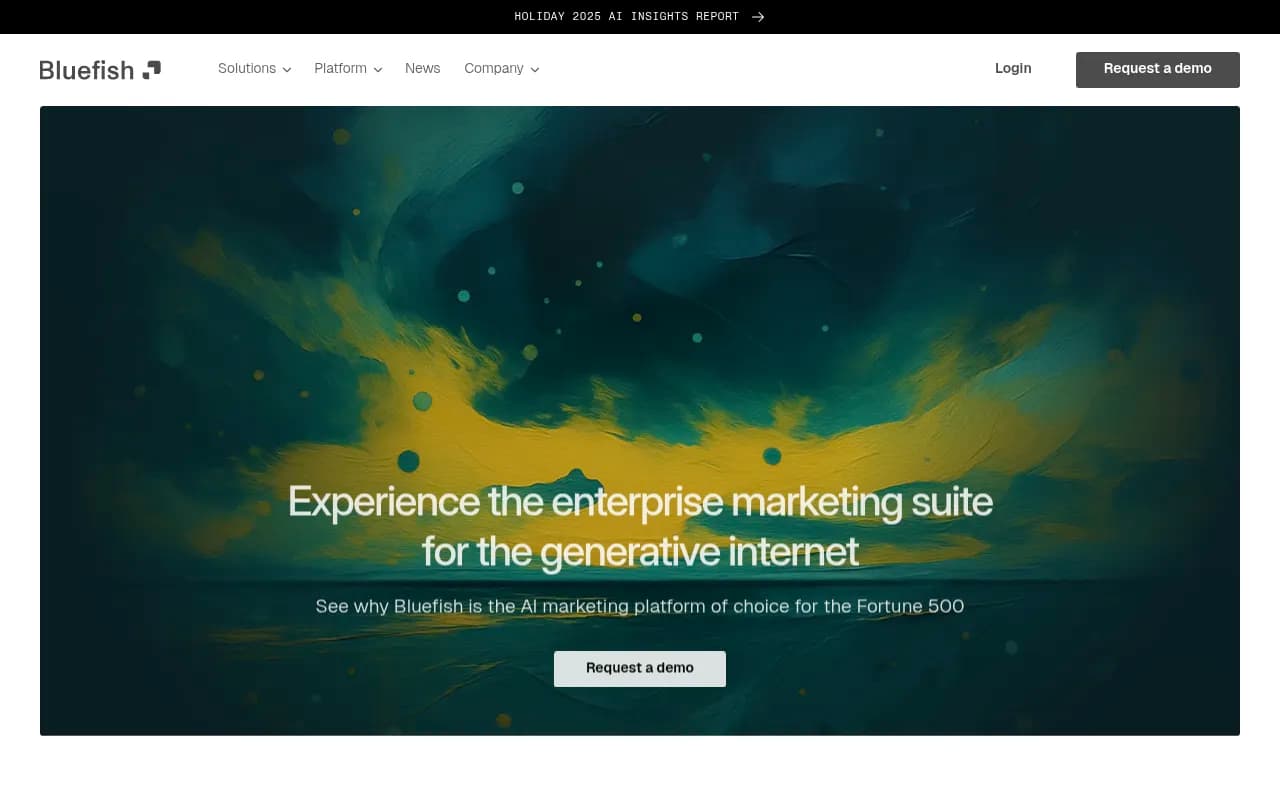
Bluefish AI positions itself as "the AI marketing platform of choice for the Fortune 500." It's an enterprise-focused monitoring suite that helps large marketing teams track brand presence across AI search engines and what they call "agentic commerce channels." The platform emphasizes depth over simplicity -- custom audiences, tailored prompt libraries, and performance analytics designed for teams that need granular control and can afford to wait weeks for implementation.
No self-service signup. No transparent pricing. Everything runs through a sales process, which tells you exactly who this tool is for.
LLM Pulse
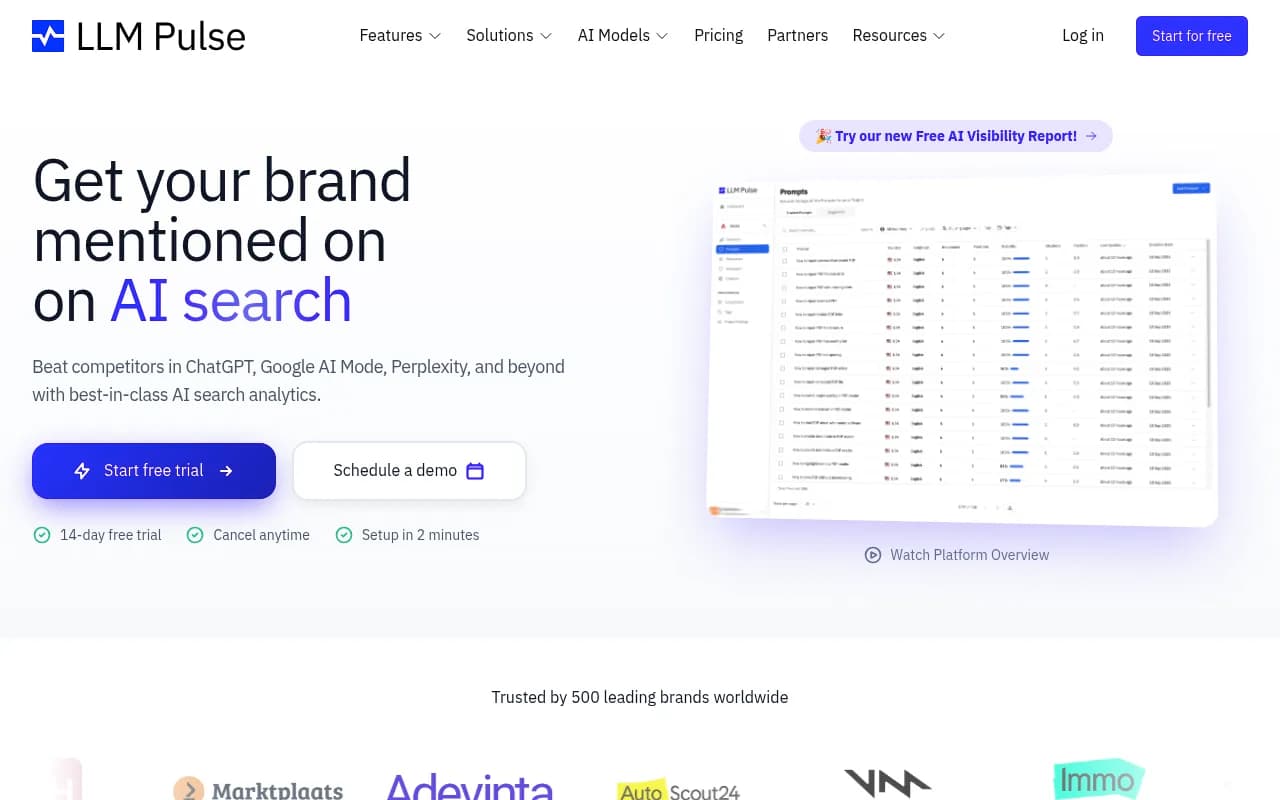
LLM Pulse takes the opposite approach: get started in 2 minutes, see results within days, pay a fixed monthly fee. It tracks how ChatGPT, Perplexity, Gemini, Google AI Mode, and other LLMs mention your brand across key prompts. You get visibility scores, citation analysis, sentiment tracking, competitor benchmarking, and AI-powered content recommendations to improve your presence.
Used by 500+ brands including Swiss Marketplace Group and Voicemod. The pitch is straightforward: track what AI says about you before your customers see it.
Side-by-Side Comparison
| Feature | Bluefish AI | LLM Pulse |
|---|---|---|
| Starting price | Custom quote (~$4,000+/mo) | €49/mo (Starter) |
| Free trial | No (demo only) | 14 days |
| Setup time | 4+ weeks | 2 minutes |
| AI models tracked | 10+ (ChatGPT, Perplexity, Gemini, etc.) | 10+ (ChatGPT, Perplexity, Gemini, Google AI Mode, DeepSeek, Grok, Claude, Copilot, Meta AI) |
| Custom audiences | Yes | No |
| Tailored prompts | Yes | Standard prompt tracking |
| Citation analysis | Yes | Yes |
| Sentiment tracking | Yes | Yes |
| Competitor benchmarking | Yes | Yes |
| Content recommendations | No | Yes (AI-powered) |
| Content generation | No | No |
| Crawler logs | No | No |
| Multi-language support | Yes (strong) | Yes |
| Target customer | Fortune 500 | Startups to mid-market |
| Infosec/compliance | Enterprise-grade | Standard |
Pricing comparison
| Plan | Bluefish AI | LLM Pulse |
|---|---|---|
| Entry tier | Custom quote (est. $4,000+/mo) | €49/mo (Starter) |
| Mid tier | Custom quote | €99/mo (Growth) |
| High tier | Custom quote | €299/mo (Scale) |
| Free trial | None | 14 days |
| Annual discount | Unknown | 17% |
| Billing | Custom contract | Monthly or annual |
Bluefish AI doesn't publish pricing. Based on their enterprise positioning and feature set, industry estimates put entry-level contracts around $4,000-$6,000/month minimum. LLM Pulse's top public tier is €299/mo -- roughly 13-20x cheaper than Bluefish's estimated floor.
Target audience and positioning
Bluefish AI explicitly targets Fortune 500 companies. Their website leads with "Enterprise brands use Bluefish" and emphasizes passing infosec reviews, custom data segmentation, and "depth and control" for competitive markets. The sales process, implementation timeline, and pricing model all signal this is built for teams with dedicated budgets and patience for enterprise software cycles.
LLM Pulse serves a different world entirely. Their 500+ customer base includes startups, mid-market brands, and agencies who need visibility tracking without the enterprise overhead. The 2-minute setup and €49 entry point make it accessible to teams testing AI search for the first time or running lean marketing operations.
If you're a three-person marketing team at a Series A startup, Bluefish won't even talk to you. If you're a global brand with a 50-person marketing org and a seven-figure martech budget, LLM Pulse might feel too lightweight.
Feature depth and control
Bluefish AI's core differentiator is customization. You get tailored prompt libraries built around your specific market, custom audience segments that match your buyer personas, and deep performance analytics that go beyond surface metrics. Their platform is designed for teams that need to slice data in complex ways -- by region, by product line, by customer segment.
The trade-off: complexity. Setup takes four weeks because you're not just turning on a dashboard, you're configuring a system. Bluefish emphasizes "how AI thinks" and "metrics that matter," which sounds great until you realize it means your team needs to define what those metrics are and how to measure them.
LLM Pulse keeps it simpler. You track prompts that matter to your business, see how often you're mentioned, analyze which sources AI cites, benchmark against competitors, and get content recommendations to improve. The platform doesn't try to be infinitely flexible -- it gives you the core workflows most teams need without requiring a data analyst to interpret results.
For content optimization, LLM Pulse provides AI-powered recommendations based on what's working. Bluefish doesn't offer this -- they focus on measurement and leave optimization to you. Neither platform generates content or tracks AI crawler activity, which are table stakes in more comprehensive GEO platforms like Promptwatch.

AI model coverage
Both platforms track 10+ AI models including ChatGPT, Perplexity, Gemini, and Google AI Mode. LLM Pulse explicitly lists DeepSeek, Grok, Claude, Copilot, and Meta AI with some marked as "Enterprise" tier features. Bluefish AI mentions tracking across "AI search and agentic commerce" but doesn't break down model-by-model coverage on their public site.
In practice, both cover the major LLMs that matter for brand visibility. The difference is how they present the data. Bluefish gives you more ways to segment and analyze responses; LLM Pulse gives you clearer out-of-the-box dashboards.
Setup and onboarding
LLM Pulse wins on speed. Sign up, add your prompts, start tracking. The platform claims 2-minute setup and based on their self-service model, that's credible. You're tracking responses within hours.
Bluefish AI averages four weeks from contract signature to full deployment. This isn't a knock on Bluefish -- it's the nature of enterprise software. You're working with their team to define custom audiences, build tailored prompt sets, configure alert rules, and integrate with your existing martech stack. If you need that level of customization, the time investment makes sense. If you just want to see what ChatGPT says about your brand, it's overkill.
Citations and source analysis
Both platforms analyze which sources AI models cite when mentioning your brand. This is critical -- if AI is pulling information from a competitor's blog, a Reddit thread, or an outdated press release, you need to know.
LLM Pulse surfaces citations in their analysis dashboard and uses them to power content recommendations. Bluefish AI provides citation tracking as part of their "deep performance analytics" but doesn't appear to offer automated content suggestions based on that data.
Neither platform tracks Reddit discussions or YouTube videos as standalone features, which limits your ability to influence those citation sources. More comprehensive platforms monitor these channels because they heavily influence AI recommendations.
Competitor benchmarking
Both tools let you track competitors and compare share of voice across AI models. LLM Pulse shows competitor mentions alongside yours in their analysis views. Bluefish AI emphasizes "differentiation" and provides custom competitor sets as part of their enterprise configuration.
The practical difference: with LLM Pulse you pick competitors and start comparing immediately. With Bluefish AI you work with their team to define competitive sets that match your market structure, which gives you more control but takes longer.
Sentiment analysis
Both platforms track sentiment -- whether AI models describe your brand positively, negatively, or neutrally. This matters because a mention isn't valuable if the AI is telling users your product is overpriced or unreliable.
LLM Pulse includes sentiment scoring in their core tracking. Bluefish AI covers sentiment as part of their "influence" measurement framework. Implementation details aren't public for either platform, but both recognize that visibility without positive sentiment is a problem.
Content optimization and recommendations
LLM Pulse provides AI-powered content recommendations to help you improve how you appear in LLM responses. These suggestions are based on citation analysis and gaps in your current content.
Bluefish AI doesn't offer this feature. Their platform is measurement-focused -- they show you the data, you figure out what to do with it. For enterprise teams with dedicated content and SEO resources, that's fine. For smaller teams, it means more work.
Neither platform generates content for you or provides the kind of Answer Gap Analysis and AI content creation tools found in optimization-focused platforms. They're monitoring dashboards, not content engines.
Enterprise features and compliance
Bluefish AI emphasizes that they "consistently pass infosec reviews with ease" and offer enterprise-grade data segmentation. If you're at a regulated company or need SOC 2 compliance, custom data retention policies, and SSO, Bluefish is built for that.
LLM Pulse doesn't highlight enterprise compliance features on their public site. Their pricing and positioning suggest they're optimized for teams that don't need those checkboxes.
Reporting and integrations
Bluefish AI mentions that "data teams get more ways to customize, segment, and optimize data in ways competitors can't match." This suggests flexible export options and possibly API access, though specifics aren't public.
LLM Pulse doesn't detail integrations or API availability on their site. Their focus is on the core tracking dashboard rather than feeding data into other systems.
For teams that need to pipe AI visibility data into Looker Studio, Tableau, or custom BI tools, Bluefish likely has more options. For teams that just need a dashboard to check weekly, LLM Pulse is sufficient.
Pros and cons
Bluefish AI pros
- Custom audiences and tailored prompts for complex market segmentation
- Enterprise-grade compliance and infosec
- Deep performance analytics with flexible data views
- Built for Fortune 500 scale and complexity
- Strong multi-language support
Bluefish AI cons
- No transparent pricing (estimated $4,000+/mo minimum)
- 4+ week implementation timeline
- No free trial or self-service option
- No content recommendations or optimization features
- Overkill for small to mid-market teams
- No content generation or crawler log tracking
LLM Pulse pros
- Transparent pricing starting at €49/mo
- 2-minute setup, immediate results
- 14-day free trial
- AI-powered content recommendations
- Clear dashboards without enterprise complexity
- 500+ brands already using it
- Annual billing discount (17%)
LLM Pulse cons
- No custom audience segmentation
- Less flexible for complex enterprise needs
- No mention of enterprise compliance features
- Limited customization compared to Bluefish
- No content generation or crawler logs
- May lack depth for Fortune 500 requirements
Who should choose Bluefish AI
Pick Bluefish AI if you're:
- A Fortune 500 brand with a dedicated AI visibility budget
- Managing multiple product lines or regions that need separate tracking
- Required to pass enterprise infosec reviews
- Willing to invest 4+ weeks in implementation for deeper customization
- Working with a marketing team large enough to use complex analytics
- Comfortable with custom quote pricing in the $4,000+/mo range
Bluefish makes sense when you need the platform to bend to your organizational structure, not the other way around.
Who should choose LLM Pulse
Pick LLM Pulse if you're:
- A startup, scale-up, or mid-market brand testing AI visibility for the first time
- Looking for transparent pricing and fast setup
- Working with a lean marketing team that needs clear insights, not complex analytics
- Want content recommendations to actually improve your AI presence
- Need to show results within days, not months
- Prefer a 14-day trial over a sales demo
LLM Pulse works when you want to start tracking AI mentions this week and iterate from there.
Final verdict
These tools serve completely different markets. Bluefish AI is enterprise software with enterprise pricing, enterprise timelines, and enterprise features. LLM Pulse is a focused AI visibility tracker you can start using today.
For most teams reading this comparison, LLM Pulse is the practical choice. The €49-€299/mo pricing is accessible, the 2-minute setup means you're tracking within hours, and the content recommendations help you actually improve your AI presence instead of just measuring it. The 14-day trial removes risk.
Bluefish AI makes sense for a narrow segment: large enterprises with complex needs, big budgets, and the patience for custom implementations. If you're managing AI visibility for a global brand across dozens of markets and product lines, and you have $50,000+/year to spend on this category, Bluefish's depth might justify the investment.
But if you're trying to understand what ChatGPT says about your brand, track competitors, and get actionable recommendations without spending a month on setup, LLM Pulse delivers what you need at a fraction of the cost.
One final note: both platforms are monitoring-only tools. If you want to close the loop from tracking to optimization -- with features like AI crawler logs, content gap analysis, and AI-powered content generation -- you'll need a more comprehensive GEO platform that actually helps you create content that ranks in AI search, not just measure what's already happening.