Key Takeaways
- Bluefish AI is a specialized AI marketing platform focused exclusively on brand visibility across AI search engines and agentic commerce -- no technical SEO, no site speed tools, no content generation. Lumar is a full website optimization suite that includes GEO/AEO alongside technical SEO, site speed monitoring, web accessibility testing, and custom analytics.
- Pricing is opaque for both platforms (custom enterprise quotes only), but Bluefish starts around $4,000+/month while Lumar's pricing varies based on site size and feature mix. Neither offers transparent tiers or self-service plans.
- Bluefish targets Fortune 500 marketing teams who need deep AI brand monitoring with custom audiences and tailored prompts. Lumar targets enterprise SEO and web teams who need a unified platform for technical optimization, performance monitoring, and AI visibility.
- Lumar includes AI-powered dev ticket generation, Lighthouse performance reports at scale, WCAG 2.2 accessibility testing, and custom analytics dashboards -- none of which Bluefish offers. Bluefish offers deeper AI commerce tracking and brand sentiment analysis across AI platforms.
- If your primary goal is understanding and influencing how AI engines talk about your brand, Bluefish is the specialist. If you need a comprehensive website optimization platform that also covers AI search visibility, Lumar is the broader toolkit.
- Neither platform includes content generation or crawler log analysis. If you need those capabilities alongside AI visibility tracking, Promptwatch fills that gap with Answer Gap Analysis, an AI writing agent, and real-time AI crawler logs.
Overview
Bluefish AI
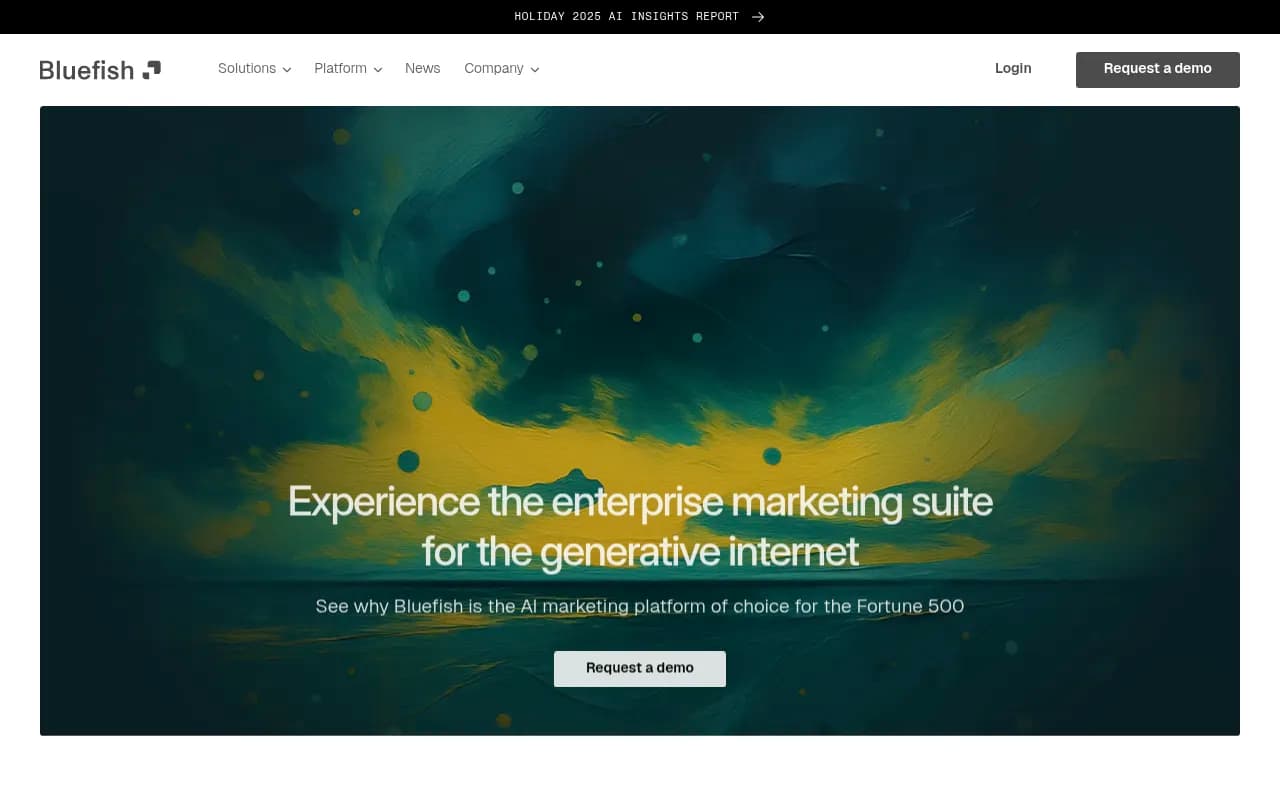
Bluefish AI positions itself as "the AI marketing platform of choice for the Fortune 500." It's built specifically for large marketing teams who need to monitor and optimize their brand's presence across AI search engines like ChatGPT, Perplexity, Claude, and emerging agentic commerce channels. The platform emphasizes depth over breadth -- custom audiences, tailored prompts, and what they call "understanding how AI thinks" rather than just tracking share-of-voice metrics.
Bluefish doesn't do technical SEO. It doesn't audit your site structure or check your Core Web Vitals. It's laser-focused on one question: how do AI engines perceive and recommend your brand?
Lumar
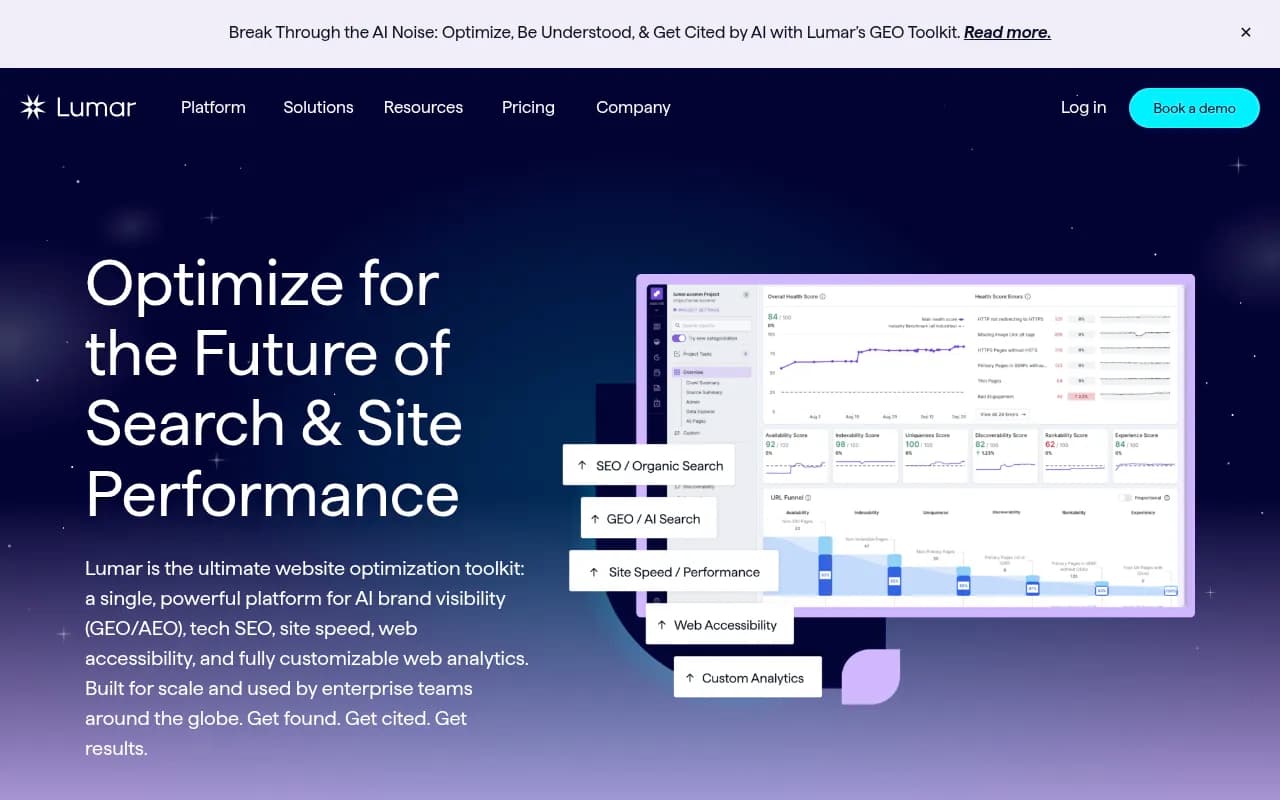
Lumar (formerly Deepcrawl) is an all-in-one website optimization platform used by enterprise teams at Adobe, Deloitte, and other large organizations. It combines technical SEO auditing, AI search visibility (GEO/AEO), site speed monitoring, web accessibility testing, and fully customizable analytics in a single toolkit.
Lumar's GEO capabilities are one module within a broader platform. You get AI brand mention tracking, content evaluation for AI understanding, and technical GEO metrics -- but you also get hundreds of technical SEO reports, Lighthouse performance data at scale, WCAG accessibility testing, and the ability to build custom metrics for any website data you need.
The core difference: Bluefish is a specialist AI marketing tool. Lumar is a generalist website optimization platform that includes AI visibility as part of a larger suite.
Side-by-Side Comparison
| Feature | Bluefish AI | Lumar |
|---|---|---|
| Primary focus | AI search visibility & brand monitoring | Full website optimization (SEO, GEO, speed, accessibility) |
| AI platforms tracked | Major AI search engines + agentic commerce | Major AI platforms (ChatGPT, Perplexity, Claude, etc.) |
| Technical SEO auditing | No | Yes (hundreds of built-in reports) |
| Site speed monitoring | No | Yes (Lighthouse + CrUX field data) |
| Web accessibility testing | No | Yes (WCAG 2.2 Levels A-AAA) |
| Custom analytics | Limited | Yes (AI-generated code for custom metrics) |
| Content generation | No | No |
| AI crawler logs | No | No |
| Custom audiences | Yes (enterprise feature) | Not specified |
| Pricing transparency | None (custom quote, est. $4,000+/mo) | None (custom enterprise pricing) |
| Free trial | No | Demo available |
| Target audience | Fortune 500 marketing teams | Enterprise SEO & web teams |
AI visibility and GEO capabilities
Bluefish AI's entire platform revolves around AI search visibility. You get real-time brand reputation monitoring across AI engines, deep performance analytics that go beyond simple share-of-voice metrics, and tools to understand "how AI thinks" about your brand. The platform emphasizes custom audiences and tailored prompts -- you're not stuck with generic datasets. For competitive markets where every brand is fighting for AI mindshare, Bluefish argues that depth matters more than breadth.
The platform tracks AI commerce channels specifically, which is a differentiator. If you're a retail or e-commerce brand worried about how AI shopping assistants recommend products, Bluefish covers that angle. Brand sentiment analysis is also built in -- you can see not just whether AI mentions your brand, but how it talks about you.
What Bluefish doesn't offer: content gap analysis, AI-generated content to fill those gaps, or crawler logs showing which AI bots are hitting your site. It's monitoring and optimization, not content creation.
Lumar's GEO toolkit is newer and less specialized. You get AI brand mention tracking, content evaluation metrics (does AI understand your content?), and technical GEO recommendations. The platform provides "instant, AI-powered GEO suggestions" to help you take action on issues discovered. It tracks major AI platforms and gives you visibility into AI discovery, AI understanding, and AI inclusion.
The advantage here is integration. Lumar's GEO metrics sit alongside technical SEO data, site speed reports, and accessibility findings. You can see how technical issues (slow page loads, broken structured data, poor mobile experience) might be hurting your AI visibility. Bluefish can't make those connections because it doesn't audit your site.
The disadvantage: Lumar's GEO features are less mature than Bluefish's. If AI visibility is your top priority and you need the deepest possible analytics, Bluefish is the specialist.
Technical SEO and site auditing
Bluefish AI: None. Not in scope.
Lumar: This is core functionality. You get hundreds of built-in technical SEO reports covering crawlability, indexability, structured data, internal linking, duplicate content, redirect chains, canonical issues, hreflang implementation, and more. The platform crawls your site at scale (enterprise sites with millions of pages are the target audience) and surfaces issues that hurt search rankings.
Lumar also includes an AI dev ticket writer that turns technical issues into actionable tasks for your development team. Instead of handing developers a spreadsheet of broken URLs, you can generate clear tickets with context and priority.
If your team needs to audit site structure, fix technical SEO problems, or manage large-scale migrations, Lumar handles it. Bluefish doesn't.
Site speed and performance monitoring
Bluefish AI: Not included.
Lumar: Full site speed and performance monitoring built in. You get Lighthouse reporting at scale (not just spot-checking a few pages), origin-level CrUX field data based on real user experiences, and Core Web Vitals tracking. The platform shows you exactly which pages are slow, why they're slow, and how performance issues impact SEO rankings and user retention.
This matters for AI visibility too. If your pages load slowly or have poor Core Web Vitals, AI crawlers may deprioritize them. Lumar lets you connect the dots between performance and AI search presence. Bluefish can't.
Web accessibility
Bluefish AI: Not included.
Lumar: WCAG 2.2 accessibility testing (Levels A, AA, AAA) with instant suggested fixes for every issue uncovered. If you need to ensure your site is inclusive and compliant with accessibility standards, Lumar handles it. The platform scans for common a11y issues (missing alt text, poor color contrast, keyboard navigation problems, screen reader compatibility) and gives you actionable recommendations.
This is a compliance and UX feature, not directly related to AI search visibility. But for enterprise teams managing large sites, having accessibility testing in the same platform as SEO and GEO is convenient.
Custom analytics and reporting
Bluefish AI: The platform emphasizes "deep expertise" and custom audiences, but specifics on custom reporting are limited. You can segment data and tailor measurement frameworks, but the level of customization isn't clear from public materials.
Lumar: Fully customizable website analytics dashboards. You can create tailored metrics powered by AI-generated code to track practically any website data you need. This goes beyond standard SEO and performance metrics -- if you have a unique optimization question (e.g. "how many product pages have video embeds and load under 2 seconds?"), you can build a custom metric to answer it.
Lumar also offers easy-to-share reports and data visualizations for stakeholder communication. If you need to present findings to executives or align cross-functional teams, the reporting tools are built for that.
Pricing
| Plan | Bluefish AI | Lumar |
|---|---|---|
| Pricing model | Custom quote only | Custom enterprise pricing |
| Estimated starting price | $4,000+/month | Varies by site size and features |
| Free trial | No | Demo available |
| Self-service option | No | No |
| Transparency | Very low | Very low |
Both platforms hide pricing behind sales conversations. Bluefish is estimated to start around $4,000/month for enterprise plans, but there's no public pricing page. Lumar's pricing depends on site size (number of pages crawled), feature mix, and contract length.
If you're a mid-market company or a smaller team, neither platform is accessible. Both are built for enterprise budgets and enterprise sales cycles.
Pros and cons
Bluefish AI pros
- Deep specialization in AI search visibility and brand monitoring
- Custom audiences and tailored prompts for competitive markets
- AI commerce tracking for retail and e-commerce brands
- Brand sentiment analysis across AI platforms
- Built specifically for Fortune 500 marketing teams
Bluefish AI cons
- No technical SEO, site speed, or accessibility features
- No content generation or crawler log analysis
- Opaque pricing (custom quotes only, estimated $4,000+/month)
- No self-service or transparent tiers
- Narrower feature set than competitors like Lumar or Promptwatch
Lumar pros
- All-in-one platform: GEO, technical SEO, site speed, accessibility, custom analytics
- AI-powered dev ticket writer for turning issues into actionable tasks
- Lighthouse and CrUX performance data at scale
- WCAG 2.2 accessibility testing with suggested fixes
- Fully customizable analytics dashboards
- Trusted by Adobe, Deloitte, and other enterprise teams
Lumar cons
- GEO features are less mature than Bluefish's specialized AI monitoring
- No content generation or AI crawler logs
- Custom enterprise pricing only (no transparent tiers)
- Overkill if you only need AI visibility tracking
- Steeper learning curve due to broader feature set
Who should pick which tool
Choose Bluefish AI if:
- You're a Fortune 500 marketing team focused exclusively on AI search visibility and brand reputation
- Your primary goal is understanding how AI engines perceive and recommend your brand
- You need custom audiences and tailored prompts for competitive markets
- AI commerce tracking is critical (retail, e-commerce, consumer brands)
- You already have separate tools for technical SEO, site speed, and accessibility
- You have the budget for enterprise-level AI marketing software ($4,000+/month)
Choose Lumar if:
- You're an enterprise SEO or web team managing large-scale sites
- You need a unified platform for technical SEO, site speed, accessibility, and AI visibility
- You want to connect the dots between technical issues and AI search performance
- Custom analytics and reporting are important for stakeholder communication
- You need WCAG accessibility testing and Lighthouse performance monitoring
- You prefer a single platform over managing multiple point solutions
Consider Promptwatch if:
- You need AI visibility tracking plus content generation and optimization tools
- Answer Gap Analysis matters -- seeing exactly which prompts competitors rank for but you don't
- You want AI crawler logs showing which AI bots are hitting your site and how often
- You need a platform that helps you create content that ranks in AI search, not just monitor visibility
- You're a mid-market company or agency that needs transparent pricing and self-service options

Final verdict
Bluefish AI and Lumar serve different audiences with different priorities.
Bluefish is the specialist. If your entire job is managing your brand's presence in AI search engines and agentic commerce channels, and you have the budget for a premium enterprise tool, Bluefish offers depth and customization that generalist platforms can't match. It's built for Fortune 500 marketing teams who need to understand "how AI thinks" about their brand and optimize accordingly.
Lumar is the generalist. If you're an enterprise web team responsible for technical SEO, site performance, accessibility, and AI visibility, Lumar gives you a unified platform to manage all of it. The GEO features aren't as deep as Bluefish's, but the ability to connect technical issues to AI search performance is valuable. You get more tools in one place.
The honest answer: most teams will find Lumar more practical because AI visibility is rarely the only thing you need to optimize. But if AI search is your singular focus and you have the budget, Bluefish's specialization is the advantage.
For teams that need AI visibility tracking plus content optimization and generation capabilities, neither platform offers the full action loop. That's where tools like Promptwatch come in -- showing you the gaps, helping you create content to fill them, and tracking the results.