Key Takeaways
- Price difference is massive: Nightwatch starts at $24/mo with transparent pricing; Bluefish requires custom quotes estimated at $4,000+/mo for enterprise plans
- Target audience couldn't be more different: Bluefish is built exclusively for Fortune 500 marketing teams with custom audiences and infosec requirements; Nightwatch serves SMBs, agencies, and mid-market teams
- Nightwatch covers traditional SEO + AI tracking: You get rank tracking, site audits, keyword research, and AI visibility in one platform. Bluefish focuses purely on AI channels (no traditional SEO tools)
- Neither platform generates content: Both are monitoring/analytics platforms. If you need content gap analysis and AI writing tools to actually improve your visibility, Promptwatch fills that gap with its action-oriented approach
- Nightwatch wins on transparency and accessibility: 14-day free trial, clear pricing tiers, self-service signup. Bluefish requires sales demos and custom contracts
- Bluefish offers deeper enterprise customization: Custom prompt libraries, tailored audiences, advanced segmentation -- but you pay a premium for it
Overview
Bluefish AI
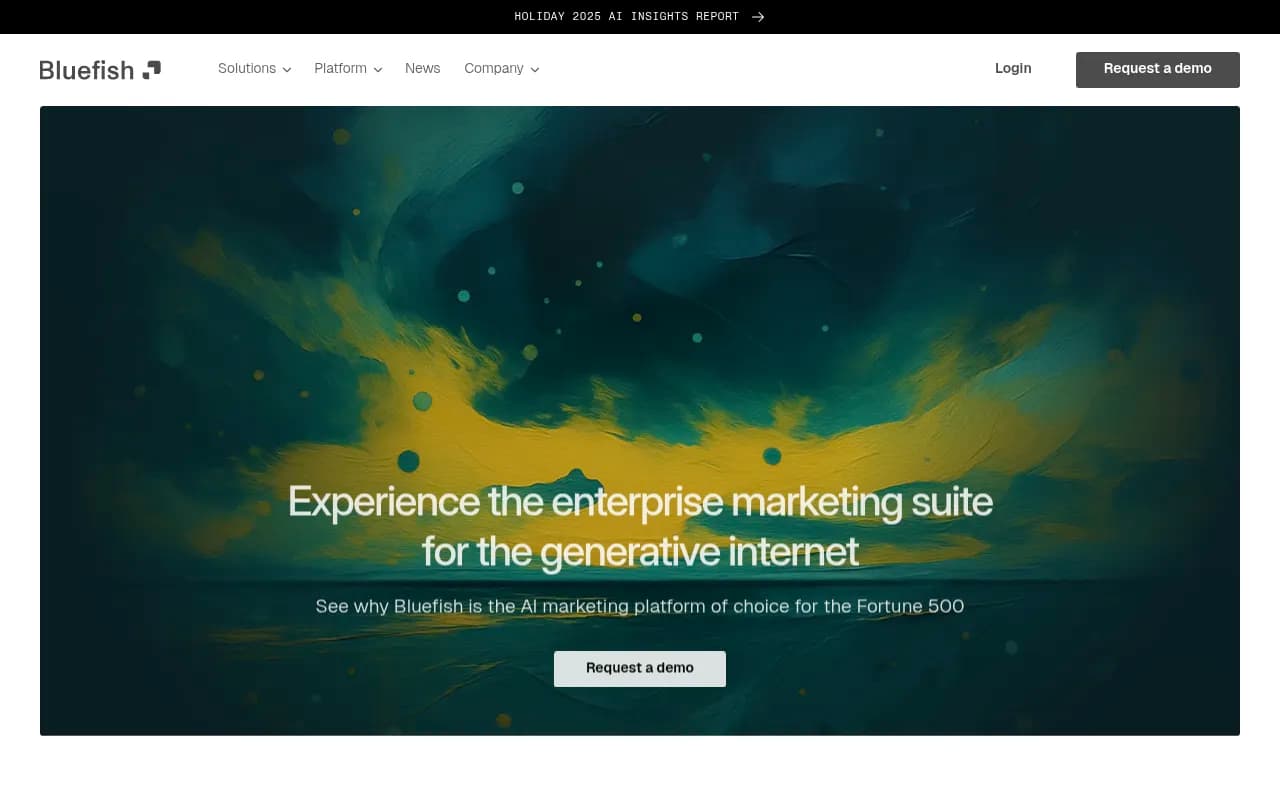
Bluefish AI positions itself as "the AI marketing platform of choice for the Fortune 500." It's an enterprise-focused monitoring platform that tracks brand visibility across AI search engines (ChatGPT, Perplexity, Gemini, Claude) and what they call "agentic commerce" channels. The platform emphasizes custom audiences, tailored prompts, and deep performance analytics designed for large marketing teams with complex needs. No self-service signup -- everything runs through sales demos and custom contracts.
Nightwatch
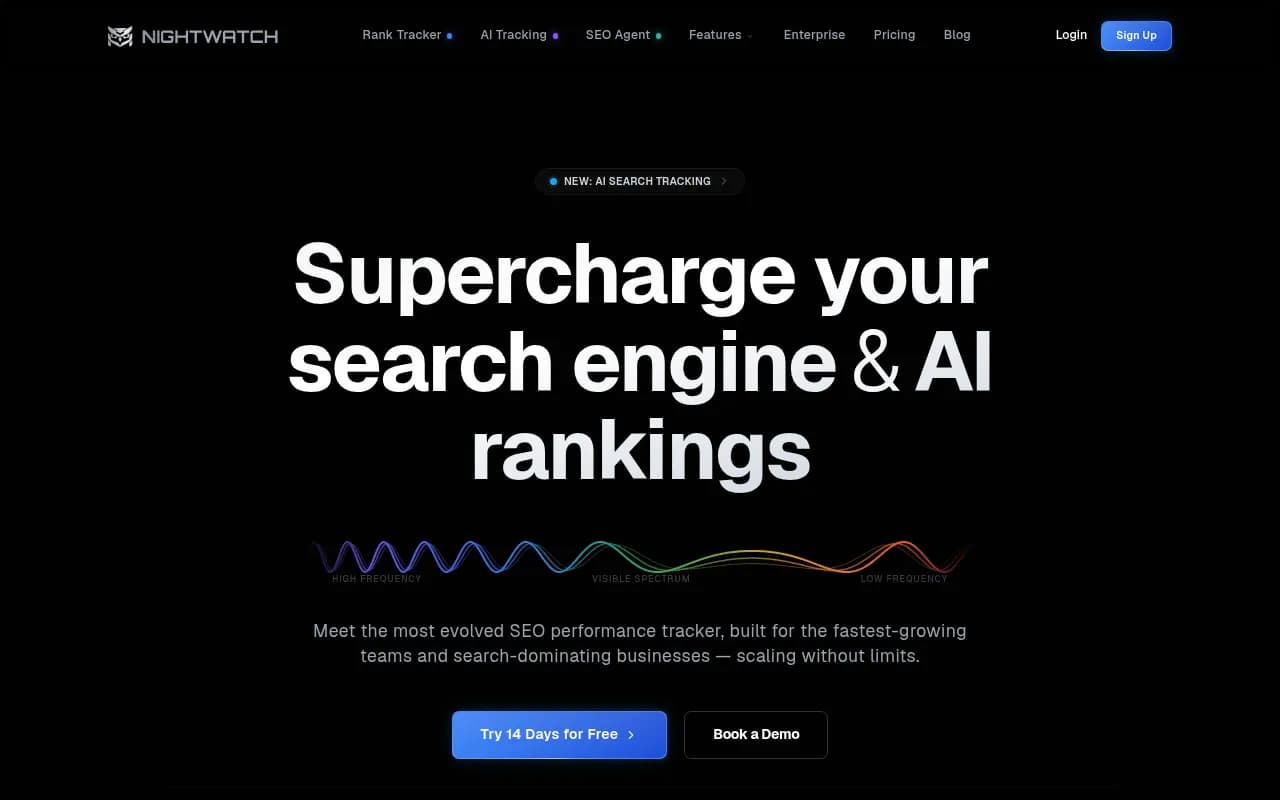
Nightwatch is a comprehensive SEO and AI tracking platform that combines traditional rank tracking with AI visibility monitoring. It tracks both search engines (Google, Bing, Yahoo, DuckDuckGo) and AI platforms (ChatGPT, Gemini, Claude, Perplexity, Google AI Overviews). Built for agencies, SMBs, and mid-market teams, it offers transparent pricing starting at $24/mo, a 14-day free trial, and self-service access. The platform includes rank tracking, site audits, keyword research, prompt research, and reporting tools.
Side-by-Side Comparison
| Feature | Bluefish AI | Nightwatch |
|---|---|---|
| Starting Price | Custom quote (~$4,000+/mo) | $24/mo (Starter) |
| Free Trial | No (demo only) | 14 days |
| Target Market | Fortune 500 enterprises | SMBs, agencies, mid-market |
| Traditional SEO Tools | None | Rank tracker, site audit, keyword research |
| AI Platforms Tracked | ChatGPT, Perplexity, Gemini, Claude, AI Overviews | ChatGPT, Perplexity, Gemini, Claude, AI Overviews |
| Custom Audiences | ✓ (enterprise feature) | Limited |
| Prompt Research | Custom tailored prompts | Prompt research tool included |
| Content Generation | ✗ | ✗ |
| Crawler Log Tracking | ✗ | ✗ |
| Reporting/Dashboards | Advanced enterprise dashboards | Customizable dashboards, Looker Studio integration |
| Self-Service Signup | ✗ (sales demo required) | ✓ |
| API Access | Enterprise plans | Available |
| Infosec/Compliance | Enterprise-grade (passes reviews) | Standard |
Pricing comparison
This is where the two platforms diverge completely.
| Plan | Bluefish AI | Nightwatch |
|---|---|---|
| Entry Level | Custom quote (estimated $4,000+/mo) | $24/mo (Starter: 200 keywords, 1 site) |
| Mid Tier | Custom quote | $59/mo (Optimize: 1,000 keywords, 5 sites) |
| High Tier | Custom quote | Custom (Enterprise: unlimited keywords/sites) |
| Free Trial | No (demo only) | 14 days |
| Annual Discount | Negotiable | Available |
Bluefish doesn't publish pricing. Based on their enterprise positioning and feature set, industry estimates put their entry point around $4,000-$10,000/month for Fortune 500 clients. Nightwatch's transparent pricing makes it accessible to teams with limited budgets -- you can start tracking AI visibility for $24/mo.
If budget transparency matters to you (or you need to get started without a three-month procurement process), Nightwatch wins by default.
Feature deep-dive
AI platform coverage
Both platforms track the major AI search engines: ChatGPT, Perplexity, Gemini, Claude, and Google AI Overviews. Nightwatch also monitors traditional search engines (Google, Bing, Yahoo, DuckDuckGo) in the same platform, giving you a unified view of both traditional SEO and AI visibility.
Bluefish focuses exclusively on AI channels. If you need traditional rank tracking, you'll need a separate tool.
Verdict: Nightwatch offers more complete coverage for teams that care about both traditional search and AI visibility.
Traditional SEO tools
Nightwatch includes a full SEO toolkit:
- Daily rank tracking for 107,000+ locations (down to zip code level)
- Site audit tool for technical SEO issues
- Keyword research and difficulty scoring
- Search engine simulator
- Backlink analysis (limited)
Bluefish offers none of this. It's purely an AI visibility monitoring platform.
Verdict: If you need an all-in-one platform that handles both traditional SEO and AI tracking, Nightwatch is the only option here.
Custom audiences and prompt tailoring
Bluefish's standout feature is custom audience segmentation and tailored prompt libraries. Enterprise clients can define specific customer personas, create custom prompt sets that match how their audiences actually search, and segment data by business unit, product line, or market.
Nightwatch offers prompt research tools and some segmentation, but it's not as deep or customizable as Bluefish's enterprise offering.
Verdict: For Fortune 500 teams with complex segmentation needs, Bluefish's custom audiences are a real differentiator. For most teams, Nightwatch's prompt research is sufficient.
Reporting and dashboards
Nightwatch provides customizable dashboards, white-label reporting for agencies, and Looker Studio integration for custom visualizations. The interface is clean and designed for teams that need to share data with clients or stakeholders.
Bluefish emphasizes "deep performance analytics" and advanced enterprise dashboards with custom metrics frameworks. The platform is built for large marketing teams that need to align AI visibility data with broader business KPIs.
Verdict: Both platforms handle reporting well. Nightwatch is more accessible for smaller teams; Bluefish offers more customization for enterprise complexity.
Content optimization and generation
Neither platform generates content or provides content gap analysis. Both are monitoring-only tools.
If you want to actually improve your AI visibility (not just track it), you'll need a platform that shows you what content is missing and helps you create it. That's where Promptwatch comes in -- it identifies content gaps by showing which prompts competitors rank for but you don't, then generates optimized articles designed to get cited by AI models.

Verdict: Tie. Both platforms leave you stuck at the monitoring stage.
Crawler log tracking
Neither Bluefish nor Nightwatch tracks AI crawler activity on your website. You won't see which pages ChatGPT or Perplexity are reading, how often they return, or what errors they encounter.
For teams serious about AI visibility, crawler logs are critical -- they show you whether AI models can even discover your content in the first place. Promptwatch includes real-time AI crawler logs as a core feature.
Verdict: Both platforms miss this entirely.
Enterprise features and infosec
Bluefish is built for enterprise from the ground up. The platform "consistently passes infosec reviews with ease" and offers custom data segmentation, role-based access controls, and compliance features that Fortune 500 legal and security teams require.
Nightwatch offers enterprise plans with custom pricing, but it's not positioned as an enterprise-first platform. Smaller teams won't hit friction, but large enterprises with strict security requirements might.
Verdict: Bluefish wins for Fortune 500 infosec and compliance needs.
User interface and ease of use
Nightwatch's interface is straightforward and designed for self-service. You can sign up, add your site, and start tracking within minutes. The learning curve is minimal -- if you've used any SEO tool before, you'll feel at home.
Bluefish requires onboarding through a sales demo and implementation process. The platform is more complex because it's built for large teams with custom workflows. Expect a longer ramp-up time.
Verdict: Nightwatch is faster to get started. Bluefish requires more investment upfront.
Who should pick Bluefish AI
- Fortune 500 marketing teams with budgets over $50k/year for AI visibility tracking
- Enterprise brands that need custom audience segmentation and tailored prompt libraries
- Teams with strict infosec requirements that need vendor compliance and custom contracts
- Companies focused purely on AI channels (not traditional SEO) and willing to pay a premium for depth
- Brands in highly competitive categories where generic prompt datasets aren't enough
Bluefish makes sense if you're a large enterprise with complex needs, a big budget, and the patience to go through a sales process. The platform delivers depth and customization that smaller tools can't match -- but you pay for it.
Who should pick Nightwatch
- SMBs and mid-market companies that need both traditional SEO and AI visibility tracking
- Digital agencies managing multiple clients who need white-label reporting
- Teams with limited budgets ($24-$500/mo range) who want transparent pricing
- Marketers who value speed and want to start tracking immediately without sales demos
- Companies that need an all-in-one platform for rank tracking, site audits, keyword research, and AI monitoring
Nightwatch is the practical choice for most teams. You get comprehensive coverage of both traditional search and AI platforms, transparent pricing, and immediate access. The platform won't match Bluefish's enterprise customization, but for 95% of companies, it doesn't need to.
Pros and cons
Bluefish AI pros
- Deep enterprise customization (custom audiences, tailored prompts)
- Built for Fortune 500 infosec and compliance requirements
- Advanced performance analytics and custom metrics frameworks
- Strong focus on "how AI thinks" (influence and sentiment analysis)
- Dedicated account management and support
Bluefish AI cons
- No transparent pricing (custom quotes only, estimated $4,000+/mo)
- No free trial or self-service access
- No traditional SEO tools (AI visibility only)
- No content generation or optimization features
- No crawler log tracking
- Long sales cycle and implementation process
Nightwatch pros
- Transparent pricing starting at $24/mo
- 14-day free trial with self-service signup
- Combines traditional SEO and AI visibility in one platform
- Rank tracking for 107,000+ locations (down to zip code)
- Looker Studio integration for custom reporting
- Fast setup and minimal learning curve
Nightwatch cons
- Less enterprise customization than Bluefish
- Limited custom audience segmentation
- No content generation or gap analysis
- No crawler log tracking
- Smaller team and support resources compared to enterprise vendors
Final verdict
For most teams, Nightwatch is the clear winner. You get comprehensive tracking of both traditional search and AI platforms, transparent pricing, immediate access, and a full SEO toolkit. The $24/mo entry point makes it accessible to small teams, while enterprise plans scale to unlimited keywords and sites.
Bluefish AI serves a specific niche: Fortune 500 enterprises with complex segmentation needs, big budgets, and strict compliance requirements. If you're a large brand willing to invest $50k+/year for deep customization and enterprise support, Bluefish delivers. For everyone else, it's overkill.
The bigger gap both platforms share: neither helps you actually improve your AI visibility. They show you the data, but leave you to figure out what to do about it. If you want a platform that identifies content gaps, generates optimized articles, and tracks the results in a closed loop, that's a different category of tool entirely.