Key Takeaways
- Pricing transparency: GeoGen lists clear pricing (€20-€399/mo), while Airefs hides pricing behind a signup wall -- if you want to know costs upfront, GeoGen wins
- Content strategy focus: Airefs is built around identifying which LinkedIn posts, Reddit threads, and YouTube videos influence AI answers, then helping you create similar content. GeoGen focuses more on monitoring and basic recommendations
- Model coverage: GeoGen tracks 5 AI models (ChatGPT, Perplexity, Gemini, Grok, Copilot), Airefs tracks 3 (ChatGPT, Perplexity, Google AI Overviews)
- Target audience: GeoGen suits small to mid-sized brands wanting straightforward visibility tracking. Airefs targets marketing teams and agencies who need actionable content insights
- Action vs monitoring: Airefs tells you where to publish (which platforms, which content types). GeoGen tells you how often you're mentioned but leaves the "what to do about it" more vague
- Both lack deep optimization: Neither tool offers AI content generation, crawler log analysis, or prompt intelligence -- they're monitoring dashboards, not full optimization platforms
Overview
GeoGen
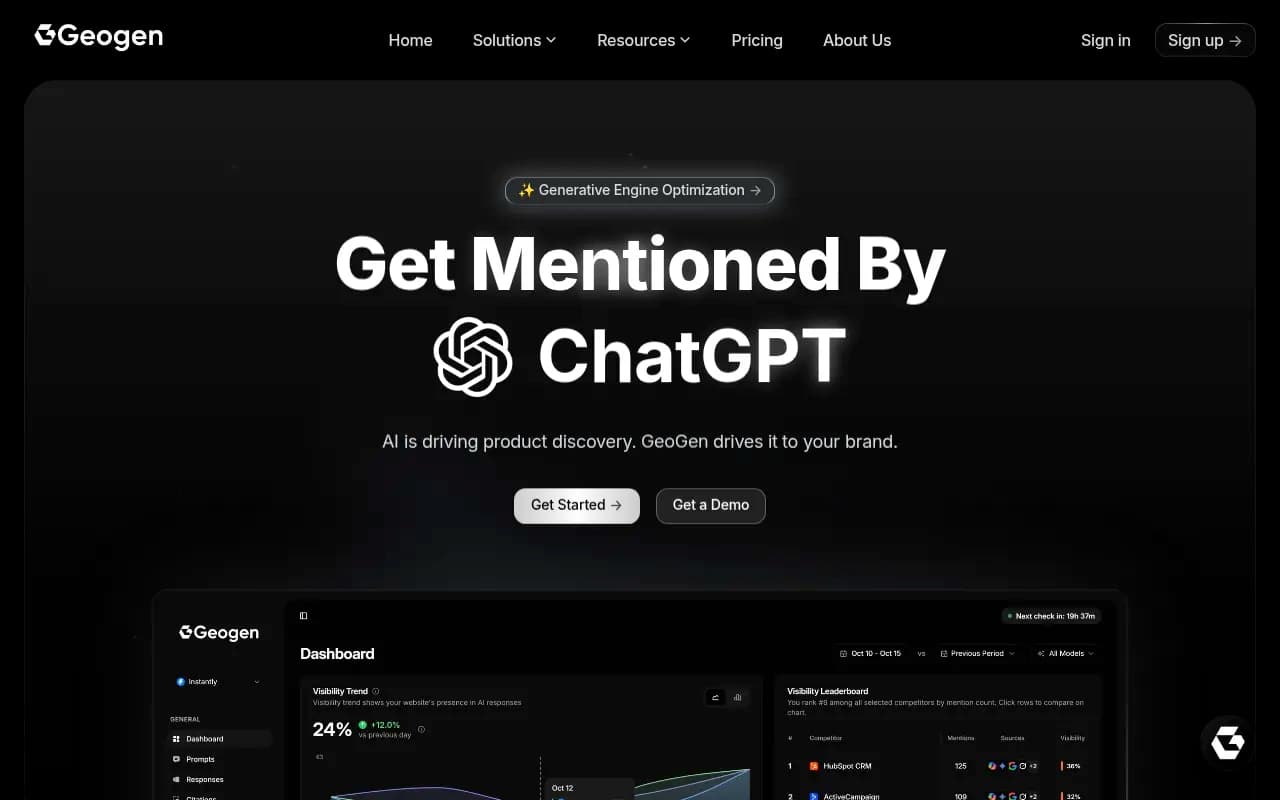
GeoGen positions itself as a Generative Engine Optimization platform for tracking brand mentions across AI search engines. It monitors ChatGPT, Perplexity, Gemini, Grok, and Microsoft Copilot, giving you visibility into how often your brand appears in AI answers. The pitch is simple: track your mentions, compare against competitors, get recommendations to improve.
The platform targets small to mid-sized brands who want basic AI visibility tracking without overwhelming complexity. Pricing starts at €20/mo for the Micro plan and scales to €399/mo for Pro, with custom enterprise options. GeoGen emphasizes ease of use and quick setup.
Airefs
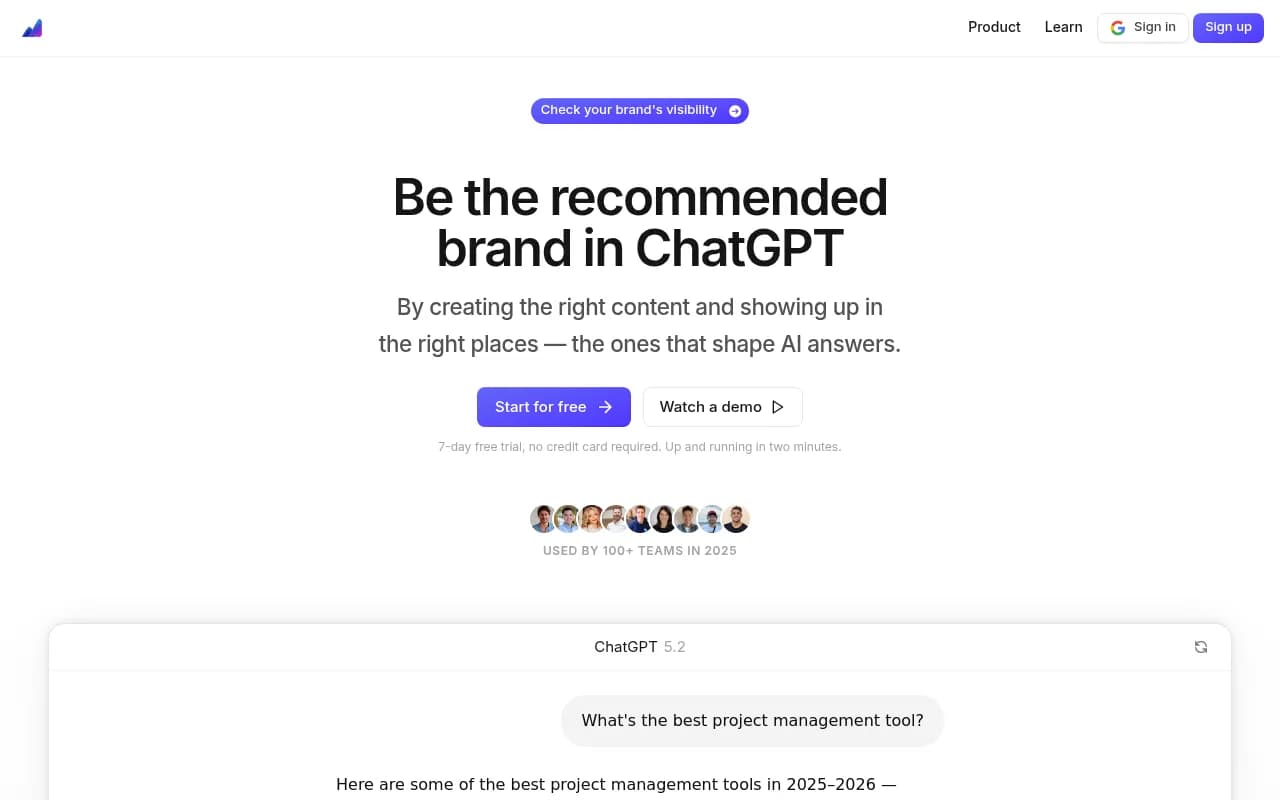
Airefs takes a different angle: instead of just tracking mentions, it focuses on why brands get mentioned. The core insight is that AI answers aren't shaped by your website -- they're shaped by LinkedIn posts, Reddit threads, G2 reviews, YouTube videos, and Quora answers. Airefs shows you which specific content pieces influence AI recommendations, then helps you create similar content to become the default answer in your category.
The platform targets marketing teams and agencies who need strategic content insights, not just dashboards. Airefs offers a 7-day free trial but doesn't list public pricing, which means you need to sign up to see costs.
Side-by-side comparison
| Feature | GeoGen | Airefs |
|---|---|---|
| Pricing transparency | €20-€399/mo listed publicly | Not listed (trial available) |
| Free trial | Not advertised | 7-day free trial |
| AI models tracked | 5 (ChatGPT, Perplexity, Gemini, Grok, Copilot) | 3 (ChatGPT, Perplexity, Google AI Overviews) |
| Competitor tracking | ✓ Yes | ✓ Yes |
| Content source analysis | Limited | ✓ Deep (LinkedIn, Reddit, YouTube, G2, Quora) |
| Content creation guidance | Basic recommendations | ✓ Strategic content playbook |
| Mention tracking | ✓ Yes | ✓ Yes |
| Citation tracking | ✓ Yes | ✓ Yes |
| AI content generation | ✗ No | ✗ No |
| Crawler log analysis | ✗ No | ✗ No |
| Prompt intelligence | ✗ No | ✗ No |
| Target audience | Small-mid brands | Marketing teams, agencies |
| Setup time | Quick | 2 minutes (per website) |
Head-to-head feature breakdown
AI model coverage
GeoGen tracks five AI models: ChatGPT, Perplexity, Gemini, Grok, and Microsoft Copilot. That's solid coverage of the major LLMs people actually use for search.
Airefs tracks three: ChatGPT, Perplexity, and Google AI Overviews. It skips Grok and Copilot, which might matter if your audience uses those platforms heavily. Google AI Overviews is a smart inclusion since it's integrated directly into Google Search.
Verdict: GeoGen wins on breadth. Five models beats three, especially since Grok and Copilot have growing user bases.
Competitor tracking
Both platforms let you track competitors and see which brands get mentioned instead of you. This is table stakes for any GEO tool.
GeoGen shows competitor mention frequency and rankings. You can see who's winning for specific queries and track changes over time.
Airefs goes deeper: it shows which specific content drives competitor mentions. You can see that a competitor gets recommended because of a viral LinkedIn post, a Reddit thread, or a G2 review. That's more actionable than just knowing they're ahead.
Verdict: Airefs wins. Knowing why a competitor is winning (specific content pieces) beats just knowing that they're winning.
Content source analysis
This is where the two platforms diverge most.
GeoGen focuses on tracking mentions and citations but doesn't break down which content types (LinkedIn, Reddit, YouTube) drive those mentions. You get visibility data but limited insight into what to do about it.
Airefs is built around content source analysis. It shows you exactly which LinkedIn posts, Reddit threads, YouTube videos, G2 reviews, and Quora answers shape AI recommendations. The pitch is: AI doesn't cite your website -- it cites this other content. So create that content.
This is a real difference in philosophy. GeoGen is a monitoring dashboard. Airefs is a content strategy tool that happens to include monitoring.
Verdict: Airefs wins for teams that want actionable insights. GeoGen wins if you just want to track numbers.
Content creation and optimization
Neither platform offers AI content generation or automated optimization. Both give you recommendations and insights, but you're on your own to create the content.
GeoGen provides basic recommendations to improve your AI search presence. The specifics aren't detailed on the website, but it's positioned as guidance rather than automation.
Airefs emphasizes creating "the right content, in the right places" and positions itself as helping you "be the default answer." It shows you which content types work (LinkedIn posts vs Reddit threads) and where to publish, but you still write the content yourself.
If you want a platform that actually generates optimized content for you, neither GeoGen nor Airefs delivers. Tools like Promptwatch include AI writing agents that create articles grounded in citation data and prompt analysis, but that's a different category.

Verdict: Airefs edges ahead with more strategic guidance, but both leave content creation to you.
Pricing and plans
GeoGen lists transparent pricing:
- Micro: €20/mo
- Mid-tier plans (pricing not fully detailed on homepage)
- Pro: €399/mo
- Enterprise: Custom pricing
- 20% discount on annual billing
Airefs doesn't list pricing publicly. You get a 7-day free trial, then need to contact sales or sign up to see costs. This is frustrating if you're comparing multiple tools and want to know budgets upfront.
Verdict: GeoGen wins on transparency. Hidden pricing is a red flag for small teams with tight budgets.
Ease of use and setup
GeoGen emphasizes quick setup and ease of use. It's built for small to mid-sized brands who don't want complexity.
Airefs claims you're "up and running in two minutes" and targets marketing teams who need fast insights. The interface (based on screenshots) looks clean and focused on actionable data.
Both platforms seem designed for non-technical users. Neither requires coding or complex configuration.
Verdict: Tie. Both prioritize simplicity and fast onboarding.
Limitations of both platforms
Neither GeoGen nor Airefs offers:
- AI crawler log analysis: You can't see which pages AI models are actually reading on your website, or diagnose indexing issues
- Prompt intelligence: No volume estimates, difficulty scores, or query fan-outs to prioritize high-value prompts
- AI content generation: No built-in writing tools to create optimized content
- Traffic attribution: No way to connect AI visibility to actual revenue or conversions
- Multi-language or multi-region tracking: Both seem focused on English-language, single-market monitoring
These are monitoring dashboards, not full optimization platforms. They show you the problem but don't help you fix it in depth.
Pricing comparison
| Plan | GeoGen | Airefs |
|---|---|---|
| Entry tier | €20/mo (Micro) | Not listed |
| Mid tier | Not fully detailed | Not listed |
| Pro tier | €399/mo | Not listed |
| Enterprise | Custom pricing | Custom pricing (implied) |
| Free trial | Not advertised | 7-day free trial |
| Annual discount | 20% off | Unknown |
GeoGen's transparent pricing is a big advantage for budget planning. Airefs might be cheaper or more expensive -- you won't know until you talk to sales.
Pros and cons
GeoGen pros
- Clear, public pricing starting at €20/mo
- Tracks 5 AI models (more than Airefs)
- Built for small-mid brands who want simplicity
- 20% annual discount available
GeoGen cons
- Less emphasis on content strategy and actionable insights
- No AI content generation or deep optimization features
- Limited content source breakdown (doesn't show which LinkedIn posts, Reddit threads drive mentions)
- No crawler log analysis or prompt intelligence
Airefs pros
- Deep content source analysis (LinkedIn, Reddit, YouTube, G2, Quora)
- Strategic focus: shows you where to publish and what content types work
- 7-day free trial to test before buying
- Built for marketing teams who need actionable insights, not just dashboards
Airefs cons
- No public pricing (frustrating for budget planning)
- Only tracks 3 AI models (vs GeoGen's 5)
- No AI content generation or crawler log analysis
- Less transparent about feature set and capabilities
Who should pick which tool
Pick GeoGen if:
- You want transparent pricing and a low entry point (€20/mo)
- You need to track Grok and Copilot in addition to ChatGPT and Perplexity
- You're a small brand that just wants basic visibility tracking without strategic complexity
- You prefer knowing costs upfront and avoiding sales calls
Pick Airefs if:
- You need to understand which specific content (LinkedIn posts, Reddit threads) drives AI mentions
- You're a marketing team or agency building a content strategy around AI search
- You're willing to sign up for a trial without knowing pricing upfront
- You want actionable insights about where to publish, not just mention counts
Skip both and consider Promptwatch if:
- You want a platform that doesn't just monitor but helps you fix gaps with AI content generation
- You need crawler log analysis to see which pages AI models are actually reading
- You want prompt intelligence (volume estimates, difficulty scores) to prioritize high-value queries
- You need traffic attribution to connect AI visibility to revenue
- You're serious about AI search optimization and want an end-to-end platform, not just a dashboard
Final verdict
Airefs is the better choice for marketing teams who need strategic content insights. It tells you why competitors are winning (specific LinkedIn posts, Reddit threads) and where to publish to catch up. That's more actionable than GeoGen's monitoring-focused approach.
GeoGen is the better choice for small brands on a budget who want transparent pricing and broader AI model coverage. €20/mo is accessible, and tracking 5 models beats Airefs' 3.
But here's the reality: both are monitoring dashboards that show you the problem without fully solving it. If you want a platform that finds content gaps, generates optimized articles, tracks crawler behavior, and connects visibility to revenue, you need something more comprehensive. Neither GeoGen nor Airefs delivers that full loop.