Key takeaways
- Monitoring too few AI models or using generic prompts gives you a false picture of your actual brand visibility
- Ignoring competitor context means you can't tell whether your visibility is good, bad, or just average for your category
- Most monitoring tools stop at measurement — they show you symptoms but can't tell you what's causing them or how to fix them
- Bad data doesn't just waste time; it actively misleads strategy, causing teams to invest in the wrong content and ignore real gaps
- The fix usually isn't a better dashboard — it's a more deliberate monitoring setup combined with tools that connect data to action
AI brand monitoring sounds simple: run some prompts, see if your brand shows up, repeat. But the gap between "we're tracking our AI visibility" and "we have reliable data we can act on" is enormous. Most teams are closer to the first than they think.
The mistakes below aren't edge cases. They're patterns that show up constantly across monitoring setups, and each one quietly corrupts your data in a different way. Some inflate your scores. Some deflate them. Some just make your numbers meaningless. Let's go through them.
Mistake 1: Monitoring only one or two AI models
If you're only checking ChatGPT (or maybe ChatGPT and Perplexity), you're looking at a fraction of where your customers are actually getting answers. In 2026, people use ChatGPT, Claude, Gemini, Perplexity, Google AI Overviews, Grok, Meta AI, Copilot, DeepSeek, and Mistral — often interchangeably depending on the task.
Your brand might be well-cited in Perplexity but nearly invisible in Google AI Overviews, which is where a huge chunk of commercial searches still land. Or you might be doing fine in ChatGPT but missing from Claude, which is increasingly used for research-heavy queries.
The fix: Track across at least 5-6 models, and prioritize the ones your specific audience uses. B2B buyers lean heavily on Perplexity and Claude. Consumer audiences skew toward ChatGPT and Google AI Overviews. Don't assume one model represents all of them.
Mistake 2: Using prompts that are too generic
"What is [your brand]?" is not a useful monitoring prompt. Neither is "[your category] tools." These prompts don't reflect how real people actually ask AI engines questions, and they tend to produce responses that either mention you trivially or not at all — neither of which tells you much.
The prompts that matter are the ones your actual customers use at decision points: "What's the best [category] tool for [specific use case]?", "Compare [your brand] vs [competitor]", "What do people say about [your brand]?". These are the queries that drive recommendations and, ultimately, traffic.
Generic prompts also tend to be the ones where established brands dominate by default. Monitoring only these gives you a false sense of security if you're a mid-size player, or a false sense of doom if you're a niche specialist who actually dominates the specific queries that matter to your business.
The fix: Build your prompt set around real buyer questions. Pull from your sales call recordings, customer support tickets, and "People Also Ask" data. Tools like Promptwatch include prompt volume estimates and difficulty scores so you can prioritize which prompts are actually worth tracking.

Mistake 3: Not accounting for response variability
AI models don't give the same answer twice. Ask ChatGPT the same question ten times and you'll get ten different responses — different brands mentioned, different rankings, different framing. If your monitoring tool runs each prompt once and reports that as your "score," that score is essentially noise.
This is one of the most underappreciated problems in AI visibility measurement. A single-sample approach means a good run inflates your score and a bad run tanks it, with no way to tell which is closer to reality.
The fix: Any serious monitoring setup should run each prompt multiple times and average the results. Look for tools that are transparent about their sampling methodology. If a tool gives you a single clean number without explaining how many times it ran the query, treat that number with skepticism.
Mistake 4: Ignoring competitor context
Your brand appears in 34% of relevant AI responses. Is that good? Bad? Average? Without knowing what your competitors are getting, that number is almost useless.
AI visibility is inherently relative. If your main competitor appears in 60% of the same responses, you have a serious problem. If they're at 15%, you're winning. The raw number alone doesn't tell you which situation you're in.
A lot of monitoring setups focus entirely on their own brand and treat competitor tracking as optional. It isn't. Competitor data is what turns a metric into a meaningful signal.
The fix: Set up competitor tracking from day one, not as an afterthought. You want to see your visibility score alongside your top 3-5 competitors for the same prompt set. Heatmap-style views that show who's winning for each prompt are particularly useful here.
Mistake 5: Treating "mentioned" and "recommended" as the same thing
There's a big difference between AI mentioning your brand and AI recommending your brand. "Some people use [Brand X], though it has mixed reviews" is a mention. "For this use case, [Brand X] is the top choice" is a recommendation. Both count as "brand mentions" in most monitoring tools, but they have completely different implications for your business.
If your monitoring setup doesn't distinguish between sentiment and position in the response, you can end up with an inflated visibility score that masks a real problem: AI models are mentioning you, but not in a way that drives consideration.
The fix: Look for tools that capture not just whether you appear, but where in the response you appear and with what framing. Sentiment analysis on AI responses is still imperfect, but even a basic positive/neutral/negative classification is better than treating all mentions as equal.
Mistake 6: Not monitoring the right geographic and language variants
AI models give different answers depending on the language and region of the query. Your brand might be well-represented in English-language US responses but nearly absent in German, French, or Spanish responses — or in UK vs US variants of the same query.
For any brand operating in multiple markets, monitoring only one language or region creates a blind spot that can be enormous. You might be investing heavily in content for a market where you're already winning, while ignoring one where you're invisible.
The fix: Map your monitoring setup to your actual market footprint. If you operate in 5 countries, you need visibility data from all 5. This includes running prompts in the local language, not just translated versions of English prompts.
Mistake 7: Monitoring without tracking what AI crawlers actually see
Here's a problem most teams don't think about: your monitoring data shows you how AI models respond to queries about your brand, but it doesn't tell you why. If AI models are consistently ignoring your best content, you need to know whether that's a content quality issue or a crawling/indexing issue.
AI crawlers (GPTBot, ClaudeBot, PerplexityBot, etc.) don't always successfully crawl and index your pages. They hit errors, get blocked by robots.txt rules, or simply don't return to pages that haven't been updated. If your monitoring shows low visibility but your content is actually good, the problem might be that AI engines can't read your pages properly.
The fix: Combine your visibility monitoring with crawler log analysis. Knowing which pages AI bots are visiting, how often, and whether they're encountering errors gives you a completely different layer of diagnostic data. Without it, you're guessing at causes.
Mistake 8: Running prompts that only favor your brand
This one is subtle but important. If you design your prompt set around queries where your brand is most likely to appear, you'll get a visibility score that looks great but doesn't reflect reality.
For example, if you only monitor "[your brand name] reviews" and "[your brand] pricing," you'll probably show up in most responses. But if you ignore "best [category] tools for [use case]" prompts where you're actually competing for new customers, you're missing the data that matters most.
This is a form of confirmation bias baked into your monitoring setup. It feels like you're doing thorough tracking, but you're systematically excluding the hard questions.
The fix: Include a mix of branded, category, and competitor-comparison prompts. The branded prompts tell you about reputation management. The category and comparison prompts tell you about competitive positioning. You need both.
Mistake 9: Measuring visibility without connecting it to traffic or revenue
Visibility scores are a means to an end. If you can't connect your AI visibility data to actual website traffic or business outcomes, you're running a vanity metrics operation — interesting to look at, impossible to justify to leadership.
The problem is that most monitoring tools stop at the visibility layer. They tell you your score went up 12% this quarter. They can't tell you whether that translated into more traffic, more leads, or more revenue. So when someone asks "is this worth the investment?", you have no answer.
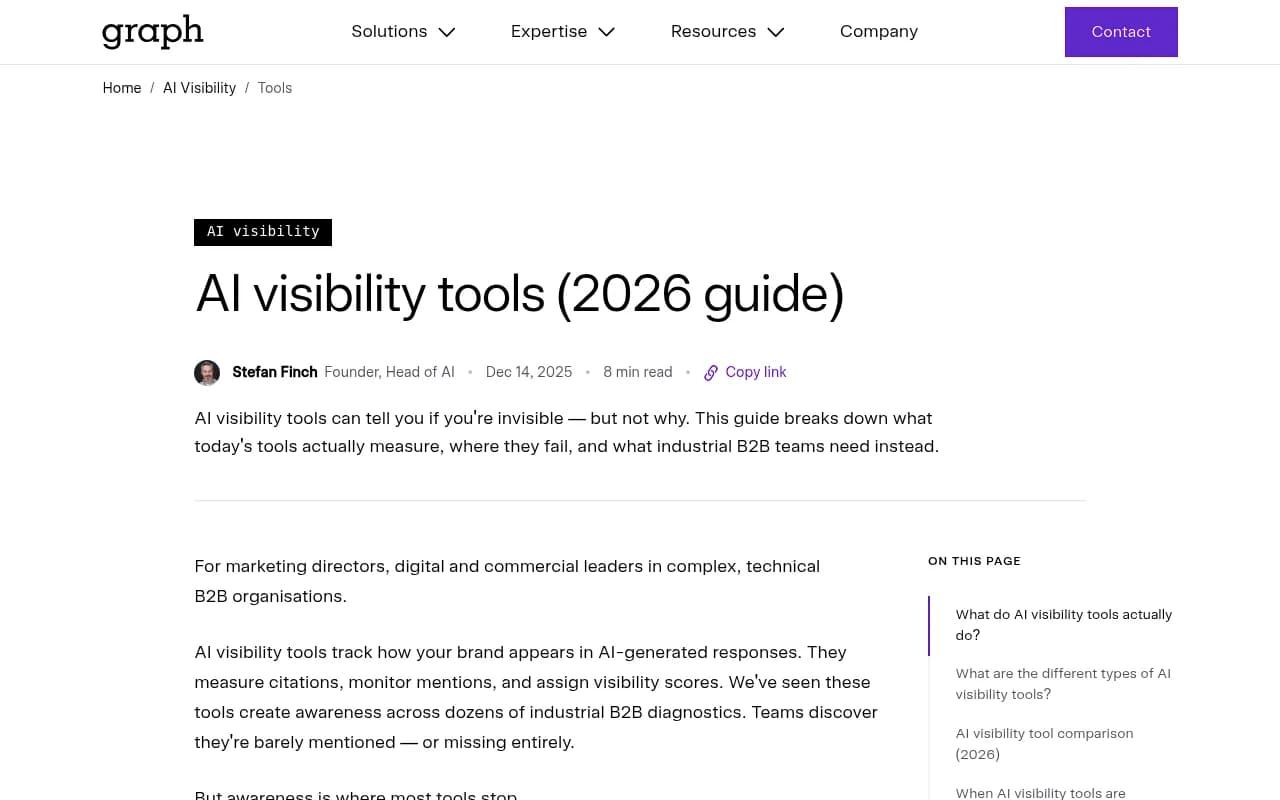
As the Graph Digital guide on AI visibility tools notes, measurement creates awareness, but awareness is where most tools stop. Measurement is not diagnosis, and diagnosis is not optimization.
The fix: Set up traffic attribution that connects AI-driven visits to your monitoring data. This can be done through a tracking code snippet, Google Search Console integration, or server log analysis. Without this loop closed, you're flying blind on ROI.
Mistake 10: Treating monitoring as a one-time setup
AI models update their training data, change their citation behavior, and shift their source preferences constantly. A monitoring setup that was well-calibrated six months ago may be giving you stale or misleading data today.
Teams often do a big initial setup, get their baseline numbers, and then let the system run on autopilot. The prompts don't get updated as the product evolves. New competitors don't get added. The prompt set stays focused on last year's use cases. Over time, the gap between what you're monitoring and what actually matters grows wider.
The fix: Schedule a quarterly review of your monitoring setup. Update prompts to reflect new product features, new use cases, and new competitors. Check whether your prompt set still covers the queries your customers are actually using.
How these mistakes compound
The really dangerous scenario isn't making one of these mistakes — it's making several at once. A team monitoring two AI models, using generic prompts, running each query once, ignoring competitors, and not tracking traffic attribution can end up with a visibility score that's simultaneously inflated (because the prompts are too easy), deflated (because they're missing the models where they're actually doing well), and disconnected from any business outcome.
That team will make content investment decisions based on that data. They'll prioritize the wrong topics, ignore real gaps, and have no way to know whether anything they're doing is working.
The table below summarizes each mistake and its primary effect on your data:
| Mistake | Primary data effect | Severity |
|---|---|---|
| Too few AI models monitored | Blind spots in coverage | High |
| Generic prompts | False sense of security or doom | High |
| Single-sample responses | High variance, unreliable scores | Medium-High |
| No competitor context | Metrics without meaning | High |
| Mentions vs recommendations conflated | Inflated visibility scores | Medium |
| Wrong geo/language coverage | Missing market-specific data | Medium-High |
| No crawler log visibility | Can't diagnose root causes | Medium |
| Biased prompt selection | Confirmation bias in data | High |
| No traffic/revenue attribution | Vanity metrics, no ROI case | High |
| Static monitoring setup | Stale data over time | Medium |
What good monitoring actually looks like
Good AI brand monitoring isn't just more data — it's the right data, collected consistently, connected to outcomes, and used to make decisions.
That means:
- Tracking 5+ AI models with regular cadence
- Running each prompt multiple times to account for response variability
- Including branded, category, and competitor-comparison prompts
- Monitoring in every language and region where you operate
- Tracking competitor visibility alongside your own
- Connecting visibility data to actual traffic through attribution
- Reviewing and updating your setup quarterly
The other thing good monitoring does is tell you what to do next. Seeing that you're invisible for a set of high-volume prompts is useful. Knowing exactly what content you'd need to create to change that is actionable.
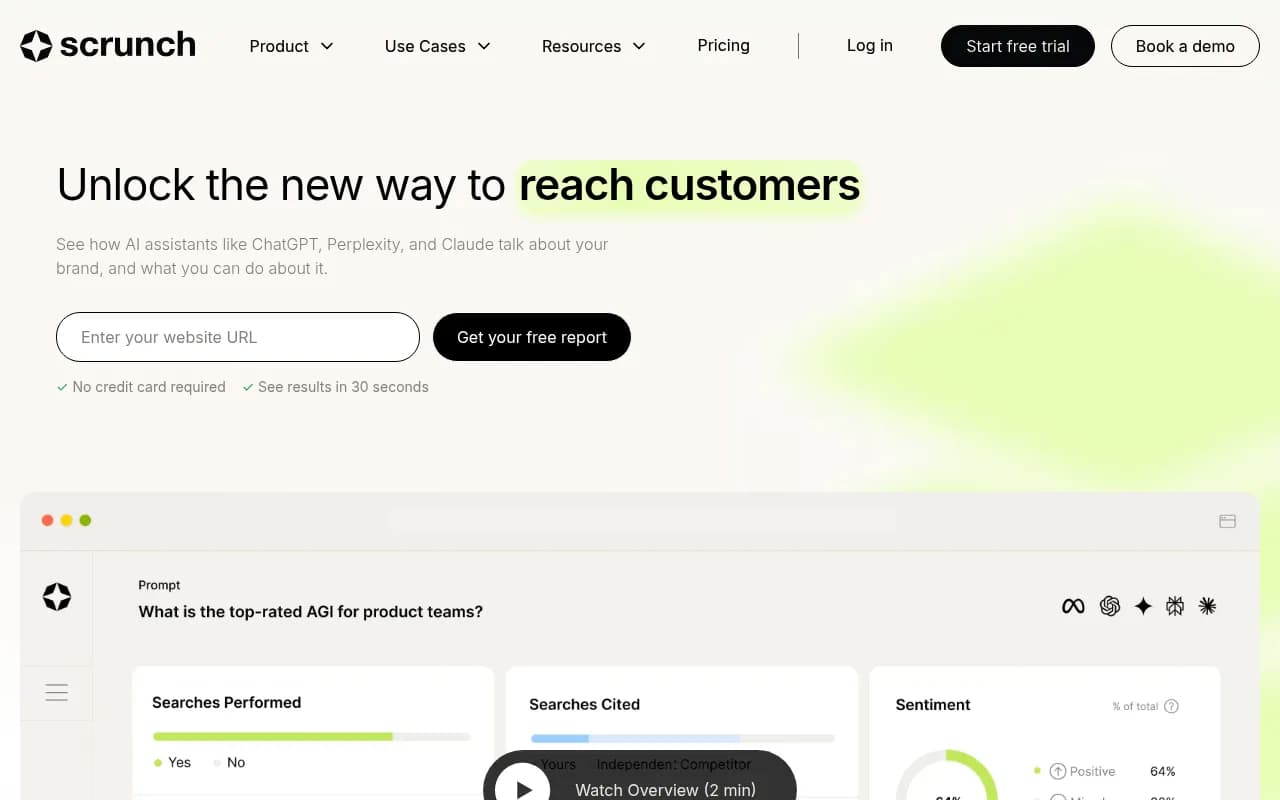
Promptwatch is one of the few platforms that covers this full loop — from crawler log analysis and prompt volume data to content gap identification and built-in content generation. Most monitoring tools stop at the dashboard. The ones worth using take you from "here's your score" to "here's what's missing and here's how to fix it."
A few other tools worth knowing about depending on your needs:
Otterly.AI


Profound

A note on dirty data and AI strategy
The stakes here are higher than they might seem. Bad monitoring data doesn't just waste your time — it actively misdirects your content strategy. If your visibility scores are inflated by easy prompts, you won't invest in the content you actually need. If you're not tracking the right models, you'll optimize for the wrong audience. If you can't connect visibility to revenue, you'll lose budget to channels that can show ROI even if they're less effective.
A Datamatics Business Solutions analysis on dirty data in AI strategy put it plainly: poor data leads to poor decision-making across business units, escalating costs, and wasted effort. That applies directly to AI visibility monitoring. The monitoring setup is the foundation. If it's wrong, everything built on top of it is wrong too.
Fix the foundation first.