Key takeaways
- Profound is a capable AI visibility platform, but its enterprise pricing and monitoring-only focus make it a poor fit for many teams.
- Most alternatives fall into two camps: pure trackers (Otterly.AI, Peec AI, AthenaHQ) and full optimization platforms (Promptwatch, Writesonic, Orchly).
- Promptwatch is the only platform in this comparison rated as a "Leader" across all GEO categories — because it closes the loop from gap analysis to content creation to traffic attribution.
- Price ranges vary wildly: from €89/mo (Peec AI) to $399+/mo (Profound), so there's a real fit-for-budget question here.
- If you only need monitoring, cheaper options exist. If you need to actually improve your AI visibility, you need a platform with content tools built in.
Profound was one of the first tools built specifically to track how brands appear inside AI-generated answers. It's well-funded, has G2 Leader status, and covers 10+ AI models. For large enterprises with dedicated SEO budgets, it makes sense.
But here's the honest reality: Profound starts at $99/mo for very limited access, scales to $399/mo and beyond for anything resembling full coverage, and it's fundamentally a monitoring dashboard. It shows you where you're invisible. It doesn't help you fix it.
That gap between "seeing the problem" and "solving the problem" is exactly why so many teams are looking for alternatives.
This guide covers 12 of the best options in 2026, with honest assessments of what each one actually does well and where it falls short.
How Profound compares to the alternatives
Before diving into individual tools, here's a snapshot of how the main contenders stack up:
| Tool | Starting price | AI models tracked | Content generation | Crawler logs | Best for |
|---|---|---|---|---|---|
| Profound | $99/mo | 10+ | No | No | Enterprise monitoring |
| Promptwatch | $99/mo | 10 | Yes | Yes | Full optimization cycle |
| Peec AI | €89/mo | 5 | No | No | Clean dashboards, CSV exports |
| Otterly.AI | ~$29/mo | 5+ | No | No | Brand monitoring, PR teams |
| AthenaHQ | Custom | 8+ | Limited | No | Enterprise with GA4 integration |
| Scrunch AI | Custom | 6+ | No | No | Mid-market monitoring |
| Semrush AI Toolkit | $99/mo add-on | 5 | Partial | No | Existing Semrush users |
| Ahrefs Brand Radar | Add-on | 2 | No | No | Basic AI mention monitoring |
| SE Ranking | $65/mo | 3 | No | No | Google-first SEO teams |
| Writesonic | $199/mo | 5 | Yes | No | SEO + content creation |
| Orchly | $49/mo | 5 | Yes | No | Budget-conscious teams |
| Otterly (alt tier) | $29/mo | 5 | No | No | Small teams, PR |
| ZipTie | Custom | 4 | No | No | Answer-level auditing |
1. Promptwatch — best overall Profound alternative
Promptwatch is the most complete alternative to Profound in 2026, and the only platform in a recent 12-tool comparison to be rated a "Leader" across every GEO category. The core difference from Profound and most other tools: it's built around fixing your AI visibility, not just measuring it.
The workflow is what sets it apart. First, Answer Gap Analysis shows you exactly which prompts your competitors appear for but you don't — specific questions and topics where AI models have nothing from your site to cite. Second, a built-in AI writing agent generates content engineered to get cited, grounded in 880M+ real citations analyzed across 10 AI models. Third, page-level tracking shows you which new pages are being picked up, by which models, and how often.
That's a closed loop. Most tools, including Profound, only do step three (and even then, at the brand level rather than the page level).
Other things worth knowing: Promptwatch has real-time AI crawler logs showing which pages ChatGPT, Claude, and Perplexity are actually reading on your site. It tracks Reddit and YouTube discussions that influence AI recommendations — a channel most competitors ignore entirely. It also monitors ChatGPT Shopping carousels, which matters if you're in e-commerce.
Pricing starts at $99/mo (Essential: 1 site, 50 prompts, 5 articles), $249/mo for Professional (2 sites, 150 prompts, crawler logs), and $579/mo for Business (5 sites, 350 prompts). That's competitive with Profound's entry tier and significantly cheaper at scale.

2. Peec AI — best for clean dashboards and prompt-level analytics
Peec AI takes a lighter approach than Profound. It tracks ChatGPT, Perplexity, Claude, Gemini, and DeepSeek at the prompt level, with clean dashboards and solid CSV export functionality. The UI scraping methodology is worth noting: it tracks what real users actually see in AI interfaces, not synthetic API responses, which can produce more accurate visibility data.
It has 115+ language support and has raised $30M+ in funding, so it's not going anywhere. The main limitation is actionability — Peec AI tells you what's happening but doesn't help you change it. No content generation, no crawler logs, no gap analysis. At €89/mo it's a reasonable monitoring tool for teams that just need the data and have their own content workflows.

3. Otterly.AI — best for brand monitoring and PR teams
Otterly.AI earned Gartner Cool Vendor recognition in 2025 and has a 4.9/5 rating across 250+ reviews, which is genuinely impressive for a relatively young tool. It's particularly strong for brand and PR teams that care about sentiment, share of voice, and daily mention alerts across AI platforms.
The entry price undercuts Profound significantly, and the interface is clean enough that non-technical marketers can use it without much onboarding. The limitation is the same as most monitoring tools: it shows you the data but leaves you to figure out what to do with it. No content tools, no crawler access, no gap analysis.
Otterly.AI

4. AthenaHQ — best for enterprises needing native analytics integrations
AthenaHQ is monitoring-focused but has one feature that genuinely differentiates it from most competitors: native GA4 and Google Search Console integrations available on its self-serve plan. For enterprise teams that need to connect AI visibility data to existing analytics stacks, that matters.
It covers 8+ AI models, has documented case studies showing 10x citation rate growth for some clients, and is built for teams that need structured reporting. The gap is on the content side — AthenaHQ doesn't generate content or help you identify what to create. You get the visibility data; the optimization work is still on you.

5. Scrunch AI — solid mid-market option
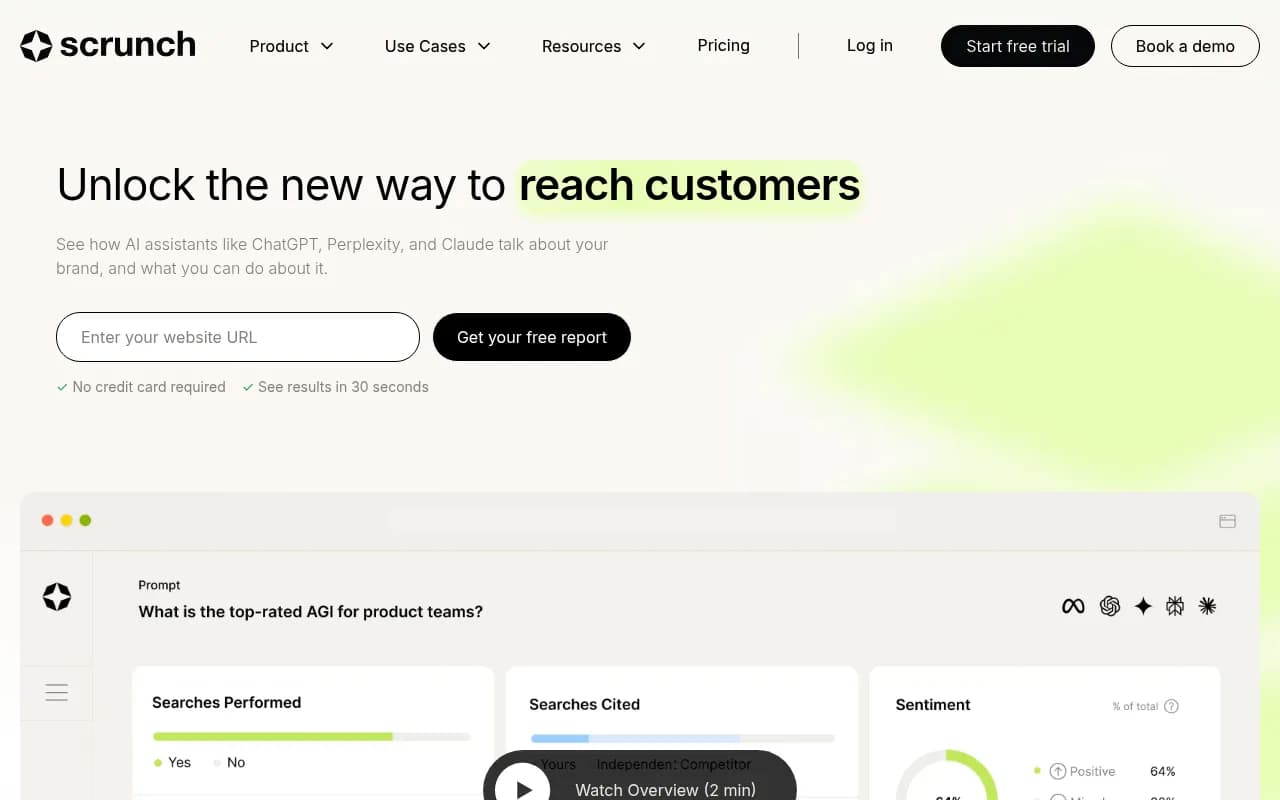
Scrunch AI sits in the mid-market tier, covering 6+ AI models with reasonable depth on citation tracking and brand mention analysis. It's a cleaner experience than some enterprise tools and doesn't require a sales call to get started.
The platform is monitoring-first, which is fine if that's what you need. Pricing is custom, which is a mild annoyance for teams that want to evaluate cost before booking a demo.
6. Semrush AI Toolkit — best for existing Semrush users
If your team is already paying for Semrush, the AI Toolkit add-on is worth considering before you buy a separate GEO tool. It covers ChatGPT, Google AI Mode, AI Overviews, Gemini, and Perplexity with partial prompt-level tracking and some sentiment analysis.
The main limitation is that Semrush uses fixed prompt templates rather than letting you define your own prompts. That means you're tracking visibility for the prompts Semrush chose, not necessarily the ones your customers actually use. There's also no AI traffic attribution. Still, for teams already in the Semrush ecosystem, it's a reasonable starting point.
7. Ahrefs Brand Radar — best for Ahrefs power users
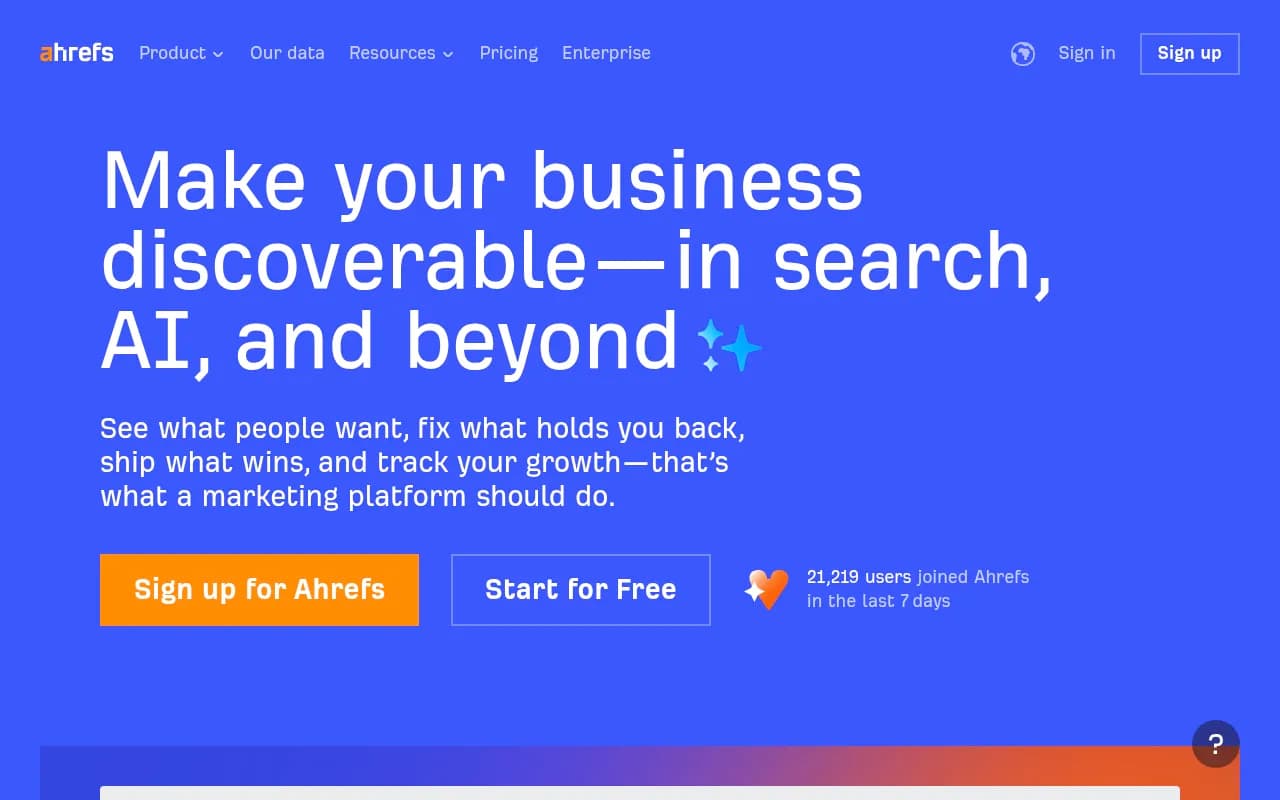
Ahrefs Brand Radar is the AI visibility add-on for Ahrefs users. It covers ChatGPT and Google AI, which is a narrower scope than most dedicated GEO tools. Like Semrush, it uses fixed prompts rather than custom ones, and there's no AI traffic attribution.
For teams already deep in the Ahrefs ecosystem who want basic AI mention monitoring without switching tools, it's convenient. For teams that want serious GEO coverage, it's not enough on its own.
8. SE Ranking — best for Google-first SEO teams
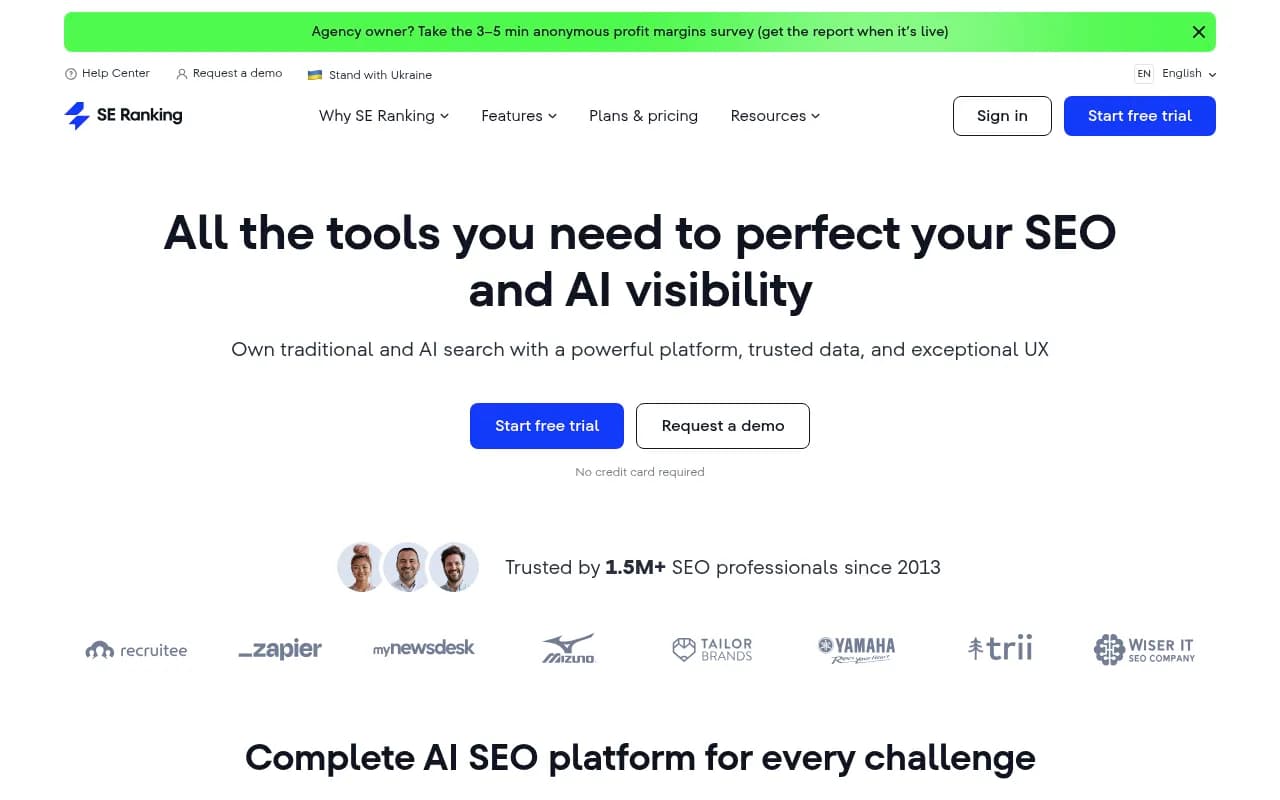
SE Ranking's AI search tracking is built primarily around Google AI Overviews, which makes it a natural fit for teams whose primary concern is Google's generative search features rather than ChatGPT or Perplexity. It's part of a broader SEO suite that includes rank tracking, site audits, and content tools.
The AI visibility coverage is narrower than dedicated GEO platforms, but the price point ($65/mo base) and the breadth of traditional SEO features make it a practical choice for teams that don't want to manage multiple tools.
9. Writesonic — best for teams that want content creation alongside tracking
Writesonic has evolved from an AI writing tool into something closer to a unified GEO + SEO + content platform. At $199/mo it covers ChatGPT, Perplexity, Google AI, Gemini, and Claude, with both visibility tracking and content generation in the same interface.
The content generation side is genuinely useful, though it's not as tightly integrated with citation data as Promptwatch's approach. If your team needs AI visibility tracking and an AI writing tool and you'd rather pay one bill, Writesonic is worth evaluating.

10. Orchly — best budget option with content tools
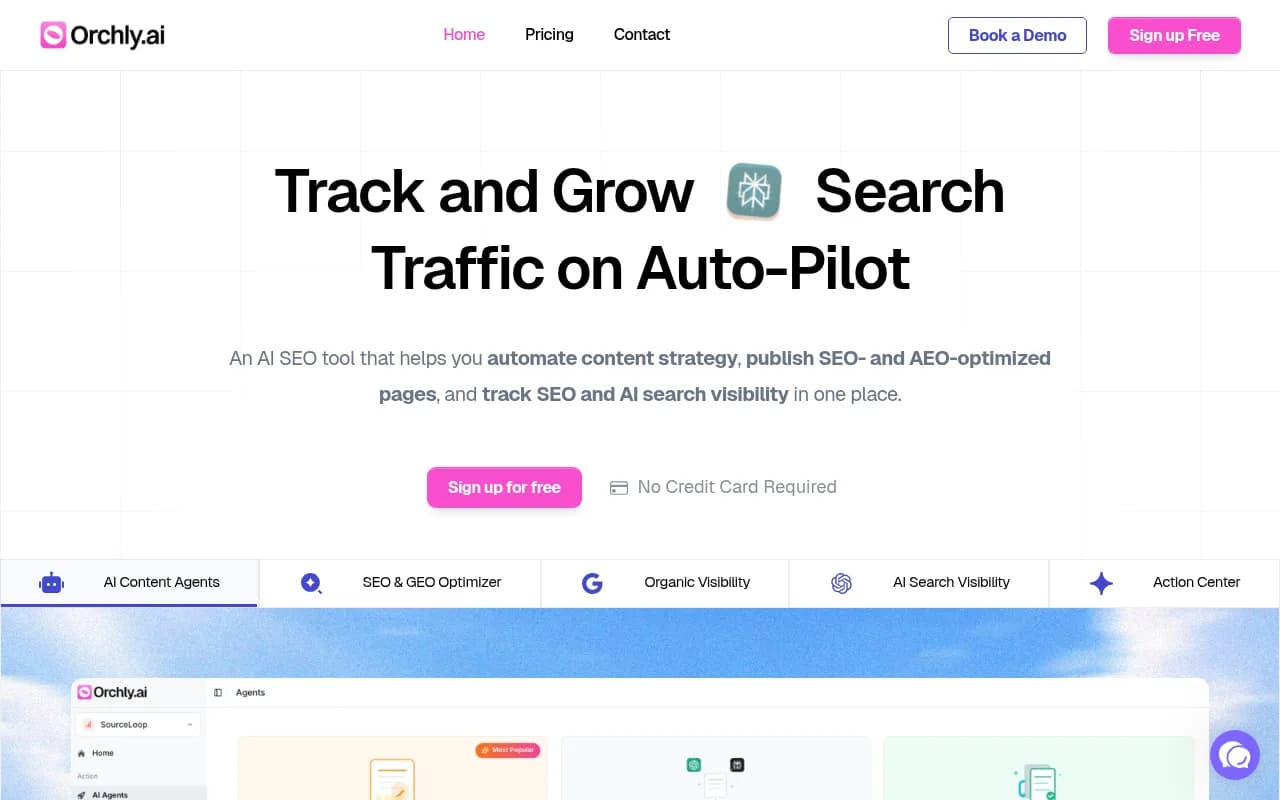
Orchly starts at $49/mo, which makes it the most affordable option in this list that includes any content automation features. It covers ChatGPT, Perplexity, Claude, Google AI Mode, and AI Overviews, with prompt-level tracking and citation tracking.
The "Action Center" feature is Orchly's attempt at actionability — it surfaces recommendations based on visibility data. It's less sophisticated than Promptwatch's gap analysis and content generation, but for small teams or solo marketers who can't justify $99-249/mo, it's a reasonable starting point.
11. ZipTie — best for answer-level auditing
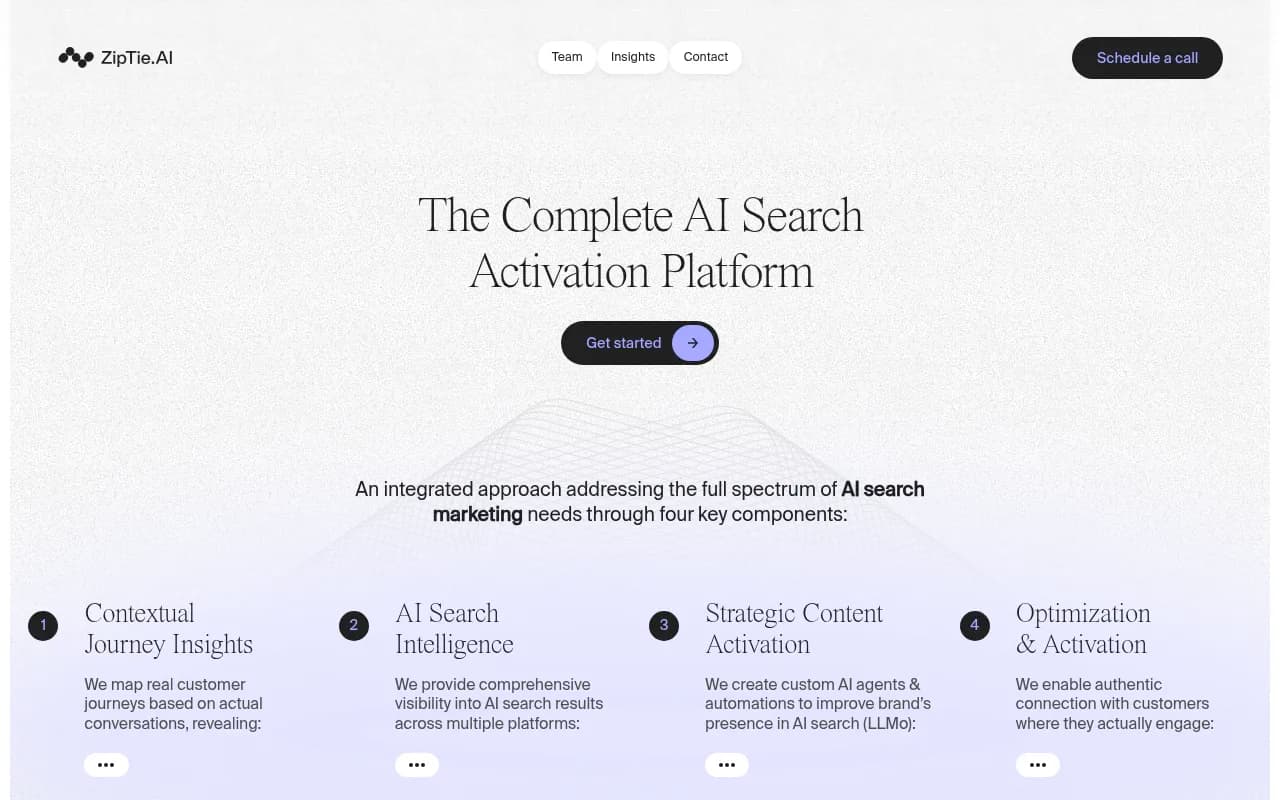
ZipTie takes a different approach from most tools. Rather than tracking brand mentions at scale, it focuses on deep, answer-level auditing across AI Overviews, ChatGPT, and Perplexity. You get a granular view of exactly what AI models are saying in response to specific prompts, which is useful for competitive research and understanding how your brand is being framed.
It's not a replacement for a full monitoring platform, but as a research and audit tool it's genuinely useful. Pricing is custom.
12. LLMrefs — best for keyword-driven AI visibility tracking
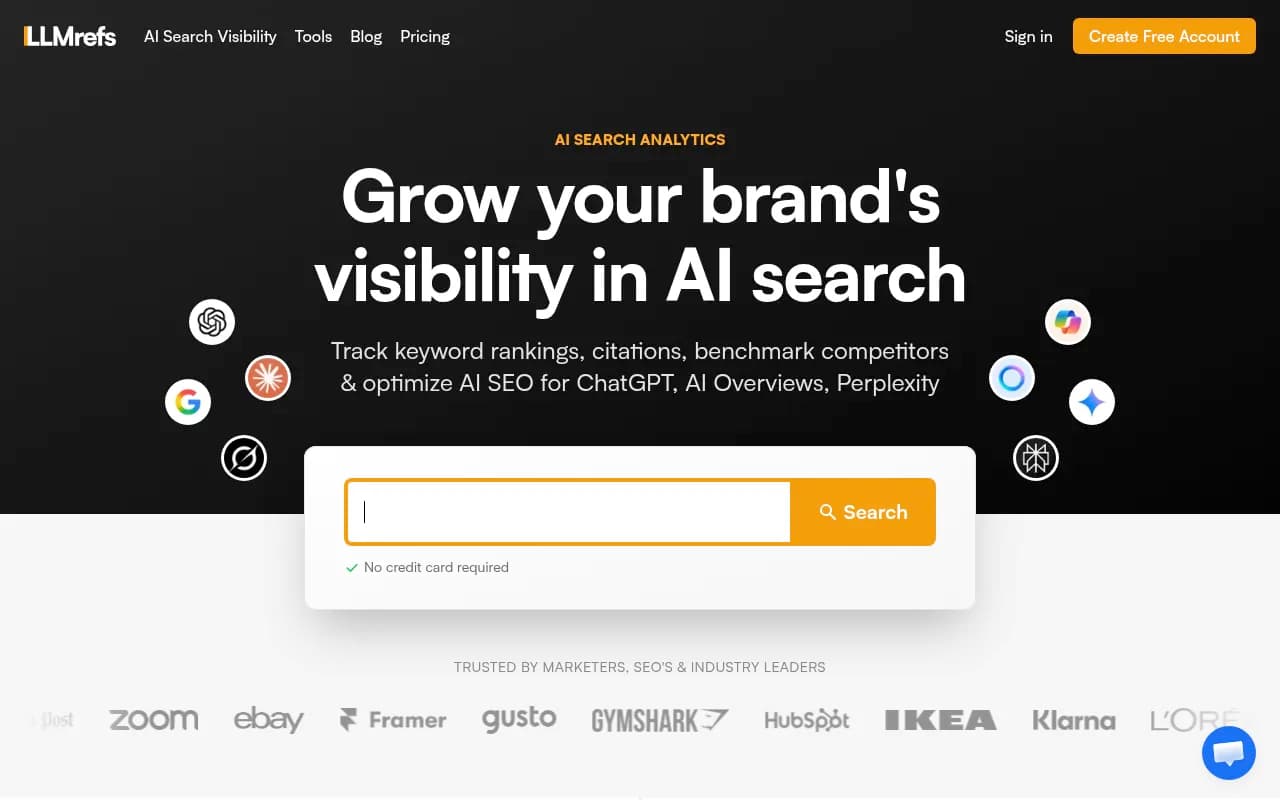
LLMrefs takes a familiar approach for anyone who's used traditional rank trackers. You define keywords and prompts, and it tracks your visibility across ChatGPT, Perplexity, and 9 other AI search engines over time. The interface will feel intuitive to SEO teams that are used to rank tracking dashboards.
It's monitoring-only, but the keyword-centric framing makes it easier to connect AI visibility data to existing SEO workflows. Good for teams transitioning from traditional SEO to GEO who want a familiar mental model.
LLMrefs
Why most Profound alternatives still leave you stuck
Here's the honest problem with this category: most tools, including Profound itself, are monitoring dashboards. They answer the question "are we visible in AI search?" but not "how do we become more visible?"
That's a significant gap. Knowing you're invisible in ChatGPT for a high-value prompt is useful information. But if the tool can't tell you what content is missing, can't help you create it, and can't show you whether your new content got picked up — you're doing three jobs manually that could be automated.
The tools that close this loop are Promptwatch (most complete), Writesonic (content-heavy), and Orchly (budget option). Everything else in this list is monitoring-first, which is fine if that's genuinely all you need.
How to choose the right Profound alternative
A few questions that should drive your decision:
Do you need content generation? If yes, Promptwatch, Writesonic, or Orchly. If no, almost any monitoring tool will do.
How many AI models do you need to track? Profound and Promptwatch both cover 10. Peec AI covers 5. Ahrefs Brand Radar covers 2. This matters more than it might seem — ChatGPT and Perplexity behave very differently, and visibility on one doesn't guarantee visibility on the other.
Do you need crawler logs? Most tools don't offer this. Promptwatch does, and it's genuinely useful for understanding why AI models aren't citing your pages (crawl errors, thin content, JavaScript rendering issues).
What's your budget? Orchly at $49/mo and Otterly.AI at ~$29/mo are the cheapest options with real functionality. Promptwatch at $99/mo is competitive with Profound's entry tier and does significantly more. Profound at $399/mo for full access is hard to justify unless you specifically need its enterprise reporting features.
Are you already in an SEO platform? If you're a heavy Semrush or Ahrefs user, start with their AI add-ons before buying a separate tool. The coverage is narrower, but the integration value is real.
Bottom line
Profound is a capable platform for enterprises that need AI visibility monitoring and have the budget for it. But for most teams — especially those that want to actually improve their visibility rather than just measure it — there are better options.
Promptwatch is the strongest overall alternative: it covers the same number of AI models, costs less at scale, and is the only platform in this category that takes you from gap identification to content creation to traffic attribution in one workflow. If you're evaluating Profound and want to see how a full optimization platform compares, it's worth a trial.
For teams with tighter budgets or simpler needs, Peec AI and Otterly.AI are solid monitoring tools. For teams already in the Semrush or Ahrefs ecosystem, start with the built-in AI features before adding another subscription.
The category is moving fast. Tools that were monitoring-only a year ago are adding content features. The gap between "tracker" and "optimizer" is narrowing — but it hasn't closed yet.