Key takeaways
- Nightwatch is a capable rank tracker for traditional SEO, but it wasn't built for AI search -- it won't tell you if ChatGPT, Perplexity, or Google AI Overviews are citing your brand.
- The best alternatives in 2026 fall into two camps: monitoring-only tools that show you data, and action-oriented platforms that help you fix visibility gaps with content.
- For teams that want to track and improve AI visibility, Promptwatch is the most complete option -- it combines tracking, content gap analysis, and AI content generation in one loop.
- Budget-conscious teams can start with tools like Gauge, LLM Pulse, or Otterly.AI, but expect to hit feature ceilings quickly.
- If you're still only tracking Google rankings in 2026, you're missing a growing share of how your potential customers find recommendations.
Nightwatch has been a reliable rank tracker for years. Clean interface, solid data, good for agencies managing multiple clients across traditional search. If you need to know where you rank on Google for a given keyword, it does the job.
But here's the problem: keyword rankings are only part of the picture now. When someone asks ChatGPT "what's the best project management tool for remote teams?" or Perplexity "which CRM should I use for a 10-person sales team?", those answers don't come from a rank tracker. They come from AI models that have their own logic for what to cite, recommend, and trust.
Nightwatch doesn't track that. Neither do most traditional SEO tools.
This guide is for marketing teams who've realized they need visibility in AI search -- not just Google -- and are looking for tools that actually help them get there.
Why teams are moving beyond Nightwatch
Nightwatch is strong at what it was designed for: daily rank tracking, SERP feature monitoring, white-label reporting for agencies. It integrates with Google Search Console, tracks local rankings, and has a clean UI that clients tend to like.
The gap shows up when you ask it anything about AI search. It has no visibility into whether ChatGPT mentions your brand. It can't tell you which prompts your competitors are winning. It has no mechanism for tracking citations in Perplexity or Google AI Overviews.
That's not a knock on Nightwatch specifically -- most traditional SEO tools have the same blind spot. But in 2026, with AI search handling a meaningful share of informational and commercial queries, that blind spot matters.
The teams moving away from Nightwatch (or adding tools alongside it) are generally dealing with one of these situations:
- Their organic traffic from Google is flat or declining, but they suspect AI search is capturing intent they're missing
- A competitor keeps getting recommended by ChatGPT and they have no idea why
- They want to understand what content to create to get cited by AI models, not just rank on page one
- They're an agency trying to show clients AI visibility data alongside traditional SEO metrics
The alternatives, broken down
Promptwatch -- best for teams that want to track and fix AI visibility
Promptwatch is the most complete option here, and the one worth understanding in detail because it works differently from the rest.
Most AI visibility tools are monitoring dashboards. They show you where you appear (or don't appear) in AI-generated answers. That's useful, but it leaves you with data and no clear path to action.
Promptwatch is built around a loop: find the gaps, create content that fills them, track whether it worked.
The "find the gaps" part is Answer Gap Analysis -- it shows you exactly which prompts your competitors are visible for that you're not. Not vague categories, but specific questions and topics that AI models are answering without citing your site. You see what's missing.
The "create content" part is a built-in AI writing agent that generates articles, listicles, and comparisons grounded in actual citation data. It's not generic AI content -- it's engineered around what AI models tend to cite, based on analysis of 880M+ citations. You can target specific prompts, personas, and competitors.
The "track whether it worked" part is page-level visibility tracking across 10 AI models (ChatGPT, Perplexity, Claude, Gemini, Google AI Overviews, DeepSeek, Grok, Copilot, Meta AI, Mistral), plus traffic attribution that connects AI visibility to actual site visits and revenue.
A few other things that set it apart: AI crawler logs (real-time data on which AI bots are crawling which pages, and how often), Reddit and YouTube tracking (surfacing discussions that influence AI recommendations), and ChatGPT Shopping monitoring for product brands.
Pricing starts at $99/month for one site and 50 prompts, with a Professional plan at $249/month and Business at $579/month. There's a free trial.

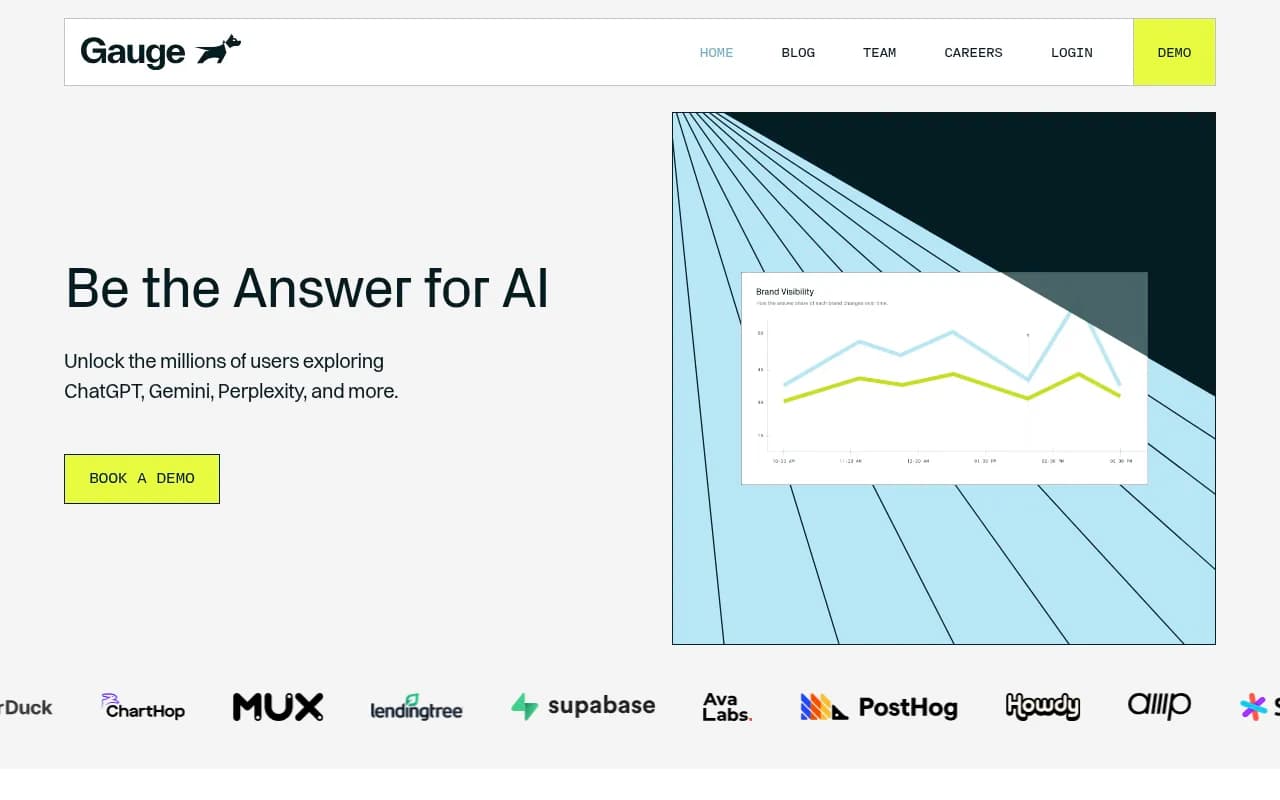
Gauge -- clean UI, good for teams new to AI visibility tracking
Gauge is a solid entry point for teams that want to start monitoring AI search without committing to a complex platform. It tracks brand mentions across AI engines and gives you a clear view of where you appear and where you don't.
The interface is clean and the onboarding is fast -- you can be tracking prompts within minutes of signing up. It's a good fit for smaller marketing teams or individual practitioners who want AI visibility data without a steep learning curve.
Where it falls short is on the action side. Like most monitoring tools, Gauge shows you the data but doesn't help you do much with it. There's no content generation, no gap analysis tied to specific competitor prompts, and no crawler log data. It's a tracker, not an optimizer.
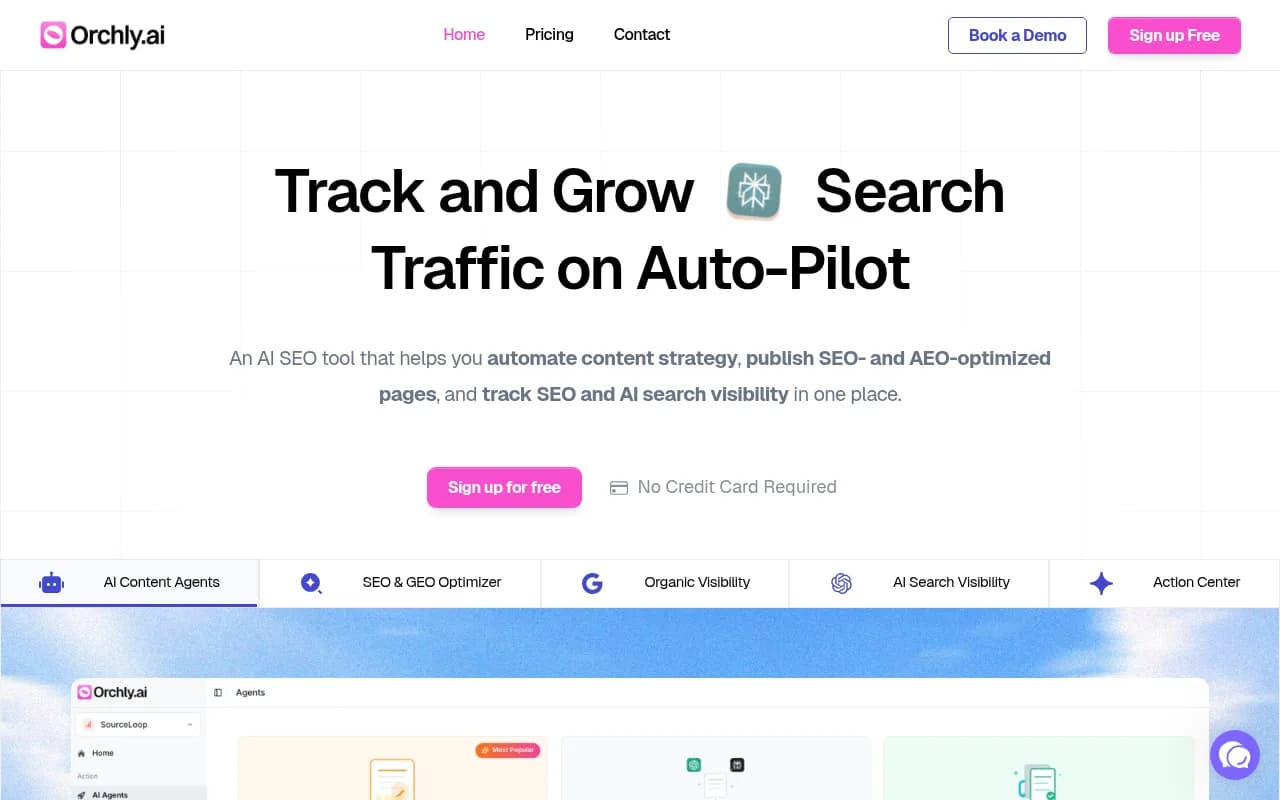
Orchly -- multi-platform tracking with content automation
Orchly combines AI visibility tracking with content automation workflows. It covers ChatGPT, Claude, Perplexity, Gemini, and Google AI Overviews, and has AI agents that can help with content creation alongside the monitoring.
Starting at $49/month, it's more affordable than enterprise-tier options and has a broader feature set than basic monitoring tools. The content automation angle is genuinely useful -- it's closer to what Promptwatch does than most competitors in this price range.
The main limitation is depth. Orchly's citation analysis and prompt intelligence aren't as granular as Promptwatch's, and it doesn't have crawler log data or Reddit/YouTube tracking. But for teams that want a mid-tier option with both tracking and some content capabilities, it's worth a look.
Scrunch AI -- enterprise monitoring with compliance focus
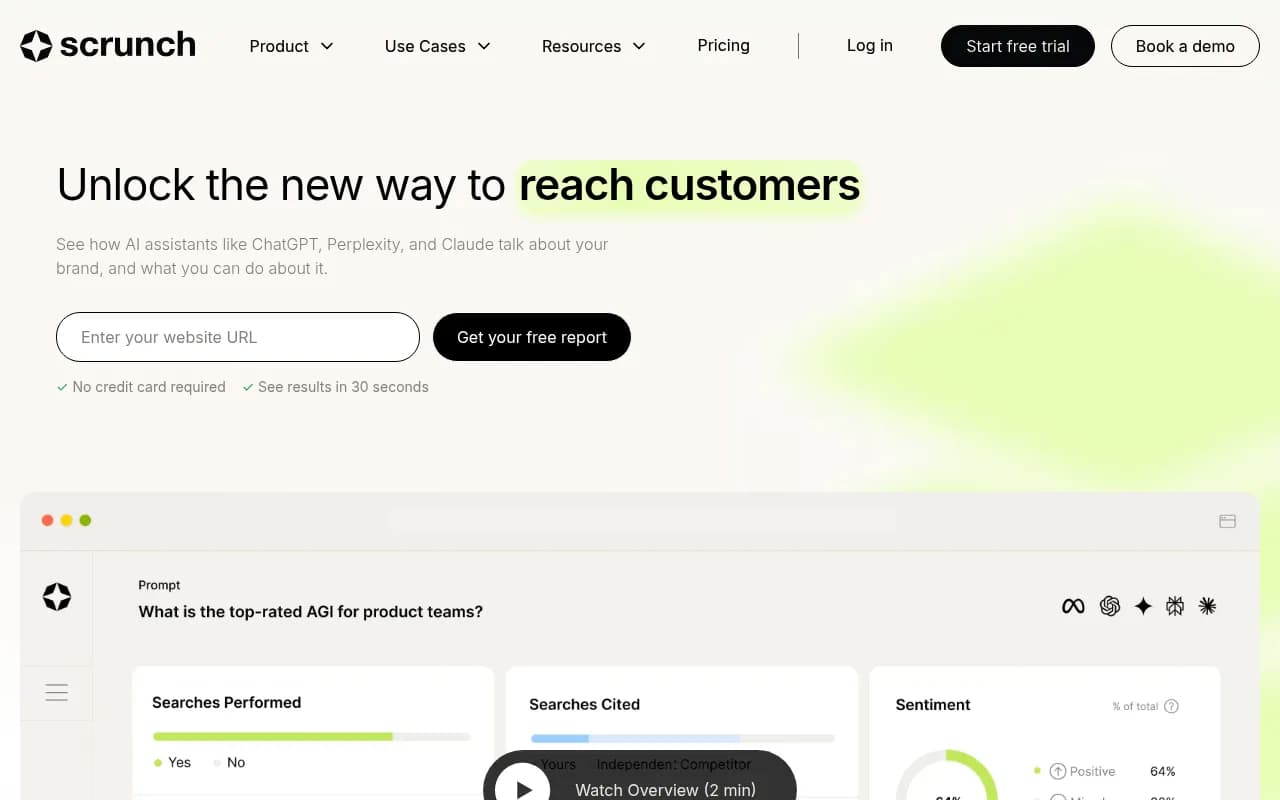
Scrunch AI targets enterprise teams that need comprehensive monitoring with security compliance. It's SOC 2 certified, covers 7+ AI platforms, and has strong reporting features that work well for larger organizations with formal reporting requirements.
Starting at $300/month, it's priced for enterprise budgets. The monitoring is solid, but like most enterprise tools in this space, the focus is on visibility data rather than helping you improve it. There's no built-in content generation or gap analysis that tells you what to create.
If your primary need is compliance-friendly monitoring with enterprise-grade reporting, Scrunch is worth evaluating. If you need to actually move the needle on AI visibility, you'll want to pair it with something else.
LLM Pulse -- good value for teams tracking multiple markets
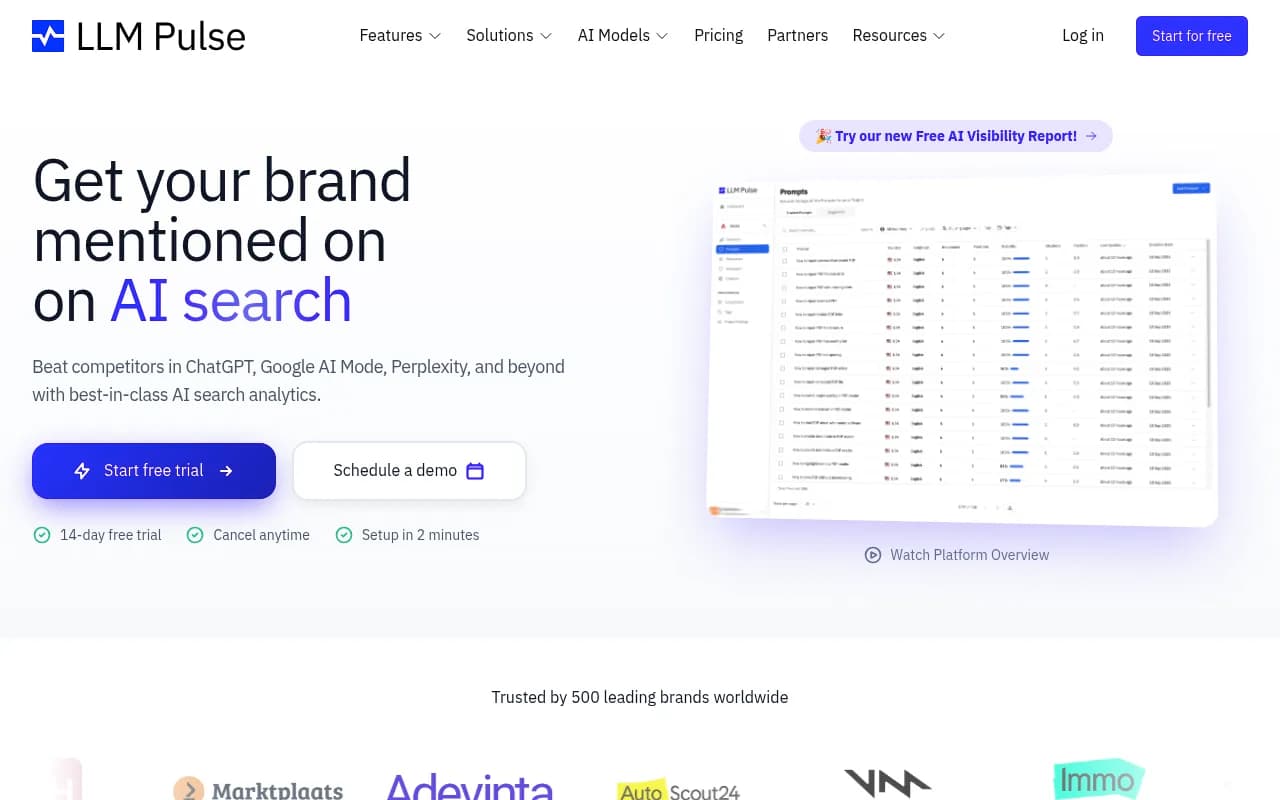
LLM Pulse is a bootstrapped platform with a strong price-per-prompt ratio and unlimited seats, which makes it attractive for agencies or larger teams where seat limits are a pain point. It covers 5 AI models on base plans (10+ on enterprise) and includes brand sentiment analysis.
The unlimited seats model is genuinely useful -- most competitors charge per seat, which adds up fast for agencies managing multiple clients or internal teams with several stakeholders who need access.
Where it's weaker: no crawler logs, no content generation, and the prompt intelligence isn't as deep as Promptwatch's. But for teams primarily focused on monitoring and reporting, it's one of the better value options.
Otterly.AI -- budget entry point with Semrush integration
Otterly.AI is one of the more affordable options in the AI visibility space, starting around $29/month. It covers ChatGPT, Perplexity, and Google AI Overviews, and has a Semrush integration that's useful if you're already in that ecosystem.
It's a monitoring tool -- there's no content generation, no crawler logs, no traffic attribution. But for teams that just want to start tracking AI mentions without a big budget commitment, it's a reasonable starting point.
The Semrush integration is the main differentiator here. If you're already using Semrush for traditional SEO and want to add a basic layer of AI visibility monitoring, Otterly.AI plugs in without requiring a completely separate workflow.
Otterly.AI

Peec AI -- strong for multilingual and international tracking
Peec AI covers 115+ languages, which makes it the strongest option for brands operating across multiple markets where AI search behavior varies significantly by language and region. It covers ChatGPT, Perplexity, and Google AI Overviews on base plans, with additional platforms available as add-ons.
Starting at €89/month, it's mid-tier pricing for what's a fairly specialized capability. If your primary challenge is tracking AI visibility in non-English markets, Peec AI is worth serious consideration. If you're primarily in English-speaking markets, the multilingual focus is less relevant and other tools offer more value.

SE Ranking -- traditional SEO with AI visibility features
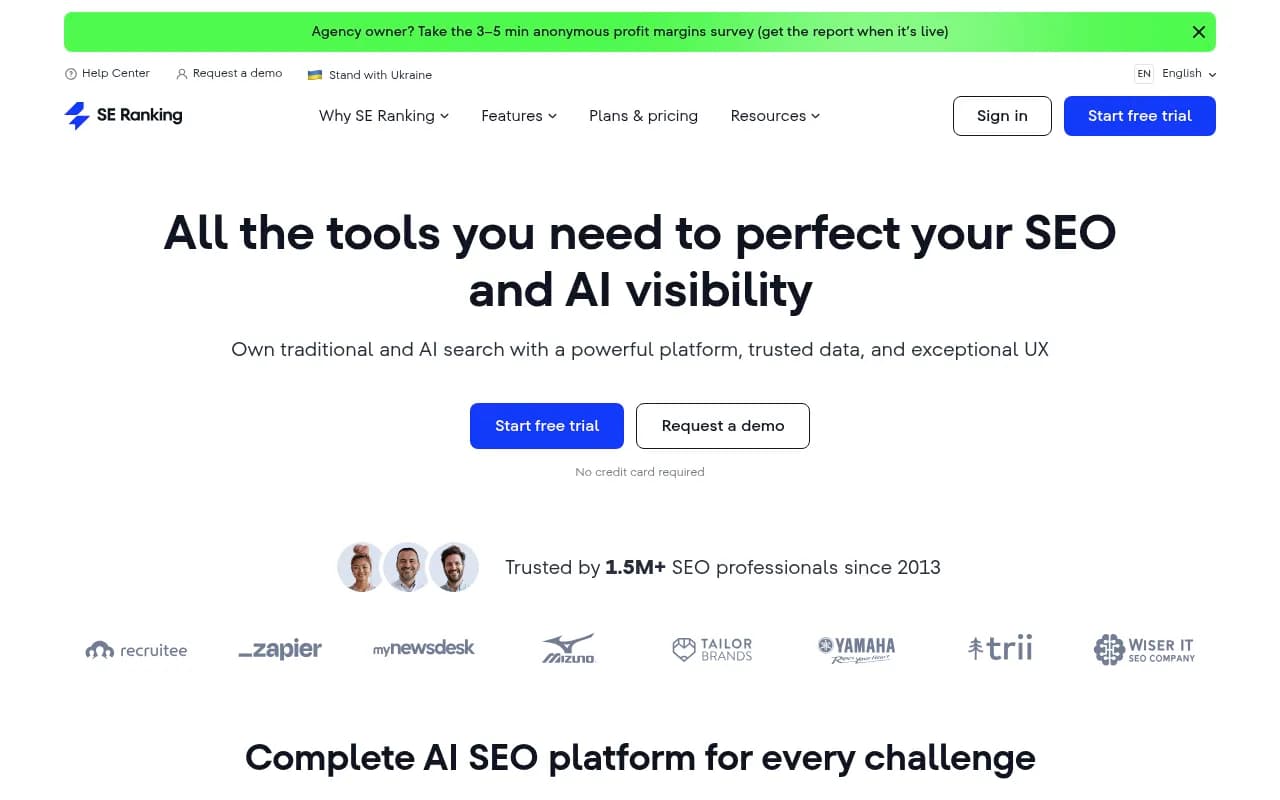
SE Ranking is a full SEO platform that has added AI visibility features. It's a good option for teams that want to consolidate their traditional rank tracking and AI visibility monitoring into one tool, rather than running separate platforms.
The AI visibility features aren't as deep as dedicated GEO platforms, but the traditional SEO capabilities (rank tracking, site audits, content tools) are solid. If you're replacing Nightwatch specifically and want to keep traditional SEO tracking while adding some AI visibility, SE Ranking is worth comparing.
AthenaHQ -- enterprise analytics with action recommendations
AthenaHQ targets enterprise teams and has an "Action Center" feature that provides strategic recommendations based on visibility data. It covers ChatGPT, Perplexity, Claude, and Gemini, and has strong analytics for large organizations.
Starting at $295/month, it's priced for enterprise budgets. The Action Center is a step toward being more than a monitoring tool, but it stops short of the full content generation and optimization loop that Promptwatch offers. It's more "here's what you should do" than "here's the content to do it with."

Profound -- enterprise with compliance and deep data
Profound is one of the more established enterprise options, covering 10+ AI platforms with features like Conversation Explorer (which lets you see how AI models discuss topics in your space) and real-time search volume insights.
Starting at $499/month (with a $99/month starter that only covers ChatGPT), it's expensive. The compliance credentials (SOC 2 Type II, HIPAA) make it relevant for regulated industries. The data depth is impressive, but the price point puts it out of reach for most mid-market teams.
Profound

How to choose
The right tool depends on what you actually need to do.
| Tool | Starting price | AI models | Content generation | Crawler logs | Best for |
|---|---|---|---|---|---|
| Promptwatch | $99/mo | 10 | Yes | Yes | Teams that want to track and improve AI visibility |
| Gauge | Custom | Multiple | No | No | Simple monitoring, clean UI |
| Orchly | $49/mo | 5 | Partial | No | Mid-tier tracking + some automation |
| Scrunch AI | $300/mo | 7+ | No | No | Enterprise compliance monitoring |
| LLM Pulse | €49/mo | 5-10 | No | No | Agencies needing unlimited seats |
| Otterly.AI | $29/mo | 3-4 | No | No | Budget entry point |
| Peec AI | €89/mo | 3+ | No | No | Multilingual/international tracking |
| SE Ranking | ~$65/mo | Limited | No | No | Traditional SEO + basic AI visibility |
| AthenaHQ | $295/mo | 4+ | No | No | Enterprise analytics |
| Profound | $499/mo | 10+ | No | No | Enterprise compliance + deep data |
A few honest observations:
If you're primarily replacing Nightwatch's rank tracking functionality and want to add AI visibility on top, SE Ranking or Semrush are the most natural transitions -- they cover traditional SEO and have added AI features.
If AI visibility is your primary concern and you want to actually move the needle (not just measure it), Promptwatch is the only tool in this list that closes the full loop from gap identification to content creation to results tracking.
If budget is the main constraint, Otterly.AI or LLM Pulse get you started without a big commitment. Just know you'll be working with monitoring data only -- the "what do I do about this?" question is left to you.
If you're an enterprise with compliance requirements, Scrunch or Profound are the safer bets, though you'll pay for it.
The bigger picture
The shift from keyword rankings to AI citations isn't a future trend -- it's happening now. Perplexity is processing hundreds of millions of queries. ChatGPT's search features are used by tens of millions of people. Google AI Overviews appear on a significant share of informational searches.
Nightwatch can tell you where you rank on page one. It can't tell you whether ChatGPT recommends you when someone asks a buying question in your category. Those are different problems, and they need different tools.
The good news is that AI visibility is still early enough that being intentional about it now creates a real advantage. Brands that understand which prompts matter, what content AI models want to cite, and how to track the results are building a moat that monitoring-only competitors can't easily replicate.
That's the case for moving beyond rank tracking -- not abandoning it, but adding the layer that actually reflects how your customers are finding information in 2026.