Key takeaways
- Botify is a strong enterprise crawler, but its pricing and traditional-SEO focus make it a poor fit for teams that need AI search visibility (GEO) alongside technical auditing.
- The best alternatives depend on your primary need: pure technical crawling, AI visibility tracking, or both.
- For GEO and AI search optimization specifically, Promptwatch goes furthest — it doesn't just track where you appear in ChatGPT or Perplexity, it helps you create content that gets cited.
- Lumar and seoClarity are the strongest enterprise alternatives if you need deep technical SEO with some GEO coverage.
- Screaming Frog remains the go-to for hands-on technical auditors who don't need a SaaS dashboard.
Why people are looking beyond Botify in 2026
Botify built its reputation on one thing: crawling very large websites at scale and surfacing technical SEO issues that smaller tools miss. For enterprise sites with millions of URLs, that's genuinely useful. But the world has shifted.
AI search engines — ChatGPT, Perplexity, Google AI Overviews, Claude, Gemini — now answer a meaningful share of queries directly, without sending users to websites at all. That changes what "search optimization" means. It's no longer just about getting indexed and ranking in a blue-link SERP. It's about being cited in AI-generated answers. That's what Generative Engine Optimization (GEO) is about, and it's where Botify has real gaps.
There's also the cost issue. Botify's enterprise pricing puts it out of reach for most mid-market teams. And its workflow is built around technical SEO specialists — not the kind of platform a marketing team can pick up and run with.
So what are the actual alternatives? It depends on what you're trying to do.
How to think about this decision
Before jumping to a list, it's worth being honest about what you actually need. There are three distinct use cases here:
- Technical crawling and site auditing — finding broken pages, crawl budget issues, redirect chains, JavaScript rendering problems. Botify's core strength.
- AI search visibility (GEO) — tracking whether your brand gets cited in ChatGPT, Perplexity, Google AI Overviews, and other LLMs. Botify barely touches this.
- Both — you want technical health monitoring and AI visibility in one place, or at least two tools that complement each other.
Most teams in 2026 need some version of all three. The tools below are organized by which use case they serve best.
Quick comparison
| Tool | Best for | GEO/AI visibility | Technical crawling | Pricing |
|---|---|---|---|---|
| Promptwatch | AI search visibility + content optimization | Yes (10 models) | No | From $99/mo |
| Lumar | Enterprise technical SEO + some GEO | Partial | Yes | Enterprise |
| seoClarity | Enterprise SEO + AI tracking | Partial | Yes | Enterprise |
| Screaming Frog | Deep technical audits | No | Yes | £259/yr |
| Sitebulb | Technical audits with visual reporting | No | Yes | From $13.50/mo |
| OnCrawl | Enterprise log file + crawl analysis | No | Yes | Custom |
| Semrush | All-in-one SEO | Limited | Basic | From $139/mo |
| Ahrefs | All-in-one SEO + Brand Radar | Limited | Basic | From $129/mo |
The best Botify alternatives in 2026
Promptwatch — for GEO and AI search visibility
If the reason you're looking at Botify alternatives is that you want to show up in AI-generated answers — not just rank in Google — then Promptwatch is the most complete option available right now.
Promptwatch monitors your brand across 10 AI models: ChatGPT, Perplexity, Claude, Gemini, Google AI Overviews, Google AI Mode, Grok, DeepSeek, Meta/Llama, and Copilot. But the monitoring is just the starting point.
What makes it different from most GEO tools is the action loop. It shows you which prompts your competitors are getting cited for that you're not (Answer Gap Analysis), then has a built-in AI writing agent that generates content specifically engineered to earn citations from those models. Then it tracks whether that content actually improves your visibility scores. Most GEO platforms stop at step one — they show you a dashboard and leave you to figure out what to do next.
Other capabilities worth knowing about: AI crawler logs (see which pages ChatGPT and Perplexity are actually crawling and how often), prompt volume and difficulty scores, Reddit and YouTube citation tracking, ChatGPT Shopping monitoring, and traffic attribution via GSC integration or server log analysis.
Pricing starts at $99/month for a single site with 50 prompts. The Professional plan at $249/month adds crawler logs, multi-location tracking, and 15 AI-generated articles per month.

Lumar — for enterprise technical SEO with GEO coverage
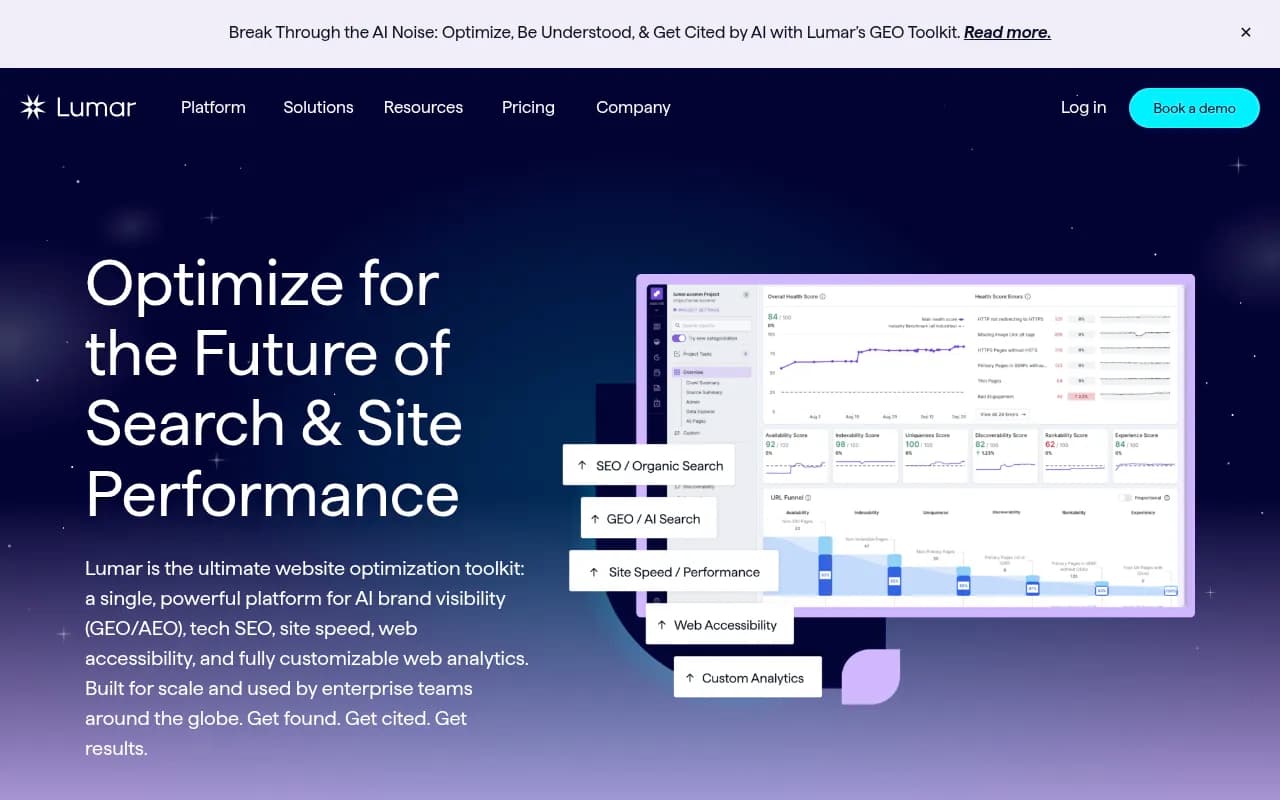
Lumar (formerly known as DeepCrawl) is probably the closest direct competitor to Botify in terms of positioning. It's built for large enterprise websites, offers deep crawl analysis, and has been expanding into GEO territory.
Where Lumar stands out is in its combination of technical depth and accessibility. The reporting is cleaner than Botify's, and the platform is easier for non-specialist team members to navigate. It covers Core Web Vitals, JavaScript rendering, log file analysis, and structured data — the full technical SEO stack.
On the GEO side, Lumar has added some AI search monitoring features, though it's not as deep as dedicated GEO platforms. If your primary need is technical SEO with GEO as a secondary concern, Lumar is worth a serious look. If GEO is your primary concern, you'll want to pair it with something like Promptwatch.
seoClarity — for enterprise SEO teams that want AI tracking built in
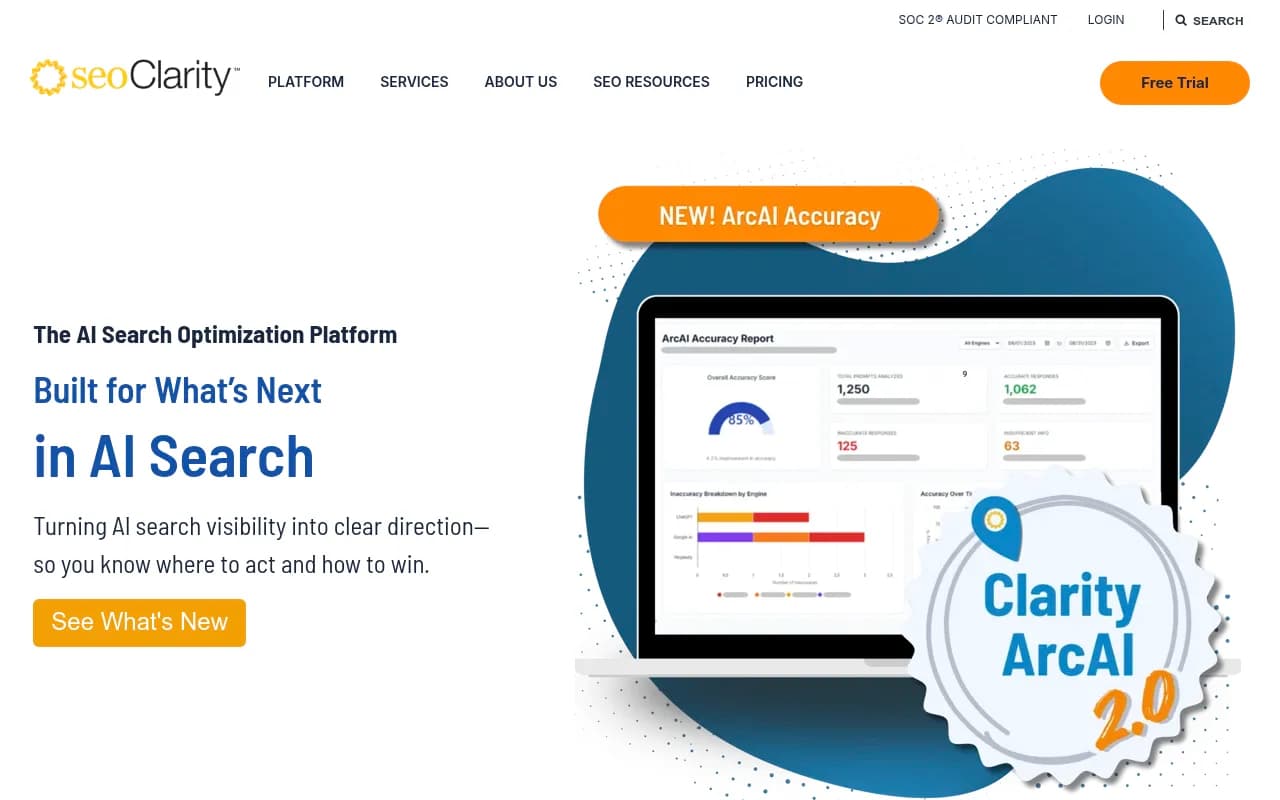
seoClarity is an enterprise SEO platform that has been more aggressive than most traditional tools in adding AI search tracking. It combines rank tracking, content optimization, site auditing, and AI visibility monitoring in a single platform — which is appealing if you want to reduce the number of tools you're managing.
The AI tracking in seoClarity covers major models and gives you brand mention data alongside traditional rank data. It's not as specialized as a dedicated GEO platform, but for an enterprise team that's primarily doing traditional SEO and wants AI visibility as part of the same workflow, it's a reasonable fit.
Screaming Frog SEO Spider — for hands-on technical auditors
Screaming Frog is the tool that most technical SEO specialists have open in a tab at all times. It's a desktop crawler that gives you complete control over how you crawl a site — custom extraction, JavaScript rendering via Puppeteer, log file analysis, structured data validation, and a level of configurability that no SaaS tool matches.
The trade-off is that it's not a platform. There's no ongoing monitoring, no dashboards, no team collaboration features, and zero GEO capability. It's a tool you run when you need to audit something. At £259 per year for the paid version (with a free version available for sites under 500 URLs), it's also dramatically cheaper than Botify.
If you're a technical SEO specialist who needs deep crawl data and you're comfortable working with raw data, Screaming Frog is hard to beat. If you need ongoing monitoring or AI visibility, you'll need other tools alongside it.
Sitebulb — for technical audits with better visual reporting
Sitebulb does what Screaming Frog does, but with a stronger emphasis on making the data understandable. Its audit reports are genuinely well-designed — they prioritize issues by impact, explain why something matters, and give you clear recommendations. For agencies that need to present technical SEO findings to clients, Sitebulb's reports are much easier to work with than raw Screaming Frog exports.
It's a desktop tool like Screaming Frog, so the same limitations apply: no ongoing monitoring, no GEO features. But for the audit use case, particularly in an agency context, it's excellent.

OnCrawl — for enterprise log file analysis
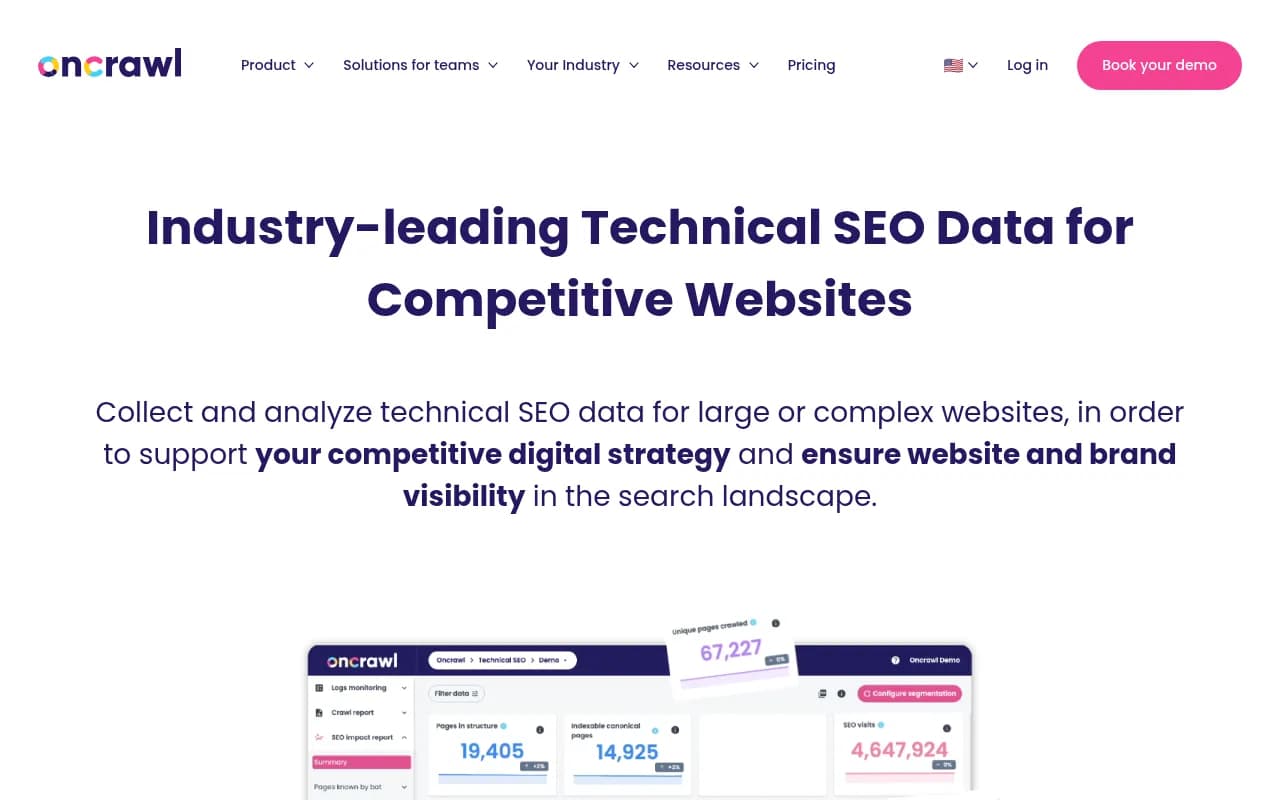
OnCrawl sits in a similar space to Botify — enterprise-grade crawling combined with log file analysis. The log file piece is where it genuinely shines. By combining crawl data with server log data, OnCrawl can show you exactly which pages Googlebot is crawling, how often, and whether your crawl budget is being wasted on low-value pages.
It's a more technical tool than most, and it's priced for enterprise. But if log file analysis is a core part of your technical SEO workflow and you're looking for a Botify alternative that covers that use case, OnCrawl is worth evaluating.
Semrush — for all-in-one SEO with some AI coverage
Semrush is the obvious all-in-one choice. It covers keyword research, rank tracking, site auditing, backlink analysis, content optimization, and has been adding AI search features. The site audit tool is solid for most use cases, though it doesn't go as deep as Botify, Lumar, or Screaming Frog on technical issues.
The AI visibility features in Semrush are limited compared to dedicated GEO platforms — the prompts are fixed rather than customizable, and there's no AI traffic attribution. But if you're already using Semrush for traditional SEO and want basic AI monitoring without adding another tool, it covers the basics.
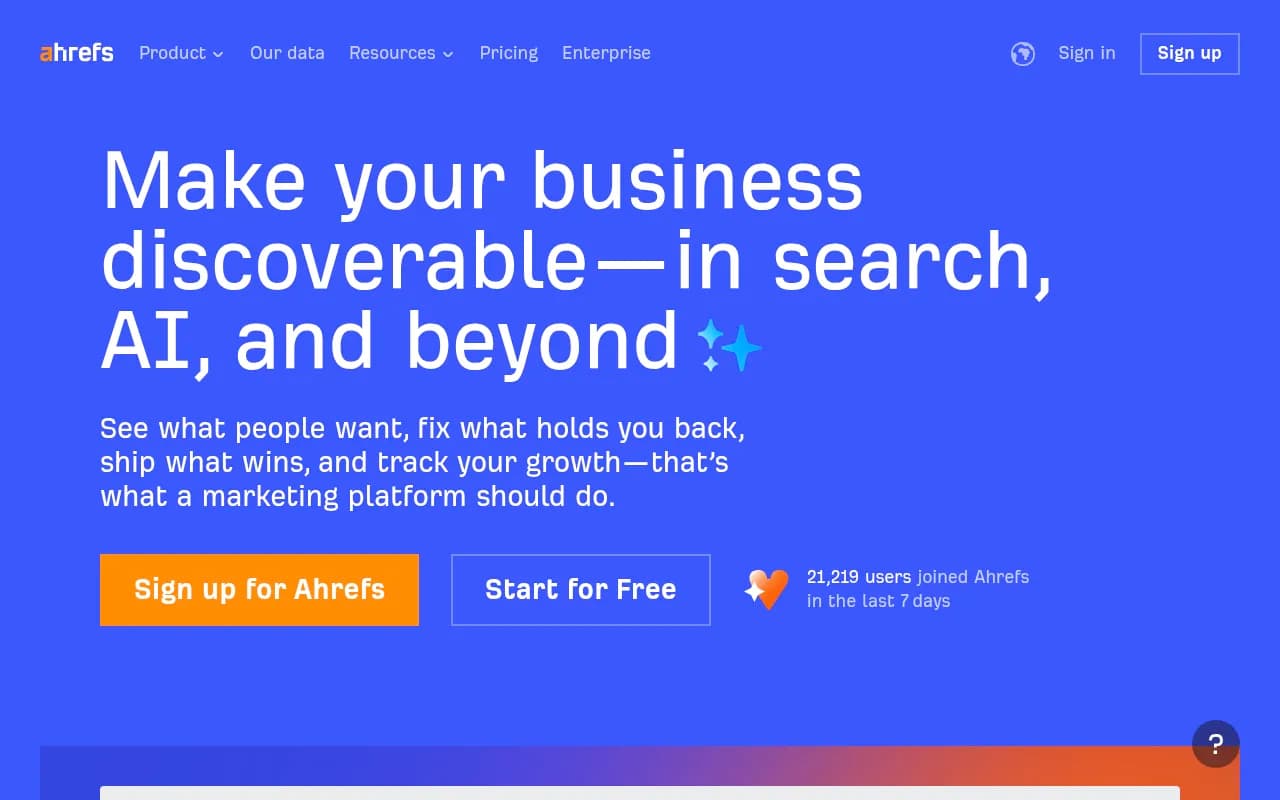
Ahrefs — for SEO research with Brand Radar for AI mentions
Ahrefs is the other major all-in-one SEO platform worth mentioning. Its Brand Radar feature tracks brand mentions across AI search engines, though like Semrush's AI features, it uses fixed prompts and lacks AI traffic attribution. The core Ahrefs product — keyword research, backlink analysis, content explorer — remains excellent.
For teams that are primarily focused on traditional SEO research and content strategy, Ahrefs is a strong choice. For dedicated GEO work, you'll need something more specialized.
A note on the GEO-specific tools
If you're reading this specifically because you want to track and improve your visibility in AI search engines, it's worth knowing that there's now a whole category of dedicated GEO platforms beyond what's listed above. Tools like Otterly.AI, Peec AI, and AthenaHQ offer AI brand monitoring at various price points.
Otterly.AI



The honest assessment: most of these are monitoring dashboards. They show you where you appear (or don't appear) in AI responses, but they don't help you do anything about it. Promptwatch is the clearest exception — the content generation and gap analysis features are what separate it from the monitoring-only crowd.
Which alternative should you choose?
Here's a practical framework:
If your main problem is technical SEO at enterprise scale and you need ongoing monitoring, crawl analysis, and log file data: look at Lumar or seoClarity. Both are more accessible than Botify and have been investing in GEO features.
If you're a technical SEO specialist who needs deep audit capability without the enterprise price tag: Screaming Frog for raw power, Sitebulb if you need to present findings to clients.
If your main problem is AI search visibility — you're not showing up in ChatGPT or Perplexity responses and you want to fix that: Promptwatch is the most complete option. It's the only platform that closes the loop from gap identification to content creation to visibility tracking.
If you want one tool that covers traditional SEO reasonably well and adds basic AI monitoring: Semrush or Ahrefs, depending on which you prefer for the core SEO work.
If you're on a tight budget and need technical auditing: Screaming Frog's free version handles sites under 500 URLs. Paid is £259/year. Nothing else comes close on price for what it does.
The reality is that in 2026, most serious SEO and GEO teams are running two tools: one for technical crawling and one for AI visibility. Botify tried to be everything for enterprise teams, but the market has fragmented. The best setup for most teams is probably a technical crawler (Lumar, Screaming Frog, or Sitebulb depending on scale) paired with a dedicated GEO platform like Promptwatch.
Bottom line
Botify made sense when technical SEO was the whole game. That's no longer true. AI search engines are sending traffic, influencing purchase decisions, and recommending brands — and none of that shows up in a crawl report.
The tools above cover the full spectrum of what "search optimization" means in 2026. Pick based on your actual problem: if it's technical, go with the crawlers. If it's AI visibility, go with a dedicated GEO platform. If it's both, combine them — the cost of two focused tools is almost always lower than one bloated enterprise platform that does neither particularly well.