Key takeaways
- Most Peec AI alternatives are monitoring dashboards that show you citation counts but don't tell you how AI bots are crawling your site or what content gaps are costing you visibility.
- Crawler log monitoring is a rare feature in this space — only a handful of platforms (Promptwatch, Botify, JetOctopus) actually show you which pages AI bots read, how often, and what errors they hit.
- The most useful tools combine tracking with action: gap analysis, content generation, and traffic attribution — not just a visibility score.
- Peec AI is solid for prompt-level tracking and Google AI Overview monitoring, but it doesn't offer crawler logs, content generation, or deep traffic attribution.
- If crawler log monitoring is your priority, Promptwatch is the only purpose-built GEO platform that includes it at scale.
Peec AI had a good run as an early mover in AI visibility tracking. It covered Google AI Overviews, brand mentions in ChatGPT-style engines, and prompt-level analytics — useful stuff when most SEO teams were still trying to figure out whether AI search even mattered.
But the market has moved fast. Teams are no longer asking "are we mentioned in AI answers?" They're asking harder questions: Why is a competitor getting cited and we're not? Which pages is GPTBot actually reading? Are there crawl errors blocking Claude from indexing our content? What should we publish next to close the gap?
Peec AI doesn't answer those questions. Neither do most of its competitors.
This guide focuses specifically on the crawler log monitoring angle — because that's where the biggest blind spot is. We'll cover 9 alternatives, what they actually do, and which ones are worth your time depending on what you need.
Why crawler log monitoring matters (and why most tools skip it)
When ChatGPT, Perplexity, or Claude recommends a competitor instead of you, there are a few possible reasons. Maybe your content doesn't answer the question well. Maybe you're not cited by the right sources. Or maybe the AI bot never crawled the relevant page in the first place.
That last scenario is invisible to most AI visibility tools. They query AI engines and report what comes back — but they have no idea what happened before that, at the crawling stage.
Crawler log monitoring fills that gap. It shows you:
- Which pages GPTBot, ClaudeBot, PerplexityBot, and other AI crawlers are visiting
- How frequently they return to specific pages
- Which pages they're ignoring entirely
- HTTP errors (404s, 500s, redirect chains) that might be blocking them
- Whether your robots.txt is accidentally blocking AI crawlers
This is technical SEO for AI search, and it's genuinely underserved. Most GEO platforms were built by marketing-focused teams who prioritized dashboards over infrastructure. Only a few have gone deep on the crawl layer.
The 9 best Peec AI alternatives in 2026
1. Promptwatch
Promptwatch is the most complete option if you want crawler log monitoring combined with everything else: prompt tracking, gap analysis, content generation, and traffic attribution.

The crawler log feature is real-time. You see AI crawlers (ChatGPT, Claude, Perplexity, and others) hitting your site, which pages they read, how often they return, and any errors they encounter. This isn't a bolt-on — it's part of a broader workflow that connects crawl data to visibility outcomes.
What makes Promptwatch different from the rest of this list is the action loop. Most tools stop at monitoring. Promptwatch shows you which prompts competitors rank for that you don't (Answer Gap Analysis), then helps you create content to close those gaps using a built-in AI writing agent trained on 880M+ citation data points. Then it tracks whether the new content actually gets cited.
Crawler logs sit at the foundation of that loop — if AI bots aren't reading your pages, the rest of the optimization work is moot.
Other notable features: prompt volume estimates, difficulty scoring, query fan-outs, Reddit and YouTube citation tracking, ChatGPT Shopping monitoring, competitor heatmaps, and multi-language/multi-region support across 10 AI models.
Pricing starts at $99/mo (Essential), with crawler logs available from the Professional plan at $249/mo. Free trial available.
2. Botify
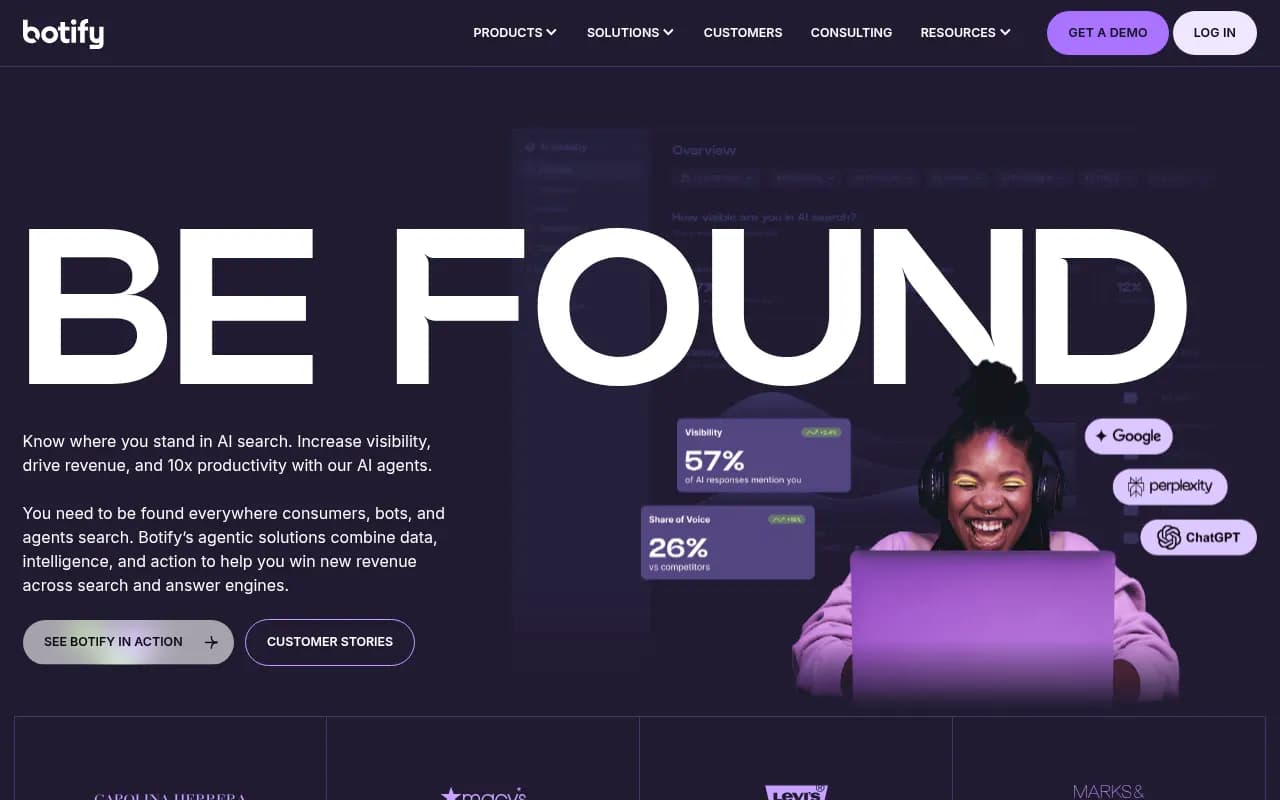
Botify is an enterprise SEO crawler that has expanded into GEO and AI search optimization. It's one of the few platforms with genuine log file analysis at scale — originally built for traditional search bots (Googlebot, Bingbot), it now tracks AI crawlers too.
If you're running a large site (100K+ pages) and want to understand AI bot behavior at the infrastructure level, Botify is serious kit. It can correlate crawl frequency with content performance, identify orphaned pages that bots never find, and flag JavaScript rendering issues that block AI indexing.
The trade-off: Botify is expensive and complex. It's built for enterprise technical SEO teams, not marketing teams who want to know why ChatGPT isn't recommending their brand. You'll likely need a dedicated implementation and ongoing support. It also doesn't have the prompt tracking, brand monitoring, or content generation capabilities that GEO-focused tools offer.
Good fit for: large enterprise sites where technical crawl issues are the primary bottleneck.
3. JetOctopus
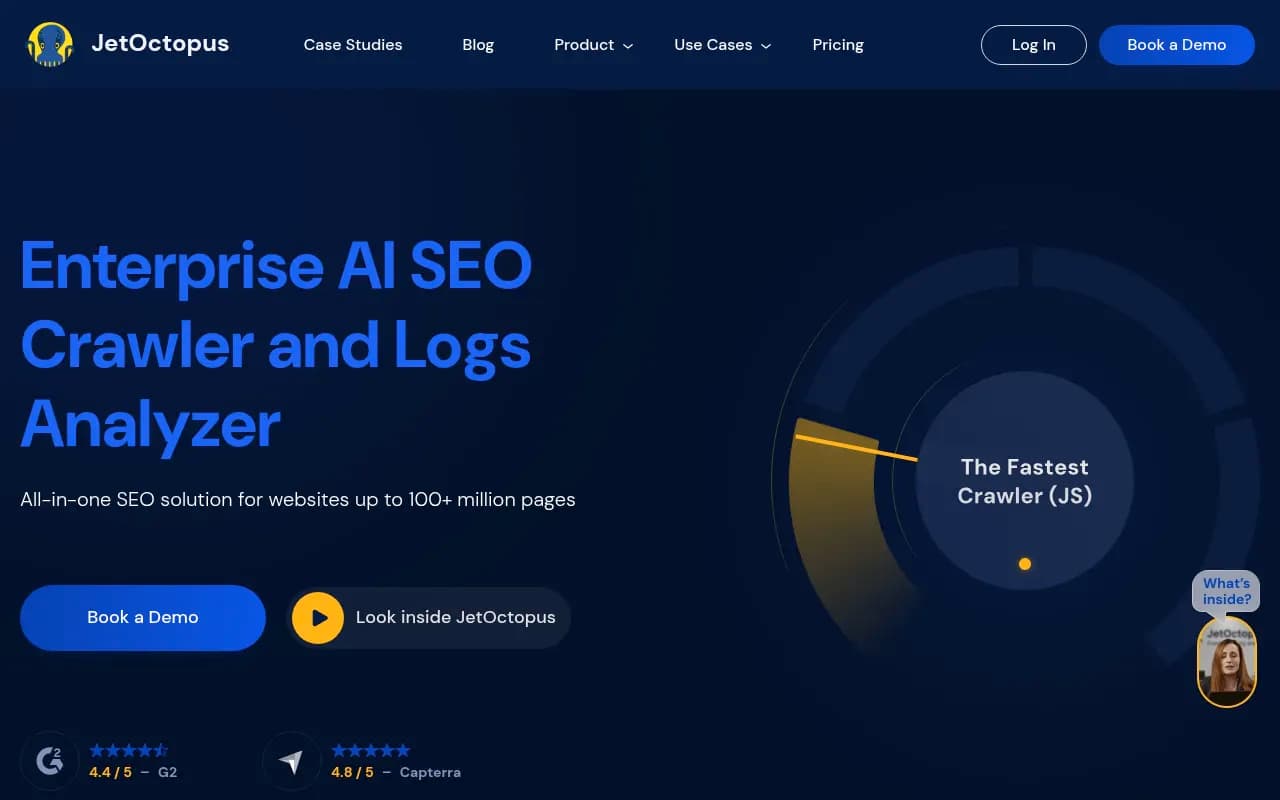
JetOctopus is a mid-market technical SEO platform with strong log file analysis. It handles sites with 10K+ pages well and has added AI crawler monitoring — you can filter logs specifically for GPTBot, ClaudeBot, and PerplexityBot to see exactly what they're doing.
The interface is cleaner than Botify and more accessible for SEO teams without a dedicated technical resource. Log analysis is fast, and the crawl data integrates with their SEO audit features so you can cross-reference crawl issues with on-page problems.
What it lacks: any GEO-specific features. JetOctopus doesn't track brand mentions in AI responses, doesn't do prompt monitoring, and has no content gap analysis. It's a technical tool that happens to cover AI crawlers, not an AI visibility platform.
Good fit for: SEO teams that already have a GEO monitoring tool and want dedicated log analysis for AI crawlers.
4. Profound
Profound

Profound is one of the more capable pure-play GEO platforms. It covers 9+ AI engines, does entity extraction, tracks competitor presence in AI responses, and has solid attribution mapping. The data quality is generally well-regarded in the SEO community.
On crawler logs: Profound doesn't have this feature. It's a monitoring and analytics platform, not a technical SEO tool. You'll see what AI engines say about you, but not how they're crawling your site.
Where Profound shines is in enterprise-level brand narrative tracking and competitive intelligence. If you're a large brand that needs to understand how AI models describe you versus competitors across multiple engines, it's worth evaluating.
Pricing starts at $99/mo, though enterprise features push the cost up considerably.
5. AthenaHQ

AthenaHQ covers Google AI Overviews, Perplexity, ChatGPT, and Claude with a clean multi-engine dashboard. It's positioned for brands competing in AI-native search and does a reasonable job of competitive intelligence.
No crawler logs here either. AthenaHQ is monitoring-focused — it tells you where you stand but doesn't help you fix it. There's no content generation, no gap analysis, and no traffic attribution.
At $295/mo starting price, it's on the expensive side for what you get compared to platforms that include optimization features at similar or lower price points.
Good fit for: teams that want clean multi-engine monitoring and don't need the optimization layer.
6. Scrunch AI

Scrunch AI focuses on brand narrative analysis — how AI models describe your brand, what descriptors they use, and how that compares to competitors. It's a genuinely different angle from most visibility tools, which focus on citation counts rather than the quality and framing of mentions.
No crawler log monitoring. Scrunch is a brand intelligence tool, not a technical SEO platform.
Where it's useful: brand teams and PR teams who care about AI-generated brand perception, not just whether they appear in responses.
7. Otterly.AI
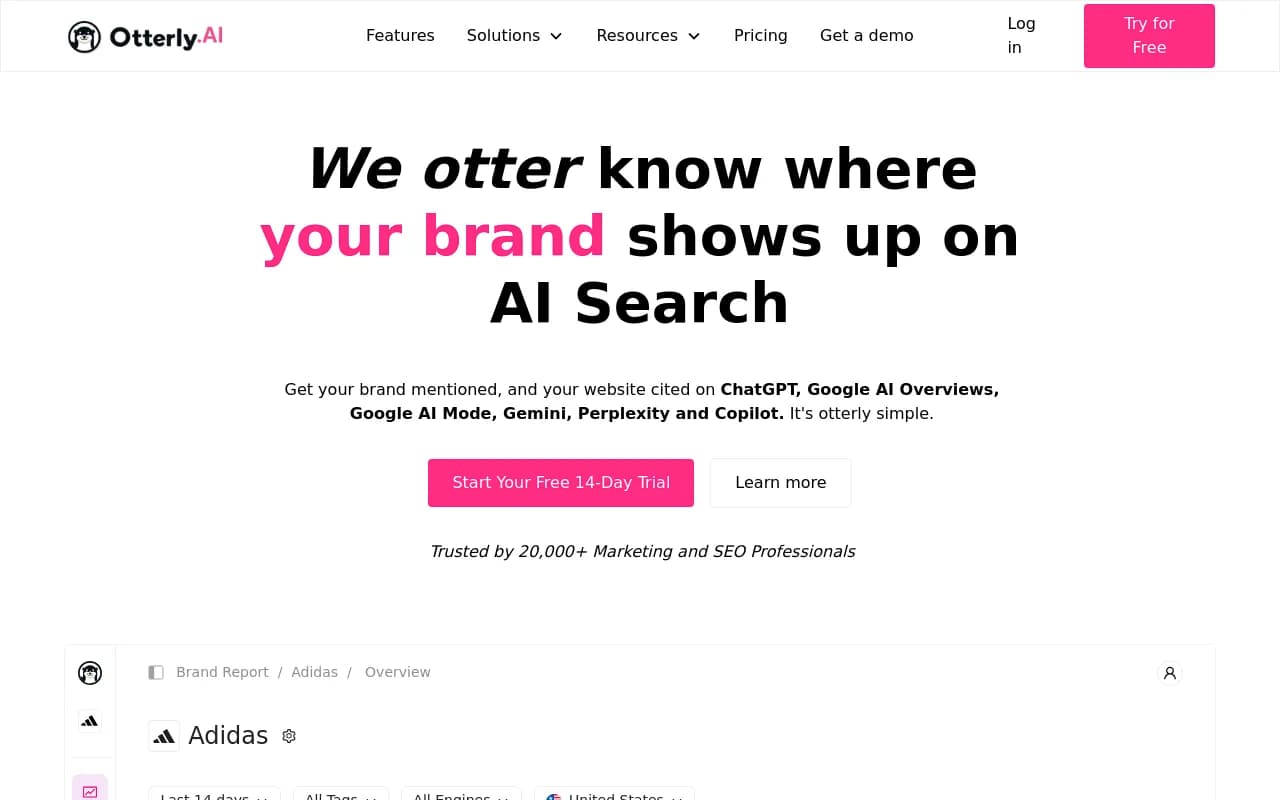
Otterly.AI is a straightforward AI search monitoring tool covering ChatGPT, Perplexity, and Google AI Overviews. It's simpler and cheaper than most alternatives, which makes it popular with smaller teams and agencies testing the GEO waters.
The limitation is that it's monitoring-only. No crawler logs, no content optimization, no gap analysis. You get visibility data and that's it. For teams that just want to know if they're showing up in AI answers, it works fine. For teams that want to actually improve their visibility, it's a starting point at best.
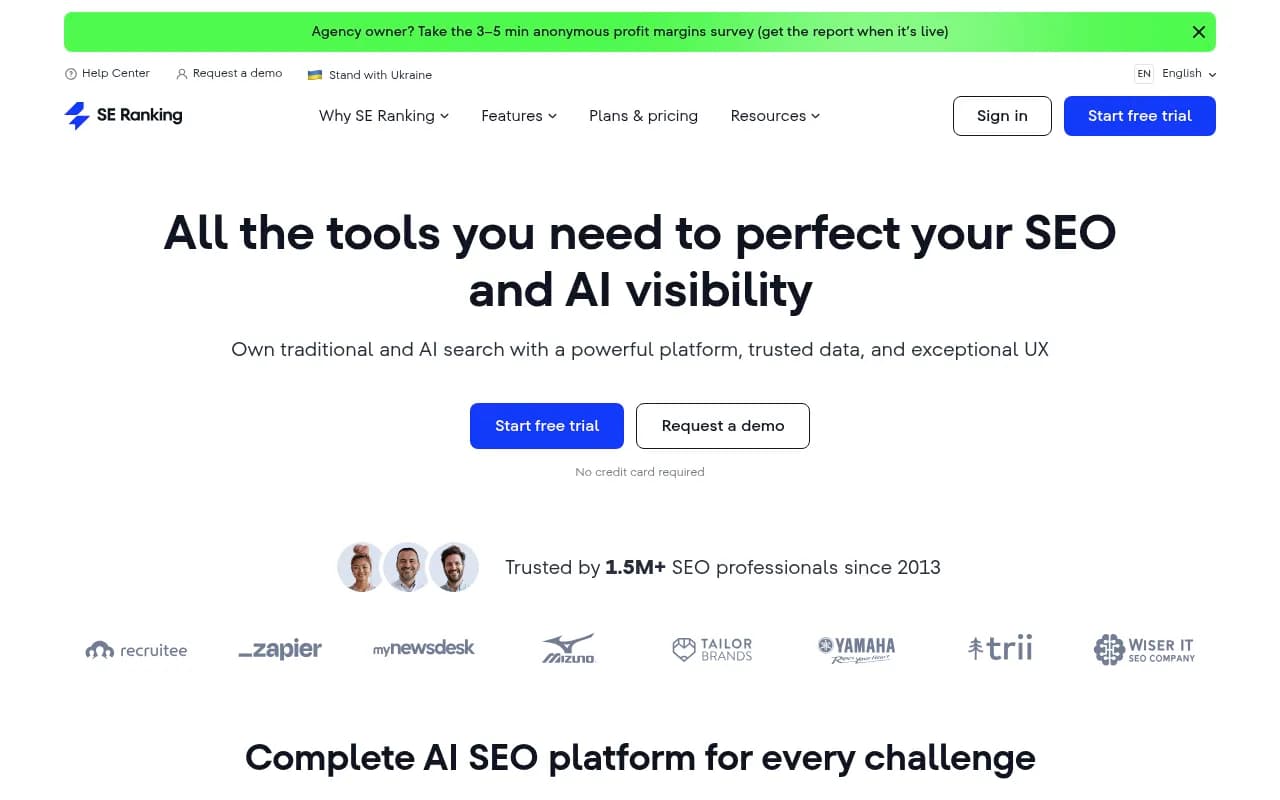
8. SE Visible (by SE Ranking)
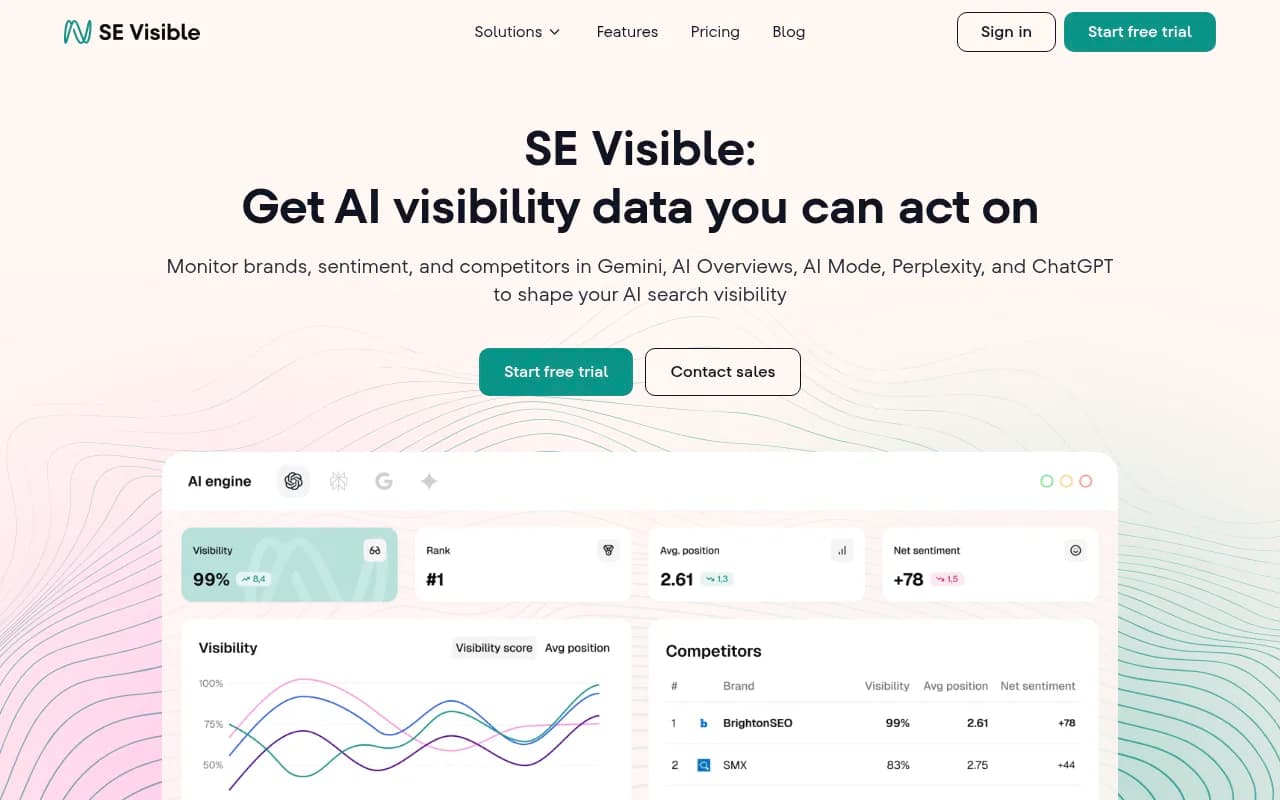
SE Visible is SE Ranking's AI visibility module. It tracks brand mentions across AI engines and integrates with SE Ranking's broader SEO platform, which is useful if you're already using SE Ranking for traditional rank tracking.
The integration angle is the main selling point — you can see AI visibility data alongside traditional SEO metrics in one place. Crawler log monitoring isn't part of the offering, and the AI-specific features are less deep than dedicated GEO platforms.
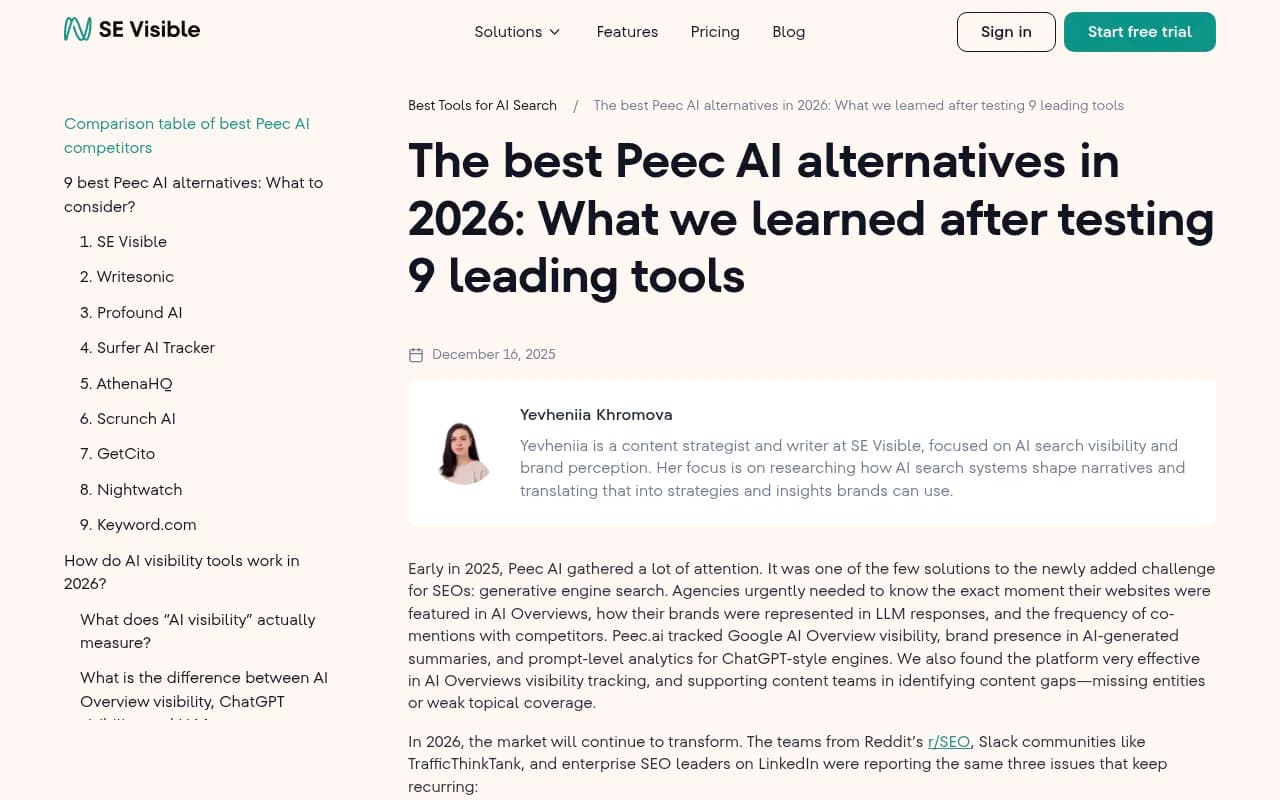
Good fit for: existing SE Ranking users who want to add AI visibility tracking without switching platforms.
9. Airefs
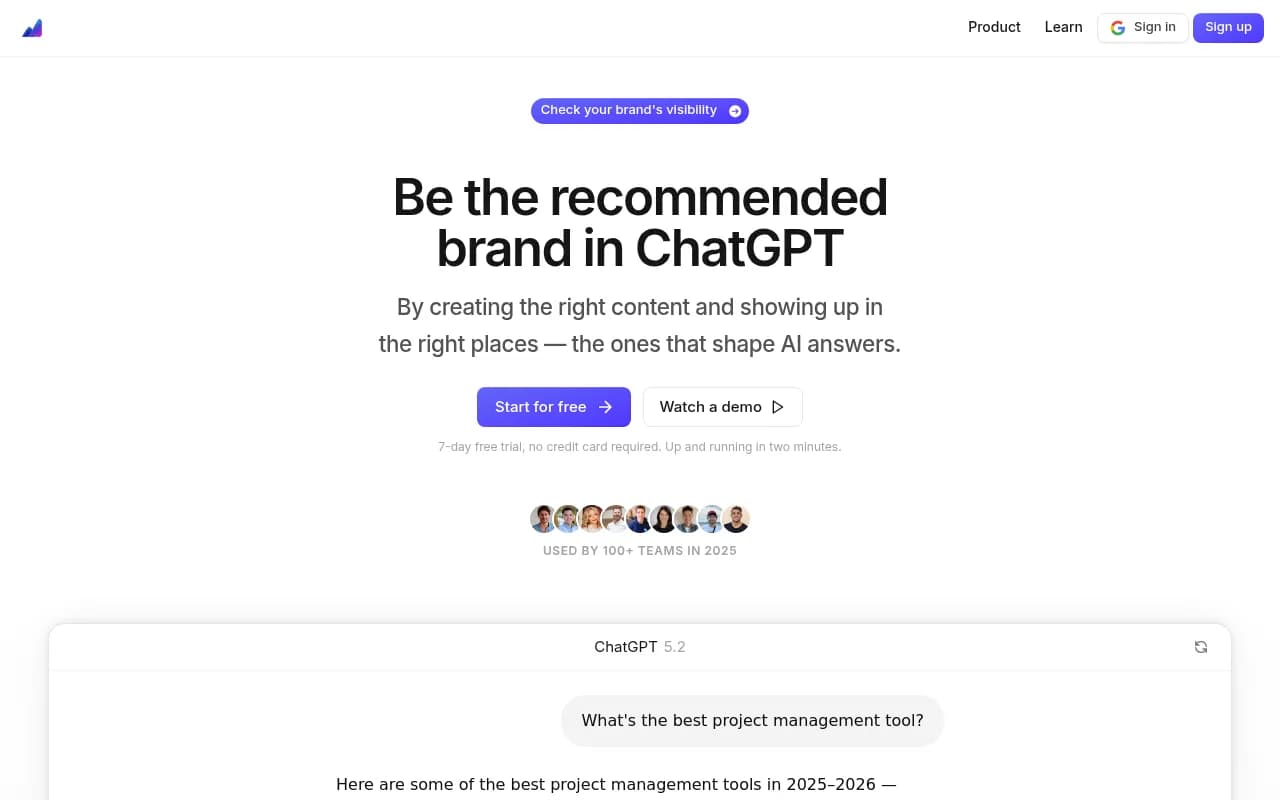
Airefs is one of the more affordable options in this space, starting at $24/mo with a focus on ChatGPT visibility. It's aimed at smaller teams and solo operators who want basic AI monitoring without enterprise pricing.
No crawler logs, no content generation, limited engine coverage. But if budget is the primary constraint and you just need to know whether ChatGPT is mentioning your brand, Airefs covers the basics.
Feature comparison
| Tool | Crawler log monitoring | Prompt tracking | Content generation | Traffic attribution | Starting price |
|---|---|---|---|---|---|
| Promptwatch | Yes (real-time, multi-bot) | Yes | Yes (AI writing agent) | Yes (GSC, snippet, logs) | $99/mo |
| Botify | Yes (enterprise-grade) | No | No | Partial | Custom |
| JetOctopus | Yes (log analysis) | No | No | No | Custom |
| Profound | No | Yes | No | Partial | $99/mo |
| AthenaHQ | No | Yes | No | No | $295/mo |
| Scrunch AI | No | Yes | No | No | Custom |
| Otterly.AI | No | Yes | No | No | ~$49/mo |
| SE Visible | No | Yes | No | No | $189/mo |
| Airefs | No | Basic | No | No | $24/mo |
How to choose
The right tool depends on what question you're actually trying to answer.
"Why aren't AI bots crawling my key pages?" — You need crawler log monitoring. Promptwatch is the only GEO platform that includes this. Botify and JetOctopus are alternatives if you need pure technical SEO depth, but they don't do brand monitoring.
"Which prompts are my competitors winning that I'm not?" — You need gap analysis. Promptwatch has this built in. Most other tools in this list don't.
"I just want to know if I'm showing up in AI answers." — Otterly.AI or Airefs will cover the basics at low cost. Peec AI itself is also fine for this use case.
"I need to understand how AI models describe my brand." — Scrunch AI is worth looking at for the narrative angle.
"I'm an enterprise with 500K+ pages and complex crawl infrastructure." — Botify is the serious option, but pair it with a GEO monitoring tool for the brand visibility layer.
The honest reality is that most teams need more than monitoring. Knowing you're invisible in AI search is useful. Knowing why, and having a path to fix it, is what actually moves the needle.
What Peec AI does well (and where it falls short)
Peec AI is genuinely good at a few things: Google AI Overview tracking is solid, the prompt-level analytics are clean, and the interface is approachable for teams new to GEO. It was one of the first tools to take AI Overviews seriously as a tracking surface, and that early focus shows in the product.
The gaps are real though. No crawler log monitoring means you can't diagnose crawl-layer problems. No content generation means you're on your own when it comes to fixing visibility gaps. No traffic attribution means you can't connect AI visibility to actual revenue. And as AI search has expanded to Perplexity, Claude, Grok, and others, single-engine or limited-engine tools feel increasingly incomplete.
For teams that outgrow Peec AI, the question isn't just "which tool has more features" — it's "which tool helps me actually do something with the data." That's a shorter list.
The crawler log monitoring gap in GEO tools
It's worth spending a moment on why crawler log monitoring is so rare in this category.
Most GEO platforms were built by teams with marketing and analytics backgrounds. They built query simulators that ask AI engines questions and record the responses. That's a reasonable starting point, but it's fundamentally a passive observation of outputs.
Crawler log monitoring requires a different technical approach. You're instrumenting your own server infrastructure to capture inbound requests from AI bots, then parsing, storing, and visualizing that data in real time. It's closer to server-side analytics than to query simulation.
The platforms that have built this (Promptwatch on the GEO side, Botify and JetOctopus on the technical SEO side) have invested significantly in the infrastructure. Most haven't, and it shows.
As AI search matures, expect crawler log monitoring to become table stakes. Right now it's a differentiator — and a meaningful one if you're trying to diagnose why your content isn't getting cited despite appearing to cover the right topics.
Bottom line
If you're evaluating Peec AI alternatives specifically because you want to understand what AI crawlers are doing on your site, the list narrows quickly. Promptwatch is the only purpose-built GEO platform with real-time crawler log monitoring. Botify and JetOctopus offer deeper technical crawl analysis but without the brand monitoring and optimization features.
For teams that want the full picture — crawl behavior, prompt visibility, content gaps, and traffic attribution in one place — Promptwatch is the most complete option available in 2026.
For teams with more limited needs or tighter budgets, Otterly.AI and Airefs cover basic monitoring. Profound and AthenaHQ are solid if you need enterprise-grade brand tracking without the technical SEO layer.
The main thing to avoid: picking a tool based on the monitoring dashboard alone. The data is only useful if it tells you what to do next.