Key takeaways
- ChatGPT recommends only 1.2% of local businesses, according to Trustmary — meaning the vast majority of businesses with solid Google rankings simply don't exist in AI search.
- A local AI visibility audit is different from a traditional SEO audit: you're testing what AI models actually say about you, not just where you rank in a list.
- The audit covers five areas: brand mentions, category recommendations, competitor comparisons, review sentiment, and citation sources.
- Most gaps come down to the same root causes: thin content, missing structured data, and a weak presence on the third-party sources AI models actually cite.
- Free tools (ChatGPT, Gemini, Perplexity) can get you started, but tracking visibility systematically across models and over time requires a dedicated platform.
Why local AI visibility is a different problem than local SEO
Here's the uncomfortable reality: you can rank in the top three on Google Maps, have 200 five-star reviews, and still be completely absent when someone asks ChatGPT "what's the best plumber in Austin?"
That's not a hypothetical. It's what's happening to most local businesses right now.
Google's local algorithm weighs relevance, distance, and prominence. AI models like ChatGPT work differently. They're synthesizing information from their training data and, increasingly, live web searches. They cite sources they trust. They repeat businesses they've "read about" across multiple credible places. If your business only exists on your own website and your Google Business Profile, you're a ghost to most AI models.
Trustmary's research puts a number on this: ChatGPT recommends just 1.2% of local businesses, while Google's local results surface around 36%. That's a 30x gap. And as more consumers use AI tools to find local services, that gap is going to cost businesses real money.
The good news is that you can audit your current AI visibility in an afternoon, identify the specific gaps, and start fixing them. Here's how.
Step 1: Set up your audit prompts
Before you open ChatGPT or any other tool, spend 10 minutes writing out the prompts you actually want to test. This is where most DIY audits go wrong — people test one or two vague queries and conclude they're either visible or invisible. Neither conclusion is reliable.
Build a prompt list across three categories:
Brand-specific prompts — these test whether AI models know you exist at all:
- "What do you know about [Business Name] in [City]?"
- "Is [Business Name] a good [service type] in [City]?"
- "Tell me about [Business Name] — are they reputable?"
Category prompts — these test whether you appear when someone asks for your type of business:
- "What are the best [service type] in [City]?"
- "Who should I call for [specific service] in [neighborhood/district]?"
- "Recommend a [service type] near [landmark or area]"
Problem/need prompts — these test whether you appear for the actual questions your customers ask:
- "My [appliance] is broken, who can fix it in [City]?"
- "Where can I get [specific service] done quickly in [City]?"
- "I need a [service type] that works on weekends in [City]"
Aim for 10-15 prompts total. The category and problem prompts are often more revealing than the brand-specific ones, because they show you whether AI models think of you as a relevant option — not just whether they've heard of you.
Step 2: Run the audit manually across three AI models
Open three tabs: ChatGPT (with web search enabled if you have access), Google Gemini, and Perplexity. Run each prompt in all three.
For each response, record:
- Does your business appear at all?
- If yes, what position? (First mention, middle of a list, buried at the end?)
- What does the AI say about you? Is it accurate?
- Which competitors appear instead of you?
- Does the AI cite any sources? If so, which ones?
This last point matters more than most people realize. When Perplexity or ChatGPT with web search recommends a business, it often shows its sources. Those sources tell you exactly where AI models are pulling their local business information from — and where you need to build a presence.
Common sources you'll see cited for local businesses: Yelp, Google Business Profile data, local news articles, industry directories, Reddit threads, and local blogs. If your business isn't on those platforms, or has thin/outdated information there, that's your gap.
Step 3: Score your visibility
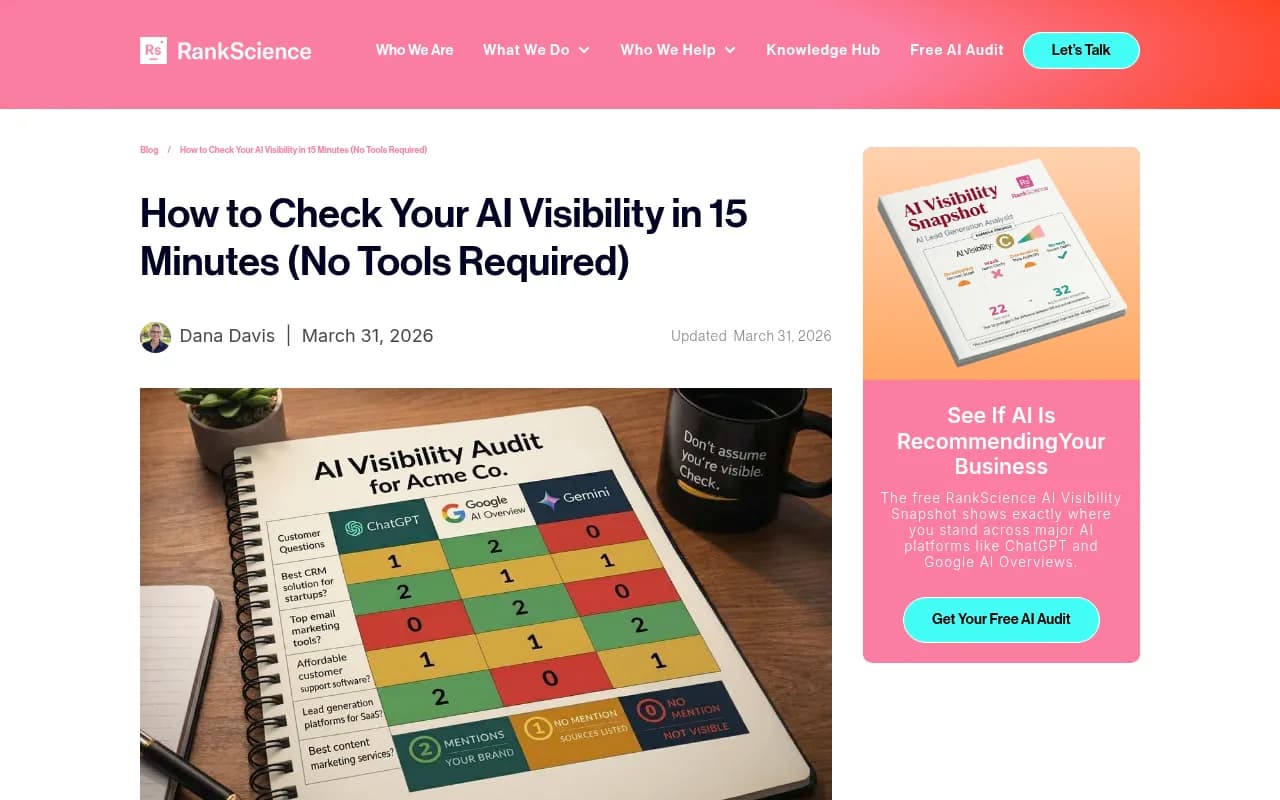
After running your prompts, score yourself honestly. A simple scoring system:
| Result | Score |
|---|---|
| Named as the top recommendation | 3 |
| Mentioned in a list of options | 2 |
| Mentioned but not recommended | 1 |
| Not mentioned at all | 0 |
Add up your scores across all prompts and all three models. A perfect score would be 3 × (number of prompts) × 3 (models). Most local businesses score well below 30% of their maximum — and many score zero on category and problem prompts even when they score reasonably on brand-specific ones.
This gap between brand visibility (AI knows you exist) and category visibility (AI recommends you unprompted) is the most important thing the audit reveals. It tells you whether you have a content problem, a citation problem, or both.
Step 4: Audit your citation sources
Take the sources you found in Step 2 and run a quick check on each one. For the platforms AI models commonly cite for local businesses:
Google Business Profile: Is your profile complete? Hours, services, photos, and a detailed description all matter. AI models that use Google data will pull from whatever is there.
Yelp: Even if you don't actively manage it, Yelp is heavily cited by AI models for local service businesses. Check that your category, description, and contact info are accurate.
Industry directories: A plumber should be on Angi, HomeAdvisor, and Thumbtack. A restaurant should be on TripAdvisor. A lawyer should be on Avvo and FindLaw. Whatever your industry's directories are, AI models know about them and cite them.
Local news and blogs: Has your business ever been mentioned in a local publication? If not, this is a gap worth addressing. A single mention in a local newspaper or city blog can meaningfully improve AI visibility because these sources carry high trust signals.
Reddit: This one surprises a lot of business owners. Reddit threads like "best [service] in [city]" are heavily cited by AI models, particularly Perplexity. If your business appears in those threads (positively), it helps. If it doesn't appear at all, that's a gap.
Step 5: Check your website for AI-readiness
AI models that use web search need to be able to read and understand your website. A few things to check:
Structured data: Do you have LocalBusiness schema markup? This tells AI crawlers your business name, address, phone number, hours, and service area in a format they can parse reliably. If you're on WordPress, plugins like Yoast SEO or Rank Math can add this without touching code.
Clear service pages: Does your website have dedicated pages for each service you offer? A plumber with one generic "services" page is much harder for AI to cite than one with separate pages for drain cleaning, water heater installation, and emergency repairs. AI models want to cite specific, authoritative answers — not vague overviews.
FAQ content: Questions like "How much does [service] cost in [city]?" and "How quickly can you respond to emergencies?" are exactly the kinds of prompts people ask AI. If your website answers these questions directly, you're more likely to be cited.
NAP consistency: Name, Address, Phone number. Make sure these are identical across your website, Google Business Profile, Yelp, and every directory you're listed on. Inconsistencies confuse AI models and reduce their confidence in recommending you.
Step 6: Compare yourself to the competitors who are appearing
Go back to your audit results and look at the businesses that are appearing in your place. Pick two or three of the most frequent ones and spend 15 minutes analyzing why they're visible.
Check their:
- Website content (more detailed? More FAQ content? Better service pages?)
- Review volume and recency
- Directory presence
- Local press mentions
- Reddit/forum presence
You're looking for patterns. If every competitor that outranks you in AI search has 100+ Yelp reviews and you have 12, that's your answer. If they all have detailed neighborhood-specific service pages and you don't, that's your answer.
This competitive gap analysis is the most actionable part of the audit because it tells you not just that you're invisible, but specifically what you need to do to become visible.
Tools that can help you go deeper
The manual audit above is genuinely useful, but it has real limits. You're checking a snapshot in time, across a handful of prompts, in one location. AI responses vary by model version, by day, and by the persona or location context of the person asking.
For ongoing monitoring, a few tools are worth knowing about:
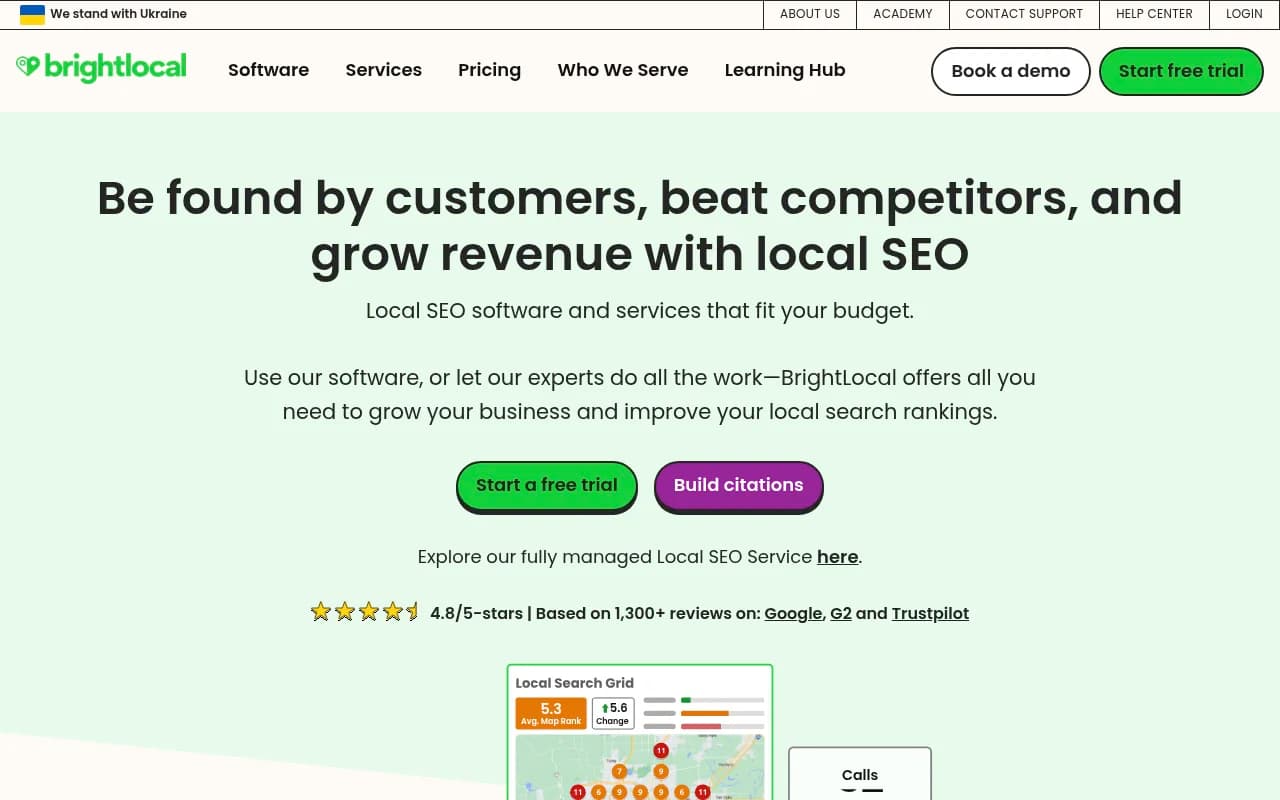
For local SEO foundations, BrightLocal remains the standard for managing citations, tracking local rankings, and monitoring reviews across platforms. It won't track AI visibility directly, but the citation management and review monitoring it provides directly feeds into AI visibility.
For AI visibility monitoring, Promptwatch tracks how your brand appears across 10 AI models including ChatGPT, Perplexity, Gemini, and Google AI Overviews. For local businesses, the prompt tracking and competitor heatmaps are particularly useful — you can see exactly which prompts your competitors are winning and which ones you're losing. The Answer Gap Analysis shows you the specific content your site is missing that AI models want to cite.

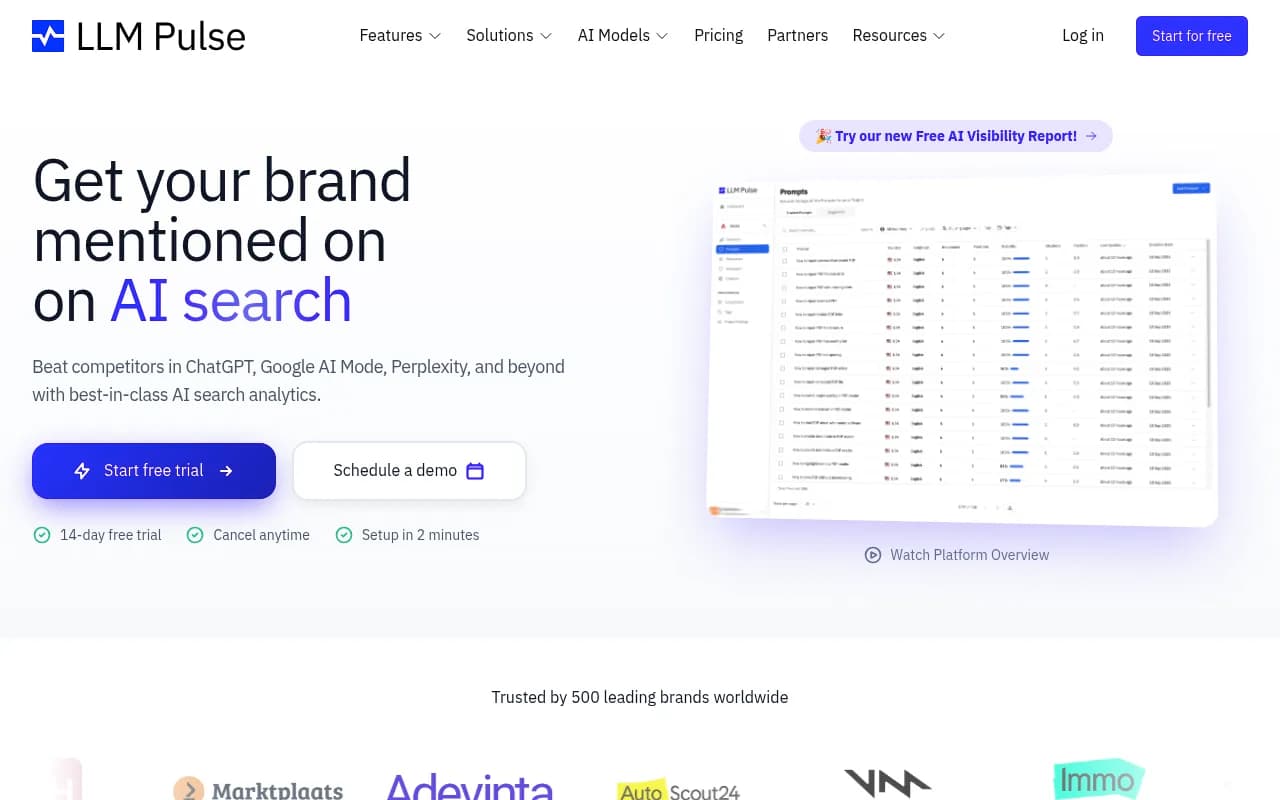
For tracking what AI models say about you across ChatGPT and Perplexity specifically, tools like TrackMyBusiness and LLM Pulse offer lighter-weight monitoring if you're just getting started.
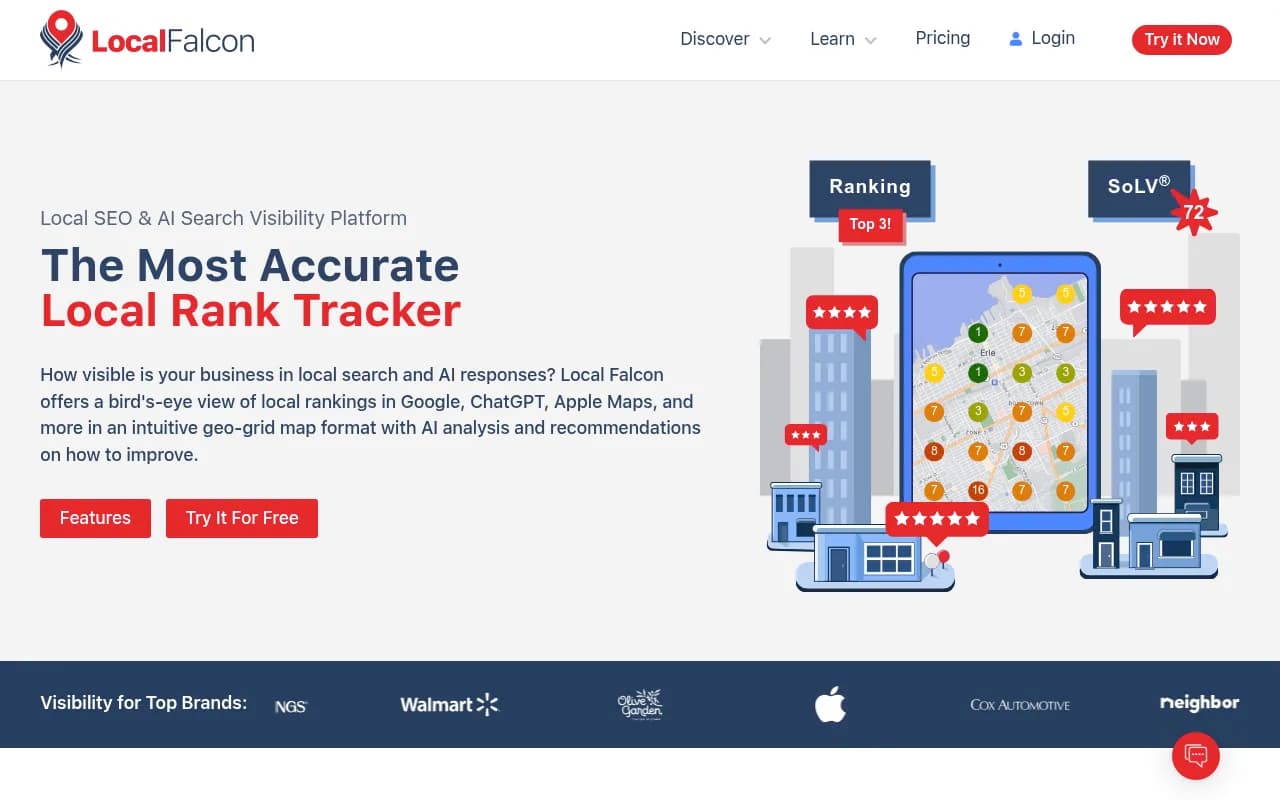
For local rank tracking (traditional, but still relevant), Local Falcon's geo-grid tracking shows you how your Google Maps visibility varies across different parts of your city — which correlates with AI visibility more than most people expect.
The most common gaps local businesses find
After running this audit, most local businesses find one or more of these issues:
Gap 1: No third-party presence. The business exists only on its own website and Google Business Profile. AI models that synthesize multiple sources have almost nothing to work with. Fix: build out Yelp, industry directories, and actively seek local press mentions.
Gap 2: Thin or generic website content. One-page websites or sites with vague service descriptions don't give AI models anything specific to cite. Fix: create dedicated service pages with real detail, pricing context, and FAQ sections.
Gap 3: Missing structured data. Without LocalBusiness schema, AI crawlers have to guess at your business details. Fix: add schema markup, either manually or via a plugin.
Gap 4: Review gaps. Competitors have significantly more reviews, or more recent ones. AI models treat review volume and recency as trust signals. Fix: implement a systematic review request process.
Gap 5: No neighborhood-level content. AI models respond to location-specific queries. If your website only mentions your city and not the neighborhoods or districts you serve, you'll miss hyperlocal queries. Fix: create location-specific pages or at minimum mention the areas you serve explicitly.
A comparison of approaches
| Approach | Time required | Cost | What you learn | Limitations |
|---|---|---|---|---|
| Manual ChatGPT/Gemini/Perplexity testing | 1-2 hours | Free | Snapshot of current visibility | No tracking over time, limited prompts |
| BrightLocal + manual AI testing | Ongoing | $39+/mo | Citation health + AI snapshot | AI monitoring not built in |
| Dedicated AI visibility platform (e.g. Promptwatch) | Setup + ongoing | $99+/mo | Full visibility across 10 models, gap analysis, trend tracking | Requires budget commitment |
| One-time agency audit | 1-2 weeks | $500-$2,000+ | Comprehensive analysis with recommendations | Snapshot only, no ongoing monitoring |
For most local businesses, the right starting point is the manual audit in this guide, followed by fixing the most obvious gaps (structured data, directory listings, review volume), and then moving to a monitoring tool once you have a baseline to track against.
What to do after the audit
The audit is only useful if it leads to action. Prioritize your fixes in this order:
- Fix technical issues first (structured data, NAP consistency, crawlability). These are quick wins that have broad impact.
- Build out missing directory listings. Focus on the platforms that appeared as citation sources in your audit results.
- Create or improve service pages. Thin content is the most common reason local businesses are invisible in AI search.
- Work on review volume. More recent, detailed reviews across multiple platforms improve AI confidence in recommending you.
- Pursue local press mentions. Even one or two mentions in credible local publications can meaningfully shift AI visibility.
Set a reminder to re-run the manual audit in 60 days. AI visibility changes as you publish new content and build new citations, but it doesn't change overnight. Patience and consistency matter more than any single tactic.
The businesses that will win local AI search over the next few years aren't necessarily the ones with the biggest budgets. They're the ones that understand how AI models discover and recommend local businesses — and build their presence accordingly.