Key takeaways
- ChatGPT and other AI models give different answers depending on where the user is located — national-level tracking misses this entirely
- City-level AI visibility tracking lets local and multi-location brands see exactly how they appear in specific markets, not just a blended average
- Most AI visibility platforms don't offer sub-national tracking at all; only a handful go down to state or city level
- Promptwatch is currently the only platform that combines city-level ChatGPT tracking with content gap analysis and AI content generation — so you can find where you're invisible and actually fix it
- For local brands, the gap between "we appear nationally" and "we appear in Chicago but not Dallas" can represent real, measurable revenue
Why location matters in AI search
Here's something most marketers haven't fully internalized yet: AI models don't give everyone the same answer.
Ask ChatGPT "best HVAC company near me" in Denver and you'll get different results than someone asking the same question in Atlanta. Ask about "top personal injury lawyers" in Miami versus Seattle and the recommendations diverge. This isn't a bug. It's how these models work. They incorporate location signals from the user's query, their browsing context, and the geographic relevance of the sources they've indexed.
The implication for local brands is significant. If you're tracking your AI visibility with a tool that runs prompts from a single server location and reports a single national score, you're looking at an average that may not reflect reality in any of your actual markets.
A restaurant group with locations in six cities doesn't need to know their "national AI visibility score." They need to know: does ChatGPT recommend us when someone in Phoenix asks for Italian restaurants? What about Dallas? What about Portland?
That's a fundamentally different question, and until recently, almost no tool was built to answer it.
What city-level tracking actually reveals
When you run the same prompt across different geographic locations, the variance in AI responses can be striking.
A national retail brand might appear in ChatGPT responses for "best outdoor furniture stores" in their home market but be completely absent in three other cities where they have physical locations. A regional law firm might dominate AI recommendations in one metro but not appear at all in a neighboring city where a competitor has stronger local content.
This matters because:
- Local content gaps are specific. A page that ranks well nationally might not have enough city-specific signals to trigger local AI recommendations. Knowing which cities you're missing tells you exactly where to create content.
- Competitors vary by market. The brand beating you in AI search in Boston might be different from the one dominating in Houston. City-level data lets you run targeted competitive analysis per market.
- Conversion intent is local. Someone asking ChatGPT "best plumber in Austin" is ready to hire. If you're not appearing for that prompt in Austin specifically, you're losing high-intent leads — not just impressions.
- Multi-location brands can prioritize. If you have 20 locations, you can't fix everything at once. City-level visibility scores tell you which markets need the most attention first.
How most platforms handle (or ignore) geo-tracking
The honest answer is: most don't handle it well.
The majority of AI visibility tools run prompts from a fixed location — usually a US-based server — and report results as if they're universal. Some more sophisticated platforms offer country-level tracking, letting you monitor how your brand appears in the UK versus Germany versus Brazil. That's useful for international brands, but it doesn't help a regional business trying to understand their visibility across different US cities.
Here's a quick look at how the major platforms compare on geographic granularity:
| Platform | Country-level | State-level | City-level | Content generation |
|---|---|---|---|---|
| Promptwatch | Yes | Yes | Yes | Yes |
| Profound | Yes | No | No | No |
| Otterly.AI | Limited | No | No | No |
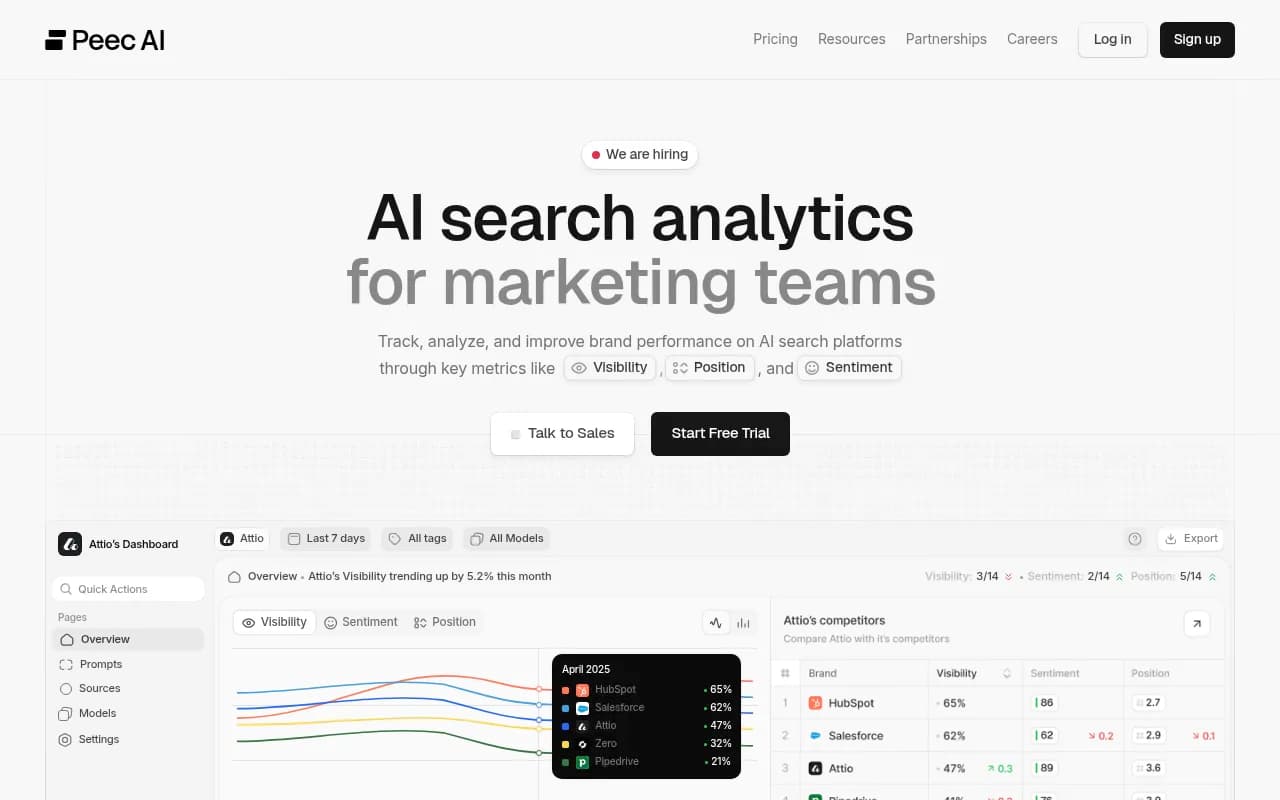
| Peec AI | Yes | No | No | No |
| AthenaHQ | Yes | No | No | No |
| Semrush | Limited | No | No | No |
| SE Ranking | Yes | No | No | No |

Profound

Otterly.AI


The gap is real. And it's not just about data granularity — it's about what you can do with the data once you have it.
What Promptwatch's city-level tracking unlocks
Promptwatch's Professional plan ($249/month) includes state and city-level tracking, which means you can run the same prompt across different metros and compare results side by side.
But the more important thing is what happens after you see the data.
Most platforms stop at "here's where you're invisible." Promptwatch connects that finding to an action. Its Answer Gap Analysis shows you the specific prompts where competitors appear in a given city but you don't. Then the built-in AI writing agent generates content designed to close that gap — articles, listicles, comparison pages — grounded in citation data from over 880 million analyzed citations.
So the workflow for a local brand looks like this:
- Run your core prompts across target cities
- See which cities have low visibility scores
- Identify the specific prompts driving that gap (e.g., "best [service] in [city]" where a competitor appears but you don't)
- Generate city-specific content targeting those prompts
- Track as your visibility scores improve in those markets
That's a closed loop. Most tools give you step 2 and leave you to figure out the rest.
Real scenarios where city-level tracking changes the game
Multi-location service businesses
Think home services, healthcare, legal, financial advisory. These businesses live and die by local reputation. When someone asks ChatGPT "who's the best [service] in [city]," that recommendation carries weight — often more than a Google Maps listing because it feels like a trusted opinion rather than a paid placement.
A plumbing company with 12 locations across the Southeast can use city-level tracking to see that they appear consistently in Atlanta and Charlotte but are invisible in Nashville and Knoxville. That's actionable. They know exactly where to invest content resources.
Regional retail and restaurant chains
A regional grocery chain or restaurant group needs to know how AI models describe them in each market. Are they being recommended for "healthy lunch options" in one city but not another? Is a competitor being cited as the go-to option in markets where you have a physical presence?
City-level data answers these questions. National averages don't.
Agencies managing multi-location clients
For agencies, city-level tracking is a reporting differentiator. Showing a client their AI visibility score in each of their markets — and demonstrating how it's improving over time — is a much more compelling story than a single national number.
Search Party
The persona layer: who's asking matters too
City-level tracking gets even more powerful when you combine it with persona targeting.
The same prompt can produce different AI responses depending on how it's framed. A prompt written from the perspective of a first-time homebuyer in Austin will surface different recommendations than one written from the perspective of a real estate investor. Promptwatch lets you customize the persona behind each tracked prompt, so you're not just tracking geography — you're tracking geography plus intent.
For local brands, this means you can monitor:
- "Best [service] in [city]" from a consumer perspective
- "[Service] recommendations for [specific use case] in [city]" from a more specific intent
- Comparison queries like "[your brand] vs [competitor] in [city]"
Each of these can produce meaningfully different results, and knowing which ones you're winning or losing in each market gives you a real content strategy.
AI crawler logs: understanding why you're invisible in some cities
One thing that often gets overlooked in the city-level visibility conversation: if AI crawlers aren't properly indexing your location-specific pages, you'll be invisible in those markets regardless of how good your content is.
Promptwatch's AI Crawler Logs show you in real time which pages ChatGPT, Claude, Perplexity, and other AI crawlers are visiting — and which ones they're ignoring or encountering errors on. If your Denver location page is returning a 404 or your city-specific content isn't being crawled, that's the root cause of your visibility gap, not the content itself.
This is a capability most competitors don't have at all. Knowing you're invisible is one thing. Knowing why you're invisible is what lets you fix it.
How to set up city-level tracking: a practical starting point
If you're new to geo-targeted AI visibility tracking, here's a reasonable approach:
Step 1: Define your priority markets. Pick your top 5-10 cities by revenue or strategic importance. Don't try to track everywhere at once.
Step 2: Build a prompt set that reflects local intent. Include city names in your prompts. "Best [service] in [city]" is a starting point, but also include more conversational prompts like "who should I call for [service] in [city]" — these often produce different results.
Step 3: Run a baseline. Before you create any new content, get a baseline score for each city. This is your benchmark.
Step 4: Identify the biggest gaps. Which cities have the lowest visibility? Which competitors are appearing there instead of you?
Step 5: Create city-specific content. This doesn't mean thin location pages with swapped city names. It means substantive content that addresses local questions, references local context, and gives AI models something worth citing.
Step 6: Track the change. Give it 4-8 weeks and re-run your prompts. Page-level tracking will show you which new pages are getting cited and by which models.
Comparing tools for local AI visibility
Beyond Promptwatch, a few other tools are worth knowing about for local and multi-location brands:
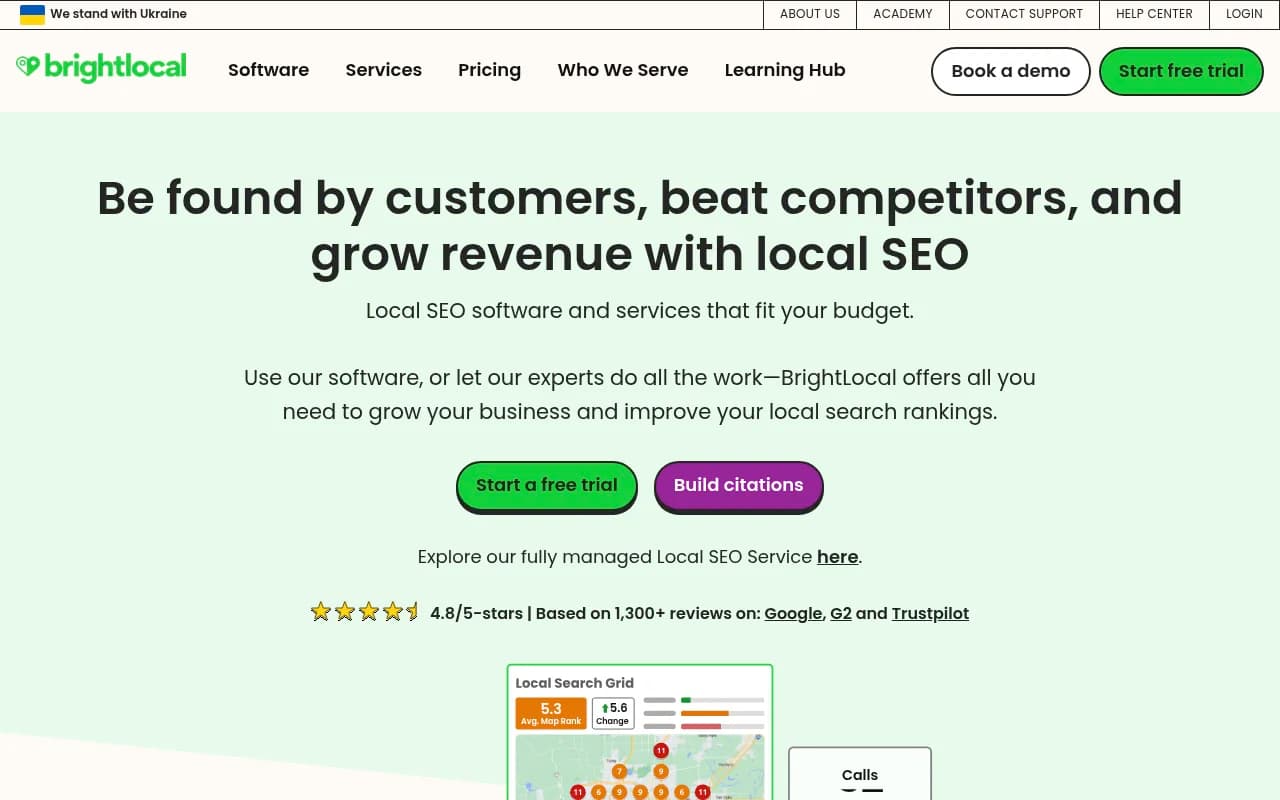
BrightLocal is the established leader in traditional local SEO — citations, Google Business Profile management, local rank tracking. It doesn't track AI visibility, but it's still relevant for the underlying local SEO foundation that influences AI recommendations.
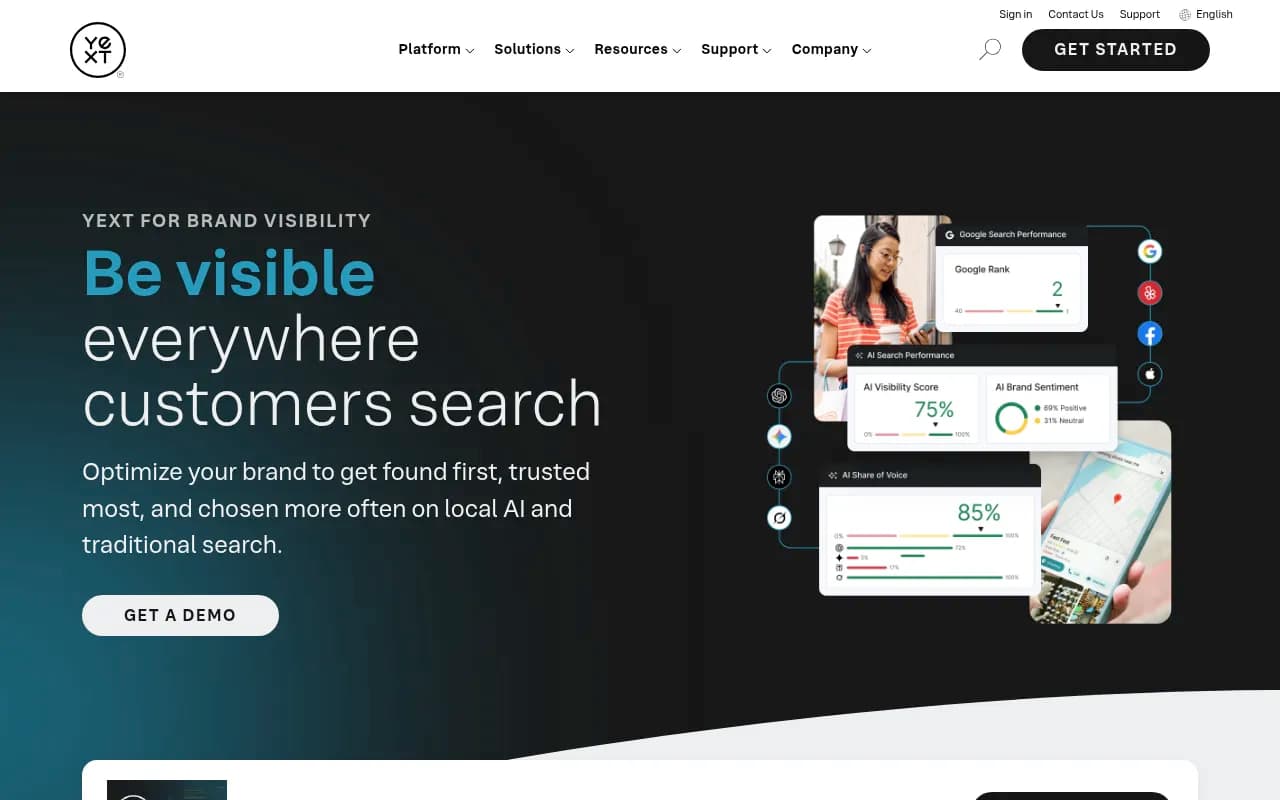
Yext has been expanding into AI search visibility and has strong multi-location data management capabilities. It's more enterprise-focused and doesn't offer the same content generation loop as Promptwatch.
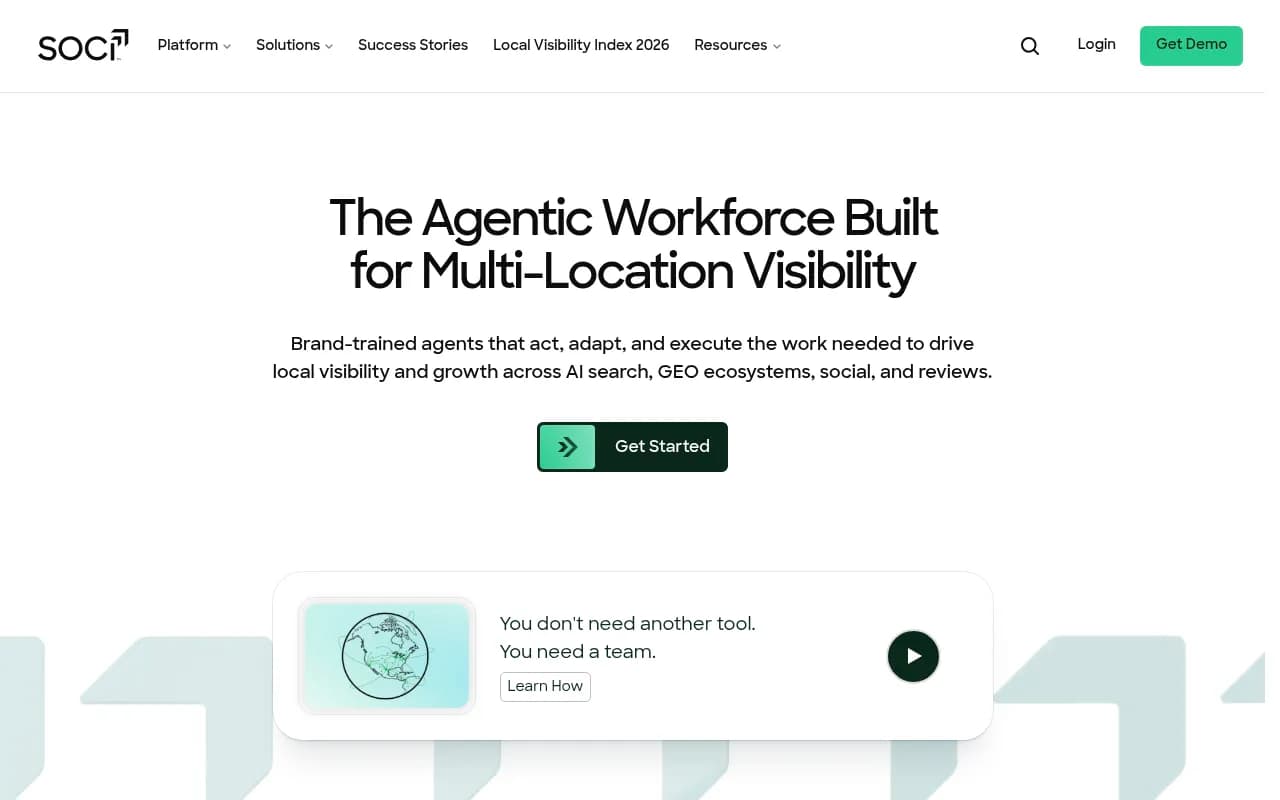
SOCi focuses on local marketing automation for multi-location brands, including AI-driven local content. Worth evaluating for large franchise operations.
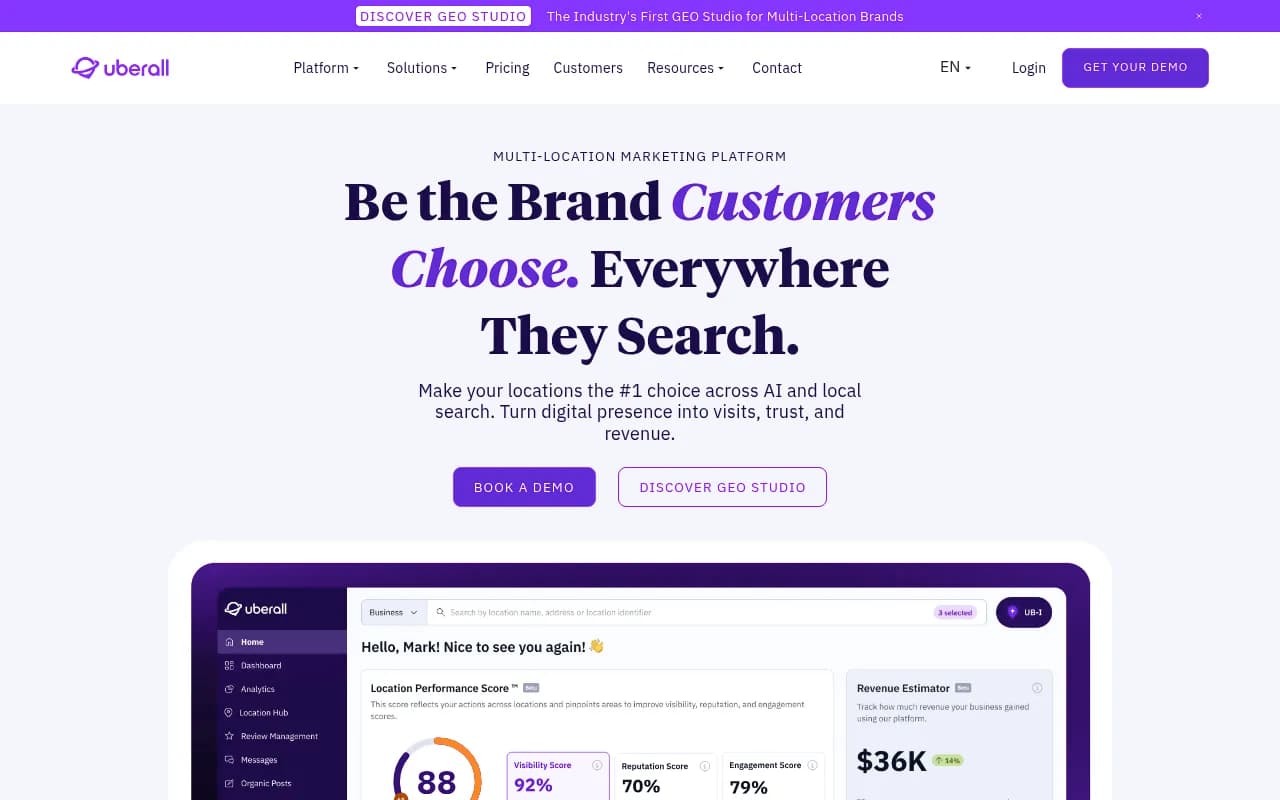
Uberall covers multi-location marketing across both traditional and AI search channels. Solid for listing management but lighter on the AI-specific tracking side.
For pure AI visibility tracking with city-level granularity and the ability to act on what you find, Promptwatch is the most complete option available in 2026.
The bottom line
City-level ChatGPT tracking isn't a nice-to-have for local brands. It's the difference between knowing you have an AI visibility problem and knowing exactly where that problem exists and what to do about it.
National averages hide the variance that matters most. A brand that appears in AI responses in three of its ten markets is not "33% visible" — it's winning in three places and completely absent in seven. Those seven represent real customers who asked an AI for a recommendation and got sent to a competitor.
The tools that let you see this granularity, and then help you fix it, are the ones worth investing in. Right now, that's a short list.