Key takeaways
- Google rank tracking at the city level measures your position in a list. ChatGPT tracking at the city level measures whether you're mentioned at all, and how favorably.
- Location affects AI responses differently than it affects Google rankings. Google uses proximity signals and local packs. ChatGPT uses training data and retrieval context, which may not reflect your city-level presence at all.
- Most traditional rank trackers (AccuRanker, SE Ranking, BrightLocal) handle geo-targeted Google tracking well. Very few AI visibility tools support genuine city-level or state-level ChatGPT tracking.
- The metrics that matter are different: Google tracking is about rank position and click-through rate. AI tracking is about mention rate, sentiment, and citation source.
- Brands that ignore AI visibility at the local level are making decisions based on incomplete data, especially in competitive local markets where ChatGPT is increasingly the first touchpoint.
Why this comparison matters in 2026
Search behavior has split in a way that wasn't fully visible two years ago. A significant share of queries that used to go to Google now go to ChatGPT, Perplexity, or Google's own AI Overviews. For national brands, this shift is measurable and increasingly hard to ignore. For local and regional businesses, it's more complicated.
The question most marketing teams are asking right now: does location still matter when someone asks an AI? And if it does, how do you track it?
The short answer is yes, location still matters. But the mechanisms are completely different from traditional geo-targeted rank tracking, and conflating the two leads to bad decisions.
How geo-targeted Google rank tracking works
Traditional rank tracking at the city level is a mature, well-understood practice. Tools simulate searches from specific geographic coordinates, capturing what a user in Chicago or Munich would actually see in Google's results.
The key signals Google uses to personalize results by location include:
- IP address and GPS data from the user's device
- Google Business Profile proximity for local pack results
- Localized content signals (city names in titles, local landing pages)
- User behavior patterns aggregated by region
For businesses, this means your rank for "emergency plumber" in Dallas is almost entirely different from your rank for the same query in Houston, even if you serve both markets. A study by Go Fish Digital found that location-based algorithm changes can completely eliminate page-one rankings in some cities while improving them in others, for the same website and the same keyword.
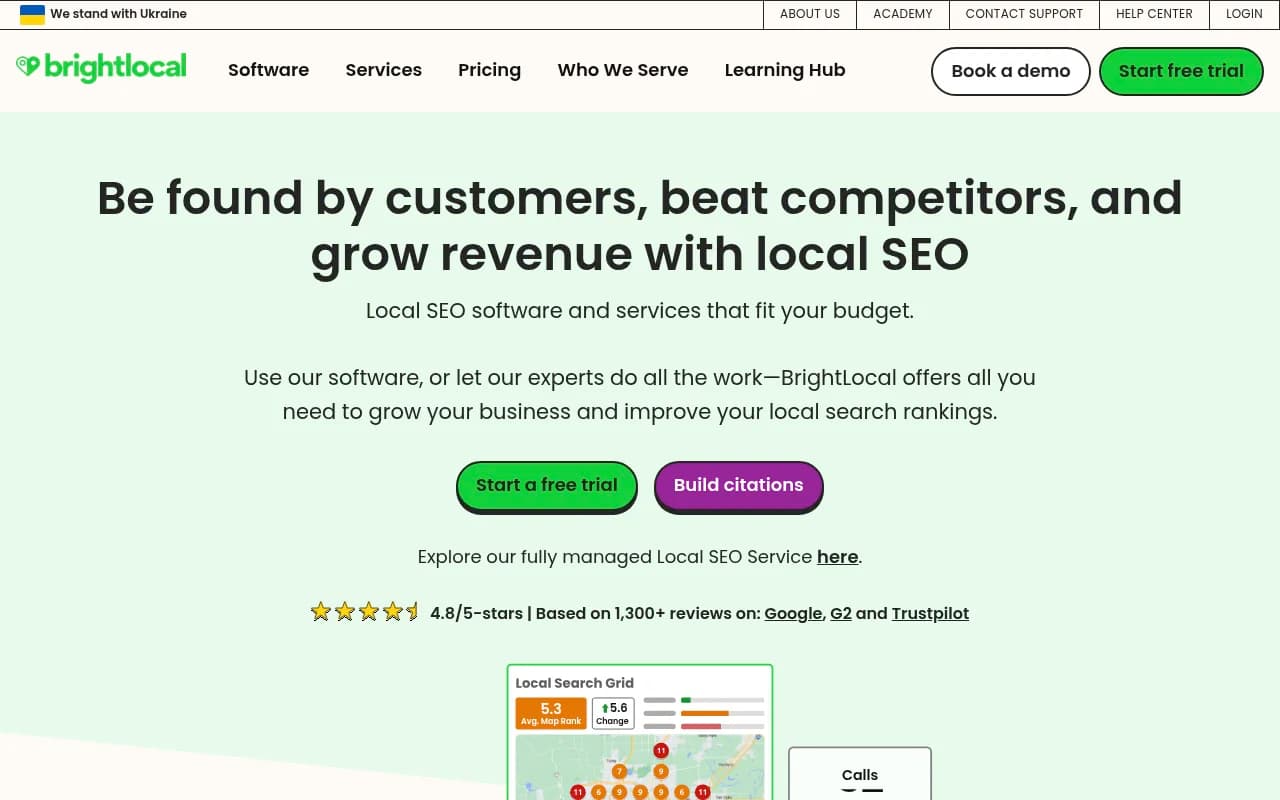
City-level tracking in tools like AccuRanker, SE Ranking, and BrightLocal works by specifying a target location (down to ZIP code in some cases) and pulling results from that simulated location. The output is a rank position number: you're #4 in Boston, #11 in Atlanta.
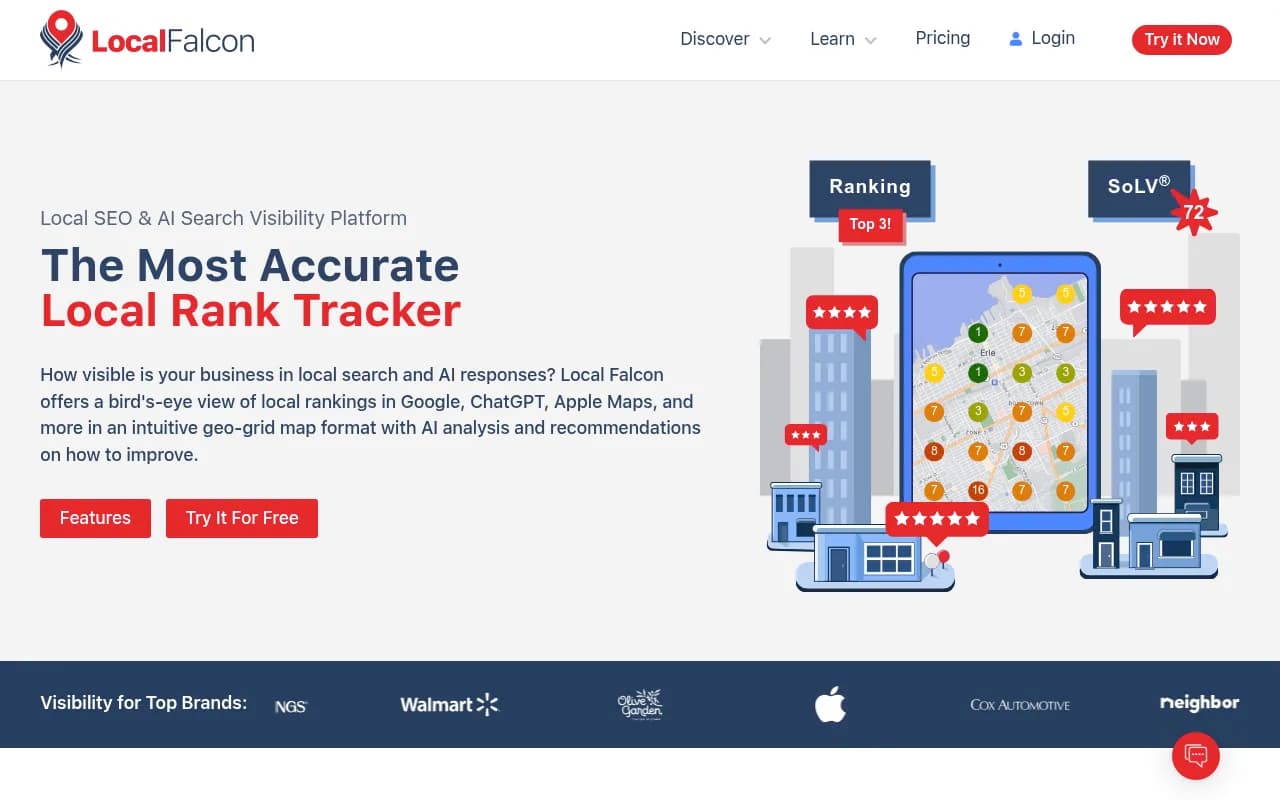
This is useful, concrete, and actionable. You can see exactly where you're underperforming and build a local SEO strategy around it. Local Falcon takes this further with visual geo-grid maps that show your Google Business Profile ranking across a physical grid of points around a location.
The challenge with traditional geo rank tracking in 2026 is that it only tells you about Google. And Google is no longer the only place people get answers.
How city-level ChatGPT tracking works (and why it's different)
When someone in Seattle asks ChatGPT "what's the best accounting software for small businesses in Seattle," the model doesn't check your Google rank. It draws on its training data and, in some configurations, retrieval-augmented generation (RAG) from web search. Whether you appear in that response depends on:
- Whether your brand is mentioned in content that ChatGPT was trained on or can retrieve
- Whether your content explicitly addresses Seattle-specific use cases or audiences
- Whether third-party sources (review sites, local directories, Reddit threads) mention you in a Seattle context
This is fundamentally different from Google's proximity-based ranking. There's no coordinate lookup. There's no local pack. The model is pattern-matching across its knowledge, not querying a database of local businesses.
So what does "city-level ChatGPT tracking" actually mean in practice?
It means running prompts that include geographic context ("best [product/service] in [city]" or "top [category] companies in [region]") and recording whether your brand appears in the response, where in the response it appears, and what the model says about you. You do this across multiple prompt variations, multiple times, to get a statistically meaningful picture.
Promptwatch supports this at the state and city level, letting you configure prompts with geographic context and track responses across ChatGPT, Perplexity, Google AI Overviews, and other models. The Professional plan specifically includes state/city tracking as a feature tier, which reflects how much demand there is for this capability.

The output looks nothing like a rank position. Instead, you're looking at:
- Mention rate: what percentage of responses include your brand
- Sentiment: is the mention positive, neutral, or negative
- Placement: are you the first recommendation or buried in a list of five
- Citation sources: what pages is the model pulling from when it mentions you
A direct comparison: what's the same, what's different
| Dimension | Geo-targeted Google tracking | City-level ChatGPT tracking |
|---|---|---|
| Core metric | Rank position (1-100+) | Mention rate / citation frequency |
| Location mechanism | Coordinate-based search simulation | Prompt includes geographic context |
| Granularity | ZIP code, city, state, country | City, state, country (prompt-dependent) |
| Update frequency | Daily or on-demand | Per prompt run (scheduled or manual) |
| What affects your result | Backlinks, local signals, proximity | Training data, third-party citations, content relevance |
| Actionable fix | Local SEO: GBP, local pages, citations | GEO: content creation, citation building, answer gap analysis |
| Tools that do it well | AccuRanker, BrightLocal, SE Ranking | Promptwatch, Profound, LLMrefs |
| Free tier available | Often yes (limited) | Some (limited prompts) |
The "proximity bias" problem in AI search
Google's proximity bias is well-documented. A restaurant two miles from the searcher outranks one five miles away, all else being equal. This is a feature for local search.
AI models have a different kind of proximity bias. They tend to surface brands that are heavily represented in their training data, which correlates with online presence, media coverage, and third-party mentions. A local business with a strong Google Business Profile but minimal web presence outside of that may rank well in Google's local pack but be completely invisible to ChatGPT.
This creates a split that many local businesses haven't fully reckoned with yet. Your Google rankings can look healthy while your AI visibility is near zero. And as more users turn to ChatGPT for "what should I use / buy / hire in [city]" queries, that zero starts to matter.
The Muck Rack practitioner guide on GEO strategies noted this directly: "A rank tracker cannot tell you if ChatGPT recommended your competitor." That's the gap. Traditional rank tracking and AI visibility tracking are measuring different things.
What actually moves the needle in each channel
For geo-targeted Google rankings, the levers are familiar:
- Google Business Profile optimization (categories, reviews, photos, posts)
- Local landing pages with city-specific content
- Local citation building (NAP consistency across directories)
- Localized backlinks from regional publications and directories
- Schema markup for local business data
For city-level AI visibility, the levers are different:
- Publishing content that explicitly addresses city-specific questions and use cases
- Getting mentioned in sources that AI models cite (local news, review aggregators, industry directories, Reddit)
- Building topical authority around your category so models associate you with it
- Answer gap analysis to find prompts where competitors appear but you don't
Tools like Promptwatch help with the second category by identifying which prompts your competitors are visible for in specific regions, then generating content designed to close those gaps. That's the loop that pure monitoring tools can't complete.
Which tools handle each job
For geo-targeted Google rank tracking
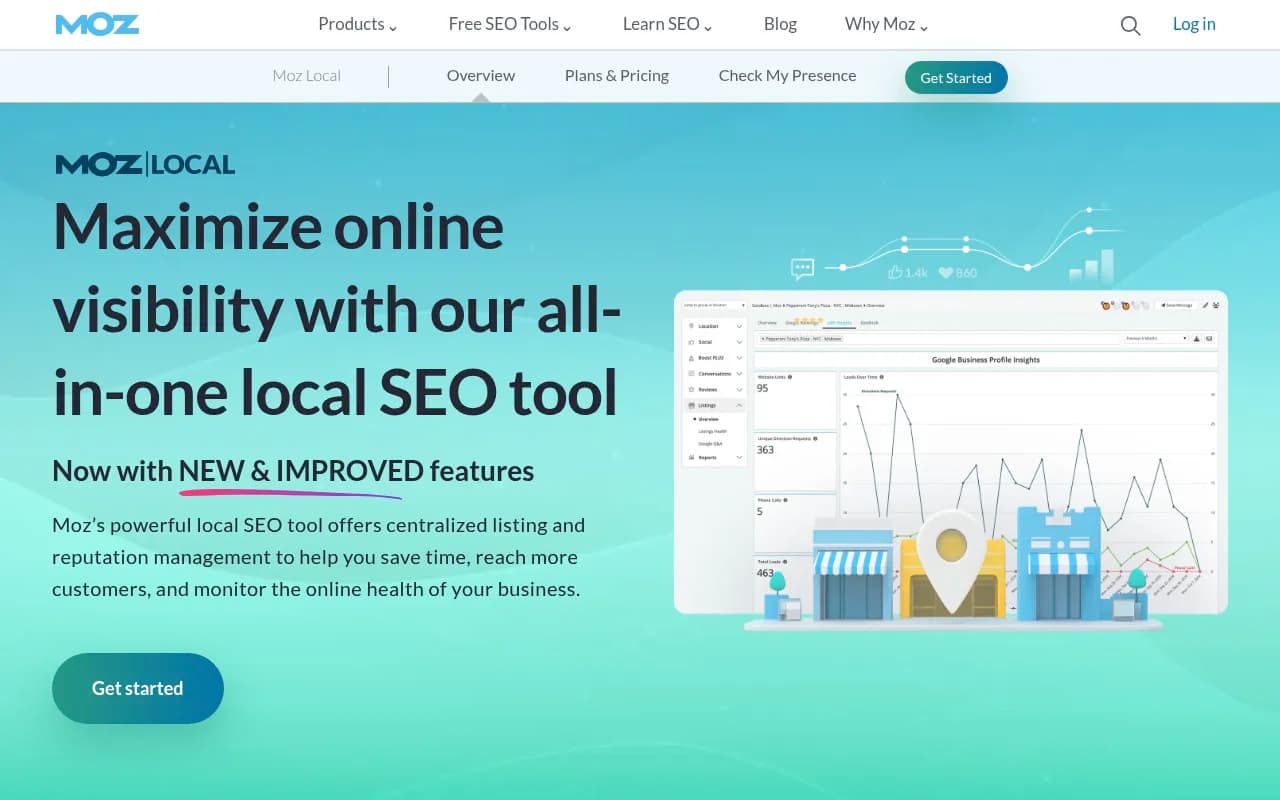
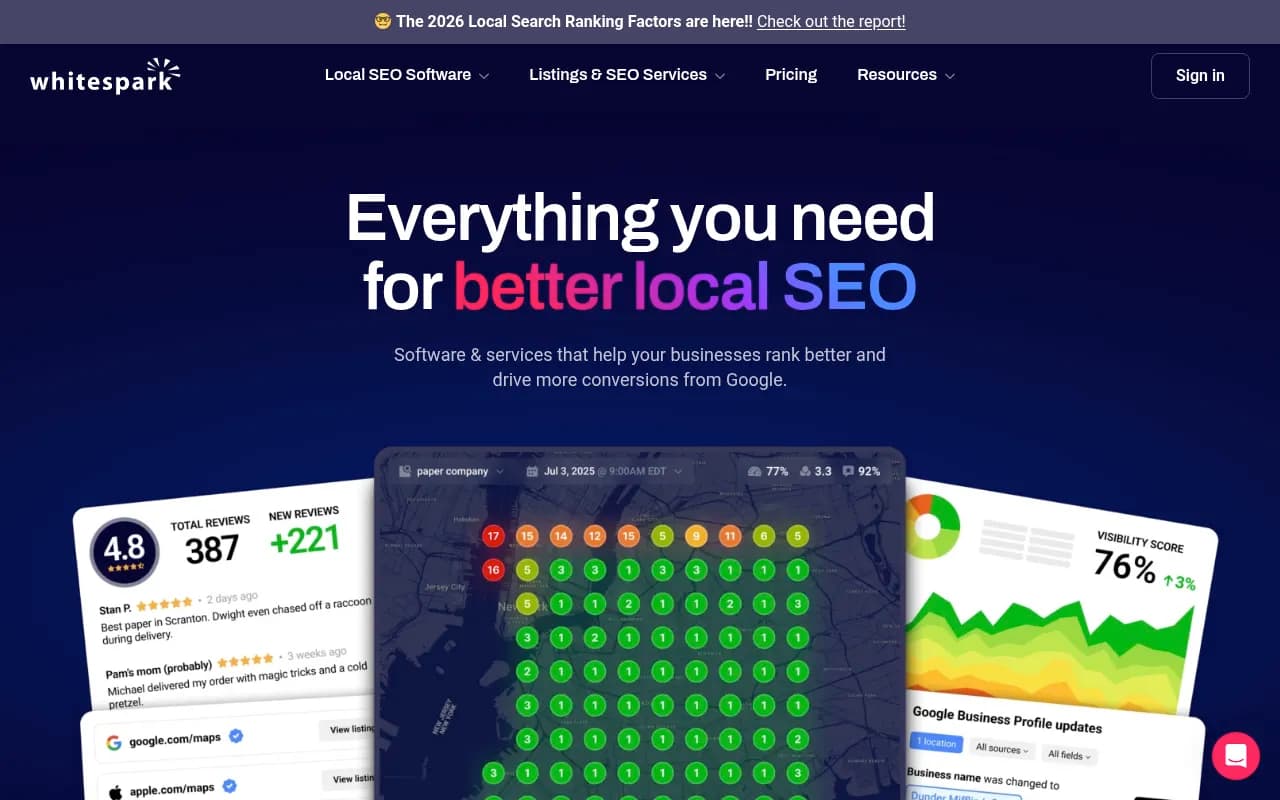
AccuRanker is the go-to for agencies that need on-demand updates and city-level precision. SE Ranking covers both traditional rank tracking and has added some AI visibility features. BrightLocal is purpose-built for local SEO and handles multi-location tracking well. Local Falcon's geo-grid visualization is particularly useful for businesses that need to understand their local pack performance across a physical area.
For city-level AI visibility tracking
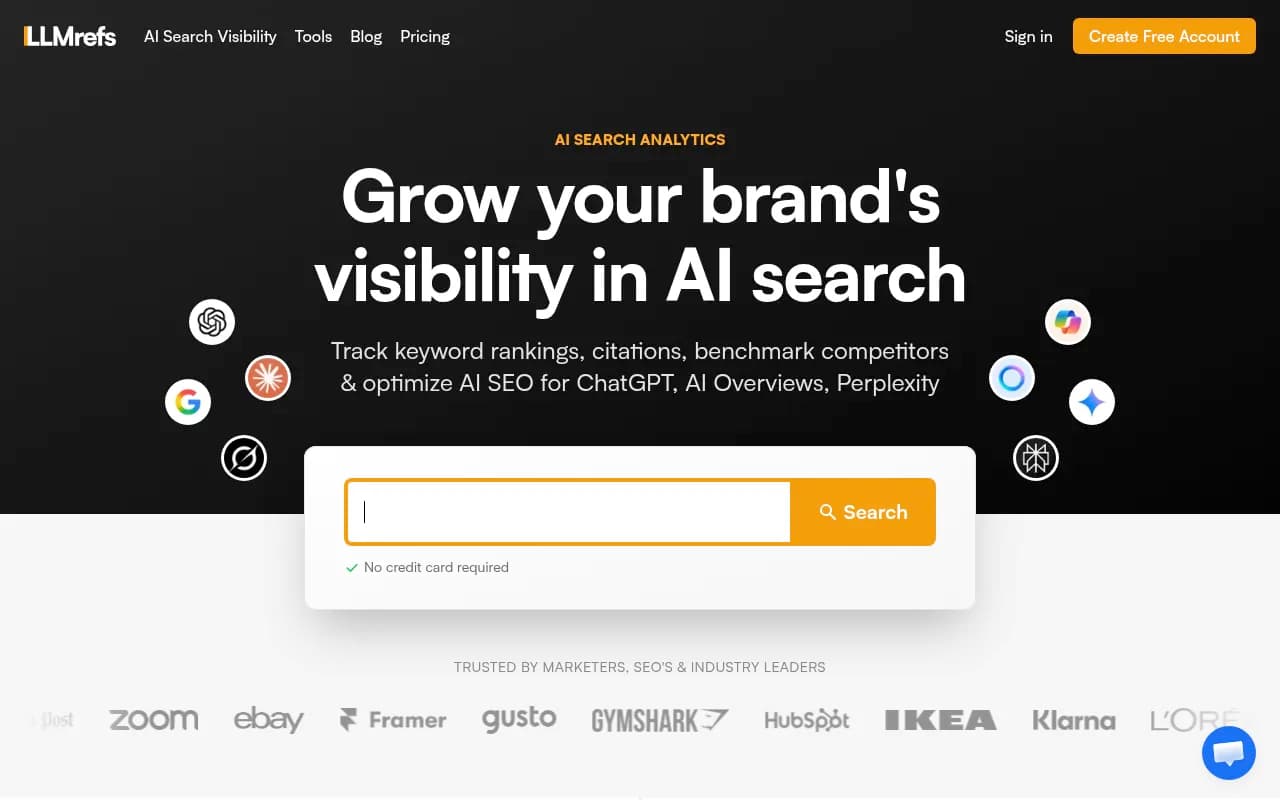
This is a thinner market. Most AI visibility tools track at the national level by default. Promptwatch's Professional plan explicitly includes state and city-level tracking, which puts it ahead of most competitors on this specific capability. LLMrefs also supports geo-location tracking across AI models.
LLMrefs
Profound and AthenaHQ cover enterprise-level AI visibility but are primarily national/global in focus. For local businesses or regional campaigns, Promptwatch's combination of city-level prompt tracking and built-in content generation is the most complete option available.
Profound


The data gap that's hurting local marketing teams
Here's a scenario that's playing out in a lot of marketing teams right now. A regional home services company checks their rank tracker and sees they're #2 in Google for "HVAC repair [city]." Traffic is decent. They feel good.
Meanwhile, a growing share of their potential customers are asking ChatGPT or Perplexity "who should I call for HVAC repair in [city]?" The model recommends three competitors. The company doesn't appear at all. They have no idea this is happening because their tracking stack only covers Google.
This isn't hypothetical. With over 60% of searches ending without a click (per the Yotpo keyword tracking report), and AI assistants increasingly fielding the high-intent queries that used to go to Google, the gap between "ranking well" and "being recommended" is growing.
The fix isn't to abandon Google rank tracking. It's to add AI visibility tracking alongside it, with geographic context where your business operates.
Building a tracking stack that covers both
For most businesses, the practical approach is to run both types of tracking in parallel and treat them as complementary data sources.
A reasonable stack for a regional or multi-location business in 2026:
- Google rank tracking with city-level granularity (AccuRanker or SE Ranking for agencies, BrightLocal for local-first businesses)
- AI visibility tracking with geographic prompt context (Promptwatch for the full loop including content generation, or LLMrefs for monitoring-only)
- Google Search Console for actual traffic data to validate what both tools are telling you
The key is not to let either data source substitute for the other. A high Google rank doesn't mean you're visible in AI. A high AI mention rate doesn't mean you're capturing organic traffic. They're different channels with different mechanics, and you need both.
What to do with the data
Once you have both data streams, the decision-making becomes clearer.
If your Google city-level rankings are strong but your AI visibility is low, the priority is content and citation building for AI. Publish content that directly answers the questions AI models are fielding in your category and city. Get mentioned in the sources those models pull from.
If your AI visibility is strong but your Google rankings are weak in specific cities, traditional local SEO applies: GBP optimization, local landing pages, citation building.
If both are weak in a specific city, that's a market where you have real opportunity and real work to do across both channels.
The tools exist to track both. The gap most teams have isn't tooling, it's the habit of checking AI visibility with the same rigor they apply to Google rankings. That habit is worth building now, before the AI search share in your category gets any larger.